Purpose

I will try my best to provide detailed info on various cars and what is like to live with them, I have already produced a few for Jaguar-car-forums, I will do my best to be unbiased, but it will be hard for some cars. I will re-produce press releases and copy from other motoring news.
Showing posts with label Camera based Advanced Front lighting System. Show all posts

Monday, 20 July 2015

FORD developing advanced headlights that point out people & Animals in the dark & widens the beam at junctions.

  • Ford is developing advanced lighting technology that enables drivers to more easily see potential hazards when driving at night
  • Camera-Based Advanced Front Lighting System widens beam at junctions and roundabouts after interpreting traffic signs
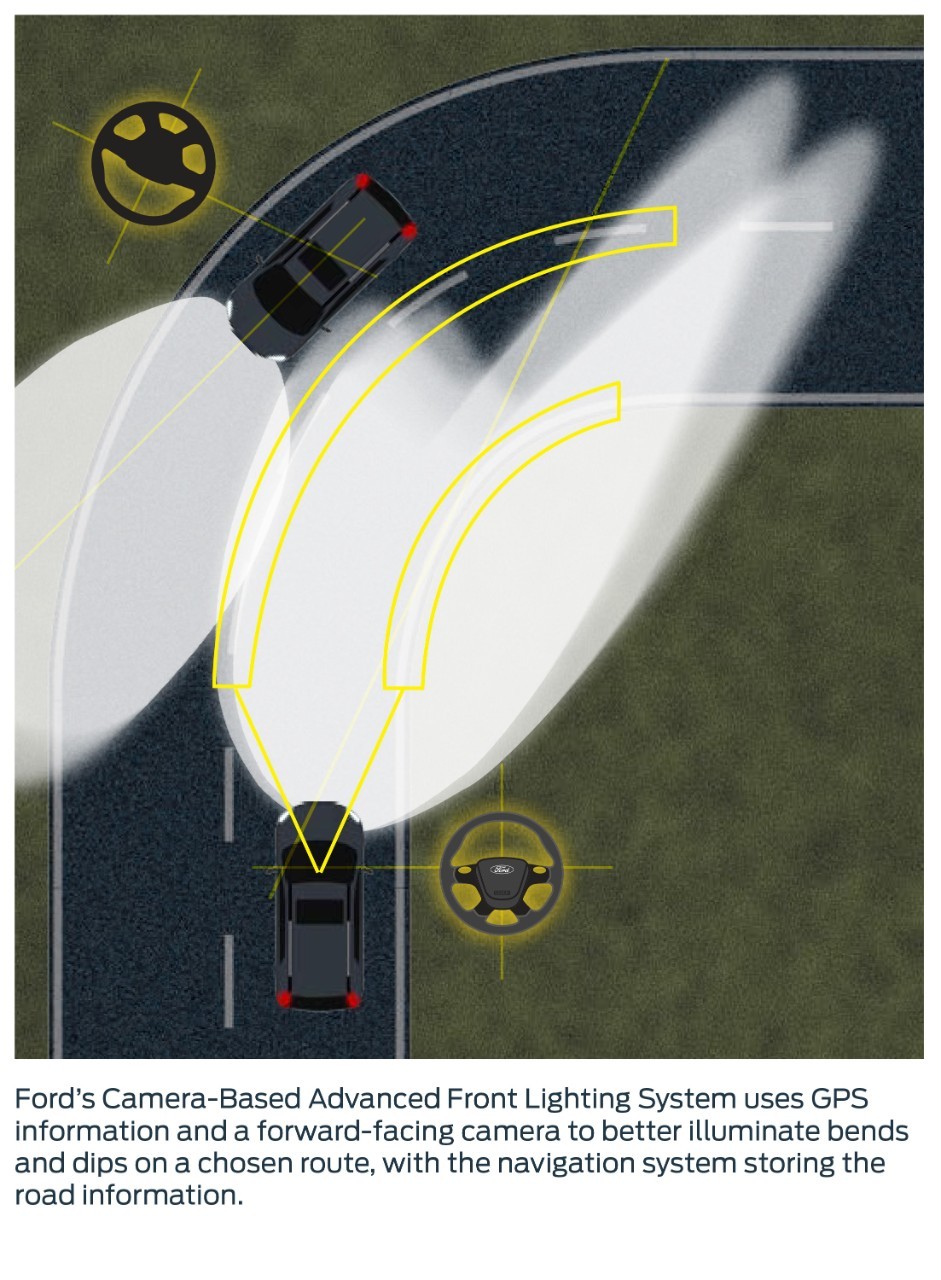
  • GPS-enabled system uses forward-facing camera to remember roadways and direct lighting to help drivers better see bends in the road – effectively lighting the way home on previously travelled routes
  • Spot Lighting uses infra-red camera to detect pedestrians, cyclists, and animals, and highlight the potential hazards; system can detect up to eight potential hazards and highlight two highest priorities using specially designed headlights and on-screen display
Driving at night, particularly on unlit roads, can be a nerve-wracking experience. Ford is developing new lighting technologies that will enable drivers to more easily identify potential hazards, including pedestrians, cyclists and animals.

Ford’s Camera-Based Advanced Front Lighting System can widen the beam at junctions and roundabouts to better illuminate hazards that are not in the direction of travel. New Spot Lighting technology helps draw the driver’s attention to pedestrians, cyclists and even large animals in the vehicle’s path or even just off the road.
“Many people who drive at night have had to quickly react to someone or something suddenly appearing in the road – as if from nowhere. Ford’s Camera-Based Advanced Front Lighting System and Spot Lighting help ensure the driver is quickly alerted to people or animals that could present a danger,” said Ken Washington, vice president, Ford Research and Advanced Engineering.
Camera-Based Advanced Front Lighting System builds upon Ford’s Adaptive Front Lighting System and Traffic Sign Recognition, which are already available in Ford vehicles, to provide drivers with improved visibility at roundabouts, stop, and give way or yield signs.
The system also uses GPS information to better illuminate bends and dips on a chosen route. Where GPS information is not available the technology uses a forward-facing video camera mounted in the rear-view mirror base to detect lane markings and predict the road’s curvature, using the information to illuminate the area more effectively.
In a further evolutionary step, in those instances, the camera stores the information in the navigation system. When next the driver uses the same road again, the headlights adapt to the course of the road automatically to better light the way.
Camera-Based Advanced Front Lighting System was developed at Ford’s European Research and Innovation Centre in Aachen, Germany, and Ford expects the technology to be available for customers in the near term.
Spot Lighting – currently in the pre-development phase with Ford engineers in Aachen – uses an infra-red camera in the front grille to simultaneously locate and track up to eight people and bigger animals, including larger dogs, at a range of up to 120 metres.
The system can spotlight two hazards for the driver with a spot and a stripe on the road surface, illuminated by two special LED lamps next to the fog lights. The highlighted objects are displayed on the screen inside the car, marked in a red or yellow frame, according to the proximity of the object and the level of danger presented.
“Camera-Based Advanced Front Lighting can help make it easier for the driver to travel at night in unfamiliar surroundings, and to more easily see unexpected hazards. At roundabouts, for example, our system helps the driver to clearly see the exits – and check if cyclists and pedestrians are crossing the road,” said Michael Koherr, research engineer, Lighting Systems, Ford of Europe. “Spot Lighting makes potential hazards in the road ahead more easily visible to the driver – whether that is a pedestrian, a cyclist, or even a large animal.”
Road safety reports show that on unlit roads there is a significantly increased likelihood of accidents, and that such accidents could involve personal injuries, or fatalities.* Ford is a leading innovator in lighting technology. Systems currently available on Ford vehicles include:
  • Dynamic LED Headlights which combines full-LED headlamps offering daylight-mimicking light clarity with Ford’s Adaptive Front Lighting System. The system adjusts the headlight beam angle and intensity to match the driving environment. It can choose one of seven settings according to vehicle speed, ambient light conditions, steering angle, distance to the vehicle in front and windscreen wiper activation
  • Glare-Free Highbeam technology for the adaptive LED headlamps. The system detects vehicles ahead and fades out light that could dazzle oncoming drivers, while retaining maximum illumination for other areas
  • Auto High Beam Control detects oncoming vehicles and automatically switches to dipped beam, before switching back to high beam once it detects the vehicle has passed

Now thats a breath of fresh air!- Ford air filtration enables city drivers to breath clean air, as clean as the country.

  • Ford has introduced advanced new air filtration technology that can mean drivers – even in cities, congestion, and tunnels – breathe air that is cleaner than outside in the countryside
  • Concentrations of nitrogen dioxide – a key trigger of asthma – and particles inside test vehicles in those locations equalled, or were lower than, those found outside vehicles in rural areas
  • Advanced air filtration is among Ford technologies that help make car journeys safer, smarter, and more comfortable through enhancing the driver’s sensory experience
  • Interior quality, in terms of sound and touch, are improved with help of RUTH the Robot. Engine noise inside the car is reduced by opposing sound waves
  • Night-driving is made easier with Camera-Based Advanced Front Lighting System and Spot Lighting systems that shows hazards; drivers see around corners with Front Split View Camera
Did you know that sneezing while driving at 95 km/h may result in “driving blind” for up to 20 metres?* Ford has introduced to vehicles a new air filtration system that blocks almost all nitrogen dioxide – a key trigger of asthma – up to 99 per cent of pollen, and gaseous pollutants and odours.

The technology is a breath of fresh air for drivers and passengers. During testing, Ford found that concentrations of nitrogen dioxide and particle concentrations inside the car were equal to or lower than was the case outside the car in rural locations – even when test vehicles were driven in the city, on the motorway, in traffic jams and through tunnels.
Advanced air filtration is among a range of Ford innovations designed to make journeys safer, smarter, and more comfortable by enhancing the driver's sensory experience. Ford European Research & Innovation Centre, Aachen, Germany, which this year celebrates its 20th anniversary, is where many of these advanced innovations first see the light of day.
“At Ford, we aspire to improve people’s lives through innovation, whether it be advanced lighting technologies that better highlight potential dangers or an advanced filtration system that pumps ultra clean air into the vehicle’s cabin,” said Ken Washington, vice president, Ford Research and Advanced Engineering.
Technology that is not to be sneezed at
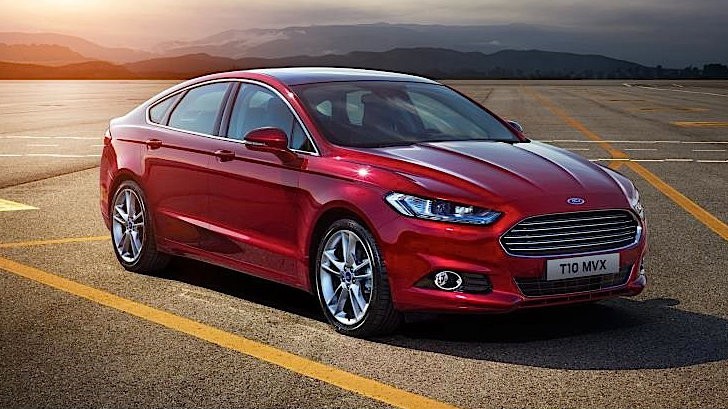
The new air filtration system introduced in the all-new Mondeo, S-MAX and Galaxy utilises activated charcoal – similar to advanced gas masks, respirators, and spacesuits.
The air quality sensor detects carbon monoxide and nitrogen dioxide levels outside the car and shuts down incoming air. As required, it also automatically switches on the advanced filtration and air recirculation. The new filter is 50 per cent more effective than its predecessor at blocking ultra-fine particles that are more than one thousand times smaller than the width of a human hair.
More than a quarter of Europeans suffer from hay fever,** and sufferers are a third more likely to be involved in a collision.***
“Ford’s filtration technology is of a quality one would only usually expect in luxury cars. The team drove test vehicles in areas of heavy congestion and concentrated pollution, such as tunnels and urban areas to prove out the system,” said Volker Scheer, technical expert, Environment and Health, Ford of Europe.”
The robot that listens
Ever heard of a robot with a sense of touch? Ford’s special robot, nicknamed RUTH (Robotised Unit for Tactility and Haptics), can be programmed to interact with many of the vehicle’s interior areas in the same way a person does.
The robot – a giant arm with six joints – is used to record and analyse attributes that can be difficult to quantify through other means, such as comfort and perceived quality of materials. Through tests that include, pre-measuring interior samples, poking the trims, turning the knobs, pushing the buttons, and gauging seat and armrest comfort, RUTH is involved from beginning to end to measure and determine the feeling of quality.
Following further development designers and engineers are now able to use the robot to record, isolate, and analyse sounds – such as those made by switches in the car, and doors shutting. This helps Ford to ensure the sounds experienced by driver and passengers are as pleasing as possible.
With interior sound in mind, Ford has now introduced Active Noise Control to the all-new Ford Mondeo Vignale. Three microphones, strategically placed throughout the cabin, monitor engine noise in the interior. The system then directs opposing sound waves through the audio system to cancel out engine noise and improve cabin ambience.
Lighting the way
Good visibility is a key to driving safely. Ford’s Camera-Based Advanced Front Lighting System builds upon Ford’s Adaptive Front Lighting System and Traffic Sign Recognition, which are already available in Ford vehicles, to provide drivers with improved visibility at roundabouts, Stop, and Give Way or Yield signs. Supported by GPS information, the system also predicts, better illuminates, and remembers bends and dips on a chosen route.
Spot Lighting simultaneously locates and tracks up to eight people and bigger animals including larger dogs. They are highlighted to the driver by a spot and a stripe on the road surface, illuminated by two special LED lamps next to the fog lights. Inside the car, such hazards, which can be located at a range of up to 120 metres, are displayed on screen.
Seeing around corners
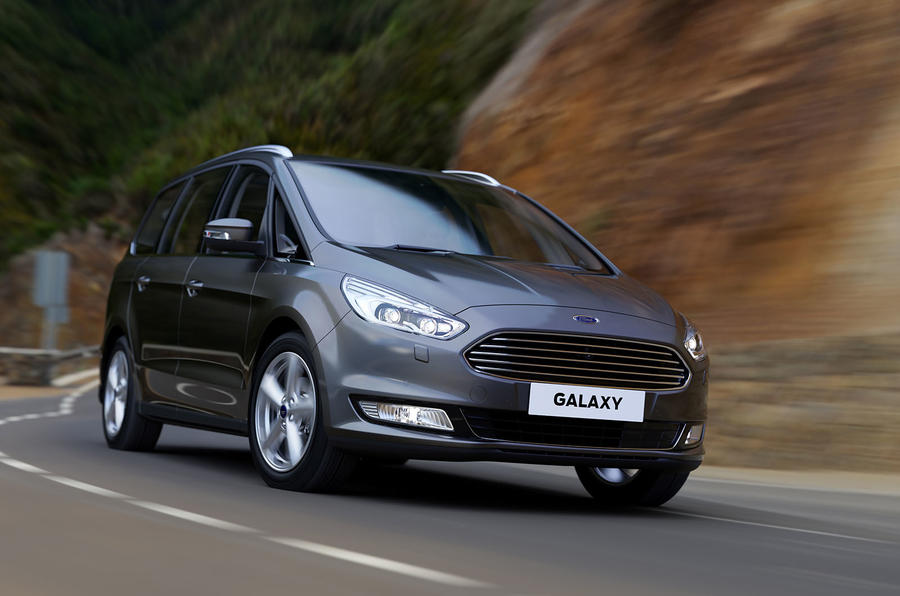
Already available on the all-new S-MAX and Galaxy, Front Split View Camera also enhances driver visibility with a 180-degree view of traffic approaching that would otherwise be obscured.
The first-in-segment technology is activated at the push of a button. A 1-megapixel camera in the front grille enables drivers to see a real-time 180-degree view – both left and right – on the vehicle’s 8-inch colour touchscreen. At a blind junction or exiting a driveway, the camera enables drivers to easily spot approaching vehicles, pedestrians or cyclists. The camera is kept clear by a specially designed retractable jet‑washer that operates automatically when the windscreen wipers are activated.
Detecting pedestrians and other vehicles
Ford vehicles also already offer further technologies that detect people and cars using radar, cameras, and sensors, and that automatically apply the brakes if the driver does not respond to warnings.
Ford’s Pre-Collision Assist with Pedestrian Detection can detect people in the road ahead – or that could cross the vehicle’s path – and automatically apply the brakes if the driver does not respond to warnings. The technology, which debuted on the all-new Ford Mondeo and also is available for the all-new S-MAX and Galaxy, can potentially reduce the severity of collisions involving pedestrians or help drivers avoid an accident altogether. The radar- and camera-equipped system cross references a “pedestrian shapes” database to distinguish people from roadside objects.
Active City Stop uses a front-facing camera and a ranging sensor to constantly monitor the gap to vehicles in front and calculates the risk of hitting a stationary or slow-moving object. This enables the system to help reduce the severity of rear-end collisions, and in some cases even prevent an accident entirely at speeds of up to 50 km/h. If the driver does not react in time to traffic that is slowing or stopped ahead the system brakes, reduces engine torque, and activates the rear hazard lights.
“Across a range of different driving situations, Ford vehicles enhance the human ability to sense what is around us and to react quickly and effectively. It may be that these are situations we only encounter rarely, but it can be of significant importance that we are better equipped to manage them safely when they do occur,” Washington added.