Purpose

I will try my best to provide detailed info on various cars and what is like to live with them, I have already produced a few for Jaguar-car-forums, I will do my best to be unbiased, but it will be hard for some cars. I will re-produce press releases and copy from other motoring news.
Showing posts with label Good rating. Show all posts

Thursday, 2 February 2017

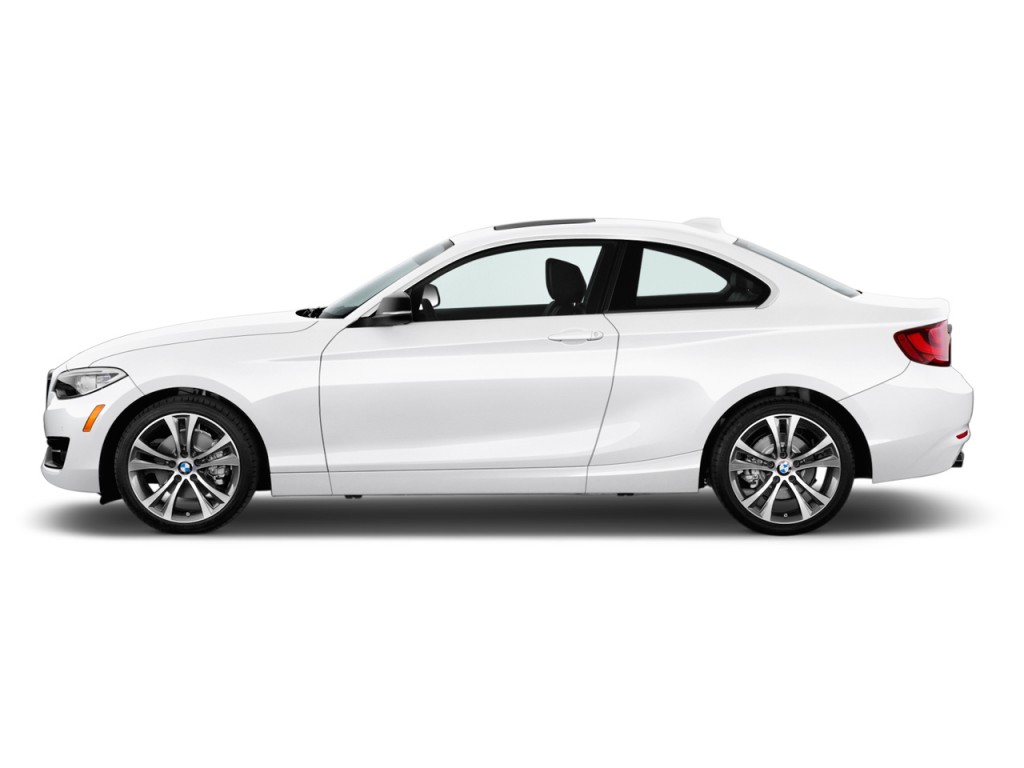
USA - The BMW 2-Series Coupe & 3-Series Sedan both gain the Top Safety Pick+ from the IIHS.

BMW is proud to announce the Insurance Institute for Highway Safety named the 2017 BMW 2 Series Coupe and 2017 BMW 3 Series Sedan a “Top Safety Pick+”, continuing the company’s long-standing commitment to offer class-leading safety with each new model. 
In order to earn a 2017 Top Safety Pick +, a vehicle must earn good ratings in the five IIHS crashworthiness tests — small overlap front, moderate overlap front, side, roof strength and head restraints. 
As well as an advanced or superior rating for front crash prevention and new for 2017, an acceptable or good headlight rating.
Following BMW’s commitment to safety, the BMW 3 Series Sedan underwent a series of small overlap enhancement measures for its 2017 model year. 
The IIHS evaluated this new 3 Series in December of 2016 receiving a “GOOD” rating in the tough small overlap crash test, ensuring the 2017 BMW 3 Series Sedan a TSP+ grade.
Since its introduction in 2014, the BMW 2 Series has been recognized by the IIHS every year for four consecutive appearances. The 2 Series has been praised for its body structure integrity receiving a top rating in all crashworthiness tests. 
Most recently the 2017 BMW 2 Series Coupe was awarded a “Top Safety Pick” in the 2017 IIHS TSP/TSP+ in early December 2016. 
BMW then implemented improvements to the 2017 BMW 2 Series Coupe headlights. The IIHS evaluated this vehicle at their proving grounds in late December 2016 and was awarded a “GOOD” rating. 
With this result the 2017 BMW 2 Series earns once again a “Top Safety Pick +” rating.
The 2017 BMW 2 Series Coupe and 2017 BMW 3 Series Coupe provide a high-level of standard safety features including BMW Assist eCall, BMW TeleService, Dynamic Stability Control, Brake Dry Assist, Cornering Brake Control and Dynamic Traction Control. 
Optional features such as Lane Departure Warning, Frontal Collision Warning including Pedestrian Warning and City Collision Mitigation are also available.

Monday, 13 June 2016

USA - All-New 2016 Honda Civic Coupe earns IIHS Top Safety Pick+ Rating.

  • Six 2016 Honda models have now earned top IIHS safety ratings
  • 10th-Generation Civic features next-generation Advanced Compatibility Engineering™ (ACE™) body structure and available Honda Sensing™ safety and driver-assistive technology
The sporty, sophisticated and dramatically redesigned 2016 Honda Civic Coupe can now lay claim to safety leadership after earning the highest available collision safety rating of TOP SAFETY PICK+from the Insurance Institute for Highway Safety (IIHS) when equipped with Honda Sensing™.  
All 2016 Civic Coupes earn the top GOOD rating in each of five IIHS test modes, including small and moderate overlap frontal collisions, side impacts and roof crush protection.

The 2016 Civic Coupe joins the 2016 Civic Sedan, 2016 Accord Sedan, 2016 Accord Coupe, 2016 CR-V and 2016 Pilot SUV in applying Honda Sensing technology and earning an IIHS TOP SAFETY PICK+ rating.
The 2016 TOP SAFETY PICK+ designation is reserved for vehicles that have an available front crash prevention system and earn an ADVANCED or SUPERIOR rating from the Institute. In 12 mph and 25 mph tests at the IIHS track, the 2016 Civic Coupe with Honda Sensing successfully avoided collisions, earning aSUPERIOR rating for front crash protection from the IIHS.
"We're proud to add the 2016 Civic Coupe to a growing family of Honda vehicles that employ our Honda Sensing technology and earn top crash safety ratings," said Jeff Conrad, senior vice president and general manager of the Honda Division. "Honda Sensing and systems like it are changing the conversation around vehicle safety performance from crash protection to crash avoidance, and we will continue to expand Honda Sensing to additional models as we work toward our vision for a collision-free society."
Standard on the Civic Touring Coupe, the Honda Sensing™ suite of advanced safety and driver-assistive technology can reduce the potential of a collision or mitigate its severity, alerting the driver and taking emergency action when a collision is determined to be imminent. Honda Sensing™ uses both millimeter wave radar and a monocular camera to sense and respond to detected road hazards. Honda Sensingtechnologies on the 2016 Civic Coupe include:
  • Collision Mitigation Braking System (CMBS™)1
  • Lane Departure Warning (LDW) integrated with RDM2
  • Forward Collision Warning (FCW) integrated with CMBS3
  • Adaptive Cruise Control (ACC) with Low Speed Follow4
  • Lane Keeping Assist System (LKAS)5
  • Road Departure Mitigation (RDM)6
The greater use of high-strength steel and advanced crash engineering features, including Honda's next-generation Advanced Compatibility Engineering™ (ACE™) body structure, a new crash stroke front frame structure and tailor-tempered B-pillars and rear frame structures, help better protect occupants in a collision while minimizing vehicle weight for superior fuel efficiency. In addition, standard passive safety features on the 2016 Civic Coupe include a new front passenger's safety vent airbag, SmartVent® front side curtain airbags and side curtain airbags with rollover sensor.
All 2016 Civic Coupe models also come standard with Vehicle Stability Assist® with Traction Control, 4-channel Anti-Lock Braking System with Brake Assist; a highly responsive, fully independent suspension; Motion-Adaptive Electric Power Steering; a Multi-Angle Rearview Camera; Expanded View Driver's Mirror; indirect tire pressure monitoring system; and Lower Anchors and Tethers for Children (LATCH) child seat mounting system.

Tuesday, 25 November 2014

USA - Honda Odyssey achieves highest rating IIHS, the 1st Minivan to earn the TOP SAFETY PICK+

  • Odyssey is the segment-leader offering top IIHS safety ratings since 2011
  • No other manufacturer has earned moreTOP SAFETY PICK and TOP SAFETY PICK+ ratings than American Honda1
The 2014 Honda Odyssey is the only minivan to earn the highest possible ratings of GOOD in the Insurance Institute for Highway Safety's (IIHS) stringent small overlap frontal crash test and is a 2014 TOP SAFETY PICK+ designation when equipped with optional front crash prevention. 

The Honda Odyssey became the first minivan to earn the TOP SAFETY PICK+ rating in August of 2013. The IIHS created the small overlap frontal crash test to replicate what happens when the front corner of a car collides with another vehicle or an object such as a tree or utility pole.

"Honda's commitment to the safety of its customers is clearly demonstrated by the segment-leading safety ratings of the Odyssey," said Art St. Cyr, vice president of auto operations at American Honda Motor Co., Inc. "As the only minivan to offer the highest possible IIHS-rated protection in small overlap crashes, car buyers can look to the Honda Odyssey to securely and safely transport what's most important – their families."


Already the benchmark minivan in terms of fuel efficiency and innovative features, occupant safety for the 2014 Honda Odyssey is further enhanced through the next-generation Advanced Compatibility Engineering™ (ACE™) body structure. The second-generation of the ACE™ body structure has also been applied to the 2014 Honda Accord Coupe and Sedan and the 2014 Civic Sedan models that previously achieved the TOP SAFETY PICK+ rating.

The next-generation ACE™ body structure improves frontal crash energy management through a wider range of offset and oblique collision modes. In addition, other body reinforcements work in tandem with the strengthened body structure to better maintain the occupant compartment volume during frontal collisions by providing additional crash energy pathways to help mitigate the forces transmitted to the passenger compartment.

Standard safety equipment on all Honda and Acura models include Vehicle Stability Assist™ (VSA®) with traction control; an Anti-lock Braking System (ABS); side curtain airbags (some vehicles equipped with a rollover sensor as well); dual-stage, multiple-threshold front airbags; and front side airbags.

While Honda has made structural improvements to the 2014 Odyssey, Honda also has applied a new type of side curtain airbag that includes a front chamber design providing additional protection in situations where occupants move in a more angled outboard trajectory, such as those that might occur in oblique or offset crashes.

The company also is offering advanced driver-assistive technologies such as LaneWatch™, Forward Collision Warning and Lane Departure Warning as available technologies to a broad segment of its product lineup. Also, Honda has applied rearview cameras as standard equipment to 100-percent of its vehicle lineup for the 2015 model year.

Honda Safety Leadership

of leadership in the development and application of advanced technologies designed to enhance the safety of all road users, including automobile occupants, motorcycle riders and pedestrians. The company operates two of the world's most sophisticated crash test facilities, in Ohio and Japan, and is responsible for numerous pioneering efforts in the areas of crashworthiness, airbag technology, collision compatibility and pedestrian safety.


1Based on 2014 Insurance Institute for Highway Safety (IIHS) TOP SAFETY PICK and TOP SAFETY PICK+ratings as of 11/20/14.

Tuesday, 22 July 2014

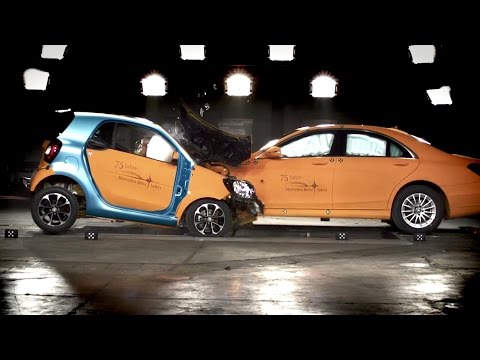
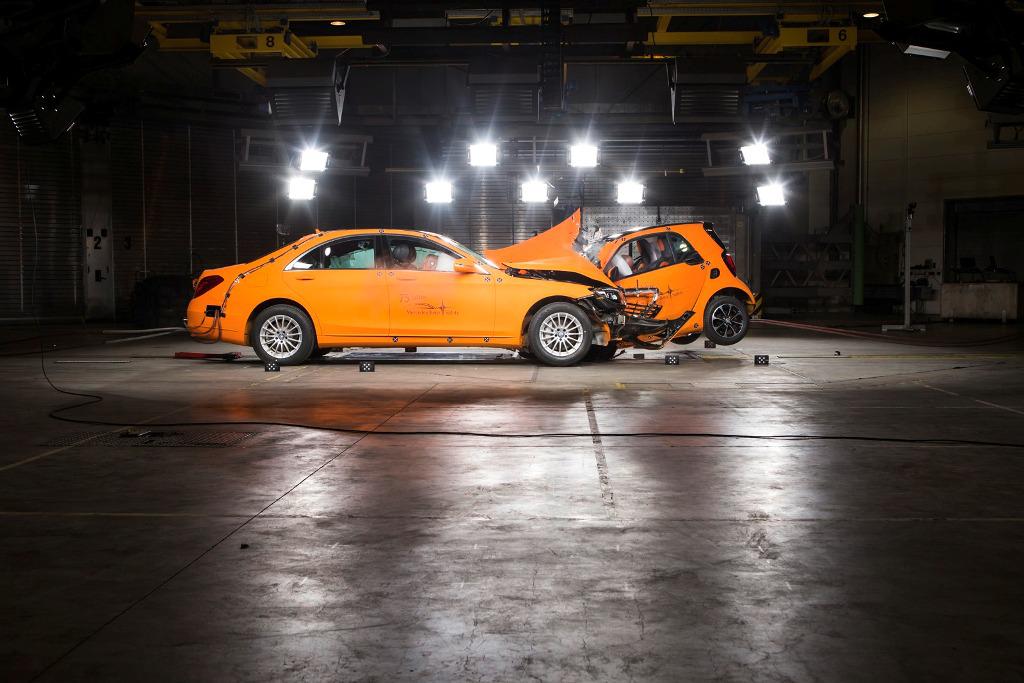
Smart Fortwo vs. S-Class - Crash test


The 2016 Smart Fortwo comes in at just 2,478 pounds, so how well does it survive when crashed against a Mercedes-Benz S-Class that weighs over twice as much? 

To test out the safety of its redesigned microcar, Mercedes-Benz pitted the two cars against each other in a head-on collision at 31 mph. Parts went flying, but the passenger compartment in the Smart vehicle remained intact after the crash. According to Smart, the force on the occupants was "significantly lower" than biomechanical limits, meaning that the driver and passenger can actually survive in this situation.


 Even the previous-generation Fortwo was considered to have good safety ratings for its class. The Insurance Institute for Highway Safety rated the 2014 ForTwo "Good" in moderate overlap front crashes, side crashes, and roof strength tests. It earned a score of "Acceptable" in head restraints and seat tests. For 2016, Smart has improved the Fortwo's tridion safety cell thanks to ultra-high-strength steel with multiphase steel. 

The model also includes a thicker structure that runs along the C-pillar. The new Fortwo goes on sale in the U.S. during fall of 2015. Make sure and check out the video below to see how the Smart car performs.

REPORT HERE