Purpose

I will try my best to provide detailed info on various cars and what is like to live with them, I have already produced a few for Jaguar-car-forums, I will do my best to be unbiased, but it will be hard for some cars. I will re-produce press releases and copy from other motoring news.
Showing posts with label L. Show all posts

Monday, 19 September 2016

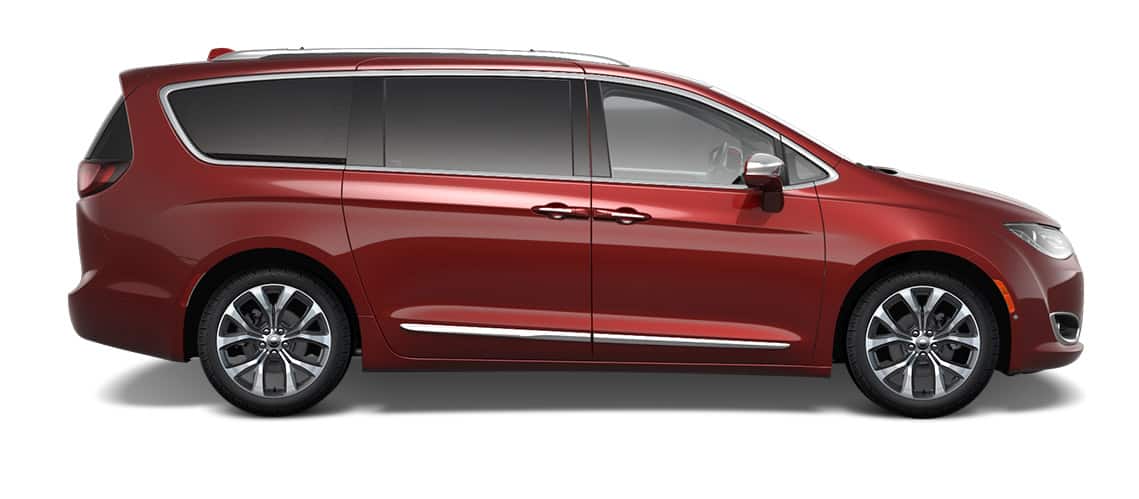
USA - WardsAuto has named the 2017 Chrysler Pacifica to the 1st-ever Wards 10 Best User Experience List for 2016

  • The most technologically equipped vehicle of its kind, the all-new 2017 Chrysler Pacifica offers the segment’s largest 8.4-inch touchscreen display 
  • A full array of comfort and convenience and driver assistance technologies are available on Pacifica, including Stow ‘n Vac integrated vacuum, handsfree sliding doors and liftgate, redesigned Stow ‘n Go seating with Stow ‘n Go Assist, as well as ParkSense Parallel and Perpendicular Park Assist 
  • New Pacifica offers all-new, class-exclusive Uconnect Theater rear seat entertainment system with two 10-inch HD touchscreen displays, device connectivity, easy-to-use built-in apps, games and more 
  • Personalization made easy with available 7-inch full-color driver information display (DID) enhanced by vivid and intuitive graphics
Continuing on a winning streak of “firsts” by delivering unparalleled levels of functionality, versatility, technology, attention to detail and bold styling, the editors at WardsAuto have named the all-new 2017 Chrysler Pacifica to the first-ever Wards 10 Best User Experience List for 2016.
To select the best of the best, WardsAuto editors evaluated the overall user experience of 29 vehicles, rating them on user-friendliness, infotainment features, sound systems, vehicle connectivity, driver assistance technology, information/displays, system compatibility and materials.
“The Pacifica treats occupants of all ages, especially the young, like royalty,” said Tom Murphy, Senior Editor of WardsAuto


“This vehicle has six USB ports, it understands and correctly processes simple voice commands and it can park itself, both parallel and perpendicular. Phone pairing is near instantaneous, dials are big and some controls are redundant. 

In the second row, climate controls are easily in reach, and the two huge display screens are loaded with enough games, media and information to keep a bored child from ever asking once again, ‘Are we there yet?,’ no matter how long the road trip. It’s a family-friendly rolling entertainment center.”
As the original creator of the minivan more than 30 years ago, FCA US LLC has transformed the segment with firsts – notching 78 innovations through the first five minivan generations. 

With the introduction of the all-new Chrysler Pacifica, FCA US adds 37 minivan firsts to its portfolio for an unprecedented total of 115 innovations in the segment.
“When it comes to a minivan, it’s all about the experience — both for our customers and their entire families,” said Tim Kuniskis, Head of Passenger Car Brands, Dodge, SRT, Chrysler and Fiat, FCA – North America. 

“Ward’s recognition that the new Pacifica ‘treats occupants like royalty’ and offers among the best user experience on the road are further validation that the new Chrysler Pacifica is delivering both the high-tech, easy-to-use features our customers want and deserve and is another reason why the all-new Chrysler Pacifica is the most awarded minivan of the year.”
The 2017 Chrysler Pacifica is the most technologically equipped vehicle of its kind, offering an all-new Uconnect Theater entertainment system with two 10-inch touchscreen displays, a 7-inch full-color driver information display, an 8.4-inch touchscreen, acclaimed Uconnect Access and an array of other features.
With the all-new, class-exclusive Uconnect Theater rear seat entertainment system, passengers can watch movies via the Blu-Ray player or the USB video input, play built-in games, connect personal devices to surf the Internet and stream content throughout the vehicle via two high-definition 10-inch touchscreens.
The available KeySense programmable key fob places limits on speed and audio volume, mutes the audio when front seatbelts are not buckled, prevents the disabling of certain features like Forward Collision Warning-Plus and ParkSense rear park assist, and allows blocking of SiriusXM Radio channels.
The 2017 Chrysler Pacifica features the available easy-to-use Uconnect 8.4 system with an 8.4-inch touchscreen, 3-D navigation, integrated voice command and Uconnect Access, which keeps drivers and passengers connected with helpful information, such as emergency assistance and a mobile app that can remote start your vehicle and more. 

There also is a five-year trial of SiriusXM Traffic and Travel Link that offers such information as fuel prices, movies listings and weather reports.


For audiophile-quality sound, the Chrysler Pacifica comes standard with six speakers and Active Noise Cancellation. Premium audio systems, either a 13-speaker Alpine system or a 20-speaker Harman Kardon surround sound system, are also available.
The 2017 Chrysler Pacifica is loaded with comfort and convenience features, including Keyless Enter ‘n Go, remote start, and heated and ventilated seats. 

Other notable features include segment-first handsfree sliding doors and liftgate, which are operated by making a kicking motion under the sliding door or bumper to open the sliding doors or liftgate.
For added convenience, the available Stow ‘n Vac integrated vacuum, powered by RIDGID, provides easy access to clean all corners of the vehicle. 

The Stow ‘n Go seating and storage system, a hallmark of FCA US minivans for more than 10 years, has been redesigned for added ease of use, and the addition of the all-new Stow ‘n Go Assist feature helps to further simplify the process. With the press of a button on the B-pillar, the front seat moves forward to allow the second-row seat to be stowed into the floor tub. 

Once the seat is stowed, pressing the button again moves the front seat back to its starting position. In addition, the Easy Tilt second-row seats allow for easy access to the third row, even with an empty child seat installed in the second row.

Tuesday, 23 August 2016

USA - Toyota announces pricing and specs for the 2017 Corolla, 86 sports car, and Corolla iM hatchback.


Toyota Motor Sales (TMS), U.S.A., Inc., today announced manufacturer’s suggested retail prices (MSRP) for the 2017 Corolla, 86 sports car, and Corolla iM hatchback. 
 
86

It’s got a new name, a new look and higher performance: the Scion FR-S adopts the Toyota 86 identity used in other global markets, as the Scion sports car transitions to the Toyota brand.

For its move to Toyota, the 86 sports car adopts more aggressive styling with a larger center intake emphasizing the low, wide stance of the car. 


The front of the car has a new high-tech design with standard LED front headlamps, daylight running lights, and turn signals, a new fog lamp bezel and revised bumper. The rear sports LED tail lamps and more sculpted bumper design with integrated aerodynamic diffuser. 

The alloy wheels feature a new twisted spoke design and 86 logos have been incorporated into a badge on the front fender, as well as inside the front headlamps.

The interior also features the 86 logo on the new “Granlux” material used on the instrument panel surround. The same material adds a new, soft feel to the door trim.  

Drivers also will enjoy new seating material with silver stitching and a revised steering wheel with integrated audio controls and an 86 logo on the center hub.

Enhanced control and agile performance are achieved through revised shock tuning and a spring rate change. On the six-speed manual version of the car, additional performance comes from a differential gear ratio change and revised engine tuning that increases the torque to 156 lb.-ft, as well as a five-horsepower increase to 205 hp. 

On both manual and six-speed automatic 86 models, Hill Start Assist Control (HAC) helps prevent the car from rolling back on steep hills from a stop.

The Toyota 86 also delivers outstanding fuel economy for a sports car: EPA-estimated 23 mpg city and 32 mpg highway with the six-speed automatic transmission and 20 city/27 highway with the six-speed manual.

The MSRP for the 2017 Toyota 86 is $26,255 when equipped with a six-speed manual transmission, an increase of $950 or 3.8 percent, and $26,975 for the six-speed automatic, reflecting an increase of $570, or 2.2 percent.
 
Corolla

Since it first launched in 1966, more than 43 million Toyota Corollas have been sold world-wide, making it the best-selling nameplate of all-time. Toyota celebrates Corolla’s 50th anniversary with refreshed styling and, more significantly, a new safety system.  Just for good measure, though, Toyota has also introduced a Corolla SE 50th Anniversary Special Edition model.


The Corolla gets a sportier look for 2017 thanks to a new front grille and LED headlamps. The L, LE and LE Eco grades gain Bi-LED headlamps, while complex-LED headlamps come standard on SE, XSE and XLE grades. 

With the base L model adding a back-up camera, that feature is now standard across the Corolla line. Redesigned 16-inch wheels are standard on the LE and XLE, while the SE and XSE step up into standard 17-inch alloy wheels.

The 2017 Corolla’s upgraded fabric interior offers a choice between added elegance in the LE with Almond, Ash/Dark Gray or Black/Brown color schemes, or bold sportiness with Softex-trimmed sport seats with Vivid Blue, Orange Zest, and Black premium fabric inserts in the SE. 

A redesigned climate control panel and circular air vents add an upscale touch.

Standard Bluetooth and Entune™ Audio are among the features that help make the 2017 Corolla a standout value in its segment. Audio and connectivity upgrades abound, including available Entune Audio Plus with Connected Navigation (Scout® GPS Link App) or available Entune Premium Audio with Integrated Navigation and App Suite. Both the Entune Audio Plus and Entune Premium Audio systems feature a 7-inch touch screen for 2017.
 
What Corolla customers are sure to appreciate, even more than great audio, is the advanced Toyota Safety Sense-P (TSS-P) technology.  Standard on all Corollas, TSS-P is a safety system that bundles the Pre-Collision System with Pedestrian Detection; Lane Departure Alert with Steering Assist; Dynamic Radar Cruise Control and Automatic High Beams.

The Corolla 50th Anniversary Special Edition adds an exclusive exterior color, Black Cherry Pearl.  Also available in Classic Silver and Blizzard Pearl, the Corolla SE 50th Anniversary Special Edition will be offered in a run of 8,000 vehicles.

Inside, Toyota made this anniversary model extra special with black mixed media seats with Black Cherry piping and contrast stitching. Black Cherry contrast stitching also trims the black interior’s steering wheel and shift boot. The distinctive Black Cherry theme also distinguishes the dash panel and door trim, and unique “50th Anniversary Edition” floor mats and exterior rear badging make the final touch.

The 2017 Corolla 50th Anniversary Edition comes standard with a 7-inch touch-screen and Entune Audio Plus with Connected Navigation (Scout® GPS Link App). There’s also a color 4.2-inch TFT Multi-Information Display in the gauge panel. A standard Smart Key system with push button start and power tilt/slide moonroof add an upscale touch to this special Corolla.

The MSRP for the 2017 Corolla ranges from $18,500 for the L CVT grade with a continuously variable transmission with intelligent shift (CVTi-S) to $22,680 for the XSE with CVTi-S.  The MSRP’s reflect an average overall increase of $281, or 1.5 percent.
 
Corolla iM

For Corolla buyers looking to hatch up some great adventures, the iM is the perfect addition to the line-up. With its versatile hatchback, the new 2017 Corolla iM has plenty of room to handle gear for new excursions. Add in the iM’s fun-to-drive, high-style, high-content and high-MPG features, and affordable pricing, creating an excellent value.

The Corolla iM’s cabin is roomy, refined, versatile, and high-tech equipped. The chassis, with sophisticated double-wishbone rear suspension and standard 17-inch alloy wheels, smooths out urban bumps and tames adventurous curves. For more hands-on driving fun, a six-speed manual transmission is also available.
 
For 2017, the iM comes with standard Toyota Safety Sense™ C (TSS-C), as well as eight standard airbags, including a driver’s knee airbag and a front passenger seat cushion airbag.
The TSS-C package features three proprietary active safety technologies and combines a camera and laser beam for enhanced performance and reliability. With Lane Departure Alert, Automatic High Beams and a Pre-Collision System, TSS-C can help prevent or mitigate collisions in a wide range of vehicle speeds.

Compact car buyers like to avoid pain at the pump no matter what. The iM offers a sweet spot of performance and efficiency, and is rated by the EPA an estimated 28 city/36 hwy/31 combined for the CVTi-S model and 27 city/35 hwy/30 combined for the six-speed manual.

Then comes the fun side. The 137 horsepower 1.8-liter 4-cylinder engine uses Valvematic continuously variable valve timing (lift and phasing) technology to offer a broad torque curve, so the iM feels responsive in all situations.

Both the manual and automatic iM models come standard with Hill Start Assist, which helps prevent roll-back when pulling away from a stop sign or traffic light on an incline.

The Corolla iM MSRP is $18,750 for the six-speed manual, an increase of $290, or 1.6 percent and $19,490 for the CVTi-S Automatic with Sport Sequential Shiftmatic Mode, reflecting an increase of $290, or 1.5 percent.

Toyota MSRPs do not include a delivery, processing and handling of $865 for Toyota passenger cars.  The DPH fee for vehicles distributed by Southeast Toyota (SET) and Gulf States Toyota (GST) may vary.

The 2017 Toyota 86 and Corolla iM will begin rolling into dealerships later this month.  The 2017 Corolla will reach dealerships in early September.

2017 Toyota Prices
MODEL#GRADEMSRP 16MYMSRP 17 MYMSRP CHANGE ($)MSRP CHANGE (%)
625386 4-cyl. 6MT$25,305$26,255  $9503.8%
625286 4-cyl. 6AT$26,405$26,975    $5702.2%
1832Corolla L 4-cyl. CVTi-S$17,900$18,500  $6003.4%
1852Corolla LE 4-cyl. CVTi-S$18,735$18,935  $2001.1%
1856Corolla XLE 4-cyl. CVTi-S$22,195$21,825 ($370)-1.7%
1863Corolla SE 4-cyl. 6MT$21,665$21,665  $00.0%
1864Corolla SE 4-cyl. CVTi-S$20,065$20,445  $3801.9%
1866Corolla XSE 4-cyl. CVTi-S$23,125$22,680  ($445)-1.9%
1872Corolla LE Eco 4-cyl. CVTi-S$19,135$19,335  $2001.0%
6273Corolla iM 4-cyl. 6MT$18,460$18,750  $2901.6%
6272Corolla iM 4-cyl. CVTi-S$19,200$19,490  $2901.5%
All prices listed above exclude the Delivery, Processing, and Handling (DPH) fee.

Friday, 13 May 2016

USA - Windsor plant continues 33 years of minivan production with launch of Chrysler Pacifica.

  • Windsor plant continues 33 years of minivan production with launch of Chrysler Pacifica
  • $744 million USD (over $1 billion CAD*) invested to upgrade facility with state-of-the-art technology
  • More than 1,200 hired since September 2014 to prepare for launch
  • Plant includes several firsts, just like the minivan it builds
  • A focus on quality at the heart of new processes
Standing in the heart of Windsor, Ont., the FCA US Windsor Assembly Plant (WAP) has been a mainstay in the community for the past 88 years. Many models have rolled off the line over the years, but none more well-known or recognizable than the minivan, which launched in 1983. Since then, more than 14.3 million minivans have been sold to date, of which 10 million have come through the Windsor plant.


The Windsor plant continues its legacy as the home of the minivan with the start of production of the sixth generation family hauler, the all-new Chrysler Pacifica. Of the $2.6 billion USD spent to develop the Pacifica, $744 million USD (over $1 billion CAD*) was allocated to the Windsor Assembly Plant to add modest footprint additions to complement the Company’s product quality initiatives, such as the addition of a Component, or Metrology, Center and Complete Technical Vehicle Validation (CTVV), as well as upgrade equipment and processes to produce the all-new Pacifica and the existing minivan on the same line.

More than 1,200 new, full-time permanent positons have been added at the plant since September 2014 to facilitate the production launch of the Chrysler Pacifica, bringing total employment to approximately 6,000 on three shifts.

Just like the new minivan it’s building, the Windsor Assembly Plant also has several firsts, including:

  • The first of its kind PULSE transfer system in a North American body shop
  • The first dual arm Laser Radar measuring system in the world in the Component Center
  • The first FCA North American application of an Oil Suparator in the paint shop


Preparing to Build Old and New
Launching a new vehicle always has its challenges, but a unique aspect of the Pacifica launch for the Windsor plant was that the current minivan models would continue to be built alongside the new platform, adding greater complexity. 

This meant reconfiguring all of the build processes throughout the plant to accommodate production of two completely different architectures with no shared parts and integrating stations specifically designed to produce a hybrid model.

To prepare the plant, major construction projects were completed during the two week Christmas break in 2014 and 14 down weeks in the first half of 2015, but work continued throughout the year to remodel and renovate the existing building to accommodate new process loading and to provide space for advanced technologies, improved conveyance and robotic assist equipment.

When the plant resumed production after the 14 week shut down in May 2015, there were two goals – one was to be back at full volume of 1,490 per day of the current minivan within seven weeks and the other was to pilot the new minivan in station on the line within two weeks, both while maintaining the same level of quality on the current minivan.

“What we were asking the Windsor team to do had never been done before,” said Brian Harlow, Vice President – Manufacturing, FCA North America. “They were truly pioneers. But we knew that with World Class Manufacturing tools guiding them, the Windsor team would rise to the challenge. At all levels of the organization, they have come together to build a vehicle that will delight the families that buy it.”

One of the keys to the successful launch of the Chrysler Pacifica was the implementation of the Work Place Integration (WPI) process two years before the start of production. As defined by World Class Manufacturing (WCM), WPI is a systematic approach to facilitate vertical start-up of new model launches through the application of WCM tools and cross-functional activity by all core organizations.

In early 2014, a team dedicated to the Pacifica launch, comprised of more than 100 salaried and hourly employees, established a temporary home in the Pilot Plant at the Chrysler Technology Center in Auburn Hills, Mich., for six months to begin reviewing and identifying best practices, validating preliminary workstation assignments, creating workstation layouts and evaluating “Golden Zone” delivery points.  By “front loading” these initiatives closer to the beginning of the program, the team could better plan and react, minimizing significant changes to the launch that could affect cost, timing and efficiency.

The information the team gained through this process was later transferred to the WPI room set up at Windsor Assembly, where work continued to identify opportunities to further refine and improve the assembly process. While nearly all of the assembly jobs were different when the plant resumed production following the 14 week shut down, they were more efficient as a result of the WPI process and suggestions implemented as a result of having the operators’ involvement upfront.

“WCM has been a very significant part that touched on almost every aspect of the Pacifica launch,” said Michael Brieda, Windsor Assembly Plant Manager. “We’ve been able to approach workstation design, material flow and quality control systems with a totally different perspective with WCM. It drives us to set the plant up the best way we know how, using what we have learned since its implementation into the Company beginning in 2009. It’s our enabler to achieve the highest vehicle quality and build the best vehicle possible for our customers.”

More than 80 Percent of Body Shop Overhauled; New Technology Introduced
The Windsor body shop has been transformed into a state-of-the-art facility. More than 80 percent of the body shop equipment is new or has been modified. In total, 822 new robots were added, 19 lines are all new, five lines were retooled and more than 1.3 miles of conveyors were upgraded. Even with all the changes, the body shop was able to achieve better dimensional quality on the existing minivan architecture when it re-launched after the 14 week shut down.

As part of the upgrades, the Windsor body shop became the first in North America to install a PULSE transfer system. The PULSE system, which stands for Propulsion Using Linear Synchronous motor Energy, uses a linear motor to apply thrust, rather than torque, to move body sections through robotic work stations as joining and other functions are performed. It is flexible enough to handle both minivan architectures, but can be configured to handle up to four. The PULSE line was integrated into the line where the inner and outer body side panels are “married” together. The new system increases the transfer speed and with fewer components that can wear, all but eliminates down time caused by the previous chain-driven system.

The Windsor body shop is also the first within FCA to assemble an aluminum door. The Pacifica’s aluminum sliding side doors, which help reduce the overall weight of the vehicle, are shipped from the Warren Stamping Plant (Mich.) to Windsor, where state-of-the-art aluminum resistance spot welding guns weld the door inner and outer panels together.

FCA US added a 32,000-square-foot Component Center as part of the plant’s body shop. Now located in eight of the 10 FCA North America assembly plants, the Component Centers reflect the Company’s heightened dedication to quality. The goal of the Component Center is to allow engineers to efficiently solve problems, identify all sources of build variation – even when components appear perfect to the naked eye – and resolve any fit and finish issues before customer vehicles are built.

The standardized equipment and tools within the Component Centers include traditional Coordinate Measuring Machines (CMM) as well as state-of-the-art inspection equipment, like a Meisterbock gauge, Quality Assurance Fixture (QAF), and blue light laser scanners that allow for 3-D measurement and certification of both plant processes and incoming supplier parts.

Another first for the Windsor plant is the use of Laser Radar, a non-contact dimensional measurement system. Used for years by the aerospace industry as a manual device, the Dimensional team worked collaboratively with the supplier to develop the first dual arm automatic laser radar in the world.

The Laser Radar system, which consists of two robots mounted on slides on each side of the cell, significantly advances the dimensional measurement process that has traditionally been done by CMM. Whereas CMM machines use touch probe technology to compile measurement data, a process that can be slow and sensitive to changes in environmental conditions, laser radar scans as many as 800 points per minute from up to 30 meters away, making gathering data easier and safer than ever before. The scanned data can be used for discrete point evaluation or compiled into an image with color mapping to highlight non-conforming components that can be compared to a CAD drawing, which allows potential issues to be addressed quickly.

With Laser Radar, the time to measure a vehicle is reduced from 2 ½ to 3 hours to about one hour, allowing the plant to measure 15 vehicles a day as compared to six with a CMM.

Another significant enhancement to the plant was the addition of a Quality Assurance Center (QAC), which performs extensive testing and analysis on parts received from suppliers in order to guarantee the highest quality components. The convenience of the QAC allows for immediate feedback to suppliers. The QAC houses chemical and vibration analyses conducted by certified chemists in its laboratory, but also manages testing in appearance, mechanics/chassis, weight, heating, ventilation and cooling (HVAC) and underbody. A sample of assembled vehicles is randomly selected to run through the QAC each day.

In addition to the Component Center and the Quality Assurance Center, Windsor has also built a new Complete Technical Vehicle Validation (CTVV) and Materials Laboratory, following an example first established in the Company’s Belvidere, Ill., plant.  

The purpose of the CTVV is to perform customer focused audits on functional aspects of the vehicle. The CTVV puts eight vehicles each day through a full audit program, measuring and monitoring over 175 functional requirements on the new Pacifica and 165 on the Grand Caravan, including door closing efforts, audio testing, heating and cooling performance, and lighting performance. The Materials Laboratory, staffed with an on-site chemist, and the CTVV allow the plant to identify and troubleshoot emerging issues onsite, with fewer delays from sending parts to Auburn Hills or supplier locations for analysis.

Putting the Shine on the new Chrysler Pacifica
Windsor implemented several new processes in its paint shop to improve the quality of the new Chrysler Pacifica. First, a new robotic sealer system was installed that applies 83 meters or 90 yards, nearly the length of one football field, of sealant to the Pacifica’s underbody, engine compartment, interior and roof ditch, the area where the roof meets the body side. Sealing the underbody was an added step in the Pacifica paint process to meet the FCA global sealant standard and provide for added corrosion protection for customers.

A new high speed friction drive transfer system, similar to the technology that powers a rollercoaster, was designed to push more vehicles through the sealer cell to improve the efficiency of the process.

Because of the increased amount of sealer being applied as well as the application to the underbody, the Chrysler Pacifica now spends 10 minutes in a new sealer gel oven. The oven hardens the sealer to prevent it from dripping into the primer powder during the next step of the paint process.

All of the nearly 2,300 carriers throughout the paint shop had to be redesigned to allow for maximum flexibility to load both the old and the new minivan architecture.
Windsor is the first FCA North American plant to incorporate a new Oil Suparator in its pretreatment system. During this phase of the paint process, the minivan body is dipped into a bath to remove any oil applied to protect the raw sheet metal during shipping before it moves to the e-coat process. The Oil Suparator, used solely in Europe until now, pulls the residual oil out of the bath to prevent contamination to future vehicles. Maintaining a clean bath and ensuring the body is as clean as possible before moving through the process improves the overall paint quality.

Not to be overlooked, 135 robots had to be reprogrammed to recognize the two different vehicle architectures.

Assembly Process Redesigned with the Operator and Customer in Mind
One of the biggest areas of transformation at the Windsor plant was on the assembly line. Every single workstation had to be modified to accommodate both current minivan production and the all-new Pacifica. This required the rearrangement of the operator’s entire workstation and also the flow of material from the loading dock to the assembly line, so that Windsor could build two minivans with completely different DNA.

A new skillet conveyor system, a global standard for FCA, runs through 74 total stations, of which 46 are being utilized for production work. A skillet, which looks like the bellows of an accordion on its side, carries the vehicle down the line on a moving floor, adjusting in height depending on which interior trim component is being installed while improving vehicle quality with better line of sight for the operator.

With the redesign of the assembly process, the body carriers that place the minivans on the skillets needed to return from the end of the line to the beginning of the line. Restricted floor space and insufficient headroom meant the only logical pathway for 200 feet of conveyor was over the roof in the middle of the 88-year-old building. Construction to create a new conveyor enclosure, measuring 20 feet tall, on the plant’s roof began during the two week Christmas break in 2014.  Approximately 200 pieces of structural steel were raised in three days using a 600-ton crane.

The rest of the skillet line was installed during the 14 week shut down in 2015 in order to dig large pits in the floor to house all of the mechanics for the new line. The skillet line is now flexible enough to accommodate all three minivan variations – the Dodge Grand Caravan, Chrysler Pacifica and the Pacifica hybrid.

The skillet system optimizes the assembly operation by improving manufacturing efficiency, ergonomics and quality. Parts for each vehicle are sorted into kits and put on a dolly, which travels with the vehicle as the skillet moves it through the line. Kitting virtually eliminates line-side inventory and ensures that operators are picking the right parts for the right vehicles. Kits also facilitate delivery of parts to operators in the Golden Zone, a 60-degree area immediately in front of the operator, so they can build the vehicles with the precision of a surgeon. Because the skillet has infinite positions, it can be adjusted to best accommodate the operation being performed and eliminate any physical strain and fatigue on the operator.

With the launch of the Chrysler Pacifica, Windsor also upgraded its glass install cell with the addition of state-of-the-art technology. Previously, windshield glass was installed manually. Now, installation of the windshield glass is fully automated. Robots apply the adhesive, assess the exact center of the opening and set the glass uniquely for each vehicle. By automating the process, the glass installation is a consistent and repeatable process, which reduces wind noise and water leaks, enhancing vehicle quality for customers.

With three different minivan models come three different storage tubs, the area in the floor pan where the third row of seats is stowed when not in use. New robots were installed in the “tub cell” to ensure the precise placement of the tub, while also improving the ergonomics for the operator.

Another quality enhancement implemented with the end customer in mind is an in-line water test performed on 100 percent of all Chrysler Pacificas and Grand Caravans. In the past, only small samplings of vehicles were water tested. Now, every vehicle is driven onto a conveyor and pushed through the water test booth where it is subjected to a three and a half minute rain storm to guarantee the customer will never have to brave the elements while inside the vehicle.
With all of its advanced safety features, including the Forward Collision Warning system, the Chrysler Pacifica is a more sophisticated vehicle, making aligning and calibrating the front end more complex.

Originally constructed as part of the 1982 model launch, the alignment station followed the wheel roll-test station where vehicles were driven under their own power to alignment. As production increased, a back log would occur because of a limited number of alignment stations. To accommodate the new vehicle, the alignment stations were expanded from three to five within four, 20 foot x 40 foot bays. The ambitious schedule involved demolition in February, construction in March and equipment installation in April. May was devoted to getting the new processes commissioned to resume production. From start to finish, the removal, demolition, excavation, utility rerouting, shoring, construction and installation was accomplished in four weeks.

Windsor also upgraded several hundred of its direct current (DC) tools throughout the plant. The new tools provide feedback on the amount of torque being applied to nuts, bolts and fasteners, and automatically shut down when the precise torque is achieved.

One of the other areas that saw significant rework to accommodate the three models was the suspension decking area, the station on the line where the underbody is “married” with the painted body. The suspensions are built up on one of three different pallets depending on the model. When not in use, the pallets are stored in racks, then automatically selected and cued into the build sequence when needed.  

The inclusion of the hybrid version of the Pacifica on the assembly line required adding several stations to accommodate the vehicle’s unique features. Due to the weight of the battery pack and the super module, the brains of the engine, ergonomic arms were integrated to assist operators with lifting and installing these components. A separate station was also added to build up the engine. The hybrid engine has more plumbing than a gas engine, but the amount of time to complete the operation remained the same, so modifications were needed in the fluid fill area to include more equipment and more hook ups to complete the operation.