Purpose

I will try my best to provide detailed info on various cars and what is like to live with them, I have already produced a few for Jaguar-car-forums, I will do my best to be unbiased, but it will be hard for some cars. I will re-produce press releases and copy from other motoring news.
Showing posts with label Lane. Show all posts

Wednesday, 17 May 2017

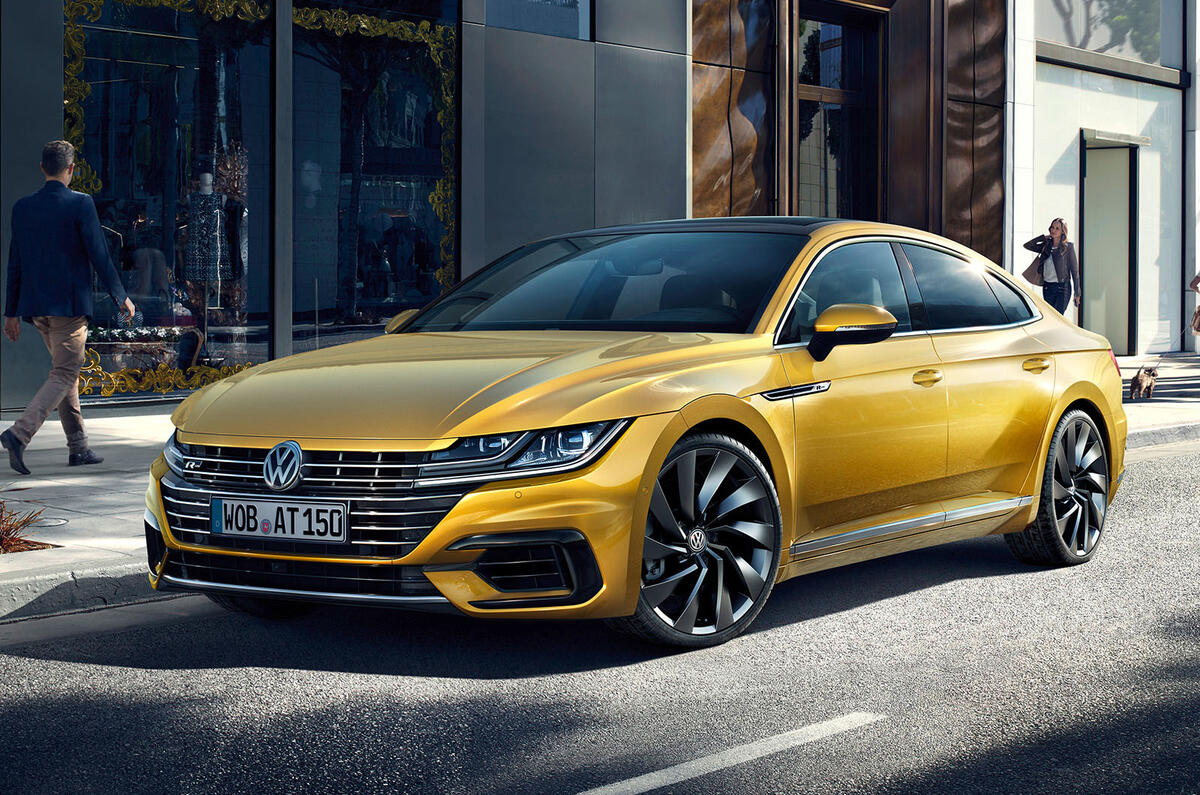
The New Volkswagen Arteon Innovative driver assistance systems in detail - part 2 'Pre-Crash proactive occupant protection system'

  • The New Volkswagen Arteon Innovative driver assistance systems in detail - part 2 'Pre-Crash proactive occupant protection system'
  • Latest Pre-Crash system can detect danger behind the car
  • System for the first time uses Side Assist data as well
It's a familiar but unwanted scenario:  traffic lights on red, a look in the rear-view mirror, the vehicle behind is approaching much too fast! A rear-end crash is looming. In such situations the new, optional 'Pre-Crash occupant protection system' in the Arteon provides assistance to the limit of its capabilities. 
For the first time, the Pre-Crash sensors are able to react not only to processes relating to driving dynamics (detected by functions such as the ESC) and to acute risks of collision from the front (registered by Front Assist), but also to hazards at the rear. 
For this the system uses data from Side Assist. Within fractions of a second it is able to initiate measures to lessen wherever possible the consequences of any accident.
This is how it works: Pre-Crash utilises the sensors of the Side Assist system, which during overtaking provides within the limits of its capabilities a warning of any vehicle in the 'blind spot'. 
Via radar sensors Side Assist is able to register the position and speed of the cars behind the Arteon. This data is then analysed by the Pre-Crash system. It does this not only when the car is moving, but also when it is stopped with the engine running and in stop-start mode, e.g. at a red traffic light. 
If the detected vehicle moves towards the Arteon, the system uses the position and speed of both cars to determine the probability of a possible collision. If the new Pre-Crash system detects an imminent risk, it duly reacts.
The hazard warning lights come on displaying the rear emergency collision alert signal and the system simultaneously closes all windows (except for a narrow gap that improves the bracing effect of the front head airbags) and the sliding sunroof. In parallel with this the belt tensioners pull the front safety belts taut.

Monday, 15 May 2017

Volkswagen looks to the furture with the first post based on it's Innovative driver assistance systems.

Innovative driver assistance systems in detail – part 1: Emergency Assist – automatic help in emergencies.
  • Latest generation brakes and steers autonomously in an emergency
  • Innovative protection technology utilises four driver assistance systems
'Autonomous driving' – a term currently generating more animated discussion than almost any other in the automotive world. It fascinates and polarises in equal measure. The fact is: automated driving functions increase comfort and often safety as well.
The new Arteon is therefore fitted with more driver assistance systems than any Volkswagen before. These systems are interconnected with each other, as it is the interaction of their sensors and computers that actually makes autonomous driving functions possible. 
Through the fusion of four driver assistance systems, the Arteon possesses a form of technology that in many circumstances can help to prevent serious accidents: Emergency Assist 2.0. 
As soon as the sensors of the avant-garde gran turismo notice that the driver has become incapacitated, the Arteon takes over the proverbial helm. Within the bounds of its system capabilities, it warns other road users and automatically steers to the nearside lane, where it stops. 
We call it a worst case scenario. Yet, through sudden ill health it can happen to anyone, regardless of age or physical condition: the driver suffers a blackout at the wheel. It is in these situations that the second-generation Emergency Assist system is able to take action. It merges ACC (Adaptive Cruise Control), Side Assist, Lane Assist and Park Assist into one system. This alliance is able – as mentioned above, within its technical system limits – to bring the car to a standstill in the nearside lane. 
This is how Emergency Assist works: as soon as the sensors recognise that for a defined length of time the driver has used neither the accelerator, brake nor steering wheel, the combined system initiates systematic countermeasures. First, the driver is warned and 'shaken out of their slumber' by acoustic, visual and physical (brake jolt) signals. If, however, they fail to react, Emergency Assist activates the emergency stop process outlined above. The hazard warning lights are then automatically switched on. In addition, via components of Park Assist (access to the electro-mechanical power-assisted steering) and Lane Assist (camera-based lane detection), the Arteon performs gentle steering manoeuvres in order to make drivers in nearby vehicles aware of the dangerous situation. 
Meanwhile, the ACC facilitates the automatic braking and contributes thanks to the radar sensors in the front of the car to preventing it from running into any vehicles up ahead. A new feature of Emergency Assist 2.0 is that on roads with multiple carriageways the Arteon steers itself in a controlled manner into the nearside lane. It is Park Assist and Lane Assist that enable it to do this, while Side Assist uses its ultrasound sensors to check on the traffic behind in order to minimise the risk of any collision when changing lane.