Purpose

I will try my best to provide detailed info on various cars and what is like to live with them, I have already produced a few for Jaguar-car-forums, I will do my best to be unbiased, but it will be hard for some cars. I will re-produce press releases and copy from other motoring news.
Showing posts with label electric vehicles. Show all posts

Tuesday, 5 December 2017

LEVC (London EV Company)’s new TX electric taxi is now fully certified to carry fare-paying passengers in London

  • LEVC (London EV Company)’s new TX electric taxi is now fully certified to carry fare-paying passengers in London
  • TX is ready to revolutionise the passenger experience with more space, 6 passenger seats, forward facing wheelchair access, power sockets for laptops, USB ports, on-board wifi, an expansive panoramic roof and active & passive safety systems making it the world’s most advanced taxi
  • The all new TX is powered by LEVC’s eCity technology comprising of an advanced electric powertrain with a small back-up petrol generator
  • e-City technology allows for a range of up to 400 miles including 80 miles range with zero emissions, helping to improve urban air quality for all Londoners
  • Milestone occasion marked on the 65th Anniversary of the Great London Smog and hosted at Battersea Power Station, another London icon reborn for the 21st Century
Today marks a momentous milestone in the life of the London taxi: LEVC (London EV Company)’s all-new electric TX taxi is now fully certified to carry fare-paying passengers. For the first time Londoners will be able to ride through the city’s streets in incredible comfort with technology at their fingertips, safe in the knowledge that they are sitting in the world’s cleanest, most advanced taxi ever.
The new TX is a revolution for passengers who should expect unrivalled ride comfort, class leading wheelchair accessibility, air conditioning, phone charging and a much more spacious cabin with six seats. 
Features abound including wide opening rear hinged doors, power sockets for laptops, on-board wifi, contactless card machines and an expansive panoramic roof. 
Chris Gubbey, CEO of the LEVC, said:After extensive testing, LEVC’s new taxi is ready to do the job it was made for: transport people around this great city of London safely, cleanly and stylishly. Better for passengers, more cost effective for drivers, it will play a major role in helping to improve air quality benefiting all Londoners. I am immensely proud of the work we have carried out so far: we have produced a new icon, the world’s most advanced electric taxi.”
Having been put through the most rigorous testing regime in the company’s history, including extreme weather conditions in the Arctic Circle and Arizona, plus thousands of miles in the hands of real cab drivers in London, the new TX is ready to go to work – ahead of TfL’s January 2018 deadline when all newly licensed taxis need to be zero emission capable.
Shirley Rodrigues, Deputy Mayor for Environment and Energy, said: “These new electric taxis are at the forefront of green transport technology and will play a transformational role in the Mayor’s plan to phase out diesel and clean up the transport network. This will help to accelerate improvements to London's toxic air.
“It’s great to have the first electric taxis on London’s streets and a testament to London’s leadership and that of LEVC. I look forward to seeing many more taxis on London's street in the coming months”.
This landmark moment was celebrated at Circus West Village, the first phase of the Battersea Power Station regeneration, which is now open. The entire site has been designed to futureproof for a mass adoption of electric vehicles with the infrastructure for almost 1,000 electric charging points planned and the flexibility to increase that. The first 57 charging points are now available for use at Circus West Village. The Grade II* listed Power Station building and its surrounding areas is being transformed into a community of homes, shops, offices, restaurants and public space - a vibrant, new town centre for Londoners. Like the TX, both icons blend old and new and are being redesigned for 21st century living, and have a major role to play in the future London landscape.
All LEVC products use its eCity technology comprising of an advanced battery electric powertrain with a small back-up petrol generator. Applied to the all-new electric TX, the technology allows for a range of up to 400 miles including 80 miles pure electric range.
Unlike the previous taxi, the vehicle’s multi-filter system works to remove gases and particles from the incoming air. In addition, an in-built air quality sensor also automatically closes the external air intake if it detects increased levels of pollution in the outside air – protecting passengers, and the driver, from the capital’s often poor-quality air.
World-class active and passive safety systems will help to protect both the vehicle and other road users too. These include forward collision warnings, autonomous emergency breaking and emergency brake assistance, while the TX combines an extremely strong, rigid aluminium body shell with crash protection to the highest international standards, reinforcing the black cab trade’s reputation for safety.
Carl-Peter Forster, Chairman of the LEVC, said: “There have been many milestones on this journey, from opening a brand-new factory in the heart of the UK – the first brand new automotive manufacturing facility in Britain for over a decade; the first dedicated electric vehicle factory in the UK – to today’s announcement that our new TX has passed all certification tests and is now able to carry fare-paying passengers. It will save drivers money, bring new levels of comfort and convenience to those who hail one and provide the safest and cleanest way of getting around a city by taxi. And this is just the start. We will deliver new TX models in Europe later in 2018 – and across the world. Our goal is to be the global, automotive leader in urban commercial vehicles. We are well on our way to achieving that.”
LEVC has received thousands expressions of interest in London for the new electric TX since order books opened on August 1st 2017 and the first electric TX models will arrive in the hands of drivers this month. The vehicle is currently available for test drive and those who have placed orders will start receiving their vehicles in due course.
Underpinned by an investment totalling £325m, LEVC, a wholly-owned subsidiary of Geely, has the single-minded ambition to be the urban commercial vehicle provider of choice for cities across the globe. Its commercial vehicle strategy will see the new TX launched first followed by an electric LCV.

Wednesday, 5 April 2017

Geely Automotive has opened its £300m new production facility in Coventry to build London Taxi's.

UK’s first dedicated car factory to produce electric vehicles for global markets
  • Ansty plant to be UK’s first dedicated electric vehicle manufacturing facility
  • First all-new vehicle manufacturing facility to be built in Britain for more than a decade
  • The first major Chinese investment of its kind in UK automotive from parent Geely
  • The creation of more than 1000 high skilled, high quality manufacturing jobs
  • A new R&D Light-weighting and EV centre for Geely and Britain
The London Taxi Company (LTC) today announced the official opening of the UK’s first car plant dedicated solely to the production of range -extended electric vehicles. This new, state-of-the-art, vehicle plant in Ansty, Coventry, is where the world’s first purpose-built, mass-market electric taxi will be built. 
LTC, a wholly-owned subsidiary of Geely, has invested more than £300m in the new site and the next-generation London taxi, which will be produced at the plant and exported around the world. 


The investment and expansion of LTC has created more than 1,000 new jobs, including 200 engineers and 30 apprenticeships.
The site has the capacity to build more than 20,000 vehicles per year - vehicles designed for, and dedicated to one task: to be the best ultra-low emission commercial vehicles in the world. The taxi vehicle is using proven Volvo Car electric powertrain system technologies and components comprising a new EV light weight platform, while retaining the iconic design heritage recognized around the world. Further derivatives of this new EV architecture will follow.
All vehicles produced at this plant will go through the most stringent testing regime in the company’s history. Each test vehicle will cover almost 500,000 kilometers, often in extreme conditions, to ensure that no city is off-limits. This program will enable LTC to deliver world-leading urban commercial vehicles, which meet the highest levels of quality, reliability and usability, purposefully designed for demanding daily drive cycles.
The all new electric taxi goes on sale first in London in quarter four 2017, and then around the world in early 2018. The new vehicle will be highly competitive with substantially lower fuel costs than its previous taxis.
Chris Gubbey, Chief Executive of the London Taxi Company, said: “Today marks the rebirth of the London Taxi Company. A company with a singular vision; to design and build dedicated urban commercial vehicles that can operate without emissions in cities around the world and bring down running costs for drivers.”
The fully integrated factory – from research through to production – will also become a globally connected research and development centre in electric vehicle powertrains and lightweight aluminum body structures, which will be applied in all vehicles made at the plant.
The technology behind the new facility and vehicle is cutting edge. It has been developed in collaboration with other members of the Geely group, including Volvo Cars, whilst drawing on LTC’s heritage and expertise in the development of purpose-built taxis.
This partnership has ensured that the vehicle retains its key features such as being wheelchair accessible, and having a high level of manoeuvrability whilst incorporating new features like a spacious cabin area with six passenger seats and a highly sophisticated electric drivetrain.
Carl-Peter Forster, Chairman of the London Taxi Company, said: “The opening of our new plant sets a number of records; it’s the first brand new automotive manufacturing facility in Britain for over a decade; the first dedicated electric vehicle factory in the UK; and the first major Chinese investment in UK automotive. We are extremely proud of what we have achieved today, and we have firmly put our stake in the ground as a new, global, automotive leader in urban commercial vehicles.”
The new fully integrated research, development and production facility, where work began just under two years ago, has been supported by the UK Government through its Regional Growth Fund.
The Rt Hon Greg Clark MP, Secretary of State for Business, Energy and Industrial Strategy attended the opening ceremony and welcome the investment, stating: “Our iconic black cabs are famous across the world. The London Taxi Company’s impressive new factory and R&D facility showcases the innovation that makes the UK a world leader in the development of new automotive technologies.
Through our ambitious Industrial Strategy, we are committed to building on our strengths and taking advantage of the opportunities the new low carbon economy provides.”
The construction of this plant at Ansty was possible thanks to the commitment of Government to support UK leadership in ultra-low emission vehicles – including measures like a dedicated purchase grants for taxi drivers provided through the Office of Low Emission Vehicles - as well as its ongoing commitment to the Midlands Engine through the government’s Industrial Strategy.
In addition, the London Mayor and TfL have played a significant role in putting the taxi industry on a more sustainable footing – including their proposed taxi decommissioning scheme, their commitment to build a dedicated charging network for commercial vehicle drivers and world leading zero emission licensing requirements.
Shirley Rodrigues the Deputy Mayor for Energy and Environment said: “The Mayor and TfL are fully committed to helping the iconic London taxi trade become the greenest, most sustainable fleet in the world. With air quality at toxic levels in London, our Taxi and Private Hire Action Plan sets out bold measures to fully support the black cab trade’s evolution into zero emission capable vehicles. The pioneering models made at this factory will help fast track the taxi industry both in the UK and internationally into the next generation of cleaner vehicles, as well as creating many new jobs. Our further efforts to drive up standards across the taxi and private hire industry will also improve safety for every passenger in London, and protect the future of the unique and invaluable service that black cabs provide to Londoners.”
The plant meets the highest environmental standards possible, including 850m2 of photovoltaic solar panels to power the factory and 20 charging points for electric vehicles. The plant has also earned an Excellent BREEAM[i] rating and an A rating for energy performance. LTC also worked closely with Natural England to minimise any potential impact to local wildlife from the construction of the facility, and supported the construction of numerous “newt hotels” to re-home rare species in the area.
Zhou Jianqan, General Manager at Geely Commercial Vehicles, said“This dedicated electric vehicle plant, gives LTC and Geely the chance to lead the way in advanced British manufacturing as we look to solve the pollution challenges facing the world’s major cities. Urbanization continues around at such a pace with more than a billion new city dwellers expected by 2030. This move to cities will only be sustainable if all vehicles, including taxis, go electric. Our vision is to help solve the pollution crisis, not as an add on, but as a company dedicated to meeting the needs of commercial drivers and their passengers.”

Wednesday, 1 February 2017

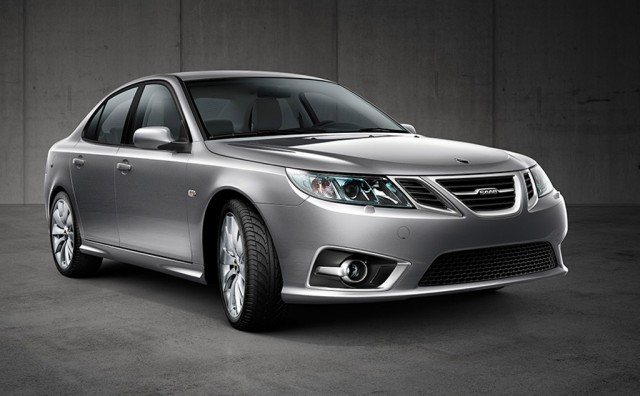
CHINA - NEVS receives electric vehicle production license in China based on old SAAB 9-3 Tech.

The Chinese government has today approved NEVS’ application to start production of electric vehicles in its manufacturing plant in Tianjin.

I am very grateful for the approval we now have received for the electric vehicle production license. It is an extremely important milestone for NEVS, which is based on 70 years of Saab long history. 

It means that we can take the next step to realize our vision - to shape mobility for a more sustainable future, says Kai Johan Jiang, chairman of NEVS.

The electric vehicle production license approved by the Chinese National Development Reform Commission (NDRC) is required in order to manufacture electric vehicles in China. 

NEVS is the first joint venture company with investors from outside China that is granted a New Energy Passenger Vehicle Project investment approval by NDRC.  

NEVS' manufacturing plant in Tianjin is under construction and planned to be up and running at the end of 2017, with the capacity of 200 000 electric passenger vehicles yearly.  

The electric car industry is growing rapidly in China. NEVS plan is to develop a product portfolio of electric vehicles and mobility services globally, with China as the first and most demanding market for the coming years. 

The immediate plan is to deliver 150 000 9-3 Sedan electric vehicles to the partner Panda New Energy, a new energy vehicle leasing company in China.  

Saturday, 12 November 2016

EUROPE - Nissan celebrates selling 75,000 Electric vehicles in Europe after the announcement of 260,000 worldwide.

  • Nissan passes 75,000 electric vehicle (EV) sales milestone in Europe as the EV market gains momentum
  • Nissan LEAF sales up 10 percent and e-NV200 sales up 34 percent in the first half of FY16*
  • Nissan Intelligent Mobility takes another step forward as the brand celebrates more than 260,000 Nissan EV customers worldwide
European Nissan LEAF sales have risen by 10 percent in the first half of FY16 compared with the same period last year, Nissan has announced today. The latest figures also reveal that there are more than 75,000 Nissan EV owners in Europe as the electric vehicle revolution speeds up across the continent.

This momentous milestone follows the recent announcement that 260,000 Nissan EVs have been sold worldwide, reinforcing Nissan’s vision for a zero-emission future as the brand continues to make Intelligent Mobility a reality.


EV sales have been further bolstered by strong e-NV200 sales year-to-date FY16 – up 34 percent year-on-year. Increased demand for Nissan’s zero-emission e-NV200 from businesses across Europe comes as the brand celebrates the extension of its class-leading five year warranty to include the all-electric LCV.


Gareth Dunsmore, Director of Electric Vehicles at Nissan Europe, said: “Europe’s electric vehicle market is growing at an extraordinary pace as motorists across the continent switch on to the multiple benefits that electric mobility provides.


“As part of Nissan Intelligent Mobility, it is our aim to offer customers around the world a safer and more sustainable future through our electric vehicle range including, the Nissan LEAF and e-NV200. By driving sales, we are encouraging increasing numbers of drivers to switch to EVs and ultimately, move towards to a zero-emission future.”

With the LEAF’s 30kWh battery now offering 155 miles in driving range** and as many as 4,000 quick chargers installed across Europe, driving an electric car is more practical and enjoyable than ever before, providing an easy gateway to a zero-emission future. Nissan is dedicated to delivering a smarter, more sustainable future, with customers across the globe having driven more than 2.5 billion electric miles.

Sunday, 29 May 2016

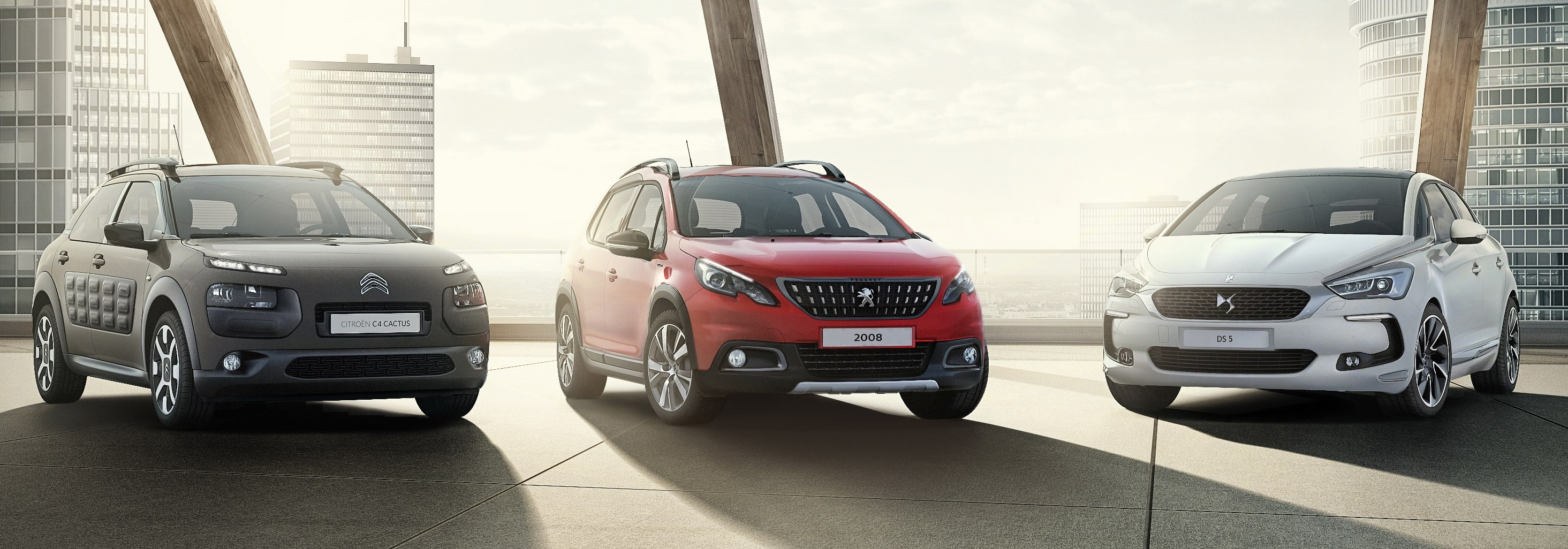
PSA Group details its future plans for Electric and hybrid cars, the future is looking good for the French Giant.

PSA Group presented its new electrification strategy at the Innovation Day event held on 25 May 2016

In order to meet all its customers' mobility and usage needs, PSA Group is consolidating the development of its models on two global modular platforms, which will allow it to offer a wide range of internal combustion, electric and plug-in hybrid petrol models as from 2019. 

Both platforms will be compatible with the manufacturing resources put in place as part of the Plant of the Future programme.
The Common Modular Platform (CMP), which was developed in partnership with DFM (Dongfeng Motors), is dedicated to compact city cars, core sedans and compact SUVs. 
The all-electric e-CMP format co-financed by PSA Group and DFM will allow the two parties to offer a new generation of spacious, multi-purpose electric vehicles with a driving range of up to 450 km and ultra-fast charging solutions providing up to 12 km of driving per minute of charging. 
Four electric models will be introduced by 2021, the first of which will reach the market in 2019.
The Efficient Modular Platform (EMP2), which is dedicated to compact and premium models, was launched first in 2013 with the new Citroën C4 Picasso and Peugeot 308 and then in 2014 in China. From 2019 onwards, its innovative design will enable the deployment of the first plug-in hybrid petrol models equipped with the best of hybrid technology:
  • SUVs and CUVs with high-performance electric four-wheel drive
  • a 60 km driving range in all-electric mode
  • a large interior that does not compromise on passenger comfort or boot space
  • leading-edge fuel efficiency in urban driving conditions (40% efficiency gains versus internal combustion models)
To facilitate use, the plug-in hybrid models will come with a four-hour charging system as well as an optional feature for recharging the battery more quickly, in less than two hours. Seven plug-in hybrid vehicles will be gradually introduced between 2019 and 2021.
On Innovation Day, Gilles Le Borgne said: "These next-generation hybrid and electric technologies will complement our range of internal combustion engines, thereby enabling PSA Group to offer its customers a diversified line-up of technologies that meet all of their mobility needs. 
This innovative strategy clearly demonstrates the Group's commitment to global, sustainable solutions that will allow us to take on the energy transition challenge."

Wednesday, 16 March 2016

Renault has signed a letter of intent with the Dutch Utrecht City Council, ElaadNL & LomboXnet on Smart Solar Charging for electric vehicles.

Renault has signed  a letter of intent with the Dutch Utrecht City Council, ElaadNL and LomboXnet on Smart Solar Charging for electric vehicles.
The Signature took place during the state visit to Paris of King Willem-Alexander and Queen Máxima of the Netherlands, under the schedule of Franco-Dutch Economic Year 2015-2016.
The smart Solar Charging Network project
Renault, Europe’s leading electric vehicles manufacturer, and its Dutch economic partners Utrecht City Council, ElaadNL and LomboXnet signed a letter of intent in Paris on 11 March 2016 to develop a Franco-Dutch framework of smart solar charging solutions for electric vehicles.

The signature ceremony was attended by Renault’s Laurens van den Acker, SVP Corporate Design and Guillaume Berthier, EV sales Director; in presence of the king and queen of the Netherlands, the Dutch minister of trade, Lilianne Ploumen and the French Foreign Affairs Ministry’s secretary of state for European affairs, Harlem Désir.
Smart-charge systems for electric transport
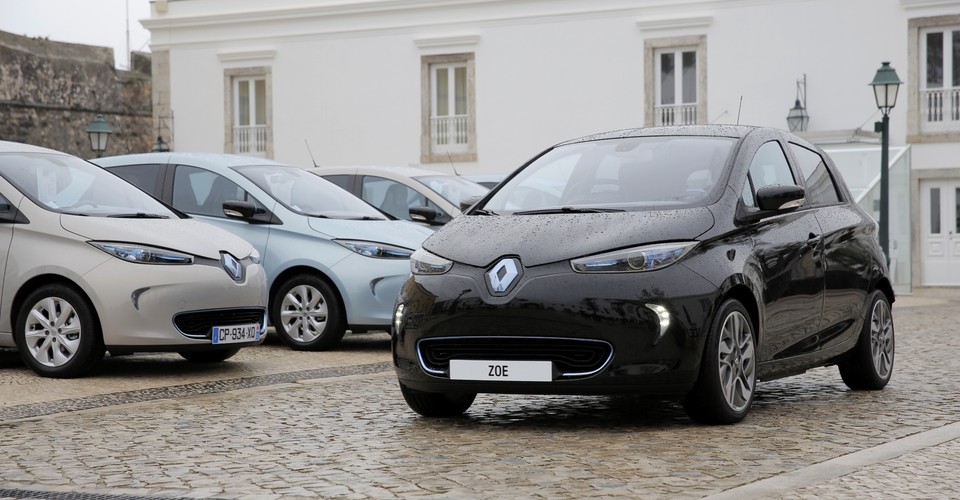
According to the letter of intent, the city of Utrecht could be the testing ground for the solar smart-charge project. Renault, Europe’s leader in electric vehicles, would supply a fleet of 150 Renault ZOE models through 2017 to the city. ElaadNL would handle management of infrastructures and the smart-charge standard, and LomboXnet would take charge of installing the network of unique public charging terminals powered by a 44 kW grid connection. Grid operator Stedin would be involved to balance supply and demand of the grid.
Phase one of the project would involve setting up 1,000 smart solar-charge stations, powered by 10,000 photovoltaic panels in the Utrecht region. Infrastructure installation would run side by side with development of a car-share service of electric cars, powered by renewable energy, for Utrecht residents. The Renault ZOE R.Access connectivity and 22 kW charging make it ideal for car-share and smart charging applications.
Phase two of the project would proceed with the partners developing a vehicle-to-grid ecosystem, with the network of solar chargers capable of both charging the electric cars and of feeding energy stored in the batteries of parked cars onto the grid to meet demand peaks. This could be the starting point for a new system storing renewably sourced energy.
Stepping up the energy transition
Through its pioneering work on EVs and their batteries, Renault contributes to the energy transition in the automotive industry by reducing the use of fossil fuels. Renault, through smart charging experiments, increases the proportion of renewable energy EVs use. One of the goals of the Smart Solar Charging Project developed by Renault, ElaadNL, LomboXnet and the Utrecht City Council is to make a substantial contribution to reducing the carbon footprint not only of the auto industry but of all sectors consuming electricity.
ElaadNL researches and tests the possibilities for smart charging on behalf of the dutch grid operators. With innovative techniques ElaadNL can charge electric cars in a smart way, exactly at the right moment. With Smart Charging, the abundance of electricity from the sun and wind is used to charge our cars. Live off the wind and drive on the sun!
In June 2015, LomboXnet introduced in Utrecht a world-wide scoop: a charging station making Smart Solar Charging accessible worldwide. This charging station can charge and discharge (vehicle-to-grid, V2G), establishing the foundation for a new local energy system based on local energy sources and local storage. The unique charging station is developed in a consortium of GE, Stedin, Vidyn, Last Mile Solutions, Utrecht Municipality and led by LomboXnet.
By implementing the vehicle-to-grid project on a regional scale, the region of Utrecht creates – together with partners like Renault - a large living lab for innovative smart grid solutions. This show case implements not only green power, but ensures also clean air zero emissions in the city and region of Utrecht. Thus, Utrecht makes way with Healthy Urban living. Not only to continuously improve its leading position as the most competitive region of the EU (according to Eurostat) but also to inspire other metropolitan regions as well.
Renault has been making cars since 1898. Today it is an international multi-brand group, selling more than 2.8 million vehicles in 125 countries in 2015, with 36 manufacturing sites, and employing more than 117,000 people. To meet the major technological challenges of the future and continue its strategy of profitable growth, the Group is harnessing its international development and the complementary fit of its three brands, Renault, Dacia and Renault Samsung Motors, together with electric vehicles, the Alliance with Nissan, and its partnerships with AVTOVAZ and Daimler.

Saturday, 20 February 2016

The BMW Group has long been at the forefront of technological development. And today is no different !

  • The new BMW 330e and BMW 225xe Plug-in-Hybrid Electric Vehicles.
  • BMW Light and Charge technology provides a cutting-edge charging solution.
  • £40 million to boost green cars across the UK.
  • Hydrogen fuel cell technology offering long range, short refuelling times and zero emissions.
  • DriveNow and Moovit team up for enhanced journey flexibility.
The BMW Group has long been at the forefront of technological development. From boosting engine performance through recent innovations such as the EfficientDynamics programme to its first foray into hydrogen powered vehicles nearly 40 years ago and the first electrically-powered 1602 Saloon in 1972, BMW has always pushed the envelope of progress. 
Now with government funded initiatives, increasing customer demand, not to mention rapid development in areas such as battery technology and other scientific knowledge and application, BMW is well placed to offer its broadest ever spectrum of transport possibilities to customers.
In 2016 BMW will have an electric powered vehicle and a range extender variant, Plug-in-Hybrid Electric Vehicles (PHEV) and highly efficient petrol and diesel internal combustion engines, while also continuing to develop hydrogen cars. 

Outside of pure product BMW is also working with key partners on how people use and fuel their cars and the growing link between varying transport options. BMW is now the Ultimate Mobility Provider while still retaining the crown as Ultimate Driving Machine too.
The new BMW 225xe and BMW 330e Plug-in-Hybrid Electric vehicles.
The new BMW X5 xDrive40e Plug-in Hybrid Electric Vehicle was the first such production car from the BMW core brand. Now for 2016. BMW will offer an additional four PHEVs to broaden the opportunity to drive ultra-low emission vehicles with all electric drive capability.
The four new PHEV models, indebted to the BMW i brand for technology, come in the shape of the BMW 225xe Active Tourer, BMW 330e Saloon, and later this year the BMW 740e and 740Le xDrive from the marque’s flagship model. This means BMW will soon offer innovative PHEV technology in everything from compact models through to luxury-class cars.
The soon to be launched BMW 225xe Active Tourer shares the BMW eDrive technology previously seen in the BMW X5 xDrive40e. This technology includes a number of cutting-edge plug-in hybrid components that makes a significant contribution to reducing fuel consumption and emissions. In addition to this, the BMW 225xe also builds on the experience gained from the BMW i8 as it features xDrive technology.
Producing a total output of 224hp (a combination of the three-cylinder combustion engine with BMW TwinPower Turbo technology, 136hp and an electric motor developing 88hp). The combustion engine sends its power to the front wheels via a six-speed Steptronic transmission and produces a peak torque of 220Nm but under heavy acceleration from rest and for overtaking manoeuvres, the power from the two drive systems combines to gives a peak torque of up to 385Nm. Its combined fuel consumption of 141.2mpg makes the 225xe one of the best in its class.
ModelPower (hp)Torque
(Nm)
0 – 62mph
(Seconds)
Top Speed
(mph)
Combined
(mpg)
CO2Emissions
(g/km)
OTR
Price from
BMW 225xe Active TourerElectric: 88
Engine: 136
Total: 224
Electric: 16
Engine: 220
Total: 385
(6.7)TBC141.246£32,545*
*HM Government Plug-in Car Grant, up to a maximum £2,500, will be applied to the on the road price. The receipt of this grant is subject to the eligibility of the vehicle for the HM Government Plug-in Car Grant scheme at the point of the vehicle’s first registration in the UK.
The electrified xDrive system allows the driver to call on electrified all-wheel drive up to speeds of 78mph. With the electric motor and combustion engine only driving one axle each, the electrically driven rear axle is added to the conventionally powered Active Tourer’s front-wheel drive, traction is increased and the BMW 225xe’s handling remains neutral for longer than the models with only front-wheel drive can claim. A further improvement in driving dynamics is the result.
As a PHEV, the BMW 2 Series Active Tourer with eDrive can charge its lithium-ion high-voltage battery (gross capacity: 7.6 kWh) by either brake energy recuperation during a journey or when plugged into a domestic power socket (in three hours 15 minutes from empty) or the optional BMW i Wallbox (two hours 20 minutes from empty).


In addition to the BMW Driving Experience Control switch – with its SPORT, COMFORT and ECO PRO settings, familiar from other BMW models, the eDrive button in the centre console offers three driving modes: AUTO eDRIVE, MAX eDRIVE and SAVE BATTERY.

AUTO eDRIVE is the basic setting activated when the car is started. It ensures the combustion engine and electric motor work together to optimum effect in all driving situations and gives a pure-electric top speed of 50mph. MAX eDRIVE allows the car to run on the electric drive system alone up to a speed of 78mph. With SAVE BATTERY, the charge of the high-voltage battery can be maintained or, if it’s already depleted, raised to over 50 per cent during a journey so that the available electric range can be used later in urban areas, for example.


BMW ConnectedDrive is also on hand to help lower fuel consumption. The ConnectedDrive package adds the proactive energy management function to the mix, which responds to the driving style and route profile to ensure the plug-in hybrid drive system is used as efficiently as possible.

The new BMW 225xe builds on the standard equipment of other 2 Series Active Tourer models, but with even greater specification and unique eDrive design elements. One example of this is eDrive Services which is offered as standard.  This allows the driver to access various features of the vehicle remotely and also integrates features of the BMW Online system into the vehicle.
As already seen on the BMW i3, this feature allows customers to search for Charging Stations in the navigation screen, access charge settings to allow off-peak charging and pre-conditioning and view efficiency statistics from with the central iDrive screen and the instrument cluster. It also allows customers to access features of the vehicle remotely via an app on compatible smartphones, tablet devices or computers. This builds on the BMW My Remote app which allows drivers to check the charging status of their vehicle, set charging times and search for charging stations whilst on foot. It will also allow them to pre-condition the vehicle by heating or cooling the interior whilst it is on charge. Other features also as standard include BMW Business Navigation, automatic tailgate and Dakota leather upholsteries.
The BMW 225xe arrives in BMW retailers from April 2016 and prices start at £32,545 OTR*.
The BMW 3 Series Saloon has already set standards for sports performance and fuel economy in its segment using conventional combustion engines. And so it provides the perfect environment for an inspiringly dynamic yet also exceptionally efficient plug-in hybrid model. Key ingredients here are its intelligent lightweight design, outstanding aerodynamics for this class of car and the extensive spread of BMW EfficientDynamics technology fitted as standard.
The new BMW 330e Saloon offers a combined fuel consumption of 148.7mpg and CO2 emissions of 44g/km when it joins the range in 2016. Its state-of-the-art plug-in hybrid technology combines an 184hp 2.0-litre petrol engine with a 65kW (88hp equivalent) electric motor. The combined output of 252hp and combined maximum torque of 420Nm give the BMW 330e Saloon a 0-62mph acceleration time of just 6.1 seconds and a top speed of 140mph.
The high-voltage battery, made up of lithium-ion cells, is located underneath the boot and boasts efficient refrigerant cooling including a highly integrated low-temperature circuit. The battery has a total capacity of 7.6 kWh, which enables an all-electric and therefore locally emission-free range of around 25 miles, perfect for city dwellers and commuters.
The integration of the high-voltage battery in the compartment under the boot gives the BMW 330e Saloon a level load compartment floor, while use of the optional through-loading system with 40:20:40 split rear seat backrests remains unrestricted. Together with its boot capacity of 370 litres, the new BMW 330e therefore offers all the everyday practicality of a conventionally powered BMW 3 Series Saloon.
Similarly to the BMW 225xe, with the 330e Saloon there is a choice of three driving modes: AUTOeDRIVE, MAX eDRIVE and SAVE BATTERY. With AUTO eDRIVE the top electric speed is limited to 50mph and ensures the combustion engine and electric motor work together to optimum effect in all driving situations. This mode is activated automatically as the default setting every time the car is started up. In MAX eDRIVE mode the BMW 330e Saloon uses the car’s electric power only, drawing on the electric drive system’s full output. A top speed of 75mph is possible. SAVE BATTERY mode only utilises the petrol combustion engine for driving and allows the battery’s energy stores to be deliberately maintained – or increased again if the charge level has dropped below 50 percent. This energy can then be used for pure-electric driving.
ModelPower
(hp)
Torque
(Nm)
0 – 62mph
(Seconds)
Top Speed
(mph)
Combined
(mpg)
CO2
Emissions
(g/km)
OTR
Price
BMW 330e SalooonElectric: 88
Engine: 184
Total: 252
Electric: 250
Engine: 290
Total: 420
6.1140148.744£33,935*
*HM Government Plug-in Car Grant, up to a maximum £2,500, will be applied to the on the road price. The receipt of this grant is subject to the eligibility of the vehicle for the HM Government Plug-in Car Grant scheme at the point of the vehicle’s first registration in the UK.
BMW ConnectedDrive works in tandem with the navigation system to allow even better use of the available electric energy. Here, the system assists the driver with proactive energy management and calculates an operating strategy which responds to the driving style and route profile at hand, ensuring the plug-in hybrid drive system is used as efficiently as possible.
The system adapts the drive strategy to the overall route profile. For example, the car uses all-electric power along urban streets and electric energy is also deployed on uphill sections so that the system’s full recuperation potential can be used on a subsequent downhill stretch. This equips the 330e perfectly to offer local emission-free driving, as well as covering longer stretches extremely efficiently and with less impact on the environment.
Like all BMW 3 Series models, the 330e has a comfortable and stylish interior featuring five seats, practical details and the ergonomic operating concept typical of BMW. Moreover, the BMW 330e Saloon comes as standard with auxiliary heating and cooling (output: 5kW). This function can be activated by a button on the 330e’s remote key or can be pre-programmed for a specific departure time using either the iDrive operating system or via the BMW Remote smartphone app. The details are shown on the Control Display.
Standard specification is extensive and includes sports multi-functional leather steering wheel with gearshift paddles, front and rear Park Distance Control and BMW eDrive services, allowing the driver to access various features of the vehicle remotely. In addition to this the 330e features LED daytime running lights and LED rear lights with the option to upgrade to LED headlights or BMW Icon Adaptive LED headlights. Business Navigation also comes as standard as does an extensive arrange of on-board technologies. BMW Online Services also come as standard, which allows the driver to purchase additional ConnectedDrive Service subscriptions such as Real Time Traffic Information (RTTI) and Online Entertainment via the on-board ConnectedDrive store.
The BMW 330e Saloon is eligible for congestion charge exemption and is eligible for the Government’s Plug in Car Grant (PiCG) representing a significant saving on the purchase price. It is on sale now priced from £33,935 OTR* with the first customers getting their cars in April 2016.
These latest BMW PHEVs come after BMW launched the ground breaking i3 and i3 with Range Extender vehicles in 2013 and the PHEV powered BMW i8 sports car. By the end of 2016 there will be a total of non-conventional internal combustion powered vehicles in the BMW model range.
BMW Light & Charge technology provides a cutting-edge charging solution.
Innovative technology announced by BMW Group will soon allow electric cars to be charged using state-of-the-art LED street lights. This offers a solution to those electric vehicle users, who do not have their own charging equipment at home but need to charge on-street. Light & Charge combines highly efficient LED street lighting with an integrated EV charging solution in a fully connected system. The luminaire enables energy consumption to be significantly reduced while the integrated charging station enables more people to rely on electric mobility. Furthermore, the system provides a connected platform for sensor-based applications such as lighting control based on occupancy or real-time parking space monitoring.


With its modular LED design, the Light & Charge street light is much more energy-efficient than conventional street lighting and provides more effective illumination. It can be installed anywhere and its modular design can to be tailored to different locations.


Up to four LED modules can be used to provide night-time lighting on main roads, while one or two modules are sufficient to provide lighting on side streets and in residential areas. As is already the case with vehicle headlights, LED technology allows more targeted light distribution with less unnecessary and ecologically undesirable “scatter”.

The Power Link, a pole-mounted EV Charging Station integrates with existing city infrastructure, making it highly cost-efficient without taking up additional sidewalk space. An integrated smart energy meter keeps track of energy taken from the grid, so that existing power cables can be used to run the charging unit.
The charging station is also part of BMW i ChargeNow network, which means its users also enjoy convenient cashless payment – a system already familiar to users of the large number of public charging stations already participating in this network. Via its built-in internet access (GSM), the Charging Station can be remotely managed, maintained and serviced. A high level of component standardization ensures full compatibility across all electric vehicle types and enables easy integration into existing infrastructure and charging station management systems.
Another component of the Light & Charge technology is the City Link system a low-cost wireless controller integrated into each luminaire of the LED street light. It works by using intelligent sensor-based light adjustment which can be communicated from one luminaire to the next. Therefore providing real-time data across the city such as data for smart city applications, including traffic flow analysis and real-time parking space monitoring.
Both the LED Street Light and the Charging Station are engineered for retrofit applications. With its clean and simple design, the system integrates into the environment of a historical city centre just as well as into the context of contemporary architecture. This forms the basis for numerous smart city applications including traffic flow analysis and real-time parking space monitoring.
Peter Schwarzenbauer, Member of the Board of Management of BMW AG, said: “The BMW i ChargeNow card already offers access to the world’s largest network of charging stations, and now it gives us great pleasure, in cooperation with our partners, to further expand this network with the help of the Light and Charge project. After all, a seamless charging infrastructure is essential if we want to see more electric vehicles on the road in our cities in the future.”


£40 million to boost green cars across the UK.
The government is to invest £40 million in projects to boost the use of electric vehicles (EVs) in the UK. London, Nottingham, Bristol and Milton Keynes will get the lion’s share of this investment after being announced the winners of a Go Ultra Low schemebased upon their proposals to encourage local residents to consider switching to a plug-in car. Elsewhere, the scheme is also providing £5 million of development funding for specific initiatives in Dundee, Oxford, York and north east regions to help them play their part in kick-starting a UK-wide clean motoring revolution.

Each main prize winning city was awarded a share of the fund for implementing cutting edge technology such as rapid-charging hubs and Light & Charge technology from BMW – a smart LED street lamp which doubles up as an electric vehicle charging point. Oxford, home to MINI and Plant Oxford where the majority of MINIs are produced will get £800,000 to trial different charging options.  
The government believes these innovations will not only support the UK’s thriving green vehicle sector but improve air quality in urban hotspots and will broadly help the government meet its emission cutting targets. Plug-in-car owners also benefit from local privileges from the scheme. Access to bus lanes in city centres, up to 25,000 free parking spaces, which could save commuters as much as £1,300 a year, a large growth in charging stations and discounted leasing schemes will all be on offer.
Transport for London aims to have 70,000 ULEVs a year sold by 2020 and almost quarter of a million by 2025.
Patrick McLoughlin, Transport Secretary, said: “The UK is a world leader in the uptake of low emission vehicles and our long-term economic plan is investing £600 million by 2020 to improve air quality, create jobs and achieve our goal of every new car and van in the UK being ultra-low emission by 2040.”
Hydrogen fuel cell technology offering long range, short refueling times and zero emissions.
BMW Group has focused on the use of hydrogen as an energy source for nearly 40 years and has experienced a constant stream of significant advances in terms of efficiency, performance and capabilities as parts of its Efficient Dynamics strategy.

Now by combining fuel cell technology with BMW eDrive, the marque has successfully created several hydrogen Fuel Cell Electric Vehicle (FCEV) prototypes including the BMW 5 Series Gran Turismo. With a long-distance range of more than 300 miles available, the FCEV provides all-electric, locally emission-free driving with fast and convenient refuelling in under five minutes.


The gaseous hydrogen contained in the storage tank is converted into electric power and water vapour. The vehicle’s high-voltage battery serves as an energy storage unit and can therefore be considerably smaller than in battery-electric concepts. Hydrogen storage comes in the form of a tunnel tank between the front and rear axle; industry standard vessel technology and cryogenic pressure vessel technology patented by the BMW Group for storing gaseous hydrogen at low temperature.


BMW will continue to develop these hydrogen-powered vehicles with a view to an application that might make series production in the future.

DriveNow and Moovit team up for enhanced journey flexibility
The car sharing service DriveNow is to expand its visibility and enhance ease of use and transportation choice with the integration of the app, Moovit. The news comes, partly, after a global survey conducted by Moovit in 2015 showed London users commanded on-demand mobility services five or more times per week, despite the fact that 29 per cent of users had access to a household car.
Now with the integration of DriveNow into Moovit users will have one-touch access to all available forms of transportation right within the app. Moovit users will be able to view the entire fleet of available DriveNow cars in their area and rent one at exactly the moment they need it. Moovit will be launching the DriveNow integration first in London, with availability in Berlin, Hamburg, Munich and Stockholm to follow.


Ulrich Quay, Managing Director of BMW I Ventures, said: “We are very excited about the integration of DriveNow and Moovit, both brands are aiming to develop smart urban mobility solutions for our cities and we are happy to continue to work together towards this common goal.”