Purpose

I will try my best to provide detailed info on various cars and what is like to live with them, I have already produced a few for Jaguar-car-forums, I will do my best to be unbiased, but it will be hard for some cars. I will re-produce press releases and copy from other motoring news.
Showing posts with label 1992. Show all posts

Sunday, 16 July 2017

The 1992 Olympics brought us various SEAT cars, as the brand and Olympics are from Barcelona

  • SEAT committed itself to Barcelona 92 with three special models, 2,000 cars for the Olympic family and training for the 30,000 volunteers
  • The Ibiza was selected as the official car of the Olympic Games 
  • Two versions of the Toledo were made: a Podium edition for the Spanish medallists and an electric variant, which led the torch relay and the Marathon event
On 25 July 1992 hundreds of millions of people had their eyes fixed on Barcelona. The Olympic Games had just begun and more than 12,000 athletes were competing. The city opened its arms to the huge Olympic family with 30,000 volunteers trained by SEAT. 
It was a formidable logistics challenge that involved shuttling hundreds of athletes, organisers and journalists every day in a fleet of 2,000 company cars. 
Among these, the brand’s most iconic model, the SEAT Ibiza, was selected as the official car of the Games. Below are a few notable facts about those models with the Olympic spirit.
-The Olympic Ibiza: A special series of the white Ibiza, customised with the Olympic rings and the Barcelona’92 logo, became the official car of the Games. The Olympic Ibiza features in the rich history of the SEAT Ibiza, which is currently the brand’s icon and now in its fifth generation, with more than 5.4 million units sold.
-A Toledo fit for a winner: Only 25 units of this special version of the Toledo were made, and the brand gave one to each of the 23 Spanish athletes who won a medal. It featured navy blue paint and exclusive detailing, such as a portable telephone in the armrest and wood inserts in the steering wheel.
-Leading the way in the torch relay: The organisers of the Games asked SEAT for a specific model to accompany the athletes during the torch relay and the Marathon event. The result was an electric Toledo that featured a plug in charger concealed behind the front grille and a set of batteries that weighed 500 kilos which gave it a range of 65 kilometres.

-2,000 cars for the needs of a large family: 400 volunteers were responsible for driving a fleet of 2,000 Ibiza and Toledo cars around the Olympic Village. The fleet was used to shuttle athletes, delegates and accredited journalists to and from the different sports facilities during the Games.

-Collector’s items: the SEAT historic collection contains a perfectly preserved model of the Olympic Ibiza, an electric Toledo and two units of the Toledo Podium, all assets that represent the brand’s living history.

Monday, 14 September 2015

After surviving the Sinkhole, the 1,000,000th Corvette underwent repair and refurbishment, now it is complete.

Sinkhole-damaged milestone returns to National Corvette Museum

After more than four months and 1,200 man-hours of painstaking craftsmanship, restoration of the milestone 1 millionth Corvette – a white 1992 convertible – is complete.


It was unveiled today at the National Corvette Museum, where it returns as part of the permanent exhibit. The car was damaged on Feb. 12, 2014, when it and seven other rare Corvettes tumbled into a sinkhole that opened beneath the museum’s Skydome area.

Chevrolet pledged to restore it.

“We felt it was important to restore this extremely significant car in Corvette's long, storied history,” said Mark Reuss, General Motors executive vice president, Global Product Development, Purchasing, and Supply Chain. 

"When we disassembled it, we found that each employee involved in building it had signed a part of the car, which was fantastic and moving to see. It brought the history to life, and reinforced the importance of the project."


After recovery from the sinkhole, the 1 millionth Corvette was moved from the museum to the Design Center on GM’s Technical Center campus in Warren, Mich., for restoration. Approximately 30 craftspeople and technicians from GM Design’s Mechanical Assembly group, along with GM Service Operations, took on the project.  Mechanical Assembly and the Fabrication Shops at GM Design build concept vehicles and maintain GM’s historic vehicle collection. 

“As the one and only 1 millionth Corvette, its preservation was important to us as the designers of the vehicle – and as Corvette enthusiasts,” said Ed Welburn, vice president of GM Global Design. 

“The damage was significant in many ways; however we have one of the most highly skilled specialty shops and team of people in the industry, so they were fully prepared to take on the challenge.”

Despite extensive damage, the team, represented by UAW locals 160 and 1869, vowed to preserve and repair as many original components as possible – a decision that involved posterity as much as history. That’s because under the skin, the 1 millionth Corvette carried all those signatures from the Bowling Green Assembly workers who built the car.

Only two signed components couldn’t be saved, so the team had the autographs scanned, reproduced as transfers and placed on the replacement parts.

“We went to great lengths to preserve every autograph,” said David Bolognino, director of GM Global Design Fabrication Operations. “In the end, we saved every one of them, which was an unexpected and important element to the restoration.”

One component with a single signature from Bowling Green Assembly employee Angela Lamb was too damaged to save or even accurately scan for her autograph. Chevrolet worked with the National Corvette Museum to secure a new signature from Lamb on the replacement part, so the 1-millionth Corvette will be historically accurate down to the last signature.

Among the parts replaced were the hood, front fascia and the lower panels between the front wheels and doors, as well as a number of ancillary supporting components under the hood. 

The replacements came from a vehicle of the same vintage and color, ensuring authenticity of the parts and materials involved with the restoration.

A few other components, such as the rear fascia and front exhaust system, would have probably been replaced in almost any other restoration project, but the team repaired them because they were also covered in signatures.

Additional highlights from the restoration:
  • The front sub-frame was damaged in the fall into the sinkhole and required straightening
  • The wheels were damaged, but reconditioned, with the original Goodyear Eagle GS-C tires
  • Rather than replace the scuffed and scratched pad on the instrument panel, its soft cover was carefully removed and replaced to preserve the employee-signed structure beneath it
  • The red leather seats, featuring one-off “1,000,000th Corvette” embroidery on the headrests were damaged but deemed irreplaceable, so they were restored, including a few replacement patches of carefully matched hide
  • The 5.7L LT1 engine, transmission and other drivetrain components were inspected and found to be damage-free
Surprisingly, the one component the team didn’t have to replace was the crushed windshield header. When the car first rolled into the shop, an overhead crane was used to raise it enough to make the car drivable, but the frame pulled up surprisingly close to the original position, encouraging the team to save it.

“The header restoration was a wonderful surprise for what everyone assumed would be the toughest aspect of the restoration,” said Bolognino. “With access to the original specifications, we got it spot-on – and even the new windshield glass dropped in perfectly.”

The final touch was replacing the unique “1,000,000th” windshield banner it wore when it rolled off the assembly line 23 years ago. The computer graphic file used for the original was still available, allowing creation of an identical banner.
The 1 millionth Corvette is the second sinkhole-damaged Corvette that Chevrolet has restored. 

The first, a 2009 Corvette ZR1 prototype known as the Blue Devil, was only lightly damaged and was returned to its original condition last fall. The National Corvette Museum will oversee the restoration of a third car, a 1962 Corvette.

The other five Corvettes swallowed by the sinkhole will remain in their as-recovered state to preserve the historical significance of the cars. They will become part of a future sinkhole-themed display at the museum.

FAST FACT: The 1 Millionth Corvette rolled off the assembly line as a convertible with a white exterior and a red interior – just like the first Corvette produced in 1953.

Monday, 10 August 2015

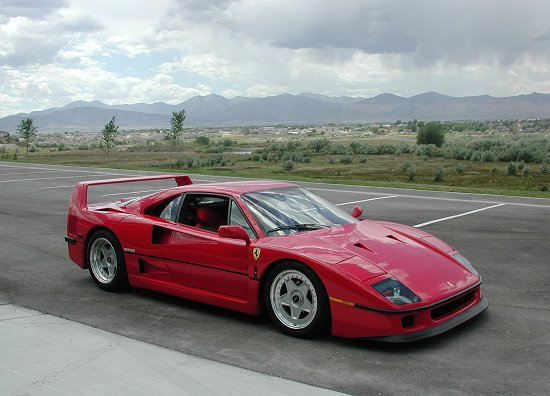
Want to see what price this Ferrari reached with a record price at the recent Coys Auction, then read on......

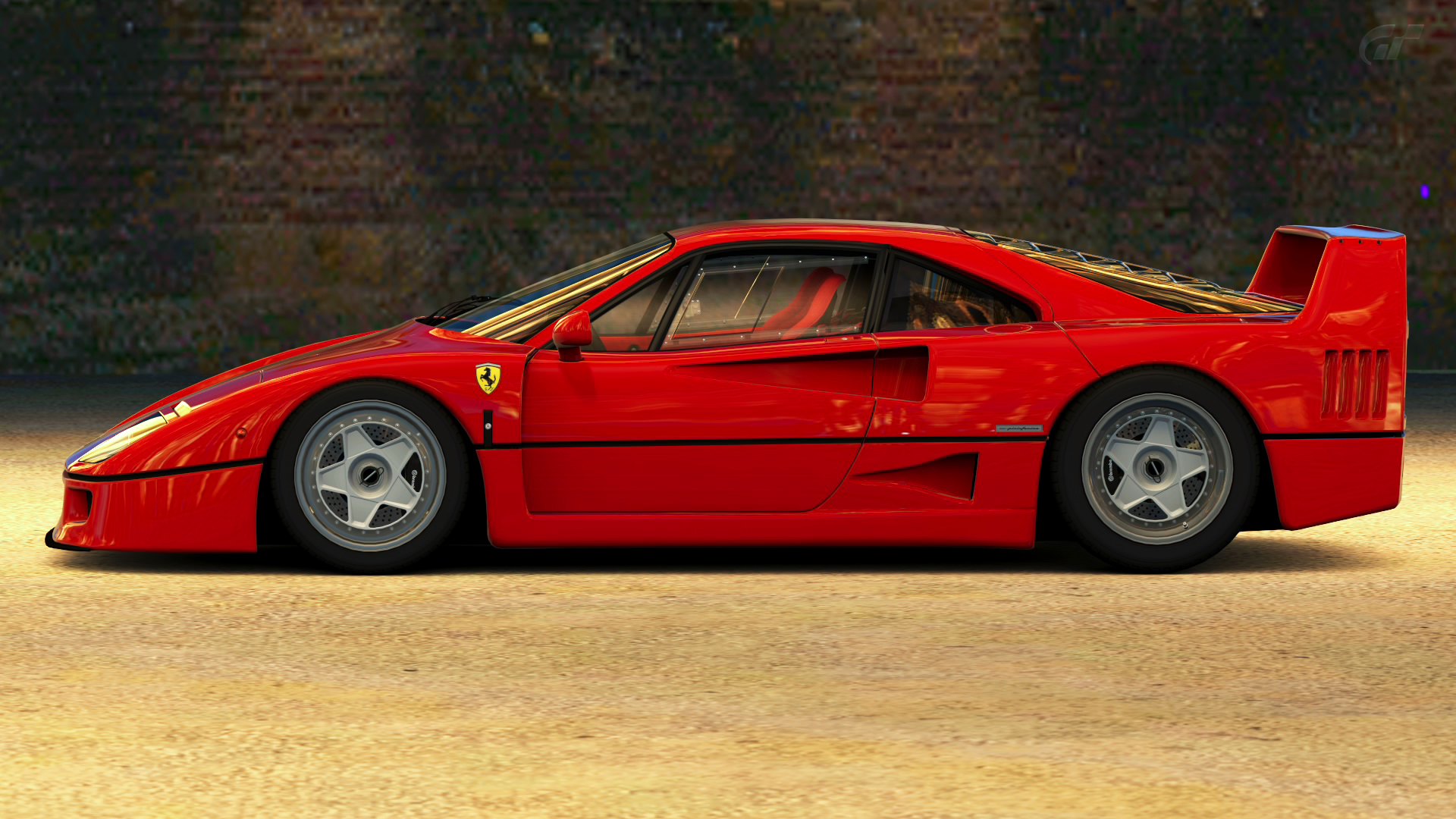
A 1992 Ferrari F40 was sold on Saturday night (8th August) for €1,12 million at Coys auction at the 43rd AVD Oldtimer Grand Prix in Nurburgring, Germany.
Other notable results include a 1937 BMW 328 Roadster, which was sold for €562,000, a 2000 Ford GT for €227,000, a 2003 Ferrari 360 for €182,000 and another record price of €145,000 for a 1971 Lamborghini Espada SII.

Chris Routledge, Managing Partner at Coys, said: “The record Ferrari F40 is a remarkable achievement which we are really happy with, proving once again that Coys is one of the leading auction houses in Germany and Europe. This is one of the last privately owned, one owner from new F40s in the world and we were entrusted with its sale by the Italian family who bought it.”
He added: “For such an important car to come to the market, it created interest from around the world and was in the end sold to a delighted German buyer, followed by a round of applause in the auction room.”
Coys auction activity continues at the world’s most exclusive pre-1974 Porsche sale at the prestigious Porsche Classics at the Castle at the Hedingham Castle in Essex, United Kingdom, on September 6th. This will be followed by their ground-breaking international auction at the Frankfurt Motorshow on September 26th.

Saturday, 31 January 2015

Uber rare, Unregistered, 31 miles only, & for sale, that will be the 1992 Lancia Delta Intergrale

One of the most iconic cars of the last 30 years, a 1992 Lancia Delta Integrale with just 31 miles from new, is to be auctioned by Silverstone Auctions at its Race Retro Sale in Warwickshire on 21st and 22nd February.

Estimated at between £90,000 - £110,000, this ‘brand new’ car is being offered at auction for the first time ever. Amazingly the car has only ever been driven on the road once on its journey from the supplying dealer to the current owner, where it has remained in perfect storage conditions for the last 22 years.


“As a limited edition special, produced to celebrate the Integrale’s success in the World Rally Championship, these cars are incredibly rare indeed,” comments Guy Lees-Milne, General Manager, Silverstone Auctions. “So, to find such a perfect example with just a few miles on the clock really is an exceptional feat. What’s more, there are few surroundings more appropriate than Race Retro to offer the car for sale.”

Finished in desirable white with the iconic Martini drinks company livery, the car is one of a limited run of just 400 that were produced to celebrate the Integrale’s fifth consecutive World Rally manufacturers’ championship for Lancia.

In order to improve the car’s handling, the ‘Evoluzione’ homologation specials featured a wider track at both the front and rear than earlier Deltas. In order to fit the track into the bodywork, the wide wheel arches were extended even further. 

To compensate for a slight increase in weight and larger frontal area, the 16V turbo engine was remapped to deliver an impressive 210bhp which meant the car could travel 5 percent quicker on both asphalt and gravel rally stages.

Production number 124, this vehicle is currently unregistered and comes complete with its original service book, manual, sales invoice and tool kit.

Friday, 14 February 2014

New rear engined Renault Twingo, the re-birth of an iconic car.

Two decades after it revolutionised the small car segment with the first-generation Twingo, Renault has taken a fresh look at its celebrated city car. The brand’s engineers and designers started from a blank sheet of paper and took their inspiration from the legacy left by the original Twingo and the Renault 5. The result is a new, innovative and agile car that is great fun to drive.


Today sees Renault take the wraps off New Twingo, the appeal of which includes a choice of four striking colours and a truly assertive personality.


A project in association with Daimler

In 2008, Renault’s engineers and designers set out to create the next-generation Twingo with the aim of rekindling the innovative spirit that was such a hallmark of the original Twingo released in 1992. It was a challenging mission but they set their sights high, in keeping with the philosophy behind the iconic model which lost no time in becoming a symbol of Renault’s creativity.


The aim was to create an even roomier and more agile city car, despite its smaller footprint, and this is how the idea of switching to a rear-mounted engine took form, in spite of the higher development costs this entailed.


Renault’s thoughts found an echo in those of Daimler which, at the same time, was exploring ideas for the next-generation two- and four-seat versions of the Smart. After early talks, a strategic cooperation agreement was concluded by the two firms in 2010, marking the official green light for the joint-development of New Twingo and the next versions of the two- and four-seat Smart.


A rear-mounted engine for agile handling and extra cabin space

Positioning the engine at the rear is a significant plus for a small city car since it frees up the front end and considerably improves the turning circle. Indeed, New Twingo is surprisingly manoeuvrable in built-up areas and parking calls for only a few turns of the steering wheel.


Combined with the use of a smaller block and the positioning of the wheels at the car’s extreme corners, the rear-mounted engine also frees up extra cabin space, while New Twingo also boasts the sort of wheelbase and roomy interior more generally associated with models in the next segment up.


Thanks to its pleasantly agile handling, spacious cabin and small front end, New Twingo delivers all the fundamentals that made the initial Twingo such a hit when it was unveiled at the 1992 Paris Motor Show.


A colourful personality

Mirroring the Twin’Z and Twin’Run concept cars that Renault presented in 2013, New Twingo oozes personality.


Like its forebear, New Twingo comes in a choice of four vibrant ‘pop’ colours (light blue, white, yellow and red), an unmistakable sign that the Twingo spirit is well and truly back!


Other cues are heavily inspired by the Renault 5, including the rake of New Twingo’s rear screen and its prominent shoulders which are redolent of the rear-engined Renault 5 Turbo that proved so popular with the public in its day.


The front end features the brand’s new trademark styling, including a prominent Renault logo set to a black background. New Twingo’s expressive gaze is reinforced by its big head lights, which are topped by the direction indicators, as well as by its LED daytime running lights which combine a hi-tech feel with an echo of the model’s predecessors. New Twingo’s lines give it a cheery yet robust air, while the small car’s sprightly personality is further underpinned by its readily recognisable lighting signature.


The originality of New Twingo’s wide glass hatch makes an important contribution to the modernity its rear-end styling, while the rear lights are a natural prolongation of the tailgate.


Meanwhile, the new city car’s five-door architecture – a first in the history of the model – makes it even more versatile than ever. Indeed, New Twingo carries over some of the keys that are behind the success of its sibling, New Clio, including a sleek profile, concealed rear door handles and plenty of scope for personalisation thanks to the range of body colours and customisable exterior trim features like the door mirrors, side protective mouldings and decals. The four body colours and customisation options mean that New Twingo can take on a host of stances, from urban to sporty, feminine and masculine.


“New Renault Twingo was inspired not only by the original Twingo but also by the Renault 5. It is a modern take on the city car genre with the accent on innovation in terms of its lines and architecture. New Twingo is a fun, playful and vibrant city car.” Laurens van den Acker, Head of Industrial Design, Renault


New Twingo… the ‘inside’ story
On March 4, it will be the turn of New Twingo’s interior to be revealed at the 2014 Geneva Motor Show. Just as they did when penning New Twingo’s exterior lines, the design team drew inspiration from the model’s héritage to propose a colourful and cheerful cabin which has been ingeniously thought through to deliver user-friendly, everyday versatility.