Purpose

I will try my best to provide detailed info on various cars and what is like to live with them, I have already produced a few for Jaguar-car-forums, I will do my best to be unbiased, but it will be hard for some cars. I will re-produce press releases and copy from other motoring news.
Showing posts with label Four Months. Show all posts

Monday, 11 July 2016

The first four months of the year see's the European Small car segment have lots of up's and down's.

European minicar sales – especially at Fiat Chrysler Automobiles -- are getting a lift from the continuing economic rebound in Italy, which is the top market for the region's smallest, most affordable vehicles. Through April, Italy’s minicar sales were up 20 percent to 129,770 vehicles, giving the models a 25 percent share of the market, according to figures from JATO Dynamics.
The car that has benefited most is the Fiat Panda, which has overtaken the Fiat 500 to become the segment's best-seller with a volume of 74,018 units across Europe, an increase of 21 percent.

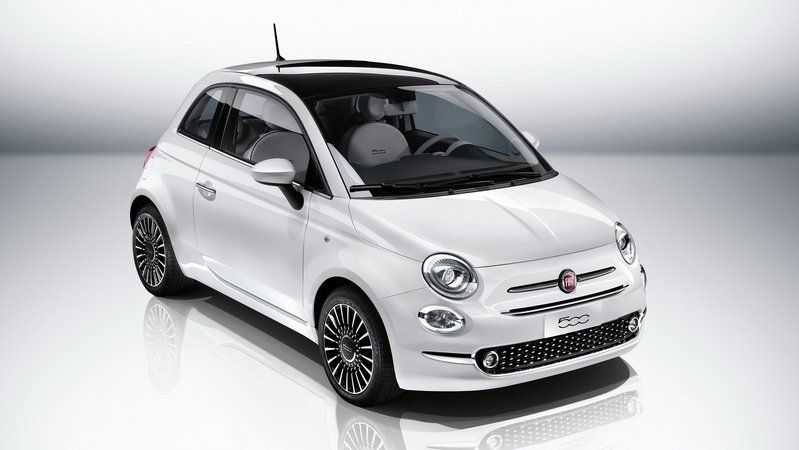
Rising demand in Italy, as well as growth in Spain and Portugal, have boosted Europe's overall minicar segment by 3.8 percent after four months, but the sector (also called the A-segment) will level off at about 1.2 million annually from 2016 to 2020, analysts at IHS Automotive predict.
IHS believes that demand has stabilized following significant sales increases and decreases between 2009 and 2014. Minicar volume rose to more than 1.6 million in 2009, which is when small, affordable cars became even cheaper to buy because a number of European governments started offering trade-in incentives to support automakers during the height of the global financial downturn. The surge was followed by a decline to about 1.13 million minicar sales in 2013 and 2014 because so many purchases were pulled forward by the incentive offers.
Highs and lows
The recent highs and lows, the predicted flatness of the segment as well as the difficulty most automakers have had turning a profit from minicars has convinced manufacturers such as Ford Motor and Nissan to leave the sector.
Ford will end sales of the Ka after a two-decade run and offer a pair of vehicles in the subcompact segment: the Ka+ and the Fiesta. The Ka+, which is just a few millimeters shorter than the Fiesta, will be Ford’s entry model for Europe. The current Ka shared a platform and factory with the Fiat 500, but it never came close to matching the success of its sibling model. "Either you partner with someone in this segment or you’re out," said a Ford official, who didn’t want to be named.
The Ka+, which is 3929mm long compared with 3620mm for the current Ka, goes on sale in the autumn. Ford says the arrival of the Ka+ allows it to reposition the next-generation Fiesta more upmarket when it debuts early next year. Ford said it will drop the Fiesta's Ambiente base trim line to leave the subcompact segment's entry price level to the Ka+.
Disappointing sales of the Ka, which had a volume of just 12,975 units through April compared with 68,068 for the Fiat 500, was "partly our fault," said a Ford source who declined to be named. "Fiat really turned the 500 into its own brand and we could have done more with the Ka, too. But when you're completely focused on returning to profitability [which Ford of Europe did in 2015 after three years of losses], investing more time and effort into a segment that on good days barely makes money is just not a priority," the source said.
Nissan, meanwhile, is reluctant to rejoin the segment after dropping the India-built Pixo in 2013. "If you look at the volume and expected profit from those vehicles, I'm not convinced there's a significant place for an A-platform car in Europe," Trevor Mann, Nissan's chief performance officer, told Automotive News Europe. Nissan and alliance partner Renault have also said they don't plan to re-engineer the successful India-built Kwid for Europe.
Troubled Twingo?
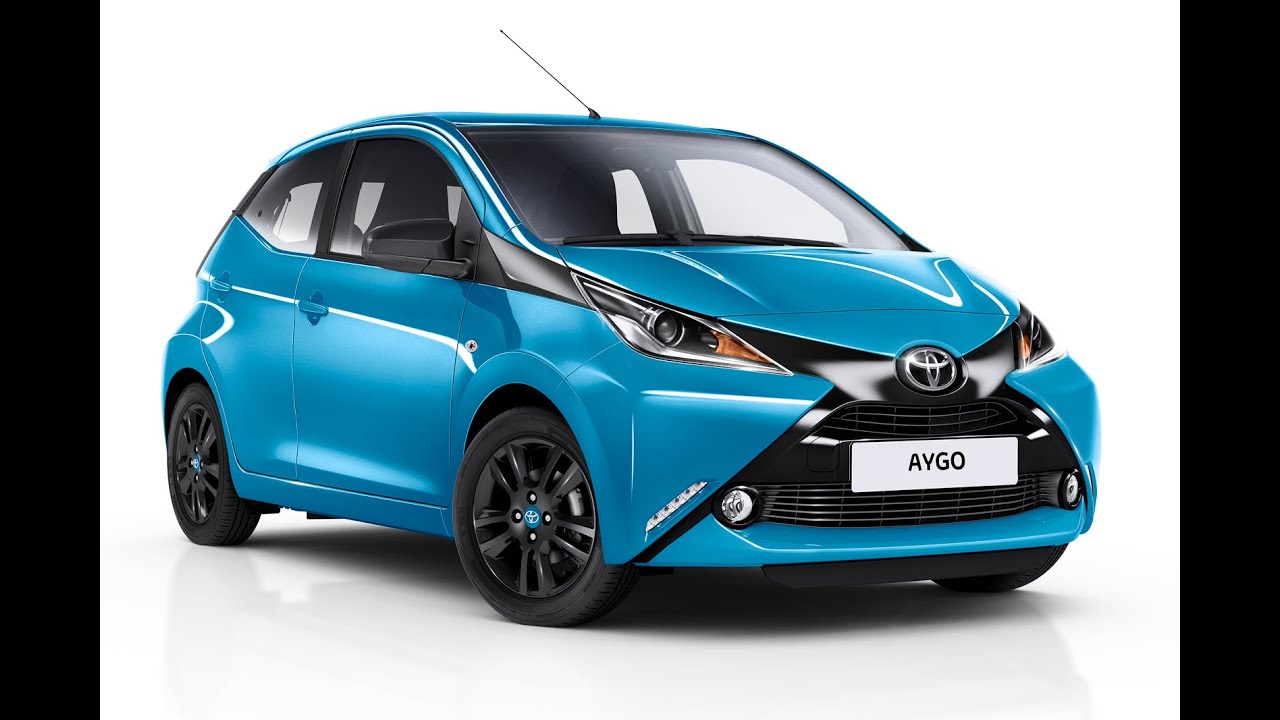
Renault is struggling in the minicar segment with the rear-wheel-drive Twingo as sales of the car fell by 20 percent to 29,081 in the first four months, according to JATO's figures. The decline dropped the Twingo to fifth place behind the similarly aged Toyota Aygo. The dip came despite the popularity of minicars in Renault's home market of France, which ranks fourth in Europe behind Italy, the UK and Germany. French minicar sales rose 2 percent to 54,415 in the period.
Renault's expectations for the car haven’t been met, said IHS analyst Ian Fletcher. IHS reports that last year Renault cut a shift at its Twingo factory in Novo Mesto, Slovenia, where the car is built alongside its platform mate, the Smart ForFour. Fletcher believes some customer are put off by the Twingo's rear-engine design, which reduces trunk space. Another problem is that the Twingo is facing competition from its larger sibling, the Renault Clio. "Some deals Renault has at the moment don't put the Clio that far away from the Twingo [in price]," Fletcher said.
Sales of the Aygo, meanwhile, are holding up because Toyota is meeting strong demand for personalization options. "Customization in that segment is very, very popular," Toyota Europe CEO Johan van Zyl said on the sidelines of the Automotive News Europe Congress in Munich last month. The Aygo's wide choice of colors and features is attracting a younger crowd, van Zyl said.
Other automakers are adapting their models to try to win new buyers. Renault, for example, will launch a GT version of the Twingo later this year that boosts power from the car's 1.2-liter turbocharged gasoline engine to 110 hp compared with 90 hp for the base Twingo.
Volkswagen showed a face-lifted version of the Up at this year's Geneva auto show featuring a 1.0-liter turbocharged TSI gasoline engine for the first time, as well as a dashboard dock for a smartphone to create an inexpensive infotainment system via a VW app.
Meanwhile, Hyundai will use the Paris auto show in September to unveil a face-lifted version of its i10 minicar that has been redesigned to attract younger buyers, a company source said.
As the segment's sales level off minicars are expected to have a market share of about 9 percent within Europe, making it the region's third-largest segment after subcompacts and compacts.
That number won't be declining any time soon, JATO Dynamics global analyst Felipe Munoz said: "The segment will always appeal to a variety consumers: first-time car buyers, single people, or simply because of parking reasons," he said. "And it doesn't face direct competition from the SUV segment, at least not for now."
Nick Gibbs
Automotive News Europe

Monday, 14 September 2015

After surviving the Sinkhole, the 1,000,000th Corvette underwent repair and refurbishment, now it is complete.

Sinkhole-damaged milestone returns to National Corvette Museum

After more than four months and 1,200 man-hours of painstaking craftsmanship, restoration of the milestone 1 millionth Corvette – a white 1992 convertible – is complete.


It was unveiled today at the National Corvette Museum, where it returns as part of the permanent exhibit. The car was damaged on Feb. 12, 2014, when it and seven other rare Corvettes tumbled into a sinkhole that opened beneath the museum’s Skydome area.

Chevrolet pledged to restore it.

“We felt it was important to restore this extremely significant car in Corvette's long, storied history,” said Mark Reuss, General Motors executive vice president, Global Product Development, Purchasing, and Supply Chain. 

"When we disassembled it, we found that each employee involved in building it had signed a part of the car, which was fantastic and moving to see. It brought the history to life, and reinforced the importance of the project."


After recovery from the sinkhole, the 1 millionth Corvette was moved from the museum to the Design Center on GM’s Technical Center campus in Warren, Mich., for restoration. Approximately 30 craftspeople and technicians from GM Design’s Mechanical Assembly group, along with GM Service Operations, took on the project.  Mechanical Assembly and the Fabrication Shops at GM Design build concept vehicles and maintain GM’s historic vehicle collection. 

“As the one and only 1 millionth Corvette, its preservation was important to us as the designers of the vehicle – and as Corvette enthusiasts,” said Ed Welburn, vice president of GM Global Design. 

“The damage was significant in many ways; however we have one of the most highly skilled specialty shops and team of people in the industry, so they were fully prepared to take on the challenge.”

Despite extensive damage, the team, represented by UAW locals 160 and 1869, vowed to preserve and repair as many original components as possible – a decision that involved posterity as much as history. That’s because under the skin, the 1 millionth Corvette carried all those signatures from the Bowling Green Assembly workers who built the car.

Only two signed components couldn’t be saved, so the team had the autographs scanned, reproduced as transfers and placed on the replacement parts.

“We went to great lengths to preserve every autograph,” said David Bolognino, director of GM Global Design Fabrication Operations. “In the end, we saved every one of them, which was an unexpected and important element to the restoration.”

One component with a single signature from Bowling Green Assembly employee Angela Lamb was too damaged to save or even accurately scan for her autograph. Chevrolet worked with the National Corvette Museum to secure a new signature from Lamb on the replacement part, so the 1-millionth Corvette will be historically accurate down to the last signature.

Among the parts replaced were the hood, front fascia and the lower panels between the front wheels and doors, as well as a number of ancillary supporting components under the hood. 

The replacements came from a vehicle of the same vintage and color, ensuring authenticity of the parts and materials involved with the restoration.

A few other components, such as the rear fascia and front exhaust system, would have probably been replaced in almost any other restoration project, but the team repaired them because they were also covered in signatures.

Additional highlights from the restoration:
  • The front sub-frame was damaged in the fall into the sinkhole and required straightening
  • The wheels were damaged, but reconditioned, with the original Goodyear Eagle GS-C tires
  • Rather than replace the scuffed and scratched pad on the instrument panel, its soft cover was carefully removed and replaced to preserve the employee-signed structure beneath it
  • The red leather seats, featuring one-off “1,000,000th Corvette” embroidery on the headrests were damaged but deemed irreplaceable, so they were restored, including a few replacement patches of carefully matched hide
  • The 5.7L LT1 engine, transmission and other drivetrain components were inspected and found to be damage-free
Surprisingly, the one component the team didn’t have to replace was the crushed windshield header. When the car first rolled into the shop, an overhead crane was used to raise it enough to make the car drivable, but the frame pulled up surprisingly close to the original position, encouraging the team to save it.

“The header restoration was a wonderful surprise for what everyone assumed would be the toughest aspect of the restoration,” said Bolognino. “With access to the original specifications, we got it spot-on – and even the new windshield glass dropped in perfectly.”

The final touch was replacing the unique “1,000,000th” windshield banner it wore when it rolled off the assembly line 23 years ago. The computer graphic file used for the original was still available, allowing creation of an identical banner.
The 1 millionth Corvette is the second sinkhole-damaged Corvette that Chevrolet has restored. 

The first, a 2009 Corvette ZR1 prototype known as the Blue Devil, was only lightly damaged and was returned to its original condition last fall. The National Corvette Museum will oversee the restoration of a third car, a 1962 Corvette.

The other five Corvettes swallowed by the sinkhole will remain in their as-recovered state to preserve the historical significance of the cars. They will become part of a future sinkhole-themed display at the museum.

FAST FACT: The 1 Millionth Corvette rolled off the assembly line as a convertible with a white exterior and a red interior – just like the first Corvette produced in 1953.

Monday, 18 May 2015

Volkswagen Group announces sales for the first four months of the year, slightly up on 2014.

  • Slight increase of 1.0 per cent in deliveries for first four months
  • 853,200 vehicles handed over in April
  • Group Board Member for Sales Christian Klingler: “Mixed market trends. Continued focus on qualitative growth.”
The Volkswagen Group delivered 3.34 (January-April 2014: 3.31; +1.0 per cent) million vehicles from January to April this year. The Company handed over 853,200 (April 2014: 864,300; -1.3 per cent) vehicles to customers in the month of April. “The start to the second quarter highlights the mixed market trends in the different regions. 
While we are experiencing a tailwind in Western Europe and North America and have been able to grow Group deliveries – in some cases quite significantly – in those regions, the situation in South America and in Eastern Europe – where the trend is primarily driven by market developments in Russia – remains challenging,” Group Board Member for Sales Christian Klingler said in Wolfsburg on Friday. “We continue to focus on qualitative growth. 

With its twelve brands, the Volkswagen Group is excellently positioned to achieve that,” Klingler continued.
Group brands delivered a total of 1.38 (1.33; +3.8 per cent) million vehicles on the overall European market in the first four months, of which 747,000 (702,600; +6.3 per cent) were handed over in Western Europe (excluding Germany). 
432,200 (400,100; +8.0 per cent) customers chose a new vehicle from the Volkswagen Group on the home market of Germany, while the Company delivered 199,900 (226,100; -11.6 per cent) units in Central and Eastern Europe. 
Deliveries in Russia continued to decline, with 57,600 (94,200; -38.8 per cent) vehicles handed over to customers there.
The Group delivered 284,300 (272,400; +4.3 per cent) models in the North America region from January to April, of which 184,000 (184,300; -0.2 per cent) were handed over to customers in the United States. The Volkswagen Group delivered 200,400 (252,700; -20.7 per cent) units in the South America region during the same period, of which 143,800 (196,200; -26.7 per cent) were handed over to customers in Brazil. 1.33 (1.32; +0.6 per cent) million vehicles were delivered in the Asia-Pacific region in the period to April, of which 1.19 (1.19; +0.2 per cent) million units were delivered in China, the Group’s largest single market.
Outline of developments at Group brands
The Volkswagen Passenger Cars brand delivered 1.98 (2.02; -2.2 per cent) million vehicles to customers worldwide in the first four months.
The premium brand Audi handed over 591,100 (561,900) vehicles worldwide in the period to April, an increase of 5.2 per cent.
The sports car manufacturer Porsche delivered a total of 72,600 (55,000) vehicles from January to April, representing an increase of 32.0 per cent compared with the previous year.
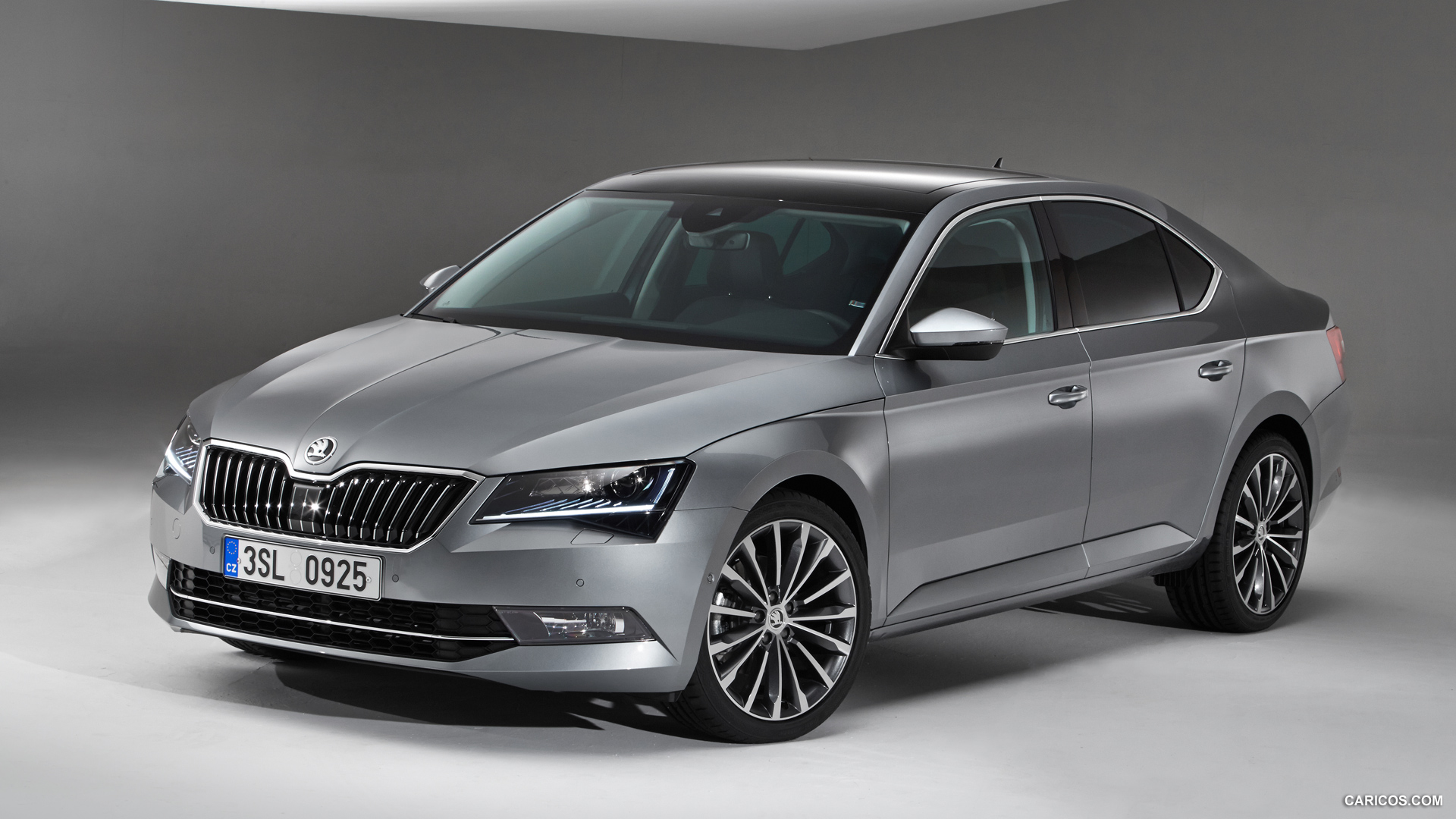
The Czech brand Å KODA delivered 357,200 (336,800) vehicles in the period to April, a rise of 6.1 per cent.
SEAT handed over 138,400 (127,400; +8.6 per cent) vehicles to customers worldwide in the first four months.
Volkswagen Commercial Vehicles delivered 147,500 (140,500; +4.9 per cent) vehicles during the same period.
The MAN brand delivered 30,300 (36.600; -17.3 per cent) units from January to April.
The Swedish brand Scania delivered 24,100 (24,700; -2.3 per cent) heavy trucks and buses to customers in the period to April.