|
Grand Prix Preview |
|
Hungary 2015 |
|

|
Facts &
Stats: Hungaroring |
|
|
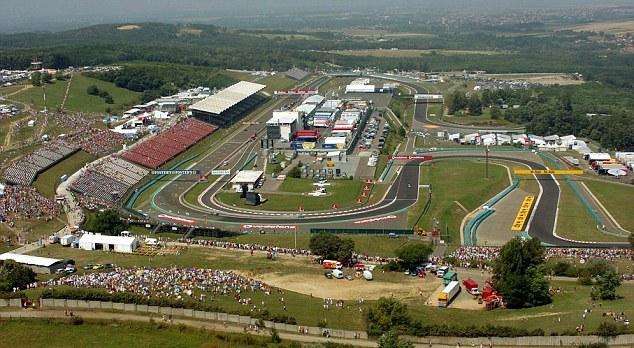
After the fast sweeps of Silverstone, Formula 1 heads to the
slowest permanent circuit on the calendar next weekend. The Hungaroring is
tortuously twisting and narrow, and has few fast corners. To be competitive, a
car needs to have aerodynamic stability and good traction.


The
Hungaroring was the first circuit in the world to be built specifically for F1.
It was completed in just nine months ahead of its first grand prix in August
1986 and it’s been a permanent fixture ever since. Only six tracks on this
year’s schedule have staged more grands prix than this 4.381km/2.722-mile
track.
With an average speed of just 190km/h (118mph), the Hungaroring
rewards low-speed traction. However, grip levels are poor early in the weekend
because the asphalt is usually very dusty and slippery. This makes life very
difficult for the drivers during Friday’s practice sessions, until some rubber
has been laid down on the racing line.
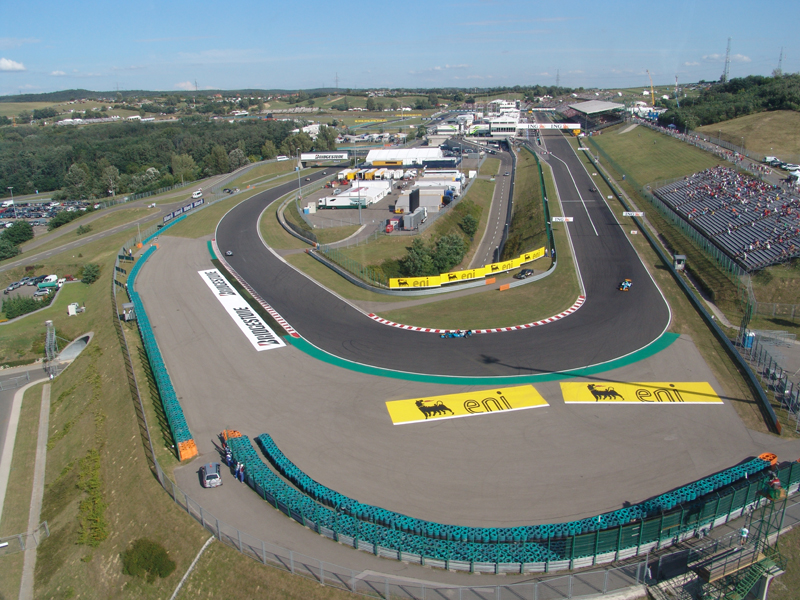
As you’d expect on a track where
overtaking is difficult, the start of the race is crucial. It’s advantageous to
line up on the clean side of the grid, and the run to the first corner is 610
metres – the fourth longest of the year – so there’s a lot of jostling for
position on the approach to Turn One.
The combination of old and
abrasive asphalt, and high track temperatures, provides a hostile working
environment for the tyres. For this reason, Pirelli are taking their Soft
(Option) and Medium (Prime) tyre compounds to the race. It’s the first time this
combination has been used since the Bahrain Grand Prix in April.
McLaren
is the most successful constructor at the Hungaroring. The team has won there 11
times, which is more than one-third of the races staged at the track. It was
also in Hungary that the team’s 2015 race drivers scored their maiden F1 wins,
Fernando Alonso in 2003 and Jenson Button in 2006.
|
|
|
|
Hungarian Grand
Prix
24th - 26th
July
Hungaroring
|
|
|
|
|
| Race distance |
|
70 laps (full world championship points awarded after 75%
distance/53 laps) |
| Start time |
|
1400 (local) / 1200 (GMT) |
| Circuit length |
|
4.381km/2.722 miles |
| 2014 winner |
|
Daniel Ricciardo |
| 2014 pole |
|
Nico Rosberg 1m22.715s
(190.674km/h) |
| 2014 Fastest lap |
|
Nico Rosberg 1m25.724s
(183.981km/h) |
| Don't put the kettle
on... |
|
The Hungaroring has a short pitlane; it takes only 16s to
complete a pitstop and that opens up a lot of strategy options. For the last two
years the race has been won with three pitstops, so stay tuned on laps 9-12;
30-33 and 50-55. |
| Full
throttle |
|
55 per cent |
| Fuel consumption |
|
2.1kg per lap, which is high |
| Brakewear |
|
Medium. There’s a significant braking event into Turn 1,
where deceleration exceeds 5g, but only 14 percent of the lap is spent on the
brakes |
| Weather |
|
Usually, it’s very warm at this time of year – 25-30
degrees. It’s unusual to see rain, but that’s what happened last year (and in
2011 and ’06). |
| DRS zones |
|
Two – on the approach to Turn One and, again, on the
approach to Turn Two |
| Top speed |
|
305km/h on the approach to Turn
One |
| Safety Car likelihood |
|
Low. There were two Safety Car periods last year, but,
statistically, there’s still only a 10 per cent chance of a Safety
Car |
|
|
|
|
McLaren at the Hungarian Grand Prix |
|
|
|
| Wins |
11 |
(1988, 1991, 1992, 1999, 2000, 2005, 2007, 2008, 2009,
2011, 2012) |
| Poles |
8 |
(1988, 1991, 1998, 1999, 2006, 2007, 2008,
2012) |
| Fastest laps |
5 |
(1988, 1999, 2000, 2001, 2005) |
|
|
|
|
|
|
“It’s funny to think that both Jenson
and I won our first grand prix in Hungary. That, of course, makes it a special
place for me, and a venue that’ll always hold good memories for me. I really
like this place; it’s a track that you really have to attack to get a good
laptime, and, although it’s often thought of as a slow circuit, the sweeps
around the back of the circuit are all really satisfying, and require a lot of
commitment.
The left-hander at Turn Six, in particular, is a really great corner
– approached blind over a crest, and really hard to nail perfectly.
“I
think the team is looking forward to this race: the track will offer us a
reasonable opportunity to showcase our steady progress, and I’d like to think
that, if everything runs smoothly, we could have a less difficult weekend.”
|
|
|
|
|
|
“It’s going to be a nice feeling to return to the
Hungaroring with Honda power behind me, having last won a race for Honda at this
very track back in 2006. Obviously, I have a place in my heart for this place –
any driver’s first grand prix victory is a special event – but, that aside, it’s
a place I’ve always enjoyed.
“Although my race at Silverstone was
extremely disappointing, Fernando’s points finish was well deserved. There’s
been absolutely no let-up on the technical side – having personally seen the
effort that’s been going on at MTC, and heard about the work that’s being done
at Sakura, I know we’re slowly but surely getting there.
“Of course,
that’s difficult to substantiate without decent results, but let’s hope we can
go into the summer break feeling confident about the second half of the
season.”
|
|
|
|
|
|
Eric
Boullier
Racing director, McLaren-Honda
|
|
|
“Last weekend’s sad news about Jules Bianchi means that
the grand prix circus heads to Budapest with heavy hearts. We’ll all remember
his life in our own personal way, but Formula 1 will come together on Sunday to
silently and respectfully mark his passing.
“The weekend’s news has
firmly put things into perspective, but we head to Hungary keen to shake off the
poor luck we’ve encountered in recent races.
“It’s been a source of great
frustration to see new components and upgrades destroyed before they’ve had the
chance to be race-proven, through a series of first-lap accidents. However, the
unshakeable belief and optimism of Fernando and Jenson has set the example for
the whole team: they are remarkable assets, and their commitment during these
times is incredibly valuable.
“Honda, too, has shown a commitment that
remains admirably undiminished. Together, we are showing the fighting spirit and
resilience that will see us continue to improve our performance and reliability
as we move back to the front.
“I hope that our performance in Hungary
will scratch the surface on the performance and potential that lies within our
organisation – it would be great to go into the break feeling re-energised about
the races ahead.”
|
|
|
Yasuhisa Arai
Chief officer of motorsport, Honda R&D Co Ltd
|
|
|
“The Hungaroring is a twisty track that’s mostly made up
of continuous slow- to mid-speed corners and various elevation changes that
makes it very difficult to overtake. Each corner is technical and tight, but
there is a certain flow to it that makes it different from a stop-and-go
circuit.
“Due to its lack of long straights and full-throttle sectors,
this track is less strenuous for the power unit compared to most circuits.
However, the frequent undulation requires more precise energy management and
deployment at lower gears and corner exits. Getting our energy management
settings right will be crucial throughout the weekend.
“Our goal is to
end the first half of the season with precise energy management and full use of
the ERS to enable the drivers' skills to shine through at this circuit.
”
|
|
|
|
|
|
|
|