Purpose

I will try my best to provide detailed info on various cars and what is like to live with them, I have already produced a few for Jaguar-car-forums, I will do my best to be unbiased, but it will be hard for some cars. I will re-produce press releases and copy from other motoring news.
Showing posts with label High strength Steel. Show all posts

Sunday, 16 July 2017

USA - The All-New Honda Accord has been launched in the US, Europe will not be getting it.

  • Next-generation Honda design, packaging and proportion
  • Interior space and quality that exceeds the midsize class
  • New powertrain lineup: turbocharged and electrified performance
  • Lighter, more rigid body and new chassis design
  • Honda Sensing® technology standard on all models and trims
  • New Accord Hybrid to be made in Ohio
Honda today showcased a new direction for America's retail best-selling midsize sedan1 with the world debut of a more stylish, sporty and premium 2018 Honda Accord that launches this fall. 
The 10th-generation Accord is new from the ground up and features a lighter and more rigid body structure, an advanced new chassis design, two all-new, high-torque direct-injected and turbocharged engines, the world's first 10-speed automatic transmission for a front-drive car and a new generation of Honda's two-motor hybrid technology, along with a host of new safety, driver-assistive and connected-car technologies – all wrapped in a more sophisticated, sleek and athletic design with top class interior space and comfort.
"We are redefining the Honda Accord for a new generation of buyers by bringing something unexpected that challenges the idea of what a mainstream sedan can be," said Jeff Conrad, senior vice president of the Automobile Division of American Honda Motor Co., Inc. 
"Even as we advance core values like great driving dynamics, safety performance and efficiency, the distinctive design of this all-new 2018 Honda Accord will help it appeal to both head and heart in equal measure."
Next-Generation Accord Design and Packaging
In reimagining the Accord for its 10th-generation rebirth, Honda designers and engineers went back to the fundamentals of proportion and stance with a sporting and athletic appearance, like a sprinter in the blocks. The approach reinvigorates classic Honda design principles, such as a low and wide body, expansive visibility and sporty seating position, and then translating them into a thoroughly modern, sporty and premium Accord sedan design. 

The new Accord features a longer wheelbase (+2.16 inches), a lower overall height (-0.59 inch) and wider (+0.39 inch) body, wider wheel tracks (+0.20 in. front, +0.79 in. rear), a shortened overall length (-0.39 inch) and lower, sportier seating position (-1.0 inch front and -0.79 inch back). A sweeping greenhouse positioned farther back on the body completes the new stance and proportion of the next-generation Accord. The combined effect of these changes is a more premium look, highlighted by shorter overhangs, a bold front fascia, a long and low hood, and a visual center of gravity moved closer to the rear wheels.
Viewed head-on, the new Accord's greenhouse also angles in more dramatically from the window sills to the roof, further emphasizing the wide lower body, while inside the cabin the seats have been moved slightly inward that contributes to improved hip, shoulder and head room while enhancing occupants' freedom of movement. Also, the longer wheelbase allowed designers to move the second-row seats substantially rearward, giving Accord almost 2 extra inches of rear leg room to offer one of the most spacious rear seating areas in its class. Overall passenger volume is increased by 2.5 cubic feet to 105.7 (based on LX). Trunk space has also been increased by nearly one cubic foot on the 1.5-liter and 2.0-liter engine powered Accords and by 3.2 cubic feet on the Accord Hybrid to a top level 16.7 cubic feet (+0.9 cu.ft.).
Elegant and modern exterior detailing compliments the Accord's new, more dynamic design. The bold and upright front fascia is highlighted by Honda's signature chrome wing front grille positioned above a large main air intake and flanked by available 9-lamp full-LED headlights and LED fog lights. The chiseled hood features a distinctive and aggressive raised center, and the deeply sculpted body sides enhance the visual length and strength of the lower body.
Further, a new laser brazing process that joins the dramatically arching roof to the body side panels creates a clean appearance with no garnish over the rain channels. The similarly low and wide rear view is finished off with an upswept decklid, distinctive LED light-pipe taillights and cleanly integrated dual exhaust ports. Overall aerodynamic efficiency is improved by approximately 3 percent (based on EX trim) to make it the most streamlined Accord yet.
Elegant and Tech Savvy Cabin
The 2018 Accord also boasts a larger, more premium and tech savvy interior that compliments its athletic and elegant body design, delivering a level of quality and premium feel that belies Accord's mainstream sedan status.

The new Accord features a panoramic forward view that is enabled by its lower cowl and by front roof pillars that are 20 percent narrower and moved rearward relative to the driver's seating position. The new soft-touch instrument panel features an ultra-thin profile and three-tier design with a strong upper deck that describes a continuous arc from its outboard section through the side door sills, giving a sense of strength and visual continuity.
A more intricately contoured sport inspired steering wheel with deep-set thumb rests and available paddle shifters compliment the Accord's more sophisticated and sporty performance capabilities. Meticulous attention to the tactile and visual quality of surface materials and decorations communicates modernity and soft-spoken elegance throughout the cabin.
The inboard positioning of the seats provides for improved freedom of movement and is complimented by longer, wider and more deeply padded arm rests, front and rear; while the Accord's newly designed seats feature taller shoulder bolstering for a more premium appearance and improved lateral support. New high-accuracy seat padding with variable firmness improves seating comfort and support. The driver's seat now has available 12-way power adjustment with height-adjustable lumbar support, and passenger comfort is further enhanced by available new heated and ventilated front seats and by improved available rear seat heating with both seat bottom and seat back heating elements. 
The tech-savvy and easy-to-use 2018 Accord cabin also features an all-new HMI that includes an ultra-slim 7-inch TFT driver's meter and a new 8-inch Display Audio touchscreen interface with physical volume and tuning knobs and more intuitive, smartphone-like features and functionality including customizable app tiles and home-screen shortcuts, along with Apple CarPlay™ and Android Auto™ compatibility. The Accord also will offer the next-generation of HondaLink telematics with new capabilities including emergency roadside assistance, remote locking/unlocking and engine start, stolen vehicle tracking, remote diagnostics, geofencing, speed tracking and more.
Touring trims of both 1.5-liter and 2.0-liter models also feature a new 6-inch driver's Head Up Display with selectable information, including speed, engine rpm, turn-by-turn navigation, and Traffic Sign Recognition. Additional new or improved connected-car technologies available on the 2018 Accord include wireless device charging, automatic Bluetooth® phone pairing with Near Field Communication technology, 4G LTE in-car Wi-Fi, and Wi-Fi-enabled over-the-air system updates.
Audio systems vary by trim, starting with 4 speakers and 160 watts on LX, 8 speakers and 180 watts on Sport and EX trims, and 10 speakers and 450 watts on EX-L and Touring trims. All models feature USB charging ports (two 2.5-amp ports on EX and above) along with Bluetooth connectivity.
Accord Performance: Turbocharged and Electrified
The 2018 Accord takes an entirely new approach to performance by featuring three advanced new powerplants – two direct-injected and turbocharged 4-cylinder engines and the third generation of Honda's two-motor hybrid powertrain technology. The 2018 Accord also features a new Honda-developed 10-speed automatic transmission (10AT) with the 2.0-liter turbo engine, the first of its kind for a front-wheel-drive car, and an available 6-speed manual transmission for both turbocharged engines.

The new 1.5-liter, 16-valve DOHC direct-injected turbo with dual Variable Timing Control (dual VTC) produces a peak 192 horsepower (HP) at 5,500 rpm and 192 lb-ft. of torque from 1,500 to 5,000 rpm, up from 185 HP at 6,400 rpm and 181 lb.-ft. at 3,900 rpm on the existing, normally aspirated 2.4-liter model. The new 1.5-liter turbo is mated to a Honda continuously variable automatic transmission (CVT) or, in Sport trim, to a CVT or a 6-speed manual transmission (6MT).  
The Accord can also be equipped with a new 2.0-liter 16-valve DOHC direct-injected turbo with i-VTEC® valvetrain paired with a 10-speed automatic transmission or, in Sport trim, to the 10AT or an available 6MT. The new 2.0-liter turbo, sharing much of its design with the race-bred 2017 Civic Type R, produces 252 HP at 6,500 rpm and 273 lb.-ft. of torque from 1,500 to 4,000 rpm, compared to 278 HP at 6,200 rpm and 252 lb.-ft. at 4,900 rpm for the 3.5-liter V6 that it replaces. 
Both turbocharged engines utilize a host of new technologies, including high-efficiency low-inertia turbos, variable valve timing, low-pressure-loss air intake and high-accuracy direct injection, to deliver immediate and powerful response along while still anticipated to receive top level fuel economy ratings.  The two new automatic transmissions – the CVT for the 1.5-liter engine and new 10AT for the 2.0-liter engine – take greater advantage of available torque while maximizing quietness and efficiency during highway cruising. The redesigned CVT has an 11 percent lower ratio compared to the current version for more powerful launch performance, while the new 10AT is 22 lbs. lighter, has a 68 percent wider overall ratio range with a 43 percent lower first gear, and a 17 percent taller top gear compared to the current Accord's six-speed automatic.
Production of New Accord Hybrid Returns to Ohio
An all-new, even more refined and fuel efficient Accord Hybrid will be again built in Marysville, Ohio after a couple of years of production in Japan, and will be powered by the third-generation of Honda's innovative two-motor hybrid technology, offering improved power delivery with no compromise to interior or cargo space and packaging.

The new hybrid powertrain will utilize a 2.0-liter Atkinson cycle engine with greater than 40 percent thermal efficiency, the highest for any mass-produced Honda engine, paired with Honda-developed electric motors that are the first drive motors in the world to use magnets containing no heavy rare-earth metals. As before, the Accord two-motor system operates without the need for a conventional automatic transmission.
Additionally, a new, more compact intelligent power unit (IPU), containing the hybrid battery pack and its control systems, is now mounted under the rear floor instead of in the trunk, preserving both cargo space (16.7 cu.-ft.) and the flexibility of a 60/40-split and folding rear seat, standard on all models and trims. Detailed specifications on the 2018 Accord Hybrid, including power and fuel-economy ratings, will be release closer to launch.
New Approach to Body and Chassis Design
The 2018 Accord's new body structure is lighter and more rigid, utilizing 29 percent ultra-high-strength steel, the most extensive application of this weight-saving material in any current mass-produced Honda car. Overall, the new Accord employs 54.2 percent high strength steel (above 440 MPa).

Key body features include the latest generation of Honda's Advanced Compatibility Engineering™ (ACE™) body structure with crash stroke front frame, tailor-tempered rear frame members for improved crash-energy absorption, and the extensive use of structural adhesives for increased rigidity, cabin quietness and weight reduction. Total vehicle weight is down between approximately 110 to 176 pounds, depending on trim, while body torsional and bending rigidity are improved 32 and 24 percent, respectively, aiding ride quality, cabin quietness, and dynamic performance. 
Mated to the new body is a more sophisticated new chassis design. The 2018 Accord's lighter chassis features a new Macpherson strut front suspension with L-shaped aluminum control arms mounted to an all-aluminum front subframe. The new setup better isolates and manages varying road inputs, improving handling precision, ride quality and cabin quietness along with outstanding high-speed stability and control. The new, more space-efficient rear suspension is a multi-link design mounted to a more rigid, floating rear subframe. Fluid-filled compliance bushings at all four corners further improve ride comfort and absorption of road irregularities, and all new Accords also feature, for the first time, an Adaptive Damper System with the ability to adjust shock absorber damping force every 1/500 of a second, providing for a more compliant and controlled ride in all driving situations.
The new Accord has a 10 mm lower center of gravity. The adoption of lighter-weight turbocharged engines and other body design changes reduce the vehicle's moment of inertia, resulting in crisper turn-in and steering response. All models now have near optimal FWD weight distribution of approximately 60/40 (front/rear). Accords with the new 2.0-liter i-VTEC turbo and 10AT check in at approximately 61/39, a significant improvement versus the current V-6 and 6AT Accord.
All new Accords will now come equipped with a Two-Mode Driving System featuring Normal and Sport settings, allowing the driver to dial-up/down the vehicle's sporty reflexes depending on the driving environment. The system engages with multiple chassis and drivetrain components, including the new dual-pinion variable-ratio electric power steering (EPS), automatic transmission, drive-by-wire throttle, adaptive dampers and Active Sound Control system, to provide the driver with an expanded range of driving characteristics. An ECON mode is also available that helps improve fuel efficiency by modifying throttle mapping and HVAC operation.
Along with the first application of structural adhesives to Accord, cabin quietness is further enhanced by a comprehensive sound-insulating package that includes full underbody covers, which also aid aerodynamics, front and rear fender and engine compartment insulators, alloy wheels with Honda-proprietary resonator technology, sound-absorbing carpet, acoustic laminated windshield glass – plus front door acoustic glass on EX and above – and a new, three-microphone Active Noise Control system.
Advanced Safety and Driver-Assistive Technology
For 2018, all Accords will feature the full suite of Honda Sensing® safety and driver-assistive technologies as standard equipment. Honda Sensing includes Collision Mitigation Braking System™ (CMBS™), Lane Departure Warning, Road Departure Mitigation, Adaptive Cruise Control with Low-Speed Follow and new Traffic Sign Recognition. Additional available driver-assistive technologies include Blind Spot Information, front and rear parking sensors, Cross Traffic Monitor and Driver Awareness Monitor; and all models feature a Multi-Angle Rearview Camera with dynamic guidelines.

Standard advanced active and passive safety systems include Vehicle Stability Assist with Traction Control, Anti-lock brakes with Electronic Brake Distribution, Tire Pressure Monitoring System (TPMS), advanced front airbags, driver and front-passenger side airbags and new driver and front-passenger knee airbags. The Accord targets top U.S. government (NCAP) and IIHS collision safety ratings.
Accord Models and Trims
More detailed information will be provided closer to launch, but the 1.5-liter powered Accord will be available in six trims – LX, Sport, EX, EX-L, EX-L Navi and Touring. The 2.0-liter model has four trims available, which are Sport, EX-L, EX-L Navi and Touring. And the new Accord Hybrid will be available in five trims – Hybrid, EX, EX-L, EX-L Navi and Touring. Sport trims for both 1.5-liter and 2.0-liter engine variants will now feature available short-throw 6-speed manual transmissions.

Accord Manufacturing
All variants of the 2018 Accord will be produced at Honda's Marysville, Ohio auto plant2, at which the company is investing with numerous enhancements to further advance quality and efficiency, including the introduction of additional technologies and processes. Accord was the first vehicle from a Japanese automaker to be made in America and has been in continuous production at the Marysville Auto Plant since November 1982, with cumulative U.S. production exceeding 11 million units over 35 years. 

The 2018 Accord's 1.5-liter and 2.0-liter turbo engines will be produced at Honda's Anna, Ohio engine plant, and its CVT transmission will be manufactured at the company's Russells Point, Ohio plant. 
The all-new, Honda-designed 10-speed automatic transmission will be produced at the company's Tallapoosa, Georgia plant2. Honda recently announced a combined $149 million investment in the Russells Point and Tallapoosa plants to facilitate production of the new 10AT. Additional details concerning new manufacturing technology and investments will be announced closer to launch.

Sunday, 4 September 2016

FCA US LLC has invested vast amounts of time and money to make their cars some of the safest and tech laden around.

Safety & Technology Overview and Glossary
  • Higher-strength steel usage up 53 percent at FCA US since model-year 2012
  • Advanced High-Strength Steel content highest in all-new 2017 Chrysler Pacifica body structure
  • LED headlamp technology debuts on 2017 Jeep Wrangler, delivering 90 percent more high-beam output versus halogen
  • 2017 lineup boasts more than 75 driver-assist, occupant-restraint and connectivity features that benefit safety and security
As FCA US LLC expands and freshens its vehicle lineup, so goes the Company’s use of higher-strength steels – a key contributor to improved crashworthiness.


Model-year 2017 also marks the debut of light-emitting diode (LED) headlamps in the FCA US lineup. The technology delivers greater light output, which helps allow drivers to see more – and potentially see it sooner.

“Our commitment to improving safety is unwavering,” says Mike Dahl, Head of Vehicle Safety and Regulatory Compliance. “We are continually exploring the use of new materials and components that will boost the performance of our vehicles, for the benefit of our customers.”


Compared with body structures of the vehicles they replaced, higher-strength steel content has increased more than 53 percent in the all-new, mainstream-segment vehicles introduced by FCA US since model-year 2012. These materials contribute to improved crashworthiness as well as weight reduction, which helps improve fuel efficiency.

Among the vehicles launched most recently, two have earned Top Safety Pick+ ratings from the Insurance Institute for Highway Safety (IIHS): Fiat 500X small crossover and the Chrysler 200 mid-size sedan. Higher-strength steel content levels in their body structures total 74 percent and 66 percent, respectively.


“It should also be noted this increased integration extends to the higher-end materials, such as Advanced High-Strength Steel (AHSS),” Dahl says.


AHSS accounts for 38 percent of the all-new 2017 Chrysler Pacifica’s body structure – the highest such concentration in any FCA US vehicle. The 500X boasts the next-highest AHSS level at 28.3 percent.

Similar usage jumps have occurred with hot-stamped steel, which accounts for 14 percent of the Jeep Renegade’s body structure.

According to the Steel Market Development Institute (SMDI):

  • High-Strength Steel (HSS) is a medium-strength steel used in various body-structure components; it is up to 100 percent stronger than conventional or “mild” steel
  • AHSS is a higher-strength steel used in parts such as beams, sills, cross-members and other energy-absorbing components; it is up to 300 percent stronger than mild steel
  • Hot-stamped steel is press-hardened for use in parts with complex shapes; it is up to 500 percent stronger than mild steel

Higher-strength steels also are lighter than conventional grades, so vehicles may benefit from weight reduction and improved fuel-efficiency. The all-new Chrysler Pacifica is 250 pounds lighter than the vehicle it replaced, and more than half of that weight savings is attributed to body structure.

The debut of LED headlamps in the FCA US lineup further reflects the Company’s staunch pursuit of technologies that improve the driving experience. The 2017 Jeep Wrangler’s headlamps generate high-beam light output that is 90 percent greater than the halogen lamps in prior models; low-beam output also jumps 63 percent.

“Such lighting helps afford the driver a better view of the road ahead, the benefits of which are literally plain to see,” Dahl says.

Despite their increased output, the new Wrangler’s headlamps draw 67 percent less power than comparable halogen lamps.

Structural systems and advanced lighting technology comprise a snapshot of FCA US strategy. The following are among the additional safety and security features available in FCA US vehicles:

Structural System Technology


  • Energy-absorbing steering column: Manual-adjust steering column features two hydroformed coaxial tubes that move relative to each other to allow for enhanced energy absorption during an impact; power-adjust steering column employs a calibrated bending element that deforms during column stroke for optimal energy management
  • Front and rear crumple zones: Specially-formed structural members that crumple and absorb energy in a collision, helping protect the occupant cabin
  • Laminated glass: Plastic sandwiched between glass panes to provide added strength; discourages break-ins
  • Safety-cage body structure: Helps protect occupants by managing and controlling energy in the event of an impact
  • Side-guard door beams: Reinforcement beams inside the doors that help provide occupant protection in certain side collisions

Driver Warning and Assist, Chassis Control and Brake Systems

  • Advance Brake Assist: Works with Full-speed Forward Collision Warning-Plus; increases deceleration if driver does not apply brake with sufficient force to respond to collision condition
  • Adaptive Cruise Control-Plus with Full Stop: Helps maintain distance from vehicle ahead; under certain traffic conditions, system can bring vehicle to full stop without driver intervention
  • All-speed traction control system: While driving, helps keep wheels from spinning during acceleration from a stop or at speed by applying brakes alone or in combination with engine torque limitation
  • Anti-lock Brake System (ABS): Senses and prevents wheel lockup, offering improved steering control under extreme braking and/or slippery conditions
  • Blind-spot Monitoring (BSM): Uses radar sensors to aid driver when changing lanes, passing or being passed; blind-spot vehicle presence noted via illuminated icons in sideview mirrors and driver-selectable audible chime
  • Brake Assist: System applies maximum braking power in emergency braking situations, minimizing stopping distance
  • Brake-lock Differential System (BLDS): Allows the vehicle to maintain forward motion if one or two wheels lose traction by selectively and aggressively applying brakes to the spinning wheels
  • Brake-throttle override: Standard equipment on every FCA US vehicle, it allows driver to stop the vehicle when throttle and brake inputs occur simultaneously; electronic throttle control also reduces engine-power output
  • Brake/park interlock: Prevents transmission from being shifted out of “Park” unless the brake pedal is pushed
  • Brake Traction-control System (BTCS): Helps to keep wheels from spinning during acceleration from a stop or during slow speeds by applying individual brakes to the slipping wheel(s)
  • Electronic Brake-force Distribution (EBD): Optimizes stopping distances and control under all vehicle loading conditions by regulating braking pressure, front-to-rear
  • Electronic Roll Mitigation (ERM): Uses input from electronic stability control (ESC) sensors to anticipate potential rollover conditions; applies brakes individually and modulates the throttle position to help driver maintain control
  • Electronic Stability Control (ESC): Enhances directional control and stability of vehicle in various driving conditions; activation occurs when steering-wheel angle differs inconsistent with vehicle; automatically reduces throttle input and/or selectively deploys brakes to counteract oversteer or understeer
  • Full-speed Forward Collision Warning-Plus: Radar and camera technology combine to determine if frontal impact with another vehicle appears imminent; if so, system pre-fills brakes, then transmits audible and visual warnings for driver to intervene; no driver response triggers brief brake application as tactile alert; if driver remains unresponsive and frontal collision risk remains, brakes are applied to slow vehicle before impact; system may bring vehicle to full stop if imminent frontal collision detected at speeds below 25 mph
  • Forward Collision Warning-Plus: Radar and camera technology combine to determine if frontal impact with another vehicle appears imminent; if so, system pre-fills brakes, then transmits audible and visual warnings for driver to intervene; no driver response triggers brief brake application as tactile alert; if driver remains unresponsive and frontal collision risk remains, brakes are applied to slow vehicle before impact
  • Forward Collision Warning: Radar determines if a frontal impact with another vehicle appears imminent; if so, system pre-fills brakes, then transmits audible and visual warnings for driver to intervene
  • Hill-start Assist: Assists drivers when starting from a stop on a hill; maintains brake pressure for short period of time after driver’s foot is removed from the brake pedal; if throttle is not applied within short period of time thereafter, brake pressure will be released
  • Lane Departure Warning with Lane-Keep Assist: Alerts and assists driver; leverages electric power steering (EPS) to deliver subtle steering-wheel input when system detects need for course correction
  • ParkSense Parallel/Perpendicular Park Assist: Features ultrasonic sensors on the bumper to find and guide driver into parking space; guidance system automatically controls the steering angle while driver controls gear position, brake, and accelerator; parallel parking possible on either side of the car; to accommodate perpendicular parking, vehicle is backed into the space
  • ParkSense Rear Park Assist Systems with Stop and Release: ln reverse, at low speeds, ultrasonic sensors detect stationary objects; if imminent collision is detected, system will provide momentary, autonomous brake pulse; below 4.4 mph, system will bring vehicle to a stop before releasing
  • ParkView rear backup camera: Provides wide-angle view of area immediately behind vehicle, giving driver greater peace of mind before reversing; features dynamic grid lines to aid driver when maneuvering into parking spaces or narrow areas; also assists when lining up trailer to vehicle’s hitch, when so equipped; image displayed on the navigation screen when the transmission is shifted into Reverse
  • Rain brake support: In rainy conditions, occasionally pushes brake pads lightly against brake rotors to keep rotors dry
  • Ready Alert Braking (RAB): Anticipates situations when driver may initiate an emergency brake stop and uses ESC pump to set brake pads against rotors, decreasing time required for full brake application
  • Rear Cross Path (RCP) Detection: In parking-lot situations, warns drivers of lateral traffic when backing out of parking spaces; automatically activates any time a vehicle is in reverse gear; driver alerted of approaching vehicle(s) via illuminated icons on sideview mirrors and driver-selected audible chime
  • Trailer-sway mitigation: Uses input from electronic stability control (ESC) sensors to anticipate potential trailer-induced yaw conditions; applies brakes individually and modulates throttle to help driver maintain control

Occupant Restraint Technology

  • Active head restraints: Deploy during collision; designed to help reduce injuries by minimizing gap between occupant’s head and the head restraint
  • Advanced multistage driver and front-passenger air bags: Inflate with force appropriate to the severity of the impact; meet FMVSS 208 advanced air bag requirements for smaller, out-of-position occupants 
  • All-row, full-length side-curtain air bags: Extend to all outboard front- and rear-seat passengers; housed in headliner above side windows, each side air bag has its own impact sensor that triggers deployment on the side of the vehicle where impact occurs
  • BeltAlert: Activates chime and/or illuminates icon in instrument cluster to remind driver and front passenger to buckle up if vehicle is driven without belted front-seat occupants
  • Child Seat Anchor System: LATCH (Lower Anchors and Tethers for CHildren) designed to ease installation of compatible aftermarket child seats
  • Constant-force retractors: Regulates force exerted on occupant by seat belt, then gradually releases webbing in controlled manner
  • Front seat-belt pretensioners: During a collision, impact sensors initiate front seat-belt pretensioners to remove slack in the seat-belt system, thereby reducing the forward movement of the occupant’s head and torso
  • Front-seat-mounted side pelvic thorax bags: Help provide enhanced protection to driver and front passenger in certain impacts; each side air bag has its own impact sensor that triggers deployment on side where an impact occurs
  • Driver’s-side knee air bag: Deploys with advanced multistage driver air bag; located below instrument panel, device designed to properly position occupant during impact
  • Height-adjustable seat belts (front row): Outboard seat belts feature height adjustment, allowing for seat belt to be placed in optimal position for any driver
  • Occupant restraint controller: Detects impact and determines if air bag deployment, and degree of deployment is appropriate; also deploys front seat-belt pretensioners

Lighting and Visibility Systems

  • Active turn signals: Turn signal flashes three times when stalk is depressed for one second
  • Auto-adjust exterior mirrors: Sideview mirrors automatically adjust to accommodate rearview when vehicle shifted into reverse
  • Auto-dimming rearview mirror: Auto-dimming mirror automatically reduces glare from bright light allowing driver to have a clearer view of the road ahead
  • Automatic defog: Automatic temperature control system measures interior humidity and activates defogging system without driver intervention
  • Automatic headlamps: Headlamps turn on and off automatically depending on exterior light levels and if windshield wipers are operating
  • Automatic high-beam headlamps: Headlamp system adjusts to ambient light and oncoming traffic to deliver maximum lighting
  • Daytime Running Lamps (DRL): Low-intensity halogen or signature LED lights that illuminate during daytime conditions, increasing vehicle’s visibility to other drivers
  • Enhanced Accident Response System (EARS): Makes it easier for emergency personnel to see and reach occupants in the event of an accident by turning on the interior lighting and unlocking doors after air bag deployment; also shuts off flow of fuel to the engine
  • Heated windshield washer ozzles: Delivers heated washer fluid to more efficiently clear windshield in inclement weather
  • High-intensity Discharge (HID) Headlamps: Provide approximately three times the light output than conventional reflector lamps
  • Halogen Infrared Reflecting Bulbs (HIR): Unique component coating delivers greater light output than conventional bulbs
  • LED fog lamps: Provide improved illumination during inclement weather
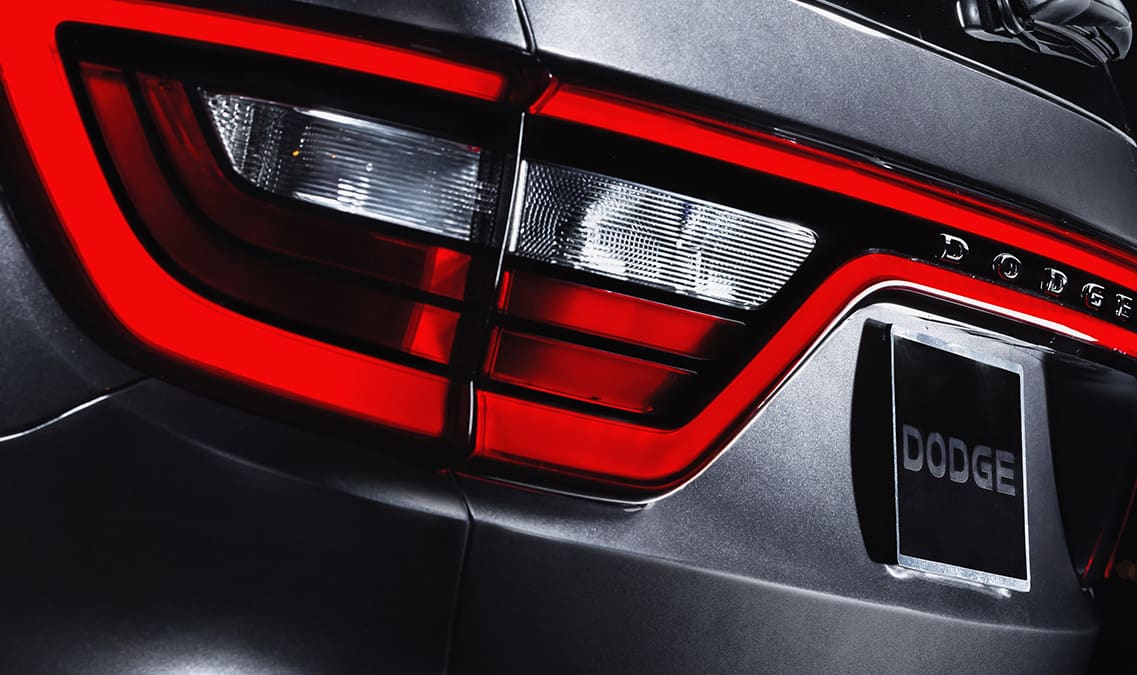
  • LED tail lamps: Provide dual-function illumination (brake, stop, turn and running light functions)
  • LED headlamps: Provide improved illumination
  • Rain-sensing wipers: A driver convenience feature that automatically senses moisture on the windshield and activates wipers

Emergency Connectivity and Other Features

  • 9-1-1 call/Assist Call: Enabled by built-in data connection, rearview mirror-mounted button connects occupants directly with emergency service providers; for roadside assistance or Uconnect system questions, a separate button establishes direct contact with appropriate call-takers
  • Auto-reverse sunroof: Automatically reverses when it senses an obstruction while closing
  • Auto-reverse windows: Automatically reverses when it senses an obstruction while closing
  • Capless fuel-filler door: Enables fuel-filling simplicity
  • Child-protection rear door locks: Disables rear doors’ inside-release handle by adjusting a small lever opposite the doorjamb
  • Electronic locking fuel-filler door: Prevents theft or tampering, which can lead to damage, inefficiency and unwanted fuel vapor release
  • Express up/down windows: One-touch express up/down window button located on the front driver and passenger-side door
  • Global Position Sensor (GPS): Used for navigation guidance and electronic vehicle tracking
  • Intelligent Battery Sensor (IBS): Continually measures flow of current into and out of battery; if battery is running low, system shuts off less-critical electrical systems to conserve power; icon in cluster denotes activation
  • Inside emergency trunk-lid release: Glow-in-the-dark handle enables unlocking from inside trunk
  • Keyless Enter 'n Go: Electronic sensors detect if unique vehicle key fob is present, which enables passive cabin entry and trunk access; illuminates interior lamps and enables push-button ignition – no need to insert key
  • Remote Keyless Entry: Locks and unlocks doors and turns on interior lamps. If vehicle is equipped with security alarm, remote also arms and disarms system
  • Remote start: Fob-activated convenience; starts engine and activates interior climate settings while maintaining vehicle security
  • Sentry Key engine immobilizer: Utilizes engine key with embedded transponder and preprogrammed security code to discourage vehicle theft; when key is inserted into the ignition, controller sends a random number to the transponder and engine is allowed to start; engine will shut off after a few seconds if an incorrect key is used
  • SiriusXM Traffic: Real-time local traffic updates via SiriusXM Radio
  • SiriusXM Travel Link: Provides passengers with real-time weather, information and entertainment to make every trip more efficient and secure
  • Speed-sensitive door locks: System automatically locks doors when vehicle acceleration reaches prescribed threshold
  • Tilt-and-telescoping steering column: Allows steering column to tilt and move toward or away from the driver to achieve a safe and comfortable distance from the advanced multistage front driver air bag, if deployed
  • Tire-pressure Monitoring (TPM) System – Lock-on Sync: Informs driver when tire pressure is too low; pressure-sensor modules within valve stems of all four wheels send continuous radio-frequency signals to a receiver; available systems use graphic display to indicate tire-specific pressure
  • Uconnect Access Mobile Hot Spot: Turns vehicle into mobile Internet hot spot; available to registered Uconnect Access subscribers
  • Uconnect Access remote services: Enables registered Uconnect Access subscribers with compatible cell phones to lock or unlock their vehicles or activate panic alarm; can also activate remote start
  • Uconnect Access voice-to-text: Enables cloud-based text-message dictation via compatible Bluetooth-enabled cell phones; available to registered Uconnect Access subscribers
  • Uconnect Access stolen vehicle location assistance: Leverages GPS data-sending capability to help authorities find stolen vehicles
  • Uconnect Voice Command: Voice-recognition technology enables handsfree navigation-system inputs and access to real-time information, such as weather forecasts via SiriusXM Travel Link
  • Uconnect Voice Command with Bluetooth: Voice-recognition technology enables drivers to use Bluetooth-enabled phones while keeping their hands on the wheel and eyes on the road