Purpose

I will try my best to provide detailed info on various cars and what is like to live with them, I have already produced a few for Jaguar-car-forums, I will do my best to be unbiased, but it will be hard for some cars. I will re-produce press releases and copy from other motoring news.
Showing posts with label Skyactiv technology. Show all posts

Monday, 5 June 2017

mazda celebrates 50 years at the top of their game, and today, they produce some amazing cars.

Fifty years ago today, Mazda Motor Corporation began its legacy of doing what was said couldn’t be done.
Mazda — then Toyo Kogyo Corporation — needed to create a unique technology that would differentiate it among a rapidly globalizing Japanese automotive industry in order to stay independent. In 1961, Mazda licensed NSU Motorenwerke AG and Wankel GmbH’s rotary engine technology, sharing learnings with the German companies in hopes of making wider use of the engine.
Once the prototype rotary engine arrived in Hiroshima, testing began. Unfortunately, within the first hour of running, the engine seized. Mazda had wagered its entire existence on this one engine technology; failure would not be an option, but early impressions meant there was much to be done to keep Mazda afloat.
Knowing how imperative the success of the rotary engine would be for the company, Chief Engineer Kenichi Yamamoto assembled a team of Mazda’s most talented engineers — known as the 47 Samurai — to make the rotary engine viable. Of course, they knew other automakers from the around the world had tried or were trying to do so as well; none had succeeded, though.
After a highly lauded debut at the 1964 Tokyo Motor Show, on May 30, 1967, the Mazda Cosmo Sport 110S — the world’s first production twin-rotor, rotary-engined car — went on sale in Japan. 
It was Mazda’s first sports car, and all the more newsworthy because the company had been known only for its small passenger cars and work trucks to that point. Its low shape complemented the compact dimensions of its two-rotor engine.
Just 1,176 production Cosmo Sports would be built, but its legacy would stretch much, much further. From the earliest races, such as the 84-hour Marathon de la Route in 1968, Mazda never stopped challenging its engineers and designers to keep improving their craft.
Eventually, those efforts would spawn championship-winning motorsports programs all over the world, as well as leading the way for subsequent sports cars that focused on lightweight performance over brute strength. 
The highest point of Mazda’s development of the rotary engine was in 1991, when the quad-rotor-powered Mazda 787B won the famed 24 Hours of Le Mans. During its production, more than 1.99 million rotary-engine vehicles were produced, from sports cars to sedans and even a 26-passenger bus.
Much as with today’s Mazda cars and crossover SUVs, hashiru yorokobi — exhilaration, joy and wellbeing from driving — continues to be a critical part of what makes Mazdas what they are.
A Legacy of Innovation: Then and Now
From its earliest days as a manufacturer of high-precision machine tools to today as a provider of exceptional customer experiences through its vehicles, Mazda aims to create a strong emotional connection with customers by offering a unique combination of driving pleasure and outstanding environmental and safety performance.
Today, Mazda’s SKYACTIV Technology continues to delight drivers and passengers with a human-centric focus on the entire driving experience.
But, much as was the case with the Wankel rotary engine, developing SKYACTIV Technology was thought to be an impossible task, never mind the fact that it was being developed by an independent, smaller automaker during the 2008 world financial crisis.
When Mazda introduced its SKYACTIV-Engine family, no other gasoline-powered production vehicle could operate with a 14.0:1 compression ratio — the world’s highest. Similarly, no other diesel engine could achieve a 14.4:1 compression ratio either — the world’s lowest. Today, Mazda’s clean-operating SKYACTIV engines are still unmatched in their balance of performance, driving engagement and environmental efficiency.
Lightweight, rigid SKYACTIV-Chassis and SKYACTIV-Body units allow Mazda vehicles to thrill the driver and passengers as much as protect them. And, in combination with all other SKYACTIV Technologies, the chassis and body designs and engineering allow for an unmatched Jinba Ittai driving experience in every Mazda, whether the iconic MX-5 Miata sports car or the seven-passenger CX-9 crossover SUV — driver and car as one.
Mazda continues to push technology, engineering and design thresholds to deliver cars and crossover SUVs for people who cherish driving. Then, as now, Mazda will never stop challenging.

Monday, 15 May 2017

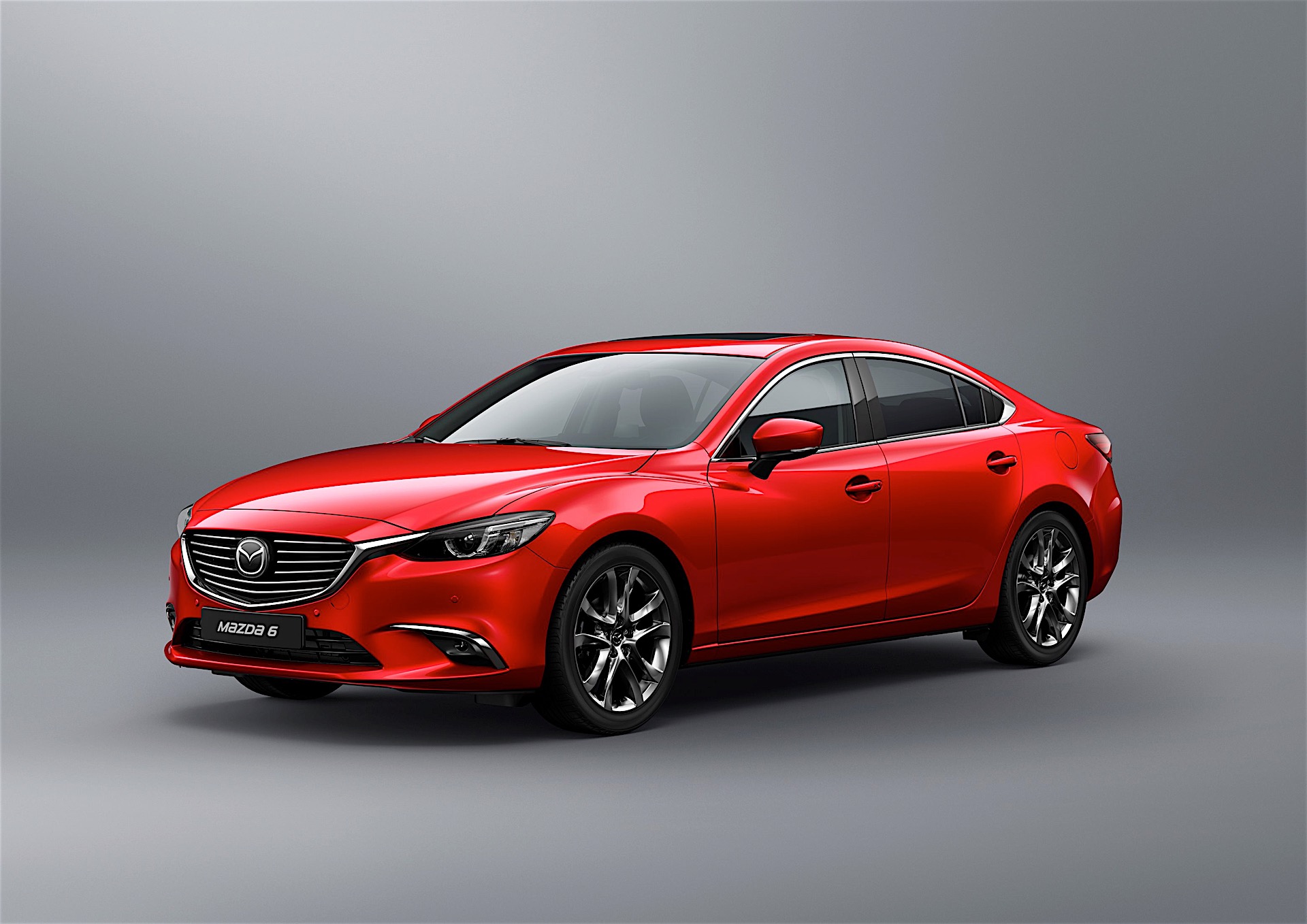
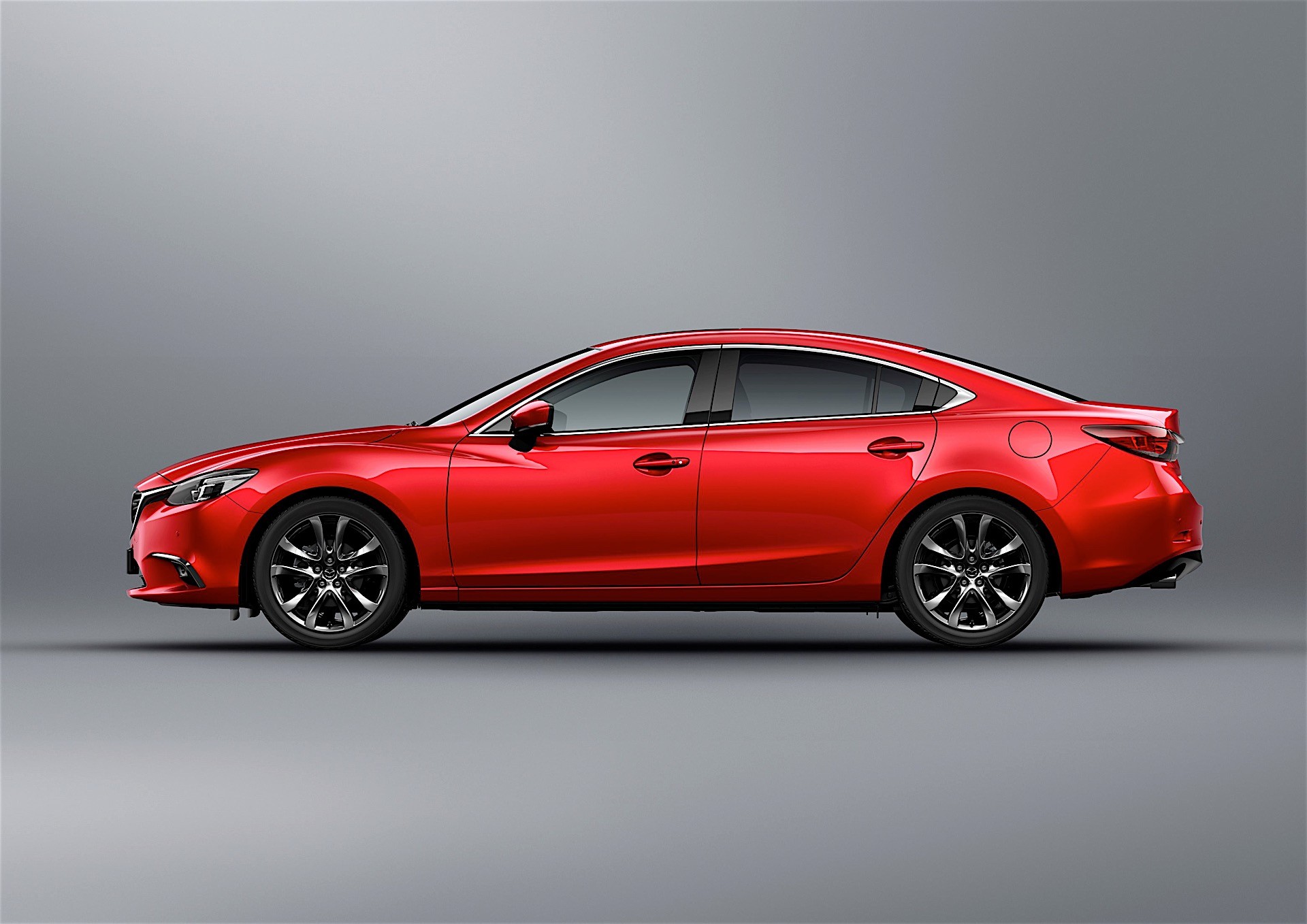
The Mazda6 Sedan celebrates it's fifteenth anniversary, updated to include more luxury.

Mazda6 has redefined the midsize sedan segment with superb driving dynamics, handsome design that stands out among its staid competition and craftsmanship that goes a step above expectations. It has charted its path as the family car for discerning drivers who need the practicality provided by a midsizer but refuse to give up on driving an engaging, enjoyable car.
Now in its third generation, Mazda6 celebrates its 15th anniversary since going on sale internationally, still setting the benchmark for its segment and for the Mazda brand.
Since 2002, Mazda6 has torn through the throngs of ubiquity that define its class and landed in the spotlight as the go-to for those desiring a better, if not more bespoke, option.
Immediately after going on sale in the U.S., Car and Driver magazine named Mazda6 to its 10Best list in 2003, stating that “…the Mazda6 is a spirited, athletic package that takes Mazda’s zoom-zoom ethos into the mainstream.”
Since then, Mazda6 has earned several other 10Best honors among dozens of awards, comparison wins and commendations for its outstanding safety, most recently being awarded both IIHS Top Safety Pick+ and NHTSA Five-Star ratings.
And, yet, Mazda6’s engineers and designers have never been good at leaving well enough alone.
In recent years, Mazda has made dozens of changes that further elevate it among its peers, no longer waiting for mid-cycle refreshes to make meaningful improvements. For 2015, Mazda6 received subtle refinements to what was already a well-received third-generation model after adopting KODO—Soul of Motion design and lightweight, efficient SKYACTIV Technology in its third generation. For 2016, its interior was completely redesigned, implementing a clean, modern design with the latest MAZDA CONNECTTM infotainment interface and segment-exclusive Active Driving Display head-up display technologies. The new interior won a Wards 10 Best Interiors award.
Starting in 2016, models equipped with available full-LED auto-leveling headlights also received a redesigned grille, headlights and tail lights.
For the 2017 model year, Mazda6 added many of the premium touches that were introduced in the all-new Mazda CX-9, including additional sound insulation by way of thicker door seals and laminated front glass and luxuries like available Nappa leather seating surfaces and rear USB charging ports. Mazda6 was also the first vehicle in the U.S. to include G-Vectoring Control, a Mazda-exclusive technology that uses throttle and steering inputs to smooth out steering feel, leading to greater confidence behind the wheel and more sure-footed handling.
Throughout its decade and a half, no matter which generation, Mazda6 has remained true to its mission, serving families who want a midsize car without compromise. Now, as in 2002, Mazda6 continues to over-deliver.
Accolades at a glance:
200310BestCar and Driver
2003All StarAutomobile Magazine
2004Best Family CarMoney Magazine
2008Car of the YearDetroit News
2009Best New CarsBusiness Week
2014Big Test Comparison WinnerMotor Trend
2014Top-Rated VehiclesEdmunds.com
2014Best Cars for FamiliesU.S. News and World Report
2014Top-Three FinalistNorth American Car of the Year
201410BestCar and Driver
201410 Best InteriorsWards Automotive
2014FinalistWorld Car Design of the Year
2015Five-Year Cost to Own AwardsKelley Blue Book
201510BestCar and Driver
2015Sedan of the YearAutobytel
201610 Best InteriorsWards Automotive
2016Comparison Test WinnerAutomobile Magazine
2016Top Safety Pick+Insurance Institute of Highway Safety
2017Best Family CarNew York Daily News Awards
2017Automotive Excellence AwardsPopular Mechanics
2017Top Safety Pick+Insurance Institute of Highway Safety
2017Most Beautiful Cars You Can Buy Right Now Under $50,000Car and Driver

Friday, 5 May 2017

mazda has revised the mazda2 range of cars to now become the best that it has been in it's history.

  • Starting from £12,695 the revised eight-model Mazda2 range goes on sale from 1st June 2017.
  • Updates include introduction of Mazda’s G-Vectoring technology and improved refinement.
  • Range-topping 90ps GT and 115ps GT Sport feature extra equipment and unique colour choices.
Mazda has announced a host of updates and changes to its highly acclaimed Mazda2 range. Highlights across all models include the introduction of Mazda’s G-Vectoring Control technology and detailed improvements to the suspension and steering to deliver improved ride comfort and steering response. In addition, interior upgrades include new seat fabrics, a new steering wheel and enhanced sound insulation. 
Thanks to its KODO: Soul of Motion design and SKYACTIV technology, the current Mazda2 set new standards for a Mazda supermini. Launched in 2015, its combination of sharp handling, attractive styling and efficient engines helped it stand out in the ultra-competitive small car sector. 
Now subtle enhancements and the launch of two new models - GT and GT Sport - are designed to keep the Mazda2 at the forefront of this ever popular segment.
Now exclusively offered with Mazda’s 1.5-litre SKYACTIV-G petrol engine, the simplified eight-model Mazda2 range starts at just £12,695 for the 75ps SE, while the 75ps engine is also offered in SE-L trim. Making up the bulk of the range the 90ps version of the 1.5-litre SKYACTIV-G engine is offered in SE-L Nav, Sport Nav and GT trim, while the 115ps output engine is exclusively matched to the flagship GT Sport and a six-speed manual gearbox.
All models feature new seat fabrics, a new steering wheel and revised door mirrors with wraparound indicators. Enhanced refinement across the range is achieved thanks to the adoption of noise-insulating glass in the windscreen and additional under bonnet sound proofing. Plus, to reduce high-frequency noise entering the cabin from the rear, sound absorbing material has been added to the inside of the tailgate, the parcel shelf and the spare wheel well. 
This improvement in refinement is matched to subtle enhancements to the Mazda2’s already driver-focused dynamics. Front and rear damper settings have been revised to enhance ride quality, while to improve body control the front anti-roll bar bushing has changed and the structure of the front lower suspension arm has been modified. Additionally, a small recalibration of the electric power steering has resulted in improved steering feel.
The upgraded Mazda2’s dynamic enhancements also see the introduction of G-Vectoring Control (GVC). Having made its debut on the 2017 Mazda3, GVC is now standard across the Mazda2 range, the first of Mazda’s SKYACTIV-VEHICLE DYNAMCIS technologies it varies engine torque to optimise loading on the wheels when cornering to indiscernibly provide more precise handling and improve comfort. 
Across the key trim levels the upgraded Mazda2 now features additional equipment: SE-L and SE-L Nav cars now feature LED front fog lamps, auto power-folding mirrors and passenger seat height adjustment, while Sport Nav models benefit from subtle visual enhancements including new 16-inch alloy wheels and a shark fin antenna.
However, thanks to new Deep Crimson Mica and Eternal Blue Mica paint colours that are both exclusive to the GT and GT Sport, it’s these models that really stand out. LED headlights, LED daylight running lights, a contrasting black rear spoiler and 16-inch silver alloy wheels further distinguish these new flagship models, while inside both the GT and GT Sport feature black leather seats with a brown dash insert, a colour head-up display, Mazda2 scuff plates and on the 115ps GT Sport, a reversing camera. 
As before, the Mazda2 features excellent active safety equipment with all 90ps and 115ps powered cars featuring Smart City Brake Support and Lane Departure Warning System. All cars outside of the entry-level 75ps engine models come with Mazda’s 7” Colour touch-screen display with MZD-Connect infotainment system, integrated navigation, DAB radio and cruise control, while Sport Nav and GT-Line models feature high-end equipment like privacy glass, rear parking sensors, climate control air-conditioning and smart keyless entry.
Commenting on the revisions to the Mazda2 Jeremy Thomson, Managing Director Mazda Motors UK said, “with annual UK sales of over 10,000 cars, the Mazda2 is a really important car in our line up. It may be the smallest car we produce, but it has at its heart the same values of style, driving involvement and quality that mark out all our products. These updates come just two years after the current Mazda2’s launch but they are designed to ensure the Mazda2 remains a class-leading contender in what remains the biggest selling segment in the UK car market.” 
Adding, “our simplified eight-model line-up has been created based on feedback from our customers and dealers, and with the new GT and GT Sport models we have two standout models that deliver the high-end equipment, premium looks and high-quality discerning small car buyers are looking for.”