Purpose

I will try my best to provide detailed info on various cars and what is like to live with them, I have already produced a few for Jaguar-car-forums, I will do my best to be unbiased, but it will be hard for some cars. I will re-produce press releases and copy from other motoring news.
Showing posts with label Zero emission. Show all posts

Saturday, 8 April 2017

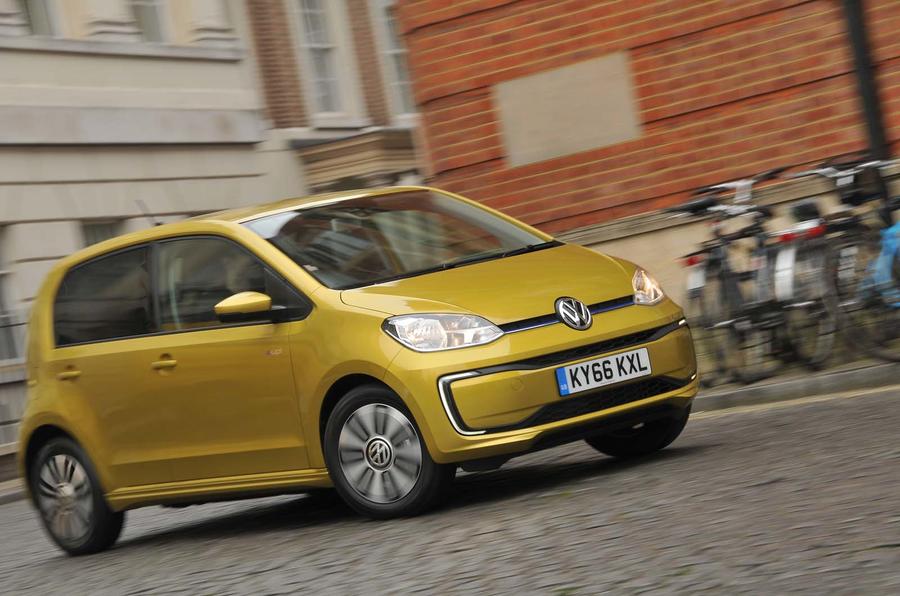
The UK's first owner of the new e-up! is situated on the Isle of Wight.

  • Isle of Wight motorist becomes UK’s first new e-up! driver
  • Volkswagen e-up! has a range of up to 99 miles* per charge
  • Zero emissions and lots of fun: The e-up! is priced at £20,780 (RRP OTR incl. Plug-in Car Grant)
The UK’s first new e-up! owner has proudly taken delivery of their stylish and practical zero emission city car from Volkswagen e-Mobility Retailer Peter Cooper in Southampton. 
The new car was handed over recently, as Volkswagen ramps up production of the new e-up! in its ongoing commitment to maintaining its status as a leader in electric and hybrid-engined cars. 
The customer, John Back, said: “I’m very pleased with my new e-up!. It’s a lovely vehicle to drive. My daughter has a High up! and I was suitably impressed with its comfort and ride and that carries over to the e-up!. It suits my lifestyle and needs – it’s ideal for island use.” 
Clever packaging and advanced technology make the new e-up! one of the most flexible electric cars for city and extra-urban use too. A top speed of 80 mph is achieved thanks to its advanced 60 kW electric motor, which has a range of up to 99 miles*. 
The substantially revised e-up! features revised interior and exterior styling, plus an advanced new infotainment system. The first examples of this next generation of electric city car are available to order at Volkswagen Retailers nationwide, and are on sale at £25,280 (RRP OTR) before the government’s plug-in Car Grant of £4,500 is applied. 
The new e-up! intelligently provides the technology to revolutionise commuting. The zero emission Volkswagen can be charged overnight and with consideration to that generous range, a lengthy commute can be completed with ease. The car’s diminutive proportions add to its suitability and ease-of-use in typically tight commuter traffic.
And the single-ratio gearbox, which is optimised for minimum friction, makes driving in traffic easy and noticeably quiet. 
The e-up!’s lithium-ion battery is rated at 374 volts and 18.7 kWh. It can be fully charged from a standard household plug in nine hours, and that time that can be reduced to six hours if an optional 3.6 kWh wall box for home garage use is purchased. Two charging cables, for regular and fast charging, are included, and when connected to a fast charge point the e-up!’s battery is 80 per cent replenished in just 30 minutes.
 The battery is made up of 204 cells and is located under the front and rear seats to increase boot space and to provide optimum safety in the event of an accident. For peace of mind, the battery comes with an eight-year or 99,360-mile guarantee. 
And it’s that battery cell pack and electric motor that provide plenty of entertainment in the e-up! The car’s near-instant 210 Nm of torque under acceleration gives it a crisp and responsive level of performance. The 0–62 mph time is 12.4 seconds.
When the driver is behind the wheel, it’s not just the performance that excites: in line with the rest of the up! range the e-up!’s infotainment system has been thoroughly updated. Instead of docking a separate console into the dash of the e-up!, as was the case with the previous version, the revised car uses the customer’s own smartphone. The phone is simply clicked into the dashpad docking station and then, when Volkswagen’s ‘Maps + More’ app is selected, the full infotainment options become available.
‘Maps + More’ is a comprehensive app that includes satellite navigation and a whole variety of other features. The satellite navigation provides a 2D or a 3D route display. Also included in ‘Maps + More’ is a function to enable the driver to search through their phone contacts using handwriting recognition, and they can then make a hands-free call via a Bluetooth connection. 
Controls for the radio and access to the smartphone’s music library are other key functions of ‘Maps + More’, and again the handwriting technology makes the interface system seamless. Information about the e-up!’s electricity consumption and remaining battery life can also be viewed with ease.
A clever element of ‘Maps + More’ is the Think Blue. Trainer. This is a system that shows the driver how they can improve their driving to make it more economical. 
Building on the electric powertrain and the advanced smartphone connectivity, the e-up! is packed with other features that set it apart from its rivals. The complete up! range features big car technology as standard including, as a minimum, anti-lock braking, electric front windows, Composition radio and power steering. The e-up! goes a few steps further, starting with stylish 15-inch ‘Tezzle’ alloy wheels that are fitted with low rolling resistance tyres. 
Electronic air conditioning brings comfort, while convenience is underlined thanks to the heated front windscreen and a rain sensor that operates the windscreen wipers automatically. Rear parking sensors reduce the potential for car park bumps, while cruise control makes for a relaxed drive. 
The e-up! is joined by the e-Golf in Volkswagen’s all-electric line-up and both cars share bright ‘C’ signature LED daytime running lights. Both cars also have a blue and chrome strip below the bonnet lip. This echoes the red strip that has been a feature of the iconic Golf GTI since the 1970s, and the petrol-electric hybrid Golf GTE and Passat GTE models also share the blue and chrome look. 
The Volkswagen e-up! is available at 25 Volkswagen e-Mobility Retailers nationwide. For more details on the Volkswagen e-up! – together with a brochure and pricing – and to use Volkswagen’s online configurator, please visit www.volkswagen.co.uk. 
The Volkswagen e-up! is priced at £25,280 before the government’s electric car grant of £4,500 is applied. 
Volkswagen e-up!
Model
Electric Motor
Power (PS)
Transmission
No. doors
CO₂ (g/km)
OTR Price
e-up!
60 kW
82
Single-speed gearbox
5
£20,780.00*
*Includes £4,500 Plug-In Car Grant.

After 100 years Harrods, the high class dept store adds another electric vehicle to its fleet of delivery vans.

  • Nissan partners with Harrods to add all-electric Nissan e-NV200 to the British store’s fleet
  • The 100 percent electric van, decked out in traditional Harrods livery, will make daily deliveries to the store’s customers
  • Harrods is the latest European business to put its trust in Nissan as the leader in electric vehicle technology
  • In total Nissan has sold more than 27,000 electric vehicles to businesses across Europe

Over 100 years after the legendary London department store first added an electric van to its fleet, Harrods is once again returning to EV technology, with the addition of the 100 percent electric Nissan e-NV200 delivery van. 
The British department store is the latest European business to add a zero emission Nissan e-NV200 to its fleet, with more than 27,000 Nissan electric vehicles sold to businesses across Europe so far. 
Nissan officially handed over the 100 percent electric van to Harrods outside its luxury Knightsbridge store this week. 
The Nissan e-NV200 has been specially adapted to perfectly fit Harrods’ delivery needs. The load space of the van has been fully refrigerated and shelving units added to allow for fresh groceries to be transported in optimum condition. The exterior has also been wrapped in the traditional green and gold Harrods livery to make it recognisable as it travels around the city. 
The e-NV200 has a range of up to 106 miles on a single charge*, which means it is easily capable of making up to 50 deliveries per week covering an average distance of 150 miles in the London area with Harrods only needing to charge it once a week. 
With an average running cost of as little as 2 pence per mile, the e-NV200 offers an alternative practical solution which will have a positive effect on city-centre air quality.
In 1919, the store used solid-tyred American Walker electric vans, later building its own fleet of 60 electric vehicles to deliver goods to local London customers. 
As petrol engines became more popular, the electric vans were slowly phased out. However with the introduction and development of new infrastructure and technology, Nissan has enabled Harrods to have an all-electric van on its fleet once again. 
Guy Cheston, Media Sales Director at Harrods said: “It’s wonderful to see an electric Harrods van on the roads of London again. As one of Britain’s largest established department stores, we are committed to reducing our carbon emissions and mitigating our environmental footprint. As part of our carbon and energy management policy, we have identified transportation as a key area where we can make a real impact. 
“We have a strong heritage in developing innovative technology, both in-store and out, and Harrods was one of the first companies in the UK to develop an all-electric commercial fleet, introducing our first electric vehicle over 100 years ago. Electric technology has developed rapidly since our old fleet was in operation, and is now a far more sustainable transport solution. Nissan is the leader in EV technology and the e-NV200 was the obvious choice for us, allowing us to easily complete daily deliveries more sustainably and efficiently.” 
Gareth Dunsmore, Director of Electric Vehicles for Nissan Europe said: “Businesses across Europe are taking major steps to reduce their impact on the environment and it’s great to see such an iconic British department store embracing zero emission technology and putting the e-NV200 on their fleet. Through Nissan Intelligent Mobility, we are working towards a sustainable future and we believe that zero emission vehicles, such as the e-NV200 are vital to tackling air pollution – an issue affecting many cities across Europe. 
“The Nissan e-NV200 is designed for forward-thinking businesses and I am delighted that Harrods has put its trust in us to help them switch to more sustainable transport solutions. Harrods is demonstrating to other European retailers how EVs can help to reduce the carbon footprint of their business while providing the practicality and versatility needed to deliver goods to customers across London.” 
As a pioneer of the EV market since 2010, Nissan has continued to provide Intelligent Mobility solutions for the masses and has sold more than 290,000 EVs globally. Harrods joins more than 900 companies worldwide who have trusted Nissan to help them towards a more sustainable future. Named Europe’s best-selling electric van in 2016, the e-NV200 is part of Nissan’s popular zero emission range, combining the best elements of two multi-award winning vehicles – the Nissan LEAF and Nissan NV200. It provides a zero emission light commercial vehicle solution, offering low vehicle running costs from as little as two pence per mile and a range of up to 106 miles on a single charge. This makes it the perfect transportation option for businesses both big and small, as not only does it contribute to reducing a company’s carbon footprint, it is also practical, reliable and cost-effective. 

Friday, 31 March 2017

Singapore's first hypercar, the all-electric Dendrobium concept, has made its global debut at the Geneva Motor Show

  • Singapore's first hypercar, the all-electric Dendrobium concept, has made its global debut at the Geneva Motor Show
  • High performance zero emission two-seater comes from Singapore electric mobility experts Vanda Electrics
  • Striking design features an automatic roof and doors, which open in a synchronized manner
  • Performance targets are a top speed in excess of 200mph and 0-60mph in 2.7 seconds
  • Vanda Electrics' technical partner is Williams Advanced Engineering, the technology and engineering services division of the Williams Group
The covers have come off Singapore's first-ever hypercar, the Dendrobium, which has made its world debut at the Geneva Motor Show. The brainchild of Singapore electric mobility experts Vanda Electrics, Dendrobium is a two seater all-electric sports car concept, which features a striking design and a target top speed in excess of 200mph.


Specializing in battery technology, research, innovation and design, Vanda Electrics is one of Singapore's leading e-mobility companies. Its revolutionary strategy is to develop a range of global electric products that capitalize on the trend towards zero emission mobility and focus on three key segments: luxury, consumer and industrial.


With the launch of a fast-charging zero emission electric light commercial vehicle (http://vandaelectrics.com/pro-anttruck/) and electric mini scooter (http://motochimp.com) taking place later this year, the company has chosen the 2017 Geneva Motor Show to unveil its most exciting model yet, a high performance halo product that will sit in the luxury sector.


A project that has resided within the design team for many years, Dendrobium is finally being realised thanks to the rapid advancements in electrification technology, which allows headturning styling to be combined with high performance, compact e-powertrains.


Vanda Electrics has also engaged a small number of key partners to develop the Dendrobium concept car.


Technical partner is Williams Advanced Engineering, the technology and engineering services division of the Williams Group. The division specialises in a number of core areas that are highly relevant to Dendrobium, including aerodynamics, lightweight structures, vehicle integration and, of course, electrification. Williams Advanced Engineering has taken the project from the design stage to dynamic concept car.


Innovative, dramatic design
Designed by Vanda's in-house team, Dendrobium's remarkable shape incorporates an automatic roof and doors, which open in a synchronized manner, resembling a fully-opened dendrobium flower, a genus of orchids native to Singapore.


This unique feature is not just for show either - it also improves access to the cockpit, making ingress and egress easier than other hypercars. The tear drop shape that forms around the cockpit and ends in the tail - where the plug-in port is located, just behind a panel above the charging light, which shows the status of the car's battery - is a design feature that has remained a key part of Dendrobium from the initial sketches.


Other highlights of Dendrobium's exterior are the aerodynamic floor, rear double diffuser and front splitter. At the back, the rear light bar elegantly floats over the tail of the car, and throughout the design there is pure, motorsport-inspired functionality, such as the exposed double wishbone front and rear suspension. That motorsport theme is continued in the materials used. In order to meet its target weight of 1,750kg, Dendrobium features a composite monocoque chassis, carbonfibre body panels, carbon ceramic brake discs and lightweight alloy calipers inside 20-inch front and 21-inch rear alloy wheels, wrapped in Michelin high performance tyres.


Driver-focused interior
Carbonfibre is also used extensively in the interior, fitting with Dendrobium's minimalist but functional design brief. Step inside and it is immediately obvious that the driver is the absolute centre of attention. He or she enjoys a bright red body-hugging sports seat - which contrasts dramatically with the predominately black interior. Both driver and passenger seats feature stitching and motifs inspired by muscle fibres.


The interior of the Dendrobium concept has been trimmed using leather from Scotland's Bridge of Weir Leather Company, which sources the best hides from the best heritage breeds and has adopted the very latest technology. The result is the lowest carbon tannery and leather product in the world - the perfect material for a zero emission halo model.


Sitting in the driver's eye line is a digital dashboard flanked by two rear-view displays, which take feeds from wing-mounted cameras. All of the dashboard buttons are hexagon-shaped: a recurring design theme throughout Dendrobium, replicated in the air vents, front grille and headlight bezels.


Hyper-mobility: target in excess of 200mph
Although strictly a concept car at this stage, performance targets for Dendrobium are a top speed in excess of 200mph and 0-60mph in 2.7 seconds. The project will feature the latest lithium-ion battery and electric powertrain technology calling on Vanda Electrics' own expertise and, of course, that of technical partner Williams Advanced Engineering.


The Grove-based organization is an electrification world-leader; it is currently the sole battery supplier to Formula E and an electric motor and e-powertrain integration expert thanks to its pioneering F1-bred hybrid systems and its key role in the rapid development of the Jaguar C-X75 supercar.


Should Dendrobium go into production, a layout featuring two inboard-mounted electric motors per axle, with a single-speed gearbox and differential at the front and a multi-speed gearbox and differential at the rear, is envisaged. If Vanda Electrics receives enough positive interest at the Geneva Motor Show, the first model is expected to hit the road by 2020.


Larissa Tan, Vanda Electrics CEO said: "Dendrobium is the culmination of a dream. Our design team has had sketches of an electric hypercar on the drawing board since the mid-90s, but that vision was many years ahead of its time. As electric technology has advanced, we have been able to revisit this vision and now, as we launch our revolutionary global e-mobility strategy, the timing is finally right for us to take the wraps off a halo model.


"Dendrobium is our interpretation and expression of what pushes the boundaries in the development of an electric performance car. We have engaged some expert partners to help us achieve this such as Williams Advanced Engineering. With its skills in electrification, aerodynamics, lightweight structures, vehicle dynamics and integration - and even lowvolume build - we could not think of a more appropriate partner.


"We are looking forward to seeing the world's reaction to Dendrobium. This electric hypercar may just be a concept for now, but we have every intention of putting it into production. It sits at the top of our range and the production version will be a fitting showcase for the best in design and e-technology."

Wednesday, 30 November 2016

The first Clarity Fuel Cell, Honda’s most advanced zero emissions vehicle, have arrived in Europe

  • The first Clarity Fuel Cell, Honda’s most advanced zero emissions vehicle, have arrived in Europe
  • Vehicles will take part in the Hydrogen for Innovative Vehicles (HyFIVE) EU demonstration project to highlight the capabilities of fuel cell vehicles and increase awareness and adoption of the technology
  • Honda will deploy vehicles with customers in London and Copenhagen
  • Clarity Fuel Cell is part of Honda’s aim to have two thirds of its fleet electrified by 2030
The first examples of Clarity Fuel Cell, Honda’s most advanced zero emissions vehicle, have arrived in Europe this week. 
The first six vehicles will be based with customers in London and Copenhagen as part of the Hydrogen for Innovative Vehicles (HyFIVE) demonstration project, partly funded by the Fuel Cell and Hydrogen Joint Undertaking (FCHJU).
The new Clarity Fuel Cell features Honda’s latest technological enhancements in the field. 
It is the first fuel cell sedan to house the entire stack underneath the bonnet, making the cabin spacious enough to carry five occupants. 


A recent US Environment Protection Agency (EPA) test measured an effective range of 366 miles (589km), greater than any other production zero emissions vehicle.
Thomas Brachmann, Chief Project Engineer, Honda Research and Development and leader of Honda’s Clarity Fuel Cell programme in Europe, said, ‘Honda has always been one of the leaders in the field of hydrogen fuel cell technology, with over 30 years of research and development behind us. The arrival of these vehicles in Europe and Honda’s participation in HyFIVE is the next step towards Honda’s vision of the full commercialisation of this technology.’
The HyFIVE project aims to promote the awareness and adoption of fuel cell vehicle technology and infrastructure across Europe. Once deployment is completed, 185 Fuel Cell Vehicles from five automotive manufacturers will be with private and corporate customers across Austria, Denmark, Germany, Italy, Sweden and UK.
The Clarity Fuel Cell is the pinnacle of Honda’s electrified vehicle technology and highlights the commitment, recently announced by company president Takahiro Hachigo, that two thirds of global sales will feature an electrified powertrain by 2030.

Thursday, 24 November 2016

Renault has been awarded the GreenFleet’s Light Commercial Vehicle Manufacturer of the Year.

  • Renault is GreenFleet’s LCV Manufacturer of the Year
  • Awarded thanks to impressive overall economy, Twin Turbo technology and its new range of Euro 6 engines
  • Tribute to the growing Renault Pro+ brand in the UK
  • Renault’s LCV range includes 100 per cent electric Kangoo Van Z.E.
Renault has been crowned LCV Manufacturer of the Year at the GreenFleet Awards 2016.
Aided by the growing Renault Pro+ brand specialising in LCV and business customers, the Award win was attributed to the Renault LCV range’s impressive economy credentials, innovative Twin Turbo engine technology and cleaner Euro 6 engines.
Colin Boynton, GreenFleet Events Manager said: “In a sector that now requires all van manufacturers to comply with Euro 6 legislation, it was always going to be interesting to see which one came to the fore, and Renault seem to have done just that. 

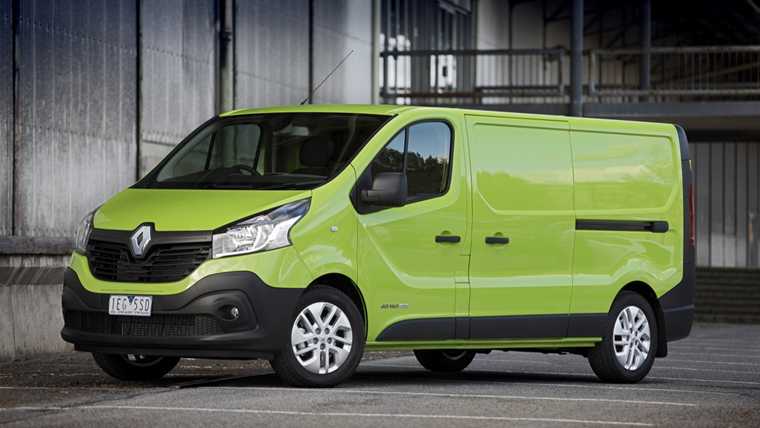
In an impressive range of small, medium and large vans, the new Trafic stood out as a great option for fleet managers, and a huge increase in sales figures seems to reflect that. Its Twin Turbo technology, Stop & Start and Energy Smart Management, all helping it achieve impressive combined fuel consumption figures, means Renault are worthy winners of the award.”
Steve Wilson, Head of LCV, Groupe Renault UK said: “We’re extremely proud to have received this award from GreenFleet. Renault’s LCVs are some of the cleanest in the industry, and by offering the 100 per cent electric Kangoo Van Z.E. and innovative Twizy Cargo, we also provide a unique-to-the-segment option for those who are looking to make their fleets kinder to the environment. The award win is further proof of the popularity of Renault’s LCV line-up in the UK after a large number of fleet operator wins this year.”
Renault caters for all forms of businesses by offering a diverse range of LCVs. The Kangoo Van, Trafic and Master are all available in differing bodystyles, heights and powertrains in front-, rear- and all-wheel drive options. Renault also provides 100% electric LCVs – the pioneering Twizy Cargo and the Kangoo Van Z.E. – for fleets and businesses looking to cut their carbon footprint.
All Renault LCV vehicles come with the reassurance of the Renault Business Quality Commitment – the manufacturer’s 13-point plan that guarantees customers will receive a class-leading service. Designed to keep customers moving no matter what and deliver hassle-free business motoring, the plan covers everything from an impressive warranty and transparent pricing to the availability of courtesy vehicles and a dedicated customer hotline.
Renault van sales in the UK grew by over 10 per cent to 22,018 vehicles October year-to-date, significantly outpacing the van market that grew by 1.4 per cent, according to official figures from the Society of Motor Manufacturers and Traders. LCV market share for the first half of 2016 stood at 6.8 per cent – up 6 percentage point on the same period in 2015.
Renault’s growth in the van market builds upon a record year for LCV sales in the UK last year, with sales up 40 per cent on 2014 to 25,458 units, and also the best-selling LCV brand in Europe for the 18th consecutive year.