Purpose

I will try my best to provide detailed info on various cars and what is like to live with them, I have already produced a few for Jaguar-car-forums, I will do my best to be unbiased, but it will be hard for some cars. I will re-produce press releases and copy from other motoring news.
Showing posts with label Ateca-Ibiza-Leon-Mii-Toledo-Alhambra. Show all posts

Wednesday, 28 September 2016

PARIS - SEAT will have a double hit at the years show with two area's one for cars the other for tech and chilling out.

  • SEAT will have two spaces enabling visitors to live and breathe the brand, designed around a 4D experience and ‘Created in Barcelona’ theme
  • SEAT is unveiling the Ateca X-Perience showcar in Paris
At this year’s Paris Motor Show, which opens its doors to media this Thursday (public show days 1 to 16 October), SEAT will reveal a unique stand concept, which is set to deliver a completely different brand experience to anything that has ever gone before.
The Spanish brand will be displaying a surprising new stand format made up of two distinct spaces. Firstly, an interactive 4D amphitheatre where a continuous press conference will be held every 30 minutes, together with a car configurator that uses BitBrain technology to configure the SEAT Ateca that best suits users’ emotions. And secondly, an informal outdoor area designed for socialising, including a press centre and chill-out zone, among others, so that visitors can live and breathe the brand.
The ‘Created in Barcelona’ theme will also feature prominently across SEAT’s spaces in Paris, highlighting qualities such as innovation, technology and urban design, all values shared by the car manufacturer itself and its home city of Barcelona.
The Ateca, the brand’s third pillar, will also play an important role in the French capital. SEAT’s successful first SUV is going a step further with an X-Perience showcar, which will be making its world debut. The Ateca X-Perience, inspired by Mediterranean culture, shows its most adventurous, off-road side and is an exercise that demonstrates the possibilities of the Ateca family and its future potential.
SEAT is also undergoing a process of transformation to become a brand that focuses on offering easier, more accessible mobility solutions. This transformation will modify the company’s vision for the future, its concept of mobility, products and services, as well as structures, procedures and internal teams.
The Paris Motor Show coincides with SEAT consolidating its financial results, as well as the beginning of its largest ever product offensive. The Barcelona-based brand is steadily progressing towards sustainable profitability and expects to close 2016 with positive earnings, after obtaining a half yearly operating profit of 93 million euros, 77% more than in the same period last year. Following the Ateca, SEAT will launch three new models in 2017, including a new SUV crossover which will be developed and manufactured in Martorell.

Thursday, 31 March 2016

Did SEAT actually make a profit or not, well, acording to a recent report, not, but then its all how you read the results.

When is making a profit actually a loss? When you're the accountant at Volkswagen Group's chronic underperformer Seat.
Earlier this month, VW's Spanish unit reported itsfirst profit since 2008. On closer inspection, the 6 million euros after-tax profit Seat said it made in 2015, compared to a 66 million euro loss in 2014, isn't as impressive as it seems.
Firstly, the figure only includes Seat S.A. – the core company that lacks certain subsidiaries and is not representative of the overall "Seat Group" as the unit's 2015 annual report shows.

Secondly, the income statement was prepared using Spanish accounting principles rather than the international IFRS standard that VW Group is required to use to improve comparability among global corporates.
Thirdly, the figure is expressed in net profit rather than earnings before interest and tax (EBIT). No doubt it has its supporters and bottom line profits are important (certainly better than bottom line losses). Yet this is the kind of white noise that says little about the health of the underlying business, which is best encapsulated by its operating result.
Lastly, it needed help to get there. Seat actually received money back from the tax collector. Only then did it become profitable.
Smaller loss
After a request by Automotive News Europe, Seat provided results that showed as a brand it had narrowed its operating loss to 10 million euros last year from the 127 million loss posted in VW Group's 2014 annual report, a figure that is directly comparable to VW group profits.
The last time that Seat as a whole earned any money was when it posted the tiniest of operating profits in 2007 at the absolute high point of the Spanish car market.
This isn't to say I am not confident that Seat can finally contribute positively to results. The launch of the critical Ateca compact SUV will finally bring a margin-rich product to its range that – even after the inevitable launch costs – should propel Seat into the black for this year. Seat also plans to save around 100 million euros by improving processes, focusing on higher added-value business and reducing costs.
Although it's important to follow Seat on its quest to break even, it's equally worthwhile to look at the cashflow statement. That is one of the few aspects of a business that should not differ regardless of what accounting standard is used, since it is supposed to reflect cold hard cash moving into and out of the till over the reporting period.
Here the company for the third year in a row was able to fund itself through its own internally generated cashflow and even have a further 310 million euros left over.
This figure of course doesn't factor in typical non-cash charges such as from the depreciation that inevitably results when investing in future growth. This alone can make the difference between earnings and losses, and in fact it amounted last year to roughly 310 million euros as well.
Helping Dieselgate costs
What this free cash flow figure tells us importantly is that Seat does not represent an actual drain on VW Group's precious liquidity reserves – every euro of which will almost certainly be needed to pay the costs from the Dieselgate scandal.
Indeed just the opposite proved to be the case, according to the annual report. After adjusting for currency effects and a small 10 million payment elsewhere, the remaining 260 million euros left in surplus cash at Seat went straight into servicing debts owed to VW Group and other associated group companies.
Seat was allowed to keep 100,000 euros at the end of last year, unlike in the previous reporting period when it was left with nothing in the till. The part of the near 4 billion euro balance sheet that lists cash and cash equivalents among its assets actually had zero-point-zero. At least now there is the slimmest of cash reserves.
This suggests the company may now have fully paid off whatever liabilities to Wolfsburg had been hanging over its head at the start of last year and can start planning now for the future.
If Seat proves this year that it will no longer be a drag on either VW Group's profits or cash, the repeated speculation that VW will dump the brand may come to an end.
Seat (Sociedad Española de Automóviles de Turismo) was created in 1950 as a prestige project under former Spanish dictator Francisco Franco. It has never had a strong heritage or aspirational brand image.
After acquiring majority control in 1986, VW has sent one executive after another to Barcelona in an attempt to turnaround the loss-making business. Former CEO James Muir said in 2010 that the brand had one last chance to break even in five years.
Even if VW Group has to dispose of some of its 12 brands to fund the costs of its emissions crisis, the company could not expect to raise much by selling off a sub-scale Spanish carmaker with a weak brand image.
Christiaan Hetzner

Sunday, 20 March 2016

At long last SEAT makes a profit for VW Parent company, its is not huge but it is significant, and can only grow.

  • Profit after-tax at 6 million euros
  • The company posted 8.3 billion euros in revenue, the highest figure in history, and twice as much as in 2009
  • SEAT generated an EBITDA of 400 million euros and operating cash flow grew by 50%
  • SEAT’s investments and R&D expenditure totalled 586 million euros, 28% more than the previous financial year
  • SEAT extends its SUV range with a crossover in 2017, wholly developed and manufactured in Martorell
SEAT underwent a major undertaking last year on the road to reaching sustainable profitability. The company closed 2015 with a profit after-tax of 6 million euros, compared to a 66 million euro loss in 2014. Growth in sales and a product mix with a higher contribution margin were the two main driving forces behind the change. 
SEAT posted a turnover of 8.3 billion euros, 11% more than the previous year. This was the company’s best ever result and double the revenue in 2009. Average earnings per vehicle increased by 3.5%.

“SEAT’s progress in 2015 was twofold – not only did we obtain a positive result for the first time since 2008, but we achieved it during a year of major challenges. We are implementing the right strategy that enables us to face the challenge of sustaining long-term profitability with optimism. We have a brilliant future ahead of us thanks to the launch of new products and the integration of new technologies in both the field of mobility as well as connectivity”, pointed out Luca de Meo, President of the SEAT Executive Committee, during the presentation of the 2015 annual results.
The growth in sales for the third year in a row, exceeding the 400,000 vehicle barrier in a single year, was the result of recuperation in southern European markets such as Spain and Italy, the fifth consecutive year of growth in Germany, SEAT’s main market, and the brand’s success in Mexico.


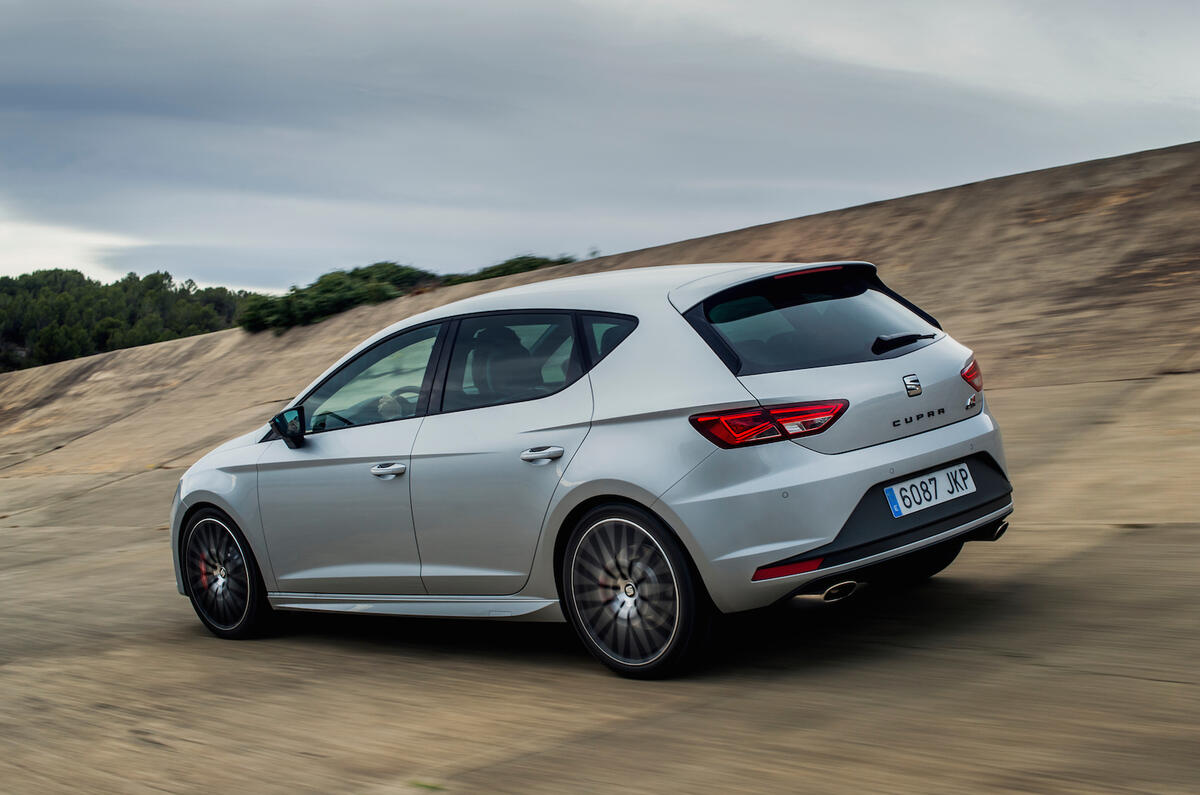
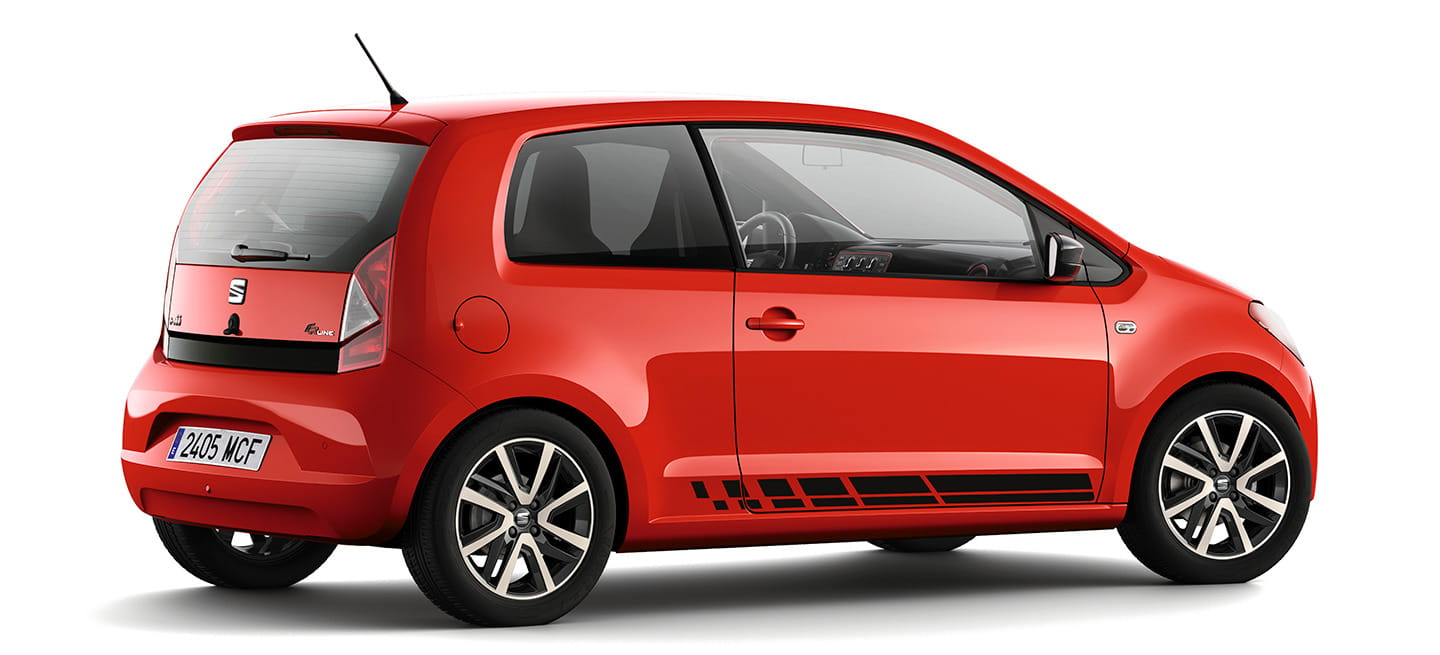
The sustained level of sales of the Leon and the Ibiza, with 2015 deliveries totalling 160,900 (+4.4%) and 153,600 (+2.4%) units respectively, the strong increase of the Alhambra (+17.2%) and the success of the Audi Q3 were beneficial to the volume as well as to SEAT’s revenue, which grew for the sixth year in a row. 


With its robust business performance, SEAT was able to respond to the increase of spendings on advertising and marketing to enhance brand familiarity, greater personnel expenditure associated with an increase in employee remuneration and the considerable increase in investments and R&D expenditure for the launch of new models, such as the work done to adapt Line 1 at the Martorell factory to the new MQB A0 platform. In 2015 SEAT spent 586 million euros on investments and R&D, 28% more than the previous year. Over the last five years, SEAT’s investment effort in this area has totalled roughly 2.7 billion euros.


Overall, the operating result improved by 96% and stood at -7 million euros compared to the  -167 of a year ago*. 


SEAT increased its ability to generate profit through its core activity. The company improved its EBIDTA (earnings before interest, taxes, depreciation and amortisation) by 30%, reaching 391 million euros, and increased operating cash flow by almost 50% to 781 million euros. The company’s Vice-President for Finance, IT and Organisation Holger Kintscher pointed out that “SEAT continues to improve its capacity to generate its own resources to self-finance investments and consolidate the company from a financial standpoint. After several years of improvement, last year was a true milestone on the road to sustainable profitability”. 

Employment
The increase in sales and production enabled the creation of 350 new jobs in the entire SEAT Group, including 100 engineers at the Technical Centre, which celebrated its 40th anniversary last year, as well as 48 young graduates of the company’s vocational training school. In total, the company destined 14 million euros to training programmes for its employees last year.
Future
SEAT expects to prolong its growth in 2016. Highlights for this year include the launch of the Ateca, the brand’s first SUV, which was recently presented at the Geneva Motor Show. The new model is a car that has been entirely created at the SEAT Technical Centre and will be commercially available this summer. 


The Ateca is just the beginning of the most ambitious product offensive in the history of SEAT. The company is going to intensify its commitment to the SUV segment and in 2017 will add a new model with the launch of a smaller all-road crossover to be developed and manufactured in Martorell. “This is excellent news for both the brand and our main factory because it is the fastest growing segment and symbolises a major step forward in making it the third pillar of the company, alongside the Ibiza and Leon families”, stressed Luca de Meo.


The company wants to be a reference in the automotive industry in the field of connectivity and has therefore entered into powerful alliances with technological leaders such as mobile giant Samsung as well as SAP, the world leader in business applications and networks and the Internet of Things (IoT).


The company is making progress towards the next level of the connected car. SEAT’s commitment is focussed on developing and equipping its cars with the latest technology in terms of connectivity and the utmost safety for drivers and customer data. In this sense, SEAT’s CONNECT versions have been on European roads since the summer of 2015 with the launch of the new Ibiza. The CONNECT version is featured on the entire SEAT range and by now represents 15% of sales since it was launched in June 2015.


The future calls for excellence in connectivity and SEAT intends to be at the vanguard of this technology. Company presence at the Mobile World Congress, together with Samsung, SAP and Accenture, for the second year in a row, is clear proof of SEAT’s commitment to connectivity.

(*) SEAT prepares its financial statements according to the Spanish General Accounting Plan, without including its subsidiaries. The Volkswagen Group applies international accounting standards (IAS/IFRS) and consolidates the SEAT brand figures.