Purpose

I will try my best to provide detailed info on various cars and what is like to live with them, I have already produced a few for Jaguar-car-forums, I will do my best to be unbiased, but it will be hard for some cars. I will re-produce press releases and copy from other motoring news.
Showing posts with label Brazil. Show all posts

Monday, 17 October 2016

The countdown to the Golf MK8 starts here, with a host of information promoted for the fist seven generations.

  • The history of this German bestseller features many record breaking milestones
  • For 42 years a Golf has been sold every 40 seconds around the world
The countdown has begun: in early November, Volkswagen will be introducing a major update for its most successful model – the Golf. 
This best seller has been around for more than four decades. An entire generation has been named after it as Generation X is known as “Generation Golf” in Germany. No other European car has sold better. 
By the end of last year, 32,590,025 Golf cars had been sold. 

In effect, therefore, over the last 42 years someone, somewhere in the world, decides to buy a new Golf every 40 seconds. Record-breaking statistics like these have shaped the car's history. And Volkswagen democratises progress to this very day with the Golf. 
  • 32,590,025 vehicles by the end of 2015 – the Volkswagen Golf is the most successful European car ever.
  • 21,517,415 vehicles– 2002 saw Golf sales overtake the hither to most successful car in the world: the Beetle.
  • 10,000,000 vehicles – by 1988 the Golf had already broken through the ten million vehicles barrier.
  • 1,000,000km – in 2003, a Golf Mk1 driver broke through one million kilometres on the clock. More “millionaires” followed.
  • €188,938– the most expensive Golf (Generation V) was auctioned in 2005; the first owner was Pope Benedict XVI.
  • €10,156– the German Chancellor Angela Merkel's first Golf (Generation II) was auctioned in 2012.
  • 2,120 Golf cars per day– this works out at more than two thousand new Golf cars being produced and sold every day for four decades.
  • 730 days for the first million– only two years after its debut, the millionth unit of the first Golf was delivered.
  • 650 PS for the enthusiasts – the most powerful Golf ever was the GTI W12-650. It was presented in 2007 at the GTI meet at Wörthersee.
  • 155 countries – today the Golf is manufactured in five factories (Brazil, China, Germany, Mexico) and exported to 155 countries.
  • 5 drive worlds – the Golf is the only car in the world which is available with electric, hybrid, petrol, diesel and gas powered engineoptions.

Friday, 30 September 2016

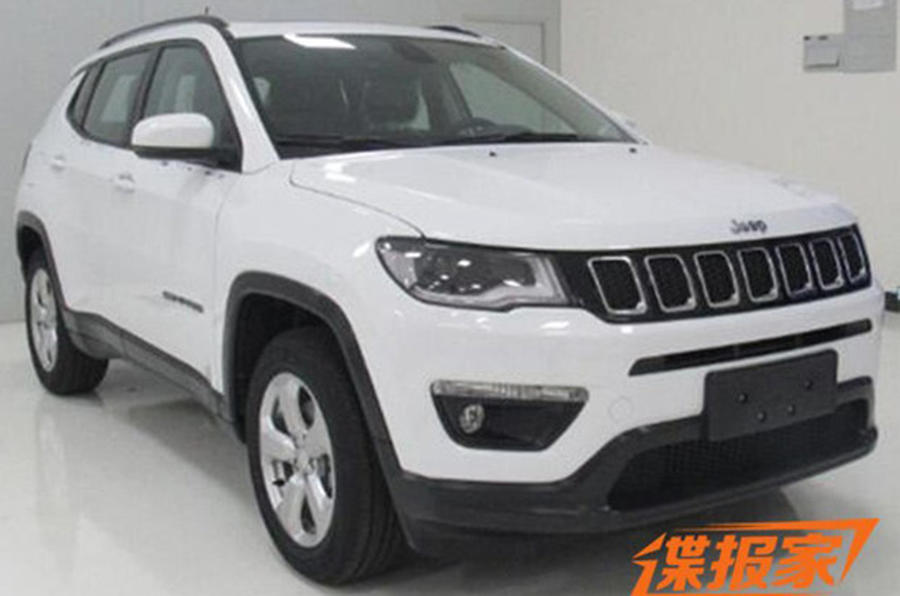
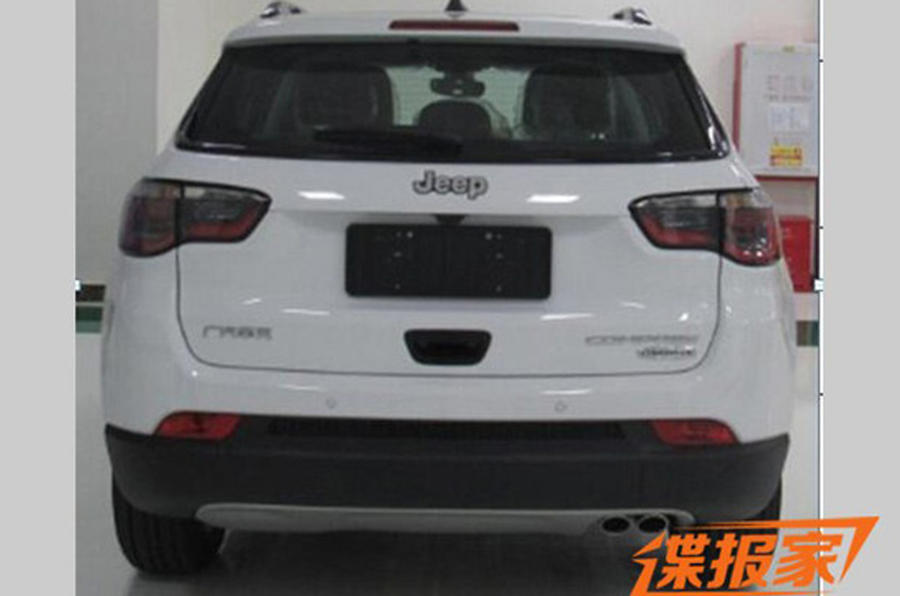
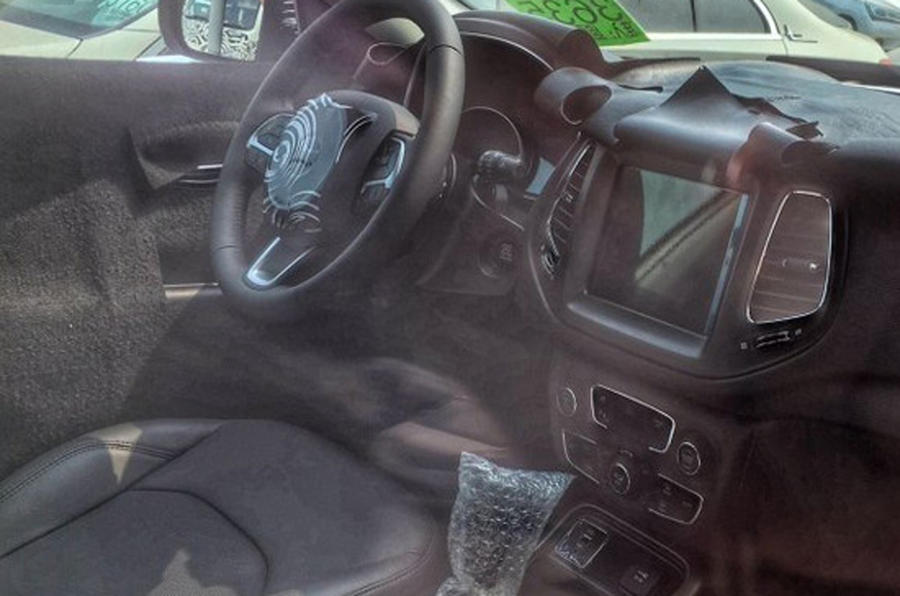
PARIS - Ahead of the biggest European Motor Show, Jeep launches the new Compact SUV Compass Model.

In celebration of the start of production at FCA’s Jeep Assembly Plant in Goiana, Pernambuco, the Jeep brand introduced the all-new Jeep Compass today in Brazil.
A truly global all-new compact SUV, the Jeep Compass will be produced with 17 fuel-efficient powertrain options for consumers in more than 100 countries around the world.

The all-new Jeep Compass expands the brand’s global reach with an unmatched combination of attributes that includes legendary and best-in-class 4x4 off-road capability, advanced fuel-efficient powertrains, premium and authentic Jeep design, superior on-road driving dynamics, open-air freedom, and a host of safety and advanced technology offerings.
The most capable compact SUV ever, the all-new Jeep Compass will be available in North America in the first quarter of 2017 and in the Europe, Middle East, and Africa region, starting the second half of 2017.
Additional images and information will be available at the vehicle’s North American debut at the Los Angeles Auto Show in November.

Thursday, 14 July 2016

Nissan officially hands over the first tranche of cars, amounting to 4,200 in total, to the Olympic committee for Rio 2016.

  • Overall, the Japanese company will supply about 4,200 vehicles to the Games
  • Official handover event held at Rio de Janeiro’s Sambadrome, where archery competitions will take place

The vehicle fleet that will be used during the Rio 2016 Olympic and Paralympic Games was officially delivered today by automotive partner Nissan to the Local Organizing Committee. The company will supply about 4,200 vehicles comprising various models to meet the many day-to-day mobility needs during the Games.

The official delivery ceremony was held at the Sambadrome in Rio de Janeiro, one of the city’s landmarks and the venue which will host archery events during the Games. Attending the ceremony were Francois Dossa, President of Nissan Brazil, and Sidney Levy, Rio 2016 Organizing Committee’s General Director. The Brazilian queen of basketball, former player Hortencia Marcari, who is Team Nissan’s mentor, was invited to represent the Brazilian athletes.
The Olympic fleet features cars from various categories and sizes to ensure comfort and best use across many different activities. Among the models, there will be more than 200 of the first-of-its kind Nissan Kicks crossover. The car, developed and designed to reflect the vibrant culture, style and colors of Brazil, is the official vehicle of the Rio 2016 Olympic and Paralympic Games and is being incorporated into the Games before it even reaches Nissan’s stores in Brazil on August 5, in a world premiere. Besides Kicks, the fleet includes the Nissan March, Versa, Sentra, Altima and the mid-size truck Frontier.
The models will be used for transporting thousands of athletes, delegation members, and guests, for supporting operational activities and also some competitions. The fleet will be driven by volunteers selected by the Organizing Committee.
"Over the past several years, we have worked very closely with the Rio 2016 Organizing Committee on a variety of activities, but the fleet delivery is an important moment for us because this directly involves our vehicles, most of which were produced in Brazil. We know how important it is to ensure the mobility of the athletes and Olympic family with comfort, agility and low carbon emissions, since all our passenger cars currently manufactured in the country have a grade A in energy efficiency, the best possible score", says François Dossa, President of Nissan Brazil.
Nissan Brazil is an official sponsor of the Rio 2016 Olympic and Paralympic Games. In addition to the Olympic fleet, the company will have a presence at the Olympic Live Sites and is developing activations to engage all Brazilians and visitors at the event. Additionally, Nissan is sponsoring the Olympic and Paralympic Torch Relays and the Brazilian Olympic Team, which includes a number of athletes from Team Nissan - a project created by the company in 2012 and formed by 31 Brazilian athletes and para-athletes.
For more information on the announcement and to find out more about Nissan Brazil’s Olympic activities, please find on http://nissannews.com/en/rio-2016

Wednesday, 22 June 2016

New Brilliant Plant for Jaguar Land Rover celebrates it's opening with a giant Street Art Mural for local school kids.

  • Local Jaguar Land Rover workers celebrate opening of new manufacturing plant in Itatiaia, Brazil, with street art project
  • World-renowned Brazilian street artist Nove leads team of employees/workers, schoolchildren and parents from local community to create vibrant mural
  • New plant that will build Range Rover Evoque and Land Rover Discovery Sport  
Workers from Jaguar Land Rover in Brazil have celebrated the opening of a new manufacturing plant in Itatiaia in the state of Rio de Janiero, by creating a giant street art mural for local school children.
Twenty employees from the new facility joined parents and school children to create the spectacular and colourful work of art, led by the world-renowned Brazilian street artist Nove. The 160 Sq m mural is based on the theme ‘Music is the Winner’, and explores the power of music and song. It follows Jaguar Land Rover’s donation of musical instruments to the centre earlier this year.


The vibrant mural was painted on the walls of the Casa De Cultura, a community centre in the state of Rio de Janiero, to commemorate the opening of a Jaguar Land Rover R$750m manufacturing facility and Education Business Partnership Centre in the town. The plant will build both the Range Rover Evoque and Land Rover Discovery Sport for Brazilian customers. 
Márcio Rodrigues Barretto, Culture Officer at Casa De Cultura, said: “The art piece has brought to life an otherwise dull and dreary corner of the school grounds. The fact that it was created by the children themselves, along with workers from the new car plant and their families, makes it even more special.”
Street artist Nove, renowned for applying unique techniques to weave together influences derived from nature and technology and who directed and led the creation of the artwork said “It’s really exciting and rewarding when you look at what Jaguar Land Rover is doing for the community. As well as providing local people with a job opportunity, it is creating a legacy through its work with local schools such as Casa De Cultura. It was a pleasure to bring my artwork and style to this project and I'm honoured to be a part of it.” 
Jaguar Land Rover’s new plant includes the brand’s first overseas Education Business Partnership Centre, which will provide a range of classroom activities for up to 12,000 local school children each year. These will help them to develop key skills, work awareness and inspire them to pursue rewarding careers at Jaguar Land Rover.
Wolfgang Stadler, Executive Director, Manufacturing at Jaguar Land Rover, said: “We are proud of the strong links we established with the communities close to our plants around the globe and the same is true here in Brazil. Our Education Business Partnership Centre is just one step we are taking to deliver exciting educational programmes to local children of all ages. Our ambition is to encourage them to consider a career in the automotive industry in the future.”
As part of its commitment to create new opportunities for 12 million people by 2020, Jaguar Land Rover works closely with the communities close to its manufacturing facilities around the world. During the last 18 months, Jaguar Land Rover has forged strong links with the local neighbourhoods in Itatiaia and nearby Resende creating new programmes to inspire the next generation of automotive engineers.
The new Education Business Partnership Centre is operated in conjunction with SENAI, the Brazilian national training provider, and will offer education programmes for children between the ages of 5 and 18. The courses are focussed on engineering, manufacturing and automotive business-related activities.
Jaguar Land Rover launched its ‘Inspiring Tomorrow’s Workforce’ training programme in Itatiaia during 2015. Today, more than 100 people have completed the scheme: 12 are working at the Jaguar Land Rover plant in Itatiaia and many others are now working within the automotive industry.
Jaguar Land Rover has had a presence in the Brazilian market for more than 25 years. In the first five months of 2016, it saw sales increase by 11% in Brazil. Land Rover is the leading premium SUV brand in Brazil and Jaguar is one of the country’s fastest growing premium brands with sales increasing by almost 70% in the first five months of 2016.
Brazil is one of Jaguar Land Rover’s top 15 markets and the Range Rover Evoque, Range Rover Sport and Land Rover Discovery are the strongest selling vehicles in the country. Jaguar Land Rover has 35 dealers covering all of the main territories of the Brazil. 

Thursday, 16 June 2016

JLR has completed the all new plant in Rio de Janeiro, Brazil, with Evoque & Discovery Sport the first products

  • Jaguar Land Rover opens first wholly-owned manufacturing plant outside of the UK
  • The new plant will build Range Rover Evoque and Discovery Sport – the most popular Jaguar Land Rover vehicles in Brazil
  • Plant includes pioneering Education Business Partnership Centre
  • First UK automotive facility in Latin America  
  • One in three premium SUV’s sold in Brazil is a Land Rover
Jaguar Land Rover today opened its new R$750m (£240m) manufacturing facility and Education Business Partnership Centre in the state of Rio de Janeiro, Brazil.
The plant inauguration represents the first time a UK automotive group has opened a production centre in Latin America.
Jaguar Land Rover’s new factory in Itatiaia is also the company’s first wholly-owned overseas facility and marks a further phase in its global expansion strategy following the opening of its Chinese joint venture factory in 2014. 

The creation of new international factories allows Jaguar Land Rover to offer its customers even more exciting new models, protect against currency fluctuations and create a globally competitive business.
The new facility will build both the Range Rover Evoque and Land Rover Discovery Sport for Brazilian customers. Vehicles will be on sale in dealers across Brazil this month.
At the plant inauguration, Wolfgang Stadler, Executive Director, Manufacturing, said: “The opening of Jaguar Land Rover’s new world-class facility in Brazil marks the latest exciting milestone in our global expansion.”
“Land Rover is already Brazil’s market-leader for mid-sized premium SUVs, accounting for more than 30% of all sales in that segment. The Range Rover Evoque and the Land Rover Discovery Sport will now be manufactured for the first time in Latin America, building on their existing popularity with customers in Brazil.”
The plant includes Jaguar Land Rover’s first overseas Education Business Partnership Centre which will provide a range of classroom activities for up to 12,000 local children each year. These will help them to develop key skills, work awareness and inspire them to pursue rewarding careers at Jaguar Land Rover.
Wolfgang Stadler added: “We are proud of the strong links that we have established with the communities close to our existing plants and the same is true here in Brazil. Our Education Business Partnership Centre is just one step we are taking to deliver exciting educational programmes to local children of all ages. Our ambition is to encourage them to consider a career in the automotive industry in the future.”
Manufacturing in Brazil
The fully flexible plant has been designed to support the company’s future plans and represents Jaguar Land Rover’s long-term commitment to the Brazilian market.
The factory includes a series of environmental features, such as rainwater collection and the planting of more than 1,200 indigenous trees to help preserve and improve the natural habitat around the factory. Jaguar Land Rover is aiming to achieve the globally recognised LEED Gold sustainability accreditation - the first automotive vehicle assembly plant in Brazil to do so.
The plant includes cutting-edge manufacturing technologies and has the most advanced Emissions Conformity and Certification facility in South America.
As part of its on-going commitment to the Brazilian automotive industry, Jaguar Land Rover has sourced major components such as the seats, cockpit, exhaust, chassis and powertrain assembly from local suppliers including Benteler and IAC. In addition, Jaguar Land Rover has invested in its technical assistance services to help suppliers support increased levels of localisation in the future.
Jaguar Land Rover in Brazil
Jaguar Land Rover has had a presence in the Brazilian market for more than 25 years. In the first five months of 2016, it saw sales increase by 11% in Brazil. Land Rover is the leading premium SUV brand in Brazil and Jaguar is one of the country’s fastest growing premium brands with sales increasing by 70% in the first five months of 2016.
Brazil is one of Jaguar Land Rover’s top 15 markets and the Range Rover Evoque, Range Rover Sport and Land Rover Discovery are the strongest selling vehicles in the country. Jaguar Land Rover has 35 dealers covering all the main territories of Brazil. 
Working with local communities
As part of its commitment to create new opportunities for 12 million people by 2020, Jaguar Land Rover works closely with the communities close to its manufacturing facilities around the world. Over the past 18 months, Jaguar Land Rover has forged strong links with the local neighbourhoods in Itatiaia and nearby Resende creating new programmes to inspire the next generation of automotive engineers.
The new Education Business Partnership Centre is operated in conjunction with SENAI, the Brazilian national training provider, and will offer education programmes for children aged 5 to 18. The courses are focussed on engineering, manufacturing and automotive business-related activities.
Jaguar Land Rover launched its ‘Inspiring Tomorrow’s Workforce’ training programme in Itatiaia in 2015. More than 100 people have completed the scheme: 12 are working at the Jaguar Land Rover plant in Itatiaia and many others are employed elsewhere within the automotive industry.
Débora Esteves completed the programme last year and is now a product coach at the new plant. She said, “I thoroughly enjoyed the programme and it gave me the opportunity to learn many new skills. I believe that without ‘Inspiring Tomorrow’s Workforce’, I would not be working at Jaguar Land Rover today.”
The programme offers work experience, training and employability qualifications for people who are unemployed to prepare them for roles in the automotive industry. It is the first programme of this nature that Jaguar Land Rover has deployed outside the UK.
Hundreds of local children have taken part in the ‘Music is the Winner’ and Try Rugby initiatives, supported by Jaguar Land Rover. Both are designed to encourage children to develop new skills and to create new opportunities for them.
Later this year, two schools from Brazil will compete in the global finals of the Land Rover 4x4 in Schools Technology Challenge. This is an innovative educational challenge that pulls together key science, technology, engineering and mathematics learning modules and engages students with engineering disciplines.

Thursday, 12 November 2015

McLaren previews this weekend's F1 race at The Autódromo José Carlos in Brazil.

2015 BRAZILIAN GRAND PRIX PREVIEW
Round 18/1913-15 November 2015

Fernando Alonso
“Interlagos is an exciting track to drive because it’s undulating and has some challenging corners. It’s also quite a short lap, which means traffic can be a problem, but that adds to the drama and excitement of the event; I always look forward to this race.”

Jenson Button

“Interlagos holds great memories for me because it was there, in 2009, that I clinched my world championship. I’ll never forget that day, or the reception that I got from the crowd. Brazilians love F1 and there’s always a great atmosphere; it’s a special race for all the drivers.”

Circuit lowdown

The Autódromo José Carlos Pace is one of the oldest and best-loved tracks on the Formula 1 calendar. It was built in 1938 on marshland deemed unsuitable for housing, and it first welcomed the World Championship in 1973.

The track is named after Brazilian F1 driver Carlos Pace, who won his home grand prix in 1975, but it’s better known as Interlagos after the suburb of São Paulo in which it’s located. It’s an undulating anti-clockwise layout and it’s been the permanent home of the Brazilian Grand Prix since 1990.

The circuit has several characteristics that set it apart from other F1 circuits, most notably its bumps and its altitude. The track was resurfaced prior to last year’s race, making it smoother, but the unstable marshland on which it’s built creates fresh bumps on an annual basis, particularly in Sector Two.

Altitude is another factor that the teams have to consider. The track is situated 800m (2,625 feet) above sea level and the thinner air has a bearing on all areas of car performance, particularly aerodynamics and cooling. Power unit losses are minimal, due to the turbo and the ERS.

As was the case last year, Pirelli will take their Soft (Option) and Medium (Prime) tyre compounds to the race. It’s the ninth time that this combination has been used this season and, should the weather conditions prove favourable, fast lap times are expected.

McLaren has an enviable record at the Brazilian Grand Prix, having won the race 12 times and taken 11 pole positions. Fernando Alonso and Jenson Button have good memories of the track, having clinched all of their world titles there (in 2005, ’06 and ’09 respectively).
Autódromo José Carlos Pace snapshot
Brazil facts & stats
It's all about: the race
Start time1400 (local) / 1600 (GMT)
Race distance71 laps (full world championship points awarded after 75 per cent distance/53 laps)
2014 winnerNico Rosberg 71 laps in 1:30m02.555
2014 pole positionNico Rosberg 1m10.023 221.532km/h (137.654mph)
2014 fastest lapLewis Hamilton lap 62 1m13.555 210.895km/h (131.044mph)
Safety Car likelihoodStatistically, there’s a 70 per cent chance of the Safety Car appearing and it’s something the engineers factor into their race strategies
Don't put the kettle on...on laps 7, 26 and 50. The top six finishers completed the race on three-stop strategies last year and with the same tyre compounds being used this season, it’s fair to assume two or three stops once again
Weather forecastWarm and wet. There’s been a lot of rain in recent weeks in São Paulo and the weather conditions look similarly unpredictable over the race weekend
It's all about: the track
First race1973
Circuit length4.309km (2.678 miles)
Run to Turn One190m (0.118 miles)
Longest straight650m (0.404 miles), on the approach to Turn One
Top speed323km/h (201mph) on the approach to Turn One
DRS zonesTwo – on the approach to Turn One and again on the approach to Turn Four
Key cornerTurn 14, a second-gear left-hander situated at one of the lowest points on the track. It’s vital to get a good exit because the cars are then flat-out up the hill to Turn One
Pitlane length380 metres (0.191 miles)
Major changes for 2015A few minor kerb alterations, but no major changes
It's all about: the car
Fuel consumption1.5kg per lap, which is on the low side
Full throttle60 per cent
Brake wearMedium. There are only six braking events around the lap, of which only two are heavy
Gear changes42 per lap/2,982 per race
Did you know?
For five consecutive years, from 2005 to 2009 inclusive, the World Championship was decided at the Brazilian Grand Prix.
Technical words of wisdom
Jonathan Neale, chief operating officer and acting CEO

“Interlagos is one of the most historic and famous circuits on the calendar; it’s a race that’s enjoyed by drivers and team personnel alike.

“The circuit is situated in a bowl, so there’s quite a lot of angle and camber change. It’s an interesting technical challenge because set-up is a difficult compromise between straight-line speed and slow-corner grip.

“The race is notorious for changeable weather conditions at the time of year in which we go racing, and despite the best efforts of the organisers and regular re-surfacing work, the moment you get rain you get rivers across the circuit and it becomes very  difficult to drive. But it’s an always an exciting race and there’s a passionate crowd, which makes it great fun for the drivers. It’s a real test of car and driver.”
Our most memorable Brazilian Grand Prix: 1991
Ayrton Senna led from pole position, much to the delight of his adoring fans. He quickly built up a lead of 3.0s over second-placed Nigel Mansell, but the tables turned quickly when Mansell closed the gap to less than a second.

Ayrton’s plight was helped when Mansell had a disastrous pitstop on lap 26, losing him 14.0s. When Ayrton emerged from his stop, Mansell was 7.0s behind and closing quickly. But more misfortune befell Mansell, this time in the form of a puncture, and his race eventually ended in retirement.

However, all was not well with Ayrton’s car. The gearbox on his MP4-6 began to fail with 10 laps remaining and he was forced to drive the last few laps stuck in sixth gear, with the Williams of Riccardo Patrese bearing down on him. When rain began to fall the challenge became even greater, but Ayrton still won by 2.9s. Gerhard Berger, in the second McLaren, finished third.
McLaren at the Brazilian Grand Prix
Wins12(1974,1984,1985,1987,1988, 1991,1993,1998,1999,2001, 2005, 2012)
Poles11(1974,1976,1977,1988,1989, 1990,1991,1998,1999,2000, 2012)
Fastest laps9(1973,1977,1984,1985,1990, 1998, 2005, 2010, 2012)


#14 Fernando Alonso
Age34 (July 29 1981)
GPs250
Wins32
Poles22
Fastest laps21
Best result in Brazil2nd (2006, 2008, 2012)
Fernando Alonso
“The last couple of races have been frustrating on my side of the garage, as we’ve had some bad luck with reliability issues. It’s something we’re always working hard on and we’ll be looking especially closely at in the lead up to the Brazilian Grand Prix, so we can make sure we get the most track time possible over the course of the weekend.
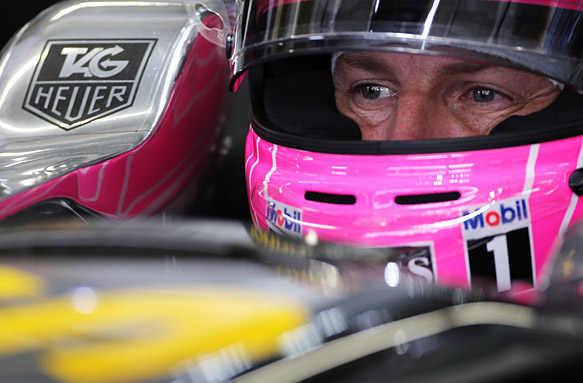
“We knew Mexico would be tough, and many of Interlagos’ characteristics are similar, with its steep sections and long straights. However, the circuit is incredible to drive and always a lot of fun, so I’m looking forward to the weekend. We are still seeing progress in our pace and small improvements in every area race by race, so we know it’s important to keep our heads down and keep pushing towards the end of the season. Every race counts and the more we can learn and gather data at every track, the more information we will have at our disposal over the winter and for the development of our package.

“After the incredible fan support we received in Mexico, I know we’ll receive another warm welcome in Brazil. The atmosphere is always fantastic and the Brazilian fans are just as passionate. It’s a very special place and we always see unpredictable racing there, so let’s hope we can have some fun this weekend.”
#22 Jenson Button
Age35 (January 19 1980)
GPs282
Wins15
Poles8
Fastest laps8
Best result in Brazil1st (2012)
Jenson Button
“Interlagos has got to be up there with the all-time great circuits in Formula 1. There’s so much history there, so many legends have raced on that circuit, and the fans are always so enthusiastic that you can’t help but love going back there each year.

“For me personally, the track is very special. It’s a tough circuit on the cars as it’s so bumpy, but really fun to drive with its off-camber sections and technical mix of corners. Although we found it tough in Mexico – especially with the altitude – our pace in the corners was positive, so I’m looking forward to seeing how our car performs in those areas in Brazil.

“The weather is usually unpredictable too, which has made for some chaotic races in the past. It’s great for the fans and always produces some really interesting results, so hopefully we can put ourselves in a position to take advantage if anything happens. Unlike the last couple of races, I hope we can get some solid dry running done initially so that we can really focus on set-up and reliability, and get as much time on track as possible from Friday onwards – then we’ll see what we can do from there.”
Eric Boullier
Racing director, McLaren-Honda

“After the drama of Austin and spectacle of Mexico, it’s great to move  to another hugely popular circuit in the Americas, and a track that holds great  memories for the McLaren-Honda team. We’ve enjoyed numerous nail-biting finishes, stunning victories and tense championship battles there, and  Interlagos is a venue universally loved by the whole Formula 1 community.

“Over its incredible 78-year history, its charm is as strong as ever, and the fans are just as animated. Interlagos has an incredible heritage and it’s great to see its legacy continue. It’s a fantastic driver’s track with lots of uniquely challenging features that the drivers love, and the fans love to watch. Although no longer the season finale, there’s always a great sense of anticipation before every Brazilian Grand Prix, and this year is no different.

“For McLaren-Honda, after a challenging couple of races, we are looking forward to arriving at the Autódromo José Carlos Pace and pushing hard with our development for the next two grands prix. Although the end of the season is in sight, we are still working flat-out to bring new parts to the car and maximise our learning and development until the last possible moment. We are focussing on both reliability and performance, and hope for a more positive weekend at this legendary circuit.”

Yasuhisa Arai
Honda R&D senior managing officer - chief officer of motorsport

“Following on from the Mexican Grand Prix, Brazil will be another atmospheric race weekend for fans of Formula 1.

“Interlagos is a mixture of fast flowing corners, with a technical slow section and multiple undulating turns. The tightness of the layout will hopefully make for an exciting race, with close competition and overtaking.

“The car and the power unit will both be busy there, changing direction and speed with every turn, which makes throttle response and car balance important.

“We predict that the altitude of the circuit, albeit not as high as Mexico City, will slightly affect the performance of the car, so we will fine-tune the driveability and deployment of the power unit accordingly."