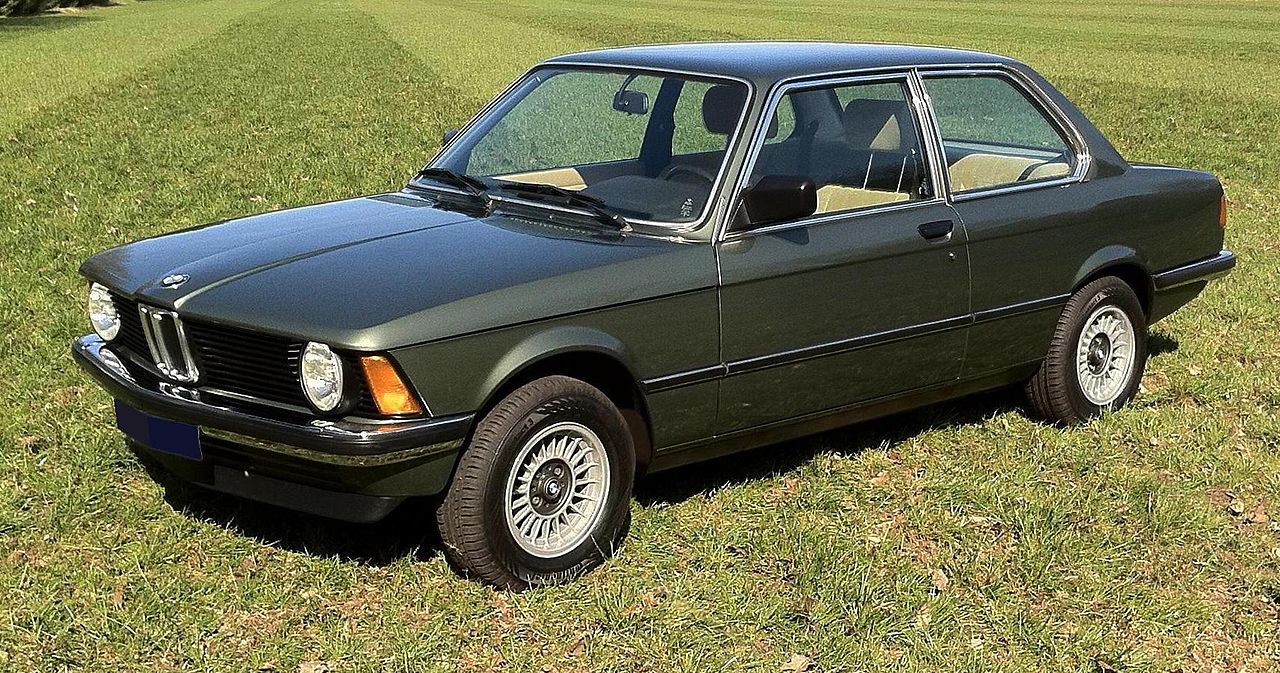
In 1975, BMW introduced the 3 series, a sporty sedan that became synonymous with the brand's performance image.
Forty years later, despite intensifying competition and changing customer tastes, the 3 series still dominates its segment. Competitors openly benchmark the 3 series and target it in their advertising. Buff books lavish it with praise. Dealers love the repeat business.
In many ways, the 3 series is BMW, the brand with the enviable mystique built on German engineering and uncompromised performance.
But the competition is coming on strong; some experts say the Mercedes-Benz C class and Cadillac ATS are already on par with the 3 series when it comes to technology and performance. The next-generation Audi A4 due next year could be another tough rival.
The question is whether BMW can maintain the 3 series' performance aura in a market demanding more luxury, connectivity, semiautonomous driving technology and increased fuel economy.
BMW can't afford not to.
The 3 series accounts for about 25 percent of BMW sales worldwide, the automaker says. In the United States, 501,569 luxury compact cars were sold last year, and the 3 series (and its spinoff 4 series) accounted for nearly 28 percent of those sales -- a percentage BMW has maintained seven out of the last 10 years.
Dealers testify to the nameplate's market strength.
"I've had repeat buyers over and over again. Over the years, the 3 series has evolved, and the technology has evolved, but they have not rested on their laurels," says Joe Laham, owner of BMW of Cape Cod in Massachusetts.
Laham, who sells 10 other brands including Audi and Volvo, says rivals have a hard time conquesting 3-series buyers.
"Everybody has tried to benchmark it," he says. "I do value my partners, but it is tough to compete with the legend."
Lutz: At the creation
The legend has been decades in the making. Fabled executive Bob Lutz joined BMW in 1971 as the board member for global sales and marketing and helped create that aura.
Lutz was there when the 3 series was launched and when BMW's tag line "Aus Freuden am Fahren" ("For the Joy of Driving") became "The Ultimate Driving Machine."
"We blessed it as conveying exactly the right blend of superiority and excellence," Lutz says. "It was the BMW promise that nobody else could make."
In the last five years, mechanically and with performance, other cars have caught up to the 3 series, he says: "What hasn't disappeared is the reputation and the brand image. It is not totally reflected by reality, but it was well-earned in a 35-year history producing good and desirable cars."
It's an enviable position, admits Johan de Nysschen, president of Cadillac, a brand that wants to dethrone the 3 series. BMW's mystique is the result of "many generations of consistency," one that Cadillac is seeking to emulate, he adds.
De Nysschen believes General Motors' brand can compete, but the perception of Cadillac as a true player will come with "consistent execution. We will see a change in five years."
"My former employer Audi are respected today. They did not get there overnight; it has taken them 20 to 25 years, and our journey will not be that long."
But he concedes it is hard to dislodge an image as strong as the 3 series': "They have embodied that in their product and developed this intangible aura and an appeal that has much intangible value. People imagine the car is much greater than it is."
There is some support for de Nysschen's opinion.
Although the 3 series has reached "that pinnacle level and has maintained it," says Stephanie Brinley, an analyst with IHS Automotive in Detroit, "I am not sure that BMW has progressively improved the 3 series as much as others have improved their cars."
'Driver focus'
Other experts say competitors still are far from matching the 3 series' "driver focus," as Tim Urquhart, an analyst with IHS in London, puts it. "It consistently beats its rivals on that."
Jean Jennings, editor of jeanknowscars.com and former editor of Automobile magazine, figures there are "at least a half-dozen competitors" vying for the 3 series' crown. Yet the 3 won an Automobile All-Star award 29 years in a row -- more than any other car, Jennings says.
She'd place odds on Mercedes-Benz and Audi coming close in sales. "If Porsche decided to make a four-door sedan in that size, it would probably wipe it up," Jennings adds.
BMW says it has sold 14.6 million 3-series models (including the 4 series coupe and convertible spun off from the 3 series) worldwide since the car went on sale in 1975. Of those, more than 11 million were sedans or station wagons.
Stephan Kessel, BMW AG's head of production management for the 3 and 4 series, says that track record makes the 3 series "the heart of the brand. Most of the values that BMW stands for are in the 3 series. It is an ambassador."
The 3 series has added significance in the U.S.: BMW of North America was founded 40 years ago when the brand took over the sales and distribution of its vehicles from independent distributors.
"When we decided to open our own division in the U.S., that was at the same time that BMW released the most important car as a company," says Manuel Sattig, head of brand strategy in the United States.
The 3 series is the epitome of BMW's marketing as the ultimate driving machine "because it is related to that feeling when you shift the gears and that direct response of using the gas pedal -- it gives you that dynamic driving feeling," Sattig says.
Even Consumer Reports sings the 3 series' praises.
Jake Fisher, the magazine's director of auto testing, says: "It has for a very long time been The One. This is the small, fun-to-drive, luxurious vehicle, and it hasn't had a lot of competition for quite a while."
Lutz says a key to the success of the 3 series is that "it was always superbly engineered."
"It was engineered up to a desirable level as opposed to engineered down to a specific cost," he says. "People expected to pay more."
"That is where the slogan came from. The focus in marketing and the car was on vehicle dynamics, good brakes, sharp handling and good engine sound -- all of the things that provide gratification to the driver."
Urquhart of IHS says the competition has intensified in the last two decades, "but the 3 series is still the benchmark."
With the redesigned C class launched last fall, the Mercedes-Benz sedan "is beginning to close that gap" because of its "premium quality and equipment, and it is a far improved drive over its predecessor," he says.
Mercedes-Benz continues to maintain a price premium over the 3 series with the C class. The C300 starts at $39,325, compared with $34,145 for BMW's entry 320i. Both prices include shipping.
Heiko Schmidt, product manager for the C class at Mercedes-Benz USA, says: "We have come a long way in the last two generations. We closed the gap with the 3 series when you benchmark to powertrain, fit and finish and especially inside with quality."
In the coming year, the C class will get a coupe and convertible designed from the ground up, derivatives that Heiko says finally will put Mercedes on a more level playing field with the 3 series.
Consumer Reports' Fisher says the 3 series isn't the most highly rated car: "In terms of reliability, safety and luxury, there are better cars." He accuses BMW of going "a bit mainstream and backing off that fun-to-drive factor" to appeal to the market's seemingly insatiable demand for plush interiors and entertaining electronics.
For instance, the freshened 2016 3 series boasts an optional color head-up display, parallel and perpendicular parking assist, a navigation system with 3-D visualization in cities and over-the-air maps.
The smaller, less fussy 2-series coupe is what the 3 series used to be, Fisher says.
"The new BMW 3 series is a BMW 2 series -- the 235i is the most classic," he said. "It is fun to drive, luxurious and can hold its own with the luxury and livability."
In Lutz's view, the 3 series faces another challenge. He figures that in the next five years, sporty compacts will matter less as the market continues to shift to compact crossovers: "More and more, worldwide customers are abandoning sedans. If the current trend continues, they will be very rare in five years."
Laham, the Cape Cod dealer, admits some of his former 3-series customers now own the BMW X3 or X1 compact crossovers: "If they don't buy another 3, they buy a variation -- an X3 or an X1." But, he adds, "all of that technology has come off the 3 series."
Lutz says that even with changing consumer tastes and advancing competitors, the 3 leads the pack. "BMW will devote all the technology and marketing to make sure the 3 series remains premium," Lutz says. "In real terms, if it was a 9.2, most others are an 8.5 or a 7.5."
Diana T. Kurylko

_CL_5-door_hatchback_03.jpg)


_2-door_sedan_01.jpg/1024px-1988-1991_BMW_318i_(E30)_2-door_sedan_01.jpg)
_convertible_01.jpg/1024px-1995-1996_BMW_328i_(E36)_convertible_01.jpg)


_%E2%80%93_Frontansicht%2C_26._Februar_2012%2C_W%C3%BClfrath.jpg/1024px-BMW_320d_Sport_Line_(F30)_%E2%80%93_Frontansicht%2C_26._Februar_2012%2C_W%C3%BClfrath.jpg)
