My thoughts on all things motoring, press releases, reviews & techie stuff, from around the world.
Please note that the pictures of vehicles within this blog are used as examples of the specific press releases, on occasions, due to the lack of available official pictures, examples are re-produced.
ANY AND ALL PROFANITIES WILL BE REMOVED AND THE PERSON/S RESPONSIBLE WILL BE BANNED, NO EXCEPTIONS.
Purpose
I will try my best to provide detailed info on various cars and what is like to live with them, I have already produced a few for Jaguar-car-forums, I will do my best to be unbiased, but it will be hard for some cars. I will re-produce press releases and copy from other motoring news.
Showing posts with label Electronic Stability Control. Show all posts
Showing posts with label Electronic Stability Control. Show all posts
Golf assistance systems defuse critical situations
For more than four decades,Golf technologies have been mirrored in the automotive world. What's more: Volkswagen has democratised progress with these innovations.
In particular, thanks to the Golf, safety systems are no longer the privilege of a few, but an expected feature for all.
It started with basics such as appropriate headrests and a secure chassis. This was followed by crash- optimised bodywork, airbags and ABS.
Electronic stability control (ESC) first appeared in 1998 and is still helping drivers today to keep control of the vehicle in potentially dangerous situations. The next stage was innovative assistance systems which created a safety revolution: from City Emergency Braking which anticipates dangers in city traffic and prevents collisions, to the Blind Spot Monitor which takes away the threat of the blind spot.
The Golf's assistance systems are wide-ranging. Now the countdown for the Golf update is under way – and this will once again make the road safer.
Significant Golf safety systems from four decades at a glance:
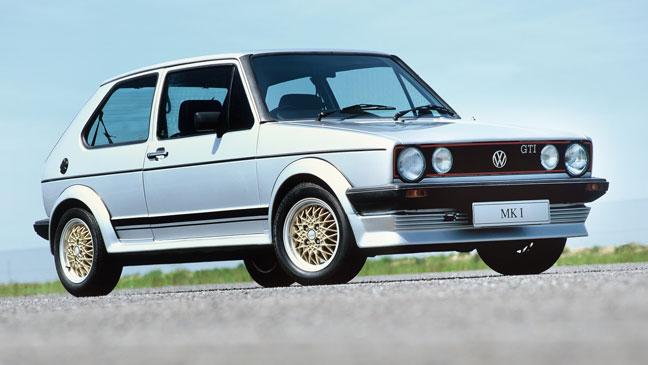
Neutral front-wheel drive – Golf MkI, 1974
Three-point automaticseat belts and headrests on all Golf cars – Golf MkII, 1976
Anti-lock braking system(ABS) – Golf MkII, in “syncro” for the first time, 1986
Driver andpassengerairbags – Golf MkIII, 1992
ABS as standardon all Golf cars – Golf MkIII, 1996
Electronic stability control (ESC) – Golf MkIV, 1998
Brake Assist – Golf MkIV, 1999
ESC first in Germany as standard on all Golf cars – Golf MkIV, 1999
Affirmation ofthe popular family car's comprehensive safety concept
The New Touran hasbeenacclaimedbythe European New Car Assessment Programme (Euro NCAP) as the best compact MPV. The Touran is thus one of the most crash-resistant vehicles of 2015.
The latest generation of the popular family MPV passed the demanding series of Euro NCAP crash tests in September and gained the highest rating of five stars. The rating takes account of the results from four sub-sections: occupant protection for children and adults, pedestrian protection and driver assistance systems.
The NCAP test specifications were toughened in 2015. The introduction in particular of an additional head-on collision of the entire front of the vehicle into a solid obstacle saw increased significance placed on occupant safety. The Touran showed itself to be well equipped to cope: thanks to its optimised vehicle body structure and standard systems such as Electronic Stability Control (ESC) with countersteer assistance, including ABS and Automatic Post-Collision Braking, it is one of Europe’s safest cars.
The Pre-Crash proactive occupant protection system also plays a special role. It activates ahead of any crash in order to minimise its severity by taking preventative measures. In addition to automatic tautening of the safety belts, the system recognises if the vehicle is in danger of skidding and automatically closes the windows and sliding sunroof. The best possible support of the head and side airbags is thus guaranteed.
Euro NCAP publishes a list of the top-ranking vehicles each year. In 2015, a total of 40 models from a range of manufacturers were subjected to the demanding series of NCAP tests.
From today, in Italy, open orders of the new special series that combines the stylistic features of the 4x2 version with functionality, versatility and security of all-wheel drive.
Five liveries, 17 color combinations, details in titanium color and interior specifications: it is the ideal choice for a customer lover of leisure but that does not renounce to the strong personalization.
Available with two Euro 6 engines: 0.9 TwinAir 85 HP 1.3 Multijet and 95 bhp.
The new Panda 4x4 K-Way is available from € 18,200.
With winter approaching it's time to rely on a Panda 4x4 K-Way®, the unstoppable city car that combines the versatility and safety, typical of four-wheel drive, with the unmistakable style of Panda K-Way® front-wheel drive launched in June.
He continues the collaboration between Fiat and the brand dell'antipioggia for excellence, two brands famous throughout the world for their products classic, contemporary, technological, functional, colorful and intelligent.
Specific features of the Panda 4x4 K-Way® is the transmission system "torque on demand" that come into play automatically when required to overcome any situation with ease. In addition, K-Way® Panda 4x4 offers as standard the ESC (Electronic Stability Control)
Full function ELD (Electronic Locking Differential), an additional driving aid and inrush departing on routes with poor grip.
Designed especially for active customers and lovers of free time, outside the Panda 4x4 K-Way® offers special items painted in titanium as bar logo front door and roof bars.
In addition, the customer can choose one of five body colors available - white, blue, black, red and orange - combining it with the wing mirrors in four colors (yellow, orange, blue and titanium) and hubcaps embellished logo K-Way ®, the same that stands on the original sticker placed on the wing mirrors.
The Panda 4x4 K-Way® is equipped as standard with alloy wheels 15 '' burnished and M + S tires that improve traction on slippery surfaces.
The same strong customization is evident inside, seats upholstered in blue fabric and eco-gray skin, with the K-Way® logo displayed on the front seat, in addition to the dashboard and blue instrument panel silver UltraShine.
Furthermore, the distinctive colors of the brand K-Way® are clearly visible on the seat belts customized, on the key cover and floor mats PVC multilayer blue.
Not least, the seats have two back-pockets back equipped with "VISIBAG®", the high visibility jacket - safety device packable and unique style - created specifically to K-Way® for Fiat.
At launch, the Panda 4x4 K-Way® offers two engines meet Euro 6: the petrol 0.9 TwinAir 85 HP (114 g / km CO2) and the turbodiesel 1.3 Multijet 95 bhp (117 g / km CO2).
Joint venture between Fiat and K-Way® is born, a specific line of licensing, and accessories made by Mopar, the brand for the services, the Customer Care, genuine parts and accessories for brands to FCA.
The new collection adopts styles and materials of the brand K-Way® reinterpreted for clients of the Panda: from jackets waterproof resealable bag to the expenditure to be used in the supermarket, the container-empty pockets to shoppers for the modern woman.
Translated by Google - Apologies for any errors that may have been caused.
All-new Ford Focus RS sprints 0-62mph in 4.7 seconds and reaches a maximum speed of 165mph
Fastest ever Ford RS model now available to order from £28,940 featuring Ford Performance AWD and 350PS 2.3-litre EcoBoost engine
Innovative Focus RS also offers Drive Modes – including industry-first Drift Mode – and Launch Control; customer deliveries of high performance hatchback starting in Europe in early 2016
Ford Motor Company has announced that the all-new Focus RS will sprint from 0-62mph in 4.7 seconds, making the high-performance hatchback the fastest accelerating RS model ever.
The Focus RS will reach a top speed of 165mph powered by a specially engineered version of Ford’s new 2.3-litre EcoBoost engine delivering maximum power output of 350PS.
Ford also announced that the Focus RS is now available to order with prices from £28,940.
The all-new Focus RS optimises acceleration by introducing Launch Control technology to a Ford RS model for the first time. The model also debuts new Ford Performance All-Wheel Drive with Dynamic Torque Vectoring, for outstanding traction and grip with unmatched agility and cornering speed.
The Focus RS is joined on display in Frankfurt by the full Ford Performance line-up for Europe, including the all-new Ford GT ultra-high-performance supercar, Focus ST wagon and 5-door models, and the multi-award-winning Fiesta ST.
“The all-new Focus RS delivers stunning performance and innovative technology at a price that will make both our customers and premium automakers look twice,” said Jürgen Gagstatter, chief program engineer for Focus RS. “After experiencing the acceleration and cornering capability of the Focus RS, drivers will question the sense in spending almost £10,000 more on a premium competitor.”
The Focus RS Launch Control system configures the vehicle’s chassis and powertrain systems to deliver the fastest possible acceleration, whatever the track conditions. The driver selects Launch Control from the cluster menu, engages first gear, applies full throttle and then releases the clutch. The system then delivers optimum drive – including distributing torque through the AWD system, maintaining maximum torque using turbo overboost function, managing the traction control system, and setting the dampers.
To achieve maximum acceleration through the gears, a performance shift light in the instrument cluster alerts the driver when approaching the optimum upshift point of 5,900 rpm, and flashes if the engine hits the limit of 6,800 rpm.
The Ford Performance AWD system uses twin electronically-controlled clutch packs to manage the car’s front/rear torque split, and also can control the side-to-side torque distribution on the rear axle – delivering the “torque vectoring” capability, which has a dramatic impact on handling and cornering stability.
The AWD system monitors inputs from multiple vehicle sensors 100 times per second. To deliver optimum driving dynamics, Ford Performance AWD was calibrated alongside the car’s advanced Electronic Stability Control, in particular the brake-based Torque Vectoring Control system that works in parallel with the torque-vectoring AWD.
Focus RS drivers can select four different Drive Modes that configure the AWD system, damper controls, Electronic Stability Control, steering and engine responses, and exhaust sound to deliver optimum performance in road or circuit driving conditions. Normal, Sport or Track settings are available, alongside a special Drift Mode to help the driver achieve controlled oversteer drifts under circuit conditions.
The new 2.3-litre EcoBoost engine for the all-new Focus RS shares its fundamental structure with the all-aluminium four-cylinder engine in the all-new Ford Mustang and is significantly upgraded for the Focus RS to deliver 10 per cent more power. The engine features a new low-inertia twin-scroll turbocharger with larger compressor, enhanced air intake design, and a large-bore high performance exhaust system.
Maximum torque of 440Nm is delivered between 2,000 and 4,500 rpm, with 470Nm available for up to 15 seconds on transient overboost during hard acceleration.
Developed by a team of Ford Performance engineers in Europe and the US, the all-new Focus RS is the third generation of Focus RS cars, following models launched in 2002 and 2009.
The Ford Performance organisation serves as an innovation laboratory and test bed to create unique performance vehicles, parts, accessories and experiences for customers. This includes developing innovations and technologies in aerodynamics, light-weighting, electronics, powertrain performance and fuel efficiency that can be applied more broadly to Ford’s product portfolio.
The 30th car to wear the legendary RS badge, the Focus RS will be built in Saarlouis, Germany, and is one of 12 new performance vehicles Ford will bring to customers globally through 2020 as part of a new era of Ford performance. Ford expects delivery to European customers from early 2016.
Five-star result confirms top level safety of the ŠKODA flagship
Outstanding occupant protection for adults and children
New ŠKODA Superb scores well with innovative safety assistance systems
Current ŠKODA model range: all cars with five stars from Euro NCAP
The newŠKODA Superb has been awarded the maximum five-star rating in Euro NCAP crash tests. The latest Euro NCAP result also shows the high safety standard of the entire ŠKODA model range: at their market launches.
All current ŠKODA model lines have been awarded a maximum five-star rating in Euro NCAP crash tests.
The Euro NCAP (European New Car Assessment Programme) rating includes categories of occupant protection for adults and children, pedestrian protection and safety assistance systems. The new ŠKODA Superb has been awarded with the maximum five-star rating in all four categories.
The new ŠKODA Superb offers safety without compromise: using Volkswagen Group’s latest MQB technology, the brand’s top model scores highly with numerous safety assistance systems.
In the event of a collision, state-of-the-art restraint systems with up to nine airbags, a more rigid body and specifically optimised crumple zones offer the best possible occupant protection.
There is also a completely new chassis that guarantees stability, comfort and agility.
The new ŠKODA Superb offers an array of new assistance systems including (in the UK) standard Front Assist emergency braking function.
This and other optional technology supports the driver in the most diverse traffic situations, from keeping at a safe distance and staying in lane to emergency braking in the case of an impending collision.
The new Superb is fitted as standard with Electronic Stability Control including Multi-Collision Brake.
In the UK, the following safety features are also standard: Front Assist with City Emergency Brake, electronic tyre pressure monitor and XDS+, an extended function of the electronic differential lock.
In addition, several safety assistance systems are optional. The Superb is available with Blind Spot Detect, Rear Traffic Alert, Traffic Jam Assist and Emergency Assist.
Further safety systems are: automatic distance control (Adaptive Cruise Control – standard from SE), proactive occupant protection (Crew Protect Assist), Lane Assist, Speedlimiter, fatigue detection (Driver Alert) and traffic sign recognition (Travel Assist).
Additionally, innovative lighting systems in the new ŠKODA Superb provide more safety. The Superb is available with Smart Light Assist, which provides automatic control of high beam lights, to better illuminate the road without dazzling other road users.
The latest Euro NCAP top rating for the new ŠKODA Superb highlights that the current ŠKODA model range is safer than ever before. In the course of their respective market launches, all current model lines have been awarded with the maximum five-star rating.
Prior to the new ŠKODA Superb, the new ŠKODA Fabia was awarded with five stars in November 2014. The maximum five-star rating was also achieved by the Octavia (2013), Rapid (2012), Citigo (2011) and Yeti (2008).
The outstanding results of ŠKODA vehicles in the Euro NCAP crash tests is the result of extensive efforts by the manufacturer to achieve maximum active and passive safety.
As part of its corporate social responsibility, the company is also involved in many ways in improving safety on roads and motorways.
Euro NCAP is an independent consortium of European ministries for transport, motoring clubs, insurers and consumer groups. The organisation carries out crash tests with new car models and assesses their safety.