Purpose

I will try my best to provide detailed info on various cars and what is like to live with them, I have already produced a few for Jaguar-car-forums, I will do my best to be unbiased, but it will be hard for some cars. I will re-produce press releases and copy from other motoring news.
Showing posts with label Headrests. Show all posts

Monday, 24 October 2016

The countdown continues for the Eighth generation of the golf, in the interim, we look back at noteable models and tech.

  • Golf made airbags and ESC the norm
  • Golf assistance systems defuse critical situations
For more than four decades,Golf technologies have been mirrored in the automotive world. What's more: Volkswagen has democratised progress with these innovations. 
In particular, thanks to the Golf, safety systems are no longer the privilege of a few, but an expected feature for all. 
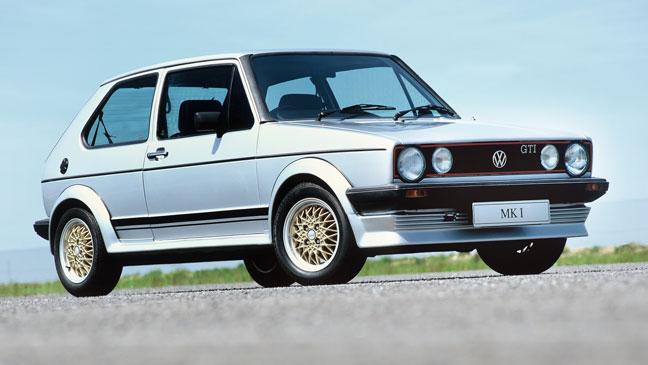
It started with basics such as appropriate headrests and a secure chassis. This was followed by crash- optimised bodywork, airbags and ABS. 
Electronic stability control (ESC) first appeared in 1998 and is still helping drivers today to keep control of the vehicle in potentially dangerous situations. The next stage was innovative assistance systems which created a safety revolution: from City Emergency Braking which anticipates dangers in city traffic and prevents collisions, to the Blind Spot Monitor which takes away the threat of the blind spot. 
The Golf's assistance systems are wide-ranging. Now the countdown for the Golf update is under way – and this will once again make the road safer.
Significant Golf safety systems from four decades at a glance:
  • Neutral front-wheel drive – Golf MkI, 1974
  • Three-point automatic seat belts and headrests on all Golf cars – Golf MkII, 1976
  • Anti-lock braking system (ABS) – Golf MkII, in “syncro” for the first time, 1986
  • Driver and passenger airbags – Golf MkIII, 1992
  • ABS as standardon all Golf cars – Golf MkIII, 1996
  • Electronic stability control (ESC) – Golf MkIV, 1998
  • Brake Assist – Golf MkIV, 1999
  • ESC first in Germany as standard on all Golf cars – Golf MkIV, 1999
  • Crash-optimised pedal clusters (COF) – GolfMkV, 2003.
  • Adaptive Cruise Control (ACC), knee airbags – Golf MkVI, 2008.
  • ACC with Front Assist plus City Emergency Braking – Golf MkVII, 2012.
  • Automatic Post-CollisionBrakingSystem, Proactive Occupant Protection System
  • Golf MkVII, 2012.
  • Blind Spot Monitor and Rear Traffic Alert – Golf Sportsvan, 2014.

Thursday, 8 September 2016

A look at the SEAT 600 and the SEAT Ibiza to compare how car safety has changed in 60 years

60 years of evolution
  • A look at the SEAT 600 and the SEAT Ibiza to compare how car safety has changed in 60 years
  • New brake systems, more elements of passive safety and chassis development are the most significant breakthroughs of recent decades 
  • The next step is to get cars to anticipate future events and try to prevent them
A lot can happen in 60 years, and when it comes to safety that’s a long time for cars to evolve. In terms of safety, and several other topics, cars today bear little resemblance to those of yesteryear. To illustrate this we can compare a 1963 SEAT 600 D to the SEAT Ibiza FR with the following results:
- Airbags and headrests. “The SEAT 600 wasn’t equipped with headrests,” recalls Javier Luzón, head of Passive Safety at SEAT. This feature makes a significant contribution to preventing whiplash when the car is involved in a low speed collision from the rear. In addition, whereas some SEAT Ibizas have up to six airbags, the SEAT 600 had none, because that technology did not become widespread until the 90s.

- Seat belt. It was developed in the 60s. But in the beginning it was “an inextensible strap that users had to adjust to their body,” explains Luzón. The difference today is that this element of passive safety adapts itself to the user’s body and not the other way round. This provides more safety in the event of a collision, as the current seat belt system fits snugly on the body and retains the passenger instantly.
- Brakes. The brake system on both models is also completely different. The SEAT 600 was equipped with drum brakes “with much lower braking power than what can be achieved today,” says Luzón. By contrast, current cars “have large diameter disc brakes,” tyres are also much wider, “giving them more contact surface with the road for safer traction,” and the cars feature ABS, a system that prevents cars from skidding out of control when braking.


- Chassis. A car’s chassis is another fundamental component when it comes to safety, and its evolution over the past several decades can clearly be seen. One major difference is the greater width of the structures, such as the doors, which nowadays “have added safety features that give better protection than before in the event of a collision.”

All in all, today’s cars offer the highest level of passenger safety. “The next step we will soon see involves cars with the ability to anticipate future events and react accordingly,” concludes Javier Luzón. This will be the beginning of a new era with technology that was unheard of at the time of the legendary 600.