Purpose

I will try my best to provide detailed info on various cars and what is like to live with them, I have already produced a few for Jaguar-car-forums, I will do my best to be unbiased, but it will be hard for some cars. I will re-produce press releases and copy from other motoring news.
Showing posts with label Jaguar Classic. Show all posts

Wednesday, 12 April 2017

The first of Ten fully restored Jaguar E-Types direct from Jaguar Classic to be shown in Germany this week.

  • First Reborn initiative for Jaguar Classic builds on successful Land Rover Classic programmes for Series I and Range Rover
  • Jaguar Classic is offering an initial batch of 10 comprehensively restored Series 1 E-types for sale direct from its purpose-built facility in Coventry
  • First E-type Reborn, a 1965 Series 1 Fixed Head Coupe 4.2, will make its world debut at Techno Classica Essen show in Germany
  • Launch of exclusive Jaguar Bonnet Art extends E-type’s appeal to interior decoration
Jaguar Classic will debut its first ‘Reborn’ Jaguar E-type at the Techno-Classica Essen show in April. An initial batch of 10 expertly sourced and comprehensively restored examples of the iconic E-type are now offered for sale direct from the new Jaguar Land Rover Classic Works facility in the UK.
E-type Reborn is a complete service from Jaguar Classic, which offers prospective customers the unique opportunity to purchase an original and highly collectible E-type direct from the vehicle’s original manufacturer. The launch of E-type Reborn is a first for Jaguar and extends the successful initiative previously introduced for Land Rover’s Series I and Range Rover Classic models, which will also be on show at Essen.
Every E-type Reborn, which starts with a base vehicle sourced by Jaguar’s E-type experts, is completely restored according to the company’s original 1960s factory specification. Unique access to build records and original drawings held by the Jaguar Heritage Trust, and the team’s decades of experience in restoration up to concours-winning standard, ensure absolute authenticity. Jaguar Classic Parts are used throughout, to maximise the vehicle’s quality, longevity and collectability.
Tim Hannig, Director, Jaguar Land Rover Classic, said: “The launch of E-type Reborn is a hugely exciting development for Jaguar Classic. The E-type is the most iconic sports car of all time, so we are delighted to be able to give new life to expertly selected examples for discerning customers around the world to own and enjoy.
“The resources and information available to Jaguar Classic’s expert technicians are unrivalled, which results in the most authentic E-type restorations possible.”
The first vehicle to go through the complete E-type Reborn process is an Opalescent Gunmetal Grey Series 1 4.2 Fixed Head Coupe. Originally exported to California in May 1965, the car recorded 78,000 miles before being stored in 1983. It retains its original matching numbers bodyshell, engine and gearbox, all of which have been completely rebuilt by Jaguar Classic technicians.
As much of the original vehicle as possible is retained or refurbished to correct specifications, while any safety-critical parts are replaced with new items from Jaguar Classic Parts. Body panels from Jaguar Classic’s reverse-engineered panel programme are fitted where necessary, to remove corrosion and restore the E-type’s iconic looks with the best fit possible. The E-type Reborn team’s meticulous attention to detail even extends to recreating the correct type of spot-welding when refitting those panels.
A number of sympathetic upgrades from later E-types can be incorporated into the restoration process at extra cost, subject to the customer’s wishes, including improved cooling (using Lightweight E-type-derived parts), all-synchromesh gearbox (if not fitted to the vehicle originally), or Series 2 front brake calipers.
Prices for E-type Reborn restorations from Jaguar Classic are dependent on specification, starting from £285,000.
Jaguar E-type Reborn specification
  • Originally produced: 1961-1968 (Series 1)
  • Engine: 265bhp, 3781cc or 4235cc, in-line six-cylinder petrol
  • Transmission: 4-speed manual, rear-wheel drive
  • Brakes: Servo-assisted discs front and rear
  • Top speed: 150mph
  • 0-60mph: 7sec

The Jaguar E-type was launched at the Geneva Motor Show in 1961 and was an instant hit. Its sensational jet aircraft-inspired lines and 150mph performance set a new benchmark for high-performance motoring in the 1960s. It was the most iconic sports car of its generation.

Such was the E-type's popularity it attracted star owners such as Steve McQueen, George Best, Sir Jackie Stewart, Brigitte Bardot and Frank Sinatra. Racing examples were successfully campaigned by drivers including Graham Hill, Jackie Stewart, Roy Salvadori and Briggs Cunningham.
More than 56 years since its debut, the E-type is still a sensational road car and race winner, and Jaguar Classic is the world’s number one source of authentic E-type parts and experiences.
E-type as art
There’s even more on offer for E-type enthusiasts at Techno-Classica Essen, as Jaguar showcases a new range of exclusive Jaguar Bonnet Art: E-type bonnets as an eye-catching wall-mounted ‘canvas’. Solid colours, racing roundels, racing stripes and one-off designs may all be commissioned. Prices start from £8,000. 

Tuesday, 22 November 2016

LA SHOW - The great Jaguar fire in 1957 resulted in lost XKSS production, today, those lost cars are being built.

  • Jaguar Classic reveals ‘new original’ XKSS to media at Petersen Museum in Los Angeles
  • One-off car has been authentically produced to exact 1957 specification by Jaguar Land Rover Classic’s expert craftsmen
  • Nine examples to be hand-built in the UK with deliveries to customers beginning in 2017
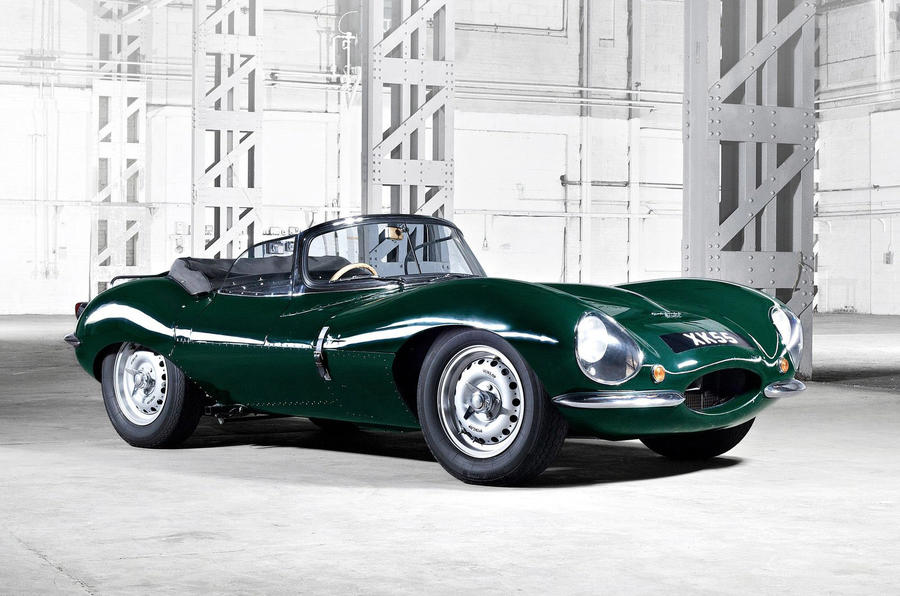
The first genuine Jaguar XKSS to be built in almost 60 years was today given its world debut presentation at the Petersen Museum, Los Angeles by Jaguar Classic.  
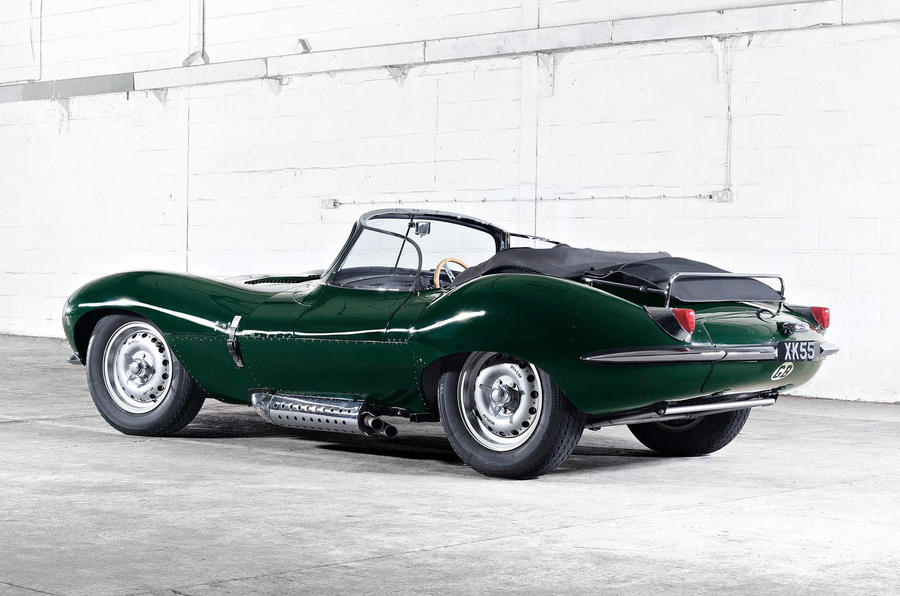
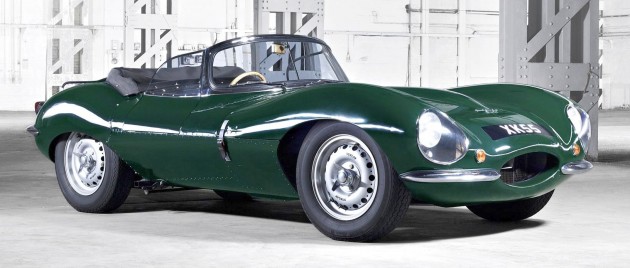
The stunning XKSS, finished in Sherwood Green paint, has been created by the Jaguar Classic engineering team ahead of the production of nine cars for delivery to customers across the globe in 2017.
Often referred to as the world’s first supercar, the XKSS was originally made by Jaguar as a road-going conversion of the Le Mans-winning D-type, which was built from 1954-1956.  
In 1957, nine cars earmarked for export to North America were lost in a fire at Jaguar’s Browns Lane factory in the British Midlands; meaning just 16 examples of XKSS were built. 


Earlier this year Jaguar announced that its Classic division would build the nine ‘lost’ XKSS sports cars for a select group of established collectors and customers. The new one-off XKSS presented in Los Angeles is the summation of 18 months of research and will be used as a blueprint from which the nine continuation cars are built. 
The nine cars will be completely new, with period chassis numbers from the XKSS chassis log. All cars are now sold at a price in excess of £1million each.
The XKSS is the second continuation car to be created by Jaguar, following on from the six Lightweight E-types that were built in 2014. This project helped the team learn to engineer cars that are faithful to the specifications to which they were built in period, and this knowledge has been enhanced in creating the ‘new original’ XKSS.
The XKSS unveiled in Los Angeles is a period correct continuation, built using a combination of original drawings from Jaguar’s archive and modern technology.  The Jaguar Classic engineering team scanned several versions of the 1957 XKSS to help build a complete digital image of the car, from the body to chassis, and including all parts required.
The body of the XKSS is made from magnesium alloy, as it was in 1957, and because the original styling bucks do not exist, Jaguar Classic produced a new, bespoke styling buck based on the original bodies from the 1950s. The bodies of the nine new cars will be formed on this buck, using a traditional process called hand-wheeling.
Jaguar Classic’s expert engineers worked with the original frames and from there produced CAD to support build of the chassis. In partnership with the Classic team, frame maker Reynolds – famous for their 531 tubing – was briefed to craft bespoke new parts using imperial measurements, rather than metric. The frames are bronze welded in the same way as the period XKSS chassis tubing.
The continuation cars feature period specification four-wheel Dunlop disc brakes with a Plessey pump, and Dunlop tyres with riveted two-piece magnesium alloy wheels.
Under the bonnet, the XKSS is supplied with a 262hp 3.4-litre straight six-cylinder Jaguar D-type engine. The engine features completely new cast iron blocks, new cast cylinder heads and three Weber DC03 carburetors.
Inside, the ‘new original’ XKSS features perfect recreations of the original Smiths gauges.  Everything from the wood of the steering wheel, to the grain of the leather seats, through to the brass knobs on the XKSS dashboard, is precisely as it would have been in 1957.
Minor specification changes have been made only to improve driver and passenger safety. The fuel cell, for example, uses robust, modern materials to support throughput of modern fuels.
Customer vehicles will be hand-built beginning this year, and it is estimated that 10,000 man hours will go into building each of the new XKSS cars.
Kev Riches, Jaguar Classic Engineering Manager, said“The XKSS is one of the most important cars in Jaguar’s history, and we are committed to making the ‘new original’ version absolutely faithful to the period car in every way.
“From the number, type and position of all the rivets used – there are more than 2,000 in total – to the Smiths gauges on the dashboard, everything is the same as the original cars, because that is the way it should be.”
Tim Hannig, Director of Jaguar Land Rover Classic, said“The XKSS continuation programme underlines the world-class expertise we have at Jaguar Land Rover Classic.  We are committed to nurturing the passion and enthusiasm for Jaguar’s illustrious past by offering exceptional cars, services, parts and experiences.
“Jaguar Land Rover Classic is perfectly positioned to cater for this growing love for classics, with a new £7.5m global headquarters set to open in Coventry in 2017. We are looking forward to growing this business, supporting our existing customers and engaging with a whole new generation of global enthusiasts.”

Thursday, 7 July 2016

JLR #4 - The next continuation model, the XKSS will be built, the nine lost models destroyed in the massive Jaguar Fire are to be built.

  • Jaguar Classic confirms limited edition continuation XKSS to make world debut in North America in 2016
  • Lightweight E-type chassis #15 to make racing debut at Le Mans Classic (10-12 July 2016), driven by presenter and journalist Chris Harris
Jaguar Classic today announces that the hotly-anticipated continuation Jaguar XKSS will receive its world debut presentation in November this year in California, North America. The presentation will coincide with the opening of the Los Angeles Auto Show.
Production of the ultra-exclusive continuation Jaguar XKSS will be limited to just nine examples, hand-crafted by Jaguar Classic expert technicians and manufactured to the exact same specification as those produced in 1957. 

Often referred to as the world’s first supercar, Jaguar originally made the XKSS as a road-going version of the Le Mans winning D-type, and cars built in ’57 were originally earmarked for export to the U.S., but disaster struck and a number were lost to the Browns Lane fire of the same year.  Now, 59 years later, Jaguar will build the nine ‘lost’ XKSS sports cars for a select group of established collectors and customers.
Tim Hannig, Director of Jaguar Land Rover Classic, said:  “The continuation XKSS reaffirms our commitment to nurture the passion and enthusiasm for Jaguar’s illustrious past by offering exceptional cars, services, parts and experiences.”
All nine continuation XKSS are now sold, with first deliveries to customers planned for early 2017.
The expertise garnered by the Jaguar Classic team in producing the business’s first continuation model – the Lightweight E-type launched in 2015, will be enhanced in the production process developed for the 2017 XKSS.
Lightweight E-type chassis number 15 is one of the famous ‘Missing Six’ produced as continuation models in 2015. Owned by Stratstone, chassis number 15 will make its racing debut this month at the Le Mans ClassicCircuit de la Sarthe on Saturday 09 July.
The fascinating story of the Lightweight E-type dates back to February 1963 and the intended 18-car ‘Special GT E-type’ race car project from that time.  Only 12 of the 18 were built and delivered by the Browns Lane competitions department between 1963 and 1964, which gave rise to the infamous ‘Missing Six’.  These missing chassis numbers – 13 to 18 – were found in 2014, and so the modern-day production by Jaguar Land Rover’s new Special Vehicle Operations division’s Jaguar Classic, got underway.
The modern incarnation of the Lightweight E-type saw Jaguar Classic deploy modern iterations of the company’s original 1960s tooling and production methods. Replete with world-leading aluminium body technology, skilled hand craftsmanship, the six-cylinder XK engine with its aluminium block, wide angle aluminium cylinder head and dry sump lubrication (derived from the Le-Mans winning D-type of the 1950s), the 2015 Lightweight E-type is both original and special in every way.
The cars have been delivered as period competition vehicles, fully compliant with FIA homologation for historic motorsport purposes.  All of the ‘Missing Six’ are built to period-exact dimensions and specifications, ensuring absolute authenticity and a modern-day build to the highest quality standards.
Journalist and television presenter Chris Harris will pilot Lightweight E-type chassis number 15 in its race debut at Le Mans Classic this weekend as part of the Jaguar Classic Challenge.   

Friday, 25 March 2016

Jaguar to build the lost XKSS models when Brown's Lane Burned to the ground, so, more New, old Jags, Awesome !

  • Ultra-exclusive sports car to be hand-built by Jaguar Classic
  • All nine cars built to exact same specification as those made in 1957, replacing cars lost due to the Browns Lane fire
  • Jaguar originally made the XKSS as a road-going version of the Le Mans winning D-type
Jaguar is to build the stunning XKSS as an ultra-exclusive continuation model.
Nine new XKSS’s - often referred to by experts as the world’s first supercar - will be hand built by Jaguar Classic to the exact specification as they appeared in 1957, replacing the cars lost due to the famous Browns Lane factory fire.
Tim Hannig, Director Jaguar Land Rover Classic, said: “The XKSS occupies a unique place in Jaguar’s history and is a car coveted by collectors the world over for its exclusivity and unmistakable design.

“Jaguar Classic’s highly skilled team of engineers and technicians will draw on decades of knowledge to ensure each of the nine cars is completely authentic and crafted to the highest quality.
“Our continuation XKSS reaffirms our commitment to nurture the passion and enthusiasm for Jaguar’s illustrious past by offering exceptional cars, services, parts and experiences.”
The original cars were earmarked for export to the USA, however, just 16 were completed before disaster struck. Now 59 years later, Jaguar is going to build the nine ‘lost’ XKSS sports cars for a select group of established collectors and customers.
The expertise gained during the construction of the Lightweight E-type project will be transferred to the construction of the nine ultra-exclusive continuations. Each one will be hand-built at Jaguar’s new ‘Experimental Shop’ in Warwick.
Every car will be constructed to the same specifications as those first 16 made in 1957 – every aspect fully certified by Jaguar. The price will be in excess of £1 million.
The story of the XKSS began following Jaguar’s three successive Le Mans victories in 1955, 1956 and 1957 with the all-conquering D-type.
After the hat-trick of wins, Sir Williams Lyons took the decision on 14 January 1957 to convert the remaining 25 D-types into road-going versions with several external modifications - creating the world’s first super car.
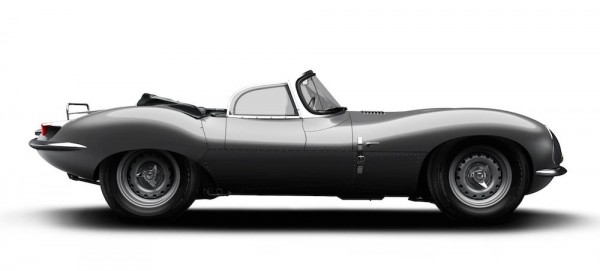
These modifications included the addition of a new higher windscreen, an extra door on the passenger side, taking away the divider between driver and passenger and the removal of the famous fin behind the driver’s seat.
The first deliveries of the new continuation Jaguar XKSS will commence in early 2017.