Purpose

I will try my best to provide detailed info on various cars and what is like to live with them, I have already produced a few for Jaguar-car-forums, I will do my best to be unbiased, but it will be hard for some cars. I will re-produce press releases and copy from other motoring news.
Showing posts with label XKSS. Show all posts

Tuesday, 22 November 2016

LA SHOW - The great Jaguar fire in 1957 resulted in lost XKSS production, today, those lost cars are being built.

  • Jaguar Classic reveals ‘new original’ XKSS to media at Petersen Museum in Los Angeles
  • One-off car has been authentically produced to exact 1957 specification by Jaguar Land Rover Classic’s expert craftsmen
  • Nine examples to be hand-built in the UK with deliveries to customers beginning in 2017
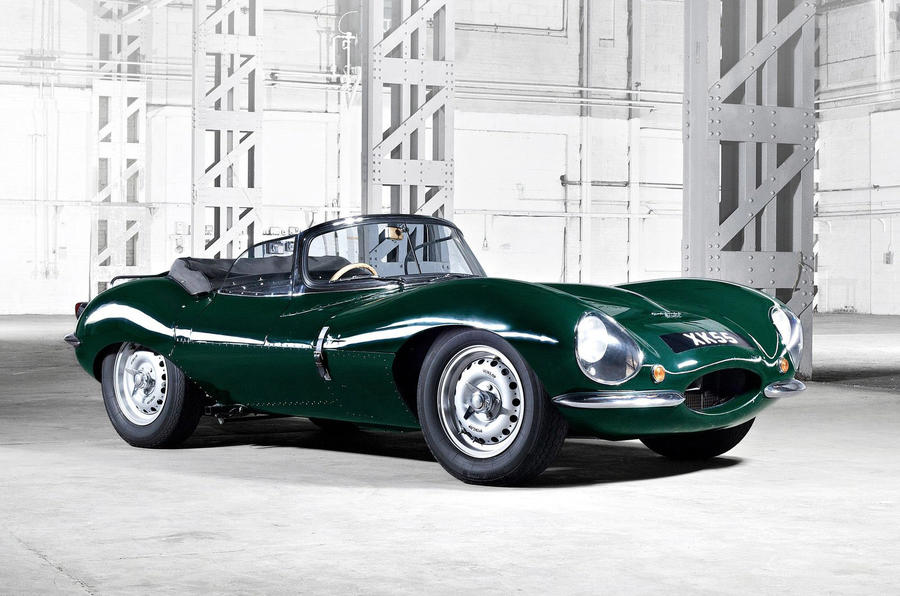
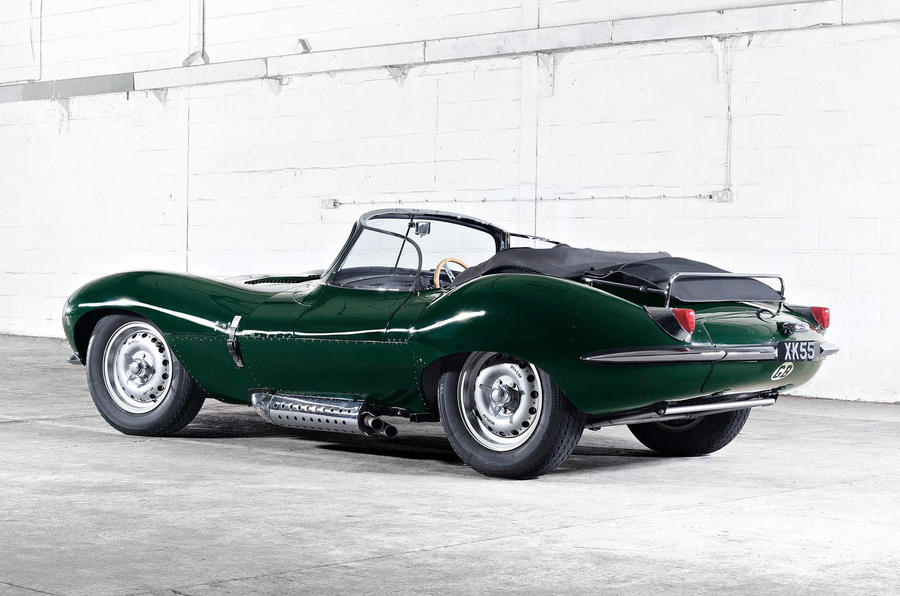
The first genuine Jaguar XKSS to be built in almost 60 years was today given its world debut presentation at the Petersen Museum, Los Angeles by Jaguar Classic.  
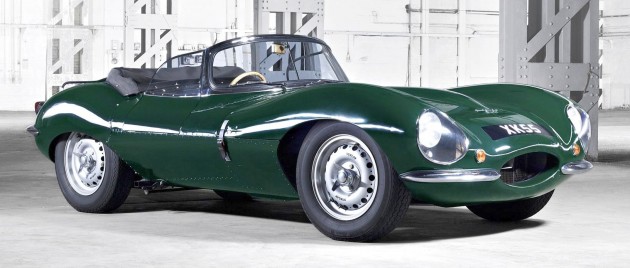
The stunning XKSS, finished in Sherwood Green paint, has been created by the Jaguar Classic engineering team ahead of the production of nine cars for delivery to customers across the globe in 2017.
Often referred to as the world’s first supercar, the XKSS was originally made by Jaguar as a road-going conversion of the Le Mans-winning D-type, which was built from 1954-1956.  
In 1957, nine cars earmarked for export to North America were lost in a fire at Jaguar’s Browns Lane factory in the British Midlands; meaning just 16 examples of XKSS were built. 


Earlier this year Jaguar announced that its Classic division would build the nine ‘lost’ XKSS sports cars for a select group of established collectors and customers. The new one-off XKSS presented in Los Angeles is the summation of 18 months of research and will be used as a blueprint from which the nine continuation cars are built. 
The nine cars will be completely new, with period chassis numbers from the XKSS chassis log. All cars are now sold at a price in excess of £1million each.
The XKSS is the second continuation car to be created by Jaguar, following on from the six Lightweight E-types that were built in 2014. This project helped the team learn to engineer cars that are faithful to the specifications to which they were built in period, and this knowledge has been enhanced in creating the ‘new original’ XKSS.
The XKSS unveiled in Los Angeles is a period correct continuation, built using a combination of original drawings from Jaguar’s archive and modern technology.  The Jaguar Classic engineering team scanned several versions of the 1957 XKSS to help build a complete digital image of the car, from the body to chassis, and including all parts required.
The body of the XKSS is made from magnesium alloy, as it was in 1957, and because the original styling bucks do not exist, Jaguar Classic produced a new, bespoke styling buck based on the original bodies from the 1950s. The bodies of the nine new cars will be formed on this buck, using a traditional process called hand-wheeling.
Jaguar Classic’s expert engineers worked with the original frames and from there produced CAD to support build of the chassis. In partnership with the Classic team, frame maker Reynolds – famous for their 531 tubing – was briefed to craft bespoke new parts using imperial measurements, rather than metric. The frames are bronze welded in the same way as the period XKSS chassis tubing.
The continuation cars feature period specification four-wheel Dunlop disc brakes with a Plessey pump, and Dunlop tyres with riveted two-piece magnesium alloy wheels.
Under the bonnet, the XKSS is supplied with a 262hp 3.4-litre straight six-cylinder Jaguar D-type engine. The engine features completely new cast iron blocks, new cast cylinder heads and three Weber DC03 carburetors.
Inside, the ‘new original’ XKSS features perfect recreations of the original Smiths gauges.  Everything from the wood of the steering wheel, to the grain of the leather seats, through to the brass knobs on the XKSS dashboard, is precisely as it would have been in 1957.
Minor specification changes have been made only to improve driver and passenger safety. The fuel cell, for example, uses robust, modern materials to support throughput of modern fuels.
Customer vehicles will be hand-built beginning this year, and it is estimated that 10,000 man hours will go into building each of the new XKSS cars.
Kev Riches, Jaguar Classic Engineering Manager, said“The XKSS is one of the most important cars in Jaguar’s history, and we are committed to making the ‘new original’ version absolutely faithful to the period car in every way.
“From the number, type and position of all the rivets used – there are more than 2,000 in total – to the Smiths gauges on the dashboard, everything is the same as the original cars, because that is the way it should be.”
Tim Hannig, Director of Jaguar Land Rover Classic, said“The XKSS continuation programme underlines the world-class expertise we have at Jaguar Land Rover Classic.  We are committed to nurturing the passion and enthusiasm for Jaguar’s illustrious past by offering exceptional cars, services, parts and experiences.
“Jaguar Land Rover Classic is perfectly positioned to cater for this growing love for classics, with a new £7.5m global headquarters set to open in Coventry in 2017. We are looking forward to growing this business, supporting our existing customers and engaging with a whole new generation of global enthusiasts.”

Thursday, 7 July 2016

JLR #4 - The next continuation model, the XKSS will be built, the nine lost models destroyed in the massive Jaguar Fire are to be built.

  • Jaguar Classic confirms limited edition continuation XKSS to make world debut in North America in 2016
  • Lightweight E-type chassis #15 to make racing debut at Le Mans Classic (10-12 July 2016), driven by presenter and journalist Chris Harris
Jaguar Classic today announces that the hotly-anticipated continuation Jaguar XKSS will receive its world debut presentation in November this year in California, North America. The presentation will coincide with the opening of the Los Angeles Auto Show.
Production of the ultra-exclusive continuation Jaguar XKSS will be limited to just nine examples, hand-crafted by Jaguar Classic expert technicians and manufactured to the exact same specification as those produced in 1957. 

Often referred to as the world’s first supercar, Jaguar originally made the XKSS as a road-going version of the Le Mans winning D-type, and cars built in ’57 were originally earmarked for export to the U.S., but disaster struck and a number were lost to the Browns Lane fire of the same year.  Now, 59 years later, Jaguar will build the nine ‘lost’ XKSS sports cars for a select group of established collectors and customers.
Tim Hannig, Director of Jaguar Land Rover Classic, said:  “The continuation XKSS reaffirms our commitment to nurture the passion and enthusiasm for Jaguar’s illustrious past by offering exceptional cars, services, parts and experiences.”
All nine continuation XKSS are now sold, with first deliveries to customers planned for early 2017.
The expertise garnered by the Jaguar Classic team in producing the business’s first continuation model – the Lightweight E-type launched in 2015, will be enhanced in the production process developed for the 2017 XKSS.
Lightweight E-type chassis number 15 is one of the famous ‘Missing Six’ produced as continuation models in 2015. Owned by Stratstone, chassis number 15 will make its racing debut this month at the Le Mans ClassicCircuit de la Sarthe on Saturday 09 July.
The fascinating story of the Lightweight E-type dates back to February 1963 and the intended 18-car ‘Special GT E-type’ race car project from that time.  Only 12 of the 18 were built and delivered by the Browns Lane competitions department between 1963 and 1964, which gave rise to the infamous ‘Missing Six’.  These missing chassis numbers – 13 to 18 – were found in 2014, and so the modern-day production by Jaguar Land Rover’s new Special Vehicle Operations division’s Jaguar Classic, got underway.
The modern incarnation of the Lightweight E-type saw Jaguar Classic deploy modern iterations of the company’s original 1960s tooling and production methods. Replete with world-leading aluminium body technology, skilled hand craftsmanship, the six-cylinder XK engine with its aluminium block, wide angle aluminium cylinder head and dry sump lubrication (derived from the Le-Mans winning D-type of the 1950s), the 2015 Lightweight E-type is both original and special in every way.
The cars have been delivered as period competition vehicles, fully compliant with FIA homologation for historic motorsport purposes.  All of the ‘Missing Six’ are built to period-exact dimensions and specifications, ensuring absolute authenticity and a modern-day build to the highest quality standards.
Journalist and television presenter Chris Harris will pilot Lightweight E-type chassis number 15 in its race debut at Le Mans Classic this weekend as part of the Jaguar Classic Challenge.   

Friday, 25 March 2016

Jaguar to build the lost XKSS models when Brown's Lane Burned to the ground, so, more New, old Jags, Awesome !

  • Ultra-exclusive sports car to be hand-built by Jaguar Classic
  • All nine cars built to exact same specification as those made in 1957, replacing cars lost due to the Browns Lane fire
  • Jaguar originally made the XKSS as a road-going version of the Le Mans winning D-type
Jaguar is to build the stunning XKSS as an ultra-exclusive continuation model.
Nine new XKSS’s - often referred to by experts as the world’s first supercar - will be hand built by Jaguar Classic to the exact specification as they appeared in 1957, replacing the cars lost due to the famous Browns Lane factory fire.
Tim Hannig, Director Jaguar Land Rover Classic, said: “The XKSS occupies a unique place in Jaguar’s history and is a car coveted by collectors the world over for its exclusivity and unmistakable design.

“Jaguar Classic’s highly skilled team of engineers and technicians will draw on decades of knowledge to ensure each of the nine cars is completely authentic and crafted to the highest quality.
“Our continuation XKSS reaffirms our commitment to nurture the passion and enthusiasm for Jaguar’s illustrious past by offering exceptional cars, services, parts and experiences.”
The original cars were earmarked for export to the USA, however, just 16 were completed before disaster struck. Now 59 years later, Jaguar is going to build the nine ‘lost’ XKSS sports cars for a select group of established collectors and customers.
The expertise gained during the construction of the Lightweight E-type project will be transferred to the construction of the nine ultra-exclusive continuations. Each one will be hand-built at Jaguar’s new ‘Experimental Shop’ in Warwick.
Every car will be constructed to the same specifications as those first 16 made in 1957 – every aspect fully certified by Jaguar. The price will be in excess of £1 million.
The story of the XKSS began following Jaguar’s three successive Le Mans victories in 1955, 1956 and 1957 with the all-conquering D-type.
After the hat-trick of wins, Sir Williams Lyons took the decision on 14 January 1957 to convert the remaining 25 D-types into road-going versions with several external modifications - creating the world’s first super car.
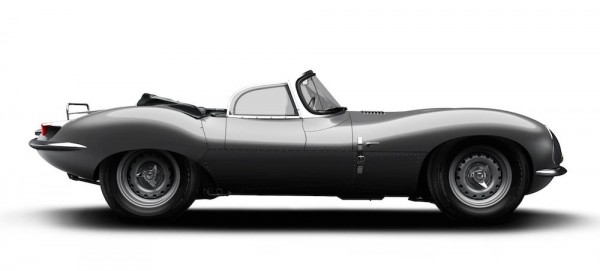
These modifications included the addition of a new higher windscreen, an extra door on the passenger side, taking away the divider between driver and passenger and the removal of the famous fin behind the driver’s seat.
The first deliveries of the new continuation Jaguar XKSS will commence in early 2017.

Sunday, 15 February 2015

Full details of the new Jaguar Heritage Challenge Series have been announced.

  • The Jaguar Heritage Challenge Series will be contested across five weekends at some of the best drivers’ circuits in the UK and Europe
  • The new race series, run in partnership with the Historic Sports Car Club, is open to pre-‘66 Jaguar models, ranging from MkI and MkII saloons to C-type, D-type and early E-type cars
  • The Jaguar Heritage Challenge marks the first time such a varied group of historic Jaguar competition cars will be assembled in one race series
  • Entrants and drivers can visit a dedicated web page for the new series at http://www.hscc.org.uk/jaguar-heritage-challenge for full details and information on how to enter
Jaguar and the Historic Sports Car Club (HSCC) have today announced further details of the Jaguar Heritage Challenge race series, including event dates, classes and eligible cars. 

Entrants and drivers can visit http://www.hscc.org.uk/jaguar-heritage-challenge – a new web page dedicated to the series for further information and to apply for an entry.


This exciting new racing championship is open to pre-‘66 Jaguar models and will be split in to five classes: Jaguar XK-series cars; pre-‘66 saloon models, C-type, D-type and XKSS, and two separate E-type classes. The Heritage Challenge marks the first time such a diverse group of historic competition Jaguars will be assembled as part of a race series.

Contested across five race weekends in 2015, beginning on the 2nd May and ending on the 31st August, the Heritage Challenge will be taking in some of the best drivers’ circuits in Europe at blue riband historic racing meetings. The full race calendar is as follows:


  • 2nd – 4th May: Donington Historic Festival
  • 16th – 17th May: Silverstone International (GP Circuit)
  • 11th – 12th July: Brands Hatch Super Prix (GP Circuit)
  • 7th – 9th August: Nürburgring Oldtimer Grand Prix
  • 29th – 31st August: Oulton Park Gold Cup

The Heritage Challenge Series builds on the success of the E-type Challenge that ran for a number of seasons. It also comes at a time when Jaguar Heritage is busier than ever, with the launch of the recreation Lightweight E-type, the Heritage Driving Experience and the growing Heritage parts and restoration business. Jaguar Heritage is part of Jaguar Land Rover’s Special Operations Division.


Derek Weale, Jaguar Land Rover Heritage Business Director, said: “We are delighted that our new Heritage Race series will take place at some of the best drivers’ circuits in Europe and at world-famous historic race meetings. The spectacle of seeing a race dedicated to these classic Jaguars, on these circuits and at these events is going to be a sight to savour and behold.”

Graham White, CEO of the HSCC, said: “A single-marque racing series like the Jaguar Heritage Challenge is a great addition to our racing calendar and I can’t wait to see some of the finest racing Jaguars of the past lining up on the grid at Donington in May.”

Friday, 13 September 2013

Jaguar turns up in force at the Goodwood revival 2013


  • More than 30 competition Jaguar and Jaguar-powered racers set to compete at Goodwod Revival (13-15 September)
  • The popular St Mary’s Trophy race dedicated to the memory of Jaguar racer, dealer and team manager John Coombs
  • New film by renowned British model David Gandy driving iconic Jaguar sports cars and new F-TYPE convertible available for public viewing at Jaguar stand in ‘Earls Court Motor Show’ exhibition at Goodwood Revival
  • Current Jaguar models to join recognised classic models in Earl’s Court Motor Show’ exhibition

Jaguar will have a huge presence at the 2013 Goodwood Revival, which opens its gates tomorrow to a sell-out crowd of keen and enthusiastic historic motor racing fans.

Over 30 historic Jaguar and Jaguar-powered race cars will be competing wheel-to-wheel at the unspoiled Goodwood Motor Circuit over the Revival weekend, with racing C-types, D-types, E-types and Mark II saloons out in force, often leading the grid, including a number of very famous, priceless and notable examples of the marque.

Expect to see Jaguar C-types leading the charge in Friday evening’s 90-minute Freddie March Memorial Trophy race into the dark, marking the 60th anniversary of the Goodwood Nine Hour races that occasionally ran in the mid-1950s.  Jaguar Heritage Racing driver Alex Buncombe won this race in 2012 behind the wheel of a stunning C-type once owned by Formula 1 legend Juan Manuel Fangio.

Jaguar XK140s promise exciting racing in the Fordwater Trophy for production-based sports cars of a type that raced between 1955 and 1960, and a number of D-types will be vying for victory in the Sussex Trophy, competing against contemporary sports cars from Ferrari, Maserati and Aston Martin.  Over a dozen E-types and E-type lightweights will compete in the hard-fought two-driver Royal Automobile Club TT Celebration race for closed-cockpit GT cars.

The popular St Mary’s Trophy for 1960s saloon cars will have a special poignancy this year as the race is dedicated to the memory of the great driver, racing team manager and renowned Guildford Jaguar dealer John Coombs.  Coombs achieved fame with his racing Jaguar Mark II saloons, with the distinctive registration plates BUY 1 and BUY 2, as often driven by such motor racing greats as Graham Hill.  Appropriately ex-Coombs Jaguar Mark IIs will be completing in the St Mary’s Trophy over the Revival weekend.

Away from the excitement of the on-track racing, numerous historic Jaguar models will be present at Goodwood, with team support cars dotted around the scenic paddocks, and examples of almost every classic Jaguar model parked-up in the huge Revival Car Show car park for pre-1966 vehicles, based just over the road opposite the main Goodwood circuit entrance.

The new Jaguar F-TYPE will be on display on the exhibition stand inside the nostalgic Earls Court Motor Show, where the brand’s lineage can be clearly seen, contrasting the stunning F-TYPE with two classic E-type sports cars.

The famous British model David Gandy will premiere his new short film, Escapism, on the Jaguar stand in Earls Court. This film features David driving some of the most famous sports cars ever produced, and celebrates the latest addition to Jaguar’s iconic sporting bloodline, the new F-TYPE convertible.

In the film Gandy gives us insight into his life as he invites us on a road trip that starts at dusk as he escapes ‘the craziness of London’.  It features the style icon driving his favourite British heritage cars from the C-Type, E-Type and XKSS, through to the very latest F-TYPE.

Gandy discusses his passion for driving; “that feeling of freedom, just you and the car” and how driving is his ‘meditation’. Throughout, he wears the same Persol sunglasses as one of his icons, Steve McQueen, who famously owned a Jaguar XKSS that he affectionately called the "Green Rat".