Purpose

I will try my best to provide detailed info on various cars and what is like to live with them, I have already produced a few for Jaguar-car-forums, I will do my best to be unbiased, but it will be hard for some cars. I will re-produce press releases and copy from other motoring news.
Showing posts with label Lake Wörthersee. Show all posts

Tuesday, 30 May 2017

The Wörthersee VW Show gets to premiere the new UP! GTi amongst other premieres.

  • Near-production prototype of the new up! GTI1 celebrates world premiere at Wörthersee as new member of the GTI family
  • First Golf GTI wins special award as most influential car of all time in Great Britain
  • Golf GTE Performance Concept2 with 272 PS plug-in hybrid drive system
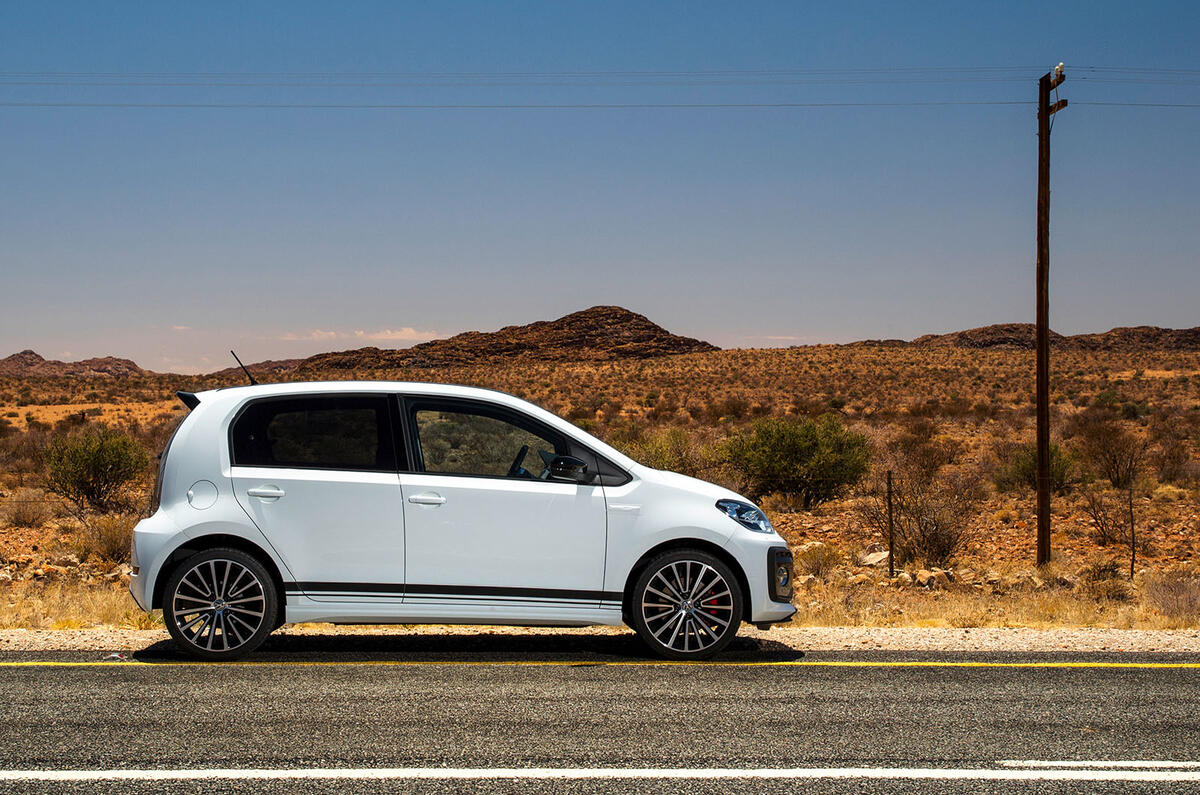
The start of this year's GTI meet at Lake Wörthersee (24 to 27 May). Around 200,000 fans will again make the pilgrimage to Kärnten for the unique festival. Volkswagen will be there with several automotive surprises. For example, with the world premiere of the near-production prototype of the 85 kW / 115 PS up! GTI – a car that pays homage to the 110 PS original GTI from 1976. 
Just ahead of the start of the GTI meet, the latter has yesterday evening scooped a remarkable prize: as part of the publication's annual awards, readers of English motoring magazine Autocar crowned the first Golf GTI the most influential car of all time! 
Another world premiere at Wörthersee: the Golf GTE Performance Concept. Instead of 150 kW / 204 PS, the plug-in hybrid drive system of this concept car develops a system output of 200 kW / 272 PS. System torque rises from 350 to 450 Nm.
The new up! GTI – externally and internally similar in size to the original GTI – will extend Volkswagen's product range from the start of 2018, carrying on the doctrine of the lightweight, uncomplicated sports car in compact format. 
It is powered by a turbo engine (TSI) delivering a potent 200 Nm of torque. The benchmarking and performance figures read like those of a Golf GTI I catapulted into the modern era. Weight: 997 kg. Top speed: 197 km/h.
0-100 km/h: 8.8 seconds. Colours: again classic and typical for the GTI – the single colours of tornado red and pure white, plus the metallic colours of dark silver, black pearl and – as a new GTI shade – costa azul (blue). 
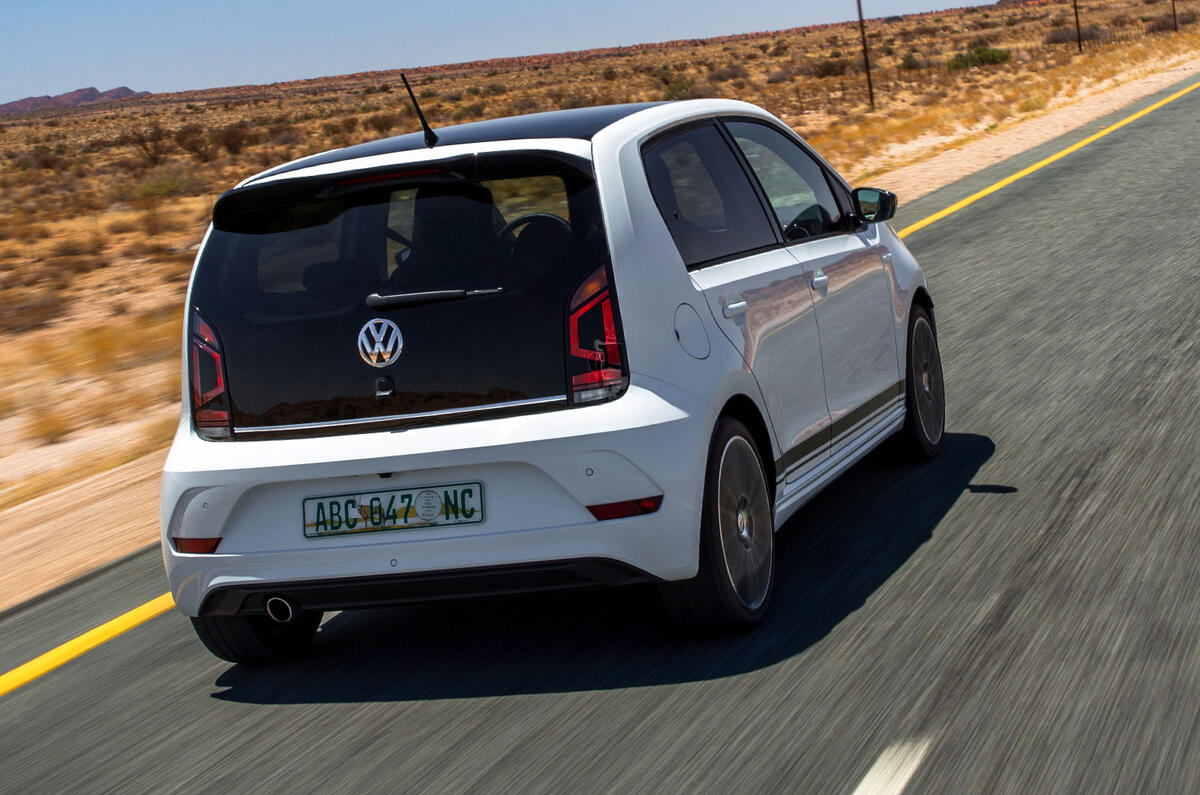
This most powerful up! can be identified by the typical GTI insignia. At the front, for instance, it is the red lateral stripe in the honeycomb-patterned radiator grille. 
Incorporated above it: the GTI logo. On the sides it is the black double lateral stripes over the wide side sill shrouds, where the new up! draws directly on the original GTI. The 17-inch alloy wheels have also been redesigned. They look particularly snappy within the wheel arches, as the up! GTI has a sports running gear set 15 mm lower. 
GTI features characterise the rear as well: here these include once again a red stripe and a larger roof spoiler that provides greater downforce on the rear axle and thus optimised handling characteristics. In the interior the typical features include the leather sports steering wheel, a GTI gear lever knob and the legendary 'Clark' seat cover pattern.
With regards to the details of the Golf GTE Performance Concept, one thing is clear: GTE3 has always stood for sustainability and dynamic handling. That is reflected too in the new Wörthersee concept car. 
While the classic GTI and the semi-electric GTE are based on a similar concept, the drive systems differ and on the GTE all the red GTI insignia are blue. With the new prototype of the Golf GTE Performance Concept, Volkswagen is now presenting an idea of how the Golf GTE, which can drive up to 50 kilometres in all-electric mode, could be further developed.
Externally the Golf GTE Performance Concept painted in Electric White Mother of Pearl Effect draws admiring looks with a black roof, blue elements in silhouette, black wing mirrors, air deflector elements in the front bumper painted in gloss black, side sills in the same gloss colour and blue-and-black 19-inch Pretoria wheels.
To accompany the increased power, Volkswagen provides large 17-inch brakes (discs perforated, callipers in 'GTE blue'), sports running gear and wheel spacers. 
At the rear features such as the exhaust tailpipes and diffuser of the Golf GTI and the roof edge spoiler of the legendary Golf GTI Clubsport mark out the GTE Performance version. On the inside it is details such as exclusive leather sports seats and a multifunction steering wheel in 'alcantara' with blue '12 o'clock marking', with which the powerful concept car will be appearing at the GTI festival in the Austrian village of Reifnitz.
1 + 2 up! GTI and Golf GTE Performance Concept: these vehicles have not yet gone on sale and therefore Directive 1999/94 EC does not apply.
3 Golf GTE – fuel consumption combined 1.6 l/100 km; CO2 emissions combined 36 g/km; electricity consumption combined 11.4 kWh/100 km; efficiency class: A+.

Tuesday, 10 May 2016

The most powerful Golf GTI ever breaks the lap record for front-wheel-drive cars on the Nordschleife

  • The most powerful Golf GTI ever breaks the lap record for front-wheel-drive cars on the Nordschleife, with a time of 07:49:21
The Golf GTI Clubsport S is the most powerful ever version of the Golf GTI and was built to celebrate 40 years of the iconic hot hatchback. With German racing driver Benny Leuchter (28) at the wheel, the car has just smashed the existing lap record for front-wheel-drive production cars on the Nürburgring Nordschleife, with a time of 7 minutes, 49.21 seconds.
This exclusive new vehicle, based on the Golf GTI Clubsport, made its world premiere at the GTI event at Lake Wörthersee (4-7 May). 

The hard performance numbers of this new GTI are truly impressive: a power output of 228 kW/310 PS; 280 pound-feet of torque between 1,700 and 5.300 rpm; 0 to 62 mph acceleration in 5.8 seconds; a top speed of 162 mph; and an unladen weight (including the driver and luggage) that has been reduced to 2,998 pounds. 
But the raw figures don’t tell the whole story, as the record lap time around the Nordschleife demonstrates how fast this car actually is.
The Golf GTI Clubsport S has an exclusive setting for the most demanding racetrack in the world, which can be accessed using the driving profile selector. This is possible because the car is fitted as standard with the individually configurable Dynamic Chassis Control (DCC) and a driving profile selector. 
In the ‘Individual’ driving profile, the engineers have developed a setting that is fine-tuned to suit the unique conditions of the Nürburgring. Over and above that, the Comfort, Normal and Race settings are also available. 
The driver can still adjust the settings in the Individual profile, as usual, and can revert to the Nürburgring setting by resetting the Individual profile on the touchscreen menu. 
This unique configuration switches the Sound, Engine and Steering parameters in the Race profile as well as DCC to Comfort. However, in this instance an entirely different group of settings is hidden behind this option, instead of the normal Race and Comfort settings.
The production run will be limited to 400 cars worldwide, 100 of which will be delivered to customers in Germany. Colors will be limited to those of the original GTI: “Tornado Red”, “Pure White” and “Deep Black Pearl Effect”, with the roof painted black. The Clubsport S is based on the two-door model with a manual transmission, in order to keep the weight as low as possible.
The Clubsport S is a pure two-seater. Doing away with the rear seats, including the central armrest, for example, accounts for the most noticeable weight saving. A smaller battery, as well as doing without insulation, the variable-height trunk floor, the rear parcel shelf, and the floor mats pushed the weight down yet further. 
An aluminum subframe for the front suspension and aluminum brake covers also shed weight. 
On the other hand, 235/35 ZR Michelin tyres mounted on 19-inch “Pretoria” aluminium-alloy wheels, DCC, a strut brace, a partition net behind the seats and a carpet in the rear add some of that saving back, for a total weight reduction of approximately 66 pounds in comparison to a similarly equipped Golf GTI Clubsport. 
The unladen weight is 2833 pounds, resulting in a dynamic power-to-weight ratio of 9.14 pounds per horsepower. Less weight also means greater fuel efficiency, with an NEDC rating of 31.8 mpg (equivalent to 172 g/km CO2).
The development team exploited synergies between motorsport and production vehicles in enhancing the engine performance, as they could draw on their experience with the 243 kW/330 PS Golf GTI TCR—the new racing car for the TCR International Series. 
This also gave them the opportunity to boost the engine to 310 PS and 280 lb-ft. The engineers achieved this boost in performance with a modified engine control unit and a new exhaust system: an increased diameter of 2.56 inches instead of 2.16 in reduces the exhaust backpressure and increases the performance. 
A side effect of the modifications is that the exhaust system produces a wonderful and deliberate ‘backfire’ under braking! In the course of the modifications the engineers also integrated a new fuel pump with increased throughput. 
The engine of the front-wheel drive Golf GTI Clubsport S is technically based on the 1,984 cc TSI engine that also powers the other versions of the Golf GTI and the Golf R.
Exterior
Other changes for the most exclusive Golf GTI include the following: semi-slick Michelin Sport Cup 2 tires mounted on 19-inch “Pretoria” alloy wheels, tinted rear windows that absorb 65 percent of the light, “Clubsport S” type plates, Bi-Xenon headlights with cornering lights and LED daytime running lights. The brake system was also modified to withstand the high temperatures inflicted at a racetrack. 
The disc bells are made of aluminium and are connected to the steel discs by cast location pins, allowing them to expand radially when they heat up. An important factor for the car's handling is that the unsprung mass of each wheel is 2.2 pounds lower thanks to the aluminum brake covers. To further improve the braking performance, the Golf GTI Clubsport S has special brake pads.
Interior
Each of the 400 Golf GTI Clubsport S cars made will have its production number (001/400 to 400/400) on the center console in the front. The driver and the front seat passenger sit in racing bucket seats that provide the necessary lateral support while flying around the Nordschleife. 
The car also features GTI insignia that’s featured in the “normal” Golf GTI Clubsport, including the iconic golf ball shifter knob with Alcantara trim, a red line in the safety belts, “Honeycomb 40” design decals on the dashboard and doors, and elegant Piano Black accents. 
The extremely grippy Alcantara-trimmed sport steering wheel, which has a chrome GTI emblem, red stitching and the 12-o'clock position marked out, was designed to be ergonomically perfect for the track.  
Genesis
The idea for the Golf GTI Clubsport S originated when the team responsible for the “normal” GTI at Volkswagen tested the final version of the current Golf GTI Performance Pack on the racetrack. 
“It was obvious to all of us that this GTI had immense potential,” recalls Karsten Schebsdat, Head of Chassis Tuning, “so we decided to get the most performance possible out of this car. A small team went through the entire process, from bottom to top, pretty much like it was back when the first Golf GTI came into being.” 
In addition to the weight reduction and the improvement in performance, two other factors are of fundamental importance when it comes to designing a really fast car: optimal aerodynamics and an outstanding chassis.
When it comes to aerodynamics, Volkswagen was able to draw on the modifications already implemented in the Golf GTI Clubsport. Both the “Clubsport” and the “Clubsport S” have completely new front bumpers that improve engine induction, front end aero, and downforce. 
At the rear, the roof-edge spoiler that was perfected in the wind tunnel and is significantly larger on the Clubsport versions results in significant amounts of additional rear downforce. 
In conjunction with a black rear diffuser, this two-part rear wing generates more downforce on the rear axle than on the front axle. In the case of the Golf GTI Clubsport S, this means that the understeer that is typical of front-wheel-drive cars is practically eliminated.
The new Golf GTI Clubsport S also has a special sport chassis. Karsten Schebsdat explains: “To neutralize the understeer and at the same time boost grip levels, we counteracted understeer on the front axle and specially designed the hub carriers,” resulting in higher camber angles. 
The negative camber increases the potential for directional control, thus optimizing the grip on the front axle. The Clubsport S is characterised by similarly good balance to the “normal” Clubsport, even at higher levels of lateral acceleration, allowing even higher cornering speeds. 
Braking performance was also perfected, in particular to prevent the rear end from breaking away:  combined with the aerodynamic measures, this allows the driver to brake into bends in a controlled way.
Even at full acceleration the car has even better traction due to the modified chassis tuning and the tires. 
Volkswagen was also able to fine-tune the ESC software on this basis: even though the traction control intervenes later in the Golf GTI Clubsport S and the torque is reduced less, "wheel hop" from the front wheels, typical of powerful front-wheel drive cars at maximum acceleration, is practically eliminated. 
The extra acceleration is also handled by stiffer engine mounts, a new coupling rod between the transmission and front axle, and a reinforced transmission. Other important elements include the XDS+ system and the electronically controlled, torque-sensing limited slip differential.
As is the case for the other GTI models, Volkswagen also offers the 'ESC Sport' function for very experienced drivers. The system is activated by a two-stage switch on the center console. 
When the driver presses this switch briefly, Electronic Stability Control (ESC) switches to the 'ESC Sport' mode. In very fast driving with lots of bends—such as on the Nordschleife—ESC responds later and thereby gives even more agile handling. 
If the driver pushes the switch for more than three seconds, the ESC system is completely deactivated. As an alternative to the push-button switch on the centre console, the ESC can also be activated or deactivated in the settings on the car menu.
Nürburgring Nordschleife setting.
Most racetracks in the world are smooth and relatively flat. That’s not the case on the Nürburgring Nordschleife, where there are plenty of bumps and elevation changes, as well as a daunting number of corners on top of that. 
So a car tuned to drive on the Nürburgring needs, on the one hand, to be able to take bends at high speed, while at the same time being able to cope with extreme dips and crests. 
If a car is fine-tuned for driving on a normal racetrack, where the suspension is very stiff, this isn't helpful on the Nordschleife. Rather, the car needs to be fairly soft vertically, but at the same time stiff when it comes to lateral damping. This is exactly what the Volkswagen engineers managed to take into account when fine tuning the spring/damper package for the DCC system.   
Chronology of a record-setting drive
Wolfsburg / Nürburgring, May 2016 – A cool spring morning. The Nürburgring Nordschleife. Temperatures slowly rise. Warmed up, the car waits, crackling in the pit lane. The new Golf GTI Clubsport S. The mission: to write history.
Race car driver Benny Leuchter (28) Leuchter puts on his helmet and gives Karsten Schebsdat a hand signal: “I’m ready.” Schebsdat is the Head of Volkswagen Chassis Tuning and is part of the team that developed the 165-mph Golf GTI Clubsport S. 
Passionate Volkswagen people from Development, Marketing, Communications and Sales worked on this car. GTI fans. They spent many months refining the “normal” GTI Clubsport and the Golf GTI TCR racer into a sporty jewel. Now they want to know what their baby can do.
Schebsdat taps Leuchter’s helmet. He starts the car, selects the “Individual” driving profile mode and thereby activates the setting for the Nürburgring Nordschleife (North Loop), which manages special settings for the engine, steering and adaptive chassis control system (DCC). The Nordschleife has a unique combination of bends and road bumps. 
“To break the record here, the GTI must be fast in the bends while simultaneously handling the bumps and leaps”, explains Leuchter as he closes the driver’s door. The Clubsport S specializes in this. The time will be measured by breaking a light beam. Leuchter drives out of the pit lane. One lap. 20.832 kilometers. A flying start. The clock is running.
The Clubsport S thunders into the Hatzenbach. Into 4th gear. “The car has to absorb the curbs cleanly”, Leuchter says via radio. “We have put a high priority on the GTI being stable on the curbs too”, says Schebsdat in the pit lane with a glance at the clock. 
The Clubsport S flies through the Hocheichen section. 4th gear, at speeds up to just over 115 mph. Full speed ahead, a longer stretch of straightaway down to Quiddelbach Höhe, then the Flugplatz. Two right-hand bends, very fast, 5th gear; good for 134 mph.
“Making sure that I am back on the gas early, because I am now heading towards Schwedenkreuz”, says Leuchter. “Upshift to 6th gear.” At nearly 150 mph, the Clubsport S flies over the crest at Schwedenkreuz. “The car is super at absorbing everything; it rebounds and immediately recovers.” 
Back to 5th gear. Backfire from the exhaust system. Now left into Schwedenkreuz. Applying the brakes, 3rd gear. Aremberg and then into the Fuchsröhre. Leuchter: “It all works at full throttle. Going very fast. But the car must be perfectly aligned when it enters the Fuchsröhre.” The GTI reaches the Adenauer Forest. Towards Metzgesfeld now. Fast left bend. 
He stays on record time, because the GTI has tremendous downforce. Through the Kallenhard section, “it is possible to brake hard at the last instant, but it still remains fully steerable”, Leuchter would later report. He continues: “I can trust the car. Even on the bumps. That is important to be really fast on the Nordschleife.”
Wehrseifen now, nearly halfway around at 9 kilometers. At Ex-Mühle, a fast uphill right: “Normally, a front-wheel-drive car understeers here. The GTI Clubsport S only exhibits it slightly at the entrance to the bend. Ex-Mühle is also bumpy. The Golf handles it superbly.” Out of this bend and towards Kesselchen. Kilometer 12. 
The GTI flattens out the bumps and curbs, and doesn’t jump a single millimeter. Kilometer 13. The Karussell. Leuchter: “Concrete, very bumpy, the GTI doesn’t jump here either.” Hohe Acht. Now the Eifel hills become more alpine, and the Nordschleife gets even more challenging.
Leuchter’s favorite passage: “Every meter from Hohe Acht down to Brünnchen is demanding on car and driver. Wippermann, for example: Enter very fast. Just touch the curbs on the left slightly, then full over to the right. Even here this GTI remains true to its line. 
That is the key to a really fast lap.” Final sprint. Pflanzgarten, the second jump over the crest. The GTI lifts briefly, comes back down and can be driven very quickly through the double right that follows. Leuchter: “Even when it rebounds to the limits, the GTI follows steering inputs.”
Kilometer 17, the Stefan-Bellof S bend. Bellof set the record on the Nordschleife in Porsche 956.007 with 650 PS. Leuchter is following Bellof’s wheeltracks with 340 PS less, but in the same spirit. Schwalbenschwanz, Galgenkopf: “The Galgenkopf is also crucial for a fast lap. 
If I can drive out of it at high speed, I can reach the Döttinger Höhe at a speed of more than 155 mph” Seconds later, the Golf GTI Clubsport S shoots through the light beam at the finish. A time of 7 minutes, 49.21 seconds. The fastest front-wheel-drive time around the Nordschleife. Ever. 
40 years of the Golf GTI – a retrospective
Golf GTI / 1976. In 1974, six men forged the secret plan to develop a 'Sports Golf'. They carry the project through to the end, although there is no recorded date for when the first full-production GTI was built in 1976. With its 110 PS and 112 mph top speed, it stirred up the world of compact cars and redefined what a sports car represents. In 1983, the first special edition makes its debut—the 112 PS  'Pirelli GTI'.
Mk2 Golf GTI / 1984. A strategic stroke of genius follows one year later with the Mk2 Golf GTI. Still with 112 PS, it continues the conceptual course of the first generation. As a result of the introduction of the catalytic converter, the power output briefly goes down to 107 PS in 1984. Two years later, Volkswagen compensates for the reduced power with a new 16-valve engine, which delivers 129 PS even with a catalytic converter and matches the agility of the original GTI (139 PS, no catalytic converter). In 1990, a 'G-Lader' supercharger in the Golf GTI G60 increases power output to 160 PS.
Mk3 Golf GTI / 1991. In 1991, Volkswagen transfers the GTI insignia to the third generation. This begins with 115 PS. A year later, the power output goes up with a new 16-valve engine to 150 PS. In 1996, a turbodiesel version (TDI) delivering 110 PS enriches the GTI concept. In 1996 the '20 Years of GTI' anniversary model is launched.
Mk4 Golf GTI / 1998. The fourth GTI generation, introduced in 1998, is very conservative in appearance. Technically, however, the 150-PS Mk4 Golf GTI is a car that keeps the competition at bay with its agility and quality. The four- and (in one case) five-cylinder petrol engines deliver up to 170 PS, while the diesels manage 150 PS. In 2001, the 180-PS '25 Years of GTI' turbo model heralds a renaissance of the sporty icon.
Mk5 Golf GTI / 2004. With the debut of the fifth generation, the Golf GTI 2004 celebrates a grand comeback. With a much sharper look, a 200-PS turbo engine and superb driving characteristics, it catapults the GTI concept into the future. In 2006, to mark the cult car's 30th birthday, Volkswagen gives its fans the 230-PS '30 Years of GTI' model. Identically powered, the reincarnation of the 'Pirelli GTI' is then launched in 2007.
Mk6 Golf GTI / 2009. With the sixth-generation in 2009, the Golf GTI redefines the subject of traction with an electronic transverse differential lock (XDS). Now with 210-PS, the GTI is even more fun and features a redesigned exhaust system that creates a dynamic sound as well. For the first time it is also available as a Convertible. This generation's crowning glory comes onto the market in 2011 for the 35th birthday: the 'Golf GTI Edition 35' with 235 PS.
Mk7 Golf GTI / 2012. The seventh generation of the GTI launches in 2012 with two levels of power output: 162 kW / 220 PS from the base version and 169 kW / 230 PS from the Golf GTI Performance, the latter being equipped with a new electronically controlled, torque sensing limited slip differential. In early 2016 the Golf GTI Clubsport, delivering up to 213 kW / 290 PS, goes on sale.

Friday, 15 May 2015

VW presents Double Golf world premiere's at Lake Worthersee, the GTE Sport and GTi Clubsport.

  • Golf GTE Sport is a 400 PS plug-in hybrid with a carbon body
  • Series production of Golf GTI Clubsport in 2016 marks 40th birthday of the GTI
For more than three decades, the south bank of Lake Wörthersee in Austria has become the home for GTI fans from around the world. And it has long since become a tradition for Volkswagen – the inventor of the GTI – to present an automotive surprise for the 200,000 visitors.
This year, Volkswagen is topping all previous 33 Lake Wörthersee GTI events with the double world premiere of two breathtaking Golf GT models planned for the near and medium-term future: the Golf GTI Clubsport and the Golf GTE Sport.

As a concept car, the Golf GTE Sport with its carbon body, completely new cockpit design, an “electric propshaft” and 400 PS plug-in hybrid drive shows what is possible when designers and engineers catapult the GT idea a long way into the future. By contrast, the Golf GTI Clubsport – also presented as a concept car – offers a glimpse at the 265 PS anniversary model which will mark the 40th birthday of the Golf GTI next year.
Five key facts on the Golf GTE Sport:
  • Golf GTE Sport is powered by a 400 PS plug-in hybrid system
  • Progressive Golf GTE Sport bridges the gap between road cars and racing sport cars
  • Avant-garde exterior design of the Golf GTE Sport perfects the idea of C-pillars with two-level construction
  • Golf GTE Sport debuts with digital instruments arranged on three levels and tailored to motor racing
  • Golf GTE Sport accelerates to 62 mph in 4.3 seconds and has a top speed of up to 174 mph

Five key facts on the Golf GTI Clubsport:
  • Market launch of Golf GTI Clubsport concept car as production version in 2016 will mark 40th birthday of the Golf GTI
  • New Golf GTI Clubsport delivers 195 kW / 265 PS
  • Additional power: thanks to a boost function approximately 10 per cent more power is available in the Golf GTI Clubsport for a short time
  • Downforce at motorsport level thanks to a new front bumper, rear spoiler, diffuser and new side sills
  • Golf GTI Clubsport debuts with motor racing bucket seats and numerous exclusive equipment details

Golf GTE Sport in detail
Ringing in a new era: with the Golf GTE Sport presented as a world premiere at the legendary GTI event at Lake Wörthersee on 14 May 2015, Volkswagen is catapulting the GT tradition into the future. The high-tech Golf that is largely made of carbon is powered by a total of three motors – combined in a plug-in hybrid drive with system power of 295 kW / 400 PS. The concept car breaks down traditional barriers between road and motorsport vehicles. 
Its progressive hybrid system in combination with the high-tech all-wheel drive, a lightweight body, optimum aerodynamic downforce, precision running gear based on the design of the current Golf GTE, a new motor racing cockpit (including visualisation of the racing line) and an unusual seating concept (two monocoque-like interior areas) enable breathtaking performance on the racetrack. 
At the press of a button, however, the concept car is able to cover a distance of up to 50 kilometres on electric power alone and hence with zero emissions.
Drive system from motorsport and research
World Rally Car TSI engine. The 1.6 litre TSI (turbocharged direct-injection engine) adapted from the superb Polo R WRC (World Rally Car) is accommodated in the engine compartment at the front of the car. It delivers 220 kW / 299 PS and maximum torque of 400 Nm. 
Volkswagen has already won the World Rally Championship twice with this engine. In the Golf GTE Sport the four-cylinder masterpiece is assisted by two electric motors. The engineers positioned the first electric motor at the front (in the housing of the 6-speed dual-clutch gearbox). 
It develops 85 kW / 115 PS and maximum torque of 330 Nm. The second electric motor is located at the rear with the same power output but torque of 270 Nm. The total torque of the drive system is 670 Nm. Whenever possible, the concept car is powered solely by electricity without producing any emissions. 
In sporty “GTE mode” all three motors work together, giving the all-wheel-drive Golf GTE Sport a standstill to 100 km/h time of 4.3 seconds and a top speed of 280 km/h. In the NEDC cycle for plug-in hybrid vehicles the sports car consumes just 2.0 l/100 km/h.
Pure-bred sports car.
Balanced for the Nürburgring north loop. The concept of the Golf GTE Sport has been designed so that the car is at home in both normal road traffic and racetrack conditions. Accordingly, the drive, suspension, body and interior all follow the principle of a pure-bred sports car. 
The drive system offers maximum agility, the suspension displays maximum neutrality in interaction with the all-wheel drive, the carbon body is lightweight and with its balanced aerodynamics it virtually adheres to the road. 
The driver ergonomics bridge the gap to motor racing, and with optimum weight distribution and a low centre of gravity the overall package ensures that a lap around racetracks such as the north loop of the Nürburgring is a unique driving experience.
Interior rings in a new sports car era
Two-seater race car. The driver and passenger board the two-seater interior of the Golf GTE Sport through doors that swing right up in the style of the XL 1. 
The doors extend a long way up into the roof and down into the side sills, resulting in convenient boarding when they are opened upwards. The interior in carbon and microfiber consists of two completely separate areas for the driver and passenger. 
Like in motorsport vehicles, they sit quite a long way to the back on racing bucket seats with five-point belts. Accordingly, the steering column that is entirely clad in carbon projects a long way into the interior where it appears to float – a further characteristic feature of a rally car or touring-car racer. 
The functional elements are operated via controllers and buttons in the cocoon-like interior trim. The gearbox of the Golf GTE Sport can also be operated manually with shift paddles on the motorsport steering wheel.
Instruments on three levels. The instruments featuring a completely new design have been specially coordinated for the configuration of the driver’s workspace. 
The Volkswagen interface designers opted for three transparent displays arranged behind one another on which all relevant information is displayed. On the smallest display at the front (closest to the driver) information such as the selected gear and the recuperation status is displayed; information that is only sporadically checked from the corner of the eye whilst driving. 
The centre display has secondary yet more complex information such as the power currently delivered by the drive (power meter) and the boost intensity of the plug-in system (electric boost). 
Information such as the current speed and the range are constantly in the driver’s field of vision on the third and largest display. In addition, in “GTE mode” not only is the current lap displayed (e.g. 9 of 16), but there is also a virtual indicator of the ideal driving line – valuable assistance for safe and fast driving on complex racetracks such as the aforementioned Nürburgring north loop.
Ergonomic perfection. The clearly arranged multifunction switch for starting and stopping the hybrid drive and controlling the 6-speed DSG is ideally positioned to the right of the driver for easy access. 
Right next to it there is a control panel for further vehicle functions; these include a button for activating a fire extinguishing system similar to that used in motorsport. Furthermore, the passenger is also supplied with data via a display in his interior segment. 
In “Info Mode” the current speed, the gear currently engaged and the engine speed can be displayed. If the passenger switches to “Data Mode” he can call up the vehicle acceleration and lateral force figures (gforces). It is not only the use of carbon, but rather a general lightweight design that saves weight in the interior. For example, the loops for opening the doors are made of the same synthetic fibre as the five-point belts. 
Moreover, extremely elaborate ergonomics prevail in every detail. The operating mode switch for selecting "EMode", "GTE-Mode" or "Hybrid-Mode", for example, is situated in the roof, like in a jet plane.
Body design and concept
Extremely lightweight. The body of the Golf GTE Sport is largely made of lightweight carbon. As both a brand and a group, Volkswagen is a trailblazer in the industrial use of this material. For example, like the exterior of the Bugatti Veyron 16.4, the body of the Volkswagen XL1 is also made of carbon. The high-strength carbon body of the Golf GTE Sport therefore weighs much less than a comparable steel body.
Side profile. The design concept of the Golf GTE Sport manifests itself in the car's striking silhouette. Here, Volkswagen is continuing the idea of C-pillars with a two-level design originating from the 2007 Golf GTI W12-650, which has been constantly further perfected in various concept cars. 
On the Golf GTE Sport that is now being presented, this C-pillar concept, which is unique worldwide, has reached a degree of perfection that allows it to leave the show car stage and – as a design vision – bridge the gap to the Golf GT models of the future. The basic styling of these pillars (like the string of a bow taut with an arrow) follows the unmistakable Golf design, but at the same time feature some completely new C-pillar details: behind the level visible from outside a second one opens up.
The airstream flows between these two levels and is contributing to the aerodynamic downforce and to the cooling of the rear brake system. Stylistically, this concept means that the rear section (like the front section) is extremely wide. By contrast, the passenger cell between the A-pillar and the interior part of the C-pillar becomes narrower when viewed from the front to the rear – an avant-garde interplay of extremely powerful shapes.
Doors and sills fold upwards. As described, the concept car painted in pearlescent "White Club" has two gullwing doors that swing forwards. The upper part that extends a long way into the roof is entirely made of dark visible carbon. 
A large part of the side sill is integrated in the door cutout. 
The three-dimensional body of the sill is enhanced at the top in the door section with an area in dark visible carbon. 
Further features on the side profile in visible carbon are the door mirror caps, the door window frames and the lower sill area. This part of the sill is designed as a splitter, i.e. a thin and sharp aerodynamic element, a feature familiar in motorsport. The side sill is framed by the new 20-inch alloy wheels fitted with tyres in format 235 at the front and 275 at the rear.
Front. With the front section of the Golf GTE Sport the Volkswagen design team is impressively illustrating how the Golf GT models could develop in future. 
On the concept car, the designers removed the striking blue radiator grille line of the Golf GTE production model from the grille and positioned it below the bonnet as a blue crossbar running across the whole width of the front. 
Below it, three further crossbars in black chrome look extend across the centre air inlet. The high-gloss black air inlet grille itself has the honeycomb structure typical of GT models. 
A further air inlet below the crossbars is framed at the top and to the sides by a striking aerodynamic element (also made of carbon). A double spoiler, also designed as a splitter, rounds off the front. Here, too, carbon is used.
LED headlights and daytime running lights. All electric and plugin hybrid models from Volkswagen have C-shaped LED daytime running lights as a distinctive feature, and the Golf GTE Sport is no exception. 
Here, they frame the whole radiator grille unit at the sides, and in the top area there is an almost seamless transition from the LED daytime running lights to the extremely narrow and sharp LED headlights.
Rear. Never before has Volkswagen realised such a charismatic and sporty rear for a Golf. Here, too, the two levels of the C-pillars are a defining stylistic feature giving the Golf GTE Sport a very wide and powerful appearance from the rear. 
The extended outer levels of the C-pillars at the rear – like the tail unit of an aeroplane – elongate the car together with the large roof spoiler. Typically Golf: the striking tailgate with a vertical downward angle at the level of the redesigned LED rear lights. 
At the top, the tailgate is limited by a black carbon roof spoiler – a wing that seems to hover in front of the tailgate at a distance of a few millimetres to the roof. The C-pillars that taper at an angle to the rear and the bumper merge into one another, with the latter projecting far above the line of the tailgate. 
As an imaginary continuation of the side strip made of visible carbon (above the sill), the top edge of the bumper also features visible carbon. Below this is an area painted in the body colour (with air outlets on the outside).
The last level is a large diffuser made of visible carbon with the splitter that is also continued here. The round stainless steel trims of the twin-pipe exhaust system are integrated in the middle of the diffuser.
Drive – plug-in hybrid and electric propshaft
E-Mode – setting off on electric power. No Golf has ever had three motors before. But this one does. As described at the beginning, the combustion engine fitted by Volkswagen is a turbocharged 1.6-litre four-cylinder direct-injection engine (TSI) that produces 220 kW / 299 PS of power and a maximum torque of 400 Nm. 
The electric components consist of the lithium-ion battery and two electric motors. The front electric motor is integrated in the housing of the 6-speed DSG (DQ400E). Both electric motors have a power output of 85 kW. 
The total available system power is 295 kW / 400 PS. If necessary, the system drive power can be distributed to all four wheels thanks to the rear electric motor and an “electric propshaft”. In normal operation the Golf GTE Sport drives just as quietly as the production Golf GTE that is already marketed. In “E-Mode” it is setting off purely electrically. 
In this case the concept car uses the battery that can be charged externally (but also whilst driving) to cruise without producing any emissions. It can cover up to 50 kilometres on a battery charge. When a defined minimum battery charge is reached, the 1.6 TSI is automatically switched on and the Golf GTE Sport drives in “Hybrid” mode. 
As soon as the battery reaches a certain charge level again, “E-Mode” can be reactivated at any time via a switch in the overhead console. In “E-Mode”, the rear axle electric motor is first and foremost responsible for propulsion. When high demands are made on performance, the front electric motor is also activated to provide support.
Hybrid mode – silent coasting. As soon as the drive system or the driver deactivates “E-Mode”, the Golf GTE Sport becomes a classic full hybrid with regenerative braking charging the battery and automatic utilisation of the right combination of TSI and/or electric motors according to the specific drive situation. 
When the driver releases the accelerator pedal, and the battery is sufficiently charged, all drive sources are shut off. This is referred to as “coasting”. 
If the driver releases the accelerator pedal or brakes, and the battery is insufficiently charged, the two electric motors operate as generators and charge the lithium-ion battery with the energy recovered from braking. 
With the dual mode “Battery Hold” or “Battery Charge” the battery’s energy content can be deliberately kept constant by the driver (“Hold”) or increased (“Charge”). When the 1.6 TSI engine is the sole source of propulsion, the concept car is a pure front-wheel drive car.
GTE-Mode – the power of three hearts. The switch on board theGolf GTE Sport that is most important for dynamic performance is located in the overhead console. It bears the letters “GTE”. 
When the driver operates this switch, the character of the Golf GTE Sport's drivetrain changes drastically in an instant because now the full system power of 400 PS is available. The turbocharged 299 PS petrol engine alone delivers immense propulsive power, and at this high level the electric drive components of the Golf GTE Sport assume an additional boost function. 
The boost effect is so strong that the drive unit would also perform well if used in professional touring car races: the Golf GTE Sport sprints to 50 km/h in 1.8 seconds, reaches 100 km/h in 4.3 seconds, and the maximum speed permitted in Austria, i.e. 130 km/h, in 6.5 seconds. On German motorways, the concept car reaches 200 km/h in 15.9 seconds. In “GTE-Mode” all four wheels of the Golf are driven.
All-wheel drive – “electric propshaft”. In “GTE-Mode” and as soon as the situation necessitates it, the drive power of the Golf GTE Sport is distributed to both axles. 
In this case (and if battery charge is low), the front electric motor – which is now being supplied with kinetic energy via the TSI – acts solely as a generator and a source of electricity for its counterpart at the rear axle. 
Since the energy for driving the rear axle flows by wire and not mechanically here, this is referred to as an “electric propshaft”. Because the TSI drives the rear electric motor via the front electric motor, the all-wheel drive system also operates when the battery’s charge state is low – an invaluable advantage in terms of driving dynamics. 
The importance of the implementation of the “electric propshaft” for Volkswagen with regard to series production is demonstrated by the fact that the company has had the German equivalent of this designation protected under copyright law.
Technical data of the Golf GTE Sport
pic