Purpose

I will try my best to provide detailed info on various cars and what is like to live with them, I have already produced a few for Jaguar-car-forums, I will do my best to be unbiased, but it will be hard for some cars. I will re-produce press releases and copy from other motoring news.
Showing posts with label world premiere. Show all posts

Tuesday, 5 December 2017

Vauxhall Announces pricing for the new Insignia GSi Super saloon, faster than the outgoing VXR.

  • Performance variant Insignia available from £33,375 on-the-road
  • Flagship model is the fastest Vauxhall to take on Nürburgring circuit 
Following its world premiere at the 2017 Frankfurt Motor Show, Vauxhall has announced the prices for the all-new Insignia GSi, the performance variant of Vauxhall’s flagship model. 
Available in both Grand Sport and Sports Tourer body styles, and powered by either a 2.0-litre turbo-petrol or 2.0-litre BiTurbo diesel engine, the Insignia GSi will be available from £33,375 on-the-road. 

Arriving in Vauxhall showrooms in March, the GSi was developed at the Nürburgring in Germany, and is the fastest Vauxhall to have taken to the iconic track. At 160kg lighter than its predecessor – the Insignia VXR – the GSi features all-wheel drive with torque vectoring, mechatronic FlexRide chassis, Brembo four-cylinder brakes and Michelin Pilot Sport 4 tyres on 20-inch rims. 
Buyers can choose from either the 2.0-litre 260PS/400Nm petrol engine, or the 2.0-litre 210PS BiTurbo diesel engine. Both units are paired with an eight-speed automatic gearbox with shift-paddles on the steering wheel, providing an active and responsive driving experience. In Grand Sport body style the Insignia GSi achieves 0-60mph in 6.9 seconds and has a top speed of 155mph. 
The Grand Sport variant, with either engine option, is available from £33,375 on-the-road, with CO2 emissions of 197g/km (petrol) or 192g/km (diesel). Drivers looking for additional space can select the Sports Tourer body style, available from £34,875 on-the-road with either engine [CO2: 199g/km, petrol and 192g/km, diesel]. 
Exterior design features include chrome air intakes, front and rear GSi bumpers, side sills and a large GSi rear spoiler (Grand Sport only), as well as incorporating Vauxhall’s innovative IntelliLux LED matrix headlamps. On the inside, the GSi features full-leather front sports seats, aluminium pedals, eight-inch colour information display with navigation, plus a Bose sound system and head-up display. 
Four driving modes are available through the GSi’s FlexRide system, allowing damping, steering, gear change-up points and the car’s stability and traction systems to be configured according to a driver’s preference, while 400Nm of torque (260PS petrol engine) – delivered through Michelin Sport Pilot 4 tyres – gives exceptional levels of grip and prevents understeer. 

Saturday, 22 July 2017

The all New Porsche 911 GT2 RS - race bred, for the road, the best 911 ever.

  • New 2018 911 GT2 RS with 700 hp, rear-wheel drive, race-bred chassis, and rear axle steering
The fastest and most powerful street-legal 911 model ever is ready for launch: The new 2018 Porsche 911 GT2 RS is celebrating its official world premiere at the Goodwood Festival of Speed in the UK from June 30th to July 2nd. 
At the heart of this high-performance sports car is a 700-horsepower twin-turbo flat-six engine. Weighing in at 3,241 pounds with a full tank of fuel, the lightweight two-seater accelerates from zero to 60 miles per hour in 2.7 seconds. 
The new 911 GT2 RS can reach a top track speed of 211 miles per hour, and it surpasses the 2011 911 GT2 RS by 80 horsepower. The 2018 911 GT2 RS delivers 553 lb.-ft. of torque, an increase of 37 lb.-ft. compared to the previous 911 GT2 RS.

 
The 3.8-liter engine in the GT2 RS is based on the power plant found in the current 911 Turbo S model. In order to increase performance further, larger turbochargers push an increased volume of air into the combustion chambers. 
A new additional cooling system delivers optimum cooling at peak loads by spraying water on the intercoolers when the intake air temperature reaches a determined threshold. 
This reduces the inlet temperature under boost and allows for optimum power output, even under extreme conditions. The customized GT seven-speed double-clutch Porsche Doppelkupplung (PDK) transmission in the new GT2 RS enables maximum efficiency with uninterrupted torque transfer. 
The specially developed lightweight titanium exhaust system weighs around 15 pounds less than the system used in the 911 Turbo and delivers a particularly emotional sound.
Porsche Design is celebrating the debut of this very special high-performance sports car by releasing a special-issue watch. Offering a nod to the world of motorsport, the Porsche Design 911 GT2 RS watch is exclusively available to owners of the new vehicle and can only be ordered in conjunction with the new GT model.
Race-bred chassis for exceptional cornering
The 2018 911 GT2 RS has exceptional dry grip thanks to its race-bred chassis with rear axle steering and Ultra High Performance (UHP) tires. 
The stability management system is tuned for spirited driving in the new 911 GT2 RS. The PSM can be deactivated in two stages using the ESC OFF and ESC+TC OFF functions. Large air intakes and outlets and the striking rear wing underscore the emphasis on aerodynamics and down-force. 
The large, wide wheels with 265/35 ZR 20 tires at the front and 325/30 ZR 21 tires at the rear help ensure outstanding braking and cornering potential. The 911 GT2 RS features Porsche Ceramic Composite Brakes (PCCB) as standard. 
The front fenders, wheel housing vents, outer shells on the Sport Design exterior mirrors, air intakes on the rear quarter panels, and parts of the rear are made from carbon fiber reinforced plastic (CFRP), as are many of the interior components. 
The front luggage compartment lid is also made from carbon fiber to make the vehicle as light as possible, while the standard roof panel is made from magnesium. Both of these body panels feature a visible recess in the center, a design element previously used on the 2016 911 GT3 RS.
Optional Weissach package saves 40 pounds of weight
The optional Weissach package reduces weight by nearly 40 pounds, further enhancing the vehicle dynamics of the 911 GT2 RS. The package includes magnesium wheels and numerous elements made of carbon fiber. 
For instance, with this optional package, the roof and anti-roll bars are made of carbon fiber, as are the end links on both axles. The 911 GT2 RS forged magnesium wheels reduce both overall and unsprung weight by over 25 pounds, complementing the vehicle's handling characteristics. 
When equipped with the Weissach Package, the carbon fiber weave of the luggage compartment lid and the roof are left largely exposed, and are painted with a centrally placed decorative strip in the vehicle color for a distinctive look. 
The Weissach package is optionally available with an MSRP of $31,000.
A truly sporty interior
The interior of the 911 GT2 RS is dominated by red Alcantara®, black leather, and carbon fiber trim pieces as standard. 
The GT2 RS Sport steering wheel with shift paddles is also included as standard. Drivers and passengers can experience the driving dynamics of the high-performance sports car in Full Bucket Seats with carbon fiber reinforced backrests, which offer a high level of comfort and lateral support. 
As in every 911 model, Porsche Communication Management (PCM) serves as the central control unit for audio, navigation, and communication. Porsche Connect Plus and the Porsche Track Precision app are also included as standard, enabling detailed recording, display, and analysis of driving data on a smartphone.
The optional Chrono Package expands the PCM functions to include a performance display, which can be used to display, save, and evaluate lap times. The package also includes a stopwatch on the dashboard featuring an analog and digital display. 
The Chrono Package on the 911 GT2 RS also provides preparation for the lap trigger available from Porsche Tequipment. When using the Porsche Track Precision app in conjunction with the infrared transmitter placed at the side of the track, the lap trigger receiver enables drivers to record lap times with a higher level of precision.
Porsche Design has teamed up with Porsche Motorsport to develop the 911 GT2 RS Chronograph exclusively for 911 GT2 RS owners. 
The timepiece housing is made of lightweight titanium. At its heart is the first clock movement developed by Porsche Design, the product of three years' work. The caliber 01.200 includes a flyback function, a load-path-optimized movement bridge, and an official COSC certificate of authenticity.
The flyback function is inspired by motorsport and represents a special feature of the Porsche Design GT2 RS watch. On a traditional chronograph, the buttons must be pressed three times in order to measure consecutive time intervals: 
The first press stops the chronograph, the second resets it, and the third restarts the measuring process. On chronographs with a flyback function, these processes happen automatically and in rapid succession. 
The stop function and the ongoing time display are clearly separated using yellow markings. Many of the details on the timepiece are based on the design details of the GT2 RS. The tungsten winding rotor is modeled after the rims of the 911 GT2 RS. The clock face is made of carbon fiber, while the design of the time display matches the instrument cluster and the tachometer.
The 911 GT2 RS and its watch counterpart are exclusively available at authorized Porsche dealers worldwide. The vehicle and watch are produced and customized in line with each customer's wishes and are delivered together.
Pricing and availability
The 2018 Porsche 911 GT2 RS model is available to order with a base MSRP of $293,200, excluding the $1,050 delivery, processing and handling fee. It will reach U.S. dealers in early 2018.

Tuesday, 4 July 2017

The All-New BMW 6-Series Gran Turismo, better looks and more kit and technology.

  • New BMW 6 Series Gran Turismo introduced with dynamic new look and cutting-edge technology.
  • Longer and sleeker, the new 6 Series Gran Turismo offers more headroom and boot capacity despite reduced vehicle height. 
  • Up to 115kg weight reduction and improved aerodynamics. Fuel consumption and emissions reduced by over 15 per cent. 
  • Optional equipment includes Remote Control Parking, WiFi hotspot for up to 10 devices and remote 3D view.
The BMW 6 Series Gran Turismo sets a new level of comfort and elegance wrapped in a sporting coupé design but now with superior driving dynamics and efficiency. This new model, which takes over from the 5 Series Gran Turismo, gets a new designation to reflect the major step forward over its predecessor.


Set to make its World Premiere at the IAA show in Frankfurt the 6 Series Gran Turismo will make its market launch on 11 November 2017. Initially it will be offered with a choice of three engines while the BMW xDrive all-wheel-drive system will be available in two of the three variants in the model line-up.


The large GT, a vehicle concept blending the luxury of a comfortable saloon with coupé looks, was first launched in 2009. Known as BMW 5 Series Gran Turismo, the model was a game changer delivering comfort and elegance, but practicality too. The new 6 Series Gran Turismo takes these characteristics so enjoyed by 5 Series GT customers to another level and enhances the driving dynamics further.


Distinctive looks: eye-catching and powerful
From the BMW kidney grille to the sculpted LED units at the rear, the BMW 6 Series Gran Turismo has an eye-catching profile, but when viewed from the front the vehicle has a muscular presence. 

Standard BMW Icon Adaptive LED headlights for dipped and main beam, joined by the daytime driving lights display the focused look familiar from other BMW models. The elongated BMW 6 Series Gran Turismo cuts an impressive silhouette: the A-pillars are much more heavily raked than its predecessor while the flowing roofline and sweeping side window design gives that true coupé look. 

The BMW 6 Gran Turismo is no longer broken up by an extra guide strip through the large window in the rear door and, at the rear, horizontal lines, sharp edges and tapering surfaces magnify the car’s width to emphasise its sporting nature.


Sleeker, sportier, with improved practicality
The new 6 Series Gran Turismo clearly takes its cues from the 5 Series GT, but its design offers a more athletic, sportier stance. Vehicle height has been reduced by 21mm, while the rear end has been lowered by 64mm. The vehicle length has been increased by 87mm while the width remains the same. All these changes, while retaining the coupé/saloon characteristics of the predecessor, have contributed to a more low-slung silhouette without compromising on interior space or practicality. 

Indeed, the 6 Series Gran Turismo better serves its passengers with more headroom as well as offering ample legroom. The rear has three full-size seats and customers can opt for electrically-adjustable chairs where the backrest angle can be altered at the push of a button.


With its increased length the BMW 6 Series Gran Turismo also offers more boot space, both with the rear seats in place or folded down. Rear-seat backrests are 40:20:40 split-folding by means of a remote release system in the boot and, behind them, the boot area can accommodate a total of 610 litres (up 110 litres on the 5 Series GT) and 1,800 litres when the backrests are folded down (up 100 litres). 

The vehicle also features a one-piece electrically operated tailgate, while the boot sill has been lowered by more than five centimetres and is now flush with the floor for improved loading capability. The two-piece luggage compartment cover has a rigid structure and can be stowed away in a compartment underneath the boot floor.


Power and efficiency
The engine line-up features TwinPower Turbo technology and all variants offer the eight-speed Steptronic transmission with paddles as standard. The 2.0-litre four-cylinder petrol unit in the new BMW 630i Gran Turismo delivers 258hp and peak torque of 400Nm, taking the car from zero to 62mph in 6.3 seconds with a combined fuel consumption of 43.4mpg with CO2 emissions of 148g/km. 

The 3.0-litre six-cylinder in-line petrol engine in the BMW 640i xDrive Gran Turismo generates 340hp and maximum torque of 450Nm and it will accelerate from zero to 62mph in 5.3 seconds. The combined fuel consumption is 35.3mpg respectively, which equates to CO2 emissions of 183g/km. The BMW 630d Gran Turismo and the new BMW 630d xDrive Gran Turismo both use a 3.0-litre six-cylinder in-line diesel engine producing 265hp and peak torque of 620Nm. 

The 630d version accelerates from zero to 62mph in 6.1 seconds while the xDrive version is slightly faster, reaching 62mph in 6.0 seconds. The combined fuel consumption and emissions figures are 57.6mpg and 129g/km for the BMW 630d Gran Turismo and 49.5mpg and 150g/km for the BMW 630d xDrive Gran Turismo.

Model
Power (hp)
Torque (Nm)
0 – 62mph (Seconds)
Top Speed (mph)
Combined (mpg)
CO2 Emissions (g/km)
From
(OTR)
BMW 630i
258
400
6.3
155
43.4
148

£46,810
BMW 640i xDrive
340
450
5.3
155
35.3
183
£53,970
BMW 630d
265
620
6.1
155
57.6
129

£50,665
BMW 630d xDrive
265
620
6.0
155
49.5
150
£52,705
Improved aerodynamics, increased efficiency, sportier performance
The increased length and reduced height of the vehicle have stretched the proportions of the BMW 6 Series Gran Turismo to give a sportier look. Among the other features that combine to give the new model its coupé -like profile are its long bonnet, the set-back position of the cabin, doors with frameless windows and an elongated window outline stretching deep into the rear end. 

This carefully sculpted design, along with a rear spoiler that automatically extends when the car exceeds 75mph and retracts below 50mph, have helped to bring the Cd drag coefficient from 0.29 on the outgoing model to 0.25 on the new 6 Series Gran Turismo. In order to optimise efficiency even further, BMW has combined lightweight engineering and increased use of aluminium and high-strength steel grades for both body and chassis components to achieve an average weight reduction of 115kg compared with the 5 Series GT. 

This, with the increase in power and superior efficiency of the new engines, has contributed to a reduction of over 15 per cent in fuel consumption and emissions (BMW 630d Gran Turismo).


Superior comfort and cornering capability 
The lighter chassis and improved suspension technology on the BMW 6 Series GT have combined to improve handling and comfort. Self-levelling air suspension comes as standard at the rear axle, but for extra comfort customers can opt for Adaptive suspension, which features front and rear air suspension plus Dynamic Damper Control. Customers can also take up the Executive Drive option, offered in combination with the Integral Active Steering system that incorporates active roll stabilisation to deliver supreme cornering capability. 

The two-axle air suspension allows the vehicle’s ride-height to be adjusted manually, meaning that, at the touch of a button, ground clearance can be increased by 20 millimetres when negotiating dirt tracks or steep ramps. 

The vehicle can also be lowered by 10 millimetres by pushing a button but it will so do automatically when SPORT mode is engaged via the Drive Performance Control switch or if the car exceeds 75mph. All optional suspension systems are now available with BMW xDrive all-wheel-drive system.


Interior comfort, driving pleasure and exceptional functionality
Inside, the BMW 6 Gran Turismo has been designed to give driving pleasure as well as comfort for passengers. A raised seating position optimises the driver’s all-round view and with electric front seats and driver’s memory function the perfect seating position can always be saved with ease.

Up front is a freestanding touchscreen for navigation, communication and infotainment functions. The high-resolution display has a 10.25-inch diagonal screen, while its tile-style menu layout with animated graphics in live mode allow for intuitive operation. 

The centre console again features the iDrive Touch Controller dial for BMW navigation and infotainment systems while standard-fit enhanced voice control that now responds to freely formulated instructions, enables total handsfree capability. The new BMW 6 Series Gran Turismo also features optional gesture control, which allows certain functions to be operated with simple movements of the hand or fingers. 

These are registered by a 3D sensor in the centre console and translated into the relevant commands. Customers can also opt for the new-generation BMW Head-Up Display. This system, where the projection area has been increased by 70 per cent, reflects driving-related information on to the windscreen that will be directly in the driver’s field of vision.


Two trim levels with option packages for individual style
Standard equipment on the BMW 6 Series Gran Turismo includes automatic climate control with an option to scale up to a four-zone system. Standard metallic paint is available in ten finishes whilst two non-metallic paint finishes are also available and, while 18-inch light-alloy wheels are standard, other wheels in sizes up to 20 inches can be ordered. 

The Original BMW Accessories range also includes 21-inch alloys. From launch, customers can choose from two trims: SE and M Sport. M Sport offers specific 19-inch light alloy wheels, leather upholstery with exclusive stitching and piping in contrasting colours, plus illuminated door sill strips. 

A Bowers and Wilkins Diamond Surround Sound System can be ordered as option - this includes a fully active 10-channel 1,400-watt amplifier with dynamic sound equalising and 16 partially illuminated speakers - whilst a panoramic glass roof is standard on M Sport models and optionally available on the SE models. Reversing assist camera is standard across both trim levels.


The latest in driver assistance systems
The BMW 6 Series Gran Turismo makes use of a standard stereo camera as well as optional radar and ultrasonic sensors to monitor the vehicle’s surroundings to improve safety and security. The Collision and Pedestrian Warning with City Collision Mitigation comes as standard, while the list of options includes the new improved version of Active Cruise Control, which is operational at speeds between zero and130mph. 

Lane Departure and Lane Change Warning systems that operate between 44-130mph are also options as are Side Collision Warning and Evasion Aid, which both come to the driver’s aid with corrective steering inputs. The options list also features a Surround View camera system that can display a 3D image of the vehicle and its immediate surroundings from multiple perspectives in the Control Display. 

The Crossing Traffic warning system, which monitors the surrounding area using radar sensors, is particularly useful when exiting from concealed junctions or driveways or when backing out of a parking space perpendicular to the road. The Crossroads and Wrong-Way warning systems avoid potentially hazardous situations at junctions where traffic on the other road has right of way and when joining motorways or entering a roundabout. 

The BMW Night Vision system is another option that gives a real-time video image in the Control Display that highlights any pedestrians, larger animals or other objects radiating heat. The vehicle can also be ordered with the Remote Control Parking feature to help drivers get into tight spaces.


Drive Performance Control: ECO PRO, COMFORT, SPORT as well as COMFORT+ and ADAPTIVE options
The Drive Performance Control switch adjusts the car’s settings according to the driving conditions. If ECO PRO mode is selected the coasting function decouples the powertrain whenever the driver lifts off the accelerator between 31-99mph. Intelligent networking also improves the efficiency-boosting effect of the Auto Start Stop function by preventing the engine being switched off at moments where it would be counterproductive for efficiency – for example when pausing briefly at T-junctions or roundabouts. As well as ECO PRO mode, the Drive Performance Control switch can activate the COMFORT and SPORT settings for sportier or more relaxed driving. Customers who choose the Adaptive and Executive Drive options add COMFORT+ and ADAPTIVE modes to the Drive Performance Control selection. These additional settings allow drivers to select a particularly comfort-based set-up in COMFORT+ or one that responds automatically to their driving style in the ADAPTIVE setting. In ADAPTIVE mode, navigation data from the standard Professional Navigation system is used to proactively adjust the car’s responses when approaching intersections or bends. This system adapts to the route so, for example, it can perform an early downshift when approaching an intersection in order to take full advantage of the engine braking effect.


BMW Connected: personal mobility assistant, new services
BMW 6 Series Gran Turismo owners can also enjoy the benefits of the BMW Connected system that helps drivers get to their destination even when they are not in their car. Calendar entries from a smartphone can be used for route planning where the ideal departure time can be calculated on the basis of real-time traffic data. The Remote 3D View function adds extra security by allowing drivers to view live images of their car and its immediate vicinity on their smartphone.


Once inside, drivers are able to manage calendar, e-mail and contact data via the Microsoft Exchange function. BMW is the first car maker to offer a secure server connection for exchanging and editing emails, calendar entries and contact details thanks to the car’s built-in Microsoft Exchange function. This means that addresses from appointment entries can be imported straight into the navigation system and telephone numbers and email addresses from an incoming email or appointment can be dialled with an easy one click transfer so that it can easily be navigated on the move. Any incoming email can be read aloud and a response dictated back using the Intelligent Voice Assistant.


Real Time Traffic Information shows jams and slow-moving traffic and the On-Street Parking Information function helps drivers to find roadside parking spaces based on historical and current data. The BMW Professional Navigation system also uses car-to-car communication so drivers can get as much information about the road network ahead including warnings of traffic hazards caused by accidents, broken-down vehicles, fog, heavy rain or black ice.


The 6 Series Gran Turismo is also available with the BMW Display Key where drivers can keep in contact with their vehicle around the clock. As well as information about fuel level and service intervals, the colour display tells the driver if the doors, windows and panoramic sunroof are closed.

Thursday, 1 June 2017

Rolls royce takes personaliszation to the next level with a one off all new car, not sure if i like it !

When, approximately one year ago, Rolls-Royce presented 103EX to the world, it invoked its coachbuilding heritage to inspire its future clientele. This Vision Vehicle envisaged a world of completely personal luxury mobility where new technologies would allow every Rolls-Royce to be designed in their owners’ image, should they wish. Such a Rolls-Royce would represent the truest meaning of luxury – a personal, Bespoke motor car like no other for each individual commissioning patron. 
The mere idea of a modern coachbuilt Rolls-Royce was not enough for one Rolls-Royce connoisseur however. This individual approached the marque with his own idea of a two-seat Rolls-Royce that he wanted to be created in the here and now. That motor car is here, now and is christened ‘Sweptail’. In a nod to the swept-tail of certain Rolls-Royces from the 1920s, admired by the client so much, he asked Rolls-Royce to reimagine this feature on his one-off motor car. 
Presenting the car to the media at the Concorso d’Eleganza at Villa d’Este on Saturday 27th May 2017, Torsten Müller-Ötvös, Chief Executive Officer, Rolls-Royce Motor Cars said, “Sweptail is a truly magnificent car. It exudes the romance of travel for its own sake, and immediately places ‘Sweptail’ in the pantheon of the world’s great intercontinental tourers. Rolls-Royce’s history as the world’s leading coachbuilder is at the very core of its identity as the world’s leading luxury brand. The arrival of 103EX shone a light on the future of Rolls-Royce in this field, and ‘Sweptail’ is proof, today, that Rolls-Royce is at the pinnacle of coachbuilding. We are listening carefully to our most special customers and assessing their interest in investing in similar, completely exclusive coachbuilt masterpieces. At the same time we are looking into the resources which will allow us to offer this unique service to these discerning patrons of luxury.” 
Through this commission, Rolls-Royce has proven once again to be the world’s leading luxury goods provider.
‘Sweptail’ – how the vision became the reality
“Sweptail is the automotive equivalent of Haute Couture,” comments Giles Taylor, Director of Design at Rolls-Royce Motor Cars. “It is a Rolls-Royce designed and hand-tailored to fit a specific customer. This customer came to the House of Rolls-Royce with an idea, shared in the creative process where we advised him on his cloth, and then we tailored that cloth to him. You might say we cut the cloth for the suit of clothes that he will be judged by.”
In 2013, Rolls-Royce was approached by one of its most valued customers with a very particular request. A connoisseur and collector of distinctive, one-off items including super-yachts and private aircraft, this gentleman came to Rolls-Royce to realise his vision of a one-off luxury motor car like no other. 
The client immediately established a close rapport with the design department led by Taylor, who set about bringing the idea to life. 
Inspired by the beautiful coachbuilt Rolls-Royces of the 1920s and 1930s, the client’s desire was for a coachbuilt two seater coupé featuring a large panoramic glass roof. As a connoisseur of Rolls-Royces, he was inspired by many of his favourite cars from the marque’s golden era of the early 20th Century, as well as many classic and modern yachts. 
The grandeur, scale, flamboyance and drama of the 1925 Phantom I Round Door built by Jonckheere; the svelte tapering glasshouse, dramatic dash to axle proportion and up-sweep of the rear departure angle of the 1934 Phantom II Streamline Saloon by Park Ward; the elegantly falling waist-rail, swept tail coachwork of the 1934 Gurney Nutting Phantom II Two Door Light Saloon, and the flowing roofline, rising departure angle, and again the swept tail coachwork of the 1934 Park Ward 20/25 Limousine Coupé were all considered by today’s Rolls-Royce designers in the creation of this very distinctive motor car. 
Over the course of a number of years, Taylor and his team of designers engaged with the client in a wonderfully intellectual journey as they worked together to realise the customer’s distinct vision and bring it to life. 
“Our job was to guide, edit and finely hone the lines that would ultimately give our client this most perfect of Rolls-Royces,” comments Taylor. 
The result of this one-off coachbuild project is the completely unique Rolls-Royce ‘Sweptail’. 


‘Sweptail’ – A distinct vision
The ‘Sweptail’ is without question a Rolls-Royce that fits to the marque’s DNA. Its initial formality when seen from the front signals that this is one very different and distinct Rolls-Royce. One’s attention is first attracted by the confident and solid character of the front profile, centred on a new treatment of the iconic Rolls-Royce Pantheon grille. The largest of any modern era Rolls-Royce, the grille is milled from solid aluminium before being painstakingly polished by hand to a mirror finish. The periphery of the front face of ‘Sweptail’ is framed in brushed aluminium. 
As one moves around to the side of ‘Sweptail’ one finds that it is the striking silhouette that defines its unique character. Flowing as they do from upright and formal frontal aspect, the lines of ‘Sweptail’ resolve into a sveltely elegant form. The scale and grandeur of this regal looking coupé is evident. From the leading edge of the windscreen, the roofline accelerates as it fires backwards towards the rear of the motor car, overshooting the boot lid edge to emphasise its length. The longer side window graphic and wide C-pillar finisher underscore the length and proportions of this more wondrous of conveyances. 
The coup de gras of the rear is the ultimate homage to the world of racing yachts that inspired the client, with its raked stern. Seen directly from behind, the rear taper contrasts strongly with the front of the motor car, shaping a completely new perception of a dramatic Rolls-Royce Coupé. 
Both the roof line as it tapers towards the centre line of the car, concluding in a ‘bullet-tip’ that houses the centre brake light, and the sweeping lower bumper area of the motor car, combine to create a greater feeling of elegance in motion. 
The cleanliness of the surface of ‘Sweptail’ is maintained as the bodywork wraps under the car with no visible boundary to the surfaces, a treatment that is akin to the hull of a yacht. The underside of the motor car was designed to deliver the visual of a progressive upward sweep at the rear departure angle of the car, culminating in the swept-tail that gives ‘Sweptail’ it name. 
And finishing off the uncluttered rear of this one-off motor car, is its identifier and registration number, 08. Two individual digits milled from ingots of aluminium and hand polished.
The panoramic glass roof invites one into the magnificent interior, along with the natural light
The highlight feature of ‘Sweptail’ however is that specifically asked for by the client. An uninterrupted glass roof, one of the largest and most complex ever seen on a motor car of any marque, allows the cabin to be flooded with natural light, animating a host of beautifully handcrafted materials and componentry. 
The size, scale and complexity of the glass roof’s curvature is a marvel to behold, and from above again accentuates the speed and elegance of ‘Sweptail’. Creating the ambience of the interior of the motor car, the glass of the roof is framed by polished aluminium rails that channel it into a vanishing point at the rearmost extremity of the cabin.
Regal but modern interior
The cleanliness and grandeur of the bodywork from the side view, the lengthened side windows and the panoramic glass roof combine to illuminate the two singular occupants of this most singular Rolls-Royce and its modern, minimalistic handcrafted interior. The provision of only two seats in a motor car of this size exudes the romance of travel for its own sake, and immediately places ‘Sweptail’ in the pantheon of the world’s great intercontinental tourers. This is furthered by the overall design of the interior, which has been conceived in a classic two-seat GT configuration, echoing the touring nature of its exterior body lines.
And what a place to be as one watches the world slip by through the vast windows and roof, detached from the outside world in a cocoon of luxury whilst feeling one is part of that passing landscape. 
The interior is ruled by a philosophy of simplicity and minimalism leading to a distillation of componentry and a purification of clutter. The value of beautiful materials takes precedence here, resulting in a fastidious suppression of switchgear to the absolute minimum to make way for the richest of materials applied in the most honest of fashions. An uninterrupted and harmonious visual experience of every surface inside the cabin is ensured. 
Generous quantities of polished Macassar Ebony and open-pore Paldao adorn the interior, creating visual and tactile contrasts for the owner, both classical and contemporary. All their forms however are thoroughly modern as they echo the exterior lines of ‘Sweptail’, hand-formed to encircle the occupants with some of the most beautiful natural materials in the world. This choice of dark and light, Ebony and Paldao, is set off by contrasting light Moccasin and Dark Spice leathers that adorn the seats, armrests and dashboard top. 
But it is what those materials have been made to do that is the most fascinating aspect of this one-off cabin. True to the spirit of a transcontinental GT that Rolls-Royce established in the 20s and 30s, in place of the rear seats is a vast expanse of wood creating a mid-shelf with an illuminated glass lip, and a hat shelf which flows to the outer limits of the interior volume. Sitting under the rear opening backlight through which it can be accessed, the hat shelf is in itself a thing of beauty, highly polished and inset with luggage rails. 
Behind the occupants, a feature named the Passarelle flows from the rear edge of the windscreen to resolve in a teardrop as it connects to the hat shelf to join all interior volumes. This element also includes the only visible presence of this singular motor car’s name as ‘Sweptail’ is discreetly debossed into the surface, exactly on the centre line.
Other modern materials and modern uses of those materials feature. The Macassar Ebony veneer seen around the cabin has been handcrafted to adorn the dashboard in the most modern way. The cleanest Rolls-Royce dashboard to date, the minimalist ethic not only dictates that only one control now appears on it whilst all other switchgear is discreetly relocated, but that the clock blends seamlessly too. In a world first, the face of this singular Rolls-Royce clock is also handmade of the thinnest Macassar veneer, visually embedding the clock into the fascia. 
The delicacy of this particular piece of veneer allows for its rear illumination to pass through to show the hour marks, meaning the only physical elements on the clock are its hands that are precision machined from titanium. This use of titanium then extends to the faces, numbers and hands on all three hand-assembled instrument dials. 
Two final surprise and delight features have been secreted inside ‘Sweptail’ to the stringent standards of the client. 
Concealed in the outboard walls on either side of the motor car, behind the opening of the coach doors, are two identical panniers. Each pannier, when activated, deploys forward to present the owner’s bespoke made attaché case which has been carefully packaged to exactly house his personal laptop device. 
The cases themselves have been hand-constructed from lightweight carbon fibre, wrapped in the finest leather that matches the interior of ‘Sweptail’ and detailed with machined aluminium and titanium clasps and locks. 
These attaché cases are twinned with the full set of luggage also developed by Rolls-Royce Bespoke for ‘Sweptail’. The luggage resides in the trunk of the motor car, a trunk beautifully clad in the same wood as the hat shelf and inset with polished aluminium luggage rails. 
The coup de gras of this one-off masterpiece is as personal to the owner as every other feature of ‘Sweptail’. The entire centre console now houses a one-off hand-built mechanism that, at the touch of a button, will deploy a bottle of the client’s favourite vintage champagne – the year of his birth – and two crystal champagne flutes. As the lid of the chiller opens, the mechanical action articulates the bottle to the perfect position for the owner to pick up. 
A most personal, coachbuilt Rolls-Royce for a specific customer, every aspect of the material treatment of ‘Sweptail’ exudes handcrafted quality and exacting attention to detail. In short, it is a Rolls-Royce – but like no other before. 

Tuesday, 30 May 2017

The Wörthersee VW Show gets to premiere the new UP! GTi amongst other premieres.

  • Near-production prototype of the new up! GTI1 celebrates world premiere at Wörthersee as new member of the GTI family
  • First Golf GTI wins special award as most influential car of all time in Great Britain
  • Golf GTE Performance Concept2 with 272 PS plug-in hybrid drive system
The start of this year's GTI meet at Lake Wörthersee (24 to 27 May). Around 200,000 fans will again make the pilgrimage to Kärnten for the unique festival. Volkswagen will be there with several automotive surprises. For example, with the world premiere of the near-production prototype of the 85 kW / 115 PS up! GTI – a car that pays homage to the 110 PS original GTI from 1976. 
Just ahead of the start of the GTI meet, the latter has yesterday evening scooped a remarkable prize: as part of the publication's annual awards, readers of English motoring magazine Autocar crowned the first Golf GTI the most influential car of all time! 
Another world premiere at Wörthersee: the Golf GTE Performance Concept. Instead of 150 kW / 204 PS, the plug-in hybrid drive system of this concept car develops a system output of 200 kW / 272 PS. System torque rises from 350 to 450 Nm.
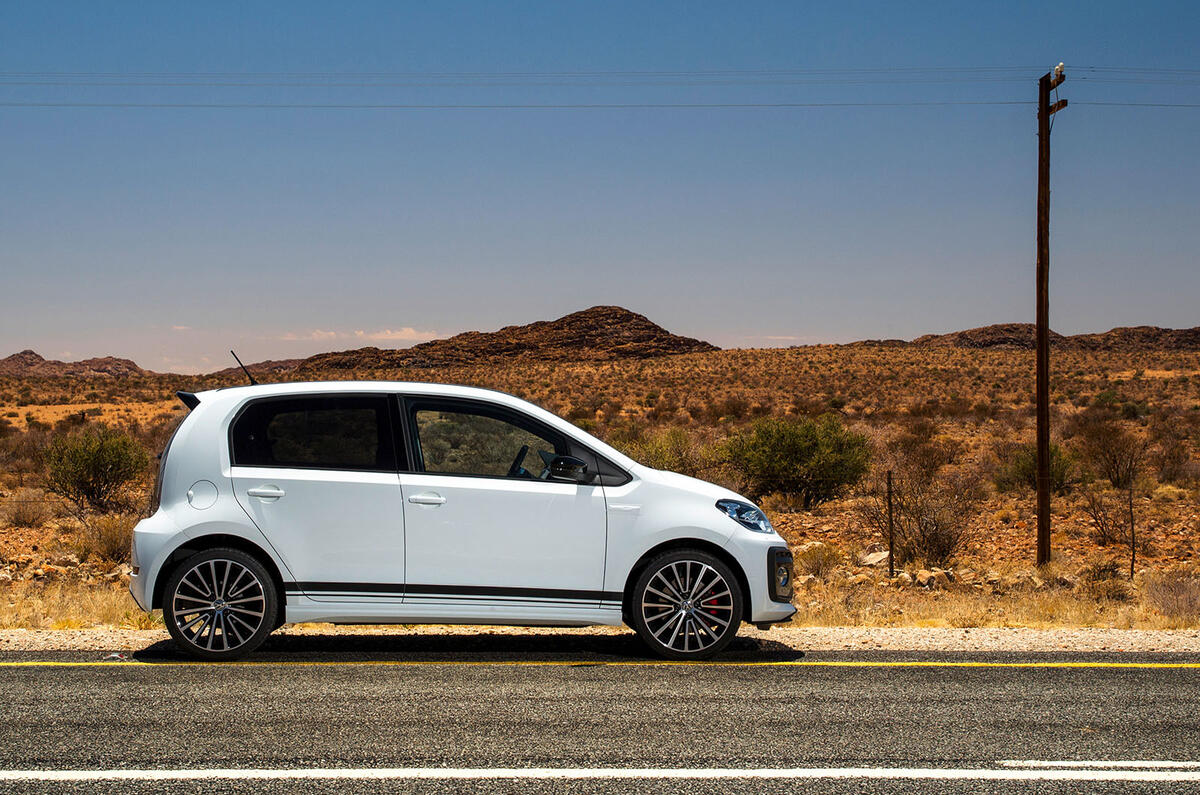
The new up! GTI – externally and internally similar in size to the original GTI – will extend Volkswagen's product range from the start of 2018, carrying on the doctrine of the lightweight, uncomplicated sports car in compact format. 
It is powered by a turbo engine (TSI) delivering a potent 200 Nm of torque. The benchmarking and performance figures read like those of a Golf GTI I catapulted into the modern era. Weight: 997 kg. Top speed: 197 km/h.
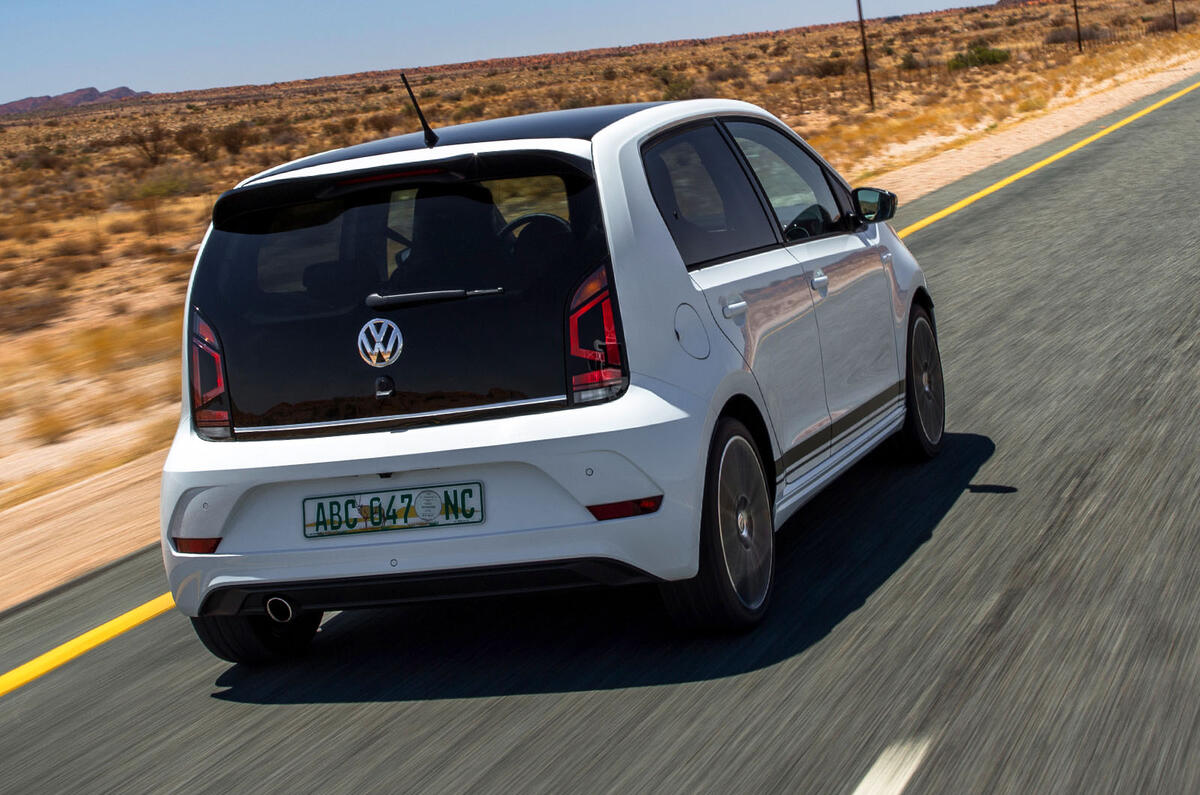
0-100 km/h: 8.8 seconds. Colours: again classic and typical for the GTI – the single colours of tornado red and pure white, plus the metallic colours of dark silver, black pearl and – as a new GTI shade – costa azul (blue). 
This most powerful up! can be identified by the typical GTI insignia. At the front, for instance, it is the red lateral stripe in the honeycomb-patterned radiator grille. 
Incorporated above it: the GTI logo. On the sides it is the black double lateral stripes over the wide side sill shrouds, where the new up! draws directly on the original GTI. The 17-inch alloy wheels have also been redesigned. They look particularly snappy within the wheel arches, as the up! GTI has a sports running gear set 15 mm lower. 
GTI features characterise the rear as well: here these include once again a red stripe and a larger roof spoiler that provides greater downforce on the rear axle and thus optimised handling characteristics. In the interior the typical features include the leather sports steering wheel, a GTI gear lever knob and the legendary 'Clark' seat cover pattern.
With regards to the details of the Golf GTE Performance Concept, one thing is clear: GTE3 has always stood for sustainability and dynamic handling. That is reflected too in the new Wörthersee concept car. 
While the classic GTI and the semi-electric GTE are based on a similar concept, the drive systems differ and on the GTE all the red GTI insignia are blue. With the new prototype of the Golf GTE Performance Concept, Volkswagen is now presenting an idea of how the Golf GTE, which can drive up to 50 kilometres in all-electric mode, could be further developed.
Externally the Golf GTE Performance Concept painted in Electric White Mother of Pearl Effect draws admiring looks with a black roof, blue elements in silhouette, black wing mirrors, air deflector elements in the front bumper painted in gloss black, side sills in the same gloss colour and blue-and-black 19-inch Pretoria wheels.
To accompany the increased power, Volkswagen provides large 17-inch brakes (discs perforated, callipers in 'GTE blue'), sports running gear and wheel spacers. 
At the rear features such as the exhaust tailpipes and diffuser of the Golf GTI and the roof edge spoiler of the legendary Golf GTI Clubsport mark out the GTE Performance version. On the inside it is details such as exclusive leather sports seats and a multifunction steering wheel in 'alcantara' with blue '12 o'clock marking', with which the powerful concept car will be appearing at the GTI festival in the Austrian village of Reifnitz.
1 + 2 up! GTI and Golf GTE Performance Concept: these vehicles have not yet gone on sale and therefore Directive 1999/94 EC does not apply.
3 Golf GTE – fuel consumption combined 1.6 l/100 km; CO2 emissions combined 36 g/km; electricity consumption combined 11.4 kWh/100 km; efficiency class: A+.