Purpose

I will try my best to provide detailed info on various cars and what is like to live with them, I have already produced a few for Jaguar-car-forums, I will do my best to be unbiased, but it will be hard for some cars. I will re-produce press releases and copy from other motoring news.
Showing posts with label Noise. Show all posts

Thursday, 31 March 2016

And the TOP Gear Magazine Car of the year is....... find out within, along with the entire rundown of all awards.

“You don’t always need to spend big money to have a huge amount of fun”
BBC Top Gear Magazine Awards Issue, celebrating the greatest cars of the year and representing the best of the best.
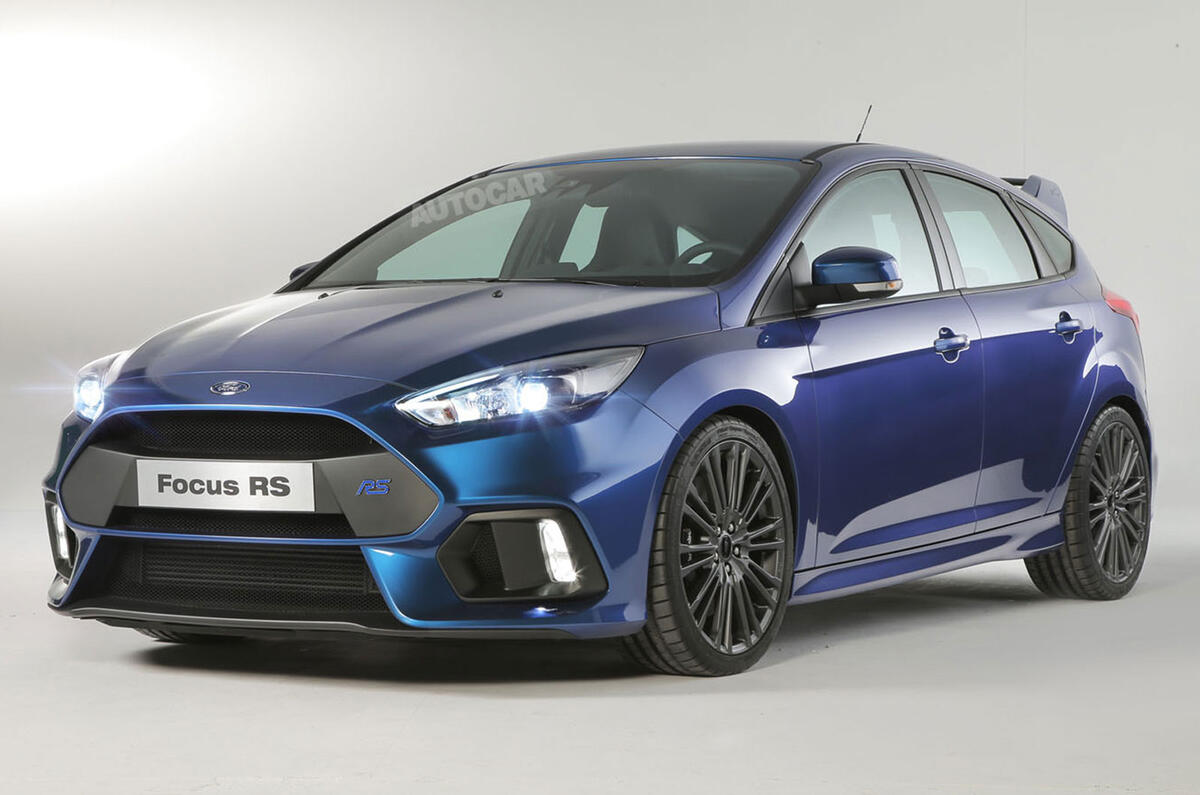
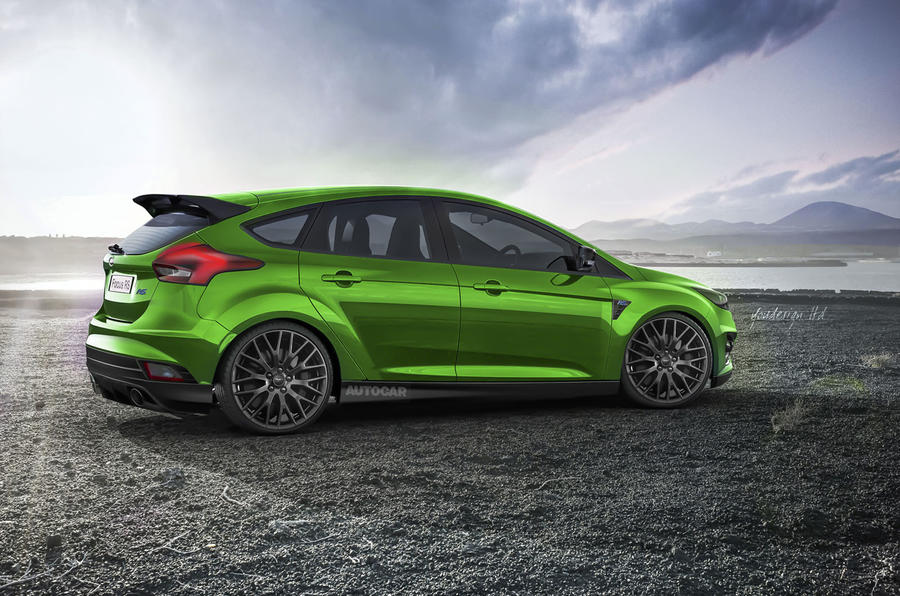
The Ford Focus RS, has claimed the title of BBC Top Gear Magazine’s Car of the Year, beating off serious competition from the significantly higher priced models, such as Porsche and Ferrari, to be the overall winner for one of the most coveted awards in the motoring industry.

Every year, Top Gear Magazine rates and reviews over 300 new cars. Each award winner is selected by Top Gear's expert motoring journalists – including some help from The Stig - and now the top 18 have been named.
The Focus is the latest in the long line of fast Fords to carry the iconic RS badge and the judges described it as a car that “combines such vivid personality with real practicality and serves it up at such a tempting price”. Naturally, it also picked up a second award in the Hot Hatch category. With a £29,995 price tag, the Ford Focus RS is one of cheapest cars on the list with a top speed of 165mph and hitting 0-62mph in 4.7 seconds. Winning Car of the Year is no stranger to Ford; the Fiesta ST also won the award in 2013.
Charlie Turner, Editor-In-Chief, Top Gear Magazine says “The Focus RS really is the complete package and claims our top award ahead of other category winners costing ten times as much. It delivers accessible performance and entertainment, with looks and practicality thrown in, and proves you don’t always need to spend big money to have a huge amount of fun. When it came to the voting the decision was unanimous - the Focus RS is a hugely worthy winner of the TopGear Car of The Year.”
In the Manufacturer of the Year category, McLaren picked up the award after launching three world beaters in 2015 with the 570S, 675LT and P1 GTR. A triumph for the (relatively) young car company from the UK.
Other notable winners include: Mazda, who picked up the Roadster of the Year Award for the new version of the iconic MX-5; and Urban Warrior of the Year for the CX-3, described as an “urban SUV with a sense of humour”.
Porsche once again demonstrated their performance pedigree; picking up two awards; the Hardcore Car of the Year with the Porsche 911 GT3 RS and Sports Car of the Year for the Porsche Cayman GT4.
Top Gear magazine has had a complete overhaul, with a fresh look and re-design. There are new sections, layouts and feature formats. Plus, some of the new presenters from the show are featured in the Awards Issue with Chris Evans, Eddie Jordan, Chris Harris and Rory Reid all contributing.
The full results and details are available in the special Awards issue of the magazine on sale Wednesday 23 March 2016.
TopGear Magazine Awards 2016 winners in full:
  • Car of the Year 2016 - Ford Focus RS
  • Hot Hatch of the Year - Ford Focus RS
  • Manufacturer of the Year - McLaren
  • Coupe of the Year - BMW M2
  • Estate Car of the Year - Mercedes-AMG C63 Estate
  • Family Car of the Year - Land Rover Discovery Sport
  • Freak of the Year - Ariel Nomad
  • Hardcore Car of the Year - Porsche 911 GT3 RS
  • Luxury Car of the Year - Rolls-Royce Dawn
  • Muscle Car of the Year - Ford Mustang GT350R
  • Noise of the Year - Range Rover Sport SVR
  • Roadster of the Year - Mazda MX-5
  • Saloon of the Year - Jaguar XF
  • Sports Car of the Year - Porsche Cayman GT4
  • Supercar of the Year - Ferrari 488 GTB
  • Urban Warrior of the Year - Mazda CX-3
  • Zen Car of the Year - Volvo XC90
  • Engine of the Year - Ferrari F12tdf

Friday, 20 November 2015

Vauxhall/Opel reveal the methods developed in reducing Noise, Vibration and harshness in the new Astra.

Much has been written about how quiet and refined Vauxhall’s new Astra is, and now the company can reveal how this has been achieved. When the Astra arrives in the acoustic lab, it is still in the final phase of being made production-ready. 
Engineers, led by Bernd Justen, Vehicle Performance Manager for Vauxhall/Opel compact class cars, are responsible for ensuring that the compact class car meets the demanding noise requirements and test the Astra thoroughly in the Vauxhall/Opel acoustic lab in Rüsselsheim.

The Brit-built Astra was tested in the comfort and noise evaluation track at the Dudenhofen Test Centre, in Germany, where all new models developed by the carmaker have to come for final testing.
Reducing NVH (noise, vibration, harshness) in the new Astra’s cabin was always a high priority, especially from the latest generation turbo-charged petrol and diesel engines that power the Astra.
“That is only one aspect we check in the acoustic lab,” explains Justen. Moreover, the Astra is put through an extensive and precisely defined requirements list. 
“Apart from the appropriate sound of the engine or rolling noise, this includes the sound made by closing a door or the clicking of the indicator. We initially check the simulation-based basic settings. Based on this we keep on working until the Astra meets our noise requirements.”
The walls and the ceiling of the lab are completely soundproof thanks to noise absorbing materials. During testing, the Astra is driven on large floor rollers, which produce the same resistance the car would experience on the road from wind and rolling friction. 
“This enables driving with road-like loads. It does not depend on the weather and we can test various scenarios under consistent conditions,” said Justen.
These tests include idle behaviour, the Start/Stop function and driving under part or full engine load for example. The highly-sensitive microphones record all noises so they can be analysed afterwards.
A typical procedure on the roller test bench is ‘full-load, rev-up’ in third gear – a demanding test that the all-new 1.4 ECOTEC Direct Injection Turbo, a four-cylinder unit from the same engine family as the innovative one-litre, three-cylinder engine, passes with flying colours while always remaining within the pre-defined tolerance curve for cabin noise. Just like the three-cylinder engine, the 125PS or 150PS unit was developed with setting new standards in noise and vibration characteristics in mind.
The outstanding refinement was achieved through the noise-optimised engine block design. 
The implemented measures to reduce the noise level included splitting the oil pan, noise protecting the integration of the cylinder head into the exhaust manifold, designing a sound-absorbing cam cover, decoupling the high-pressure injection valves and trimming the timing chain for quiet concentricity. 
The test bench quickly reveals that the engineers did an outstanding job: The engines offer a pleasant and dynamic sound experience – and reduce noise levels in the cabin.
“Dummy Head” Testing
“Our ‘dummy heads’ confirm the exemplary noise level,” explains Justen, referring to the weird looking figures in the Astra cabin that are reminiscent of mannequins. Plastic effigies of the human head and shoulder area that possess a perfect replica of all acoustically relevant elements of the human outer ear adorn the seats. “There are highly sensitive microphones fitted in the ears of dummy heads too. 
They allow us to record and replay noises in the same way that a ‘real’ human would perceive them.” This enables stereo recording and replaying, as well as differentiation between the upward and downward direction of noise, making the dummy’s hearing virtually three-dimensional.
To achieve the desired vehicle sound that is pleasant for occupants, a binaural transfer path analysis and synthesis is conducted using so-called binaural measurements. This enables a distinction between airborne and structure-borne noise source paths. 
“This enables us to identify and analyse the different sound sources,” explains Justen. Using a noise transfer path model, engineers can identify, for example, which screw needs to be turned to achieve the agreed target value – first virtually and then in reality. If both cases produce satisfactory results, the Astra has taken its next hurdle on the way to production readiness.

Saturday, 1 August 2015

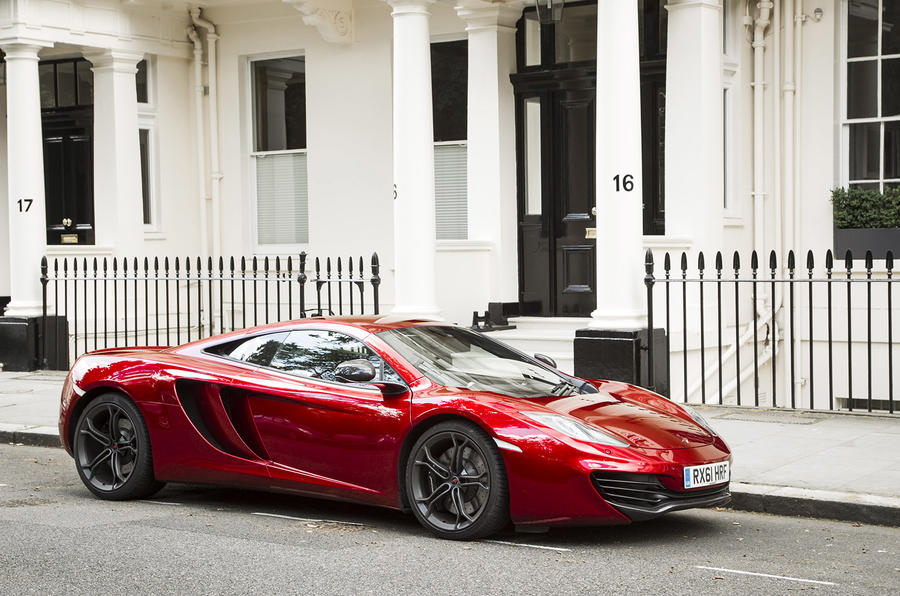
Kensington & Chelsea’s proposal to draft a new set of laws to deal with wealthy Middle Eastern supercar drivers.

‘Kensington and Chelsea – don’t demonise supercars,’ pleads Prindiville’s founder, Alex Prindiville.

‘The Royal Borough of Kensington and Chelsea’s proposal to draft a new set of anti-social behaviour laws to deal specifically with the “menace” of wealthy Middle Eastern supercar drivers is heavy-handed and unnecessary,’ argues Alex Prindiville, founder and owner of Prindiville, central London’s only supercar showroom.


‘Existing laws are already perfectly adequate to deal with the minority of supercar drivers who step out of line, provided they are properly enforced,’ reasons Alex. ‘The proposed Public Spaces Protection Order (PSPO) to be applied to a large spread of Knightsbridge is using the proverbial sledgehammer to crack a nut.

‘While I can fully sympathise with local residents who are upset by the anti-social behaviour of the few, the proposed terms of the PSPO are an excessive response – forbidden will be playing music loudly in your car, travelling in convoy, revving your engine, letting your engine idle, causing either a stationary or moving obstruction, sounding your horn, accelerating rapidly, and a few more things besides.

‘Will these new rules be evenly applied to all, I wonder. Will three Range Rovers in a row taking kids to a party be treated as a convoy? 

If those Range Rovers then stop on double yellow lines to disgorge the children, will that be seen as a stationary obstruction? If the mums dropping the kids off then have a little chat by the roadside with their doors open and music playing inside the car, will they be prosecuted?

‘If I were to go shopping at Harrods in the Ferrari LaFerrari currently in the Prindiville showroom and when I started it up it revved loudly – which it would because that’s simply what happens with supercars like these, whether you like it or not – would I be arrested and have my car impounded?

‘I don’t doubt that some of the young Arabs in their powerful supercars do cause a genuine nuisance, but apart from the price of their cars, are the rest of them so very different from young lads the length and breadth of this country? 

Existing police powers will sort out the troublemakers in Newcastle or Birmingham, Bristol or Brighton, so why does Kensington and Chelsea require anything extra?

‘Besides which, if I show up in Knightsbridge with, say, three cars that I wish to show to a client, I don’t want to feel that I could be liable to prosecution simply for parking them all together. 

Good old-fashioned policing could sort out a lot of local residents’ concerns – devising new laws is simply political posturing. Please let common sense prevail.’

Friday, 12 September 2014

Vauxhall continues new engine roll out with brand new 2.0L Diesel

  • New generation 2.0 CDTi (170PS) premiers in Insignia and Zafira Tourer
  • Power density increased: fuel consumption and CO2 emissions reduced
  • Outstanding running refinement with low noise, vibration and harshness
  • Selective Catalytic Reduction enables Euro 6 compliance
With 170PS and 400Nm, Vauxhall’s all-new 2.0-litre CDTi diesel engine will debut at next month’s 2014 Paris Motor Show (4th – 19th October).
The new state-of-the-art unit will be revealed in the Insignia and Zafria Tourer as Vauxhall continues the roll out of its new powertrain portfolio. The new engine replaces the current 2.0 CDTi (163PS) engine at the top of Vauxhall’s diesel range.
This highly efficient, Euro 6-compliant engine delivers almost five per cent more power and 14 per cent more torque while reducing fuel consumption and CO2 emissions.
The engine is also impressively quiet and smooth as a result of Vauxhall’s unwavering focus on ‘sound engineering’ measures to minimise NVH (noise, vibration, harshness). Engine noise has been reduced by five decibels.

The new engine’s power density is 85PS per litre, the same as Vauxhall’s much-lauded 1.6 CDTi ‘Whisper Diesel’ unit. Impressive torque of 400Nm is available from 1,750 to 2,500rpm, and maximum power of 170PS is accessed at just 3,750rpm.
The new 2.0 CDTi runs as clean as a petrol engine thanks to Vauxhall’s BlueInjection Selective Catalytic Reduction system. BlueInjection is an after-treatment which removes NOx from the engine’s exhaust gases.
“This sophisticated engine makes a perfect partner for our top models including Insignia and Zafira Tourer,” said Stuart Harris, Vauxhall’s Head of Carline Brand. “Its high power density, refinement and frugality place it among the very best diesels in its class.”
Available next year, the new 2.0 CDTi is the first in a new family of large diesel engines developed in-house by a global team of engineers in Turin and Rüsselsheim supported by engineers in North America. It will be manufactured at Opel/Vauxhall’s Kaiserslautern engine plant in Germany.
“This excellent new powertrain is part of the company’s €4 billion investment in product and powertrain development, which is helping to bring 23 new products and 13 new engines to market” said Tim Tozer, Vauxhall’s Chairman and Managing Director. “This new large diesel engine is extremely important to Vauxhall as a sizable amount of customers chose a 2.0-litre CDTi engine.”
This 2.0-litre CDTi unit is the latest step in Vauxhall’s powertrain offensive, following the introduction of all-new 1.6-litre petrol and diesel engines and a 1.0-litre three cylinder petrol powertrain. 
Performance
Key to the engine’s enhanced performance are the newly-designed combustion chamber, the re-profiled intake ports and the new fuel injection system with 2,000 bar and up to 10 injections per cylinder cycle. This ensures high power, improved fuel atomisation and also contributes to quieter running. The definition of the combustion chamber alone was the subject of more than 80 computer design simulations, before the best five were finally selected for hardware development.
The VGT (variable geometry turbocharger) features an electrical actuator for the variable aspect turbine, giving a 20 per cent faster boost response than a vacuum actuator. Exceptionally compact packaging of the VGT and intercooler also minimises the air volume between the turbocharger and engine, further contributing to a fast boost pressure build up. For durability, the turbocharger is water-cooled and has an oil filter fitted at the oil inlet point to help further reduce wear in the bearing system.
The VGT and exhaust gas recirculation (EGR) module have been designed as a single system for optimal efficiency. The EGR module is based around a new stainless steel radiator concept which provides a near 90 per cent cooling efficiency. An integrated, water-cooled EGR bypass valve minimises pressure drop and its closed loop control offers a significant improvement in NOx/PM trade-off under transient driving conditions, while improving the management of HC and CO emissions.
Improved NVH
A consistent improvement in NVH characteristics under all operating conditions was a key requirement for the new engine right from the outset of its design. Several CAE acoustic optimisation loops were executed on each component and sub-system even before the first prototype engines were built.
Architectural improvements focused on two high noise emitting areas at the top and bottom of the engine. A new aluminium cylinder head design, including the addition of a decoupled, plastic cam cover with isolated fixings and a sealing gasket, improves noise attenuation. And the intake manifold is also wrapped in a single shell cover made of sound-absorbing material.
At the bottom of the engine, a new balancer shaft module is fitted, made of high pressure die-cast aluminium. It houses two counter-rotating shafts which offset up to 83 per cent of secondary order engine vibrations. A helical gear on the crankshaft drives one of the balancer shafts, which is geared to drive the other shaft. Scissor gear control ensures smooth gear teeth meshing, and the elimination of a drive chain removes the risk of rattle noise. After detailed analysis, plain instead of roller bearings were preferred for the balancer shafts to further reduce NVH, as well as weight.
The design of the oil pan is also new. The previous single piece solution is now replaced by a two piece design, with a lower sheet metal pan fixed to an upper section in high pressure, die-cast aluminium. NVH performance was further improved by several analysis loops to acoustically optimise the internal and external ribs of both sections.
Other detailed sound engineering measures to reduce operating noise include:
  • Optimised fuel injection patterns for reduced combustion noise without compromising fuel economy; acoustically-designed ribs in the cast iron cylinder block; individual balancing of the VGT compressor and turbine wheels; improved teeth-meshing on the timing belt and decoupled mounting points for its cover.
  • As a result of all these design features, the new engine emits less noise than its predecessor throughout its operating range, and is five decibels quieter at idle.  
Selective Catalytic Reduction (SCR)
The new 2.0 CDTi with Vauxhall’s BlueInjection SCR system assures compliance with Euro 6 emissions standards effective September 2015. 
BlueInjection is an after-treatment which removes NOx from the engine’s exhaust gases. Tiny quantities of AdBlue, a harmless fluid consisting of urea and water, are injected into the exhaust gas flow ahead of the SCR catalyst and downstream of the diesel particulate filter. The solution is immediately converted into ammonia, which is absorbed by the SCR catalyst. Nitrogen oxide in the passing exhaust gas is then selectively reduced to harmless nitrogen and water vapor in a chemical reaction with the ammonia.
The AdBlue solution, available at filling stations and Vauxhall dealerships, is stored in a tank, which can be topped up as required via a nozzle adjacent to the vehicle’s fuel filler cap.