Purpose

I will try my best to provide detailed info on various cars and what is like to live with them, I have already produced a few for Jaguar-car-forums, I will do my best to be unbiased, but it will be hard for some cars. I will re-produce press releases and copy from other motoring news.
Showing posts with label Reduce CO2 emissions. Show all posts

Sunday, 26 March 2017

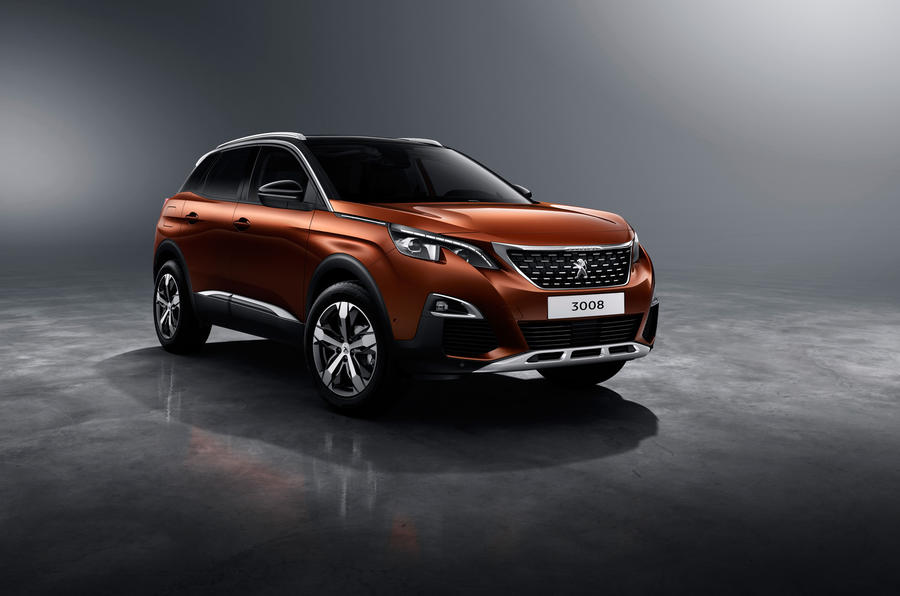
Peugeot continues to be the brand that improves its CO2 levels with another drop during 2016.

  • New car average CO2 emissions decreased by 1.2% in 2016, with Norway responsible for the largest decrease in CO2 levels
  • Peugeot led the brand ranking, with its average emissions falling by 1.7g/km in 2016
  • The data is being released as the industry prepares for the implementation of WLTP, which is expected to dramatically impact CO2 emissions monitoring
Average CO2 emissions for new cars in Europe fell during 2016 demonstrating the continued progress being made by the industry. 

The analysis carried out by JATO Dynamics covered 23 European markets and showed that average CO2 emissions fell by 1.2% in 2016 - finishing at 117.8 g/km. The result was 1.4 g/km lower than the total seen in 2015, but this represents the smallest annual percentage improvement for the last ten years. 

In part this can be attributed to the slower growth of diesel registrations in 2016, which produce lower CO2emissions.
On a country level, Norway had the lowest CO2 emissions of all countries analysed. Incentives to increase the use of EVs and hybrids resulted in these segments accounting for 39% of the country's total registrations. Notably, the Netherlands and Denmark were the only two markets with increased average CO2 emissions in 2016, again the major driver of change was government policy - the reduction of tax incentives in the Netherlands resulted in a 53% fall in demand for PHEVs, and increased tax rates for EVs in Denmark resulted in a 71% fall in EV registrations.

Peugeot led the brand ranking for a second year - it decreased its CO2 emissions by 1.7g/km. This was primarily due to a lower CO2 emission average for its petrol engines. Peugeot's top-seller, the Peugeot 208, decreased its average CO2 emissions by 1.3g/km from 99.3g/km to 98g/km. PSA Group's other volume brand Citroën, occupied second place with 103.3g/km, which is a reduction of 2.3g/km compared to 2015. Both Peugeot and Citroën benefit from their smaller ranges of SUVs / large vehicles. Overtaking Renault in third place was Toyota, whose improvements were largely thanks to the strong performance of its hybrid range, which accounted for 39% of its European registrations in 2016. Notably, Toyota's average emissions for its hybrid range grew by 4.3g/km due to the launch of its RAV4 Hybrid.

The only brands not to decrease CO2 emissions in 2016 were Nissan, Ford and Mazda, this can largely be attributed to the prominence of these brands with regards to particular models. A significant portion of Nissan's registrations were SUVs; the Nissan X-Trail posted an average emission of 138.1g/km and was the brand's third best-selling model. Similarly, Ford and Mazda's average CO2 emissions increases can be attributed to increased registrations of the Mustang and MX-5 respectively.

The SUV boom dominated the automotive world in 2016, and the success of newer compact SUV models - such as the Tiguan and Tucson - helped to decrease the segment's CO2 emissions by 6.1 g/km. The luxury cars decreased their average by 14.5 g/km, due to lowered emissions across the segment and increased diesel and PHEV registrations. The Sports segment was the only category to increase CO2 emissions. This was due to the high volume of registrations of the Ford Mustang V8 which negated the improvements made by the BMW 4-Series, Mercedes C-Class Coupé, MINI Convertible and Porsche 911.

"It's clear that the industry is making progress: CO2 emissions declined. The rate of decline has, however, slowed. This is due to the increased market share of gasoline vehicles and the deceleration of the growth of diesel vehicles. With WLTP imminent this is a significant year and it remains to be seen the impact it will have on emissions monitoring," commented Felipe Munoz, Global Automotive Analyst at JATO Dynamics.

Thursday, 1 December 2016

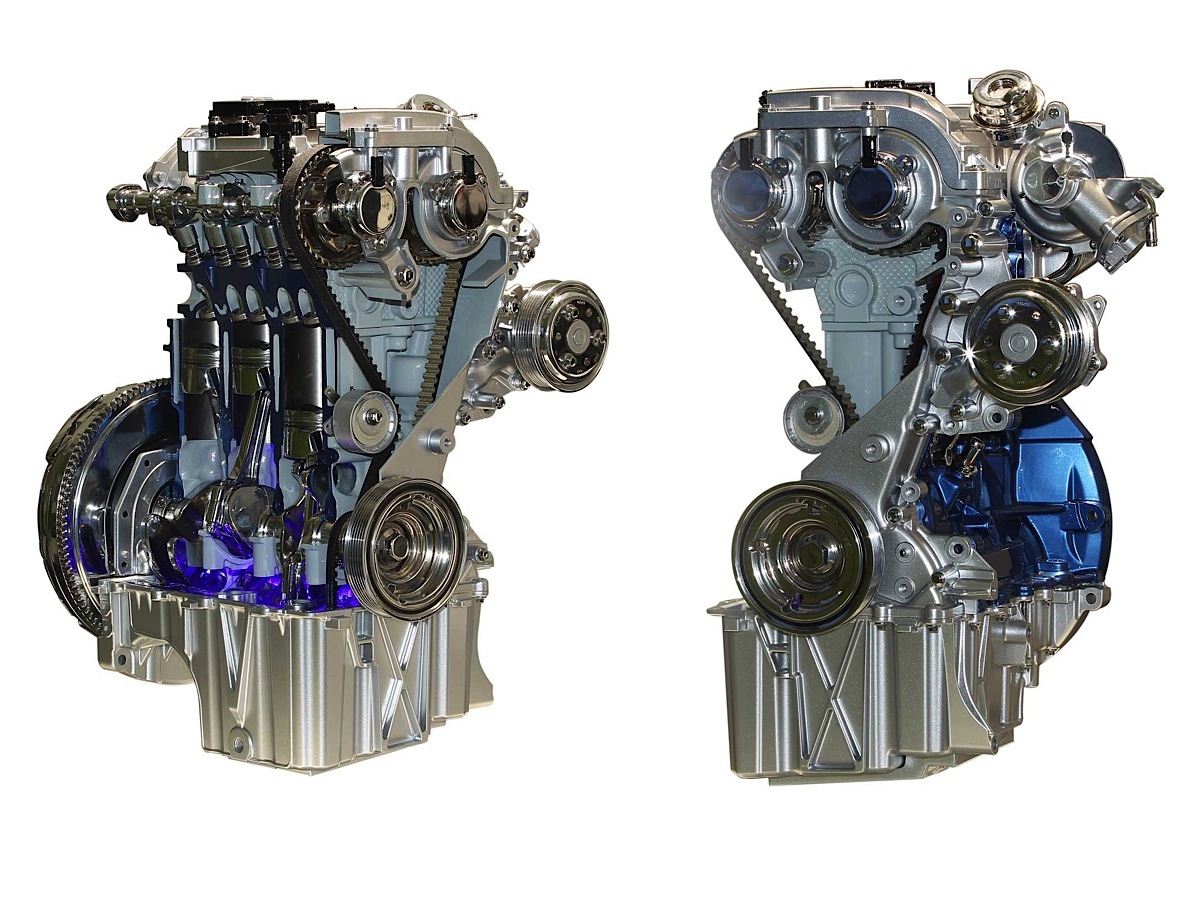
Ford announces that the 1.0‑litre EcoBoost petrol engine is to be offered with innovative cylinder deactivation technology

  • Ford to launch variable displacement for the multi-award-winning 1.0-litre EcoBoost engine using cylinder deactivation technology from early 2018
  • Technology will be a global first on a three-cylinder engine; can stop or restart combustion in 14 milliseconds and improve CO2 and fuel efficiency by up to six per cent
  • European Ford engineers defy industry opinion by further enhancing three-cylinder engine’s fuel efficiency with no compromise on performance or refinement
Ford today announced that the multi-award-winning 1.0‑litre EcoBoost petrol engine is to be offered with innovative cylinder deactivation technology for further reduced CO2 emissions and improved fuel efficiency.
Ford’s compact and powerful 1.0-litre EcoBoost will in early 2018 become the first three-cylinder engine in the world to feature cylinder deactivation. 
The accomplishment is delivered through innovative engineering by Ford, and defies industry opinion that a three-cylinder, variable capacity engine could not deliver the refinement needed for passenger car applications.
Cylinder deactivation will deliver reduced running costs for 1.0-litre EcoBoost customers by automatically stopping fuel delivery and valve operation for one of the engine’s cylinders in conditions where full capacity is not needed, such as when coasting or cruising with light demand on the engine.

An example of the advanced engineering that enables Ford to deliver the power of choice to customers with fuel efficient petrol, diesel and electrified powertrains, the technology can disengage or re-engage one cylinder in 14 milliseconds – 20 times faster than the blink of an eye. Combined with advanced solutions to counteract vibrations, cylinder deactivation will be imperceptible to drivers in terms of operation and engine performance.
“Ford has pushed back the boundaries of powertrain engineering once again to further improve the acclaimed 1.0-litre EcoBoost engine, and prove that there is still untapped potential for even the best internal combustion engines to deliver better fuel efficiency for customers,” said Bob Fascetti, vice president, Global Powertrain Engineering, Ford Motor Company.
Making the best even better
The cylinder deactivation system, developed by Ford engineers at Dunton Technical Centre, in Essex, UK, Germany and the U.S. in collaboration with Ford’s engineering partners at the Schaeffler Group, improves fuel efficiency and CO2 emissions by reducing friction and pumping demand inside the engine.
Simple in concept but featuring advanced engineering that enables it to operate at engine speeds of up to 4,500rpm – when valves are each opening and closing almost 40 times per second – the system uses engine oil pressure to activate a special valve rocker and interrupt the connection between the camshaft and the valves of cylinder number one.
Sophisticated software determines the optimum moment to deactivate the cylinder based on factors including speed, throttle position and engine load. A new single-piece camshaft module – similar to the design debuted earlier this year for the all-new Ford EcoBlue diesel engine – frees space within the cylinder head for new oil channels and valve-switching componentry.
“With the variable capacity delivered by cylinder deactivation, drivers get the power and performance of the whole engine when they need it, and the enhanced fuel efficiency of a smaller engine when they don’t,” said Denis Gorman, powertrain engineer, Ford of Europe. “Our research shows that in most driving scenarios the system will be active for just a few seconds at a time, making fast and seamless operation crucial, and has the potential to improve fuel efficiency by up to six per cent.”
Ford’s single-cylinder deactivation design reduces complexity to make volume production achievable, but also presented significant challenges in maintaining the 1.0-litre EcoBoost engine’s acclaimed refinement – delivered using innovations including an offset crankshaft configuration and deliberately “unbalanced” flywheel and pulley that counteract vibration.
A new dual-mass flywheel and a vibration-damping clutch disc help neutralise engine oscillations when running on two cylinders, especially at lower rpm, and enable a wider operating range. Intake and exhaust valves are closed when the system is active, trapping gasses to provide a spring effect that helps balance forces across the three cylinders for refinement, and also retain temperatures inside the cylinder that maintain fuel efficiency when reactivated.
New engine mounts, drive shafts and suspension bushes also will be specially tuned for refinement. The 1.0-litre EcoBoost will feature enhanced durability to cope with the different loading forces resulting from cylinder deactivation, including a new camshaft chain, and valve rockers formed using advanced metal injection moulding.
“Cylinder deactivation adjusts the effective engine capacity to maximise fuel efficiency, and to deliver the greatest benefit to customers, needs to be triggered in as many driving scenarios as possible,”said Carsten Weber, manager, Powertrain Research and Advanced Engineering, Ford of Europe. “We intensively tested the system in real world conditions using a range of deactivation strategies to develop a system that maximises the fuel efficiency without compromising driving comfort.”
Game-changing 1.0-litre EcoBoost
Ford’s 1.0-litre EcoBoost engine was launched in the Ford Focus in 2012, and uses Ford EcoBoost technologies including high-pressure direct fuel injection, Twin-independent Variable Cam Timing and turbocharging to deliver optimised fuel efficiency alongside the power and performance of a naturally aspirated 1.6‑litre engine.
The 1.0‑litre EcoBoost was earlier this year voted best in class at the International Engine of the Year Awardsfor the fifth year in a row. In 2014, the 1.0-litre EcoBoost became the first engine to be named overall International Engine of the Year for a third time in a row, and also was in 2012 named “Best New Engine.”
The compact engine – with a block small enough to fit into an aeroplane’s overhead locker – is available with 100PS, 125PS and 14 PS – delivering a greater power-per-litre ratio than a Bugatti Veyron supercar.
Eleven Ford models, including Fiesta, EcoSport, B-MAX, Focus, C-MAX, Grand C-MAX, Tourneo and Transit Connect, Tourneo and Transit Courier and Mondeo are available in Europe with the three-cylinder engine. One in five all-new Ford vehicles sold in Europe in last year were equipped with the 1.0-ltre EcoBoost, including two in five Fiestas.