Purpose

I will try my best to provide detailed info on various cars and what is like to live with them, I have already produced a few for Jaguar-car-forums, I will do my best to be unbiased, but it will be hard for some cars. I will re-produce press releases and copy from other motoring news.
Showing posts with label Petrol engine. Show all posts

Tuesday, 30 May 2017

Wörthersee meeting see's a double premiere from Vw and Students, from fuel to electric.

  • Premiere 1: Golf GTI First Decade combines 410 PS (300 kW) petrol engine with 12 kW electric motor for rear and all- wheel drive
  • Premiere 2: Apprentices from Saxony present their Golf GTE Estate impulsE with 165 kW hybrid system rating
Wednesday saw a very special Golf GTI is to make its world debut at the Wörthersee meeting. 13 apprentices from Volkswagen and Sitech are waiting anxiously as they will be presenting the first GTI that also features electric propulsion: the Golf GTI First Decade. 
The name indicates that this show car is the 10th apprentices’ GTI to be presented by talented young people from Wolfsburg at the traditional GTI fans’ meeting in Austria. 
The Golf GTI First Decade was created in slightly less than nine months on the basis of ideas provided by apprentices in six vocations. In the interior and exterior design, the five women and eight men were inspired by the many and varied blue tones of water and sky on the Wörthersee.
The Golf GTI First Decade combines a 410 PS (300 kW) petrol engine driving the front wheels with a 48-volt electric motor that drives the rear wheels with a maximum output of 12 kW. The two drive systems can be used separately but also work hand-in-hand when required. 
The car can be operated conventionally (front-wheel drive), in purely electric mode (rear-wheel drive) and in combined mode (all-wheel drive). The mild electric propulsion system offers the benefits of zero-emission, silent driving during parking manoeuvres and for short distances in residential areas or in stop-and-go traffic (electric mode). Through the recovery of braking energy (regenerative braking), two batteries in the rear of the vehicle are charged. 
This energy allows further carbon-neutral driving in electric mode. On more demanding surfaces, the combination of front and rear-wheel drive for starting assistance (electric all-wheel mode) comes into its own. The modes can be selected and controlled from a tablet PC using an app or from the infotainment display via Mirror Link. 
“During the creation of their dream GTI, our apprentices learn about the complexity and future challenges of automobile production. They gain further experience in the use of digital technologies, the application of system technology and electro-mobility,” says Peter Christ, Head of Automotive Technology Training in Wolfsburg. 
“This is why we choose our strongest talents and offer them the opportunity to learn from experienced instructors and experts from the entire company at an early stage.” This year, the departments concerned included Design, Group Research Drive Systems, Technical Development, the pilot hall, the seat center, plastic parts production and the paint shop.
Highlights of the Golf GTI First Decade (selection):
Exterior: the two-door sports Golf is painted in Atlantic Blue Metallic and the doors and rear side panels also feature large areas of foil in the contrasting color of Satin Ocean Shimmer. Stripes of glossy blue chrome foil underline the racing design. 
Rally stripes on the bonnet and roof take up the composition of three blue tones with contrasting foils. The sporting presentation is underlined by the high-gloss black paintwork of the honeycomb radiator grille, Clubsport rear spoiler and 20-inch alloy wheels. The wheel rims from mb-Design are decorated by hubs painted in Ocean Shimmer. The starting number 10 on the C-pillars and the “First Decade” logo on the tailgate signal that this show car is the 10th Wörthersee GTI from the Wolfsburg talent factory. 
Interior: GTI drivers in the two-seater benefit from top sports seats. The driver’s seat can be adjusted electrically using an app on a smart phone or tablet. 
The seat offers several back massage profiles with a memory function. The sports seats are handmade: titanium black nappa leather/Alcantara combination with decorative blue stitching. Punched Alcantara sections have a blue background and the central section is decorated by an embroidered “10” at the top. 
The racing design of the exterior is taken up in a more restrained way in the interior of the vehicle. Decorative strips painted in Ocean Satin Shimmer surround the air outlets and the instrument cluster. The steering wheel clasp and the decorative trim strips on the sides feature the same colour, with the starting number 10 in Atlantic Blue. 
The dark blue trim above the glove compartment bears the “First Decade” logo in Satin Ocean Shimmer. Instead of rear seats and a luggage compartment, the rear of the vehicle accommodates a high-end sound system with 1,690 watts from 11 loudspeakers and a subwoofer as well as a special rear HIFI installation with LED lighting on a carbon- covered base plate. The batteries and control electronics for the electric rear-axle drive system are installed under the base plate. 
For the “First Decade”, the 18 to 23-year-old apprentices completed part of the work rapidly and efficiently using digital technologies. Designs were created on graphic tablets; special components were designed on CAD computers and produced using advanced 3-D printing technology. In the course of the project, the apprentices from six vocations gained considerable specialist knowledge and expertise and grew together to form a strong team around project manager Holger Schülke. 
The Golf GTI First Decade is the latest of 10 show car projects since 2008. Each unique car bears witness to the high level and practical character of vocational training at Volkswagen. 
The2017 Wörthersee Team members (by training vocations): 
Motor vehicle mechatronics technicians: team spokesperson Eric Miguel Lehrach (21), Marvin Bömeke (23), Janik Kelm (20), Götz Riechmann (19) and Joshua Schilling (23), vehicle interior fitters: Ronja Schönfisch (18) and Sarah Isabel Schorle (18), vehicle paint technicians: Kevin Hoffmann (22) and Michelle Schmerse (21), media designer: Yasmine Weinhold (20), technical product designer: Nils Lennart Fröhlich (21), process technicians specializing in plastic and rubber engineering: Laura Hein (21) and Alexander von Czacharowski (21) as well as Holger Schülke, Project manager, and Martin Nobbe, Project coordinator and controller. 
Sarah Isabel Schorle is training with Sitech in Wolfsburg, Laura Hein with Volkswagen at the Brunswick plant, and all the others at the Volkswagen plant in Wolfsburg. Sitech is the Volkswagen Group company specializing in the development and production of vehicle seats. 
TheWörtherseeGTIs2008 – 2016 and their highlights (selection):
2008 Golf GTI Performance: gull-wing doors, wide body, three-seater, air suspension 2009 Golf GTI Street: two-tone color scheme with decorative foil
2010 Golf GTI Yellow Pearl: exclusive paintwork with matching interior
2011 Golf GTI Reifnitz: two-seater, seamless multicolor paintwork, alu gear shift knob 2012 Golf GTI Black Dynamic: decorative foil, embossed GTI logos on doors and tailgate
2013 Golf GTI Cabrio Austria: red- white-red paintwork, air outlets with honeycomb pattern
2014 Golf GTI Wolfsburg Edition: Wolfsburg silhouettes on doors, inside and outside 2015 Golf GTI Dark Shine: exhaust system with spectacular sound and valve control
2016 Golf GTI Heartbeat: two color scheme, contrasting foil, heartbeat and honeycomb symbols
2017 Golf GTI First Decade: two-seater, electric motor for rear axle and all-wheel drive, three-color scheme with matt foils and glossy chromium decorative strips, 1,960-Watt sound system
Second premiere: Golf GTE Estate impulsE from Zwickau
Today, apprentices from Volkswagen Sachsen are also unveiling a Wörthersee show car, the Golf GTE Variant impulsE. This year, the 14 apprentices from the Zwickau vehicle plant, the Chemnitz engine plant and the Transparent Factory in Dresden focused on e-mobility together with their mentors. For them, it was important to combine dynamism, sporting character and skilled craftsmanship with hybrid vehicle technology. 
A highlight of the show car is the prototype battery with a capacity increased from 8.8 to 16.8 kWh. This doubles the car’s range in electric operation. In terms of appearance, the Golf GTE Variant impulsE also breaks new ground: Its five-tone matt paintwork in Oryx White, Apassionata Blue, Anthracite, Hallmark and St. James Red makes the Golf GTE Variant “impulsE” from Saxony a real eyecatcher. Another fascinating detail is the bonnet with its ventilation slats. The color scheme for the interior harmonizes with the exterior. The decorative trims are painted and the steering wheel, central console, selector gaiter and door trim feature blue decorative stitching. The animated, app-controlled ambient lighting in the door trim, the indirectly lit panorama sliding roof and the leather/ Alcantara bucket seats with decorative blue stitching, “impulsE” logo and customized buckets round off the interior design. 

Thursday, 11 May 2017

Mercedes-Benz announces pricing and specification for the updated new SLC Range.

  • Entry-level petrol engine added to SLC range, priced from £32,039
  • Features a turbo-charged 1.6-litre petrol engine with 156 hp
  • Six-speed manual gearbox as standard
  • On sale now, with first deliveries arriving late summer
The SLC 180 AMG Line has been added to the SLC range, with prices starting from £32,039 OTR.
With monthly payments starting from as low as £276, the new SLC 180 makes the Mercedes-Benz roadster range more accessible than ever before.
The SLC 180 features a turbo-charged 1.6-litre petrol engine producing 156 hp and 250 Nm. It can accelerate from 0 to 62 mph in 7.9 seconds and has a top speed of 140 mph. It emits a low 134 g/km of CO2 and delivers up to 48.7 mpg combined. A six-speed manual transmission is standard, or for £1,600 customers can opt for a 9G-Tronic automatic gearbox.
The SLC 180 AMG Line comes as standard with 18-inch alloy wheels; Artico seats; Active Brake Assist; cruise control; air conditioning; sports suspension; and sports braking system.
The SLC Sport model line has also been discontinued to make the range even simpler, with AMG Line now the only option. The price of AMG Line trim has also been reduced by £500, making the SLC line-up even more attractive.
Possible purchase costs
Representative PCP example: SLC 180 AMG Line with metallic paint and a six-speed manual transmission
36 monthly payments of1
£275.08
Customer deposit
£3,999
On-the-road price
£32,679
Retailer deposit contribution
£6,158.34
Duration of agreement
36 months
Optional purchase payment2
£15,850
Amount of credit
£22,519.15
Total amount payable3
£35,922.73
Purchase activation fee2
£10
Fixed interest rate
5.56%
Representative APR
5.7%
Model featured is an SLC 180 AMG Line at £32,679 on-the-road (OTR price Inc. VAT, delivery, 12 months’ Road Fund Licence, number plates, first registration fee and fuel). 
¹Finance offer based on an SLC 180 AMG Line with metallic paint and manual transmission on a 36 month Mercedes-Benz Agility Agreement. Based on 10,000 miles per annum. Vehicle condition, excess mileage and other charges may be payable. Guarantees may be required. ²Payable if you exercise the option to purchase the car. ³Includes optional purchase payment, purchase activation fee and retailer deposit contribution (where applicable). Orders/credit approvals on selected SLC models between 4 May and 30 June 2017, registered by 30 September 2017, excluding Mercedes-AMG models. Offer cannot be used in conjunction with any other offer. Some combinations of features/options may not be available. Please contact your Retailer for availability. Credit subject to status by Mercedes-Benz Finance, MK15 8BA.
Prices correct at time of going to press 04/17.

Monday, 19 December 2016

MG Motor UK’s family-friendly SUV, the MG GS, has been announced as the company’s fastest-ever selling vehicle.

MG Motor UK’s family-friendly SUV, the MG GS, has been announced as the company’s fastest-ever selling vehicle. Launched at The London Motor Show in May 2016, the model has already surpassed 500 unit sales in just 176 days.
Reaching the milestone faster than any other of the manufacturer’s vehicles, even its stylish supermini, the MG3; success of the MG GS demonstrates market demand for a fun, family-friendly SUV – available at a sensible price.

Sales of the GS reflect MG’s continued success in the UK, with the brand recently announced as the country’s sixth fastest-growing automotive business, reporting 4,035 year-to-date vehicle registrations – already 956 units more than 2015.
Matthew Cheyne, Head of Sales & Marketing at MG Motor UK, commented: “As our first entry into the SUV marketplace, the MG GS has continued to delight customers nationwide – a sporty, stylish and affordable vehicle for all the family to enjoy.
“Surpassing the 500-unit milestone faster than any other MG model in the modern era shows a highly positive market outlook, as well as considerable demand for a fun yet sophisticated SUV.
“However, we couldn’t have achieved such impressive sales volumes without the support of our national distributor network, which has continued to play an instrumental part in the promotion and sales of each model in the MG family. For this reason, I would like to extend my personal thanks to each dealership within the group.”
Whether it’s a weekend family adventure, the daily commute to work or a trip to the shops, the MG GS makes family fun affordable. With OTR prices starting from £14,995, the GS is currently available with a number of great offers*, including:
  • 0% APR with just a 20% deposit monthly finance option
  • £660 contribution towards your deposit when financed on a PCP basis
  • A five-year/80,000-mile (whichever occurs first) manufacturer parts and labour warranty

Thursday, 1 December 2016

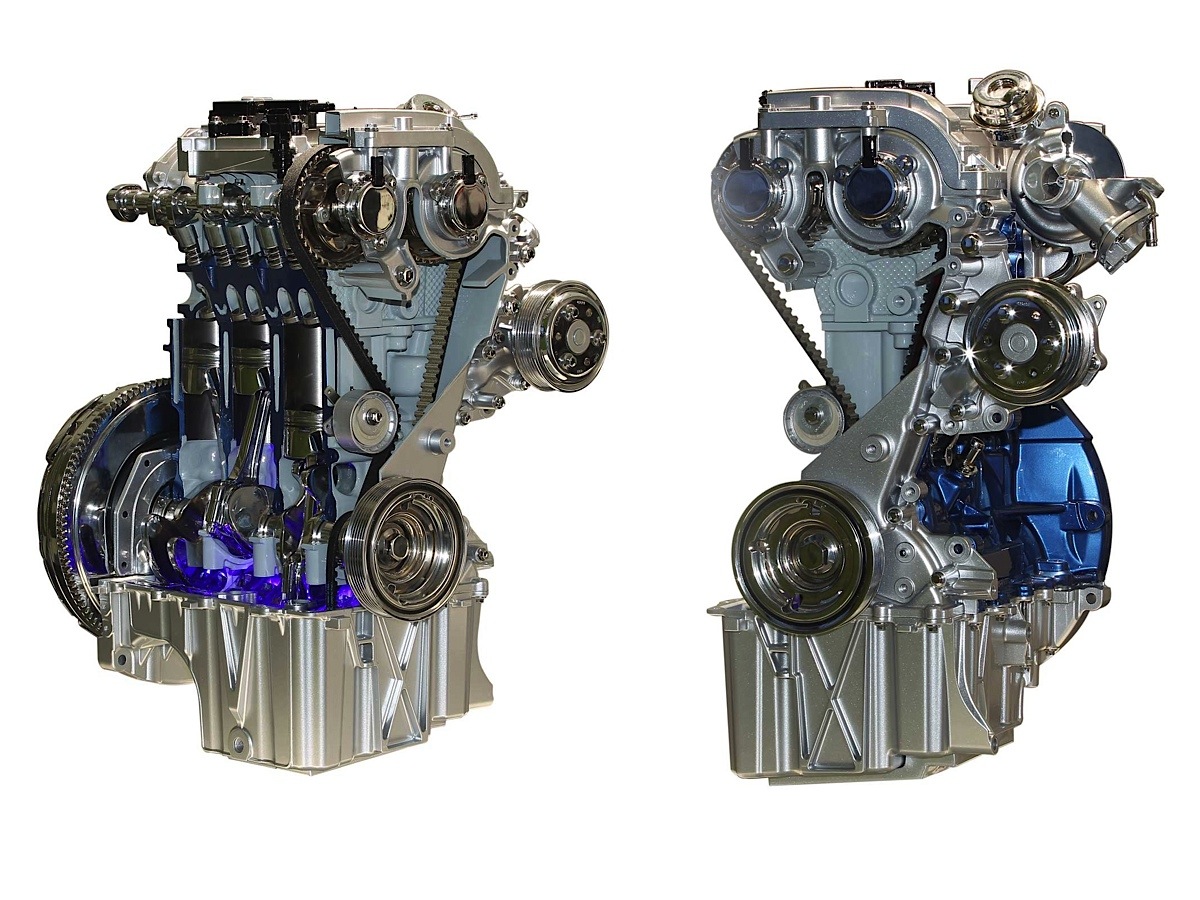
Ford announces that the 1.0‑litre EcoBoost petrol engine is to be offered with innovative cylinder deactivation technology

  • Ford to launch variable displacement for the multi-award-winning 1.0-litre EcoBoost engine using cylinder deactivation technology from early 2018
  • Technology will be a global first on a three-cylinder engine; can stop or restart combustion in 14 milliseconds and improve CO2 and fuel efficiency by up to six per cent
  • European Ford engineers defy industry opinion by further enhancing three-cylinder engine’s fuel efficiency with no compromise on performance or refinement
Ford today announced that the multi-award-winning 1.0‑litre EcoBoost petrol engine is to be offered with innovative cylinder deactivation technology for further reduced COemissions and improved fuel efficiency.
Ford’s compact and powerful 1.0-litre EcoBoost will in early 2018 become the first three-cylinder engine in the world to feature cylinder deactivation. 
The accomplishment is delivered through innovative engineering by Ford, and defies industry opinion that a three-cylinder, variable capacity engine could not deliver the refinement needed for passenger car applications.
Cylinder deactivation will deliver reduced running costs for 1.0-litre EcoBoost customers by automatically stopping fuel delivery and valve operation for one of the engine’s cylinders in conditions where full capacity is not needed, such as when coasting or cruising with light demand on the engine.

An example of the advanced engineering that enables Ford to deliver the power of choice to customers with fuel efficient petrol, diesel and electrified powertrains, the technology can disengage or re-engage one cylinder in 14 milliseconds – 20 times faster than the blink of an eye. Combined with advanced solutions to counteract vibrations, cylinder deactivation will be imperceptible to drivers in terms of operation and engine performance.
“Ford has pushed back the boundaries of powertrain engineering once again to further improve the acclaimed 1.0-litre EcoBoost engine, and prove that there is still untapped potential for even the best internal combustion engines to deliver better fuel efficiency for customers,” said Bob Fascetti, vice president, Global Powertrain Engineering, Ford Motor Company.
Making the best even better
The cylinder deactivation system, developed by Ford engineers at Dunton Technical Centre, in Essex, UK, Germany and the U.S. in collaboration with Ford’s engineering partners at the Schaeffler Group, improves fuel efficiency and CO2 emissions by reducing friction and pumping demand inside the engine.
Simple in concept but featuring advanced engineering that enables it to operate at engine speeds of up to 4,500rpm – when valves are each opening and closing almost 40 times per second – the system uses engine oil pressure to activate a special valve rocker and interrupt the connection between the camshaft and the valves of cylinder number one.
Sophisticated software determines the optimum moment to deactivate the cylinder based on factors including speed, throttle position and engine load. A new single-piece camshaft module – similar to the design debuted earlier this year for the all-new Ford EcoBlue diesel engine – frees space within the cylinder head for new oil channels and valve-switching componentry.
“With the variable capacity delivered by cylinder deactivation, drivers get the power and performance of the whole engine when they need it, and the enhanced fuel efficiency of a smaller engine when they don’t,” said Denis Gorman, powertrain engineer, Ford of Europe. “Our research shows that in most driving scenarios the system will be active for just a few seconds at a time, making fast and seamless operation crucial, and has the potential to improve fuel efficiency by up to six per cent.”
Ford’s single-cylinder deactivation design reduces complexity to make volume production achievable, but also presented significant challenges in maintaining the 1.0-litre EcoBoost engine’s acclaimed refinement – delivered using innovations including an offset crankshaft configuration and deliberately “unbalanced” flywheel and pulley that counteract vibration.
A new dual-mass flywheel and a vibration-damping clutch disc help neutralise engine oscillations when running on two cylinders, especially at lower rpm, and enable a wider operating range. Intake and exhaust valves are closed when the system is active, trapping gasses to provide a spring effect that helps balance forces across the three cylinders for refinement, and also retain temperatures inside the cylinder that maintain fuel efficiency when reactivated.
New engine mounts, drive shafts and suspension bushes also will be specially tuned for refinement. The 1.0-litre EcoBoost will feature enhanced durability to cope with the different loading forces resulting from cylinder deactivation, including a new camshaft chain, and valve rockers formed using advanced metal injection moulding.
“Cylinder deactivation adjusts the effective engine capacity to maximise fuel efficiency, and to deliver the greatest benefit to customers, needs to be triggered in as many driving scenarios as possible,”said Carsten Weber, manager, Powertrain Research and Advanced Engineering, Ford of Europe. “We intensively tested the system in real world conditions using a range of deactivation strategies to develop a system that maximises the fuel efficiency without compromising driving comfort.”
Game-changing 1.0-litre EcoBoost
Ford’s 1.0-litre EcoBoost engine was launched in the Ford Focus in 2012, and uses Ford EcoBoost technologies including high-pressure direct fuel injection, Twin-independent Variable Cam Timing and turbocharging to deliver optimised fuel efficiency alongside the power and performance of a naturally aspirated 1.6‑litre engine.
The 1.0‑litre EcoBoost was earlier this year voted best in class at the International Engine of the Year Awardsfor the fifth year in a row. In 2014, the 1.0-litre EcoBoost became the first engine to be named overall International Engine of the Year for a third time in a row, and also was in 2012 named “Best New Engine.”
The compact engine – with a block small enough to fit into an aeroplane’s overhead locker – is available with 100PS, 125PS and 14 PS – delivering a greater power-per-litre ratio than a Bugatti Veyron supercar.
Eleven Ford models, including Fiesta, EcoSport, B-MAX, Focus, C-MAX, Grand C-MAX, Tourneo and Transit Connect, Tourneo and Transit Courier and Mondeo are available in Europe with the three-cylinder engine. One in five all-new Ford vehicles sold in Europe in last year were equipped with the 1.0-ltre EcoBoost, including two in five Fiestas.  

Sunday, 27 November 2016

Decisions, Decisions, if you have 63,000 possible variations on ONE car, how do you go about making sure yours is the special one.

  • Personalisation reaches new levels in Volkswagen’s stylishly refreshed up! city car
  • The new up!’s striking lines are brought to life with 13 bold body colour options
  • Exciting new up! range starts from just £8,995 (RRP OTR)
Dazzling colour choices inside and out; sporty wheels and a broad variety of personalisation options make the new Volkswagen up! a kaleidoscope of automotive joy.  Customers can choose their bespoke colour and trim combination from an exceptionally broad 63,180 potential variations. 
The palette starts with a choice of 13 bold exterior paint colours, of which seven are completely new to the latest up!.  This includes Volkswagen’s eye-catching Premium Signature paint, which is available in bright Habanero Orange or rich Savanna Gold.  
The paint brings out the contours of the new up!’s revised bumpers and contrasts with the bright LED daytime running lights.
Choosing the colour of the up!’s smartly-designed bodywork is just the start of the journey, though.  Volkswagen customers can then specify a different coloured roof to fit their preferred scheme, with the options being ‘Black’, ‘White’ or ‘Grey’.  
The contrast between the roof and the bodywork can be particularly vivid, and can create a stylish combination that gives the up! a sporty finish or adds a premium designer tone to the city car’s surfaces.
The door mirrors have caps that can be finished in the same tone as the roof, or even be matched to the wheels.  In this way, the personalisation options of the up! are almost unique to each customer.  
For example, the offbeat ‘Polygon Black’ wheels can be ordered with a ‘Fortana Red’ or a ‘Sandstorm Yellow’ finish.  The wing mirrors can then be trimmed in the same tone of red or yellow to match. 
The same applies to the ‘La Boca Black’ wheels.  In this instance, the wheels can be finished in ‘Golden Beige’, ‘Hot Orange’ or ‘La Boca Grey’.  With the same colours applied to the wing mirrors, the up! becomes a city car that truly stands out in the urban environment.  Other wheel options are finished in silver, white or anthracite.
The Volkswagen up! is a cheeky city car with its own personality.  This can be further embellished with a range of six side decals, plus a roof decal which reads ‘THIS SIDE up!’ (£150 RRP).  For those that are more daring, there’s a ‘Motorway’ decal that paints a road up the up!’s bonnet and over the roof.  And if that striking style statements gets a bit too much, the decals can be simply removed.
Once up! buyers have chosen their perfect exterior design specification, they can head inside the spacious cabin to add their own personal touches.  This starts with the seat upholstery, which is available in eight colour combinations ranging from the bright ‘beats’ cloth and the savannah brown ‘Art Velours’ to a range of darker shades.
The upper dashpad is available in nine different designs, which include solid colours and a ‘Pixels’ finish.  The Honey Yellow 2D Pixels and the Red 2D Pixels dash designs are no-cost options, and also come with the chance to finish the seat bolsters in Honey Yellow or ‘Beam’ Black/Red cloth.  In addition, the up! beats models have a unique ‘beats’ dashpad finish.
Despite the dazzling array of choice the process of selecting a complete new up! design has been simplified, with Volkswagen offering customers the chance to specify pre-defined style packs. As an example, the ‘La Boca Hot Orange’ alloy pack includes 16-inch ‘La Boca Black’ alloy wheels with a ‘Hot Orange’ finish, with ‘Hot Orange’ door mirrors and side decals.  All this for £375 RRP.
The Cube White 3D design pack includes a ‘Cube White 3D’ dashpad, Black or White decals on the door panels and Black, White or Grey door mirrors.  This pack costs £110 RRP.  Additional design packs include Wood 3D Pixels and Pixels Savanna Gold 3D. 
Of course, sitting in the middle of the dashpad is the up!’s new smartphone cradle, in which the driver’s smartphone connects to give access to just as broad an array of digital features.  The smartphone becomes a part of the car, with its screen used to display features including Volkswagen’s ‘Maps + More’ app, plus offering access to the driver’s contacts and music library, and displaying data about the up!’s fuel consumption, among other useful tools.  All up!s also come with the Composition Radio system with DAB digital radio.
Customers can experiment with Volkswagen’s simple-to-use online configurator to find the interior and exterior combination that works best for them.  Crucially, they can then save a unique code that means they can take their chosen up! design to their local Volkswagen Retailer, which makes the process of ordering their car quick and stress-free.
Adding further fizz to the funky new up! package is the arrival of the new 90 PS turbocharged petrol engine.  Available to order from Volkswagen Retailers now from £11,350 (RRP OTR), this new engine shifts the High up! and the up! beats from a standstill to 62 mph in a sprightly 9.9 seconds.

Friday, 25 November 2016

Lap Record broken at Silverstone, with the new Alfa Romeo Giulia, with totally blocked out windows.

  • To celebrate arrival of the Alfa Romeo Giulia in UK dealerships the manufacturer set a lap record at Silverstone in the flagship Quadrifoglio – driven ‘blindfolded’
  • Attempt utilised on-board technology and driver focused design
  • Feat marks 65 years since Alfa Romeo driver and Italian F1 World Champion Nino Farina set the fastest lap at the circuit during the British Grand Prix
  • Fastest blindfolded lap recorded: 1:44.3secs
  • Car reached speeds in excess of 100mph despite windows completely covered by black vinyl
  • Starting price for the Alfa Romeo Giulia range starts at £29,180 OTR and is available to test drive in UK dealerships

To celebrate the arrival of the Alfa Romeo Giulia in UK dealerships, the Italian manufacturer has achieved a world first by setting a lap record of the famed Silverstone circuit with an epic twist – the windows of the Quadrifoglio were completely blacked out. 
Marking 65 years from Italian F1 World Champion Nino Farina registering a lap record at Silverstone while driving the legendary Alfa Romeo 159 which was adorned with the iconic Quadrifoglio badge, the 2016 range-topping Alfa Romeo Giulia Quadrifoglio can now lay claim to another record-breaking accomplishment completing the lap on the National Circuit in 1:44.3secs, matching the 1:44secs set by Farina in 1951.

Despite the car windows being covered entirely in a black vinyl, the hotly-anticipated sports saloon, powered by an all-new aluminium 510hp, 600Nm Bi-Turbo V6 petrol engine, navigated the seven-turn, 1.64-mile course and reached speeds of more than 100mph.
Clearly a challenge of this magnitude would require rigorous preparation. With the Quadrifoglio driven by Ed Morris – the youngest ever British driver to compete at Le Mans 24 hour – and David Brise directing from a second Quadrifoglio behind, the drivers spent two days getting to grips with the challenge, first practising on the smaller Stowe Circuit, before moving onto the iconic National Circuit.
To make this achievement possible required more than just driver determination and memory power, the Alfa Romeo Giulia is packed full of high-performance technologies that allowed the driver to be truly at one with the car.
The Alfa Romeo Giulia is equipped with the Alfa Chassis Domain Control (CDC) system, which is a sector first, distributing the power evenly through the Torque Vectoring & Active Suspension systems to ensure maximum drive through the rear wheels. The “brain” is dedicated to vehicle dynamics – combined with the front Active Aero Splitter and rear air diffuser which helped keep the rear-wheel drive Alfa Romeo Giulia Quadrifoglio ‘glued’ to the track, while the on-board Alfa Connect infotainment system allowed the driver to stay in touch with the support team.
In addition, and working almost as a sixth sense for the driver, the active safety systems such as Forward Collision Warning (FCW), Autonomous Emergency Brake (AEB) with pedestrian recognition and Lane Departure Warning (LDW), allowed the driver to have complete confidence in the task at hand.
“I’ve driven hundreds of cars but never one with all the windows blacked out,” said professional driver Morris. “As a racing driver it’s in your nature to push yourself and the car to its limits and knowing the Alfa Romeo Giulia is packed with so many high-performance technologies really allowed us to have complete trust in it and focus on setting a record.”
The Alfa Romeo Giulia range is now available to test drive at dealerships throughout the UK, with a starting price of £29,180 OTR, including the record breaking Alfa Romeo Giulia Quadrifoglio priced at £59,000 OTR.