Purpose

I will try my best to provide detailed info on various cars and what is like to live with them, I have already produced a few for Jaguar-car-forums, I will do my best to be unbiased, but it will be hard for some cars. I will re-produce press releases and copy from other motoring news.
Showing posts with label jato dynamics. Show all posts

Tuesday, 30 May 2017

Europe drops sales by over 7% in April, with some significant declines in brands.

  • European car registrations totalled 1.22 million units in April 2017, a drop of 7.1% when compared to April 2016 and the largest monthly decline seen since March 2013
  • Diesel saw a dramatic 15% decline in regisations in April – performing well below the market average
  • The Volkswagen Golf regained its position as Europe’s most popular car model – after the Ford Fiesta took the spot in March
The European car industry saw a drop in registrations in April 2017, with new registrations for the month totalling 1.22 million units – a decrease of 7.1% when compared to the same month last year, and the largest monthly decline posted since March 2013. 

This was also a poor month for diesel vehicles, which witnessed a 15% decline in registrations meaning that the fueltype has lost its dominance in the European market. Diesel accounted for just 46% of the market in April 2017, compared to its 50% market share in April 2016.


Four of Europe’s five largest markets posted decreases in registrations in April, with Spain the only market to experience an increase in registrations – a small 0.8%. 
The largest decrease in Europe’s biggest five markets was posted by Italy, where registrations decreased by 24.2% - this can be attributed to the introduction of lower incentives that have cooled private demand. 

This was followed by the UK, where registrations decreased by 19.8%, as the market felt the impact of the new VED rates. Meanwhile, in Germany, registrations decreased by 8%, followed by France, which saw a fall in registrations of 6.2%.


The decline in registrations particularly affected traditional car segments - compact cars posted a drop in registrations of 11.9%, subcompact registrations decreased by 9% and MPV registrations shrunk by 21.3%. Meanwhile SUVs continued to grow, posting an increase in registrations of 7.2% - but this growth wasn’t enough to offset the double-digit drops seen by other segments.

“Diesel has lost its dominance in the Euopean car market. While there are several reasons for this shift, all evidence points to the ‘dieselgate’ scandal as the start of this decline. 
Since the scandal, which broke in 2015, the fuel type has suffered major setbacks to its reputation as governments consider new legislation that directly affect diesel car owners – such as plans in the UK for a diesel scrappage scheme. In tandem with this, the media continues to advise consumers to avoid the fuel type wherever possible. 
When factoring in the ongoing push for electric/hybrid vehicles, which are particularly prevelant in markets like the UK, it is perhaps no surprise to see this decline in performance from diesel,” commented Felipe Munoz, Global Automotive Analyst at JATO Dynamics.

Sunday, 26 March 2017

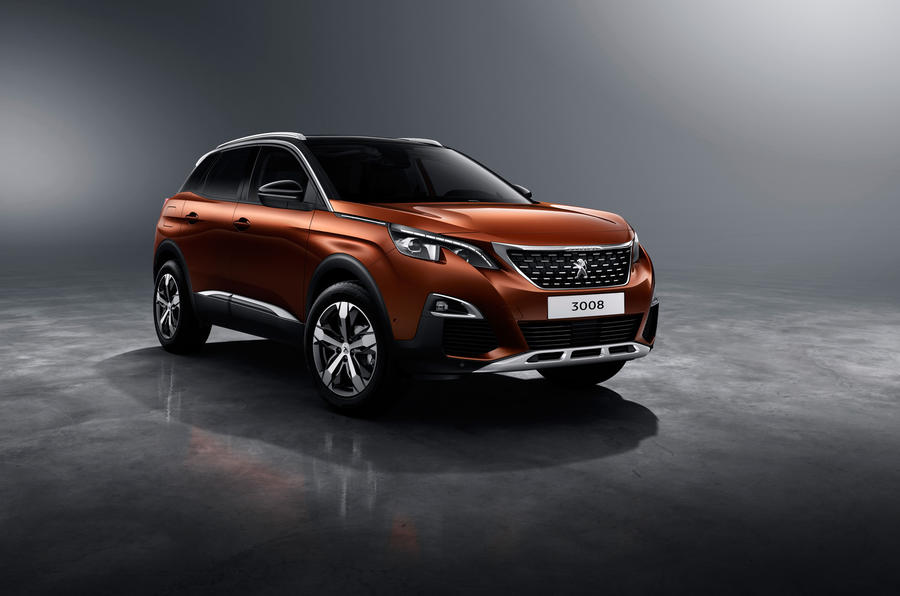
Peugeot continues to be the brand that improves its CO2 levels with another drop during 2016.

  • New car average CO2 emissions decreased by 1.2% in 2016, with Norway responsible for the largest decrease in CO2 levels
  • Peugeot led the brand ranking, with its average emissions falling by 1.7g/km in 2016
  • The data is being released as the industry prepares for the implementation of WLTP, which is expected to dramatically impact CO2 emissions monitoring
Average CO2 emissions for new cars in Europe fell during 2016 demonstrating the continued progress being made by the industry. 

The analysis carried out by JATO Dynamics covered 23 European markets and showed that average CO2 emissions fell by 1.2% in 2016 - finishing at 117.8 g/km. The result was 1.4 g/km lower than the total seen in 2015, but this represents the smallest annual percentage improvement for the last ten years. 

In part this can be attributed to the slower growth of diesel registrations in 2016, which produce lower CO2emissions.
On a country level, Norway had the lowest CO2 emissions of all countries analysed. Incentives to increase the use of EVs and hybrids resulted in these segments accounting for 39% of the country's total registrations. Notably, the Netherlands and Denmark were the only two markets with increased average CO2 emissions in 2016, again the major driver of change was government policy - the reduction of tax incentives in the Netherlands resulted in a 53% fall in demand for PHEVs, and increased tax rates for EVs in Denmark resulted in a 71% fall in EV registrations.

Peugeot led the brand ranking for a second year - it decreased its CO2 emissions by 1.7g/km. This was primarily due to a lower CO2 emission average for its petrol engines. Peugeot's top-seller, the Peugeot 208, decreased its average CO2 emissions by 1.3g/km from 99.3g/km to 98g/km. PSA Group's other volume brand Citroën, occupied second place with 103.3g/km, which is a reduction of 2.3g/km compared to 2015. Both Peugeot and Citroën benefit from their smaller ranges of SUVs / large vehicles. Overtaking Renault in third place was Toyota, whose improvements were largely thanks to the strong performance of its hybrid range, which accounted for 39% of its European registrations in 2016. Notably, Toyota's average emissions for its hybrid range grew by 4.3g/km due to the launch of its RAV4 Hybrid.

The only brands not to decrease CO2 emissions in 2016 were Nissan, Ford and Mazda, this can largely be attributed to the prominence of these brands with regards to particular models. A significant portion of Nissan's registrations were SUVs; the Nissan X-Trail posted an average emission of 138.1g/km and was the brand's third best-selling model. Similarly, Ford and Mazda's average CO2 emissions increases can be attributed to increased registrations of the Mustang and MX-5 respectively.

The SUV boom dominated the automotive world in 2016, and the success of newer compact SUV models - such as the Tiguan and Tucson - helped to decrease the segment's CO2 emissions by 6.1 g/km. The luxury cars decreased their average by 14.5 g/km, due to lowered emissions across the segment and increased diesel and PHEV registrations. The Sports segment was the only category to increase CO2 emissions. This was due to the high volume of registrations of the Ford Mustang V8 which negated the improvements made by the BMW 4-Series, Mercedes C-Class Coupé, MINI Convertible and Porsche 911.

"It's clear that the industry is making progress: CO2 emissions declined. The rate of decline has, however, slowed. This is due to the increased market share of gasoline vehicles and the deceleration of the growth of diesel vehicles. With WLTP imminent this is a significant year and it remains to be seen the impact it will have on emissions monitoring," commented Felipe Munoz, Global Automotive Analyst at JATO Dynamics.

Thursday, 2 March 2017

European sales continue to grow with a near 10% increase, and the best Jan in a Decade.

  • European car registrations totalled 1.2 million units in January, which is an increase of 9.4% and constitutes the second highest January result in a decade
  • 24 out of 29 European markets posted an increase in registrations in January
  • SUV launches continued to drive growth – with 38,000 of the units registered last month being new models
The European car industry has continued to grow in January 2017 – with new car registrations for the month totalling 1.2 million units, a 9.4% increase when compared to January 2016. 
This is the second highest result for January in a decade, with the automotive market benefitting from an increased number of promotions and incentives across the 29 markets analysed.
All of Europe’s largest five markets posted an increase in registrations, with Germany experiencing the highest increase of 10.5%. This can be attributed to improved economic conditions and consumer sentiment, combined with lowered interest rates. 
France came in second, posting a healthy increase of 10.4%. This is due to there being two more working days in the month, increased sales to rental companies, and brands registering stock vehicles in January, in order to sell them later in the year – a common practice used to achieve objectives and take advantage of bonus season. Meanwhile, Spain, Italy and the UK all posted increases of 8.4%, 10.1% and 2.9% respectively. 


The strong performance in the UK may be due to consumers rushing to make purchases before the Brexit process gets underway, amidst claims that prices will rise due to the sinking pound. 
The UK’s performance is particularly notable ahead of the introduction of the new VED (Vehicle Exise Duty) car tax rules which are likely to influence the decision-making process of consumers from April onwards.
Among the 29 markets analysed, the Netherlands experienced a significant 26.6% increase in registrations. 
This was partially due to a shift in tax policy, with many dealers registering cars last month, to benefit from the new lower tax rate of 22% which came into effect in January 2017 (compared to the previous tax band of 25%).
“The positive results in January show that the boom of 2016 has continued into 2017. Increased incentives and stronger promotions are pushing consumers to purchase now. 
In the UK, anticipation of increased prices post-Brexit and the impending VED tax changes are driving growth, whilst in Germany lower interest rates are beginning to take effect. 
A range of economic and socio-political factors are benefiting the automotive industry and it will be interesting to see if the sector can improve upon the strong results of 2016,” commented Felipe Munoz, Global Automotive Analyst at JATO Dynamics.
Volkswagen led the brand ranking, although it is growing at a slower rate than the market average as the brand’s traditional models, such as the Golf and Polo, were overtaken by newer rivals. The Tiguan, Europe’s best-selling SUV, helped boost the brand’s performance.
The Volkswagen Golf maintained its lead, and sales remained stable, but the model is losing ground to its rival - the Astra. However, Volkswagen's recently updated Golf is expected to revitalise its sales over the upcoming months.

Thursday, 23 February 2017

Analysis shows that there was significant growth in 2016 with some weird and wonderful products leading the charge.

  • Analysis of 52 markets found that 84.24 million units were sold in 2016, which was driven by increased demand in China, India and Europe
  • China saw double-digit growth in sales, while demand in the US remained stable
  • Global demand for SUVs continued, with significant sales increases in the segment across South East Asia, Europe and China
The global automotive industry showed its resilience in 2016 with 84.24 million units (LCVs and passenger cars) sold according to data released today by JATO Dynamics. This is a 5.6% increase on 2015 and shows the sector's strength amidst the uncertainty of 2016. 
"Despite the hurdles faced by the automotive industry last year, an increase in registrations of 5.6% shows the sector's resilience. The growth shows that the declines in Japan, Russia and Brazil were offset by strong results in China and Europe," commented Felipe Munoz, JATO's Global Analyst.
The expansion of the car purchase restrictions policy in China caused a slowdown in the market at the beginning of the year. 
However, demand recovered during H2, with consistent monthly double-digit growth. 2016 was a mixed year for the US, with a decline in registrations in five of the twelve months. This resulted in the overall volume of registrations in 2016 increasing by just 0.4% compared to 2015.
Japanese car sales decreased by 1.6% compared to 2015, signalling a slowdown in the retraction of the industry when compared to the sharp fall of 9.5% seen in 2015. Tax increases on Kei-cars continued to impact the Japanese market in 2016, with city-cars posting a decline of 4.2%. 
The decline in registrations in Brazil was particularly dramatic, with 500,000 less units registered compared to the previous year. 2016's total was a significant 45% lower than the record 3.63 million units posted in 2012.
The declines in these markets were offset by double-digit growth in China and Europe's slow, consistent recovery. European car and LCV registrations totalled 17.1 million units, which is a significant increase of 7% on 2015. Click here to see full European car registrations details.
In the emerging markets, India showed its strength with more than 3.3 million units sold as a result of growing prosperity and the greater availability of consumer credit. India's growth offset losses in other emerging markets, and established India as a solid source of revenue for car manufacturers.
Toyota maintained its leading position as the world’s most popular car brand, despite losing ground in the US and China. Overall it increased sales during 2016 thanks to strong results in emerging markets such as Indonesia and Mexico.
Despite the emissions issue, the Volkswagen brand increased its sales by 2.8% during 2016. Its Chinese operations remained largely unaffected by the scandal, with its sales continuing to grow. This allowed the brand to offset significant declines in Brazil, the US and Russia. In contrast, in Europe, Volkswagen posted the highest market share drop of any brand as a result of the issue.
Honda, Kia and Mercedes were the best performers in the top 10, as a result of their latest launches capitalising on the SUV boom.
Other brands which experienced notable growth in 2016 include:
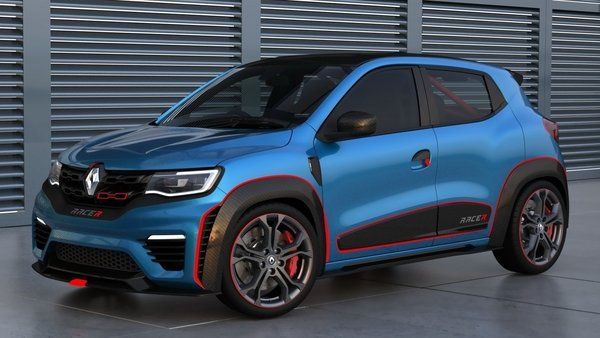
  • Renault’s performance was boosted by a 28.1% increase on its SUV sales, and its dramatic improvement in India where it experiened a 146% increase in registrations due to the popularity of the Kwid.
  • Buick’s Chinese sales accounted for 82% of its global results and its Excelle compact sedan was the country’s third best-selling car.
  • Jeep’s performance was boosted by the popularity of the Renegade B-SUV and as a result the brand increased its sales in the US, became a market leader in Brazil, and sold more than 100k units in Europe.
Demand in the US for large pickups continued to fuel the success of the Ford F-Series and as a result it became the world’s best-selling car.
Meanwhile, the Volkswagen Golf suffered a dip in demand in its largest market, Europe, as a consequence of stronger competition and the impact of the emissions issue.
2016’s best-selling SUV was the Nissan X-Trail/Rogue, which overtook the Honda CR-V – which had occupied the lead position for some years as a result of strong growth in the US, China and Europe. Other big increases include the Honda HR-V (aka XR-V or Vezel), the Great Wall Hover midsize SUV and the twins Hyundai Tucson – Kia Sportage.
The segment ranking indicates that SUVs were the largest drivers of growth, with its volume accounting for almost 29% of all cars, pickups and LCVs sold last year. The majority of these registrations were in the C-SUV subsegment, but the smallest subsegment (B-SUV) posted the highest growth of 28.0%.
“SUVs have continued to take market share away from traditional segments, and this trend isn’t restricted to particular markets – it’s a trend that we’ve seen on a global scale and expect to continue in 2017,” concluded Munoz.

Friday, 27 January 2017

2016 see's European growth of 6.5% to 15.14 million sales, of whch 25% are SUV/Crossover models.

  • European car registration volume at second-highest point since 2007
  • The market was boosted by the launch of additional SUVs and higher demand for premium brands
  • Volkswagen Golf maintained its position as Europe’s most popular car model
The European car industry boomed in 2016 - with new car registrations for the year totalling 15.14 million units, a 6.5% increase when compared to 2015. 
This is the second highest volume seen since 2007 when total registrations exceeded 16 million units, demonstrating that the market is proving resilient in the face of the geopolitical events of 2016 which have rocked consumer confidence.
The results show that the continuing SUV boom was the overwhelming trend of the year, with registrations growing by 21.4% - increasing from 3.2 million units registered in 2015 to 3.9 million last year. In contrast, the traditional segments grew by just 2.2%.
In fact, European consumer preferences shifted further towards SUVs, and away from hatchbacks, sedans, station wagons and MPVs. SUVs accounted for more than a quarter of total registrations at 25.6%, an increase in market share of 3.1 percentage points when compared to 2015. 
In contrast, MPVs lost 0.9 percentage points, with its market share falling to 9.5%, whilst subcompacts lost 0.8 percentage points and accounted for 21.2% of the market.
In a show of resilience, Volkswagen Group maintained its lead of the market, and despite 2016 being one of its most challenging years ever - the German car maker still managed to increase its registrations by 3.3%. 
The overall market grew by 6.5%, meaning that Volkswagen Group’s market share fell from 24.8% in 2015 to 24.0% last year. This was the highest market share decrease of all car groups. 
In contrast, FCA, Daimler, Renault-Nissan and Tata Group all increased their market share, thanks to their wider SUV ranges and the increase in sales seen in Southern European markets. 
As other manufacturers gain ground, Volkswagen Group will need to work hard to maintain its position as Europe’s leading manufacturer.
EUROPE-29 FULL-YEAR 2016 VOLUME BY COUNTRIES

“2016 was a great year for the industry, with the second highest volume of registrations since 2007. European car registrations have shown good momentum, with 27 out of 29 markets in Europe recording positive growth last year, and 14 of those markets posting double-digit increases. 

I believe car makers are now better prepared to face the challenging times ahead,” said Felipe Munoz, JATO’s Global Automotive Analyst.

TOP SELLING BRANDS
Regarding the performance of brands in 2016, Munoz said “The challenges seen by VW benefitted mainstream brands such as Renault and Fiat.

The premium brands also performed very well, increasing their market share by almost 1 percentage point from 23.0% in 2015 to 23.8% last year.”

TOP SELLING MODELS

The Golf maintained its lead but lost ground in the model ranking. The Opel/Vauxhall Astra, Renault Captur, Fiat Panda, VW Tiguan and Peugeot 2008 also performed well. The highest market share gains were posted by the Hyundai Tucson, Renault Kadjar and Fiat Tipo.
SEGMENTS