Purpose

I will try my best to provide detailed info on various cars and what is like to live with them, I have already produced a few for Jaguar-car-forums, I will do my best to be unbiased, but it will be hard for some cars. I will re-produce press releases and copy from other motoring news.
Showing posts with label Renault-Nissan. Show all posts

Thursday, 24 August 2017

The Renault-Nissan Alliance continues to grow now with added Mitsubishi sales.

  • Combined sales exceed 5.27 million units from Renault, Nissan and Mitsubishi Motors in six months to June 30, 2017, rose 7 percent
  • Cumulative volume of electric vehicle sales exceeds 480,000 units
  • Enlarged Alliance set to become industry’s number-one sales group for full year 2017
Unit sales at the Alliance rose seven percent to 5,268,079 vehicles in the first half of the calendar year resulting from an increased demand for models from the French and Japanese brands, and the first semester sales contribution from new Alliance member Mitsubishi Motors.
The Alliance saw increased sales of Renault models including Clio, Sandero, Megane, Captur and Duster, while Nissan reported strong orders for models such as the X-Trail/Rogue, Sentra/Sylphy, Qashqai and Altima/Teana. Unit sales at Mitsubishi Motors, which became part of Alliance in late 2016, reached close to 495,000 vehicles amid solid demand for its Outlander SUV globally and the Pajero Sport in the ASEAN region.
Cumulative sales of electric vehicles by the companies also rose significantly to 481,151 units, reaffirming the Alliance’s role as the leading electric car manufacturer for the mass-market segment. The increase was driven primarily by demand for the Nissan LEAF and the Renault ZOE, which remains the #1 EV sold in Europe, and Mitsubishi’s i-Miev. On the hybrid side, the plug-in hybrid electric versions of the Mitsubishi Outlander reached over 13,000 units.
Carlos Ghosn, chairman and chief executive of the Renault-Nissan Alliance, said: “The Alliance has delivered record sales during the first semester of 2017 reaching 5,268,079 vehicles sold. We will continue to leverage our significant economies of scale and global market presence to deliver valuable synergies for our member companies this year, while maintaining a strong technology lineup and offering customers breakthrough electric models.”
“Our enlarged Alliance is well placed to realize its full potential, not only in terms of unit volumes, but also by providing next-generation mobility services to customers around the world.”
Groupe Renault sold 1.879,288 million vehicles in the first half of 2017, which represents a raise of 10.4 percent in a market that grew 2.6 percent. All group brands posted increases in sales volumes and market share. The Renault and Dacia brands set half-year sales records and Renault ranks as the second most sold brand in Europe. Furthermore, all regions increased their sales volumes and market share. In particular, the Group recorded a 19.3 percent rise in sales in the Africa-Middle East-India Region and a 50.5 percent increase in the Asia-Pacific Region.
Nissan Motor Co. Ltd. sold 2,894,488 cars and trucks worldwide, up 5.6 percent in the six months to June 30. In Japan and Europe, the company achieved a growth of 22.9 percent and 5.7 percent respectively. Infiniti sold more than 125,000 vehicles in the first half, an increase of roughly 13 percent on the same period of 2016.
Mitsubishi Motors sold 494,303 units cars worldwide, up 2.4 percent year on year as the company resumed sales of its ‘Kei’ mini cars in Japan. The sales increase also reflects the strong growth in China following the launch of locally-produced Outlander SUVs. Sales also increased in the ASEAN region, led by demand for SUVs and pick-up trucks.
The Alliance is expected to generate increased synergies this year as Mitsubishi Motors co-operates more closely with Nissan and Renault in areas including joint purchasing, deeper localization, joint plant utilization, common vehicle platforms, technology-sharing and an expansion in both mature and emerging markets.
Top 10 Groupe Renault Markets
 1
 France
 2
 Russia
 3
 Italy
 4
 Germany
 5
 Spain
 6
 Turkey
 7
 Brazil
 8
 Iran
 9
 United Kingdom
 10
 Argentina
Top 10 Nissan Markets
 1
 U.S.A
 2
 China
 3
 Japan
 4
 Mexico
 5
 United Kingdom
 6
 Canada
 7
 Russia
 8
 France
 9
 Italy
 10
 Germany
Top 10 Mitsubishi Motors Markets
 1
 U.S.A
 2
 China
 3
 Japan
 4
 Australia
 5
 Philippines
 6
 Indonesia
 7
 Thailand
 8
 Germany
 9
 United Kingdom
 10
 U.A.E.
ABOUT THE RENAULT-NISSAN ALLIANCE
The Renault-Nissan Alliance is a strategic partnership between France-based Groupe Renault and Japan-based Nissan Motor and Mitsubishi Motors. The automakers combined sold 9.96 million vehicles in nearly 200 countries in 2016 – more than one in nine vehicles worldwide. The Alliance has strategic collaborations with other automakers, including Germany’s Daimler and China’s Dongfeng. It also owns a majority stake in the joint venture that controls Russia’s top automaker, AVTOVAZ. The Alliance is the industry leader in zero-emission vehicles and is developing the latest advanced technologies, with plans to offer autonomous drive and connectivity features and services on a range of affordable vehicles.

Monday, 26 October 2015

Renault-Nissan Alliance to supply the biggest ever fleet of zero emission vehicles to the COP21 International Conference.

  • Alliance to provide 200 pure electric vehicles to 2015 Paris climate conference
  • Fleet expected to cover 400,000 km during event and emit zero emissions* while driving
  • Fleet comprised of Renault ZOE, Nissan LEAF and Nissan e-NV200
  • 200 Renault and Nissan employee volunteers to drive cars, alongside team of professional drivers
The Renault-Nissan Alliance will provide the world’s largest electric-vehicle fleet ever to an international conference. As the official passenger-car provider for the United Nation’s COP21 climate conference in Paris, the Alliance will provide 200 pure electric vehicles to the annual summit which runs from Nov. 30 to Dec. 11.

Together, the vehicles are expected to cover more than 400,000 km, emitting zero emissions* while shuttling delegates during the 21st annual Conference of Parties (better known as COP21). More than 20,000 U.N. participants from 195 countries are expected to attend COP21.
“Electric vehicles are a practical and affordable mode of transportation. At the same time, they offer a solution for drastically reducing tailpipe CO2 emissions. They also reduce regulated exhaust pollutants, helping us to improve the air quality in our cities. Together, the public and private sectors can accelerate the transition to a zero-emission society,” said Carlos Ghosn, Chairman and CEO of the Renault-Nissan Alliance.
The COP21 car fleet will feature the Renault ZOE subcompact car, the Nissan LEAF compact car and the 7-seater Nissan e-NV200 van. The vehicles will be available to shuttle delegates 24 hours, seven days a week to and from the Le Bourget conference venue, as a complement to public transportation.
This marks the first time the U.N. will use a zero-emission or 100% electric fleet for its entire passenger-car shuttle at a climate summit
200 Renault and Nissan employees volunteer to drive at COP21
The 100% electric cars will be driven by a team of 200 professional drivers and 200 volunteers from Renault and Nissan. In June, the Renault-Nissan Alliance launched a call for volunteers to allow employees in and around Paris the opportunity to be part of COP21 as volunteer drivers. The response was overwhelming with more than 450 employees applying before the recruitment process was closed. The 200 successful Renault and Nissan applicants, as well as the professional drivers, will undergo a rigorous training program in preparation for the event.
“Renault and Nissan employees are at the forefront of the electric-vehicle revolution. Many of them already drive an electric vehicle. They are the best ambassadors to demonstrate the benefits of these cars and what zero-emission mobility is all about,” said Ghosn.
(Click here for a video of Ghosn explaining why the Renault-Nissan Alliance has chosen to participate in COP21 and the key role that Renault-Nissan employees will play):
The Renault-Nissan Alliance will set up network of 90 quick and standard charging stations in strategic locations with French electric utility company EDF powered by low-carbon electricity. The residual emissions will be offset under an accredited U.N. carbon offsetting program. The quick charging stations will be able to charge the EVs from 0 to 80% capacity in about 30 minutes.
The Alliance has sold more than 274,000 electric vehicles around the world, accounting for half of all EVs on the road since its first electric vehicle Nissan LEAF went on sale in late 2010.
*No CO2 emissions and no regulated exhaust pollutants while driving, according to NEDC homologationcycle.

Wednesday, 29 July 2015

Renault-Nissan Alliance and Daimler have significantly extended their cooperation in Central Mexico.

  • Manufacturing joint venture called COMPAS (Cooperation Manufacturing Plant Aguascalientes)
  • To build plant for the production of next-generation premium compact vehicles for the brands Mercedes-Benz and Infiniti
  • COMPAS led by international management team from Daimler and Nissan
Five years after their strategic cooperation was established, Daimler and the Renault-Nissan Alliance have significantly expanded their collaboration with the start of a manufacturing joint venture in Aguascalientes in central Mexico.

The new business entity COMPAS (Cooperation Manufacturing Plant Aguascalientes) is 50:50 owned by Daimler and Nissan. The partners will invest a total of US$1 billion in COMPAS which will oversee the construction and operation of a manufacturing plant for the production of next-generation premium compact vehicles for the brands Mercedes-Benz and Infiniti.
The state-of-the-art plant will be located near the Nissan Aguascalientes A2 plant. It will have an initial annual production capacity of more than 230,000 vehicles and will create about 3,600 direct jobs by 2020. Depending on the market development and customer demand, there will be the potential to add additional capacity. Production of Infiniti vehicles will begin in 2017, first Mercedes-Benz vehicles will roll off the line in 2018.
COMPAS is led by an international management team from Daimler and Nissan: Ryoji Kurosawa is Chief Executive Officer (CEO); Uwe Jarosch is Chief Financial Officer (CFO) and Glaucio Leite is Chief Quality Officer (CQO).
The decision-making process of COMPAS is supported by a Board of Directors made up of three executives from each company. The board members from Daimler are: Michael Göbel, Head of Production Compact Cars, Mercedes-Benz Cars; Axel Harries, Head of Quality Management, Mercedes-Benz Cars; and Christian Schulz, Head of Controlling, Mercedes-Benz Cars Operations.The Nissan executives are: Armando Avila, Manufacturing VP, Nissan Mexico; Carlos Servin, Finance VP, Nissan North America; and Takehiro Terai, Total Customer Satisfaction VP, Nissan North America.
"COMPAS is an outstanding example of the global reach of the Renault-Nissan Alliance and Daimler cooperation. Together we are combining the manufacturing expertise of Nissan and Daimler in one production plant in Mexico for the production of next-generation premium compact cars," said  COMPAS CEO Kurosawa. "Aguascalientes was selected as the location for this new plant thanks to the state's well-established supplier base and Nissan's track record in highly efficient manufacturing in Mexico for more than three decades," he added.
Kurosawa has more than 30 years' manufacturing experience at both Nissan and Infiniti. In his last position as General Manager of the Tochigi Plant in Japan, he was in charge of the production and quality of Infiniti, including the Infiniti Q50 flagship sedan.
"With COMPAS, Mercedes-Benz Cars will for the first time have a production location for compact cars in the NAFTA region and will thus be able to serve its customers close to the market in a flexible and efficient manner," said COMPAS CFO Jarosch.
During more than 40 years at Daimler, Jarosch has completed various and largely international assignments in finance and controlling. In his last position as CFO of the Mercedes-Benz passenger cars business in India, he had a responsible role in the significant expansion of the local production and the sales network in the country.
"By incorporating the best from both companies in terms of manufacturing and quality processes, we will produce top-quality products, maximize resources, and optimize costs at the same time. We are also making sure that both brands' quality requirements and identities are safeguarded," added COMPAS CQO Leite.
During 24 years at Daimler, Leite has taken over various functions in production and planning at Mercedes-Benz commercial vehicles as well as passenger cars in Brazil and Germany. In his last position, after several project assignments at the passenger car plants in the USA and China, he oversaw preparations for the final assembly of the next-generation E-Class at the Mercedes-Benz Sindelfingen plant in Germany.
As announced in June 2014, Daimler and Infiniti will also cooperate in the development of the next-generation premium compact vehicles for the brands Mercedes-Benz and Infiniti. The two partners will closely collaborate at every stage of the product creation process. Brand identity will be safeguarded as the Mercedes-Benz and Infiniti vehicles will clearly differ from each other in terms of product design, driving characteristics, and specifications.
Daimler and Nissan will also produce the next-generation premium compact cars at other production locations around the world, including Europe and China.
Car Pictures used for illustrative purposes only - full model ranges to be announced soon.

Friday, 10 July 2015

Renault-Nissan Alliance cost savings increase to 3.80 Billion Euro's, an increase on the previous year.

  • Purchasing, engineering and manufacturing are biggest contributors to synergies
  • Common Module Family (CMF) drives synergies in all major areas
  • Convergence of key functions in 2014 accelerates synergy momentum
  • Sales and marketing and other functions increase contributions
The Renault-Nissan Alliance posted record synergies of €3.80 billion in 2014, up from €2.87 billion the previous year. Purchasing, engineering and manufacturing were the biggest contributors. The launch of the Alliance’s first Common Module Family (CMF) vehicles, as well as the recent convergence of four key units, helped drive synergies all three areas.  

Synergies are generated from cost reductions, cost avoidance and revenue increases. Only new synergies (not cumulative) are taken into account each year. Accounting for synergies helps Renault and Nissan determine if they are meeting their performance objectives. More significantly, the net savings and revenue enhancements enable both automakers to offer higher-value vehicles to customers around the world.
“Our Common Module Family system continues to drive synergies in all major areas,from purchasing to vehicle engineering and powertrains,” said Carlos Ghosn, Chairman and CEO of the Renault-Nissan Alliance. “At the same time, the recent convergence of four key functions at Renault and Nissan -- Engineering, Manufacturing Engineering & Supply Chain Management, Purchasing and Human Resources -- is accelerating the momentum.”
Renault and Nissan converged the four functions on April 1, 2014. While Renault and Nissan remain separate companies, each function is led by a common Alliance executive vice president. Thanks to the convergence, the Alliance expects to overachieve on its goal of generating €4.3 billion in annualized synergies by 2016. That’s up from €1.5 billion in 2009.
Common Module Family (CMF)
Common Module Family is the Alliance’s unique system of modular vehicle architectures and an increasing source of synergies (to see our CMF infographic go toblog.alliance-renault-nissan.com/node/2634/)
CMF enables Renault and Nissan to build a wider range of vehicles from a smaller pool of parts, while at the same time increasing customer choice and quality. Small vehicles are based on CMF-A, while mid-sized vehicles utilize CMF-B, and the largest vehicles use CMF-C/D.
In February 2014, Nissan launched an all-new version of the popular Qashqai crossover in Europe. The Qashqai is built on CMF-C/D and is the third CMF model for Nissan. In 2013, Nissan launched the Rogue SUV in the United States and X-Trail crossover SUV in China. Earlier this year, Renault launched its first CMF vehicles: the New Espace and the Kadjar. Both vehicles are built on CMF-C/D as well.
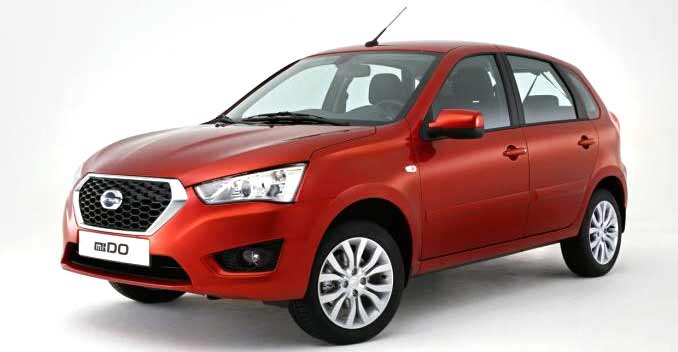
In 2015, Renault will launch the Kwid in India. The Kwid is the first Alliance car built on the CMF-A architectureand will be produced at the Renault-Nissan plant in Chennai. Datsun will launch a vehicle on the same platform in 2016.
By 2020, the Alliance expects 70 percent of its vehicles to be built on CMF architectures.
Cross production
The cross production of vehicles is also a major driver of manufacturing synergies. Cross production is expected to accelerate across the Alliance following the rollout of the Alliance Production Way (APW) at all plants around the world by the end of 2015. The APW manufacturing system is the result of best practice sharing throughout the organization and allows plants to make better use of their capacity by enabling them to produce both Renault and Nissan vehicles.
In 2014, Nissan began production of the Rogue crossover in Renault’s plant in Busan, South Korean, to meet stronger-than-expected demand in the U.S.
The AVTOVAZ plant in Togliatti, Russia, is the Alliance’s biggest production base in the world with capacity of nearly one million vehicles per year. The plant produces vehicles under four brands – Lada, Renault, Nissan and Datsun. The Alliance owns a majority stake in the joint venture that controls AVTOVAZ, Russia’s largest automaker.
Contribution from other business areas, including sales and marketing
The Alliance is increasingly benefitting from synergies in other areas, such as sales and marketing.
For example, thanks to the Alliance, Renault and Nissan are able to offer customers an extensive range of vehicles around the world. In 2014, the Alliance signed global contracts with several fleet customers, including multinational food-products corporation Danone.

Thursday, 21 May 2015

INDIA - The Kwid will be launched in India in the Q2 of 2015 with a price tag of between 3 and 4 lakhs.

  • Kwid: An attractive, innovative and affordable vehicle for international markets
As an innovator since 1898, Renault has constantly sought to pioneer new ideas, question conventional thinking and reinvent the way we use cars. “With Kwid, Renault continues to pursue its strategy of accessible mobility for all to step up its international growth.

Using a new Renault-Nissan Alliance platform and following the trail blazed by the Duster, the Kwid will enable Renault to continue its expansion and address the needs of customers who want a vehicle that is stylish, robust and easy to use.”

Carlos Ghosn - Chairman and Chief Executive Officer of Groupe Renault

The Kwid overturns established A-segment design cues thanks to a robust, stylish exterior plus a modern, welcoming interior equipped with features normally associated with models from the next segment up.


This eminently modern newcomer features SUV styling and construction, combining generous cabin space with unprecedented features for its segment, while its compact footprint makes it particularly versatile.

Quality interior appointments include a modern Media-Nav navigation/multimedia system complete with large seven-inch touchscreen display and Bluetooth connectivity.

The Kwid combines the comfort and functional user-friendliness of a family city car with a modular interior and a raft of stowage solutions.

Renault has long showcased its ability to develop unique, innovative vehicles designed to meet the specific needs of its international markets.

With the introduction of the Kwid, the brand has gone a step further down the road of designing attractive, affordable vehicles in the small-car segment.

The Kwid will be launched in India in the second half of 2015 with a price tag of between 3 and 4 lakhs.

CONTENTS
  1. Unique styling, plus features new to the Kwid’s segment

    • SUV styling that inspires confidence
    • A modern interior
    • Features new to the A-mini segment

  2. The Kwid, the latest step in Renault’s international growth strategy

    • Based on a new Renault-Nissan Alliance platform
    • Customer-focused development founded on complementary expertise
    • A strategy based on expanding international markets 

  3. Renault’s ambitions in India
  • A high-potential market
  • A strong base and a fast-expanding network
  • An increasingly acclaimed brand

1. Unique styling, plus features new to the Kwid’s segment

The combination of Kwid’s great looks, features more readily associated with higher-end models, a dynamic stance and SUV lines adapted to its compact size make it a unique offering in India’s compact city car segment. 

The brand new ‘Outback Bronze’ colour adds a warm, energetic touch. The Kwid is an attractive, modern car, with a spacious, comfortable interior that meets the everyday needs of families.

SUV styling that inspires confidence

The Renault Kwid illustrates the ‘Explore’ petal of Renault’s design strategy, a symbol that stands for dynamic performance, robust strength and a taste for adventure. 

The Kwid’s SUV-inspired design is an innovation in its segment.

Its short front and rear overhangs and high ground clearance (180mm) exude an impression of strength and reliability.

At 3.68 meters long and 1.58 meters wide, Kwid is ideally for zipping about in urban traffic, while its high-up driving position provides greater visibility for more relaxed journeys.
“At first glance, the Kwid blends an emotional design with the need for reassurance expressed by customers. Its SUV lines mirror its tough, robust character and underpin its distinctive, modern look.”

Laurens van den Acker – Senior Vice President, Corporate Design

The Kwid’s upright front end and short front and rear overhangs provide owners with the look associated with SUVs.

The bold, structured grille design highlights the logo and further emphasises the model’s SUV credentials, while the head lights incorporate the brand’s new lighting signature including a ‘C’-shaped chrome trim.

The slightly sculpted sides provide a fluid, dynamic touch, with the rectangular forms of the black wheel arches providing another pointer to the Kwid’s SUV breeding, as well as additional protection. 

The lower door decor underlines the Kwid’s robust character. The steeply-raked, forward-positioned windscreen lends a sense of movement and fluidity to the high waistline which rises slightly at the rear.

The large windows ensure good visibility for the driver and play a big part in travelling comfort.
“TheKwid is an entirely new car which offers a lot of surprises both inside and out, including features from the next segment up.”

David Durand - Head of Kwid Styling

At the rear, the lower part of the bumper comes with a black trim, another SUV cue. The body-coloured tailgate spoiler adds to the car’s dynamic stance.

A modern interior

The Kwid’s interior carries over the same confidence-inspiring styling as the exterior. Its distinctive appointments suggest status without neglecting everyday needs.

The horizontal, uncluttered lines of the dashboard convey an impression of width and feature the cues associated with higher-end segments.

The digital instruments and chrome air vent surrounds create a modern, high-quality feel. The dashboard also harmoniously houses the centrally-positioned multimedia system. Designed by Renault Design India, the interior trim is reassuring and status-enhancing.

Features new to the A-mini segment

The Kwid offers a modern, intuitive interior. The piano black centre console comes with a chrome-surround and houses the Media-Nav multimedia/navigation system which comes with a seven-inch (18 cm) display, an unprecedented size for the segment.

The Kwid’s connected interior includes technologies that not only meet drivers’ needs but also make driving simpler.

The user-friendly Media-Nav system includes the radio and Bluetooth technology for hands-free telephony which contributes to safer driving.

These features correspond to the needs of Indian customers who are looking for status and connected technologies.

Thanks to its specific architecture, the Kwid combines a compact footprint (length: 3.68m) with a spacious interior that sets the standard in its category for all five occupants. The front seats are generously sized and the rear seats are particularly comfortable.

The Kwid has a very spacious boot for a best-in-class load capacity.

2. The Kwid, the latest step in Renault’s international growth strategy

The Kwid sees Renault launch a global car, made for easy living and a new way to go motoring. Built on a brand new platform common to Renault and Nissan, the Kwid reaps full benefit from the Alliance’s pooled resources and expertise. 

The new model vehicle is adapted to the specific needs of markets like India and will enable Renault to push ahead with the deployment of its international expansion strategy.

Based on a new Renault-Nissan Alliance platform

Founded in 1999, the Renault-Nissan Alliance sold 8.5 million vehicles in almost 200 countries in 2014, consolidating its position as the world’s fourth largest vehicle manufacturer.

The Renault Kwid is the first Renault-Nissan Alliance model to use the CMF-A platform.

Thanks to this platform-based approach, the Alliance will be able to go further still in the development of an international, flexible product offering based on component sharing and high-performance architectures.

Like all the Alliance platforms, the CMF-A is extremely flexible. As a result, exterior styling and the powertrain can be varied significantly in order to match the specific requirements and preferences of customers in Renault’s international markets like India.

“The CMF-A platform opens up new horizons in terms of our ability to satisfy and even exceed the expectations of customers in countries where demand is currently highest, particularly those customers buying a vehicle for the first time. 

These influential consumers do not want a car that was initially designed for mature markets before becoming outdated. They aspire – and rightly so – to a modern, robust, elegant car at a price that represents a mini- revolution for such a remarkable vehicle.”

Arnaud Deboeuf – Alliance Senior Vice-President of Renault-Nissan BV and Alliance CEO Office
Customer-focused development founded on complementary expertise

Renault went further down the road in terms of its organisation, cost management and delivery times to design and manufacture the Kwid, a model with a global calling.
The process made use of resources and staff in France, Japan, Korea and India.

For example, vehicle testing took advantage of the Alliance‘s strengths by using different establishments to put the Kwid through its paces: the body and chassis were tested in Japan, body equipment was evaluated in Korea and endurance tests were carried out in France, while India was the backdrop for overall and assembly testing.

The vehicle was developed close to its market. Supplier sourcing in India has been raised to 98 per cent, including 60 per cent in the Chennai region.

The project management team put in place the conditions necessary to develop the Kwid, with the entire team working out of a single location so that the teams tasked with designing, developing and building the car could work together more effectively.

Methodologies throughout were harnessed to ensure the car would be in phase with market needs and meet pricing targets.

A strategy based on expanding international markets

The Renault Group is active in 125 countries and sold 2,712,432 vehicles worldwide in 2014. As a result of this international strategy, Renault now sells 46 per cent of its vehicles outside of Europe, compared with 37 per cent in 2010.

Renault is pursuing its strategy to build vehicles close to its markets with 36 production sites and more than 12,000 points of sale worldwide.

Renault has regional engineering centres based in strategically important countries in order to take account of local needs (flex fuel engines in Brazil, extreme cold in Russia, etc.).

Furthermore, with five design centres around the world (France, Brazil, Romania, Korea and India), the Group is able to take account of local parameters when designing and adapting its products to meet specific requirements, such as colours and materials.

Following the revelation of the KWID Concept, the first Renault concept car to have been unveiled outside of Europe (New Delhi Motor Show in February 2014), Renault is staging the world premiere of the Kwid in India. The Kwid is a strong illustration of Renault’s growth ambitions on international markets.

The Kwid mirrors Renault’s vision of the motor car… innovative, attractive and affordable. This vision is expressed by the brand’s new ‘Renault – Passion for Life’ tagline.
Renault has been around for more than 115 years, during which time it has pioneered a wealth of innovations intended for use by all motorists.

Today, Renault is continuing to innovate and develop technologies that stay one step ahead of customer requirements, as illustrated by its comprehensive range of electric vehicles.

This clearly-stated commitment reflects Renault’s customer-focused approach which seeks to make innovations even more readily available, bringing them within the reach of the greatest number. For Renault, innovating primarily means designing the best products and services possible and making them an affordable reality.

As the inventor of the ‘Voitures à Vivre’ concept, Renault has acknowledged know-how in the city car segment. This expertise is now expressed in the brand’s new tagline: ‘Renault – Passion for Life’.

Over the years, Renault has created numerous city cars that have reflected the changing face of society through their design and technical specification, introducing technological innovations that have simplified life for their owners, from remote central locking and automatic boot-opening to hands-free cards, etc.

Meanwhile, Renault’s expertise as an engine manufacturer in Formula 1 has enabled the Group to develop a wide range of powertrain innovations that have played a part in bringing down the fuel consumption of production models.
Renault is also reputed for conceptual innovations such as sliding rear bench seats, tipping seats and flat floors for everyday versatility.

From the outset, Renault forged a reputation for making ‘Voitures à Vivre’, in other words cars that are innovative, ingenious, versatile and comfortable. Since 2012, these Renault hallmarks have combined with a desire to appeal to customers’ emotions, a shift that called for a fresh approach to vehicle design.

“Our new tagline ‘Renault – Passion for Life” mirrors the in-depth design transformation pioneered by the latest-generation Clio. More than a signature, it expresses a promise to our customers. Our models are developed with passion by our engineers and designers to make people’s lives easier and more enjoyable.”

Michael van der Sande – Senior Vice-President, Global Marketing

Renault’s ambition is to develop mobility in its international markets.

Like all volume vehicle manufacturers, Renault markets a comprehensive range of vehicles to meet the needs of customers the world over. However, Renault stands apart from other brands for its visionary strategy based on bold objectives and a commitment to mobility for all in its international markets.

Renault has a proven ability to develop vehicles tailored to all markets, with the Duster for example, by designing the practical products customers need.

This approach has also enabled Renault to be competitive by reducing costs, shortening development times and offering more attractive products, while at the same time paying attention to the functions and content that customers want.

Today, Renault and its partner Nissan are going even further by investing in the CMF-A platform which will provide the basis for a new range of modern vehicles targeting the greatest number.

Thanks to a combination of unprecedented features for the segment, attractive SUV styling and intuitive equipment, the Kwid personifies the brand’s values as a model designed with passion with the intention of enhancing the lives of its owners.

3. Renault’s ambitions in India

India is one of Renault’s priority markets, along with Russia, Brazil and China. With a staff of more than 12,000, the Group has a strong local base there enabling it to adapt more effectively to local realities and requirements.

The Kwid is an illustration of Renault’s ability to develop vehicles that make everyday life easier by meeting the needs of customers looking for a stylish vehicle that is robust and easy to drive. The Kwid’s design and innovative features are poised to play an essential role in Renault’s ongoing expansion in India.

A high-potential market

With a vehicle ownership rate currently standing at just 20 per 1,000 inhabitants compared with 105 in China, 300 in Russia and 600 in Europe, the Indian automotive market is expanding rapidly. 

In 2014, sales increased by 3.1 per cent to reach 2,537,892 vehicles and volumes are expected to be around five million by 2020. As a result, India could become the world’s third biggest market by the end of the decade.

Renault’s ambition is to increase its share of the Indian market from two per cent to a mid-term five per cent.
More than ever, the emerging young middle classes see mobility as a way to escape the constraints of the public transport system, gain a degree of freedom, display their social success and have a safe means of transport for their family.

In a market where the A2 and A3 segments account for the bulk of sales (the A segment currently accounts for more than 30 per cent of retail sales), a growing number of customers are keen to own larger, higher-end models.

Against a backdrop of rapid urban development, customers in India are looking for more connected, sophisticated cars that are reassuring and designed for family use. The Kwid meets these requirements.

A strong base and a fast-expanding network

Since arriving in India as an independent brand in 2010, Renault has established itself as a highly dynamic player in the automotive sector.

Renault has placed the emphasis on local presence and local content by setting up an operational base for the Alliance, with a production plant in Chennai, along with the Renault-Nissan engineering and purchasing centre and the Technical Business Centre India (RNTBCI).

The design centres in Mumbai and Chennai, and logistics hubs in Pune and Chennai reveal the brand’s determination to establish a strong long-term presence in the country. The Mumbai design centre was the first to be opened in India by a foreign vehicle manufacturer in 2007.

Renault has an extensive network of dealers covering over 80 per cent of India, in 120 cities. This fast-expanding network increased from 14 dealers in mid-2011 to 157 at the end of 2014. It is expected to reach 205 dealerships by end-2015.

An increasingly acclaimed brand

In 2010, Renault announced a strategy to bring five vehicles to market in this country.

The Fluence and Koleos were launched in May and September 2011 respectively. Then, in January, July and September 2012, Renault rolled out the Pulse, Duster and Scala.

Renault sold nearly 45,000 vehicles in 2014, compared with 1,500 in 2011. In the space of just a few years, Renault has made greater gains in terms of recognition and visibility than rival brands present in India for 10 years.

Today, Renault ranks as the number one European make and number nine overall in India for vehicle sales. The Lodgy’s recent launch in April 2015 is expected to consolidate Renault’s growth in the country.

“Thanks to the Duster, Renault has become India’s leading European brand. Following the launch of the Lodgy last month, and the warm welcome it received from the press, we are now taking the wraps off the Kwid. We confirm that our medium-term objective is to earn a five percent market share in India, one of the key countries in Renault’s international growth strategy. ”

Bernard Cambier – Senior Vice President, Chairman of Africa-Middle East-India Region

Renault is more and more acknowledged in India where it has received 40 awards, including 31 for the Duster alone.

Renault won the title of Manufacturer of the Year in 2012.

The Duster won the Indian Car of the Year prize in 2013.

Less than a year after its launch, the Duster also received the TNS Voice of Customer prize for the highest rate of customer satisfaction. 

Meanwhile, the Duster was runner-up in the JD Power Asia Pacific 2013 India rankings on initial quality. The company praised the remarkable quality of the Duster in a highly congested segment, with no fewer than 15 models in contention.