Purpose

I will try my best to provide detailed info on various cars and what is like to live with them, I have already produced a few for Jaguar-car-forums, I will do my best to be unbiased, but it will be hard for some cars. I will re-produce press releases and copy from other motoring news.
Showing posts with label Richard Truett. Show all posts

Sunday, 12 April 2015

Henrik Fisker drops plans for a new Supercar after legal action from Aston Martin.

Aston Martin has put the brakes on Henrik Fisker’s return to the auto industry. Fisker, sued by Aston Martin late last month over plans to produce a $400,000 supercar called the Thunderbolt, has agreed to drop those plans to settle the suit.
He claimed the Thunderbolt was based on the current Aston Martin Vanquish, a V-12 powered supercar that was to have been modified with custom styling and cosmetic features.

Fisker showed the Thunderbolt at the Amelia Island Concours d’ Elegance classic-car show and auction last month and said he planned to market the vehicle through Galpin Aston Martin, a California dealer.
Aston Martin -- where Fisker was once design director -- said not so fast and sued Fisker on March 27, claiming the Thunderbolt infringed on Aston Martin’s intellectual property rights. In a statement released on Wednesday, Aston said the suit has been dismissed after Fisker agreed to drop the project.

Late last year, Fisker reworked a new Ford Mustang to test the waters for a custom version of that car.
Before Fisker founded his own company, Fisker Automotive, to produce the Fisker Karma, he modified BMWs. He produced the Fisker Tramonto and Latigo. Few were sold.
Richard Truett

Friday, 30 January 2015

Old defunct brands from GM will not be making a comeback anytime soon !

General Motors CEO Mary Barra, at the recent Automotive News World Congress, said the company doesn’t miss any of the brands that were discontinued during the company’s 2008-09 bankruptcy and restructuring -- Saturn, Saab, Hummer and Pontiac.
You can take that to mean that none will ever be revived by GM, at least while Barra is in power.
But that doesn’t mean displaced customers of two of the brands -- Hummer and Pontiac -- have nowhere to go.
Fiat Chrysler Automobiles is building a lineup that would be a natural home for displaced Hummer and Pontiac customers.

Looking at Jeep’s staggering global growth and the worldwide explosion in popularity of SUVs and crossovers, you have to think a Hummer customer’s first choice would be a Jeep. (Don’t forget the two brands shared the same basic seven-slot grille.) GM no longer has a dedicated brand of rugged off-road vehicles.
But I see the biggest migration of GM customers to coming from Pontiac -- and going to Dodge.
“Dodge is the American performance brand,” Tim Kuniskis boasted during a presentation of Fiat Chrysler’s new five-year plan in May.
Kuniskis, CEO of Dodge, is trimming and recasting the brand’s lineup to focus on performance -- putting its tires squarely on the turf that transformed Pontiac into a performance powerhouse in the 1960s.
Pontiac’s performance image, spawned by such cars as the GTO, Firebird, Super Duty Trans Am and others, lasted well into the 1980s. It was in the midst of being reborn when GM killed the brand in 2009.

Dodge’s Grand Caravan minivan is about to join the midsize Avenger sedan in automotive history books. And by 2018, Kuniskis says, Dodge will have seven performance-oriented nameplates. That plan is already in motion with the outrageous new 707-hp Challenger and Charger SRT Hellcat muscle cars, and the V-10 Viper sports car.
I asked Kuniskis if Dodge will actively pursue Pontiac fans with direct mail appeals, discounts and other tactics, since GM no longer has a brand dedicated to performance vehicles.
“The Dodge brand is open to any buyer who is looking for performance,” he said. “Every Dodge vehicle is designed to deliver that visceral feel that reminds buyers why they fell in love with driving in the first place, and we’re open to any buyer who is looking for that feeling, regardless of the brand they’ve previously driven.”
I don’t want to give you the impression that GM no longer cares about performance cars and Pontiac customers. Cadillac is largely about luxury and tire-shredding performance. At the North American International Auto Show, Cadillac showcased the new CTS-V, a 640-hp road rocket.

And Chevrolet has some interesting cars, such as the SS, which is a new version of the discontinued Pontiac G8 sports sedan, and the Corvette and Camaro. But GM has no mainstream brand purely devoted to performance or even with a strong performance image.
Even if Dodge does capture a good share of Pontiac buyers, success is not guaranteed, says AutoPacific analyst Dave Sullivan.
For one thing, GM won’t give up Pontiac customers easily.
GM spokeswoman Ryndee Carney says GM consistently communicates with Pontiac customers, alerting them of new GM models and offering loyalty incentives to stay with GM. The company won’t disclose or quantify how successful it has been at retaining Pontiac customers, Carney said.
U.S. buyers have many performance vehicles from which to choose.
“When you look at other performance models -- the Ford Focus ST, the Raptor, BMW’s M series, Audi’s S and RS models -- none of those automakers dedicate a whole brand to performance,” Sullivan says. “There is a limited market for go-fast stuff. Look how many Accords, Camrys and Altimas sold last year.”
Sergio Marchionne, CEO of Fiat Chrysler, is not known to have a lot of patience. But he may need it with Dodge.
Says Sullivan: “It’s going to take a few product cycles, maybe 10 or 15 years, to fix memories of the Caliber and Journey.”
Richard Truett

Tuesday, 30 December 2014

USA - SAAB continues to as if nothing has changed at this US dealership.

Nearly all Saab dealers reached a dead end after the Swedish brand's bankruptcy in 2011. But not Park Ave Saab in Maywood, N.J.
The dealership, about 10 miles from Manhattan, bought the customer lists of several defunct Saab dealerships in the New York City area.
Then it moved into a closed Suzuki store and started courting Saab drivers in New York, New Jersey and Pennsylvania. With ads, service coupons and emails, it offers readily available parts, service and a selection of low-mileage used Saabs.

Park Ave's website is a portal for all things Saab, such as the latest news and rumors from Sweden, updates on parts and alerts when a used Saab is for sale.
The store's ultimate goal, explained General Manager Jeremy Morrissey, is to keep Saab customers happy. And when they are ready to quit their quirky Swedish cars, ease them into one of the company's other brands. The Park Avenue Auto Group handles Acura, BMW and Lotus at other stores nearby.

Die-hard loyalists


There are more than 10,000 Saab owners in the New York, New Jersey and Pennsylvania area, according to the customer lists, giving Park Ave a solid customer base.
The store's used-car and parts-and-service business has been strong, said Morrissey. In 2014, the store has:
• Averaged monthly sales of between 30 and 50 mostly high-end used cars.
• Billed between 600 and 700 hours per month in the service department. Park Ave employs two full-time technicians and a service writer.
• Boosted its parts business by targeting Saab owners and independent repair shops.
The store is posting a monthly operating profit of between $20,000 and $50,000 after all the bills, rent and wages are paid, said Morrissey, who has sold Saabs since the late 1980s.
"The Saab customer is very interesting," Morrissey said. "They are very emotional about Saab, and it amazes me the loyalty customers have to that brand. They'd rather pay top dollar for a used 2011 than buy a new 2014 Volvo."
So far, few die-hard Saab fans have quit the brand at his store. But that will change as the cars age and wear out, said Morrissey. He said customers often trade high-mileage Saabs from the 1980s and 1990s for newer models, such as the 9-5 from 2008-11.
About 450,000 Saabs are still in daily use in the United States, according to an estimate by Saab Automobile Parts North America, the Swedish-government owned business unit that distributes original equipment Saab service parts to 200 factory-authorized service centers in the United States.
"When [Saab] customers have had issues with their cars and are at the end of their ropes, they know this is the best place to trade their car because of our affinity to the brand," said Morrissey. "We give them top dollar for their car. We treat them and the car as if the brand is still in the United States."

Clock is ticking


Morrissey said he can sell all the Saabs he can get that were built in 2008 and later. He scours the Internet daily, goes to auctions and buys late-model Saabs from other dealers. He buys Saabs from all over the country and ships them to New Jersey. He also ships used Saabs to other states and to Europe.
Morrissey said the plan to service Saab customers is working well. But he realizes that the clock is ticking. Eventually, even the last Saabs built in 2011 will become too old to recondition and sell at a sufficient profit, Morrissey said.
"I expect the business to decline. Everything has a time limit," said Morrissey. "I think there will be a time period when we can ride the wave, maybe another two years at the best. Then you have to figure something else out."
Richard Truett

Saturday, 3 May 2014

Jaguar Land Rover to share knowledge of Aluminium production with competitors.

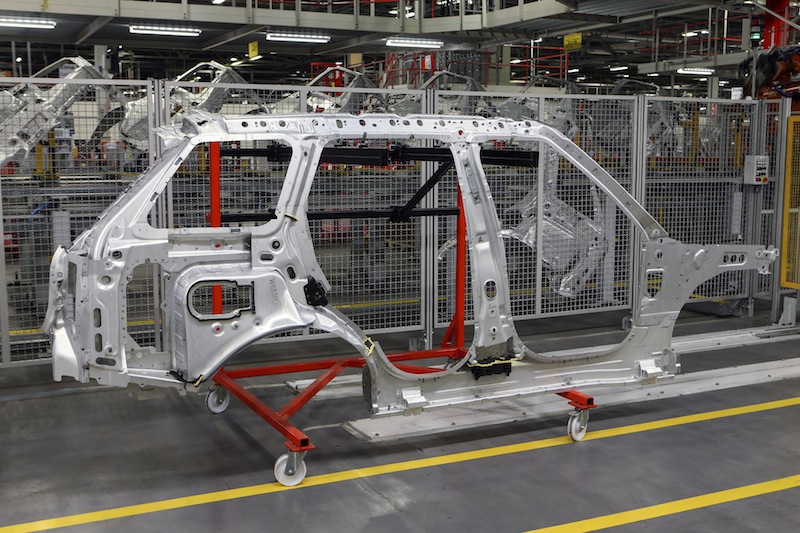
It's the exact opposite of hush-hush corporate security: Jaguar Land Rover wants to share everything it knows about assembling aluminum-bodied cars.
And that has made Jaguar Land Rover's Solihull assembly plant in England a popular destination for manufacturing executives from Audi, Mercedes-Benz, Ford and others.
Why is the company so happy to share its patented procedures? Because it hopes that doing so will save the company money in the long run.

Jaguar Land Rover would like the industry to adopt standards for raw materials and tools to assemble aluminum vehicles. These standards would cut production costs, and the changes won't happen unless the big players get involved.
Mark White, Jaguar Land Rover's chief technical specialist for aluminum, says automakers producing vehicles with aluminum -- Audi, Mercedes-Benz, Porsche, and soon Ford -- each use a slightly different manufacturing system that includes various grades of aluminum and different rivets, glue, robots and measuring systems.
For example, Jaguar Land Rover will buy 353 million rivets this year to assemble all of its aluminum-bodied vehicles. When production of Ford's aluminum F-150 begins in the fall, Ford will be buying about 2 billion rivets per year, assuming each F-150 has roughly the same number of rivets as an aluminum-bodied Range Rover.
To push the idea of standards, White does a lot of entertaining.
"Mercedes-Benz was here [four] months ago, and we are going to see their S class on a return visit," said White. "They were very impressed with what they saw. And they took a lot of things we do away. Audi was here twice so far, and we are doing some work with them. I am going to see the A8 and I have an open invitation to see the Q7."
Ford's aluminum manufacturing executives visited too, White said.
"The only way we think we can drive the cost down in aluminum production technology is to get into mass production," White says. "If you patent everything, then everyone else is either going to find another way of doing it or they are just not going to do it at all."
Ford declined to comment about sharing with competitors the aluminum manufacturing technology it has developed for the redesigned 2015 F-150 with an aluminum body. But Ford does agree in principle with Jaguar Land Rover. 

"Ford believes that certain industry standards can provide great benefits in terms of cost, quality, efficiency and innovation," said Ford spokeswoman Kristina Adamski. But, she added, "Each process specification would need to be evaluated on a case-by-case basis with respect to the customer and product benefits."
Industry analyst Emmanuel Rosner, of CLSA Americas, estimates that the aluminum F-150 will cost Ford at least $750 more per unit than the steel 2014 model. Based on that number, with production of around 650,000 F-150s per year, the added material cost to use aluminum would be more than $488 million.
Richard Truett