Purpose

I will try my best to provide detailed info on various cars and what is like to live with them, I have already produced a few for Jaguar-car-forums, I will do my best to be unbiased, but it will be hard for some cars. I will re-produce press releases and copy from other motoring news.
Showing posts with label automotive news europe. Show all posts

Friday, 11 November 2016

Jaguar Land Rover agreed a pay deal with its workers which will beat inflation and gives extra bonuses and a lump sum.

Jaguar Land Rover agreed a pay deal with its workers which will beat inflation and includes a higher holiday bonus and an extra lump sum, in a sign of the pressure facing firms as the cost of living rises after the Brexit vote.
The UK's biggest carmaker built almost one in three of Britain's 1.6 million cars last year but saw its profits fall due to increased investment.
It had originally sought to offer as small a pay rise as possible due to a 40 percent drop in its profits to 1.6 billion pounds ($2 billion) and increased spending, including on a new plant in Slovakia, a trade union source told Reuters.
But its UK workers will now receive a two-year pay rise.

In the first year, from this month, workers will get a 3.5 percent hike. In the second year, from November 2017, their wages will go up by the Retail Price Index (RPI) measure of inflation - which currently stands at 2 percent - plus 0.5 percent.
The firm will also pay a lump sum of 750 pounds and an increased holiday bonus of 400 pounds in the first year followed by 410 pounds in the second year.
"We feel that this is a very strong deal agreed by the trade unions and it will be recommended unanimously to its members," a Jaguar Land Rover spokeswoman said.
The automaker, which employs over 30,000 people in the UK, is expanding its product range and plans to open a 1-billion-pound plant in Slovakia.
Brexit vote
But the automaker’s business could be hit by Brexit. The company estimated its profit could be cut by 1 billion pounds by 2020 if the UK returns to World Trade Organization rules for trade with Europe, involving a 10 percent tariff on exports, two sources told Reuters prior to the June referendum.
Brexit could also force bosses in all sectors to offer more generous pay rises in the months ahead as the sharp fall in the value of the pound pushes up inflation and reduces many people's spending power.
"We make all the cars here, we make all the profit here and we want the pay rise here," the trade union source told Reuters.
Unions are recommending the deal is accepted by workers with the result of a ballot due on Nov. 25
Automotive News Europe

Thursday, 18 August 2016

Lotus Cars are looking like they will make a profit this year, the first in nearly two decades.

It’s been a little more than two years since seasoned auto executive Jean-Marc Gales took over as CEO of struggling British sports car maker Lotus. 
When the former Opel, Mercedes-Benz and PSA Group executive arrived there was no money to replace Lotus’ aging three-model range. 
That forced him to cut costs while also finding ways to inexpensively enhance his portfolio to achieve his goal of making the company profitable. 

Gales expects to reach the key target in Lotus’ current fiscal year, he told Automotive News Europe Correspondent Nick Gibbs.
Are you closer to profitability?
We will be profitable this financial year that started in April. We had a three-year plan from when I arrived in 2014. The first two years were basically building up, this year is the year of profitability.
Where are you now?
I can’t give any numbers, but we are better than the year before. We are continuously improving as 2013 was better than 2012, 2014 was better than 2013, 2015 was better than 2014. Now comes the big year 2016-17 where we will be profitable.

What does that mean in models sold?
Probably 2,200 to 2,300 in this financial year. But we believe we could do even more because we will have the full-year effect of the U.S., where we launched the Evora in May and we expect sales of 400 cars. We already have 250 orders.
Will all U.S. sales be Evora coupes?
Yes. The roadster will arrive about a year after the coupe. Right now almost the whole factory is [building] U.S. orders.
Are you still cutting costs?
We are continuing with the cost-cutting exercise. The worst is behind us, but it’s a continuous exercise to review costs.
What are your targets on that front?
The last two years we have achieved them. We are very lean. We have about 900 staff now, down from more than 1,200. We have reduced the number of hours it takes to build each car by 10 percent. We are continuously looking at reducing cost of the parts. It was one of the prerequisites of becoming profitable, and we will get there -- after 20 years of not being profitable.
Is the Elise or Evora your top-seller?
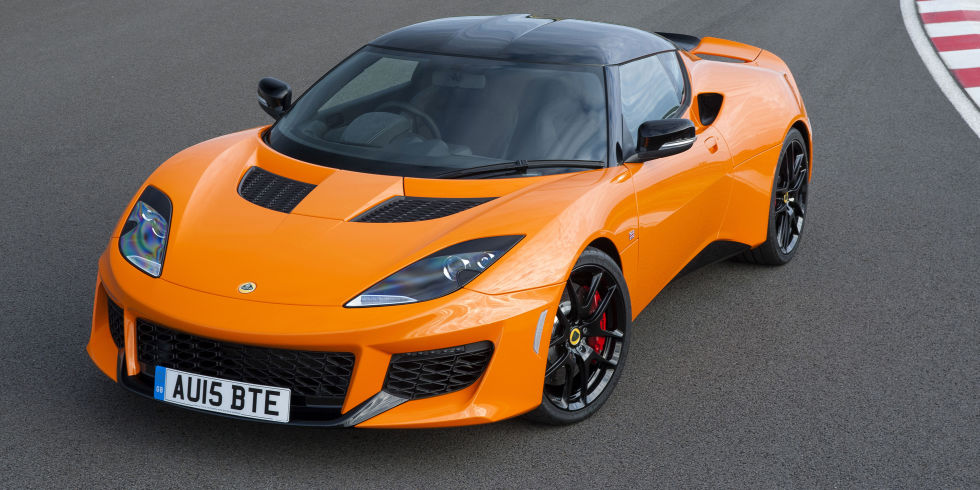
The Evora will be our biggest seller this financial year with its entry into the U.S. Next year it will be Evora as well.
When we last spoke you were about to finish a prototype SUV to show to Chinese authorities with a view to making it there. How did that that go?
We are making progress. I won’t say more, but it’s going well.
How is the development of the new architecture going?
There’s so much life left in the current one. There will be a new architecture coming but give us another four years for the [Elise] small car and a bit longer for the [Evora] large car. The basic architecture is 20 years old, yes, but the Porsche 911 architecture is 50 years old and that’s still going strong. We’ve continuously updated it. Look at all the competitors who try to copy our cars. Either they get too heavy or too slow or both.
Will you stick with aluminum for the next architecture?
Probably. It’s what we do best. I like it because it’s so flexible, on the same car you can do both open or closed. It gives you so much more flexibility than a carbon chassis. We are still working on reducing the weight.
When will you upgrade the Elise?
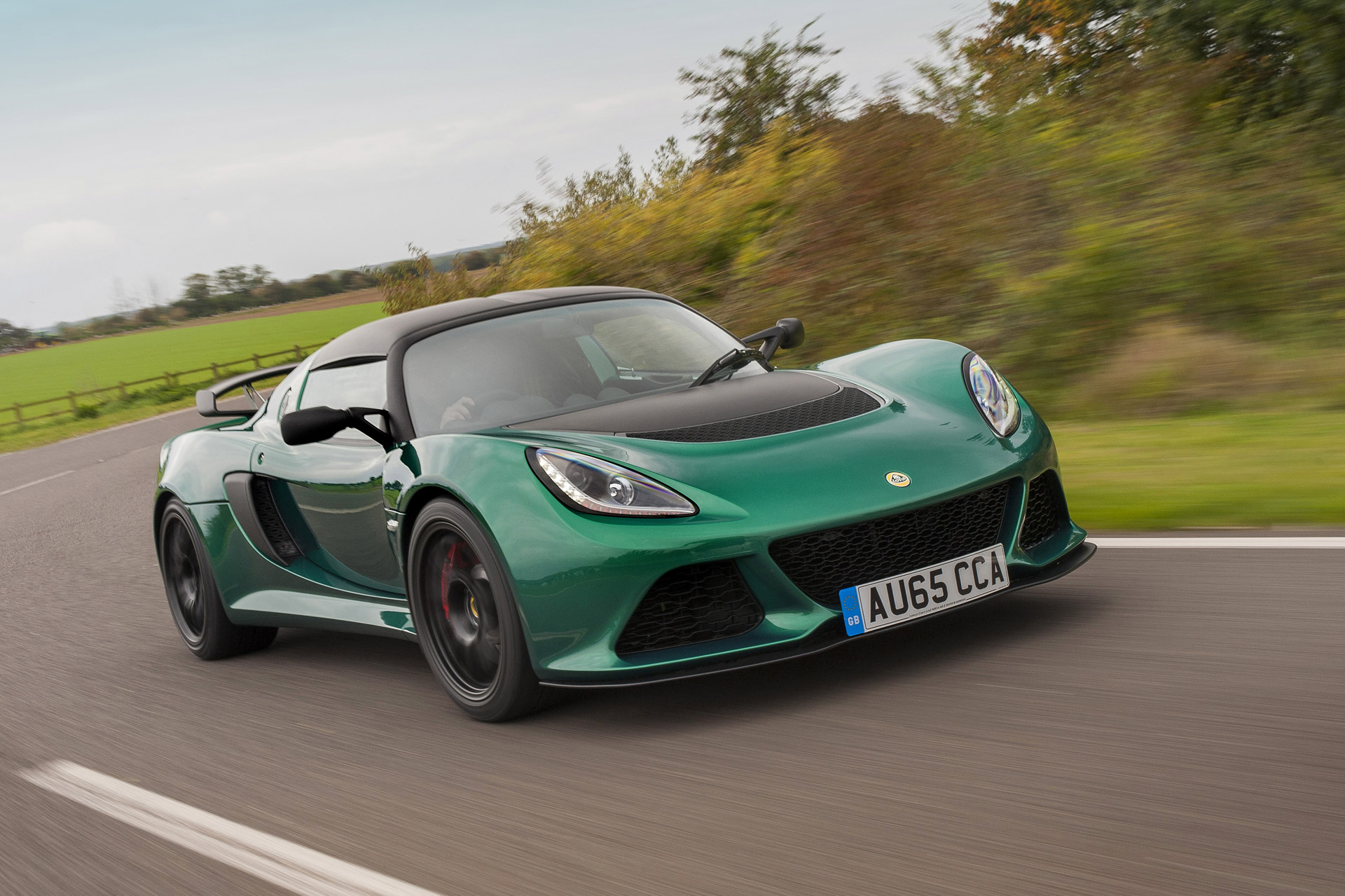
I can’t give a precise date, but I can say will upgrade the Elise before the new architecture comes. We have concrete ideas of what we’re going to do with the car regarding improved infotainment, lower weight and more power.
Will you sell that car in the U.S.?
No. But with the next architecture certainly. We currently offer the Evora and we will also offer the [more powerful] Evora 410 Sport in the U.S. Then the roadster. Three different cars.
How is business for Lotus Group’s engineering arm?
It provided turnover of 10 to 15 million pounds, which is up from last year. That’s about 10 to 15 percent of our total turnover.
Does a hybrid powertrain make sense in a Lotus?
For a sports car, no. For an SUV, yes. Why add two powertrains and batteries when I can add one powertrain and optimize. It would be completely against Lotus’ philosophy of lightweight. It would add 100kg of batteries and 50kg for the second drivetrain. Hybrid is favored by the current emissions cycle. When the emissions cycle changes it won’t be favored as much.
Lotus has battled with the EU over emissions. Have you been given a target?
We fall under the small manufacturer clause like McLaren and Aston Martin. However, in the U.S. we need to fulfill some reductions. Over a five-year period, we need to show a gradual 3 percent-per-year reduction. We can get there. In Europe we are working on remapping the electronics and reducing weight.
How can you get 3 percent out annually?
One option is to take out the supercharger [from the Evora’s Toyota-sourced 3.5-liter V-6]. Another is to go for extreme lightweight, but that is in our DNA anyway. The third is have longer gear ratios, which I don’t like much because it takes away the liveliness of the car. I don’t believe a four-cylinder fits there.
Nick Gibbs
Automotive News Europe

Monday, 15 August 2016

INDIA - Renault’s sevenfold surge in vehicle sales fueled growth in India's auto market in July.

NEW DELHI – Renault’s sevenfold surge in vehicle sales fueled growth in India's auto market in July, extending the industry's streak of gains to 13th consecutive months.
Demand for the Kwid small crossover pushed demand for Renault vehicles to 11,968 deliveries last month.

Industry wide passenger vehicle sales rose 17 percent in July to 259,685, the biggest gain since October 2015, Society of Indian Automobile Manufacturers said today in New Delhi.
Monsoon rains boosting farm output and falling fuel prices are lifting consumer sentiment, according to Rakesh Srivastava, senior vice president for sales and marketing at Hyundai Motor Co.'s local unit.
State-owned refiners have been cutting gasoline and diesel prices, and rainfall in the June-to-September monsoon season has been above normal, benefiting a country where about 30 percent of passenger vehicles are sold in rural areas.

Domestic sales of Maruti Suzuki India increased 14 percent, with deliveries of SUVs including the compact Vitara Brezza more than doubling. The country's biggest automaker by volume raised prices this month of some models, including the Vitara Brezza and Baleno hatchback, citing demand and currency swings.
Hyundai, which posted a 13 percent jump in India sales last month, also said it will increase prices starting Aug. 16. Mahindra & Mahindra Ltd. reported a 20 percent jump in deliveries.
Reuters contributed to this report
Automotive News Europe

Sunday, 17 July 2016

In its 75-year history, Jeep never has been in better shape than it is right now.

In its 75-year history, Jeep never has been in better shape than it is right now.
The reason? Current owner Fiat Chrysler Automobiles has accomplished what a succession of previous owners only dreamed of: truly globalizing one of the world's most storied automotive brands.
Worldwide, Jeep's deliveries in 2015 topped 1.2 million vehicles, its fourth consecutive record year for global production and sales.

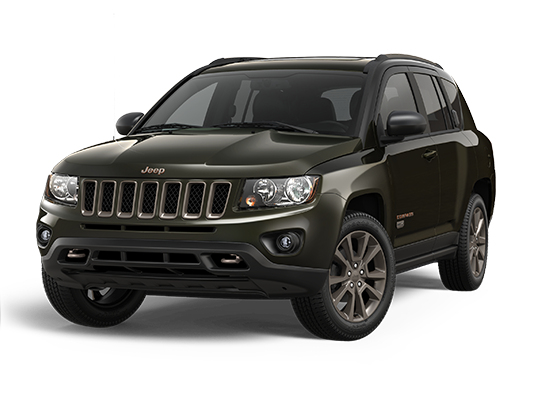
Jeep Renegades are now built in Europe (Italy), South America (Brazil) and Asia (China) for sale in those regional markets. By the end of the year, production of the replacement for the Jeep Compass will begin in Brazil and China, as well as Mexico. Jeep-branded vehicles also will soon begin rolling into India, with local production slated to begin in 2017.
Meanwhile, sales in Jeep's largest and most profitable market, the United States, are up 17 percent through June over record 2015 sales.
Jeep's lineup also is expanding. Brand head Mike Manley said last month that luxury full-size SUVs under the storied Wagoneer and Grand Wagoneer names will return with the development of a redesigned Jeep Grand Cherokee in 2019. On the other end of the size spectrum, a micro-segment Jeep, smaller than the Renegade, is under strong consideration, primarily for markets outside North America. 
Meanwhile, FCA is expanding production capacity of its profit-rich Wrangler by at least 50 percent, allowing the brand to fulfill what it sees as unmet domestic and international demand. The added capacity also will allow for the return of a pickup to the Jeep lineup for the first time since 1996. 
CEO Sergio Marchionne says Jeep is the engine that keeps his company going, no matter how tough the economic circumstances become. 
"One of the things that we've always faced in the United States in the production of Jeeps is to make this unfortunate Sophie's Choice about whether we sell in the U.S. or whether we sell overseas," Marchionne explained this year. "In the last probably three or four years especially, we've been forced to make choices about which markets get allocated product. 
"Even if there were to be a contraction of the U.S. market, there is unexplored potential in terms of outside U.S. markets, especially where we have not established local production," he said. 
"Anything which relates to either a Cherokee or a Grand Cherokee and eventually a Wagoneer or Wrangler will have additional means of expression in international markets."
Larry P. Vellequette
Automotive News Europe

Cadillac aims to take on Europe, again, but this time with a more realistic output of models, with gradual growth.

Cadillac is launching two new models and expanding its dealer network in Europe in a renewed sales push in the region against entrenched premium rivals BMW, Mercedes-Benz and Audi. But the General Motors luxury brand’s latest European sales target is modest compared with past goals that were never achieved.

In 2006, GM predicted it would sell 20,000 Cadillacs in the region by 2010, up from 2,019 in 2005. Cadillac bet heavily on its BLS, a midsize sedan based on the Saab 9-3 but the BLS was a flop.

Cadillac now aims to reach annual 5,000 sales in Europe by the end of the decade. The forecast includes GM’s Corvette and Camaro sports cars, which are sold in the same dealerships as Cadillacs. Last year, GM sold 1,131 Corvette and Camaro models and 579 Cadillacs in Europe.
Leading the brand’s product offensive will be the CT6 large sedan, the brand’s new flagship model, and the XT5 midsize SUV, a replacement for the SRX.


"We want organic growth," Barnabas Vincze, Cadillac's European manager for advanced planning and product marketing, said at an event here.
Key to growth is expanding the brand’s dealer network, he said. "We sell in 12 European countries. Certain countries only have one dealer. That's not the right basis to do business."
Cadillac has struggled in Europe to compete with the big three German premium brands, BMW, Mercedes and Audi, which together take about 85 percent of the region’s premium market.
Vincze said Cadillac will remain a niche brand in the region.
Cadillac will not offer diesel models despite the huge popularity of diesels among European premium buyers. Diesels account for half of Europe’s new-car sales with an even higher share in some premium segments.
Cadillac also will not build right-hand-drive versions to sell in the UK, Europe’s second-largest premium market after Germany. Currently, the brand’s three biggest European markets are Germany, Switzerland and Sweden.
'Leftfield alternative'
Cadillac executives say the brand aims to win over European customers by offering gasoline-only cars loaded with equipment and marketed as a good-value, “leftfield” alternative for wealthy urban dwellers who want to be seen driving something different from German premium models.
Future Cadillacs will improve fuel economy so the brand can compete against the dominant diesel, Vincze said, without going into detail.
The CT6 and XT5 will be available in Europe starting September 5. The CT6 will be priced between 73,500 euros and 94,500 euros in Germany. The XT5 will be priced between 48,800 euros and 66,800 euros.
The CT6 will eventually be available as plug-in hybrid, sources close to GM have said.
Currently the most fuel efficient engine Cadillac offers in Europe is a 2.0-liter turbocharged four-cylinder unit in the ATS and CTS sedans. There are no plans to fit this engine in the CT6 or XT5, which use V-6 gasoline engines, Vincze said.
GM has established a new European unit to market and distribute its cars. The brand’s former importer, Kroymans, crashed in 2009.
A new European head, Felix Weller, starts work at the beginning of September. Weller had been in charge of Cadillac’s sales and marketing in the Middle East and has also worked for Audi and Mercedes in various positions in sales and dealer strategy.
Nick Gibbs

REPORT HERE

Automotive News Europe

Wednesday, 13 July 2016

Bentley considering a number of new models from a car above the Mulsanne, a new sports car, and well, many others.

Bentley is exploring the possibility of offering a low-volume sedan based on the Mulsanne that would be positioned above it in the lineup -- a model separate from the Mulsanne convertible that has been rumored for years.
The derivative wouldn't share the Mulsanne name and would be built in small numbers, 50 to 100 units total, Rolf Frech, Bentley's board member for engineering, told Automotive News Europe sister publication Automotive News at a press launch for the revised Mulsanne.

"That doesn't mean we then have to make a bigger car than the Mulsanne," Frech said. "But maybe there are some possibilities for additional edges in this exclusive realm."
Bentley also is giving the other end of its lineup some attention.

It is close to a decision on whether to bring the EXP 10 Speed 6 concept to production. The two-door sports coupe would serve as a gateway to the Bentley brand and give buyers more of a performance edge than the larger and more expensive models Continental can offer.
Frech says producing the Speed 6 is a matter not of if but when; there's vast enthusiasm for the model among customers and the media and at Bentley.
David Undercoffler
Automotive News Europe

Monday, 11 July 2016

The first four months of the year see's the European Small car segment have lots of up's and down's.

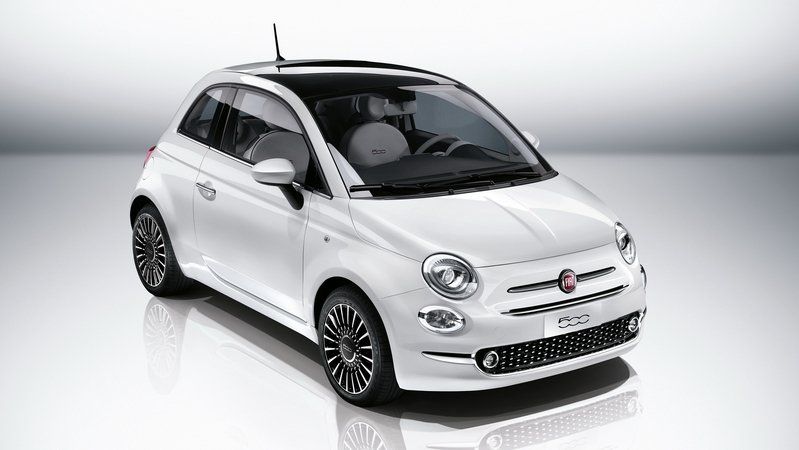
European minicar sales – especially at Fiat Chrysler Automobiles -- are getting a lift from the continuing economic rebound in Italy, which is the top market for the region's smallest, most affordable vehicles. Through April, Italy’s minicar sales were up 20 percent to 129,770 vehicles, giving the models a 25 percent share of the market, according to figures from JATO Dynamics.
The car that has benefited most is the Fiat Panda, which has overtaken the Fiat 500 to become the segment's best-seller with a volume of 74,018 units across Europe, an increase of 21 percent.

Rising demand in Italy, as well as growth in Spain and Portugal, have boosted Europe's overall minicar segment by 3.8 percent after four months, but the sector (also called the A-segment) will level off at about 1.2 million annually from 2016 to 2020, analysts at IHS Automotive predict.
IHS believes that demand has stabilized following significant sales increases and decreases between 2009 and 2014. Minicar volume rose to more than 1.6 million in 2009, which is when small, affordable cars became even cheaper to buy because a number of European governments started offering trade-in incentives to support automakers during the height of the global financial downturn. The surge was followed by a decline to about 1.13 million minicar sales in 2013 and 2014 because so many purchases were pulled forward by the incentive offers.
Highs and lows
The recent highs and lows, the predicted flatness of the segment as well as the difficulty most automakers have had turning a profit from minicars has convinced manufacturers such as Ford Motor and Nissan to leave the sector.
Ford will end sales of the Ka after a two-decade run and offer a pair of vehicles in the subcompact segment: the Ka+ and the Fiesta. The Ka+, which is just a few millimeters shorter than the Fiesta, will be Ford’s entry model for Europe. The current Ka shared a platform and factory with the Fiat 500, but it never came close to matching the success of its sibling model. "Either you partner with someone in this segment or you’re out," said a Ford official, who didn’t want to be named.
The Ka+, which is 3929mm long compared with 3620mm for the current Ka, goes on sale in the autumn. Ford says the arrival of the Ka+ allows it to reposition the next-generation Fiesta more upmarket when it debuts early next year. Ford said it will drop the Fiesta's Ambiente base trim line to leave the subcompact segment's entry price level to the Ka+.
Disappointing sales of the Ka, which had a volume of just 12,975 units through April compared with 68,068 for the Fiat 500, was "partly our fault," said a Ford source who declined to be named. "Fiat really turned the 500 into its own brand and we could have done more with the Ka, too. But when you're completely focused on returning to profitability [which Ford of Europe did in 2015 after three years of losses], investing more time and effort into a segment that on good days barely makes money is just not a priority," the source said.
Nissan, meanwhile, is reluctant to rejoin the segment after dropping the India-built Pixo in 2013. "If you look at the volume and expected profit from those vehicles, I'm not convinced there's a significant place for an A-platform car in Europe," Trevor Mann, Nissan's chief performance officer, told Automotive News Europe. Nissan and alliance partner Renault have also said they don't plan to re-engineer the successful India-built Kwid for Europe.
Troubled Twingo?
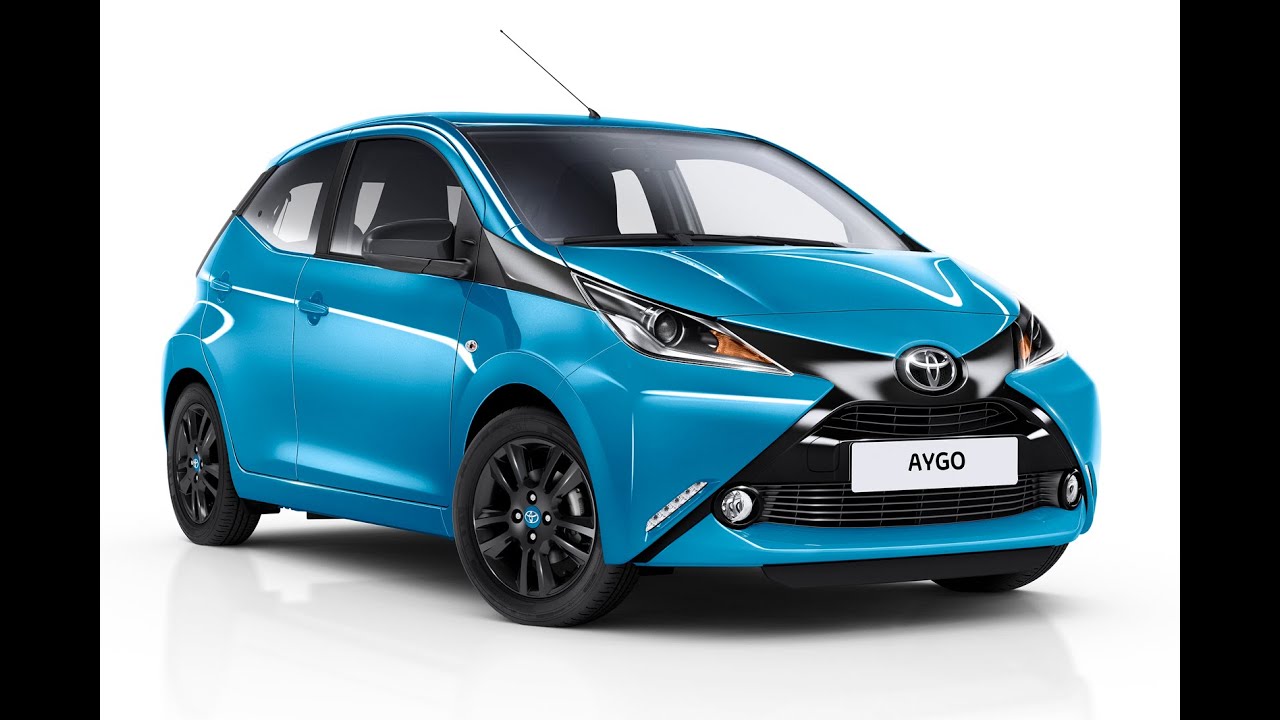
Renault is struggling in the minicar segment with the rear-wheel-drive Twingo as sales of the car fell by 20 percent to 29,081 in the first four months, according to JATO's figures. The decline dropped the Twingo to fifth place behind the similarly aged Toyota Aygo. The dip came despite the popularity of minicars in Renault's home market of France, which ranks fourth in Europe behind Italy, the UK and Germany. French minicar sales rose 2 percent to 54,415 in the period.
Renault's expectations for the car haven’t been met, said IHS analyst Ian Fletcher. IHS reports that last year Renault cut a shift at its Twingo factory in Novo Mesto, Slovenia, where the car is built alongside its platform mate, the Smart ForFour. Fletcher believes some customer are put off by the Twingo's rear-engine design, which reduces trunk space. Another problem is that the Twingo is facing competition from its larger sibling, the Renault Clio. "Some deals Renault has at the moment don't put the Clio that far away from the Twingo [in price]," Fletcher said.
Sales of the Aygo, meanwhile, are holding up because Toyota is meeting strong demand for personalization options. "Customization in that segment is very, very popular," Toyota Europe CEO Johan van Zyl said on the sidelines of the Automotive News Europe Congress in Munich last month. The Aygo's wide choice of colors and features is attracting a younger crowd, van Zyl said.
Other automakers are adapting their models to try to win new buyers. Renault, for example, will launch a GT version of the Twingo later this year that boosts power from the car's 1.2-liter turbocharged gasoline engine to 110 hp compared with 90 hp for the base Twingo.
Volkswagen showed a face-lifted version of the Up at this year's Geneva auto show featuring a 1.0-liter turbocharged TSI gasoline engine for the first time, as well as a dashboard dock for a smartphone to create an inexpensive infotainment system via a VW app.
Meanwhile, Hyundai will use the Paris auto show in September to unveil a face-lifted version of its i10 minicar that has been redesigned to attract younger buyers, a company source said.
As the segment's sales level off minicars are expected to have a market share of about 9 percent within Europe, making it the region's third-largest segment after subcompacts and compacts.
That number won't be declining any time soon, JATO Dynamics global analyst Felipe Munoz said: "The segment will always appeal to a variety consumers: first-time car buyers, single people, or simply because of parking reasons," he said. "And it doesn't face direct competition from the SUV segment, at least not for now."
Nick Gibbs
Automotive News Europe