Purpose

I will try my best to provide detailed info on various cars and what is like to live with them, I have already produced a few for Jaguar-car-forums, I will do my best to be unbiased, but it will be hard for some cars. I will re-produce press releases and copy from other motoring news.
Showing posts with label X7. Show all posts

Wednesday, 18 January 2017

BMW's US plant posts over 400,000 units again, the third time and the highest ever.

  • South Carolina Plant Produces 411,171 X Models.
For the third consecutive year, BMW Manufacturing recorded its largest annual production, producing 411,171  during 2016. 
This production record confirms the South Carolina plant will remain the largest plant by volume in the BMW Group global production network.  
In addition, the plant exported 287,700 vehicles last year – 70 percent of its total production. “Last year was a very successful year for Plant Spartanburg,” said Knudt Flor, President and CEO of BMW Manufacturing. 
“Our X models continue to be extremely popular worldwide, and I’m proud of the commitment shown by our team of dedicated associates to deliver premium quality vehicles for our customers.” 

2016 marked the second time the South Carolina plant has topped 400,000 units. In 2015, production totaled 400,904 units.  A breakdown of production by model is seen below: 
  • X3 – 151,298
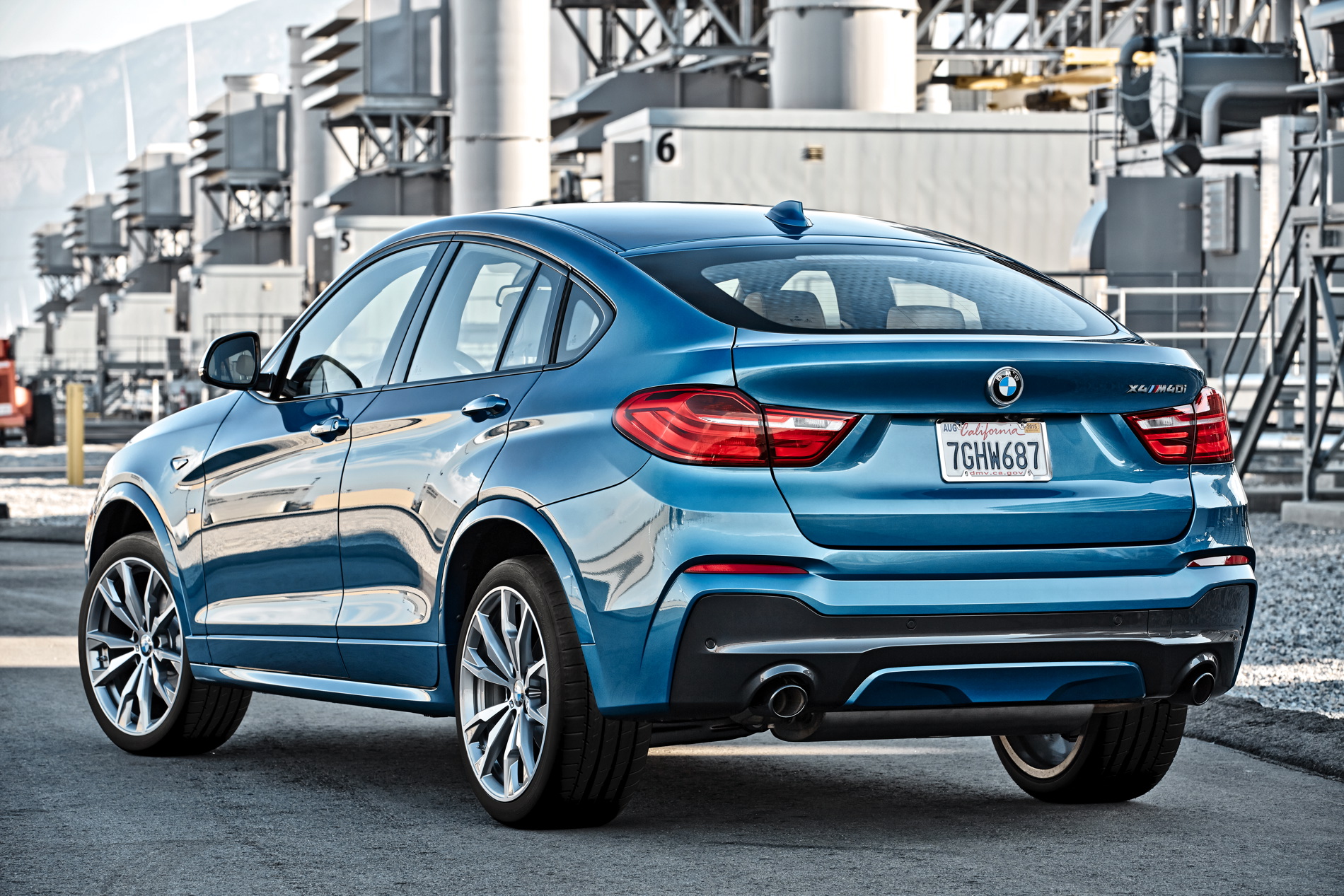
  • X4 – 56,404
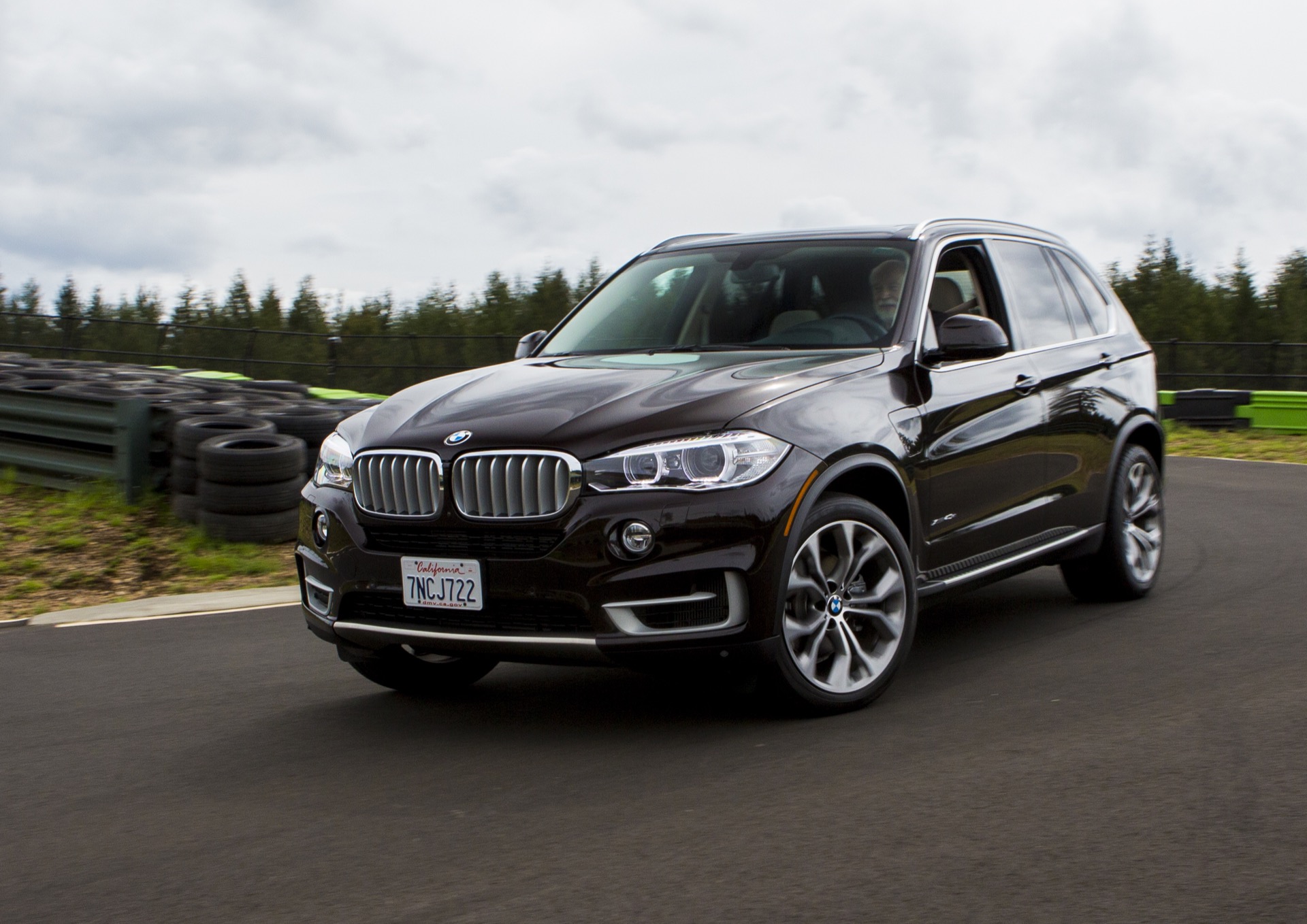
  • X5 – 165,377
  • X6 – 38,092
Plant Spartanburg welcomes new leader
Last month, Knudt Flor became the seventh president and CEO of BMW Manufacturing. Flor has served 28 years with the BMW Group.  He has worked in a variety of roles within the company and worldwide locations, including four years at Plant Spartanburg as Senior Manager Supplier and Assembly Quality Management.  Most recently, Flor served as Senior Vice President of Corporate Quality for the BMW Group.
“This is a homecoming for me,” Flor said. “I enjoyed my four years in Spartanburg in the late 1990s, and I have been waiting for this opportunity to return.  I’m eager to work with this dedicated team, and I’m excited about the future of this BMW plant.”
$1 Billion investment
BMW Manufacturing will continue construction and installation of tooling around the plant site as it prepares for the future and adds a fifth model to the vehicle line-up – the all-new BMW X7. Construction projects include a new state-of-the-art body shop totaling more than 1.2 million square feet and an expansion of the X5/X6 Assembly hall by 200,000 square feet.  Installation of special tooling and body shop robots will take place during 2017.
BMW began manufacturing vehicles in the United States in 1994 and has since produced more than 3.7 million vehicles for the world. BMW Group has invested more than $7.4 billion in the South Carolina plant.  Currently, BMW Manufacturing produces more than 1,400 vehicles each day and exports 70 percent of its production to 140 countries around the world.

Wednesday, 22 June 2016

It's time for Chinese regulators to punish copycat carmakers, it does not happen much these days, but still happens.


  • It's time for Chinese regulators to punish copycat carmakers
Ten years ago, it became fashionable for Chinese brands, new to the car industry, to copy the design of popular foreign models.

Over the years, most major Chinese carmakers have outgrown their copycat phase. They've built their own automotive design teams and tapped foreign talent to lead them.

Yet, China's regulators still protect domestic companies that continue to copy foreign models. Two recent cases illustrate the bad habit.


The first incident involves Jaguar Land Rover, which sued Jiangling Holdings this month for marketing a Landwind X7 crossover that closely resembled the Range Rover Evoque.
The British luxury automaker also asked China's State Intellectual Property Office to annul Jiangling's patent rights for the Landwind X7.

Jiangling, a small company formed in 2004, counterattacked with a request that the regulators revoke the Evoque's patent rights. The regulators, in their wisdom, ruled that both models should lose their patent rights.

The Landwind X7, which went on sale in China last year, shares the Evoque's roof line and tapered windows and character lines on the side panels.

Obviously Jiangling's patent rights deserved to be revoked, but it is a mystery why the office also ruled against Jaguar Land Rover. With its patent rights annulled, Jaguar Land Rover will find it difficult to pursue its case against Jiangling Holdings in the Beijing court.
  

If this ruling smacks of favoritism, an earlier court ruling against Honda is downright outrageous.

Earlier this year, the high court in north China's Hebei province reviewed Honda's lawsuit filed against Shuanghuan Automobile, a small local automaker.

In 2004, Honda sued Shuanghuan for copying the CR-V crossover, but the court did nothing. Meanwhile, the central government revoked Shuanghuan's production license because it produce so few cars.

In April, the Hebei court finally ruled that Honda must pay Shuanghuan 16 million yuan ($2.4 million) compensation for bullying the small Chinese carmaker.

The rulings against Honda and Jaguar Land Rover have compromised the ability of China's courts and regulators to ensure fair competition.

And even though they were intended to protect Chinese carmakers, the rulings ultimately will do more harm than good.

China's car market has undergone a couple of decades of robust growth and now car ownership is common.

Over that period, Chinese car buyers have developed a high level of brand awareness. To win their favor, domestic automakers must demonstrate quality, reliability and original design.

This explains why major Chinese carmakers are opening styling studios in Western countries and recruiting experienced international designers to lead their in-house design teams.

For example, Geely hired styling veteran Peter Horbury from Volvo, while Chery tapped James Hope, a former designer at Ford, General Motors and DaimlerChrysler.

Times have changed. Chinese copycats have little chance of success in today's market -- and China's auto executives know it.

The two rulings by the Hebei court and the State Intellectual Property Office shocked industry observers and drew ridicule in Chinese media.

It's time for these institutions to punish companies that copy foreign car designs, rather than condone this unlawful practice.

REPORT HERE

Yang Jian

Saturday, 29 November 2014

Land Rover to complain to Chinese officials about blatent copying of the Evoque.

The Landwind X7 is scheduled to go into production this month and is expected to retail for the equivalent of about 17,700 euros in China.
"Jaguar Land Rover will take whatever steps are appropriate," the company said in a statement to Automotive News Europe.
The X7 SUV, presented by Chinese automaker Landwind, closely resembles the Evoque, right down to the font and the positioning of the lettering on its hood.
"The fact that this kind of copying is ongoing in China is very disappointing," Land Rover CEO Ralf Speth told the UK's Autocar magazine. "I will talk to our officials and I will talk to our partners at Chery to find a way around this situation."
The Landwind X7 was flagged up by Jaguar Design Director Ian Callum, who tweeted a picture of the car from the Guangzhou show, adding “haven’t we seen this somewhere before?”
At the same show Land Rover revealed the first Evoques made at its new manufacturing plant in Changshu, northeast of Shanghai, built with its joint venture partner, Chery Automobile.
Autocar said the Landwind X7 is scheduled to enter production this month and is expected to retail for 134,992 yuan (17,665 euros, $22,000) in China.
That is significantly below the 578,000 yuan (76,000 euro) starting price of the Evoque there, which is more than the SUV's UK starting price because of import duties. Autocar reported that the locally built Evoque, called the Aurora in China, will start at about 385,000 yuan.
Landwind is an SUV-focused brand owned by Jiangling Motor Holding (JMH), the parent company of Jiangling Motor Co. (JMC). Ford has a 31 percent stake in JMC, which makes Ford Transit vans in China among other ventures.
The Landwind X7, top, has borrowed virtually every exterior styling cue from the Range Rover Evoque.


Photo credit: JAY RAMEY

The Landwind X7 is powered by a 2.0-liter turbocharged gasoline engine from Mitsubishi and is offered with an eight-speed automatic transmission, according to the company’s website. Landwind described the design’s narrow side and rear windows “as giving a strong sense of power and majesty.”
Chinese media earlier this year reported that Landwind had submitted patent drawings for the X7’s design with the Chinese patent office.
Speth told Autocar: "The simple principle is that it is not something that should happen; the intellectual property is owned by Jaguar Land Rover, and if you break that IP then you are in breach of international regulations that apply around the world."
The X7 name will be shared with a forthcoming BMW SUV and joins the X5 and X6 in Landwind’s lineup. BMW said it is powerless to prevent the name clash. “Chinese law doesn't allow companies to protect a combination of letters and numbers, such as X7, X1, 320i etc, it only works with brand and common names such as BMW, Mini, Clubman, Phantom,” a spokesperson told Automotive News Europe.
High-profile disputes between Chinese automakers accused of copying design and engineering from Western cars include the 2008 case when General Motors claimed that its Daewoo Matiz subcompact was copied by Chinese automaker Chery, which marketed a very similar-looking car called the Chery QQ.
The QQ was an extreme example of the sporadic industrial copying that took place in the automotive market, as its doors and a number of other parts were actually interchangeable with the Matiz.
Also in 2008, an Italian court prohibited Chinese automaker Great Wall Motors from importing its Peri subcompact car, ruling it looked too much like the Fiat Panda.
Jay Ramey of AutoWeek contributed
You can reach Nick Gibbs

Tuesday, 8 April 2014

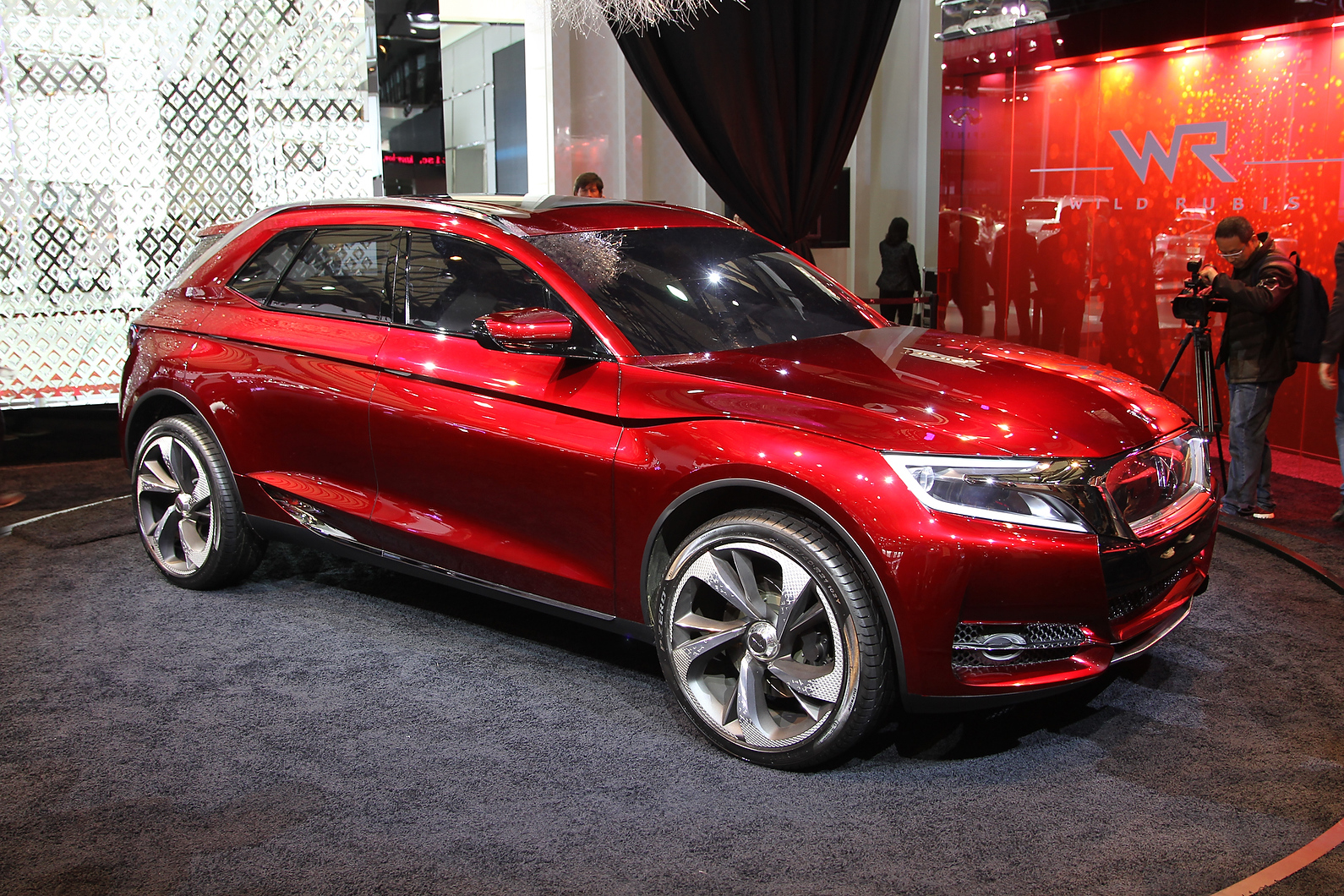
Citroen previews new DS SUV

Citroën has released a teaser image of a new luxury DS model that is set to be revealed at the Beijing motor show later this month.
The new car, which is claimed to "marry power and refinement", may be a production version of the Wild Rubis concept. At its reveal, the Wild Rubis was reputed to offer a "subtle combination of power and refinement". 

Previous reports had suggested that the Wild Rubis was due to enter production in late 2014 as the Citroën DS X7 SUV. 

Following its launch it will sit alongside luxury Citroën models including the DS4 and DS5. 

Citroën's high-performance DS 5LS R concept car is also set to make its world debut at the Beijing motor show.

Sunday, 30 March 2014

BMW confirms US plant expansion and new X7 large SUV

  • Investment of one billion U.S. dollars by 2016
  • Production capacity to reach 450,000 vehicles Expansion will create 800 new jobs
  • BMW Group extends X family with new BMW X7
  • Production of new BMW X4 ramps up in Spartanburg
The BMW Group is expanding capacity at its U.S. plant in Spartanburg, South Carolina. “To meet strong global demand for our BMW X models, we will invest a total of one billion U.S. dollars in our Spartanburg plant by 2016. This will increase annual production capacity by 50% up to 450,000 vehicles from 300,000 currently,” explained Chairman of the Board of Management of BMW AG, Norbert Reithofer, at a special ceremony in Spartanburg on Friday commemorating 20 years of production in the U.S.

Among the guests attending the ceremony held on the plant grounds were U.S. Secretary of Commerce, Penny Pritzker; Governor of the state of South Carolina, Nikki Haley; Board of Management member for Production, Harald Krüger; and head of BMW Plant Spartanburg, Manfred Erlacher.

BMW X7 to be built in Spartanburg
BMW X3, X5, X5 M, X6 and X6 M models have been manufactured so far in Spartanburg, BMW’s centre of competence for X vehicles. Friday’s event celebrated the start of production of the BMW X4. Norbert Reithofer also announced a further expansion of the X model family: “With the BMW X7, we are developing another, larger X model, which we will produce at our U.S. plant for our world markets – once again underscoring our commitment to the U.S.”
During the ceremony, BMW Board of Management member for Production Harald Krüger talked about the importance of the U.S. to BMW Group’s overall production strategy: “The BMW Group aims for a good balance of growth between all markets and continents. The Spartanburg plant is an important building block in our international network of 28 production and assembly facilities in 13 countries today. It makes a vital contribution to profitable, globally-balanced growth.”
Krüger continued: “The BMW plant in Spartanburg is the best example of our successful strategy of ‘production follows the market’. The state of South Carolina has supported us as a valuable and reliable partner throughout our 20-year involvement in the region and played a decisive part in making the U.S. our second home.”

Spartanburg workforce increases to 8,800
The plant’s expansion will also increase the number of employees at the U.S. facility significantly. “Expansion at the site will create 800 new jobs, bringing the total workforce in Spartanburg to 8,800,” Reithofer explained. “It will also make Spartanburg the largest plant in terms of production capacity in our global production network,” he added.
According to a study released by the U.S. Department of Commerce, the annual export volume of BMW’s Spartanburg plant totals USD 7.5 billion – which makes the BMW Group’s American facility the largest vehicle exporter in the United States, based on total exports excluding NAFTA. Approximately 70% of Spartanburg’s production is exported to BMW markets around the world.

A recent analysis published by the Moore School of Business at the University of South Carolina found that BMW Group activities in South Carolina had a total impact of around USD 16.6 billion on the state economy. The BMW Group’s presence in South Carolina supports a total of 30,000 jobs. The study also cites the importance of the BMW Group for South Carolina’s economic standing, improving technological and manufacturing competitiveness and establishing a high level of training.
Since the start of production in 1994, Spartanburg has built more than 2.6 million vehicles for BMW customers around the world. The models BMW X3, X5, X5 M, X6 and X6 M are all produced at the plant. In the near future, a plug-in hybrid version of the BMW X5 will also be produced here. A total of 297,326 vehicles were manufactured in Spartanburg in 2013, with around 1,100 vehicles currently produced per working day. The Spartanburg site presently employs around 8,000 staff.

Friday, 21 March 2014

USA - BMW to confirm new X7, seven seater SUV next week.

The long-rumoured BMW X7 will be built at the company’s plant in Spartanburg, S.C., The Wall Street Journal reported today.
BMW will make the announcement on March 28, the newspaper reported, and will spend several hundred million dollars to expand the plant to build the seven-seat X7. 

BMW had been rumoured to be considering a three-bench vehicle to fill a gap in its crossover lineup.
Construction at the plant would boost production levels to 400,000 vehicles annually from 300,000 today, the Journal reported. The expansion would make the plant one of BMW’s largest and would add several hundred production jobs. BMW has 7,000 employees at Spartanburg.

The plant builds the X3, X5 and X6 crossovers, of which roughly half are exported to more than 130 countries. Most X7s produced at the plant will remain in the United States.