Purpose

I will try my best to provide detailed info on various cars and what is like to live with them, I have already produced a few for Jaguar-car-forums, I will do my best to be unbiased, but it will be hard for some cars. I will re-produce press releases and copy from other motoring news.
Showing posts with label hypercar. Show all posts

Wednesday, 16 August 2017

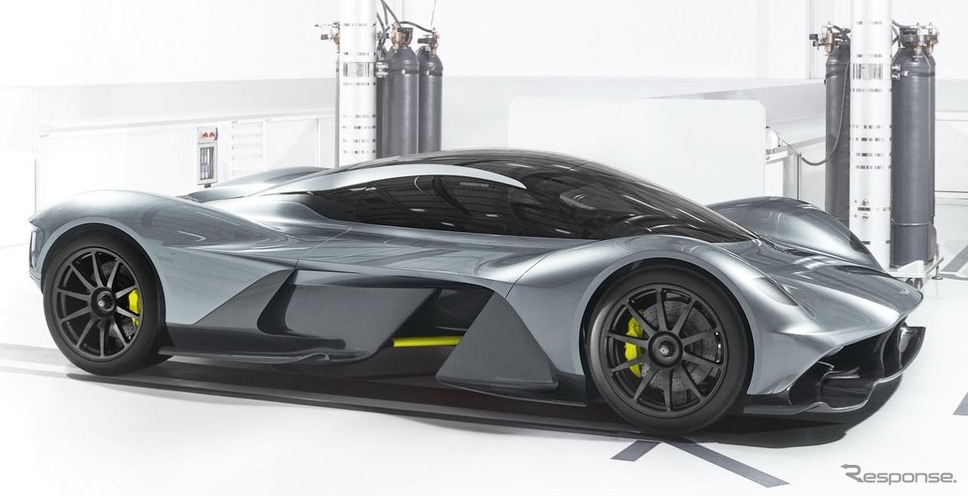
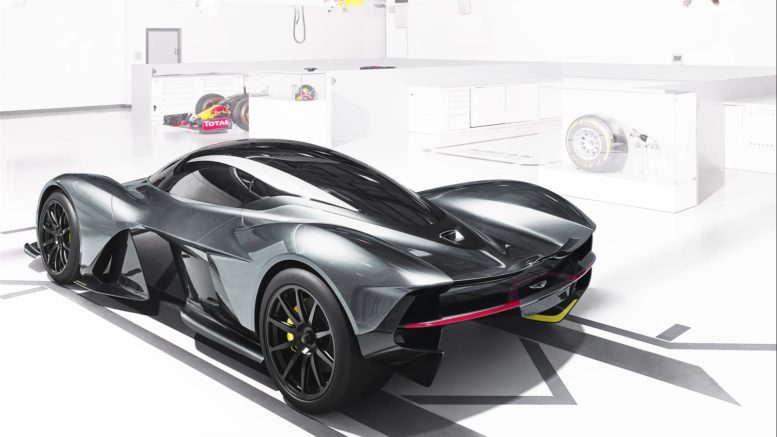
The details are flowing from Aston Martin about the new Valkyrie hypercar.

  • Aerodynamic development has driven evolution of hypercar’s exterior design
  • Exquisite, innovative detailing reflect the uncompromising pursuit of performance
  • Ultra-efficient interior packaging achieves space for two 98 percentile adults
  • Cockpit features F1-style reclined driving position and minimalist ergonomics
Since the first reveal of the Aston Martin Valkyrie hypercar in July 2016, Aston Martin, Red Bull Advanced Technologies and project partner AF Racing have been working intensively to further develop the Valkyrie’s aerodynamics, body styling and cockpit packaging. 
The teardrop-shaped cockpit’s upper body surfaces and lower tub contours follow the envelope of space available between the huge full length Venturi tunnels that run either side of the cockpit floor. 
Drawing huge quantities of air beneath the car to feed the rear diffuser, these tunnels are the key to generating the Aston Martin Valkyrie’s extraordinary levels of downforce while keeping the upper body surfaces free from additional aerodynamic devices that would spoil the purity of the styling.
To maximise interior space the seats are mounted directly to the tub, with occupants adopting a reclined ‘feet-up’ position reminiscent of today’s Formula One and Le Mans Prototype race cars, ensuring driver and passenger are extremely safe, perfectly supported and feel completely at one with the car. 
A four-point harness comes as standard, while an optional six-point harness will be offered for those who intend to do more track driving.
The Aston Martin Design team were keen to keep distractions to a minimum and focus the driver on the road ahead. To this end all switchgear is located on the steering wheel, with all the vital signs shown on a single OLED display screen. The steering wheel is also detachable, both to aid ingress and egress, and to serve as an additional security device. 
Great attention has been taken with the glasshouse design to ensure forward and peripheral side-to-side vision is virtually uninterrupted. To avoid any unwanted aerodynamic disturbance or stylistic ‘clutter’ traditional door mirrors have been replaced by discreetly mounted rear facing cameras in each of the Aston Martin Valkyrie’s flanks. 
These feed two displays which are positioned at the base of each A-post to mimic the view provided by conventional door mirrors. The all-enveloping bodywork and roof-mounted engine air intake means there is no rear window, negating the requirement for a rearview mirror.
Matt Hill, Aston Martin Creative Director of Interiors said of the Aston Martin Valkyrie’s cockpit design: “It’s been a tremendous challenge to make the interior packaging work. We’ve embraced Red Bull Racing’s Formula One ethos and approached from a different angle than conventional road car design. In this instance, we’ve started from a position where you think something is impossible and work at it until you find a way to make it work. 
We’ve been fighting for millimetres everywhere, but the battle has been worth it, as it’s been fantastic seeing customers try the interior buck for size. They love the ritual of getting in and how it feels to be sat behind the wheel. They’re also genuinely surprised at how the car just seems to swallow them. You really do have to sit in it to believe there is genuine space for two large adults.”
While the essence of the original Aston Martin Valkyrie exterior design remains unchanged, Adrian Newey’s pursuit of downforce and aerodynamic efficiency has driven many detail changes to the bodywork. These requirements have been faithfully incorporated into the design by the Aston Martin Design Team in a genuine case of form following function.
One of the biggest changes in this latest model are openings in the body surface between the cockpit and front wheel arches, Adrian Newey having found that they were the key to achieving considerable gains in front downforce. It was then the job of the Aston Martin Design Team to integrate these new apertures into the overall design and ensure they had aesthetic merit as well as aerodynamic function.
While aerodynamics and downforce are the dominant story, Aston Martin Valkyrie features some delightful details. Some of the most striking are the headlights, which take inspiration from the pure functionality of a Formula One car’s components. 
Aston Martin’s designers stripped things back to the bare essentials, celebrating the engineering rather than concealing it behind cladding. With the low and high beam elements attached to an intricate exposed anodised aluminium frame not only are the headlamp units a work of art, but they are 30-40 per cent lighter than the lightest series production headlamps available to Aston Martin.
The same approach has been taken with the Aston Martin ‘wings’ badge that adorns the nose. With the regular badge considered too heavy, and a simple sticker not befitting for a car of the Aston Martin Valkyrie’s quality and cutting-edge nature, the Aston Martin Design Team came up with a chemical etched aluminium badge just 70 microns thick. 
That’s 30 per cent thinner than a human hair, and a remarkable 99.4 per cent lighter than the regular enamel wings badge. The badge (nicknamed the ‘lacewing’) is then attached to the painted body and covered with a perfectly smooth coat of lacquer.
Further detail innovation can be found at the rear of the car, with the centre high mounted stop light (CHMSL). Mounted on the tip of the small shark’s fin that runs down the spine of the Aston Martin Valkyrie’s airbox and rear bodywork, the light is just 5.5mm wide and 9.5mm high. Illuminated by a red LED it is the world’s smallest CHMSL and evidence of how every element of the Aston Martin Valkyrie is scrutinised in the pursuit of eliminating unnecessary weight and drag.
Aston Martin Creative Director of Exterior Design, Miles Nurnberger, said of the Aston martin Valkyrie’s design evolution: “I would say we’re around 95 per cent of the way there with the exterior design. Much of what you see is actually the structure of the car, so this had to be signed-off relatively early in the project. The remaining areas of non-structural bodywork are still subject to evolution and change as Adrian [Newey] continues to explore way of finding more downforce. 
The new outlets in the body are a case in point. Ordinarily the last thing we’d want to do to one of our surfaces is cut a hole in it, but these vents work the front wings so much harder that they’ve found a significant gain in front downforce. 
The fact that they are so effective gives them their own functional beauty, but we’ve finessed them without impacting on their functionality. That they also serve as windows through which to view the fabulous wing section front wishbones is a welcome bonus!”

Friday, 31 March 2017

The name has been released for the Aston/Red Bull Hypercar - we give you VALKYRIE !

  • Continuation of a naming tradition stretching back seven decades
  • Joins famous lineage of Aston Martin ‘V’ cars
  • Valkyrie name taken from ancient Norse mythology  
The revolutionary hypercar being co-developed by Aston Martin and Red Bull Advanced Technologies, formerly identified by its codename AM-RB 001, has now been officially named the Aston Martin Valkyrie.
The name continues a fine tradition of Aston Martin ‘V’ cars. This began back in 1951 with Vantage, which was selected as a name to distinguish high performance variants of the then current model, the DB2. 
Boasting 125bhp versus 105bhp for the standard engine, the Vantage represented a significant increase in performance and desirability. The first time the Vantage badge appeared was on the side of the DB5.
It remained a name reserved for the most potent model derivatives until 2005, when the Vantage became a model line in its own right. Twelve years later the acclaimed family of V8 and V12-powered models has made the Vantage the most successful model in Aston Martin’s history.
Virage, Vanquish and the Aston Martin Vulcan - Aston Martin’s very own God of fire - are more recent ‘V’ cars to continue this lineage. Now, seven decades after the Vantage name started it all, the Aston Martin Valkyrie propels this uniquely distinctive and lyrical family of model names to another level.
For Aston Martin’s Chief Creative Officer, Marek Reichman, Valkyrie perfectly captures the drama of what is not only the ultimate Aston Martin, but the ultimate expression of hypercar design, engineering and performance: “Aston Martin model names have deep meaning. They need to inspire and excite. To tell a story and enrich a narrative that stretches back some 104-years. The Aston Martin Valkyrie is an incredibly special car that demands an equally remarkable name; an uncompromising car that leaves nothing in reserve. The connotations of power and honour, of being chosen by the Gods are so evocative, and so pertinent to a car that only a fortunate few will ever experience.”  
While its name is rooted in ancient mythology, the Aston Martin Valkyrie is a pure expression of modern technology. By bringing together Aston Martin, Red Bull Advanced Technologies, project partner AF Racing and some of the world’s leading technology partners, the Aston Martin Valkyrie promises otherworldly performance befitting of its name. 

Wednesday, 1 March 2017

The next stage of build and information is released for the AM-RB 001 Hypercar.

  • Prestigious roll call of world-leading technical partners working alongside Aston Martin and Red Bull Advanced Technologies  
  • Bespoke 6.5-litre naturally aspirated V12 engine designed and built by Cosworth
  • Cutting-edge 7-speed transmission developed by Ricardo Engineering
  • Carbon fibre MonoCell supplied by long-time composites partner, Multimatic
With design and engineering work on the AM-RB 001 hypercar progressing apace, Aston Martin, Red Bull Advanced Technologies and project partner AF Racing today confirm some of the key technical partners for AM-RB 001.
Working to the exacting brief of both brands, the technical partners have been selected for their unrivalled expertise and willingness to push the performance boundaries. 
Together with Adrian Newey, Red Bull Racing’s Chief Technical Officer and Aston Martin’s VP and Chief Special Operations Officer, David King and his team, they will embrace the challenges inherent with delivering a car poised to redefine the limits of road car performance.
The heart of every Aston Martin is its engine. Never more so than in the AM-RB 001, which is why it has been entrusted to legendary engine builder, Cosworth. An illustrious name with an impeccable motorsport pedigree, the UK-based company will bring all its Formula One and high performance production engine experience to bear in the design and manufacture of the AM-RB 001’s bespoke, high-revving 6.5-litre naturally aspirated V12 engine.
Mated to AM-RB 001’s all-new engine is a bespoke 7-speed paddle-shift transmission. Designed and manufactured by Ricardo, to Red Bull Advanced Technologies’ specification, the gearbox will be the perfect partner to Cosworth’s V12. Conforming to the radical hypercar’s ethos of minimal mass and maximum efficiency and led by Red Bull Advanced Technologies’ simulation work, Ricardo will deploy intelligent engineering solutions to achieve Newey’s uncompromising goals.
Not content with commissioning the ultimate road-legal internal combustion engine, the AM-RB 001 also boasts a lightweight hybrid battery system supplied by Rimac. Acknowledged as world-leaders in high-performance battery technology, the Croatian-based company has showcased its capabilities with the innovative Concept-One: the world’s first - and fastest - all-electric hypercar.
With lightweight construction paramount the AM-RB 001’s MonoCell is constructed from carbon fibre by world-leading composite experts, Multimatic. A long-standing technology partner on projects such as One-77 and Aston Martin Vulcan, Multimatic will combine its unrivalled manufacturing experience with Red Bull Advanced Technologies’ knowledge gained from the design and build of ultra-competitive, championship-winning Formula One cars.
With a power-to-weight ratio of 1:1 - that’s to say one bhp for every kilogram of kerbweight - the AM-RB 001 requires a braking system that’s more than the equal of its powertrain. Step forward Alcon and Surface Transforms, who together are responsible for supplying the lightweight, high performance brake calipers and carbon discs required to deliver the stopping power.
To guarantee maximum efficiency, performance and dynamic control, electronics expert Bosch has been entrusted with developing bespoke Engine Control Unit (ECU), Traction Control Unit (TCU) and Electronic Stability Programme (ESP) systems for the AM-RB 001, while UK light manufacturer, Wipac, is responsible for the hypercar’s full LED headlamps and tail lamps.
Adrian Newey, Red Bull Racing’s Chief Technical Officer, says of the technical partners supporting the AM-RB 001 project: “Much like Formula One, designing, engineering and building a car like the AM-RB 001 is a massive team effort. To achieve great things you need to surround yourself with the best people. Experience, creativity, energy, diligence and perfectionism are absolute must-have qualities in every area of the project. Having great technical partners such as those working with us is both reassuring and motivating. Together we aim to produce an innovative piece of engineering art.
David King, VP and Chief Special Operations Officer, commented: “Making the    AM-RB 001 presents huge challenges. It’s a real test of everyone involved, but that’s as it should be, for we’re genuinely raising the bar with this car. That’s what makes the project so special, and why having the right technical partners is so critical. Some of those names we’re working with are long-standing suppliers of Aston Martin, but there are some new names in there, too. Whether forging fresh partnerships or building on existing relationships, the AM-RB 001 project is a shared engineering adventure we’re all relishing.”
A maximum of 150 road going AM-RB 001s will be built, including all remaining prototypes, with 25 additional track-only versions. First deliveries are due to commence in 2019.

Tuesday, 28 February 2017

The AM-RB 001 hypercar to get its world and North American Show debut at the Canadian Auto Show.

The Aston Martin-Red Bull Advanced Technologies concept hypercar; AM-RB 001, will make its first appearance in North America — and global auto show debut — at the Canadian International Auto Show in Toronto later this month.
The unique and groundbreaking AM-RB 001, introduced in July 2016 at the Aston Martin headquarters in Gaydon, England, is an unprecedented fusion of form and function the likes of which has never before been seen in a road-legal vehicle. 

It will be accompanied to Toronto by Dr. Andy Palmer, the President and CEO of Aston Martin, who will be speaking at the Opening of Manufacturers’ Media Preview Day and the Automotive News Canada Congress on Thursday, February 16, 2017.
Aston Martin President and CEO, Dr. Andy Palmer said: “The Canadian International Auto Show marks the global auto show debut of our groundbreaking hypercar.  The AM-RB 001 is destined to become the defining hypercar of this decade and a hugely desirable investment for collectors and enthusiasts.” 
The original full-size concept model of the AM-RB 001 will be located at the Toronto Star stage on the 300 Level of the North Building at the Metro Toronto Convention Centre during the public days of the Auto Show.  Aston Martin Toronto and Aston Martin Uptown Toronto, part of the Grand Touring Automobiles Group of Companies, will also be showcasing the new Aston Martin DB11 at the Canadian International Auto Show.
The public viewing days for the Canadian International Auto Show will be held at the Metro Toronto Convention Centre between February 17th and 26th.  

Monday, 20 February 2017

A visit to the Bugatti factory - Enjoy the pictures, the new Chiron is coming, and its awesome !!!

  • Series production of the Chiron in Molsheim gathers pace
  • The first vehicles are to be delivered to customers in the first quarter of 2017
  • Up to 70 Chirons are to be built in the Bugatti Atelier in 2017
  • On average, six months pass between start of production and delivery
  • 20 employees assemble the Chiron from over 1,800 individual parts in the Atelier
  • Unlimited customising opportunities with respect to materials and colours
  • The world’s most powerful, fastest, most luxurious and most exclusive production super sports car is completely hand-built and is subject to the most stringent quality controls
  • Chiron production is ‘Haute Couture de l’Automobile’
  • Extensive modifications to the Molsheim facility for the Chiron
Series production of the Bugatti Chiron1 is rapidly gathering pace. Currently, 12 super sports cars are taking shape in the French luxury brand’s production facility, the so called “Atelier” at the company’s headquarters. It is planned to deliver the first vehicles to customers in the first quarter of 2017 and to build up to 70 of these cars this year. 
On average, about six months pass between the start of production and the delivery of a Chiron. 20 employees in the Atelier assemble the world’s most powerful, fastest, most luxurious and most exclusive production super sports car from more than 1,800 individual parts, working solely by hand. 
The Chiron is subjected to the most stringent acceptance tests and quality controls before it is delivered to the customer. 
Many modifications to the facility at Molsheim were made for the assembly of the 1,500 PS super sports car to take account of its higher performance and the generally more complex nature of the new product and its production process.

At its facility in Molsheim in an idyllic location in Alsace, which has been the home of the marque since it was founded in 1909, Bugatti is making automobile dreams come true with the Chiron. Before customers can take delivery of their new Chiron, there is a lot to do. 
The first step is the configuration of the vehicle, which is completed by the customer together with a designer from Bugatti. Each Bugatti is unique and is manufactured in accordance with the customer’s personal wishes. This is why personalising is a top priority for Bugatti.

23 topcoat colours and eight carbon variants form the basic range for the exterior. In the interior, customers can choose from leather in 31 different colours or Alcantara in eight colours, as well as 30 stitching, 18 carpet and 11 belt colours. In addition to this basic range, thousands of other colours are possible. And in addition to that, individual colours may even be created to match a favourite handbag or the label on a customer’s preferred brand of mineral water. There are also many other design options such as logos or initials on the bottom of the rear spoiler or embroidery on the headrest and leather inlays on the central console. With its customising program “La Maison Pur Sang“, Bugatti is virtually in a position to meet a customer’s every wish – provided that installation in a super sports car is technically feasible and meets Bugatti’s high quality requirements.
Only when the customer has signed off the configuration does production planning start. The many small wheels of a complex process that runs to a strict time schedule are then set in motion. At the end of this process, a Chiron leaves the Atelier in Molsheim. Normally, a Chiron takes about nine months for this journey from configuration through to delivery – with an average degree of customising. The more unusual a customer’s wishes in terms of materials, colours or other details are, the more time will be required.
When a production slot has been assigned to a customer’s vehicle, the parts that are needed are ordered. From now on, the countdown has started and it will take about six months up to the delivery of the car. Now, Bugatti’s suppliers, who are located throughout Europe, work hard to deliver the parts that are needed to Molsheim in time for assembly.
One month before the start of production in Molsheim, the bodyshell is assembled with the monocoque and chassis substructure for the first time to ensure that everything fits together perfectly. Each part is assigned a kit number and is then transferred to the paint shop. It takes about three weeks to apply the various coats of paint. In the case of visible carbon fibre, a field in which Bugatti is the market leader in terms of production quality and diversity of colours, six layers are required. For the top coat, up to eight layers may be needed depending on whether the finish that has been ordered is uni, metallic or pearlescent. The process is so time-consuming because all layers are applied by hand and each individual coat needs to be sanded down and polished before work can start on the next coat.
Then the starting signal is given for the assembly of the Chiron in Molsheim. Christophe Piochon, Member of the Bugatti Board of Management responsible for Production and Logistics, watches over production, making sure that all processes run smoothly and there are no hitches. “Here in Molsheim, we have a small factory with a small warehouse. Neither our equipment nor our procedures can be compared with those of other car plants,” says the 40-year-old mechanical engineer, who worked in quality assurance with the Volkswagen Group before joining Bugatti. “’Just-in-time’ has a very special dimension for Bugatti,” he adds.
The production building for the Chiron, which Bugatti calls “Atelier“, has a floor space of more than 1,000 square metres. It was inaugurated in 2005 and has an oval configuration, based on the French brand’s logo, the Bugatti “Macaron”. It was designed by the renowned architect Professor Gunter Henn from Munich. For more than 10 years, the Veyron 16.4 and its derivatives were built here. For the Chiron, many modifications were made to the Atelier and associated facilities to take account of the new product properties and increased complexity of the production process. For example, exterior components are now pre-assembled at the technology centre in the plant area, where they are already subjected to initial inspection. In addition, a new rolling dynamometer was developed to accommodate the 1,500 PS developed by the Chiron. The most striking change is the floor in the Atelier. It is made from epoxy and is conductive, ensuring the dissipation of any electrostatic charges. In addition, the reflecting glossy white creates an atmosphere comparable with the catwalk of a fashion house. “We are building a super sports car. That is quite clear,” says Christophe Piochon. “But it is the way we do it, hand-crafting an individual product for each customer in this very special atmosphere, that makes us unique. This is ‘Haute Couture de l’Automobile‘“.
At Bugatti, no conveyor belts nor robots can be found. People work at stations, as in the workshop of a Formula One team. All in all, there are 12 stations. At the first station, the powertrain is prepared for assembly. This is supplied pre-assembled from the Volkswagen Group engine plant in Salzgitter, where specialists build the 1,500 PS engine in a pilot hall equipped exclusively for Bugatti and then put it through its paces on a test bench for eight hours. At the same time, a similar procedure is applied to the new 7-speed dual-clutch transmission which has been made bigger and stronger to accommodate the high power output of the Chiron and the gigantic torque of 1,600 Nm.
At the second station, the powertrain is installed on the chassis. Thanks to the increased use of carbon and other lightweight materials, this unit weighs 628 kilograms and is no heavier than that of the Veyron, the final version of which had a power output which was 300 PS lower. There are two chassis building platforms in the Atelier. At each station, three employees spend about one week on the assembly of the chassis. In contrast to a conventional production line worker, each of these employees must be in a position to assemble the entire chassis, including the rear end, monocoque and frame.
The rear end of the vehicle is built round the powertrain. At the same time, the monocoque and the front end are joined together and equipped with the wiring harnesses required. The pipes connecting the engine at the rear with the radiators at the front are also installed. Cooling is crucially important in the Chiron. The vehicle is equipped with three water pumps, one large pump for the high-temperature cycle and two smaller pumps for the low-temperature cycle. The cooling water pipes have the same diameter as a fire brigade’s spray lance and the flow rate is correspondingly high. The coolant flows to the engine along the driver’s side and returns on the passenger’s side after cooling the engine.
The only electronic tool used in chassis assembly is the new EC nutrunner system. This allows a data curve of each bolt tightened on the chassis to be stored on a computer connected to the system, which then gives the assembly worker a signal when the right torque value is reached. There are more than 1,800 bolted joints on a Chiron, with documentation required for 1,068.
The high point of chassis assembly is definitely the marriage – the operation of joining the monocoque and the rear end. 14 titanium bolts ensure that the bond between the two units is durable and extremely strong. Titanium was selected to save weight; each bolt only weighs 34 grams.
Finally, four wheels are bolted to the chassis and it then rolls forward to the next station – the filling unit, where all the operating fluids are filled into the vehicle: engine and transmission oil, brake fluid, hydraulic fluid and coolant. The coolant is filled in under vacuum which is maintained for 10 minutes in order to test the coolant cycle for any leaks again. This is where the 16-cylinder engine is started in the vehicle for the first time – always an exciting moment for the production team.
After this stage, the chassis travels a few metres to the rolling dynamometer. This is the part of the production facility that called for the greatest investment in preparation for the Chiron. The modifications, including larger electric cables, were necessary as the old rolling dynamometer could not absorb the 1,500 PS and 1,600 Nm developed by the Chiron. The new unit is so powerful that it can produce electricity with a current of up to 1,200 amps during operation. Bugatti feeds the excess power generated to the local grid in Molsheim. The Bugatti rolling dynamometer is the most powerful of its type in the world.
The impressive dynamometer is installed in a separate room with its own ventilation system for vehicle cooling and pollution control. For safety reasons, all the wheels of the car are fastened to the floor using special adapters. Speeds of up to 200 km/h and acceleration under full power (1,500 PS) can be simulated. A team member sits behind the wheel and follows all the tests on the monitor. Among other things, he monitors the engine settings, communication between the engine and transmission, the adjustment of the mass airflow meter and the clutch as well as the functioning of ESC, ABS and other programs. The tests take between two and three hours, during which time the vehicle covers about 60 kilometres.
When the Chiron has passed all its tests on the rolling dynamometer, it is fitted with its exterior skin at the following station. Here, the exterior parts, which are made entirely from carbon in the case of the Chiron, are installed on the vehicle. As some of the individual lightweight parts are very large and fragile, this work is extremely demanding, which is why a pre-assembly stage was introduced for the Chiron. Pre-assembly is completed in Bugatti’s new technology centre, which is located only 200 metres away from the Atelier. The body parts are installed here on special mobile frames, with assembly points identical to those of the Chiron. The lighting conditions in this assembly hall are the same as in the Atelier, which means that any problems with the paintwork or damage to individual parts can be identified and remedied before the parts are installed on the vehicle. It takes between three and four days before the body parts have been installed on the Chiron and the gaps and joints have been precisely adjusted.
The next stage is a water test. Here, the Chiron is exposed to monsoon rain of varying intensity for 30 minutes to show that there are no leaks.
The interior fittings are only installed when this test has been completed. Here, two team members make sure that all the parts are installed in the right place in the interior of the Chiron, a process that normally takes about three days. Customers can choose between a luxurious variant with full leather trim or a more sporty combination of leather and carbon fibre.
When the interior has been completed, the Chiron is prepared for its test and final inspection drive. For this purpose, the entire super car is covered by a strong transparent plastic foil. This process alone takes a whole day. A further day is required for removing the foil and cleaning the vehicle following the test drive.
Before the Chiron leaves the Atelier for the first time on its test drive, the electronic functions of the vehicle are tested and the track of the wheels is adjusted. By the way, Bugatti does not use the original wheels and underbody on the test drive to ensure that these parts are protected against wear and damage. During the test drive, the Chiron is driven 300 km through the Vosges to the airport in Colmar, where it completes test of functions requiring speeds in excess of 250 km/h on the runway. The return trip is covered at a more “relaxed” pace on the Autobahn to allow the vehicle to cool down. If the test driver gives the Chiron the thumbs up following the trip, the transmission oil is changed and the original wheels and underbody are installed in the Atelier. The car then completes a last test drive over 50 km before final dynamic approval is given.
At this stage, the Chiron is transferred to the paint booth, where it is prepared for the finish. All the protective foils are removed and the vehicle is then cleaned and polished. The cosmetic preparation of the Chiron takes two days before it is transferred to the light tunnel. Here, a team member carries out a relentless inspection of the finish for more than six hours, after which the Chiron returns to the paint booth. The team member then devotes himself to intensive optimization until all the visible blemishes have been remedied. This can take between three hours and three weeks if a highly personalised component needs to be produced again. When the auditor in the light tunnel has given his final approval of the finish, Christophe Piochon meets the Heads of the Sales, Quality Assurance and Customer Service Departments for management approval. Only when the managers are satisfied with the condition of the vehicle can an appointment for handing over to the customer be arranged.
Usually, the customer will already have visited Molsheim several times by then. Following a test drive in a demonstration vehicle, the signature of the contract and the configuration of their own personal Chiron, customers welcome the opportunity to witness the creation of their vehicle personally during production in the Atelier. Those, who really want to, can even spend a day working on their own sports car.
After about two months, the Chiron leaves the Atelier. During this time, 20 employees, including two women, have assembled a total of about 1,800 individual parts to create the world’s most powerful, fastest, most luxurious and most exclusive production super sports car. 
They are supported by 17 logistics employees and 15 quality assurance colleagues. 
Following production, their colleagues in Customer Service, the famous Bugatti Flying Doctors, assume responsibility for individual support to ensure that each vehicle remains in perfect condition and owners can be sure of having added the crowning glory to their collection - the ultimate super sports car.
1  Fuel consumption, l/100km: urban 35.2 /extra urban 15.2 /combined 22.5; CO2 emissions (combined), g/km: 516; efficiency class: G