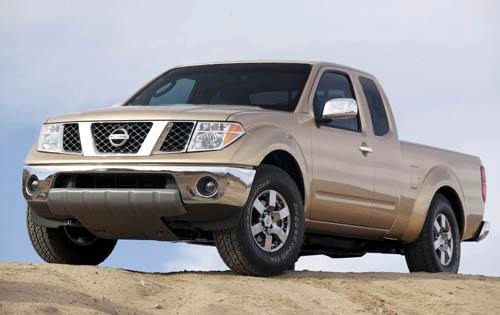
Nissan Motor Co. is recalling 16,838 Frontier pickup trucks in North America to address an electrical issue that could cause a fire, according to documents filed with U.S. safety regulators.
The documents said a circuit breaker in mid-sized trucks from model years 2012 through 2014 may have been installed incorrectly at an assembly plant in Canton, Miss., potentially causing an electrical short and fire.
The power seat and sunroof functions might also be rendered inoperable, according to documents filed with the National Highway Traffic Safety Administration.
A Nissan spokesman said there have been no reports of accidents or injuries related to the issue, but one report of smoke coming from under a dashboard on a truck in Mexico in December.
Of the affected vehicles, 13,535 are in the United States, 1,930 are in Mexico and 1,373 are in Canada, the spokesman said.
Dealers will inspect the circuit breaker wire harness and repair free of charge if needed. The recall is expected to begin in early March, according to the NHTSA documents.
REPORT HERE
My thoughts on all things motoring, press releases, reviews & techie stuff, from around the world. Please note that the pictures of vehicles within this blog are used as examples of the specific press releases, on occasions, due to the lack of available official pictures, examples are re-produced. ANY AND ALL PROFANITIES WILL BE REMOVED AND THE PERSON/S RESPONSIBLE WILL BE BANNED, NO EXCEPTIONS.
Purpose
I will try my best to provide detailed info on various cars and what is like to live with them, I have already produced a few for Jaguar-car-forums, I will do my best to be unbiased, but it will be hard for some cars. I will re-produce press releases and copy from other motoring news.
Showing posts with label motor co. Show all posts
Monday, 24 February 2014
Hyundai Motor's INTRADO focuses on the essential to enrich and engage lives.
- Hyundai Motor takes a fresh approach to develop new concept car
- Purposeful design and advanced lightweight structure influenced by aircraft
- Global debut for Hyundai Motor’s next-generation fuel cell powertrain
Set to be revealed to the public at the 2014 Geneva Motor Show, Intrado has resulted from fresh consideration of what consumers will need and expect of their cars in the near future: cars that are easy to use, intuitive to interact with, and readily adaptable to the varying demands of their busy, active lifestyles.
Intrado takes its name from the underside of an aircraft’s wing – the area that creates lift. The car’s advanced materials and technologies also draw inspiration from aircraft, such as the removal of all unnecessary weight, logical solutions to complex challenges, inspired by a purity of purpose, and a highly efficient powertrain.
The exterior of Intrado presents a progressive interpretation of Hyundai’s established fluidic sculpture form language. The vehicle’s distinctive shape is dictated by the need to be aerodynamically efficient; it is free of unnecessary adornments and features minimal detailing. The body panels are made of advanced super lightweight steel from Hyundai Motor’s steel plant.
The interior of Intrado is defined by a focus on usability and adaptability, and draws attention to its advanced materials and radical construction to deliver the kind of functional beauty typically seen on high-end mountain bikes. The seals of opening panels shut directly against the central carbon frame, showcasing the carbon fibre whenever doors, hood or trunk are opened. Components that are usually concealed are highlighted, including the ‘see-through’ air vents and exposed frame onto which the seats clip directly. The use of bright ‘Beaufort Orange’ contrasts with the exposed carbon fiber, reflecting the car’s active brief and mirroring its restrained exterior detailing.
The super-lightweight structure of Intrado demonstrates Hyundai’s desire to produce lighter, stronger cars that are even better to drive and simpler to repair. The central carbon frame structure is constructed using new, patent-pending manufacturing and joining techniques that together have the potential to change the way cars are made. The strength and rigidity of this central structure also allow body panels to be constructed from any material, giving designers greater flexibility and aiding repairability. Lightweight steel impact structures further enhance crash performance and repair times.
Intrado is powered by a next-generation hydrogen fuel-cell powertrain that utilises a Li-ion 36 kWh battery. Refuelled in just a few minutes, Intrado has a range of up to 600 kilometres and emits only water. In addition to improved performance and increased range, Intrado promises more responsive and agile driving dynamics, thanks to the reduced weight and greater efficiency of its powertrain.
Intrado is the first Hyundai to have been developed under the direction of Peter Schreyer, who became President and Chief Design Officer of Hyundai Motor Group in January 2013. He commented: “Effortless and sensual, Intrado reflects the open-mindedness and constant renewal of the Hyundai brand. It also shows that Hyundai wants its customers to rediscover the joy and freedom that should be associated with personal mobility. That’s why this car has such purity of purpose – it’s logical, lovable and liveable.”
The result of close collaboration between Hyundai Motor’s design and engineering teams, Intrado was styled and engineered primarily at Hyundai Motor European R&D centre in Rüsselsheim, Germany – as indicated by its codename, HED-9 (Hyundai Europe Design).
Thomas Bürkle, Chief Designer at Hyundai Motor Europe Technical Centre, led the design team that created the Intrado: “In line with its promise of a motoring future that is more relevant to users’ lifestyles, we have given Intrado a distinctive exterior and interior shape, formed from the lightweight frame that incorporates only what is necessary. The exterior is defined by a simple yet sporty profile which displays the latest interpretation of fluidic sculpture, while the interior shows how minimal ornamentation will perfectly fit into the varied lifestyles of the millennial generation.”
Sunday, 23 February 2014
USA - Ford uses hefty men to test durability of 2015 F-150 seats
Ford Motor Co. went to unusual lengths to ensure that the seats in its 2015 F-150 pickups, which go on sale this fall, were durable enough to handle the daily demands of heavyset drivers.
Last summer, Ford assigned about a dozen men weighing between 265 and 275 pounds to work as many as 10 hours a day climbing into and out of the driver's seat of a 2015 F-150, a Ford spokesman said. The testers were to enter and exit the trucks at least 10,000 times in the course of a week.
Human testers were used instead of robots in order to replicate actual wear and tear, the spokesman said.
The testers were required to wear the same pair of jeans, and the seats were sprinkled with Arizona fine dust, a commercially available material used to simulate the consistency of dirt, the spokesman said.
The testers were hired by Motor City Solutions, a suburban Detroit company that handles a variety of automotive engineering, event management and verification services, and were paid about $60-$70 a day.
As a result of the tests, the aluminum-bodied 2015 F-150 has front seats made of higher-strength steel and more durable leather that weigh 30 pounds less than the current F-150's seats, but still offer the durability needed to accommodate hefty drivers, the spokesman said.
Last month, Ford said its 2015 F-150 shed as much as 700 pounds from the current F-150, yielding improvements in fuel economy, performance and capability.
Meanwhile, General Motors is working toward a largely aluminum-bodied pickup slated for a late 2018 release, The Wall Street Journal reported.
REPORT HERE
Last summer, Ford assigned about a dozen men weighing between 265 and 275 pounds to work as many as 10 hours a day climbing into and out of the driver's seat of a 2015 F-150, a Ford spokesman said. The testers were to enter and exit the trucks at least 10,000 times in the course of a week.
Human testers were used instead of robots in order to replicate actual wear and tear, the spokesman said.
The testers were required to wear the same pair of jeans, and the seats were sprinkled with Arizona fine dust, a commercially available material used to simulate the consistency of dirt, the spokesman said.
The testers were hired by Motor City Solutions, a suburban Detroit company that handles a variety of automotive engineering, event management and verification services, and were paid about $60-$70 a day.
As a result of the tests, the aluminum-bodied 2015 F-150 has front seats made of higher-strength steel and more durable leather that weigh 30 pounds less than the current F-150's seats, but still offer the durability needed to accommodate hefty drivers, the spokesman said.
Last month, Ford said its 2015 F-150 shed as much as 700 pounds from the current F-150, yielding improvements in fuel economy, performance and capability.
Meanwhile, General Motors is working toward a largely aluminum-bodied pickup slated for a late 2018 release, The Wall Street Journal reported.
REPORT HERE
Friday, 31 January 2014
Honda announces 4th quarter results and estimated sales figures for the full year.
Honda Motor Co. today said its October-December net profit more than doubled to 160.7 billion yen ($1.56 billion), back to pre-Lehman crisis levels, helped by strong sales of the redesigned Fit subcompact that went on sale in Japan in September.
Honda cut its vehicle sales forecasts for this fiscal year as slumping demand in Thailand overshadows what has otherwise been a golden year for Japanese corporate earnings, which have benefited from the weaker yen.
Honda lowered its full-year sales projections for vehicles and motorcycles by about 1 percent. The company now expects to deliver 4.385 million automobiles and 17.32 million motorcycles in the financial year ending March 31. It said it aims to sell a record 4.5 million vehicles or more in its 2014 financial year.
The slump in Thailand, where Honda saw deliveries plunge last quarter, will probably continue because of the political turmoil there, Honda said.
"Every Japanese carmaker was hurt in Thailand, and so was Honda," said Kota Yuzawa, an analyst at Goldman Sachs Group in Tokyo. "Honda hasn't launched its new hit products in the region so we'll have to wait until next year to see a pickup in volumes."
While quarterly net income was lower than analysts estimated, operating profit of 228.6 billion yen was higher than the 220.4 billion yen average analyst estimate compiled by Bloomberg
For the year ending in March 2014, Honda stuck to its forecast of 580 billion yen in net profit.
CEO Takanobu Ito has set an aggressive goal of selling 6 million vehicles a year by end-March 2017, compared with a record 4.01 million in the year ended March 2013.
North America
In North America, Honda reaped 131.1 billion yen in operating profit last quarter, increasing from 70.89 billion yen a year earlier.
Honda expects to sell a record 1.6 million cars in the United States, its biggest market, this calendar year ending March 31, up 5 percent from 1.525 million sold in 2013, Tetsuo Iwamura, executive vice president in charge of the automaker's U.S. business said today.
Honda showed a retooled Fit at the Detroit auto show this month that will be sold in North America starting this year. The company is counting on the model to grab market share from the Chevrolet Sonic and Ford Fiesta.
Iwamura said in an interview in December that fixing Acura's sedan lineup has become a top priority. The company showed the new TLX sedan, a replacement for the TL, at the Detroit auto show this month.
Japan, China joy; Europe loss
Operating profit rose 46 percent to 59.3 billion yen in Japan, as deliveries jumped in the quarter, helped by the new Fit and the rush buying before the sales tax rise in April. The Fit, introduced Sept. 6, became Japan's top-selling car from October through December, overtaking Toyota's Aqua.
In China, Honda's sales doubled last quarter, as a consumer backlash eased over a territorial dispute between Japan and China. Full-year China deliveries rose to a record, fueled by the Jade wagon and Crider sedan, which Honda says are the company's first models tailored for the Chinese market.
Industrywide sales are projected to expand by as much as 10 percent this year, after the country became the first to surpass 20 million units in annual deliveries, according to the China Association of Automobile Manufacturers.
Honda expects sales to rise at least 19 percent to more than 900,000 vehicles in China in 2014. The carmaker plans to introduce nine new or revamped models in 2014 and 2015, as it seeks to catch up with Nissan and Toyota in the world's largest auto market.
Honda's quarterly operating loss in Europe widened to 8.7 billion yen.
Weaker Yen
Honda is among Japanese exporters benefiting from Prime Minister Shinzo Abe's economic policies, which have helped weaken the country's currency by about 18 percent against the dollar in 2013. A weaker yen increases the value of repatriated earnings and gives Japanese carmakers an edge over rivals including General Motors Co. and Hyundai Motor Co.
Before Abe, the Japanese currency had hobbled exporters for years, appreciating to a postwar high of 75.35 to the dollar in October 2011 from about 115 in a four-year period.
Honda is the first of Japan's big three automakers to announce quarterly results. Toyota will report results on February 4 and Nissan on February 10.
Honda cut its vehicle sales forecasts for this fiscal year as slumping demand in Thailand overshadows what has otherwise been a golden year for Japanese corporate earnings, which have benefited from the weaker yen.
Honda lowered its full-year sales projections for vehicles and motorcycles by about 1 percent. The company now expects to deliver 4.385 million automobiles and 17.32 million motorcycles in the financial year ending March 31. It said it aims to sell a record 4.5 million vehicles or more in its 2014 financial year.
The slump in Thailand, where Honda saw deliveries plunge last quarter, will probably continue because of the political turmoil there, Honda said.
"Every Japanese carmaker was hurt in Thailand, and so was Honda," said Kota Yuzawa, an analyst at Goldman Sachs Group in Tokyo. "Honda hasn't launched its new hit products in the region so we'll have to wait until next year to see a pickup in volumes."
While quarterly net income was lower than analysts estimated, operating profit of 228.6 billion yen was higher than the 220.4 billion yen average analyst estimate compiled by Bloomberg
For the year ending in March 2014, Honda stuck to its forecast of 580 billion yen in net profit.
CEO Takanobu Ito has set an aggressive goal of selling 6 million vehicles a year by end-March 2017, compared with a record 4.01 million in the year ended March 2013.
North America
In North America, Honda reaped 131.1 billion yen in operating profit last quarter, increasing from 70.89 billion yen a year earlier.
Honda expects to sell a record 1.6 million cars in the United States, its biggest market, this calendar year ending March 31, up 5 percent from 1.525 million sold in 2013, Tetsuo Iwamura, executive vice president in charge of the automaker's U.S. business said today.
Honda showed a retooled Fit at the Detroit auto show this month that will be sold in North America starting this year. The company is counting on the model to grab market share from the Chevrolet Sonic and Ford Fiesta.
Iwamura said in an interview in December that fixing Acura's sedan lineup has become a top priority. The company showed the new TLX sedan, a replacement for the TL, at the Detroit auto show this month.
Japan, China joy; Europe loss
Operating profit rose 46 percent to 59.3 billion yen in Japan, as deliveries jumped in the quarter, helped by the new Fit and the rush buying before the sales tax rise in April. The Fit, introduced Sept. 6, became Japan's top-selling car from October through December, overtaking Toyota's Aqua.
In China, Honda's sales doubled last quarter, as a consumer backlash eased over a territorial dispute between Japan and China. Full-year China deliveries rose to a record, fueled by the Jade wagon and Crider sedan, which Honda says are the company's first models tailored for the Chinese market.
Industrywide sales are projected to expand by as much as 10 percent this year, after the country became the first to surpass 20 million units in annual deliveries, according to the China Association of Automobile Manufacturers.
Honda expects sales to rise at least 19 percent to more than 900,000 vehicles in China in 2014. The carmaker plans to introduce nine new or revamped models in 2014 and 2015, as it seeks to catch up with Nissan and Toyota in the world's largest auto market.
Honda's quarterly operating loss in Europe widened to 8.7 billion yen.
Weaker Yen
Honda is among Japanese exporters benefiting from Prime Minister Shinzo Abe's economic policies, which have helped weaken the country's currency by about 18 percent against the dollar in 2013. A weaker yen increases the value of repatriated earnings and gives Japanese carmakers an edge over rivals including General Motors Co. and Hyundai Motor Co.
Before Abe, the Japanese currency had hobbled exporters for years, appreciating to a postwar high of 75.35 to the dollar in October 2011 from about 115 in a four-year period.
Honda is the first of Japan's big three automakers to announce quarterly results. Toyota will report results on February 4 and Nissan on February 10.
Labels:
4th quarter,
Civic,
CR-V,
crider,
Fit,
Honda,
jade,
motor co,
motorcycles,
North America,
profits,
results,
Sedan,
subcompact,
TLX,
wagon
Subscribe to:
Posts (Atom)