Purpose

I will try my best to provide detailed info on various cars and what is like to live with them, I have already produced a few for Jaguar-car-forums, I will do my best to be unbiased, but it will be hard for some cars. I will re-produce press releases and copy from other motoring news.
Showing posts with label solar. Show all posts

Wednesday, 27 May 2015

CHINA - Volkswagen celebrates opening a new production facility in China.

  • Annual capacity: 300,000 Volkswagen and ŠKODA vehicles
  • Highest state certificate for CO2-neutral production with solar and hydroelectric power
The Volkswagen Group continues to expand its production capacity in China with the addition of a new vehicle plant of Shanghai- Volkswagen (SVW) in Changsha, southern China, which was inaugurated on Sunday by Prof. Dr. Jochem Heizmann, Member of the Board of Management of Volkswagen Aktiengesellschaft and President and CEO of Volkswagen Group China. 
This plant is the Group’s 119th global facility and its 20th in China.
“China is not only the Volkswagen Group’s largest and most important market; it has also become the Group’s second home market. We intend to develop the entire country as a company with local roots, Prof. Dr. Jochem Heizmann emphasized.

“The plant in Changsha is a key step in our “Go South” strategy in China. This new facility will bring us nearer to our Chinese customers and also improve the quality of our supply chain.“
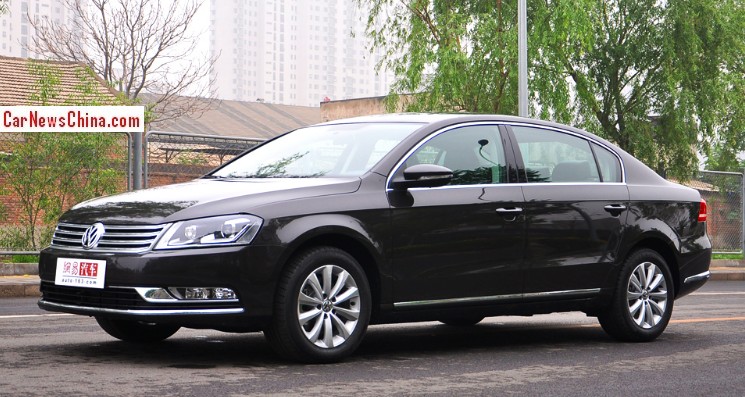
The new plant in Changsha is about 900km to the west of Shanghai. Production of the Volkswagen New Lavida is beginning there after only two years of construction. Other models of the Volkswagen and ŠKODA brands are to follow. The total capacity of the plant is about 300,000 vehicles per year. The plant is creating more than 4,000 new jobs, together with 4,000 more in the neighbouring supplier park.
The Changsha plant is the first production facility of the Shanghai-Volkswagen joint venture to receive the “Triple-Star Green Building Design Award”, the highest state award for environmentally compatible factory design. 
Thanks to a dry painting system (“E-scrub”), water and energy consumption will be reduced by more than 20 per cent. Excess paint particles are filtered out in an environmentally compatible way by an electrostatic precipitator system. 
In addition, fresh water consumption in production hasbeen reduced by 20 per cent compared with conventional processes by using rainwater and recycled production water. Solar facilities at the plant generate more than 10,000 MWh of environmentally compatible power. Further power is generated by local hydroelectric plants. Production at the Changsha vehicle plant will therefore be carbon-neutral.
Volkswagen has been at home on the Chinese market for more than 20 years and is among the country’s western automobile pioneers. In 2014, Volkswagen, together with its two joint ventures FAW-Volkswagen and Shanghai-Volkswagen, delivered a total of about 3.7 million vehicles to customers in China, representing an increase of 12.4 per cent over the previous year. With its partners, the Volkswagen Group will be investing more than €22 billion in China by 2019.

Friday, 3 January 2014

Ford C-MAX Solar Energi Concept is first-of-its-kind sun-powered vehicle.


  • Ford C-MAX Solar Energi Concept is first-of-its-kind sun-powered vehicle with the potential to deliver the best of a plug-in hybrid without depending on the electric grid for fuel
  • C-MAX Solar Energi Concept with a solar panel roof draws power from a special solar concentrator lens similar to a magnifying glass
  • By using renewable power, Ford C-MAX Solar Energi Concept is estimated to reduce the annual greenhouse gas emissions a typical owner would produce by four metric tons
  • C-MAX Solar Energi Concept, which will be on display at the 2014 International CES in Las Vegas, Jan. 7-10, debuts as Ford’s strong electrified vehicle lineup is expected to post a record 85,000-plus sales for 2013 

Ford Motor Company announced today the C-MAX Solar Energi Concept, a first-of-its-kind sun-powered vehicle with the potential to deliver the best of what a plug-in hybrid offers – without depending on the electric grid for fuel.


Instead of powering its battery from an electrical outlet, Ford C-MAX Solar Energi Concept harnesses the power of the sun by using a special concentrator that acts like a magnifying glass, directing intense rays to solar panels on the vehicle roof.


The result is a concept vehicle that takes a day’s worth of sunlight to deliver the same performance as the conventional C-MAX Energi plug-in hybrid, which draws its power from the electric grid. Ford C-MAX Energi gets a combined best miles per gallon equivalent in its class, with EPA-estimated 108 MPGe city and 92 MPGe highway, for a combined 100 MPGe. By using renewable power, Ford C-MAX Solar Energi Concept is estimated to reduce the annual greenhouse gas emissions a typical owner would produce by four metric tons.


“Ford C-MAX Solar Energi Concept shines a new light on electric transportation and renewable energy,” said Mike Tinskey, Ford global director of vehicle electrification and infrastructure. “As an innovation leader, we want to further the public dialog about the art of the possible in moving the world toward a cleaner future.”

C-MAX Solar Energi Concept, which will be shown at the 2014 International CES in Las Vegas, is a collaborative project of Ford, San Jose, Calif.-based SunPower Corp. and Atlanta-based Georgia Institute of Technology.


Strong electrified vehicle sales

The C-MAX Solar Energi Concept debuts as Ford caps a record year of electrified vehicle sales.

Ford expects to sell 85,000 hybrids, plug-in hybrids and all-electric vehicles for 2013 – the first full year its six new electrified vehicles were available in dealer showrooms.


C-MAX Energi is Ford’s plug-in sales leader, with sales of more than 6,300 through November. Ford sold more plug-in vehicles in October and November than both Toyota and Tesla, and it outsold Toyota through the first 11 months of 2013. Plug-in hybrids continue to grow in sales as more customers discover the benefits of using electricity to extend their driving range.


C-MAX Hybrid over the last year has been a key driver in helping Ford sell more hybrids than any other automaker in the United States, second only to Toyota. C-MAX Hybrid continues to bring new customers to the Ford brand, with a conquest rate of 64 percent and drawing nearly half of its sales from import brands. Conquest rates are even higher in key hybrid growth markets like San Francisco, Los Angeles and Washington, D.C.

Breakthrough clean technology

SunPower, which has been Ford’s solar technology partner since 2011, is providing high-efficiency solar cells for the roof of Ford C-MAX Solar Energi Concept. Because of the extended time it takes to absorb enough energy to fully charge the vehicle, Ford turned to Georgia Institute of Technology for a way to amplify the sunlight in order to make a solar-powered hybrid feasible for daily use.


Researchers developed an off-vehicle solar concentrator that uses a special Fresnel lens to direct sunlight to the solar cells while boosting the impact of the sunlight by a factor of eight. Fresnel is a compact lens originally developed for use in lighthouses. Similar in concept to a magnifying glass, the patent-pending system tracks the sun as it moves from east to west, drawing enough power from the sun through the concentrator each day to equal a four-hour battery charge (8 kilowatts).

With a full charge, Ford C-MAX Solar Energi Concept is estimated to have the same total range as a conventional C-MAX Energi of up to 620 miles, including up to 21 electric-only miles. Additionally, the vehicle still has a charge port, and can be charged by connecting to a charging station via cord and plug so that drivers retain the option to power up via the grid, if desired.


After C-MAX Solar Energi Concept is shown at CES, Ford and Georgia Tech will begin testing the vehicle in numerous real-world scenarios. The outcome of those tests will help to determine if the concept is feasible as a production car.

Off-the-grid car 

By tapping renewable solar energy with a rooftop solar panel system, C-MAX Solar Energi Concept is not dependent on the traditional electric grid for its battery power. Internal Ford data suggest the sun could power up to 75 percent of all trips made by an average driver in a solar hybrid vehicle. This could be especially important in places where the electric grid is underdeveloped, unreliable or expensive to use.


The vehicle also reinforces MyEnergi Lifestyle, a concept revealed by Ford and several partners at 2013 CES. MyEnergi Lifestyle uses math, science and computer modeling to help homeowners understand how they can take advantage of energy-efficient home appliances, solar power systems and plug-in hybrid vehicles to significantly reduce monthly expenses while also reducing their overall carbon footprint.

The positive environmental impact from Ford C-MAX Solar Energi could be significant. It would reduce yearly CO2 and other greenhouse gas emissions from the average U.S. car owner by as much as four metric tons – the equivalent of what a U.S. house produces in four months.

If all light-duty vehicles in the United States were to adopt Ford C-MAX Solar Energi Concept technology, annual greenhouse gas emissions could be reduced by approximately 1 billion metric tons.

Friday, 21 June 2013

Landmark milestone reached for famous manufacturing plant


  • Landmark milestone reached for famous manufacturing plant
  • Site investment continues with green technologies

This day 75 years ago in 1938, the first building block was placed at Pyms Lane marking the beginning of Bentley’s famous factory in Crewe.

Originally constructed to manufacture the Merlin engines which powered Spitfire and Hurricane fighters, the factory is now home to more than 3,600 Bentley employees who helped manufacture over 8,500 Bentley cars last year for discerning customers all over the world.

Member of the Board for Sales, Marketing and Aftersales Kevin Rose, commented: “This is an important landmark in the history of manufacturing in Crewe. Many great achievements have been made, and are still being made, here in the factory - from its original construction to producing cars for over 60 years that sit at the pinnacle of luxury automotive manufacturing.


“It is this continued investment, in both our product and our facilities that have made this possible, as well as our many thousands of employees who have worked so tirelessly to make the business and site run so successfully. This is a celebration for them as well, as we not only look to the past, but to the future where we will strive to continue this success.”

In the months leading up to Monday 20th June 1938, Rolls Royce, then owners of Bentley, was looking to expand production of its Merlin engine. The business considered different locations but identified Crewe for its quality and availability of engineers, and strong transport links.

Merrill’s Farm, Pyms Lane was the chosen site and 60 acres of land was purchased for the sum of £99 per acre. Ground levelling started immediately and in October 1938, production started, with 500 engines built and 2,000 employees based in the factory by the end of 1939.

The introduction of the new factory also had a considerable effect on the wider Crewe area, with 2,000 new houses built, many of which were to accommodate employees.

Production moved quickly, and by 1945, over 15,000 aero engines had been built when the decision was made to move predominantly to car production. Just a year later, the first Bentley was produced, the Mk VI.

Car production remained at a pace and now production continues in growing numbers and the Home of Bentley in Crewe is considered as a Volkswagen Group Centre of Excellence for its Wood and Leather and Trim manufacturing departments.

Developments continue at the Pyms Lane factory, with Bentley keen to invest in new technologies as part of its position as the third largest investor in research and development in UK automotive industry.

The manufacturer recently installed 20,000 solar panels with a capacity of 5MW, the UK’s largest roof-mounted solar panel installation, which will generate up to 40 per cent of Bentley’s energy requirements and reduce CO2 usage by 2000 tonnes per year.

The panels will also generate enough energy to power over 1,200 households in Crewe, once again in its 75th anniversary year, proving the valuable contribution the factory has made to the local and wider community.