Purpose

I will try my best to provide detailed info on various cars and what is like to live with them, I have already produced a few for Jaguar-car-forums, I will do my best to be unbiased, but it will be hard for some cars. I will re-produce press releases and copy from other motoring news.
Showing posts with label CO2. Show all posts

Tuesday, 15 December 2015

Opel to voluntarily re-test all its models for CO2 and NOX emissions after issues were raised.

  • Engineering initiative for more transparency and credibility
  • From Q2 2016, Opel will start publishing WLTP cycle fuel consumption numbers for specific models reflecting more everyday driving conditions
  • Engineers developing improved SCR diesel applications – improvement towards RDE NOx specifications, including voluntary customer satisfaction field action
Opel is voluntarily taking the next step to meet future emissions guidelines, both on CO2 and NOx. From Q2 2016, and in addition to the official fuel consumption and CO2 information, fuel consumption numbers recorded under the WLTP cycle will also be published. In addition, diesel engineers have recently started working on an initiative to implement NOx emission improvements on SCR (Selective Catalytic Reduction) diesel applications. 

This is a voluntary and early improvement towards the so-called RDE (Real Driving Emissions) legislation that goes into effect in 2017. Opel is committed to providing the testing authorities transparency.
“The events and discussions in the last weeks and months have shown that there is a tremendous focus on the automotive industry and it is now time to act based on the learnings,” says Opel Group CEO Dr. Karl-Thomas Neumann. 
“It is obvious to me that the diesel discussion is a turning point. The world is not as it was before. We cannot ignore this and it is in the hands of the automotive industry to change the perception of the new reality.”
Fuel Consumption and CO2
From Q2 2016, and in addition to the official fuel consumption and CO2 information of Opel models, fuel consumption numbers recorded under the WLTP cycle will be published, starting with the new Astra. This procedure has broad industry acceptance and has been developed to be more representative of what customers will experience in use. 
According to EU plans, the “New European Driving Cycle” (NEDC) will be replaced starting in 2017 with the more modern standard “Worldwide Harmonized Light Duty Vehicles Test Procedure” (WLTP). 
The WLTP – also a test conducted in laboratory conditions – is based on stringent test procedures, more consistent with fuel consumption and CO2 emissions in real-life road traffic. This new test cycle is important to maintain standardized, reproducible and comparable results.
SCR Technology
Related to NOx emissions, Opel is also acting right now. The Rüsselsheim automaker has started working on improved solutions for the effectiveness of exhaust gas treatment systems in Euro 6 diesel engines with SCR technology to make improvements in the direction of future RDE guidelines. RDE is the real driving emissions standard which supplements current test methods and measures a car’s emissions directly on the road.
"Our analyses in the last months show that we have no devices that tell us if our vehicles are in a test cycle or not. 
Nevertheless, we also believe that we are capable of further improving the effectiveness of reduction of oxides of nitrogen emissions from our Euro 6 diesels with SCR technology and so we are making an improvement towards future RDE specifications,” emphasizes Dr. Neumann. “We will use SCR as the mainstream system for Euro 6 diesel going forward as we continue to develop improved technologies to explore higher efficiencies.”
The work on this Euro 6 SCR improvement has started and we expect a production implementation as of the summer of 2016. This activity will also include a voluntary customer satisfaction field action that will involve 43.000 vehicles that are already on the road in Europe (Zafira Tourer, Insignia and Cascada).These vehicles will get a new calibration once it becomes available.
Opel CEO Dr. Neumann also calls for improving the transparency between automakers and authorities in Europe. “In the USA, the companies disclose their complete calibration philosophy to authorities. I would like to see us embrace this practice in Europe.” 
In this context, the Opel CEO also wants to suggest that all automakers that are active in Europe take part in a negotiated agreement for more transparency.

Thursday, 5 November 2015

Clarification moving forward:Internal investigations at VW identify irregularities in Co2 Levels.

  • Matthias Müller: “Relentless and comprehensive clarification is our only alternative.”
  • Around 800,000 Group vehicles could be affected
  • Initial estimate puts economic risks at approximately 2 billion euros
The Volkswagen Group is moving forward with the clarification of the diesel issue: during the course of internal investigations irregularities were found when determining type approval CO2 levels. Based on present knowledge around 800,000 vehicles from the Volkswagen Group could be affected. 
An initial estimate puts the economic risks at approximately two billion euros. The Board of Management of Volkswagen AG will immediately start a dialog with the responsible type approval agencies regarding the consequences of these findings. 

This should lead to a reliable assessment of the legal, and the subsequent economic consequences of this not yet fully explained issue.
Under the ongoing review of all processes and workflows in connection with diesel engines it was established that the CO2 levels and thus the fuel consumption figures for some models were set too low during the CO2 certification process. The majority of the vehicles concerned have diesel engines.
“From the very start I have pushed hard for the relentless and comprehensive clarification of events. We will stop at nothing and nobody. This is a painful process, but it is our only alternative. For us, the only thing that counts is the truth. 
That is the basis for the fundamental realignment that Volkswagen needs”, Matthias Müller, CEO of Volkswagen Aktiengesellschaft, said, and added. “The Board of Management of Volkswagen AG deeply regrets this situation and wishes to underscore its determination to systematically continue along the present path of clarification and transparency.”
In cooperation with the responsible authorities, Volkswagen will do everything in its power to clarify the further course of action as quickly as possible and ensure the correct CO2 classification for the vehicles affected.
The safety of the vehicles is in no way compromised. A reliable assessment of the scale of these irregularities is not yet possible. An initial estimate puts the economic risks at approximately two billion euros.

Thursday, 22 October 2015

SPAIN - Audi launches the new A4 Avant with an alternative Bi-Fuel Engine system, making this car more efficient.

  • Alternative propulsion system for the new Audi A4 Avant
  • Bi-fuel engine 2.0 TFSI equipped with an innovative combustion process
  • The Audi e-gas provides free mobility of CO2 emissions
Sporty, versatile and with low emissions of CO 2 . With marketing scheduled for late 2016, the Audi A4 Avant g-tron Audi is another proposal for the sustainable mobility of the future.Following the trail initiated by the Audi A3 Sportback g-tron, it is the second model of the brand that can use natural gas and Audi e-gas production sustainable.
The A4 Avant g-tron is simultaneously sporty, efficient and extremely economical. The engine is based on the new 2.0 TFSI developed by Audi, which offers an advanced and highly efficient combustion process.Turbocharged power unit produces 170 hp (125 kW). 
Its maximum torque of 270 Nm is available at around 1650 rpm. The pistons and valves have been specially modified to run on gas and allow optimum compression ratio. An electronic controller reduces the high pressure of 200 bar gas from the reservoir until a pressure of 5 to 10 bars in the motor. 

This control system pressure is done dynamically and precisely in response to the requirements that the driver requires the engine. The correct pressure is thus always present in the gas pipes and valves injection: low pressure for efficient driving at low speed ranges, and higher for more power and torque pressures.
According to the NEDC measurements, the Audi A4 Avant g-tron consumes less than four kilograms of CNG (compressed natural gas) per 100 kilometers, which results in fuel costs for the client less than four euros (prices in October 2015 ). Emissions of CO 2  are less than 100 grams per kilometer. 
The fuel tank capacity is 19 kilograms of gas, enough to have a range greater than 500 kilometers. When the content of gas in the reservoir falls below 0.6 kilos -number analogous to a residual pressure of 10 bar-control unit switches to gasoline mode operation. 
The A4 Avant g-tron can then cover an additional distance of 450 kilometers in this mode. The total potential range is comparable to that of a car equipped with an engine TDI.
Mouths filling gas tanks and gas are located next to each other in the same location under the same cover.
After refueling and whenever the temperature is not too cold, the engine begins its start in petrol mode, then changing as fast as possible, to run on natural gas. Two indicators in the scorecard keep the driver abreast of fill levels of both deposits. The driver information system shows fuel consumption in active mode.
Audi four cylindrical tanks installed CNG as a single compact module in the rear of the A4. Each has been specifically sized and adapted to the available space. 
They are protected by a coating of steel sheet and a tensioning straps hold the cylinders and protect them against damage. The full CNG tank module, which includes the fuel tank 25 liters, the body is set during production of A4. 
The usual spare wheel has been removed, the battery and its location varies from the luggage compartment to the engine compartment. The trunk floor even has its edge in the cargo area, which can offer a fully functional space for luggage.
CNG tanks, with an operating pressure of 200 bar at 15 ° C, follow the principle of lightweight construction of Audi. 
Thanks to its innovative design, its weight is 56 percent lower than comparable steel deposits. Its inner layer is a polyamide matrix gastight. The second layer, a compound consisting of polymers reinforced with carbon fiber (CFRP) and polymers reinforced with fiberglass (GFPR), provides maximum strength. 
The third layer is made of GFPR and serves mainly aid for initial visual inspection if necessary, to turn a milky white in case of damage. Before being installed in the car, every tank is tested at 300 bar during the production phase, so that the maximum pressure that support is even higher and far exceeds legal requirements.
Audi e-gas produced in Germany, the A4 Avant g-tron is a vehicle that runs free of CO 2 . 
The e-synthetic methane gas is obtained from water and CO 2  with the help of sustainable electricity in plants "power-to-gas". Audi launched the world's first plant of this type for the production of Audi e-gas on an industrial scale in Werlte, but now e-gas produced at other facilities. 
With the "power-to-gas" technology, the brand with the four rings makes it possible to store excess renewable energy, a valuable contribution to the energy transition.
The company and its partners are strongly promoting the development of various known synthetic fuels such as Audi e-fuels, including through new biological production processes.
In Germany, the driver can refueling card using the Audi e-gas refueling as in the case of the Audi A3 Sportback g-tron, which serves as a means of payment and at the same time as a tool to balance emissions.
From the information transferred during payment, Audi supplies the German natural gas network with the amount equivalent to the gas load refueled by the customer. Thus, Audi achieved a completely neutral emission mobility CO 2
Translated by Google - Apologies for any errors that may have been caused.

Tuesday, 21 July 2015

SMMT statement: Budget 2015 - added info with the bands and associated costs.

On the 8th July, the Chancellor announced a new vehicle excise duty (VED) banding system for cars registered on or after 1 April 2017. First year rates will vary according to the vehicle’s CO2 emissions. 
There will be a flat standard rate of £140 for all cars for subsequent years, except those emitting 0g/km of CO2, for which the standard rate will be £0. 
Cars, including zero-emission cars, with a list price above £40,000 will be subject to a £310-per-year supplement for the first five years in which the standard rate is paid.


Mike Hawes, SMMT Chief Executive, said, “We recognise the current VED system needs to be reformed and highlighted this in a recent report. The Chancellor’s Budget announcement on the regime came as a surprise and is of considerable concern. While we are pleased that zero-emission cars will, on the whole, remain exempt from VED, the new regime will be a disincentive to take up low emission vehicles. 
New technologies such as plug-in hybrid, the fastest growing ultra low emission vehicle segment, will not benefit from long-term VED incentive, threatening the ability of the UK and the UK automotive sector to meet ever stricter CO2 targets.
“The introduction of a surcharge on premium cars also risks undermining growth in UK manufacturing and exports. British-built premium cars are in increasing demand at home and globally, and the industry helps to support almost 800,000 jobs in the UK. Levelling a punitive tax on these vehicles will almost certainly impact domestic demand.”

New VED rates to apply to new cars registered on or after 1 April 2017


VED table

CURRENT RATES

New VED rates to apply to new cars registered on or after 1 April 2015


Monday, 13 July 2015

PSA group sees growth on all three brands with new metal and tech to continue the growth.

  • Worldwide sales up 0.4% to 1,547,000 units[1]
  • Sales advance in Europe, China, India-Pacific and Middle East & Africa – now the Group's third largest growth market
  • Assertive brand positioning:
    • Worldwide success for the Peugeot 308, the brand's bestselling model
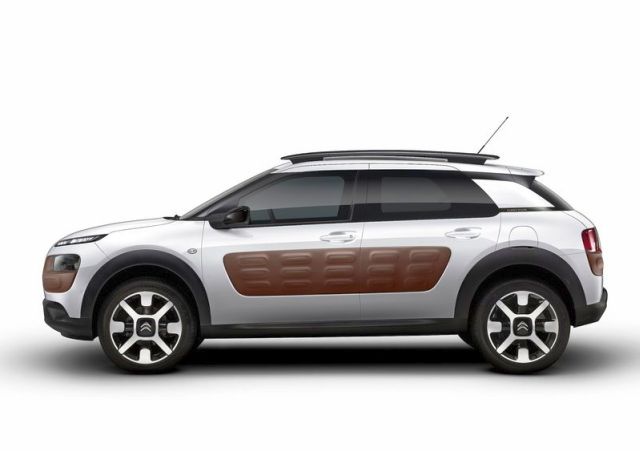
    • Citroën C4 Cactus gets seal of approval with 90,000 units sold since its launch a year ago and 35 awards across the world
    • Premium brand DS continues its development with the launch of the new DS 5
  • The Group consolidates its position as European leader in CO2 emission reduction with average CO2emissions of 106.9g/km in the first five months of 2015, thanks in particular to the popularity and performance of its three-cylinder petrol range
Consolidated sales in Europe rose 2.9% year on year to 984,000
Peugeot sales were up 6.7% as a result of the excellent performance delivered by the Peugeot 308, the third bestselling model in the C segment (sedans and estates) in Europe and the segment leader in France. In the B-SUV segment, the Peugeot 2008 held onto its no. 2 ranking in Europe with 57% of sales generated on the two highest trim levels.

Citroën registrations climbed 2.8% in the first half, reflecting the brand repositioning which began a year ago, its well-rounded sales policy and the success of its latest passenger car models. The Citroën C4 Cactus generated sales of more than 43,000 units over the period and was well received by international critics, garnering awards such as "World Car Design of the Year" in New York in April. Sales of the new Citroën C1 came in at 32,000 units, a staggering 54% higher than the previous version.
DS sales jumped 14.8% between the first and second quarters to reach 40,700 units, driven by the launch of the new DS 5. The brand pursued its long-term premium positioning strategy during the period, launching "1955" limited edition models across the range to mark the 60th anniversary of the very first DS.
First-half 2015 also saw the opening of several new DS Stores, most recently in Paris, Geneva, Luxembourg and Milan, taking the DS network's total to 9 DS STORE and 65 DS SALON.
In China and Southeast Asia, PSA Peugeot Citroën sales totalled 368,000 vehicles, a 2.2% improvement on first-half 2014.
For the second year running, Peugeot was one of the fastest growing international brands on the market with sales up 11.1% year on year in China: SUV 2008 and 3008 sales surged 34%; the new 408 sedan got off to an excellent start, selling 68% more units than the old model; while the launch of the 308 S in April also contributed positively.
In China, Citroën sales retreated 6.7% compared with first-half 2014, mainly as a result of the discontinuation of low-margin models, including the old C-Elysée, and a lull in the market for notchback sedans, which accounted for all of the brand's sales until the successful launch of the C3-XR SUV in December 2014 (nearly 30,000 units sold). The Citroën C-Elysée remains the brand's bestseller with more than 46,000 units sold over the period. 
DS sales rose 4% in China in the first half of 2015 thanks in particular to the success of the DS 6. The brand also continued to develop its distribution network and now has 84 DS Stores covering 60 major cities. China currently represents 20% of the brand's worldwide sales.
Middle East & Africa: a profitable international lever of the Back in the Race plan
In the first half of the year, the Group consolidated the strong positions it holds in a number of countries in its historical Middle East & Africa markets: leading the market in Tunisia and ranking second in Morocco and third in Algeria.
Peugeot sold 61,700 units in the first half, advancing 11% compared with the same period in 2014. The brand's performance was buoyed by the recovery in the Turkish market, where it gained 0.6 market share points. In Algeria, Peugeot also improved its market share, from 10.8% to 13%, and consolidated its position as the country's no.3 player.
Citroën sales shot up by 53% to 38,300 units on the back of market share gains in two of the region's major markets, Turkey and Algeria (1 point and 0.5 points respectively), thanks in particular to strong demand for the Citroën C-Elysée, the brand's bestselling model in both countries.
Markets remained slow in Latin America and Eurasia where Peugeot and Citroën focused on improving their margins by placing an emphasis on their most profitable vehicles and those manufactured locally. In Mexico, Peugeot sales jumped 19.6% owing to the success of the Peugeot 301 and the Peugeot Partner as well as the recent launch of the new Peugeot 308.
In the India-Pacific region, Peugeot sales rose sharply, particularly in South Korea (up 132%), driven by sales of the Peugeot 2008. Citroën also enjoyed robust growth, particularly in Japan, with deliveries up 67% thanks to the strong performance of the Grand C4 Picasso.
Commenting on the sales results for the first half of 2015:
Maxime Picat, Chief Executive Officer, Peugeot brand said: "With worldwide sales up 3.9%, led by the resounding success of the 308 and our best-in-class technology, the Peugeot brand has confirmed its pulling power and sent a message of confidence about the future."
Linda Jackson, Chief Executive Officer, Citroën brand said: "Boosted by the success of its recent launches, Citroën continued to make headway in the first half of the year with higher volumes in Europe. In China, the Citroën C3-XR SUV made an excellent market debut following its launch at the end of December. We are pursuing the worldwide repositioning we began just one year ago, as demonstrated by the Citroën Aircross concept unveiled in April. The concept reflects our ability to flout convention in all segments."
Yves Bonnefont, Chief Executive Officer, DS brand said: "We are continuing to roll out the DS brand globally, with the new DS 5, new engines for the DS 4 and DS 3, and new connected services for the entire range. These new products and services strengthen our offering and reaffirm our brand's positioning at the crossroads of technology and refinement. We also opened several DS Stores during the first half of the year in such major cities as Geneva, Milan and Paris."