Purpose

I will try my best to provide detailed info on various cars and what is like to live with them, I have already produced a few for Jaguar-car-forums, I will do my best to be unbiased, but it will be hard for some cars. I will re-produce press releases and copy from other motoring news.
Showing posts with label 300000 units annually. Show all posts

Friday, 25 March 2016

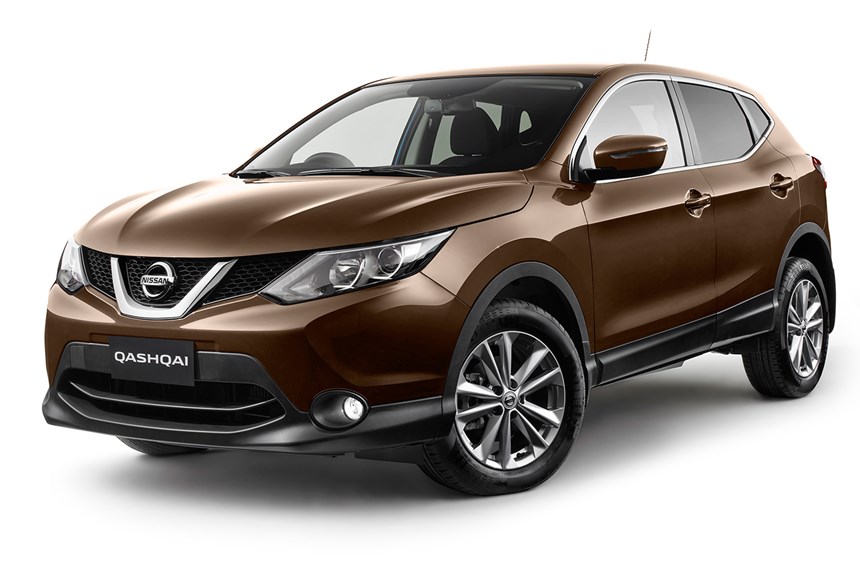
Nissan to spend £22 Million to produce more Qashqai's from the year end, as demand outstrips supply.

  • £22m investment for additional Qashqai capacity from 2017
  • Demand outstrips supply despite record production levels
  • Crossover icon to feature autonomous technology from next year
After a decade of unprecedented customer demand, Nissan today announces its intention to increase Qashqai capacity and further enhance its position as the best-selling crossover in Europe.
Nissan still cannot keep pace with the continued growth of the crossover market it created with Qashqai, despite record volumes of 300,000 cars every year on Line 1 at the company’s Sunderland Plant, round-the-clock production and a build rate of one car every minute.

Now Nissan engineers are preparing to uncork supply to its European customers by modifying Line 2 in Sunderland to introduce additional Qashqai production, a further investment of £22m/€29m in the plant.
The first additional vehicles are scheduled for production in before the end of 2016, ahead of the next phase in Qashqai’s development in 2017 when it becomes the first Nissan in Europe to feature autonomous ‘Piloted Drive’ technology.
Colin Lawther, Nissan’s Senior Vice President for Manufacturing, Purchasing and Supply Chain Management in Europe, said: “When the first Qashqai came off the line in 2006 it created the crossover segment. Today it remains the benchmark for European customers for its dynamic styling, exciting driving experience and innovative technology.
“Through innovative engineering and productivity improvements, my colleagues in Sunderland have broken production records to keep pace with demand, but our new generation Qashqai has reached a tipping point.
“This additional capacity will give us free supply of Qashqai for the first time, ahead of the launch of a refreshed Qashqai equipped with Piloted Drive technology from next year.”
Nissan currently manufactures the C-segment Qashqai and the all-electric Nissan LEAF, the world’s best-selling electric vehicle, on Line 1 in Sunderland, which operates on a three-shift basis. Line 2 production currently includes the Nissan Juke B-segment crossover, Nissan Note and Infiniti Q30 premium compact, and will continue to operate on a two-shift basis.
Through body welding, paint and final assembly, all production areas of Line 2 at Sunderland require modification ahead of the introduction of Qashqai, after which both production lines will be capable of building vehicles based on the Renault-Nissan Alliance Common Module Family CMF-C architecture. Line 2 will additionally have CMF-B capability following the introduction of the next- generation Nissan Juke.
Nissan is this year celebrating the 30th anniversary of the Sunderland facility, which has grown to become the largest UK car plant of all-time, supporting nearly 40,000 UK jobs and manufacturing one in three of all cars made in Britain.
Thanks to Nissan’s UK-based design and technical centres, vehicles like Qashqai are designed, engineered and manufactured in the UK and exported from Sunderland to over 130 markets.
Qashqai recently became the highest volume model in the history of Nissan’s European manufacturing operations, previously held by another of Nissan’s European icons, the Micra supermini. Nissan’s Sunderland plant continues to produce around 1,200 Qashqais every day, and by the end of February 2016 the total stood at 2,398,134 units. No other car in the history of the UK car industry has gone beyond 2m units in such a short period of time.
Globally, Qashqai is also manufactured in Nissan’s plants in St. Petersburg, Russia, and in the Huadu Plant of Dongfeng Nissan in China.
About Nissan in the UK
  • One in three cars built in the UK is a Nissan
  • Sunderland Plant currently employs more than 6,800 people
  • Nissan's European Design Centre is located in Paddington, London and employs around 65 people
  • Nissan's European Technical Centre is based in Cranfield, Bedfordshire and employs around 1,000 people
  • Nissan’s sales and marketing headquarters in Rickmansworth, Hertfordshire employs around 190 people

Wednesday, 27 May 2015

CHINA - Volkswagen celebrates opening a new production facility in China.

  • Annual capacity: 300,000 Volkswagen and ŠKODA vehicles
  • Highest state certificate for CO2-neutral production with solar and hydroelectric power
The Volkswagen Group continues to expand its production capacity in China with the addition of a new vehicle plant of Shanghai- Volkswagen (SVW) in Changsha, southern China, which was inaugurated on Sunday by Prof. Dr. Jochem Heizmann, Member of the Board of Management of Volkswagen Aktiengesellschaft and President and CEO of Volkswagen Group China. 
This plant is the Group’s 119th global facility and its 20th in China.
“China is not only the Volkswagen Group’s largest and most important market; it has also become the Group’s second home market. We intend to develop the entire country as a company with local roots, Prof. Dr. Jochem Heizmann emphasized.

“The plant in Changsha is a key step in our “Go South” strategy in China. This new facility will bring us nearer to our Chinese customers and also improve the quality of our supply chain.“
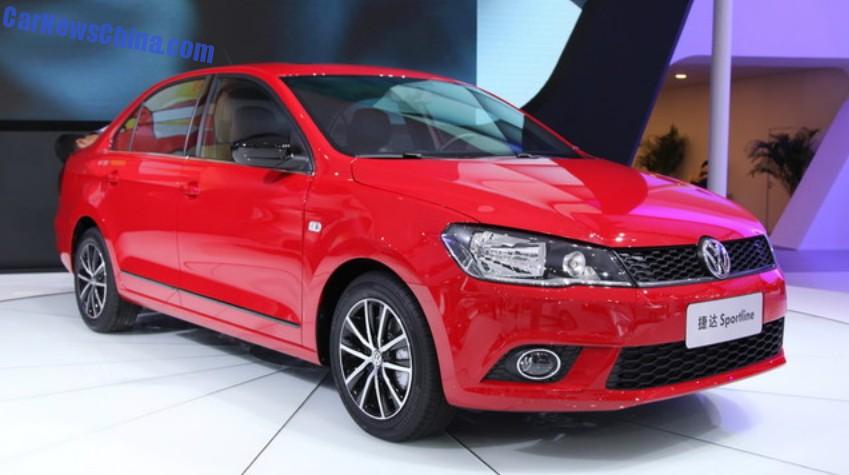
The new plant in Changsha is about 900km to the west of Shanghai. Production of the Volkswagen New Lavida is beginning there after only two years of construction. Other models of the Volkswagen and ŠKODA brands are to follow. The total capacity of the plant is about 300,000 vehicles per year. The plant is creating more than 4,000 new jobs, together with 4,000 more in the neighbouring supplier park.
The Changsha plant is the first production facility of the Shanghai-Volkswagen joint venture to receive the “Triple-Star Green Building Design Award”, the highest state award for environmentally compatible factory design. 
Thanks to a dry painting system (“E-scrub”), water and energy consumption will be reduced by more than 20 per cent. Excess paint particles are filtered out in an environmentally compatible way by an electrostatic precipitator system. 
In addition, fresh water consumption in production hasbeen reduced by 20 per cent compared with conventional processes by using rainwater and recycled production water. Solar facilities at the plant generate more than 10,000 MWh of environmentally compatible power. Further power is generated by local hydroelectric plants. Production at the Changsha vehicle plant will therefore be carbon-neutral.
Volkswagen has been at home on the Chinese market for more than 20 years and is among the country’s western automobile pioneers. In 2014, Volkswagen, together with its two joint ventures FAW-Volkswagen and Shanghai-Volkswagen, delivered a total of about 3.7 million vehicles to customers in China, representing an increase of 12.4 per cent over the previous year. With its partners, the Volkswagen Group will be investing more than €22 billion in China by 2019.

Friday, 9 January 2015

CHINA - Hyundai is so successful in China, it intends to build its fourth and fifth plant there.

  • Each Plant to have annual production capacity of 300,000 units
  • New plants will increase Beijing Hyundai Motor Co.’s capacity to 1.65 million units per year by 2018
Beijing Hyundai Motor Company (BHMC), a 50-50 joint venture between Hyundai Motor Company and Beijing Automotive Industry Holding Co., today said it would begin building its fourth and fifth plants in China next year to respond to surging demands in the world’s largest automobile market.

BHMC will build its fourth plant in Cangzhou, Hebei province, and its fifth plant in Chongqing, with an annual production capacity of 300,000 units per plant. With the completion of the two plants by 2018, BHMC will have the capability to produce up to 1.65 million cars per year in China.


BHMC plans to open the fourth plant with an initial annual capacity of 200,000 units in the second half of 2016, and later add capacity to reach the expected 300,000 units per year. The plant in Hebei will be built on a 2.095 million square metre site with a floor space of 221,000 square metres, featuring vehicle production facilities such as stamping, welding, painting, assembly and module lines.

Construction of its fifth plant in Chongqing will begin in the third quarter of 2015 and once completed, it will also have an annual capacity of 300,000 units.  Built on a 2 million square metre site, the plant will have 274,000 square metres of floor space, featuring complete vehicle and engine production facilities. Small and mid-size models specifically designed for the Chinese market will be rolled out from the plant, starting from the first half of 2017.

Hyundai established BHMC in 2002, opening its first plant in China. It added a second factory in 2008, doubling its annual production capacity to 600,000 units. In 2012, with the addition of the third plant, the total annual production capacity reached more than 1 million units per year. The new plants are expected to further reinforce the company’s presence as a leading automaker in the Chinese market.

Thursday, 28 August 2014

Kia announces a $1 billion deal to build a new plant in Mexico.

  • Plant to be located in Monterrey, Nuevo Leon region
  • Construction to begin in September
  • 300,000 vehicles a year capacity for new plant
  • Kia’s global capacity will rise to 3.37 million vehicles a year
Kia Motors Corporation has announced it has signed an investment agreement with the government of Mexico to build a state-of-the-art manufacturing plant in Monterrey which is located the north-eastern state of Nuevo León.
The official investment agreement was signed at the Technological Museum of the Electricity Federal Commission (MUTEC) in Mexico City, and was attended by a delegation of key executives from Kia Motors, led by Hyoung-Keun Lee, Vice Chairman of Kia Motors Corp., and a host of Mexican government dignitaries including Enrique Peña Nieto, President of Mexico, and Rodrigo Medina de la Cruz, Governor of the State of Nuevo León.
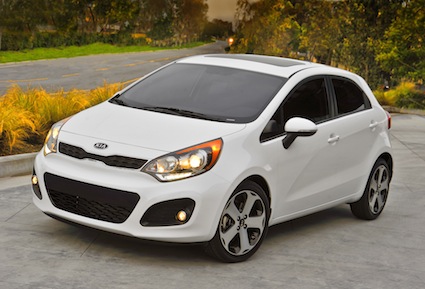
Construction on the Kia Motors Mexico plant is scheduled to commence in late September, and when completed in the first half of 2016 it will boast an annual production capacity of 300,000 vehicles. The plant will boost Kia’s total global manufacturing capacity to 3.37 million vehicles, including 1.69 million vehicles at domestic Korean plants and 1.68 million at overseas plants. Kia plans to produce a range of yet-to-be confirmed compact models at the new plant.

Representing an investment of approximately US$1 billion by Kia Motors, the new, highly automated manufacturing plant will be situated on a 500 hectare (53.8 million square foot) site that will also be home to numerous supplier companies’ facilities.
As one of the world’s fastest growing automakers in recent years, Kia Motors Corporation has been evaluating various options for entering new overseas markets to secure future growth for the brand. With its strong growth forecasts for new vehicle demand, Mexico was chosen as the site for Kia’s next overseas plant given that it is one of the few remaining major markets of the world in which Kia does not have a sales presence.
For Korean automakers to competitively enter the Mexico market, the establishment of local production facilities is pivotal as Mexico imposes high tariffs on imported cars from Korea. Mexico is well-known for its skilled labour force and numerous free trade agreements (such as NAFTA) with about 40 countries.
Kia expects the Mexico plant to play a major role in alleviating current global supply issues thanks to its strategic geographic location. Its proximity to the USA will enable the company to better address the ongoing supply shortage situation that has arisen due to the dramatic growth of the Kia brand in the US market. Kia also plans to utilize the plant as a foundation for strengthening the brand’s sales presence throughout the entire Central and South America region while freeing up supply from Kia’s domestic plants to address supply shortage issues in other regions of the world.
Hyoung-Keun (Hank) Lee, Vice Chairman of Kia Motors Corp., said, “All of us at Kia Motors are proud to signal in a new era for the brand with the announcement of our first manufacturing plant in Mexico. We are committed to producing world-class quality vehicles here in Mexico that feature industry-leading styling and high-tech convenience and safety features that customers have come to expect from Kia, while making significant contributions to both the economic growth of the State of Nuevo León and the future development of the Mexican automotive industry.”

Wednesday, 2 July 2014

Renault-Nissan and Daimler Benz combine further to bring down corporate costs and bring in new joint ventures

  • Teams will work closely on development of next-generation compact vehicles for both Mercedes-Benz and Infiniti
  • New plant in Aguascalientes, Mexico, will add nearly 5,700 additional workers and annual capacity of 300,000 vehicles when fully ramped up
  • Companies will equally divide investment costs of approximately €1 billion
The Renault-Nissan Alliance and Daimler AG are significantly expanding their cooperation with joint development of premium compact vehicles and joint production in Mexico.
Renault-Nissan CEO Carlos Ghosn and Daimler CEO Dieter Zetsche announced today that their companies have agreed to establish a 50:50 joint venture, the business entity that will oversee construction and operation of the new plant in Aguascalientes in north-central Mexico. The new plant will be built in the immediate vicinity of an already existing Nissan plant and will have an annual capacity of 300,000 vehicles when fully ramped up.
Start of production is planned for 2017 with Infiniti models. The production of Mercedes-Benz brand vehicles will follow in 2018.

Daimler and Nissan will share the total investment cost for Aguascalientes of approximately €1 billion. The companies will add almost 5,700 jobs (including engineering, line workers and support staff) by the time the plant reaches full capacity, expected in 2021. In addition, a high localization rate will significantly increase the Mexican supply base.
Carlos Ghosn, Chairman and CEO of the Renault-Nissan Alliance: “Joint development of compact premium vehicles and joint production in Aguascalientes together represent one of the largest projects between the Renault-Nissan Alliance and Daimler. It also shows how our collaboration, which began in Europe, has become global in scope.”
Dieter Zetsche, Chairman of the Board of Management of Daimler AG and Head of Mercedes-Benz Cars: “In Aguascalientes, we will take our successful partnership to the next level by combining the skills of our two companies Daimler and Nissan in one production plant. Just over four years after the cooperation was founded, the decision for the new plant in Mexico is a major milestone.”
Close collaboration between Infiniti and Mercedes-Benz at every stage of development, from advanced research and design to production, will ensure that vehicles within the scope of the project will clearly differ from each other in terms of product design and specifications.
Growing together in Mexico
In Aguascalientes both partners will enjoy access to Nissan’s award-winning, highly efficient workforce. Nissan has been producing vehicles in Aguascalientes since 1992, and the plant has expanded significantly just in the past year.
In November, Nissan opened the first stage of a US$2 billion manufacturing complex in Aguascalientes. This increased Nissan’s total capacity in Mexico to more than 850,000 vehicles annually.
Mexico is already an important market for Daimler. The company has production plants for trucks and buses in Saltillo, Santiago Tianguistenco and Garcia, a parts distribution center in San Luis Potosí and a remanufacturing plant in Toluca. For passenger cars Daimler has a pre-delivery-inspection and a training center.
Four years of increasing collaboration
The French-Japanese-German industrial cooperation of Daimler and the Renault-Nissan Alliance began in April 2010, with three “pillar projects” primarily focused on Europe. Since then, the portfolio has increased to twelve significant projects, including major initiatives from the Americas to Japan.
Just yesterday, Infiniti and Daimler launched production of four-cylinder gasoline engines in Decherd, Tennessee, USA. With an annual production capacity of 250,000 units, the Decherd facility produces engines for use in the Mercedes-Benz C-Class and in the Infiniti Q50.
Later this year, the Alliance and Daimler will start selling the next-generation smart and Twingo city cars, developed on a shared platform, the Twingo and the four-seater smart being produced at the Renault plant in Novo Mesto, Slovenia, the two-seater smart in Hambach, France.