Purpose

I will try my best to provide detailed info on various cars and what is like to live with them, I have already produced a few for Jaguar-car-forums, I will do my best to be unbiased, but it will be hard for some cars. I will re-produce press releases and copy from other motoring news.
Showing posts with label wider. Show all posts

Tuesday, 16 January 2018

An iCon re-invented - the new Mercedes G-Class, the same, but not the same.

An icon reinvented
The new Mercedes-Benz G-Class: whether on or off the road and whatever the operating conditions, the off-road vehicle impresses with its performance, cutting-edge assistance systems, outstanding handling, and safety. At the same time, the new suspension, the DYNAMIC SELECT driving modes, the “G-Mode” and the three 100‑percent differential locks enhance not only ride comfort but also agility – on any surface.
UK specification and pricing is still to be confirmed, with first customer deliveries arriving in the summer.

“The new G-Class is setting the bar higher still in all relevant areas – in terms of performance both on and off the road as well as with regard to comfort and telematics. Our ‘longest-serving’ model series is therefore ideally equipped to continue its success story. In short, the new ‘G’ is still a ‘G’, only better,” stresses Ola Källenius, Member of the Board of Daimler AG responsible for Group Research and Mercedes-Benz Cars Development.
Working on the development of the new G-Class was extremely challenging for the team. “Enhancing an icon such as the G‑Class in technological terms was both a challenge and an opportunity at the same time. Each part and every bolt came under close scrutiny,” explains Dr Gunnar Güthenke, Head of the Off-Road Product Group at Mercedes-Benz. “With the body, our main focus was on increasing the vehicle rigidity and the connections between the suspension and drivetrain with the ladder-type frame.”
At the time of market launch in June, the G-Class will be available at an entry-level price of €107,040.50 (price in Germany, incl. VAT) and thus remains at the level of the preceding version. The specification includes a host of new features such as LED headlamps, driving assistance systems, a high-quality interior with leather seats, and new suspension. For demanding customers, options such as the Exclusive Interior Plus with leather on the interior door panels provides even more exclusivity.
The G-Class, reinterpreted for today
The G-Class, the luxury off-road vehicle from Mercedes-Benz, has long been considered a design icon. Its external appearance has not changed significantly since 1979. Iconic elements continue to serve very specific purposes and to give the G‑Class its unique appearance. All these are still found in the new G‑Class: the distinctive door handle and the characteristic closing sound, the robust exterior protective strip, the exposed spare wheel on the rear door and the prominent indicator lights. Extraordinary features like these combined with the off-roader’s angular lines define its special look.
The enhanced design of the G-Class follows the philosophy of Sensual Purity and at the same time remains true to the character of the original. As a result, the door hinges positioned on the outside and the surface-mounted bonnet are carried over to the new generation. With the latest update, the off-road icon - which has been continually enhanced technically over the decades but visually has hardly changed - is making the leap into a new era – both in terms of technology and form. The new G-Class is 53 mm longer and 121 mm wider and now has even greater presence, on the road as well as off-road.
More than ever, the new G-Class appears to be cast from a single piece. All surfaces have a more taut design and are have more tension, while the surface quality has been taken to an even higher level. This results in narrower, more precise gaps and more harmonious transitions. In addition, the wheel arches and bumpers form a more integral part of the body and thus look less like add-on features.
Interior: authentic icon
While the exterior maintains the iconic classic look, the interior of the G-Class has undergone a fundamental modern redesign which reinterprets the genes of the classic vehicle to reflect the exterior. With its off-road character and luxury appointments, the G-Class has always combined two extremes. Unmistakable at first glance and from the first touch, only high-quality materials are used. Every detail is finished by hand with the utmost care.
Getting in the G-Class reveals that numerous design features from the exterior have been transposed into the interior. The shape of the round headlamps, for instance, is reflected in the side air vents. Or the design of the iconic indicators, found again in the shape of the loudspeakers. Hallmarks of the G‑Class include the grab handle in front of the front passenger and the chrome-highlighted switches for the three differential locks. Both have been meticulously optimised and retained as characteristic features.
The very clearly arranged and completely redesigned instrument panel features timeless tube-look analogue round dials as standard. In other words, fans of classic round instruments will not be disappointed in the new G‑Class. As in the new E-Class and S-Class, an instrument cluster in the form of a large display showing virtual instruments in the driver's direct field of vision and a central display above the centre console is available as an option. In this case the two 12.3-inch displays blend visually into a Widescreen Cockpit beneath a shared glass cover. Drivers can choose between three different styles for the displays – “Classic”, “Sport” and “Progressive” – and also select relevant information and views according to their individual needs.
Thanks to haptic impulses and audible feedback from the on-board speakers, drivers can use the touchpad with controller in the centre console without taking their eyes off the road. The input options are rounded off by shortcut keys in front of the controller for frequently used operating tasks, and by the optional control panel for the driving assistance systems above the rotary light switch. The driver sits up close to the windscreen and enjoys excellent all-round visibility from behind the wheel.
More space for all
The revised dimensions of the now larger G-Class benefit not only the driver and front passenger, but also the passengers in the second row. Key data at a glance:
Description
Difference
Legroom in the front
+38 mm
Legroom in the rear
+150 mm
Shoulder room in front
+38 mm
Shoulder room in rear
+27 mm
Elbow room in front
+68 mm
Elbow room in rear mm
+56 mm

The rear seats can be folded down to 60, 40 or 100 percent. The seats in the G‑Class are equipped as standard with numerous convenience functions and are ergonomically designed, thus providing enhanced seating comfort and lateral support. Features include the Memory function for the driver’s seat, seat heating front and rear, as well as luxury head restraints in the front. 
This comfort can optionally be boosted still further with the Active Multicontour Seat Package. In addition to the special multicontour seats, this encompasses such features as various massage functions, climate-controlled seats, and fast seat heating. This variant also offers electrically adjustable lumbar supports for the driver and front passenger. 
The side sections of the seat cushions and backrests of the active multicontour seats include integrated air chambers that fill or empty continuously depending on the driving dynamics, thus providing better support for the seating positions of driver and front passenger and, for example, offering more lateral support during cornering. The front seats of the Active Multicontour Seat Package are recommended by experts from the German spinal health organisation “Aktion Gesunder Rücken e.V.”.
Off-road: the legend surpasses itself
The primary goal of development was to redefine the quality of the handling both on and off the road. This goal has been achieved: The new G-Class performs even better off-road, while on the road it is significantly more agile, dynamic and comfortable than its predecessor. The G thus remains a true G – thanks to its standard ladder-type frame, the three 100-percent differential locks and LOW RANGE off-road gear reduction.
The new suspension emerged from the collaboration between Mercedes-Benz G GmbH and Mercedes-AMG GmbH. The result is an independent suspension with double-wishbone front axle in combination with a rigid rear axle. As part of their work, the engineers had the task of fighting for every millimetre, because off-road capability not least also means maximum ground clearance. The raising of the axles makes a decisive contribution in this respect, while requiring a strut tower brace in the engine compartment to achieve the ruggedness objectives.
The components of the double-wishbone front axle are directly mounted to the ladder-type frame without a subframe. The lower wishbone’s attachment points on the frame are positioned as high up as possible. This arrangement ensures good driveability beyond the asphalt. Specifically for the G-Class, the new front axle is designed in such a robust way that the off-road performance and off-road capabilities of its predecessor are maintained and even surpassed.
Equipped in this way and with a ground clearance of 270 mm to the front axle gear, the G-Class provides plenty of potential for maximum assertiveness and driving pleasure off-road. The figures speak for themselves:
  • Slope climbing ability of up to 100% on suitable surfaces
  • Ground clearance between axles, plus 6 mm, now 24.1 cm
  • Maximum fording depth now 70 cm when driving through water and mud, no less than an additional 10 cm
  • Stable at tilt angles of 35°, plus 7°
  • Angle of departure: 30°, angle of approach: 31°, plus 1°
  • Break-over angle: 26°, plus 1°
Thanks to the independent suspension, it was possible to improve the rigidity of the body front end. A strut tower brace, also known as a suspension bridge, now connects the front strut towers, which increases the torsional rigidity of the ladder-type frame.
At the rear, in contrast to the predecessor, the new rigid axle is controlled by four trailing arms on each side and a Panhard rod. This makes normal driving on the road even more comfortable. In rough terrain, the rear spring jounce of 82 mm and rebound of 142 mm plus the ground clearance of 241 mm to the rear axle gear help to ensure a safe ride even in extreme situations.
À la carte: “Comfort”, “Sport”, “Individual” or “Eco”
DYNAMIC SELECT is now available with up to five driving modes for the G‑Class. This allows adjusting the vehicle characteristics in seconds at the touch of a button, as the system modifies the characteristics of the engine, transmission, suspension, steering and assistance systems at the driver’s behest. The four programs “Comfort”, “Sport”, “Eco” and “Individual” can be set conveniently via the DYNAMIC SELECT rocker switch. In “ECO” mode, a particularly fuel-optimised driving style is possible, for example. In “Sport” mode, on the other hand, the shift points of the automatic transmission, the throttle response of the engine, and the parameters of the electric steering system and the exhaust flap are changed. “Individual” allows drivers to configure their own preferred vehicle settings.
DYNAMIC SELECT provides a host of options in combination with the new suspension with optional Adaptive Damping System. The driver is then also able to modify the vehicle’s damping characteristics in Sport and Comfort modes using the DYNAMIC SELECT switch.
Put simply, the G-Class detects the particular condition of the road and sets the appropriate damping characteristics, so that the damping in terrain is stiffer, for example. In contrast, in Sport mode the G-Class boasts a more agile response when driving on the road.
The new “G-Mode” paves the way where there is none
One of the prerequisites for the improved off-road handling characteristics is the new “G-Mode”. The G-Class changes to “G-Mode” independently of the chosen driving mode as soon as one of the three differential locks has been activated or the LOW RANGE off-road reduction gear has been engaged. This off-road mode adapts the adjustable damping of the chassis and the steering as well as the accelerator characteristic, avoids unnecessary gear shifts and thus ensures optimum control and maximum off-road capability. A small “G” icon discreetly lights up in the instrument cluster. The “G” swallows rough ground so easily that the driver is able to enjoy inch-perfect manoeuvring even in the steepest terrain and receive excellent feedback on the traction capacity of the surface.
On-road: agile, comfortable, superior
The specification for the G-Class not only included solidness and superiority in rough terrain, but also enhanced driving dynamics and comfort on paved roads. Thanks to the new front axle design, the on-road performance of the
G-Class has therefore been enhanced at the same time. On the road, the “G” is as agile as it is comfortable and provides the driver with a better steering feel. The off-roader stays on track more solidly, and is agile and effortless when driving off-road.

Using a digital prototype, the developers simulated the service life of individual components and closed systems to find out in which places it would be possible to make use of lighter raw materials. The diet worked, as the G-Class has shed around 170 kg. The recipe for success: a new mix of materials comprising strong, high-strength, ultra-high-strength steels and aluminium, as well as improved production processes at the Magna Steyr plant in Austria. The rigid body shell is now made of a variety of steel grades, while the wings, bonnet and doors are made of aluminium.
To be able to retain the door hinges and handles typical of the G-Class, the developers modified these to suit the new aluminium design. The A- and B‑pillars are made of high-strength steel due to their load-bearing function. However, less mass in no way translates into less stability – on the contrary, it was possible to increase the torsional rigidity of the frame, body shell and body mounts by around 55 percent, from 6,537 to 10,162 Nm/deg. Alongside improvements to the natural driving dynamics and comfort, this also results in enhanced quality in terms of noise levels, among other things, with the positive effect of significantly less noise and vibrations being noticeable in the interior when driving.
Powerful and efficient
In the new G 500* (fuel consumption, combined: 11.1 l/100 km; combined CO2 emissions: 263 g/km) a high-performance 4.0-litre V8 petrol engine ensures powerful propulsion. The new biturbo produces an output of 310 kW (422 hp) and a maximum torque of 610 Nm at 2000 to 4750 rpm.
*G 500 not confirmed for UK market
New automatic transmission on board
For the transfer of power, the 9G‑TRONIC automatic transmission with torque converter was specifically adapted to meet the needs of the off-road icon. The developers have managed to reduce the shift and response times of the 9-speed transmission by means of a dedicated software application. The wide transmission ratio not only makes driving quieter and more comfortable especially at low engine speeds, it simultaneously also contributes to reducing fuel consumption.
As direct as possible, as indirect as necessary
As standard the G-Class is now fitted with electromechanical rack-and-pinion steering, which now allows driving assistance systems such as Parking Assist to be implemented. In addition, the electromechanical steering uses less energy than a hydraulically assisted steering system. Depending on the driving mode, one of three sets of steering characteristic lines, namely Comfort, Sport and Off-road, comes into effect. This ensures a comfortable or sporty steering feel on the road, but also straightforward and precise feedback in unpaved and demanding terrain - always paired with sufficient steering power assistance. In a nutshell: as direct as possible, as indirect as necessary.
Stronger than time
The G-Class is the top model among luxury off-road vehicles. It is not only the passenger car model series with the longest production run in the history of Mercedes-Benz by far, but also the forefather of all SUVs to bear the three-pointed star – this is why all Mercedes off-road models feature the upper-case G in their name.
What began in 1972 with a collaboration agreement between then Daimler-Benz AG and Steyr-Daimler-Puch in the Austrian city of Graz is now a story peppered with superlatives and significant milestones. The first concept to be developed was already different. The team designed a vehicle which impressed with superior off-road capability, while at the same time appealing to customers as a full-featured and safe vehicle suitable for recreational purposes. All-wheel drive and 100-percent differential locks have also been part of the “G” since that time, as has the robust ladder-type frame.
At the time of its market launch, in the spring of 1979, it was available with a choice of four engine variants from 53 kW/72 hp to 115 kW/156 hp. Customers had the option of a Cabriolet with a short wheelbase or Station Wagon models with short or long wheelbase. In 1989 the vehicles of the model series 463 marked the beginning of an evolutionary process for the off-roader that was not just about keeping pace with technical progress. It was an evolution that also brought a steadily expanding fan base and emphasised its character as an exclusive vehicle for any occasion. And, since 1993, a vehicle with an official name: the G-Class.
The G-Class models used for the “Popemobile” are famous world. The Mercedes-Benz 230 G painted in mother of pearl with a special transparent body accompanied Pope John Paul II on numerous journeys from 1980.
The 25th anniversary of the G-Class was marked by the arrival of a very special model on the market, honed by Mercedes-AMG: the G 55 AMG Kompressor. Its eight-cylinder power unit (350 kW/476 hp, 700 Nm of torque) gave the robust off-roader an unprecedented level of performance and demonstrated the tremendous potential of the G-Class.
The G 500 4x4² of 2015 added not only a luxurious interior to the equation, but also a ground clearance of 45 centimetres and impressive on-road performance. Since 2015, the designo manufaktur range has been providing customers with the option to take a G-Class and make it their own individual “G” – with exclusive equipment variants that are perfectly coordinated with each other.
Thanks to the Mercedes-Maybach G 650 Landaulet, the iconic G-Class reinvented itself once more in 2017. With its V12 engine (fuel consumption, combined: 17.0 l/100 km, combined CO2 emissions: 397 g/km), portal axles, electric fabric top and exclusive appointments in the rear compartment, this very special all-terrain vehicle, which is limited to 99 units, meets the expectations of customers who demand the very highest standards of their vehicle and is arguably the most exclusive form of open-air driving pleasure.
The summer of 2017 saw the 300,000th G-Class roll off the assembly line in Graz – a Mercedes-Benz G 500 in designo Mauritius blue metallic with black leather seats and contrasting white topstitching (combined fuel consumption: 12.3 l/100 km; combined CO2 emissions: 289 g/km). Equipped with a range of off-road features including all-terrain tyres mounted on black 16-inch rims and a sturdy roof rack, the anniversary vehicle embarked this summer on new adventures. G-Class fans around the world determined the vehicle specification by voting for their favourite equipment and appointments on the official G‑Class Facebook page. You can also follow the future road trips of the 300,000th G-Class on social networks.

Monday, 29 May 2017

The new Micra now with an entry level petrol engine which will take about 20% of sales.

  • Highly efficient 71PS entry level petrol model at retailers for demonstration drives
  • Will account for approximately 20% of Micra sales
  • Launch line-up of three Micra engines now complete
  • All-new Micra features expressive design, uplifting interior and confident drive 
The launch range of the all-new Nissan Micra has been completed with the arrival at retailers of the eagerly anticipated 1.0-litre 71PS entry-level model. 
While it’s the last of three launch engines to go on sale, it will play a vital role in the Micra success story. It is expected to account for approximately 20% of sales. 
Offering an excellent balance of performance and running costs, the three-cylinder naturally aspirated petrol engine is linked to a five-speed manual transmission. This highly efficient powertrain results in official Combined Cycle fuel economy of 4.6 litres/100km and CO2 emissions of 103g/km when running on 15 or 16-inch wheels. 
The new 1.0-litre 71PS engine joins the 0.9-litre 90PS three-cylinder turbo petrol and the 1.5-litre 90PS four-cylinder diesel, which went on sale earlier this year. 
The new Nissan Micra is quite simply a revolution. It is a radical progression from the model it has replaced, and from the trio of highly successful superminis which date back to the Micra’s debut in Europe in 1983. 
Longer, wider and lower than ever before, the all-new Micra has been conceived, designed and engineered with European customers’ requirements at the top of the agenda. 
Key to its appeal is the hatchback’s athletic and expressive exterior design, which moves the Micra name plate in a daring new direction. The contemporary look and premium feel continues inside, with a high-quality cabin that boasts two-tone soft-touch materials as standard across the range. 
The all-new Micra is also a technology leader, with a number of features which are not only new to the Micra but new to the segment. These include Intelligent Lane Intervention, a safety system which gently corrects the Micra back on to the right path should it be required. 
Also unique to Micra is the BOSE Personal audio system, which features speakers built into the driver’s head rest for an immersive 360° sound experience. The new Micra is available with a wide range of personalisation options, allowing owners to modify the exterior and interior with premium components in a variety of stylish and contemporary colours. 
The new Micra is also a fantastic car to drive, with a dynamic performance that is the perfect balance between agility, excitement and the secure feeling that comes with confident and predictable handling. 

Friday, 13 January 2017

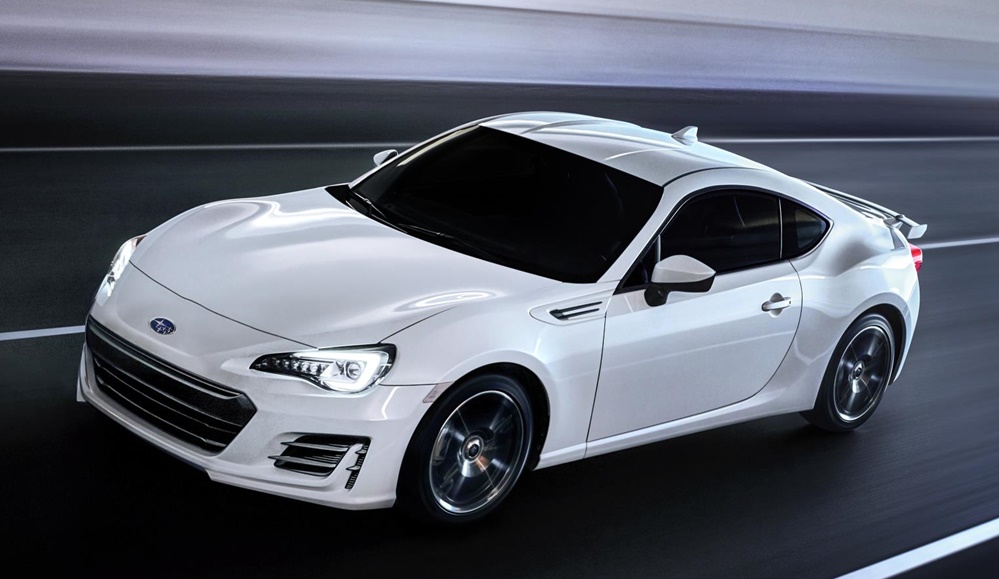
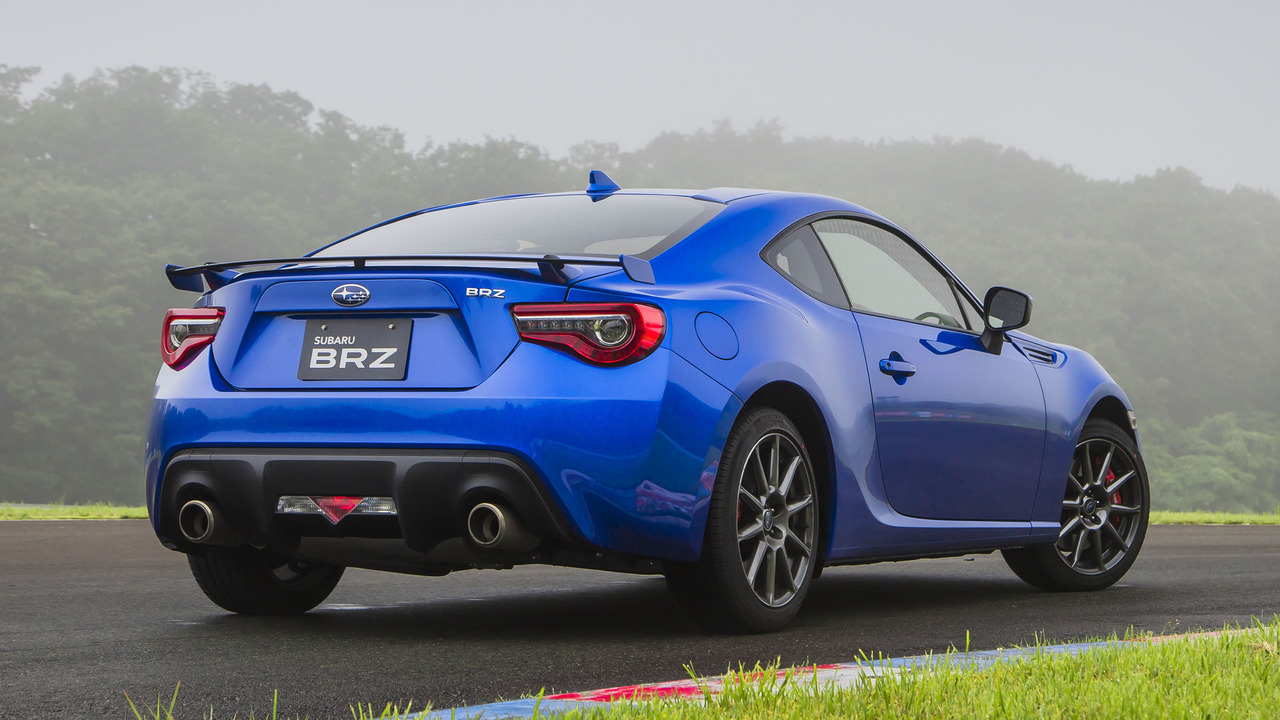
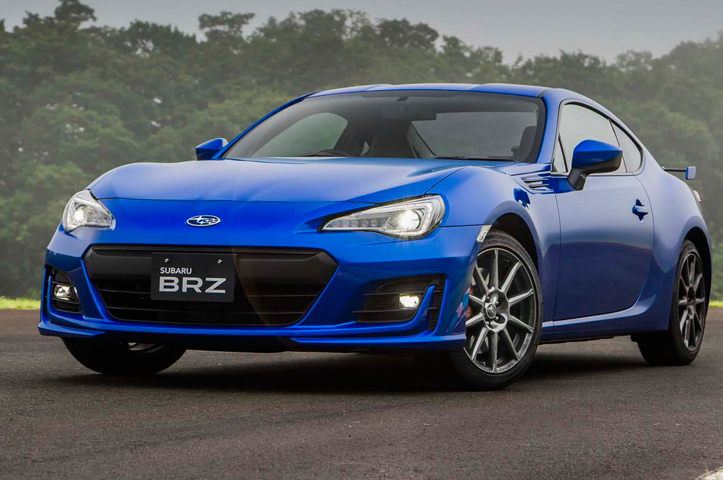
The new fully updated Subaru BRZ gets it's UK debut at the motorsport show at the NEC.

Europe’s largest motorsport show opens its doors 12th - 15th January 2017 at the NEC and BMR Racing and Subaru can be found at stand 6000 in Hall 6.

The 2017 BRZ has been updated from top to bottom; exterior, interior, powertrain, suspension and safety, refining the driving experience whilst enhancing sports car appeal.
The Coupe shape remains, but is enhanced with a wider, lower stance at the front end. The BRZ’s face is finished off with full-LED headlights, a Subaru first. 
New design rear lamps and aerodynamic pedestal spoiler top off the rear of the car, and the wheels are now a 10 spoke aluminium design.
Inside, a 4.2-inch colour LCD multi-information display has been added into the instrument panel. The steering wheel has also been redesigned into a smaller package with different leather to increase the driver’s grip for a more engaging experience, whilst higher quality materials have been used throughout the cabin.
BRZ was built to deliver a linear driving feel, ensuring that the car responds exactly as the driver intended. Keeping this concept in mind, the BRZ’s suspension, engine and drivetrain have been further refined to enhance its poised handling and driving experience.
For sporty drivers, the new TRACK mode enhances the stability of the car and allows for more refined accelerator inputs when driving on race circuits. For urban drivers, there is a new type of Hill Start Assist (HSA) to help with uphill starts or downhill reversing.
The 2017 BRZ will be available in SE Lux trim only with either a manual or automatic transmission from Spring.

Tuesday, 3 January 2017

Skoda launches the new flagship Octavia model, the strikingly quick vRS model.

  • 2.0 TSI petrol now with 169 kW (230 hp), 2.0 TDI diesel also with all-wheel drive
  • New front end, full-LED headlights, vRS-specific details
  • Top technologies for infotainment, connectivity and driver assistance systems set standards in compact class
Just weeks after introducing the extensively modernised ŠKODA OCTAVIA, the Czech automobile manufacturer presents the top model in the series – the ŠKODA OCTAVIA vRS.
The new front section, modified rear and sporty interior highlight its dynamic character. The upgraded ŠKODA OCTAVIA vRS is available as a hatchback and estate. 
Both body styles have two four-cylinder engines to choose from. While the 2.0 TDI diesel engine has the same 135 kW (184 hp) output as previously, the performance of the 2.0 TSI petrol engine has increased by 7 kW (10 hp) to 169 kW (230 hp), making it the most powerful and fastest series-production model in the history of the ŠKODA OCTAVIA. 
New premium technologies supporting infotainment, connectivity and driver assistance systems emphasise the exceptional position of the compact sports car in its segment.

Dynamic design
The appearance of the new ŠKODA OCTAVIA vRS accentuates the extensively redeveloped design of the series in a particularly sporty and emotional way: The new front section with a wider radiator grille, which has been extended with additional headlamps featuring a crystalline look, and the even wider air intakes with honeycomb structure in the redesigned bumpers are masculine and dynamic. The four full-LED headlights with Adaptive Front-lighting System (AFS), as well as the LED side-mounted headlights integrated into the bumper shape the new front end. At the rear, the hatchback’s spoiler and the estate’s roof spoiler set independent accents.

The rear is dominated by a powerful black diffuser element and broad red reflector lamp above. These elements are unmistakable characteristics of the upgraded ŠKODA OCTAVIA vRS. In addition, the model now features LED-technology license plate illumination and taillights in the classic C-design as standard.
The interior of the new ŠKODA OCTAVIA vRS is characterized by the vRS-Sport seats which provide plenty of lateral support thanks to high sides and integrated headrests. In addition to the leather/fabric combination, the sports seats are now also available in Alcantara as an option. The multi-function sports steering wheel (for DSG gearbox with shift paddles) has a perforated leather crown. Ambient lighting comes as standard. The recesses of the door handles are illuminated, the pedals shine in an aluminium finish, and the entry panels bear the vRS logo. ŠKODA-typical ‘Simply-Clever’solutions include an umbrella under the passenger seat and a removable LED lamp in the boot of the estate.
Chassis, technology, engines
The 15 mm lower sports suspension and the rear track, 30 mm wider than the predecessor, as well as the red brake callipers underline the dynamic character of the new ŠKODA OCTAVIA vRS. 18-inch wheels are available as standard, while 19-inch wheels are available as an option.

Progressive steering, Performance Mode Select with Performance Sound Generator (option), the stability program ESC with electronic cross barrier XDS+ and Dynamic Chassis Control (DCC) add to the intensive driving pleasure of the new ŠKODA OCTAVIA vRS. DCC allows the driver to choose between Comfort, Normal or Sport modes.
The new engine of the ŠKODA OCTAVIA vRS 2.0 TSI provides 169 kW (230 hp) and has a maximum torque of 350 Nm at 1,500 to 4,600 rpm. The front-wheel drive sports model sprints from 0 to 62mph in 6.7 seconds. The model’s top speed is 155 mph. The combined fuel consumption is 43.4 mpg (149 g CO2/km; all values: hatchback with manual transmission). As standard, the ŠKODA OCTAVIA vRS 2.0 TSI is equipped with a manual 6-speed manual gearbox, optionally with a 6-speed DSG.
In the ŠKODA OCTAVIA vRS 2.0 TDI, a diesel engine with an output of 135 kW (184 hp)and a maximum torque of 380 Nm from 1,750 rpm ensures acceleration from 0 to 62 mph in 7.9 seconds and a top speed of 144 mph. The combined fuel consumption is 62.8 mpg (119 g CO2/km, all values: hatchback with manual transmission). The ŠKODA OCTAVIA vRS 2.0 TDI is available either with front-wheel drive (manual or 6-speed DSG) or 4×4-wheel drive and 6-speed DSG.
Infotainment and ŠKODA Connect
As all versions in the series, the current ŠKODA OCTAVIA vRS features the latest generation of infotainment systems. The capacitive touch displays are designed in glass. The top version is the navigation system Columbus with a 9.2-inch monitor, WLAN hotspot and optional LTE module.

Driver assistance systems
The wide range of driver assistance systems in ŠKODA OCTAVIA vRS sets new standards in the compact class. New features include Trailer Assist, Blind Spot Detect, which warns the driver of vehicles in the blind spot, and Rear Traffic Alert, which monitors side and rear traffic when leaving a parking space. The Crew Protect Assist closes windows and sunroofs in the event of an imminent accident, tightens driver and passenger seatbelts and works in conjunction with the improved Front Assist including city emergency braking and predictive pedestrian protection.

History
The abbreviation RS was first used for racing cars in 1974, and has been used for the top sporty versions in the ŠKODA model range since the year 2000, with the vRS moniker adopted for the UK market. To date, more than 200,000 ŠKODA OCTAVIA RS and vRS models have been sold worldwide, of which 100,000 units of the third generation that was launched in 2013.

Thursday, 27 October 2016

Vauxhall launches some spy shots of the new generation Insignia before its world premiere at the Geneva Motor Show.

  • Vauxhall flagship with all-new architecture and top technologies
  • Debuts in March at the Geneva Motor Show 2017
  • Elegant, athletic silhouette apparent despite camouflage
Covered in camouflage, Vauxhall’s all-new flagship model, which will be known as the Insignia Grand Sport, is in its final stage of development on UK roads before it makes its world premiere at the Geneva Motor Show next March.
The Insignia Grand Sport is a five-door hatchback that is based on a completely new architecture and has a considerably longer wheelbase (by over 9cm) than its predecessor. But thanks to markedly shorter front and rear overhangs, it is only 5.5cm longer than the outgoing model. 

The 1cm wider track and 3cm lower roofline emphasise the Insignia Grand Sport’s dashing presence. These altered proportions give the next generation of Vauxhall’s flagship a look that is more athletic and striking than ever before.
And by using lightweight materials, Vauxhall engineers were able to shave up to 175kg off of the new model. Optimised packaging also allows for a much roomier interior and cutting-edge technology on board.
At the 2013 Frankfurt Motor Show, Vauxhall gave a glimpse into the future of the automobile with the visionary Monza Concept Study: light, athletic, and efficient, with cutting-edge connectivity. The new Astra, which was named “Car of the Year 2016”, follows this philosophy. With the Insignia Grand Sport, Vauxhall now launches a model that further realises these standards and takes them to the next level.
The newcomer is noticeably larger than the current Insignia both inside and out, putting it in another league in terms of size, roominess and comfort. And of course, Vauxhall continues to make the latest technological innovations available to the widest audience at an affordable price.
“Vauxhall is raising its game even further with the launch of the new Insignia Grand Sport,” said Rory Harvey, Vauxhall’s Chairman and Managing Director. “It will set new standards for design, efficiency, technology and connectivity when it debuts next year at the Geneva Motor Show.”
A frequent class-leader in the UK’s D-sector, over 900,000 Insignias have been sold in Europe and it was named “Car of the Year” in 2009.

Tuesday, 22 September 2015

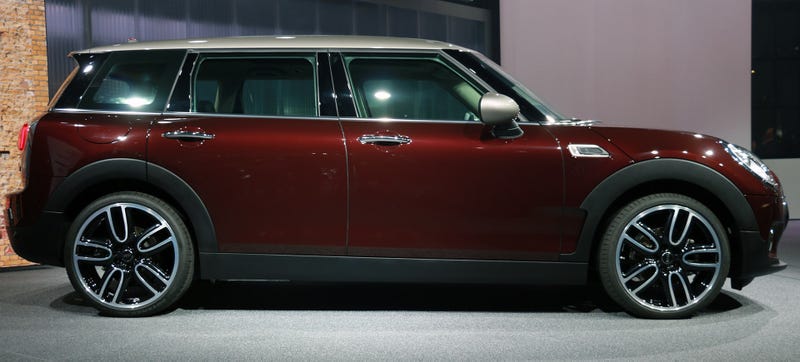
The Biggest MINI yet, the All-New Clubman - or should that be The Biggest MAXI yet ?

Unveiled in a UK première as part of the GQ Style Night out, the new MINI Clubman was officially launched on Thursday 17th September, by Matthew Zorpas, ‘The Gentleman Blogger’, as it dazzled in the spotlight on Carnaby Street.

The British car brand and London’s most celebrated neighbourhood have a long and stylish history together, dating back to the hedonistic swinging sixties. However, today the partnership is a very different picture, with the sleek and powerful new MINI Clubman demonstrating how much MINI has grown up.


To mark The MINI Clubman’s new look, MINI is working with The Gentleman Blogger, Matthew Zorpas, to explore what makes a ‘Modern Gentleman’ today. Matthew is pictured wearing items from the Pitti Umo collection, created exclusively for MINI and inspired by the car.

The epitome of style, design and sophistication, the new MINI Clubman is the ultimate accessory for the modern gentleman’s armoury and boasts a 0-62 time of 7.2 seconds on the Cooper S, with range pricing starting from £19,995.

On sale nationwide from 31st October 2015, the MINI Clubman was unveiled as part of the GQ Style Night Out to kick start London Fashion week. The evening saw hundreds of stylish guests in attendance where they had the opportunity to see, experience and get photographed with the new MINI Clubman.

Thursday, 17 September 2015

USA - 2016 Model Year Kia Optima grows and becomes more luxurious.

Kia’s Best-Selling Nameplate is Passionately Designed and Obsessively Crafted with European Styling, a Refined Premium Interior and Significant Ride and Handling Improvements
  • Optima matures into an expertly crafted sedan with two turbo engine choices and five trims, including the U.S.-exclusive SXL
  • Built at Kia’s U.S. plant*, Optima features reduced NVH and a more responsive, confident ride
The all-new 2016 Optima challenges the midsize sedan segment through significant improvements in refinement and obsessive attention to detail.  

An instant hit with consumers looking for a fresh alternative to an otherwise staid segment, the Optima has been Kia Motors America’s (KMA) top-selling vehicle for three consecutive years, and the all-new model is poised to continue that success.

Conceived under the watchful eye of Kia’s president and chief design officer, Peter Schreyer, with modern and instantly recognizable design cues, the Optima maintains its athletic identity but rides on a chassis that is longer, wider and stiffer for improved ride and handling and a more spacious cabin.  


Available with three engine choices, including a new 1.6-liter turbocharged four-cylinder that’s mated to a seven-speed Dual Clutch Transmission (DCT), the Optima is more confident than ever on the road.  

The all-new Optima’s roomier, more luxurious cabin features an impressive level of craftsmanship that will come standard across five trim levels – LX, LX 1.6T, EX, SX and SXL.  Like the outgoing model, the all-new Optima will be built at Kia’s plant* in West Point, Georgia.  Pricing will be announced closer to the vehicle’s launch date.

 “The Optima changed the way people felt about the Kia brand, and KMA owes much of its growth and success to its head-turning design and sporty performance.  The all-new Optima encompasses everything the outgoing model did so well but does it better.  

It has matured in all the right ways; from the European sport-sedan design to the premium materials to its improved ride and handling,” said Orth Hedrick, vice president, product planning KMA.  

“The all-new Optima retains the signature personality of its predecessor, but we’ve literally improved everything; providing more space, better ergonomics, more technology and greater refinement.”
Instantly Recognizable European Design

Because the previous generation Optima was such a success story for the brand, Kia’s designers had to strike a delicate balance, retaining the identity of the vehicle while, at the same time, making a confident move forward to keep the car modern and fresh.  

Sweeping contemporary surfaces and modern architecture inspired the design of the all-new Optima, revealing a sophisticated and dynamic sedan that is instantly recognizable yet has more road presence than ever.

The all-new Optima is boldly designed to be functional and sporty with exterior dimensions that are marginally longer, taller and wider.  The wheelbase has been extended to 110.4 inches (increased 0.4 inches), and the vehicle has been widened to 73.2 inches (increased 1.0 inch). 

Both changes enable a roomier and more comfortable cabin with more head room, shoulder room and rear seat leg room.  The increased dimensions also allow for more cargo capacity in the trunk. 

The aggressive front clip pulls the sheet metal taut over the wheel arches, and the swept-back headlights reach deeply into the fenders.  On the SX and SXL trims, Kia’s signature tiger-nose grille is hot stamped and composed into a sophisticated pinpoint design that bears a strong resemblance to Kia’s luxury sedan, the K9001.  

The all-new Optima introduces Kia’s first application of Bi-Xenon HID headlights – with available Dynamic Bending Lamps and High Beam Assist – that illuminate the tarmac around corners.
The greenhouse silhouette maintains the raked A-pillar and sweeping C-pillar that lend the Optima its sport-sedan appearance.  

The rear quarter windows kick up smartly just ahead of the carved rear fenders.  As with its predecessor, the all-new Optima incorporates a raised deck lid, and the use of available LED halo-style tail lights mimics that of the Cadenza premium sedan.   

The 2016 Optima rides on alloy wheels ranging from 16 to 18 inches, with three new unique 18-inch wheel designs, depending on trim level.  

Three new exteriors colors complement the latest Optima’s sophisticated styling:  a vibrant blue inspired by a sparkling ocean underneath a sunny sky; a dynamic grey with olive undertones, and a deep red that gains depth from the use of aluminum pigments.

Exquisite Interior Craftsmanship

Optima’s interior is larger and more comfortable with an innovative and functional cabin that is well-appointed with class-up touches.  Drawing inspiration from Kia’s premium and luxury sedans, the Optima utilizes more soft-touch materials throughout the passenger compartment.  

Optima’s luxurious interior is obsessively crafted with an impressive attention to detail and features real stitching along the dash and doors, complemented by tasteful metallic accents, varying by trim level.  

The driver-oriented cabin has been simplified with a cleaner, more unified design than the previous generation, with a stronger horizontal plane and a wider center console that help create a greater sense of space.  By grouping and reducing the number of functional keys and buttons, Kia’s already-superior ergonomics are markedly improved. 

The interior design team also paid particular attention to seat comfort.  A stiffer seat frame reduces vibration and soft foam in the headrest and upper back, and denser, more supportive foam in thigh-support areas allows occupants to nestle into seats with deeper side bolsters.  

For extra convenience, heated and ventilated front seats are available with power adjustable driver and front passenger seats.  For added convenience, the 2016 Optima offers a height-adjustable front passenger seat, a feature normally found only in premium vehicles.  

Depending on trim level, the seats are covered in cloth, leather or luxurious Nappa leather trim and two new interior colors – a rich merlot and a dark aubergine – are available.  
Convenience and Technology
Kia’s cutting-edge connectivity system, UVO2, comes standard with four additional eServices not previously available on Optima:  Geo-fencing, Speed Alert, Curfew Alert and Driving Score3.  Additionally, Optima is Kia’s pilot vehicle for the introduction of AndroidTM4 Auto and Apple®5 CarPlay (late availability), which allow drivers to access a suite of core functions from their smartphones.
  
After connecting their smartphone to the head unit via the vehicle’s front USB port (two additional fast-charge USB ports and rear 12V outlet are located in the center console for the front and rear seat passengers), the 8-inch touchscreen screen displays the smartphone’s most important features.  

Core functions including music (new SoundHound app), messaging, navigation and voice calls are available via the screen, the steering wheel or via voice command2.  Kia is one of the first to deliver this technology, which is available for select Android phones operating with Lollipop or Apple phones operating with iOS8.X or higher. 

While the standard six-speaker audio system will satisfy all but the most demanding enthusiasts, true audiophiles will gravitate to a Kia  first-ever available Harman/Kardon QuantumLogic™6 Premium Surround Sound Audio System7, which includes 10 speakers, Clari-Fi™8 technology and an upgraded 630-watt digital amplifier.  

Clari-Fi is a patented music restoration technology that rebuilds audio signals that are lost in the digital compression process.  

This technology breathes new life into your favorite music, restoring a high-fidelity listening experience to any compressed digital source.  

Optima’s Harman/Kardon premium audio system also comes equipped with next-generation QuantumLogic™ Surround Sound technology, which extracts signals from the original recording and redistributes them into an authentic, multidimensional soundstage for playback that is clear, refined and detailed.  

Kia was one of the first automakers to incorporate Clari-Fi technology into their audio systems with the debut of the 2016 Sorento, and Optima is the first-ever Kia sedan to feature QuantumLogic Premium Surround Sound technology.

The all-new Optima takes convenience to the next level with a long list of available technologies across the various trim levels.  Available on every Optima is a rear-camera display8 while SX and SXL trims offer an available 360-degree Surround-View Monitor8.  

Available driver-aid technology, including Advanced Smart Cruise Control (ASCC), Blind Spot Detection (BSD)with Lane Change Assist, Rear Cross Traffic Alert (RCTA), Rear Parking Assist System (RPAS), Front Collision Warning System (FCWS), Lane Departure Warning System (LDWS) and Autonomous Emergency Braking (AEB)8 – which, under appropriate conditions, will bring the vehicle to a complete stop to potentially avoid a collision or reduce damage – makes the task of driving easier and more convenient. 

Also available for the first time on any Kia vehicle are Bi-Xenon HID headlights with Dynamic Bending Lamps (DBL) and intuitive High Beam Assist (HBA), which recognizes oncoming traffic and automatically switches the lights to low beam until the opposing vehicle has passed.
Smart Performance and Safety

The 2016 Optima features a uniquely engineered body that combines various high-tensile strength steel alloys and sits on a chassis that is stiffer and more durable thanks to the increased use of Advanced High Strength Steel (AHSS).
  
With more than 50 percent of the body constructed from AHSS, the all-new Optima represents a 150-percent increase over the previous car.  The greater use of structural adhesive by more than 450 percent over the previous generation improves NVH and contributes to structural rigidity.
  
Engineers also added more hot stamped components to the all-new Optima, a 200 percent increase over the 2015 model.  This body structure helps provide crash protection, better driving dynamics, and is the foundation for a quieter ride.

Additional innovations were implemented to reduce NVH, lighten the vehicle and enhance aerodynamics.  The 2016 Optima is the first Kia to feature a panoramic sunroof support structure made with carbon-fiber-reinforced plastic, which helps reduce weight and lower the vehicle’s center of gravity.  

A larger full floor under cover helps reduce wind noise and aid fuel efficiency.  

Increased dash insulation, added windshield side molding, acoustic laminated front door windows and the increased use of structural adhesive ensure a quiet ride with reduced road and wind noise.  Engine mounts, body panels and wheels all are stiffer on the all-new Optima, reducing vibrations, engine noise and road noise.  

Larger cross-member bushings are utilized to help isolate road and engine noise, as well as reducing engine vibration through the floor and steering wheel.

Improving ride and handling was a top priority for engineers.  Overall, the chassis is lighter and stiffer, resulting in improved steering response, high-speed stability and handling.  

Moving the suspension points outward optimizes suspension geometry for a smoother ride over uneven pavement.  

Where the previous Optima made due with dual bushing mounts, increased lateral stiffness was achieved with a four-bushing mount system for both sub-frames.  The increased stiffness pays dividends in improved steering response and tractability through corners. 

More robust wheel bearings up front and the addition of larger dual lower control arms at the rear also help refine the all-new Optima’s ride and handling characteristics.  Available Rack-mounted Motor Driven Power Steering (R-MDPS) improves steering response with a higher gear ratio.

The all-new Optima is available with three engine choices, striking a performance balance between sportiness and fuel efficiency.  

Two powerplants carry over from the previous generation, the 2.4-liter GDI four-cylinder, available on the LX and EX models, and the 2.0-liter GDI turbo engine, available on the SXL and SX models.  

While the engines have yet to receive EPA certification, the 2.4-liter produces 185 horsepower at 6,000 rpm and 178 lb.-ft. of torque at 4,000 rpm.  The 2.0-liter turbo generates 245 horsepower at 6,000 rpm and 260 lb.-ft. of torque at 1,350 rpm.  

Both engines are mated to a six-speed automatic transmission with Sportmatic® shifting while the SX and SXL trims add paddle shifters.  Both engines have been retuned for fuel economy9 and better performance and drivability with maximum torque now available at a lower RPM. 

All new for the 2016 model is a 1.6-liter four-cylinder turbo engine.  The 1.6-liter will be offered on the LX trim.  Pushing out 178 horsepower at 5,500 rpm and a stout 195 lb.-ft. of torque at just 1,500 rpm, the new engine mates to a seven-speed DCT, a first for the Kia brand.  

The transmission optimizes the engine’s responsiveness for a sporty feel that doesn’t sacrifice fuel economy.  Also new for the Optima, Michelin®10tires are available on select trims.  All three engines channel energy through the front wheels.


* The Sorento and Optima GDI (EX, SX & Limited and certain LX Trims only) are assembled in the United States from U.S. and globally sourced parts


1 2015 K900 V8 available in select trims and in select markets with limited availability.
2 Warning: Driving while distracted can result in a loss of vehicle control that may lead to an accident, severe personal injury and death. Always drive safely and use caution.
3 The Driving Score is for informational purposes only and is based on factors such as the smoothness, consistency, and length of time that the driver applies the accelerator and brake pedals during a trip segment.
4 Android™ is a trademark of Google, Inc.
5 Apple® is a registered trademark of Apple Inc.  
6 Clari-Fi™ and QuantumLogicTM are trademarks of Harman International Industries, Inc.
7 Registered trademark of Harman International Industries, Inc.
8 These features are not substitutes for safe driving and may not detect all objects around vehicle. Always drive safely and use caution.
9 Actual mileage will vary with options, driving conditions, driving habits and your vehicle’s condition.
10 Michelin® is a registered trademark of Michelin.
** 2015 K900 V8 available in select trims and in select markets with limited availability.
*** Soul EV in select markets with limited availability.