Purpose

I will try my best to provide detailed info on various cars and what is like to live with them, I have already produced a few for Jaguar-car-forums, I will do my best to be unbiased, but it will be hard for some cars. I will re-produce press releases and copy from other motoring news.
Showing posts with label personalisation. Show all posts

Monday, 29 May 2017

The new Micra now with an entry level petrol engine which will take about 20% of sales.

  • Highly efficient 71PS entry level petrol model at retailers for demonstration drives
  • Will account for approximately 20% of Micra sales
  • Launch line-up of three Micra engines now complete
  • All-new Micra features expressive design, uplifting interior and confident drive 
The launch range of the all-new Nissan Micra has been completed with the arrival at retailers of the eagerly anticipated 1.0-litre 71PS entry-level model. 
While it’s the last of three launch engines to go on sale, it will play a vital role in the Micra success story. It is expected to account for approximately 20% of sales. 
Offering an excellent balance of performance and running costs, the three-cylinder naturally aspirated petrol engine is linked to a five-speed manual transmission. This highly efficient powertrain results in official Combined Cycle fuel economy of 4.6 litres/100km and CO2 emissions of 103g/km when running on 15 or 16-inch wheels. 
The new 1.0-litre 71PS engine joins the 0.9-litre 90PS three-cylinder turbo petrol and the 1.5-litre 90PS four-cylinder diesel, which went on sale earlier this year. 
The new Nissan Micra is quite simply a revolution. It is a radical progression from the model it has replaced, and from the trio of highly successful superminis which date back to the Micra’s debut in Europe in 1983. 
Longer, wider and lower than ever before, the all-new Micra has been conceived, designed and engineered with European customers’ requirements at the top of the agenda. 
Key to its appeal is the hatchback’s athletic and expressive exterior design, which moves the Micra name plate in a daring new direction. The contemporary look and premium feel continues inside, with a high-quality cabin that boasts two-tone soft-touch materials as standard across the range. 
The all-new Micra is also a technology leader, with a number of features which are not only new to the Micra but new to the segment. These include Intelligent Lane Intervention, a safety system which gently corrects the Micra back on to the right path should it be required. 
Also unique to Micra is the BOSE Personal audio system, which features speakers built into the driver’s head rest for an immersive 360° sound experience. The new Micra is available with a wide range of personalisation options, allowing owners to modify the exterior and interior with premium components in a variety of stylish and contemporary colours. 
The new Micra is also a fantastic car to drive, with a dynamic performance that is the perfect balance between agility, excitement and the secure feeling that comes with confident and predictable handling. 

Saturday, 20 May 2017

The Lotus Elise is now, more than ever a great car for the buyer, with decent residuals and kit.

  • What Car? ranks Elise as the slowest depreciating performance car
  • Latest Lotus Elise lauded with five-star reviews
  • Class leading residual values deliver low ownership costs
  • Lotus’ interest free finance package* available now
It’s regarded as one of the best sports cars of its time, and one of the most involving drives you’ll experience, but now there’s another great reason to buy a new Lotus Elise - it’s rock-bottom running costs.
Despite its straight-line speed, the Lotus Elise has been declared by What Car? as the slowest depreciating performance car on the market - retaining more of its purchase price than rivals. Excellent news for buyers, and with five-star reviews of the latest Elise Sport and Elise Sprint now published, it shows there’s never been a better time to find out what makes this Lotus so special.
With depreciation the single biggest ownership running cost, and some rival performance models losing owners a small fortune in the first years of ownership, the Elise’s strong values mean it’s a wise choice for those buying the car outright or opting for a great-value finance package.
Beating the very best that competitors can muster, buyers’ bible What Car? rates the Elise as top in class, retaining up to 95% of its price after 12 months and over 54% of after four years with average mileage. In addition to besting similarly priced sports car, including the Porsche Cayman, What Car?’s data shows the Elise also trumps exotic rivals, like the Ferrari 458 Italia.
Jean-Marc Gales, CEO, Group Lotus plc said, “At Lotus we design and build our cars to be the best, from the quality of the engineering to the experience from behind the wheel. We’re second to none in refining the very definition of a sports car. Rivals may have six-figure price tags, no other is as intuitive or involving as a Lotus. 
The great news is that you’ll enjoy all the raw performance and sublime handling that the Elise has to offer without the fear of high running costs. The latest Elise is the best yet, and we know that a new generation of buyers are going to love it.”
Since its introduction, nearly 33,000 Elise have been hand built at the company’s famous Hethel factory, every one epitomising Lotus founder Colin Chapman’s vision of efficient engineering. Hailed as the greatest car of a generation, combining pace, agility and a purity of purpose, it has also received the Readers’ Champion as part of the prestigious Autocar Awards.
Steve Huntingford, Editor of What Car? said, “Depreciation is generally the biggest cost of car ownership. But, aside from limited-run specials, the Elise holds its value better than any other car. This makes it a surprisingly affordable long-term ownership proposition and a sports car that you can buy with your head as well as your heart.”
Lotus’ popular interest-free finance deal*, which includes paying half now and the remaining balance in two years means it’s easier to drive one of the all-time great sports cars.
About the Lotus Elise
Unveiled in March, and recently reviewed to acclaim by the leading motoring journalists, the latest Elise is fully focused on driver involvement. Reaffirming the company’s leading position in automotive engineering, it remains a benchmark in purity and balance.


Integrating a new front and rear aesthetic with Lotus’ established design language, the Elise receives a wide range of cabin enhancements - including the lightweight open-gate gear select mechanism first introduced on the Lotus Exige Sport 350.  Available in both the 1.6-litre naturally aspirated and 1.8-litre supercharged versions, the new car comes with a host of weight-saving items as standard.
At the heart of the Elise line up is the new Sprint edition, which encapsulates the spirit of Lotus by offering the latest in efficient engineering to set the standard as the lightest fully homologated car available in Europe, using lightweight and carbon components to hit a new benchmark dry weight of just 798 kg.
Every new Elise buyer can personalise their car through the Lotus Exclusive programme. Developed by the Lotus Design team, it combines traditional British craftsmanship with the best of contemporary styling. Conceived to inspire customers, allowing them to tailor vehicles to their personal taste, it offers a comprehensive array of options and provides an alluring alternative to an off-the-peg sports car. Since its introduction this has proved increasingly popular, with 25% of all new cars undergoing some form of personalisation.
Manufacturer’s Suggested Retail Price
Elise Sport                               £32,300
Elise Sprint                              £37,300
Elise Sport 220                        £39,300
Elise Sprint 220                       £44,300
Elise Cup 250                          £47,400
*Credit is subject to status, 18+ UK residents only. Lotus Finance, a trading style of Black Horse Limited, St William House, Tresillian Terrace, Cardiff, CF10 5BH.

Sunday, 5 February 2017

The final Rolls Royce Phantom MK VII has been built, ready to usher in the MK VIII version.

From the creation of ‘New Phantom’ in 1925, every generation of this most fabled name in luxury has served to define its moment, not only in Rolls-Royce’s history, but in world history. Quite simply, it has been the choice of the people who have defined our world and made it turn for the last 90 years.

Phantom I (or ‘New Phantom’ as it was then known) carried the weight of expectation of living up to its eminent predecessor’s billing as ‘The Best Car in the World’. Needless to say it emphatically succeeded. In doing so, elevating Rolls-Royce to a place beyond a maker of superlative motor cars, to the very standard by which all luxury endeavours are judged.   
78 years later, Phantom VII, the first Goodwood Phantom heralded the renaissance of Rolls-Royce and established its own legend, returning the marque to its rightful place as the only conceivable mode of conveyance for the world’s most famous, wealthy and influential individuals.

Today, after 13 years defining luxury, Phantom VII leaves the stage with a fittingly artful tribute to the skills of the craftspeople at the Home of Rolls-Royce. This very last seventh generation Phantom signals the end of the first successful chapter in the renaissance of Rolls-Royce under new custodianship and the establishment of a true global centre of luxury excellence in West Sussex, England.  
Phantom – at the pinnacle of luxury for over 90 years 
Like its modern successor, that first generation Phantom was developed in an environment of fevered secrecy, borne of the weight of expectation surrounding such an important car. Lead engineer Ernest Hives even went as far as to scatter armoured plating around the factory to substantiate the project’s codename Eastern Armoured Car (EAC).  This kind of fervour and global scrutiny surrounding its development was perhaps not seen again for over seven decades, when a small team of engineers and designers ensconced themselves in total secrecy in a disused bank in central London. Their task was to create a Phantom, worthy of the name and reverential to its history, whilst making a truly bold statement on Rolls-Royce’s pinnacle position in a new luxury landscape.
The mission would have been familiar to Hives, who himself was tasked with creating a modern Rolls-Royce for an era of profound change. Both Phantoms I and VII had to plot the marque’s course amidst a backdrop of the shifting tastes and sensibilities of its wealthy patrons.
In designing Phantom VII, the task set before Ian Cameron and his team of designers cannot be overstated. Rolls-Royce, under new custodianship, had just five years to successfully design, develop, engineer and test a motor car worthy of re-entering the consciousness of a rapidly emerging yet increasingly global elite. The world was watching.
Rowing to the safety of pastiche or even tribute to Phantom I and its successors would have been a grave error. The 21st century’s wealthy and influential demanded authenticity and sovereignty in the luxury houses they choose to patronise, so a thoroughly contemporary, singular vision of Rolls-Royce luxury was the only possible path.
3 January 2003 saw Cameron’s vision finally unveiled to the world as the global media descended upon the marque’s factory on only its third day of official operation. Like Hives and his ruse to keep the press off the scent, Phantom VII was designed and developed under a cloak of absolute secrecy. On unveiling that first car, the press were unanimous in their reaction, praising Rolls-Royce and its new custodians for bringing to the world a thoroughly modern interpretation of the classic lines and proportions that had maintained a stately presence at the world’s great occasions for three quarters of a century.
Underneath that imposing yet elegant coachwork lay the foundations on which the opening passages of the next great chapter in Rolls-Royce history was built. A totally new aluminium spaceframe, designed and engineered for strength and weight-saving, and propelled by a magnificent 6.75l naturally-aspirated V12 Rolls-Royce engine developed the abundant yet whisper-quiet performance that has become the hallmark of modern Rolls-Royces.
Behind Phantom’s now emblematic coach-doors lay an exquisitely crafted interior – realised by using only the finest materials by a new artisanal workforce drawn from the local area’s boat-building and saddle-making industries. These first craftspeople, part of a workforce on that first day of just 350, served as the masters to a burgeoning new generation of 1,700 skilled craftspeople, their careers made possible by the success of the all-important seventh-generation Phantom.
For the first time since the age of the coachbuilder, patrons of luxury were offered true personalisation through the marque’s Bespoke programme, with Phantom serving as an exquisite blank canvas from which its patrons’ boldest visions could be expressed.
Media and customer acclaim soon affirmed that, like Hives, Cameron and his team had re-established the legend of the ‘Best Car in the World’. It was stated at the time, that the establishment of the marque’s centre of excellence and the concurrent development and launch of Phantom in just five years, stood as the ‘last great automotive adventure.’ Phantom once again represented the start of a bold new era – a period many close to the marque acknowledge as the most significant in its history. In just 13 years, Rolls-Royce had established itself once again as the yardstick by which all other luxury goods are judged.
The final Phantom VII – a study in luxury
Now, as this most significant motor car prepares to gracefully leave the stage, it is fitting that the final Phantom VII, a beautifully appointed extended wheelbase limousine, has been created to celebrate the golden age of travel that Phantom defined.
This remarkable example, commissioned by a renowned contemporary Rolls-Royce collector, perfectly serves to illustrate the extraordinary attention-to-detail and deftness of touch that has defined the first chapter at the marque’s home in Goodwood, West Sussex.
The art of marquetry – so beautifully used throughout Phantom’s life – depicts a stylised 1930s ocean liner, reflecting this particular patron’s fascination with the design and iconography of this grand era. The nautical theme continues with the application of tone-on-tone embroidery evoking the movement of the sea, exquisitely applied to the interior’s Powder Blue leather.
In true Phantom style, every possible detail has been considered. The clocks, featured in both the front cabin and the partition wall have been designed to echo the style of the radio clocks that adorned grand ocean liners. The Bezel, expressing 24 time zones, sits proud of the main clock, and reminiscent of HG Well’s time machine, allows the owner to rotate it in either direction depending on where they find themselves in the world.
The maritime theme even extends to Phantom’s indulgent lambswool carpets which feature a hand-cut wake effect elegantly created by the marque’s master craftspeople – perhaps a nod to the fact that this final Phantom has passed, leaving the world in its own wake.
The exterior is finished in a stunning Blue Velvet, completed with a twin coachline with ocean liner motif to the shoulder, and offset beautifully by pinstripe tyres and a solid silver Spirit of Ecstasy. This carefully tended hand-crafted scheme completes a stunning final expression for the last Phantom of its kind.
The completion of this very final motor car, and the decommissioning of the Phantom production line after 13 years, sets the stage for the introduction of Phantom VIII, underpinned by an all-new aluminium architecture of luxury. Like its predecessor it will advance the standards set by its illustrious forbears.
Its arrival will herald the beginning of yet another great chapter in the history of the world’s most compelling and celebrated name in luxury.

Sunday, 27 November 2016

Decisions, Decisions, if you have 63,000 possible variations on ONE car, how do you go about making sure yours is the special one.

  • Personalisation reaches new levels in Volkswagen’s stylishly refreshed up! city car
  • The new up!’s striking lines are brought to life with 13 bold body colour options
  • Exciting new up! range starts from just £8,995 (RRP OTR)
Dazzling colour choices inside and out; sporty wheels and a broad variety of personalisation options make the new Volkswagen up! a kaleidoscope of automotive joy.  Customers can choose their bespoke colour and trim combination from an exceptionally broad 63,180 potential variations. 
The palette starts with a choice of 13 bold exterior paint colours, of which seven are completely new to the latest up!.  This includes Volkswagen’s eye-catching Premium Signature paint, which is available in bright Habanero Orange or rich Savanna Gold.  
The paint brings out the contours of the new up!’s revised bumpers and contrasts with the bright LED daytime running lights.
Choosing the colour of the up!’s smartly-designed bodywork is just the start of the journey, though.  Volkswagen customers can then specify a different coloured roof to fit their preferred scheme, with the options being ‘Black’, ‘White’ or ‘Grey’.  
The contrast between the roof and the bodywork can be particularly vivid, and can create a stylish combination that gives the up! a sporty finish or adds a premium designer tone to the city car’s surfaces.
The door mirrors have caps that can be finished in the same tone as the roof, or even be matched to the wheels.  In this way, the personalisation options of the up! are almost unique to each customer.  
For example, the offbeat ‘Polygon Black’ wheels can be ordered with a ‘Fortana Red’ or a ‘Sandstorm Yellow’ finish.  The wing mirrors can then be trimmed in the same tone of red or yellow to match. 
The same applies to the ‘La Boca Black’ wheels.  In this instance, the wheels can be finished in ‘Golden Beige’, ‘Hot Orange’ or ‘La Boca Grey’.  With the same colours applied to the wing mirrors, the up! becomes a city car that truly stands out in the urban environment.  Other wheel options are finished in silver, white or anthracite.
The Volkswagen up! is a cheeky city car with its own personality.  This can be further embellished with a range of six side decals, plus a roof decal which reads ‘THIS SIDE up!’ (£150 RRP).  For those that are more daring, there’s a ‘Motorway’ decal that paints a road up the up!’s bonnet and over the roof.  And if that striking style statements gets a bit too much, the decals can be simply removed.
Once up! buyers have chosen their perfect exterior design specification, they can head inside the spacious cabin to add their own personal touches.  This starts with the seat upholstery, which is available in eight colour combinations ranging from the bright ‘beats’ cloth and the savannah brown ‘Art Velours’ to a range of darker shades.
The upper dashpad is available in nine different designs, which include solid colours and a ‘Pixels’ finish.  The Honey Yellow 2D Pixels and the Red 2D Pixels dash designs are no-cost options, and also come with the chance to finish the seat bolsters in Honey Yellow or ‘Beam’ Black/Red cloth.  In addition, the up! beats models have a unique ‘beats’ dashpad finish.
Despite the dazzling array of choice the process of selecting a complete new up! design has been simplified, with Volkswagen offering customers the chance to specify pre-defined style packs. As an example, the ‘La Boca Hot Orange’ alloy pack includes 16-inch ‘La Boca Black’ alloy wheels with a ‘Hot Orange’ finish, with ‘Hot Orange’ door mirrors and side decals.  All this for £375 RRP.
The Cube White 3D design pack includes a ‘Cube White 3D’ dashpad, Black or White decals on the door panels and Black, White or Grey door mirrors.  This pack costs £110 RRP.  Additional design packs include Wood 3D Pixels and Pixels Savanna Gold 3D. 
Of course, sitting in the middle of the dashpad is the up!’s new smartphone cradle, in which the driver’s smartphone connects to give access to just as broad an array of digital features.  The smartphone becomes a part of the car, with its screen used to display features including Volkswagen’s ‘Maps + More’ app, plus offering access to the driver’s contacts and music library, and displaying data about the up!’s fuel consumption, among other useful tools.  All up!s also come with the Composition Radio system with DAB digital radio.
Customers can experiment with Volkswagen’s simple-to-use online configurator to find the interior and exterior combination that works best for them.  Crucially, they can then save a unique code that means they can take their chosen up! design to their local Volkswagen Retailer, which makes the process of ordering their car quick and stress-free.
Adding further fizz to the funky new up! package is the arrival of the new 90 PS turbocharged petrol engine.  Available to order from Volkswagen Retailers now from £11,350 (RRP OTR), this new engine shifts the High up! and the up! beats from a standstill to 62 mph in a sprightly 9.9 seconds.

Thursday, 7 July 2016

JLR #2 - The SVO Business expands to increase staffing by an extra 250 people this year.

  • Jaguar Land Rover is creating 250 jobs across its Special Operations division during 2016; an increase of nearly 25 per cent
  • Special Operations is responsible for halo car products (Special Vehicle Operations), Vehicle Personalisation, classic car programmes by Jaguar Land Rover Classic and an exciting range of Branded Goods 
  • Recruitment plan aligned to opening of new SVO Technical Centre and acquisition of new Jaguar Land Rover Classic headquarter facilities in UK
Jaguar Land Rover Special Operations today announces recruitment plans to support its ambitious growth strategy, with the creation of 250 new jobs this year.
Just two years after its creation in 2014, plans to increase the number of employees across Special Operations’ business areas is aligned to the £30m investment made in new headquarter facilities in the British Midlands for Special Vehicle Operations (£20m) and Jaguar Land Rover Classic (£7.5m).

John Edwards, Jaguar Land Rover Special Operations Managing Director, said: “Today we employ just over 1,000 designers, engineers and technicians across four divisions in Special Operations.
“The team is energetic, enthusiastic and entrepreneurial. They are the principal reason that we have made a strong start in business since 2014.
“Now we have new facilities, technologies, products and services in place to exceed the demands of our most discerning customers all over the world. I look forward to strengthening our team and delivering on this fantastic opportunity.”
Since June 2014, Special Vehicle Operations has successfully launched the Jaguar F-TYPE Project 7 and incredible new, 200mph-capble F-TYPE SVR, as well as the formidable Range Rover Sport SVR and luxurious Range Rover SVAutobiography. Sales of SVO products across both the Jaguar and Land Rover brands totalled more than 3,600 in the 2015/16 financial year.
John Edwards said: “Our business plans are driven by the desire for ‘halo’ vehicles and other exclusive products from customers in all corners of the globe. The vision for Special Vehicle Operations is to launch one new SVO car every year, on average, for at least the next four years.”
These new products will be crafted at the new £20m Special Vehicle Operations Technical Centre at Oxford Road in Coventry. The new centre will contain four new areas, with a Commissioning Suite and Viewing Suite where experts will guide customers through the design and creation of their new vehicles. These vehicles become reality in the newly-established Manufacturing Facility, Paint Facility and Technical Suite. These new facilities, and the people working there, will be responsible for building the cars that represent the very pinnacle of the Jaguar and Land Rover brands, offering the ultimate in luxury, performance and capability.
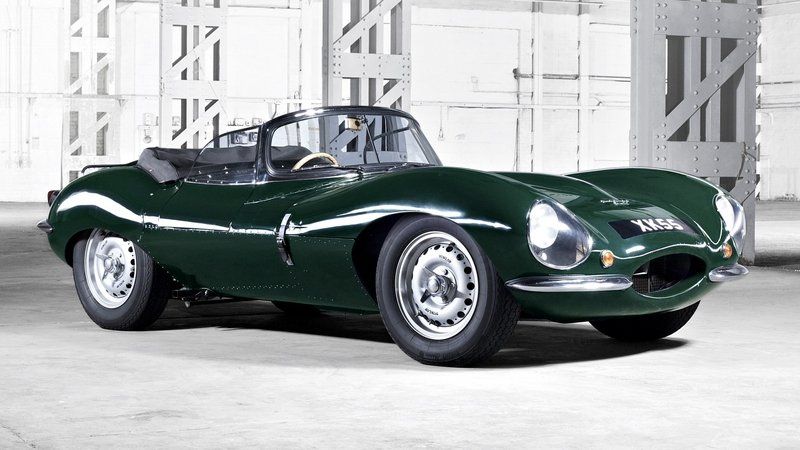
Jaguar Land Rover Classic, which is responsible for the successful launches of continuation editions of the Jaguar Lightweight E-type and forthcoming XKSS, as well as the recent introduction of the Land Rover ‘Reborn’ restoration programme, will establish a new home in the British Midlands later this year, following acquisition of a new site near to the Special Vehicle Operations Technical Centre. The initial investment in this new facility totals £7.5m and the new site will house car sales, restorations, servicing and parts operations.

JLR #1 - SVO gets it's own manufacturing base to build, design & commission storming versions of existing cars.

  • Brand new Technical Centre to undertake manufacturing, personalisation and commissioning programmes for Jaguar Land Rover Special Vehicle Operations division
  • New Technical Centre located near Coventry represents a £20m investment by Jaguar Land Rover
  • Technical Centre comprises four zones: Manufacturing Facility, Paint Facility, Technical Suite and new VIP Commissioning and Viewing Suites 
Jaguar Land Rover Special Vehicle Operations (SVO) today officially opens its new Technical Centre in the heart of the British Midlands. The innovative new £20m facility near Coventry will be the headquarters of SVO and will house manufacturing, paint, technical and customer commissioning and presentation zones inside the 20,000m2 facility.

The new Technical Centre is significant representation of the growth of Jaguar Land Rover Special Operations – the specialist division of Jaguar Land Rover created in June 2014 to build a business responsible for halo car products (SVO), Vehicle Personalisation, classic car programmes by Jaguar Land Rover Classic and an exciting range of Branded Goods. 


John Edwards, Managing Director of Jaguar Land Rover Special Operations, said: “The new Special Vehicle Operations Technical Centre is a major step forward in meeting the desires of our most discerning customers. There are more than 200 skilled employees here that are committed to outstanding quality and craftsmanship in everything they do.
“The SVO Technical Centre is very modern facility, inspired by a Formula 1 engineering centre. It covers 20,000 square metres including a manufacturing area, one of the world’s most eco-friendly and advanced paint shops, custom-built commissioning suite, technical suite, presentation suite and offices.
“This new Technical Centre enables us to build on the successful launches of the Range Rover Sport SVR, Range Rover SVAutobiography and Jaguar F-TYPE SVR , and provide an excellent foundation for the growth of the SVO business with the introduction of exciting new Vehicle Personalisation programmes.”
The Vision: Vehicle Personalisation
In future, customers will be able to visit the Technical Centre’s Bespoke Commissioning Suite by invitation, where they will explore the infinite range of possibilities for creating and customising their own Jaguar or Land Rover vehicle. A member of the Jaguar or Land Rover Design team will be on hand to assist the customer in the commissioning process.
Greg Clark, Director of Vehicle Personalisation said: “Our brand new facility delivers industry leading quality, precision and choice. We will encourage customers to participate in the design of their own vehicles, to give a real sense of emotional connection to something that they have created; something unique.
“Our aim is to progressively grow our portfolio to cater to, and exceed, the desires of our most discerning customers.”
The exclusive experience will continue through to the food served to customers visiting the Technical Centre. Michelin-starred chef Graham Edwards, who learned his trade in London’s West End and has previously worked with Raymond Blanc, is on hand to create a selection of dishes designed to suit the client or and utilising the very best of the Midlands’ regional ingredients.
The SVO story will continue in the Technical Centre once the customer has left, as their car is painted and hand-finished in the other three areas of the building.
The quality and attention to detail throughout the Technical Centre has been inspired by the exacting standards of the top level of motorsport. The workshop features a series of highly advanced workstations and has been created to enable the final assembly of SVO vehicles, by hand, to the highest possible quality.