2015 marks 80 years of the original, sport utility vehicle
In 1935, the Hoover Dam was completed, Elvis Presley was born, and canned beer first graced backyard barbeques across America. It was also the year the Chevrolet Suburban was introduced.
No other vehicle has been in continuous production as long as the Suburban. A black 2015 Suburban was the 10 millionth vehicle built at GM’s Arlington Assembly Center, which has been the home of the Suburban and other General Motors’ full-size SUVs since 1997.


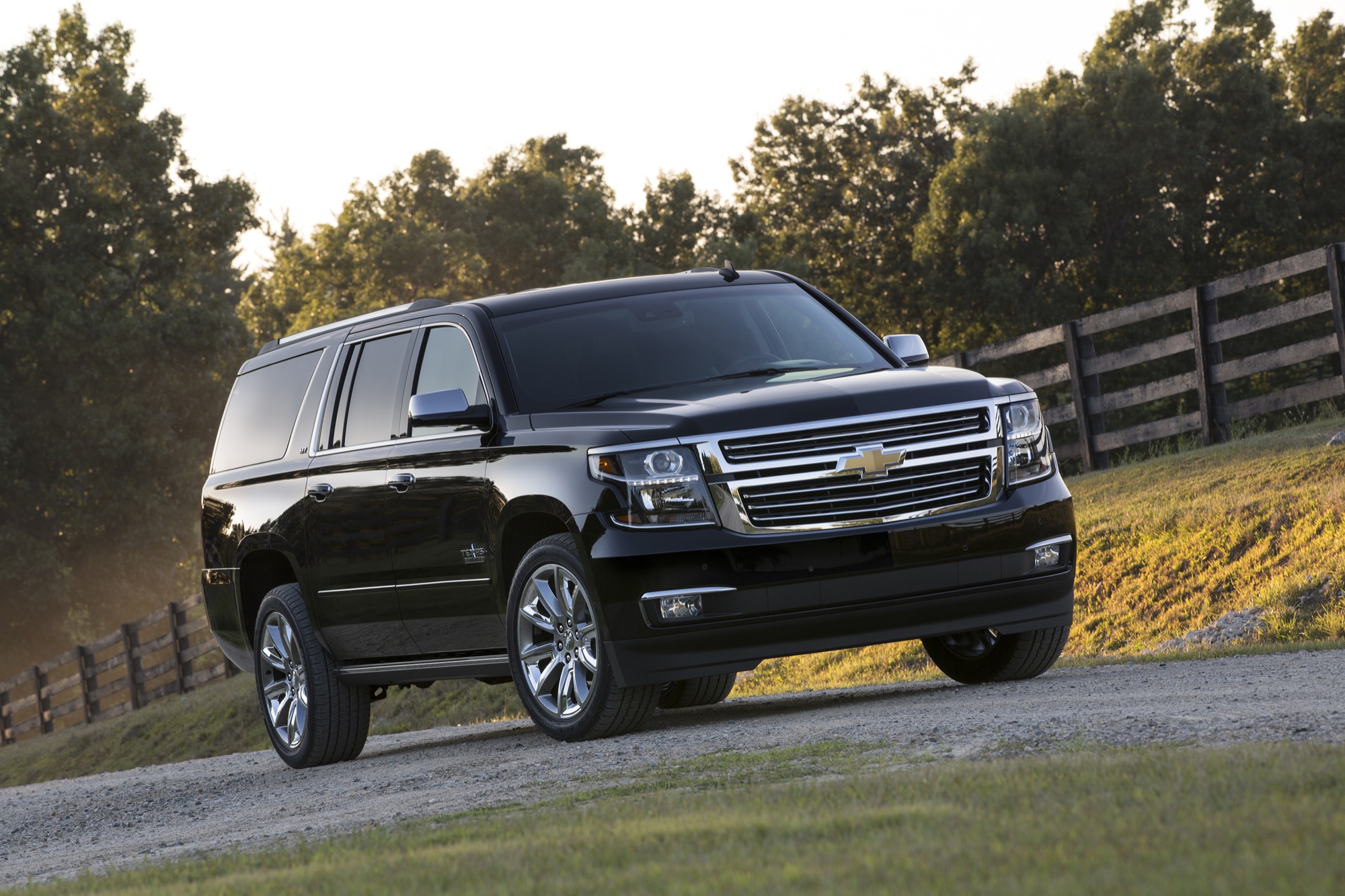
An all-new Suburban that debuted for 2015 marked the original SUV’s 80th anniversary and its 12th generation, with technology, refinement and efficiency that would have amazed engineers and customers in 1935.
“Times have changed and America has grown beyond all imagination, but the Suburban remains a fixture for those who need the capability of a truck with maximum passenger and cargo space,” said Sandor Piszar, Chevy Trucks marketing director.
The original 1935 Suburban could seat eight, while easily removable seats provided a large, 75-inch-long by 77-inch-high (1,905 mm x 1,956 mm) cargo area. It was powered by an inline-six-cylinder engine that produced 60 horsepower.
The all-new 2015 Suburban seats up to nine and offers up to 121.1 cubic feet (3,429 L) of maximum cargo space. Power comes from a 5.3L V-8 delivering 355 horses – almost six times the power of the 1935 model – with up to 23 mpg EPA highway.
A brief history of 80 years of innovation
Through the early 1930s, most manufacturers offered car-based wagons for professional use, but the Suburban was born of a need for a heavier-duty, truck-based wagon for commercial customers.
Prior to the Suburban, most car-based professional vehicles featured wood sides and canvas tops; and while they were versatile, their car-based chassis and damage-prone bodies were compromises. Chevrolet began experimenting with an all-steel wagon body mounted on a commercial chassis in the mid-1930s, resulting in the launch of the Suburban Carryall in 1935.
Car-based commercial vehicles, including sedan-based delivery vehicles, remained in production, but the heavy-duty truck-based chassis of the Suburban increasingly found favor with commercial customers. In the post-World War II years, its popularity steadily increased with private customers who appreciated its uncompromising capabilities.
The Suburban hit the mainstream in the early 1990s as part of the SUV boom. While many customers were new to the Suburban, it had a legion of longtime owners of multiple examples over the years. From hauling Little League teams and equipment, to towing a horse trailer or ferrying a work crew to a job site, the Suburban was a fixture of Americana.
Generation 1 – 1935-36
The Suburban Carryall is introduced on a half-ton chassis, with a signature two-door body style that would be produced through 1967. Power came from Chevrolet’s tough “Stovebolt” inline-six that produced 60 horsepower (45 kW).


Generation 2 – 1937-40
New, streamlined exterior styling carried Art Deco cues, and horsepower from the Stovebolt six increased to 79 (59 kW).

Generation 3 – 1941-46
Production of almost all civilian cars and trucks halted during America’s involvement in World War II, although many Chevy trucks – including the Suburban’s body style – were pressed into military duty.


Generation 4 – 1947-55
Representing the first significant redesign of Chevrolet’s truck line since before the war, the Suburban was welcomed by professionals in need of an all-new workhorse. Torque from the inline-six engine was 174 lb-ft (217 Nm) at only 1,200 rpm, creating excellent towing capability.


Generation 5 – 1955-59
Revolutionary new styling is introduced midway through the model year. Known as the “second series” design, it features a wraparound windshield and the elimination of running boards – the body is flush with the fenders for the first time. The second series model also introduces the legendary Small Block V-8. In 1957, factory-installed four-wheel drive is offered for the first time, with the famous NAPCO-supplied “Powr-Pak” system.


Generation 6 – 1960-66
All-new styling greets the 1960s and Chevrolet institutes the C/K designations to denote models with 2WD (C) and 4WD (K). During the sixth generation, engine choices ranged from a 230-cubic-inch inline-six to the 283- and 327-inch versions of the Small Block V-8.


Generation 7 – 1967-72
A redesign of Chevy’s half-ton trucks is introduced, including Suburban, which carries a unique three-door arrangement – with a single door on the driver’s side and front and rear doors on the passenger side. The configuration, with easier access to cargo area, was popular with ambulance companies.


Generation 8 – 1973-91
The Suburban is offered in a conventional four-door body style for the first time. Increased focus on interior comfort and amenities brings more personal-use customers to Suburban. By the late-1980s, electronically controlled fuel injection and a four-speed overdrive transmission bring greater efficiency.

Generation 9 – 1992-1999
An all-new Suburban features sleek styling with flush glass and composite headlamps. Other updates include four-wheel antilock brakes, Insta-Trac on four-wheel-drive models and a suspension system designed to provide a more carlike ride. In 1998, OnStar and the full-time AutoTrac all-wheel-drive system are added. In Australia, right-hand-drive versions of the Suburban are offered through GM’s Holden brand.

Generation 10 – 2000-2006
Launched in 1999 as a 2000 model, the 10th-generation Suburban brings new styling, new interiors and new powertrains. The engines include the Vortec 5.3L and 6.0L V-8s from the same Gen III Small Block family introduced a couple of years earlier in the Corvette. Other new features include four-wheel disc brakes and a load-leveling suspension system.

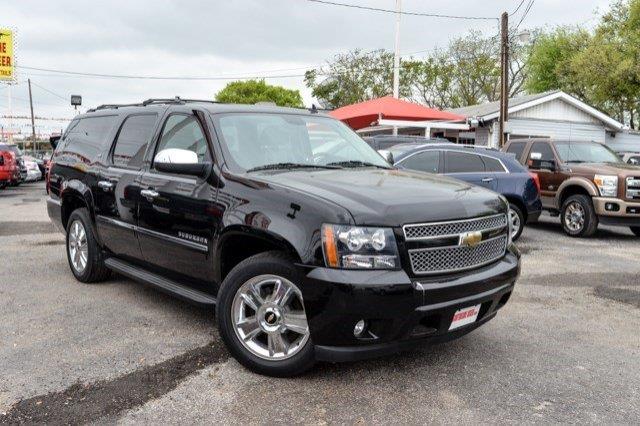
Generation 11 – 2007-14
The Suburban features a wind tunnel-shaped exterior and elimination of traditional chrome front and rear bumpers. More efficient, comfortable and capable than ever, the Suburban continues to offer customers uncompromising capability and versatility. In 2010, a limited-production 75th Anniversary Diamond Edition is offered.
Generation 12 – 2015+
Designed to be more functional and refined, while offering more safety features and a greater range of advanced technologies, the all-new Suburban is also more efficient, thanks to a range of enhancements that include a more aerodynamic design and a new, direct-injected EcoTec3 5.3L engine. Improved aerodynamics also contributes to a quieter interior.


