Purpose

I will try my best to provide detailed info on various cars and what is like to live with them, I have already produced a few for Jaguar-car-forums, I will do my best to be unbiased, but it will be hard for some cars. I will re-produce press releases and copy from other motoring news.
Showing posts with label 400000 units. Show all posts

Wednesday, 26 October 2016

Fords transit van now sells worldwide and has become teh worlds best selling commercial vehicle range of products.

  • Ford Transit was the best-selling cargo van family* globally in 2015, with nearly 400,000 vans registered, based on IHS Markit global new vehicle registration data for calendar year-end 2015
  • Ford has been Britain’s top-selling commercial vehicle since launch over 50 years ago and is also Europe’s number one CV brand
  • Transit is the best-selling van in America with sales up 31 per cent year-to-date; and is the best-selling nameplate in the light bus and van segment in China, based on data from China Insurance Information Technology Company
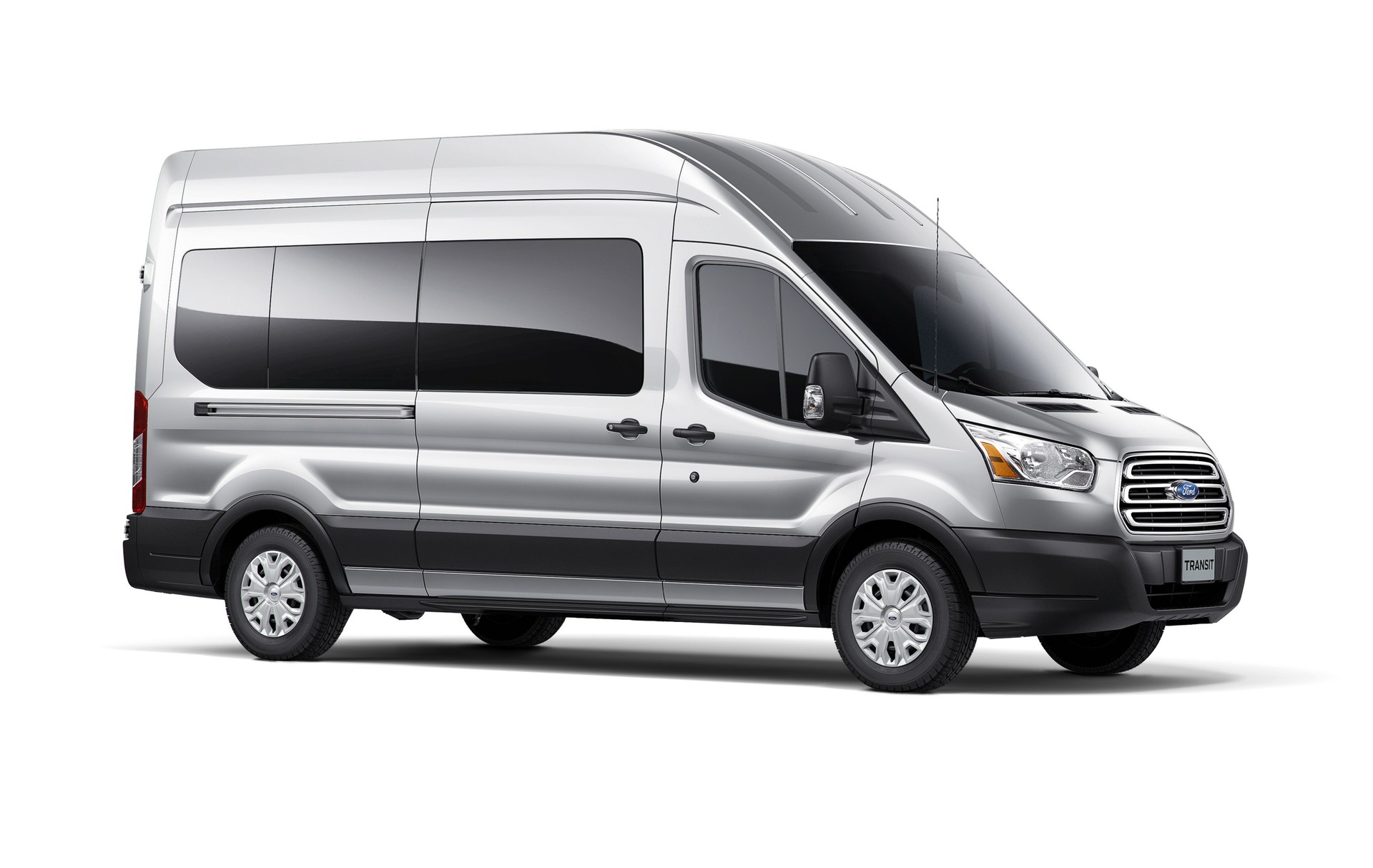
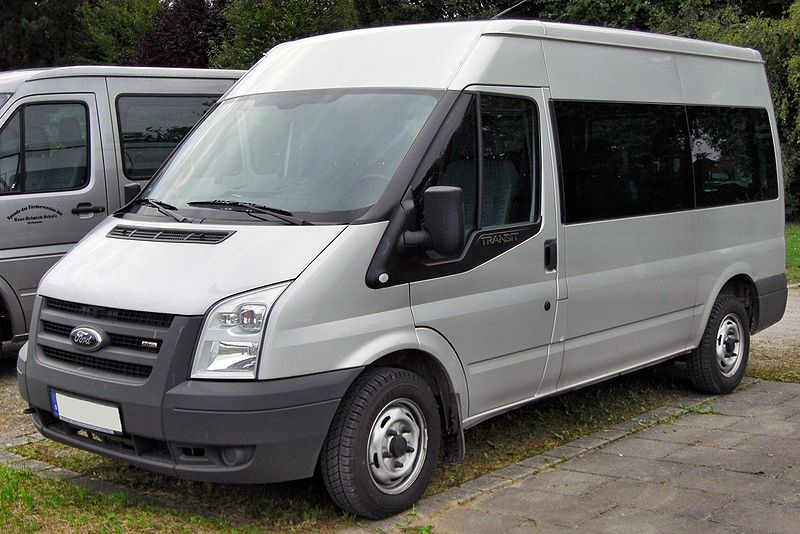
Fleets and tradespeople around the world are increasingly turning to Ford vans to get the job done, making the Ford Transit family the best-selling line-up of  cargo vans on the planet.
Ford Transit was the best-selling cargo van family* globally in 2015, with nearly 400,000 vans registered, based on IHS Markit registration data.

“We are focused on building our clear global leadership in trucks, vans and commercial vehicles,” says Raj Nair, Ford executive vice president, Global Product Development, and chief technical officer. “While other manufacturers only offer their van line-ups regionally, Ford has cracked the code on developing global van architecture that can be customised to regional needs.”
Transit is building on a 50-year legacy in Europe. In the past 25 months, Ford has seen its commercial vehicle market share grow from 10.8 per cent to 12.9 per cent in Europe.
This makes Ford the No. 1-selling commercial vehicle brand in Europe for the first time in 18 years, thanks to continued growing demand for its completely new and expanded Transit range – including Transit, Transit Custom, Transit Connect and Transit Courier – based on IHS Markit commercial vehicle registrations.

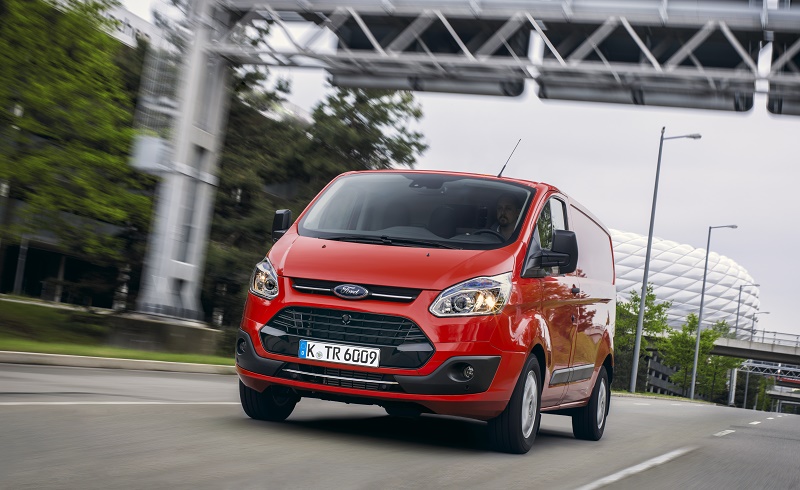
Transit Custom sales in Europe grew 23 per cent to 89,800 units year-on-year during the first three-quarters of 2016, and Transit sales grew 17 per cent to 64,800 units during the same period.**
“Ford sold more than 247,000 commercial vehicles in the first three quarters of 2016 – an 18.6 per cent increase year-on-year – and our Transit models are the cornerstone of that success,” said Hans Schep, general manager, Commercial Vehicles, Ford of Europe. “Equipped with an all-new generation of powerful Ford EcoBlue diesel engines, Transit and Transit Custom now offer even greater load-hauling capability alongside improved fuel-efficiency for reduced running costs.”
The success of Transit has also propelled Ford to become the top seller of commercial cargo vans in the U.S, accounting for 40 per cent of the full-size commercial van market in the country through September – up from 36 per cent in 2015. Strong demand for Transit is putting Ford on track for its best year for U.S. van sales since 1978, based on Ford-reported data. Transit now outsells even America’s best-selling minivan, based on industry-reported sales.  
Overall industry sales for Class 1-3 vans in the U.S. and Mexico are expected to continue growing, according to work truck industry association NTEA, which predicts industry sales will increase 10 per cent in 2016 compared with 2015.
Transit is the best-selling nameplate in the light bus and van segment in China, on track to become the best-selling nameplate there for 2016, based on data from China Insurance Information Technology Company.
Transit also remains the UK’s favourite van after over 50 years of sales leadership and after a successful March, commercial vehicle sales are on track to be at a record high at year end.
Deep roots for Ford commercial cargo van leadership
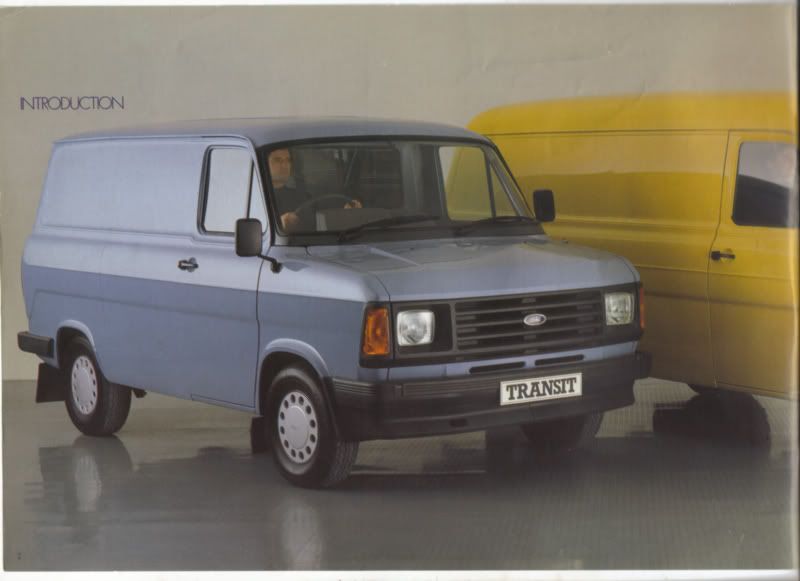
Ford’s commercial cargo van legacy began when the first Transit left the production line in Langley, England, Aug. 9, 1965. Transit became a favourite in Europe, and recently celebrated its 50th anniversary.
Ford is expanding its Transit line-up in China as part of its relationship with Jiangling Motors Corporation, which started in August 1995, with the first Ford Transit produced there in December 1997.
More than eight million Transit and Transit Custom vehicles have been built, as the range grew from a single model more than half a century ago to an entire family of commercial cargo vehicles. Lined up end-to-end, 50 years of Transit vans would circle the globe. A customer buys a new Transit every 180 seconds on average, based on Ford sales and production data.
Transit debuts Ford EcoBlue diesel
Ford earlier this year introduced the new Transit and Transit Custom, powered by state-of-the-art Ford EcoBlue diesel engine technology that delivers significant cost of ownership and performance benefits, with fuel efficiency improved by up to 13 per cent and low-end torque by 20 per cent.
Sophisticated new driver assistance technologies for both models include:
  • Pre-Collision Assist emergency braking system – the first in the segment to feature Pedestrian Detection technology – that reduces the severity of some frontal collisions involving vehicles and pedestrians, or helps drivers avoid some impacts altogether
  • An upgraded Electronic Stability Control system that provides an enhanced suite of functions to improve vehicle stability in extreme driving situations including Side Wind Stabilisation – a new system that applies the brakes on one side of the vehicle to reduce the effect of a sudden side wind gust on the vehicle’s path
Also offered is a new six-speed automatic transmission for Transit and Transit Custom; and an enhanced all-wheel drive system and advanced SYNC 3 connectivity for Transit.

Sunday, 15 November 2015

Reports and rumours suggest that all the new Alfa models planned for the next few years are all delayed.

Alfa Romeo will delay the sales launches of two key new models, according to sources, in a further setback for the struggling Fiat Chrysler Automobiles brand.
The Giulia Quadrifoglio midsize sedan will go on sale in Europe six months later than planned in the middle of next year, two supplier sources told Automotive News Europe. Alfa’s first SUV, based on the Giulia, will not come to market before early 2017, nine months later than planned, the same sources said.

The high-performance Giulia Quadrifoglio was due to launch in Europe by the end of this year as the first model in the Giulia lineup, Alfa’s European dealers were told during the car’s presentation in June. The car's market launch is now delayed because Alfa is working to refine some safety and ride characteristics, the sources said.
Alfa Romeo declined to comment on whether the launches of the Giulia Quadrifoglio and the SUV have been delayed.
The U.S. launches for the Giulia and Giulia-based SUV are scheduled to happen about 3 to 6 months after their European sales debuts.
FCA CEO Sergio Marchionne said on Oct. 28 that the company is re-examining Alfa's global expansion because of the slowdown in the Chinese market. He reaffirmed a planned 5 billion euro investment announced in May 2014 to boost Alfa’s annual global sales to 400,000 units with eight new models but said the investment will be completed in 2019 or 2020.
Fiat Chrysler will work hard in the next 30 to 60 days to review Alfa's business plan and the new vehicles may come in a different order to satisfy consumer tastes in Europe and North America, Marchionne told analysts on a conference call on on Oct. 28 after FCA announced its third-quarter results. The revised sequence likely will be announced in January, he said.
Alfa has not announced the details of all its planned eight new models but sources say they include a replacement for the Giulietta compact, a large sedan, as well as large and compact SUVs.
Delays to the first of those models, the Giulia and Giulia-based SUV, mean that Alfa is likely to sell well below the 400,000 units outlined in its business plan in 2018.
IHS Automotive in its latest forecast predicts that Alfa will reach slightly more than 230,000 annual sales by 2018, up from 68,000 last year. Just under 50,000 of those sales will be Giulias and about 23,000 will be Giulia-based SUV, the firm forecasts.
IHS analyst Ian Fletcher said Marchionne’s latest revision of Alfa’s revival plans appears to show that he is "managing expectations" for the brand. Marchionne may postpone the launch of niche models such as the large sedan, Fletcher said. FCA is likely to bring to market sooner the type of models Alfa needs "to enable it to survive," he said, including the Giulietta replacement.
Maserati setback
Marchionne said on the Oct. 28 call that the continued weakness of imported luxury vehicles in China had forced a reassessment of FCA's strategy for Alfa, but Max Warburton, an auto analyst at Bernstein, said Maserati’s falling sales may have prompted Marchionne to re-examine his strategy for Alfa.
"It's a bit odd to start blaming China for a fundamental change in the plan for Alfa," he said. Marchionne is probably shocked by the speed of the deterioration in Maserati’s demand. "Maserati was the dry run for Alfa and it has not gone to plan," Warburton said.
Maserati has been hurt by slowing demand in the U.S. and China, its two largest markets. The brand’s global vehicle sales fell 22 percent to 6,916 in the third quarter.
Alfa Romeos are not sold in China and FCA has not set a date for the brand’s introduction in the world’s largest market. Marchionne’s revival plan for Alfa originally called for China sales to account for about 20 percent the 400,000 target. A large portion of the volume projection that had been assigned to China will have to be absorbed by other regions, including North America and Europe, Marchionne said on Oct. 28.
Giulia volume models
The Giulia was previewed in June and officially unveiled in September at the Frankfurt auto show in the guise of the 503-hp Giulia Quadrifoglio version. The Giulia’s volume models, which will be powered by a new 2.0-liter gasoline engine and a new 2.2-liter diesel, are now likely to launch in Europe late next year instead of March next year, sources said.
When finally launched, the Giulia will attack the core of the premium midsize segment dominated both in Europe and globally by the BMW 3 series, Mercedes-Benz C class and Audi A4. German rivals, however, are not worried.
  • Giulia Quadrifoglio
  • New target: mid-2016
  • Old target: late 2015
  • Giulia-based SUV
  • New target: early 2017
  • Old target: spring 2016
  • Giulia base models
  • New target: late 2016
  • Old target: March 2016
“Who is Alfa Romeo?” Audi CEO Rupert Stadler joked at the Frankfurt auto show in September. “I’m sorry, but we have to define the landscape of competition.” For Stadler, that landscape includes only Mercedes and BMW.

IHS Automotive believes Alfa will sell 22,000 Giulias in Europe during its best year, forecast to be 2018, compared with European sales of 150,000 for the Mercedes C class, a volume of 140,000 for the Audi A4 and 92,000 for the BMW 3 series in the same year.
Overly ambitious?
Even on the eve of the Giulia preview in June, analysts were sceptical about Marchionne’s ambitious plans for Alfa. Bernstein’s Warburton said in a June 18 investors note that the Giulia will eventually go on sale but “we remain unconvinced that it will be followed by a significant expansion of the model range.”
“Fiat has promised numerous re-launches for Alfa Romeo in the Marchionne era. New products and bold volume targets have come and gone,” Warburton said.
Richard Hilgert, an auto analyst at Morning star, said Marchionne’s 400,000 sales target is over-reaching. “I would be impressed if the brand sold 200,000,” he said.
Said Hilgert: “I think Marchionne set an overly-lofty target as a shock treatment to a patient in cardiac arrest. The idea being to get an immediate dramatic response, but his plan for 400,000 units in 2018 would have the patient immediately get up and run a 5-kilometer race.”
Nick Gibbs and Luca Ciferri contributed to this report.