Purpose

I will try my best to provide detailed info on various cars and what is like to live with them, I have already produced a few for Jaguar-car-forums, I will do my best to be unbiased, but it will be hard for some cars. I will re-produce press releases and copy from other motoring news.
Showing posts with label Luca Ciferri. Show all posts

Thursday, 25 February 2016

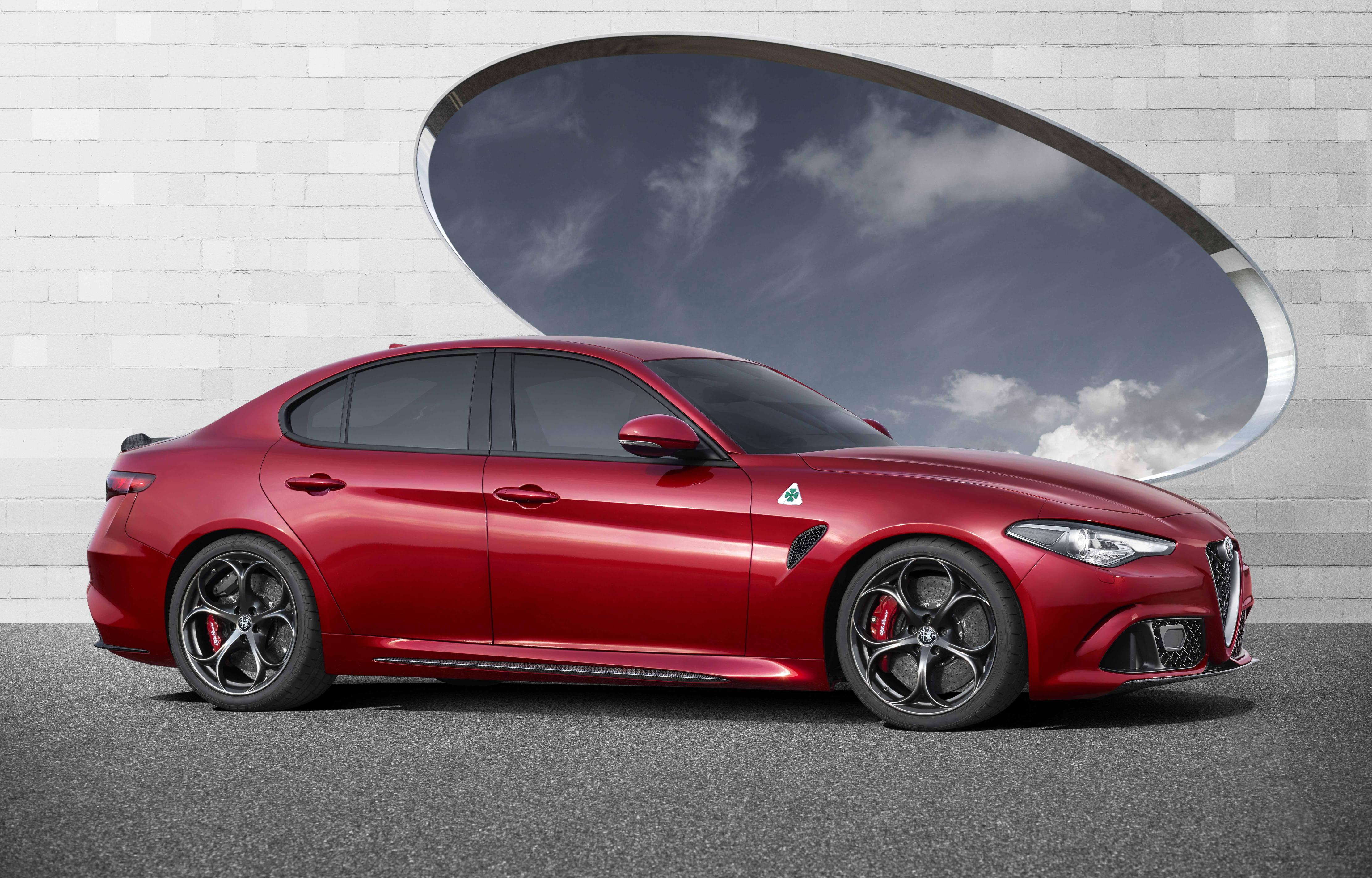
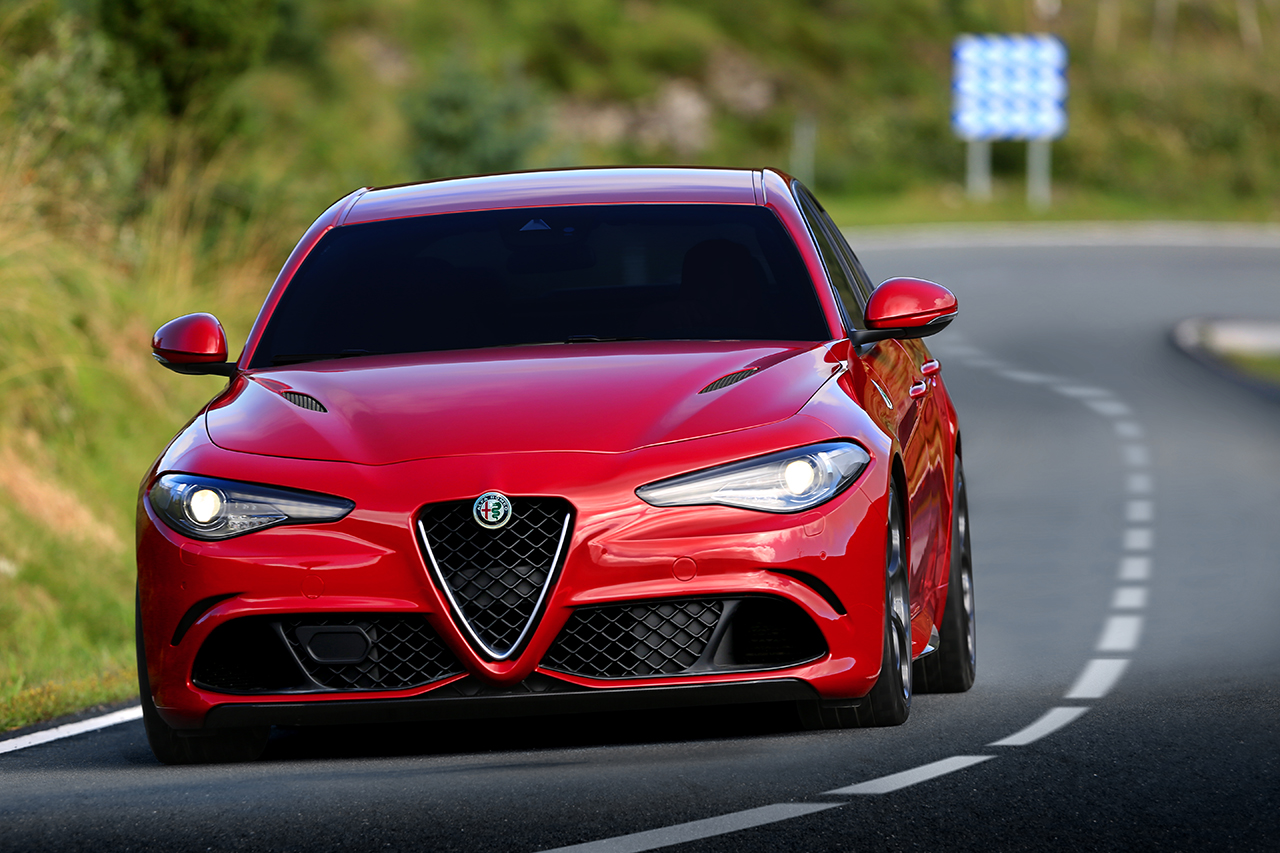
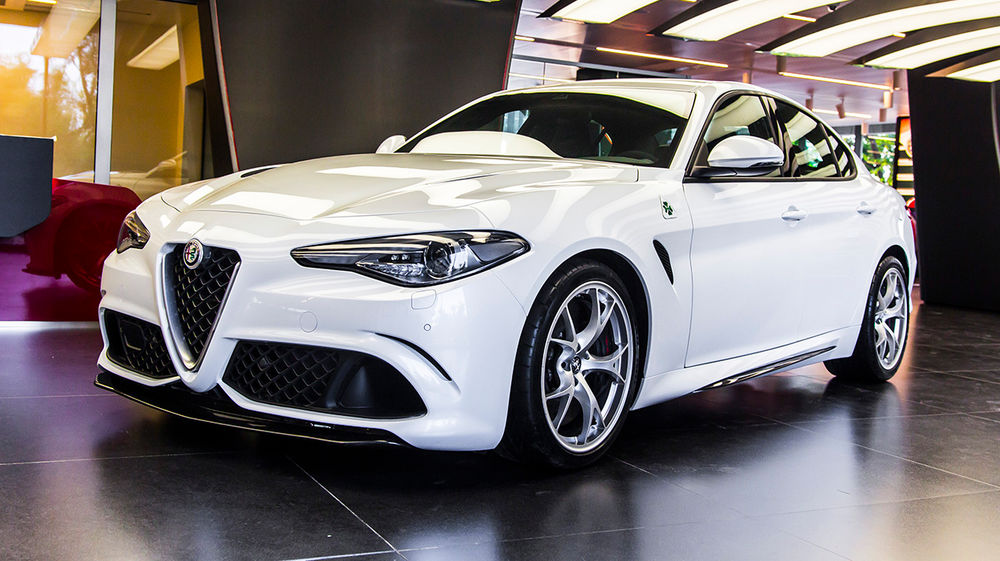
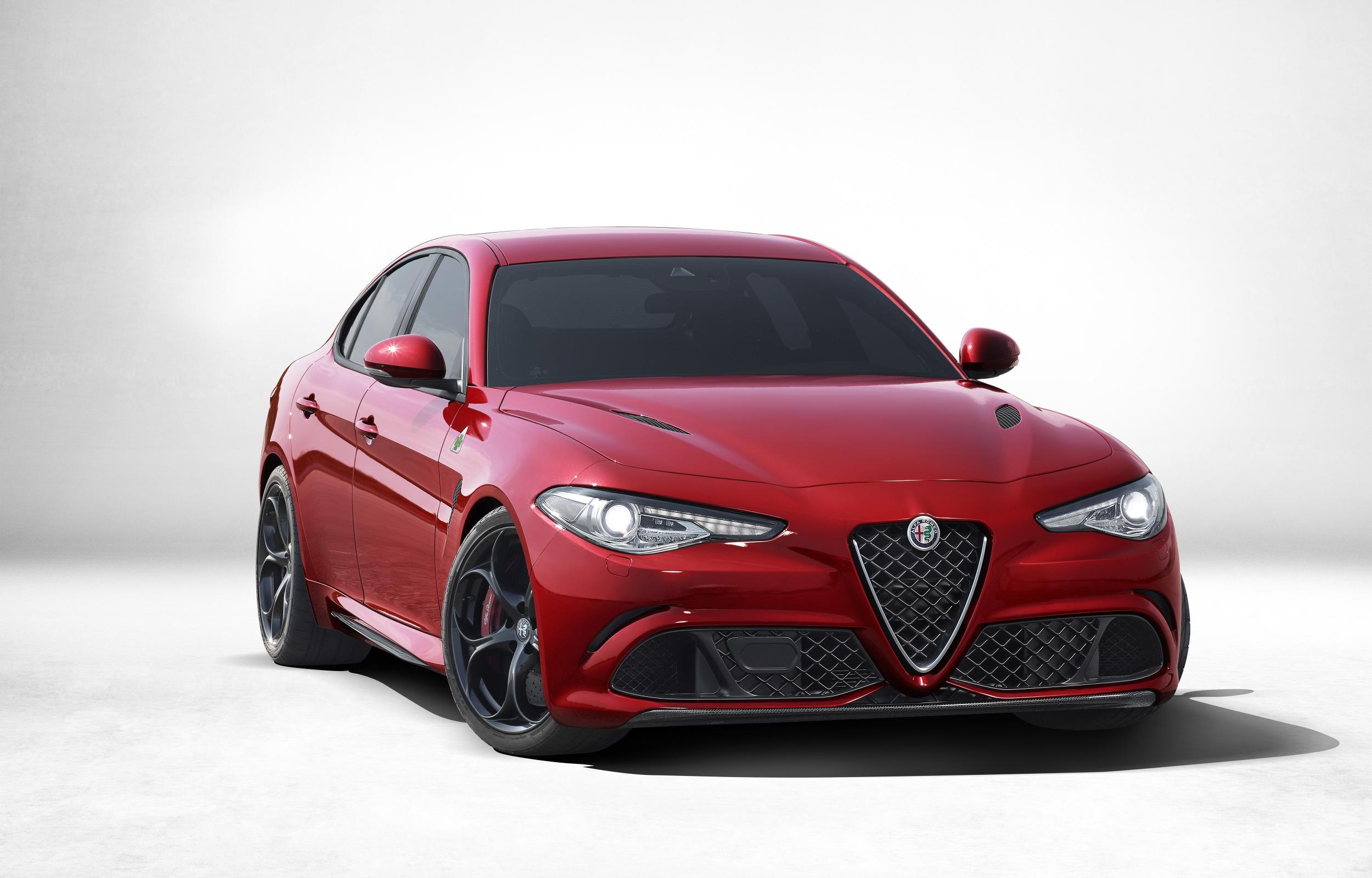
Alfa Romeo will launch the mainstream versions of its Giulia midsize sedan at the Geneva Auto Show.

Alfa Romeo will unveil the long-delayed mainstream versions of its Giulia midsize sedan at the Geneva auto show next week.
The debut follows presentation of the high-performance, top-of-the-line Giulia Quadrifoglio in Frankfurt last September.
The Giulia, a rival to the Audi A4 and BMW 3 series, will be shown with an entry-level 2.0-liter gasoline engine and a 2.2-liter diesel that is unlikely to be sold in the U.S. The Giulia Quadrifoglio has a Ferrari-derived 505-hp twin-turbocharged V-6.

U.S. sales of the Quadrifoglio will begin in the third quarter, with the 2.0-liter version arriving in U.S. showrooms by year end, Alfa has said. Originally, the Quadrifoglio was expected in the U.S. in the first quarter and the rest of the range by midyear.
The new 2.0-liter engine, a direct-injection, turbocharged four-cylinder, will be available in 180-hp, 250-hp and 330-hp versions. The engine also has FCA's MultiAir variable valve system.
The Giulia will also use a higher-output variant of a revised 2.2-liter diesel introduced last year on the Jeep Cherokee. The engine has a top output of 210 hp but also will be offered in more fuel-efficient 135-hp and 180-hp variants.
The Giulia, previewed at the Alfa Romeo museum in June 2015, has had a bumpy development. This month, FCA lured former Ferrari chief engineer Roberto Fedeli back from BMW Group to help fix mounting technical challenges at Alfa and Maserati.
The launch of the Giulia is months behind schedule. Supplier sources have told Automotive News Europe the Giulia failed to pass internal front, side and rear crash tests, which resulted in extensive re-engineering that has added about six months to the sedan's development time.

"We are not commenting in any way," said an FCA spokesman when asked about a delay. 
The Quadrifoglio version was due to launch in Europe by the end of last year with the base Giulia scheduled for a European debut in March, European dealers were told last June. 
The Quadrifoglio and the diesel are now set to go into production on March 31, with deliveries to Italian dealers to begin by late May or early July. The Giulia with the 2.0-liter gasoline engine is due in Europe by the end of the year.
Luca Cifferi
Automotive News

Sunday, 15 November 2015

Reports and rumours suggest that all the new Alfa models planned for the next few years are all delayed.

Alfa Romeo will delay the sales launches of two key new models, according to sources, in a further setback for the struggling Fiat Chrysler Automobiles brand.
The Giulia Quadrifoglio midsize sedan will go on sale in Europe six months later than planned in the middle of next year, two supplier sources told Automotive News Europe. Alfa’s first SUV, based on the Giulia, will not come to market before early 2017, nine months later than planned, the same sources said.

The high-performance Giulia Quadrifoglio was due to launch in Europe by the end of this year as the first model in the Giulia lineup, Alfa’s European dealers were told during the car’s presentation in June. The car's market launch is now delayed because Alfa is working to refine some safety and ride characteristics, the sources said.
Alfa Romeo declined to comment on whether the launches of the Giulia Quadrifoglio and the SUV have been delayed.
The U.S. launches for the Giulia and Giulia-based SUV are scheduled to happen about 3 to 6 months after their European sales debuts.
FCA CEO Sergio Marchionne said on Oct. 28 that the company is re-examining Alfa's global expansion because of the slowdown in the Chinese market. He reaffirmed a planned 5 billion euro investment announced in May 2014 to boost Alfa’s annual global sales to 400,000 units with eight new models but said the investment will be completed in 2019 or 2020.
Fiat Chrysler will work hard in the next 30 to 60 days to review Alfa's business plan and the new vehicles may come in a different order to satisfy consumer tastes in Europe and North America, Marchionne told analysts on a conference call on on Oct. 28 after FCA announced its third-quarter results. The revised sequence likely will be announced in January, he said.
Alfa has not announced the details of all its planned eight new models but sources say they include a replacement for the Giulietta compact, a large sedan, as well as large and compact SUVs.
Delays to the first of those models, the Giulia and Giulia-based SUV, mean that Alfa is likely to sell well below the 400,000 units outlined in its business plan in 2018.
IHS Automotive in its latest forecast predicts that Alfa will reach slightly more than 230,000 annual sales by 2018, up from 68,000 last year. Just under 50,000 of those sales will be Giulias and about 23,000 will be Giulia-based SUV, the firm forecasts.
IHS analyst Ian Fletcher said Marchionne’s latest revision of Alfa’s revival plans appears to show that he is "managing expectations" for the brand. Marchionne may postpone the launch of niche models such as the large sedan, Fletcher said. FCA is likely to bring to market sooner the type of models Alfa needs "to enable it to survive," he said, including the Giulietta replacement.
Maserati setback
Marchionne said on the Oct. 28 call that the continued weakness of imported luxury vehicles in China had forced a reassessment of FCA's strategy for Alfa, but Max Warburton, an auto analyst at Bernstein, said Maserati’s falling sales may have prompted Marchionne to re-examine his strategy for Alfa.
"It's a bit odd to start blaming China for a fundamental change in the plan for Alfa," he said. Marchionne is probably shocked by the speed of the deterioration in Maserati’s demand. "Maserati was the dry run for Alfa and it has not gone to plan," Warburton said.
Maserati has been hurt by slowing demand in the U.S. and China, its two largest markets. The brand’s global vehicle sales fell 22 percent to 6,916 in the third quarter.
Alfa Romeos are not sold in China and FCA has not set a date for the brand’s introduction in the world’s largest market. Marchionne’s revival plan for Alfa originally called for China sales to account for about 20 percent the 400,000 target. A large portion of the volume projection that had been assigned to China will have to be absorbed by other regions, including North America and Europe, Marchionne said on Oct. 28.
Giulia volume models
The Giulia was previewed in June and officially unveiled in September at the Frankfurt auto show in the guise of the 503-hp Giulia Quadrifoglio version. The Giulia’s volume models, which will be powered by a new 2.0-liter gasoline engine and a new 2.2-liter diesel, are now likely to launch in Europe late next year instead of March next year, sources said.
When finally launched, the Giulia will attack the core of the premium midsize segment dominated both in Europe and globally by the BMW 3 series, Mercedes-Benz C class and Audi A4. German rivals, however, are not worried.
  • Giulia Quadrifoglio
  • New target: mid-2016
  • Old target: late 2015
  • Giulia-based SUV
  • New target: early 2017
  • Old target: spring 2016
  • Giulia base models
  • New target: late 2016
  • Old target: March 2016
“Who is Alfa Romeo?” Audi CEO Rupert Stadler joked at the Frankfurt auto show in September. “I’m sorry, but we have to define the landscape of competition.” For Stadler, that landscape includes only Mercedes and BMW.

IHS Automotive believes Alfa will sell 22,000 Giulias in Europe during its best year, forecast to be 2018, compared with European sales of 150,000 for the Mercedes C class, a volume of 140,000 for the Audi A4 and 92,000 for the BMW 3 series in the same year.
Overly ambitious?
Even on the eve of the Giulia preview in June, analysts were sceptical about Marchionne’s ambitious plans for Alfa. Bernstein’s Warburton said in a June 18 investors note that the Giulia will eventually go on sale but “we remain unconvinced that it will be followed by a significant expansion of the model range.”
“Fiat has promised numerous re-launches for Alfa Romeo in the Marchionne era. New products and bold volume targets have come and gone,” Warburton said.
Richard Hilgert, an auto analyst at Morning star, said Marchionne’s 400,000 sales target is over-reaching. “I would be impressed if the brand sold 200,000,” he said.
Said Hilgert: “I think Marchionne set an overly-lofty target as a shock treatment to a patient in cardiac arrest. The idea being to get an immediate dramatic response, but his plan for 400,000 units in 2018 would have the patient immediately get up and run a 5-kilometer race.”
Nick Gibbs and Luca Ciferri contributed to this report.

Tuesday, 10 March 2015

Automotive News Europe Interview with Carlos Ghosn.

Renault-Nissan CEO Carlos Ghosn remains confident that by 2018 his seven-brand alliance will rank as one of the world’s three largest automakers. He sees the alliance rising from No. 4 now despite big troubles in Russia and finishing about 1.4 million units behind No. 3 General Motors last year. Ghosn is confident because, he says: “A lot of things can happen in three years.” Ghosn shared his views on the sales race, the reasons for Dacia’s success and more during an interview with Automotive News Europe Editor Luca Ciferri.
Will economic downturns in markets such as Russia prevent Renault-Nissan from becoming one of the three largest automakers by 2018?
In the short term some of the emerging markets where we have significant capacity such as Russia are not moving in the right direction, but this will not last forever. Russia has a much bigger potential than what the market is showing today. When oil prices return to a more reasonable level - because today they are abnormally low - the Russian market will boom again. Russia falls very quickly but also recovers very rapidly. Brazil is much the same. India is one of the Asian markets with the highest potential for growth. We have made investments there and our product offensive is starting now.

Do you still believe the alliance will rise into the top three in three years?
Yes, I’m optimistic that the numbers will rise. We have headwinds in some markets, but we sold 8.5 million units last year. The No. 3 [General Motors] is 1.4 million units ahead of us, but in this industry, a lot of things can happen in three years.
Does the alliance need another partner to enter the top three?
We don’t need another partner. Partnerships are a matter of opportunity, synergies and complementarity. You don’t form partnerships just for the sake of additional volume. Scale is a problem, sure, but at 8.5 million units, we don’t lack scale. Somebody else needs to worry about scale, not us.
Are you planning any big changes to your cooperation with Daimler?
I don’t think we need to change anything. This cooperation in going very well. We are adding projects and, frankly, we are acclimating to each other very quickly.
And beyond Daimler?
Will there be more opportunity for cooperation with other carmakers? Without any doubt, because this industry is changing very quickly, not only in terms of technology, but also on product and the geographic footprint. There is always a configuration that makes more sense than the one you have today. I don’t rule out anything, but at the same time, we are not in a position where we need to find a partner for our survival.
What are the biggest opportunities for the alliance?
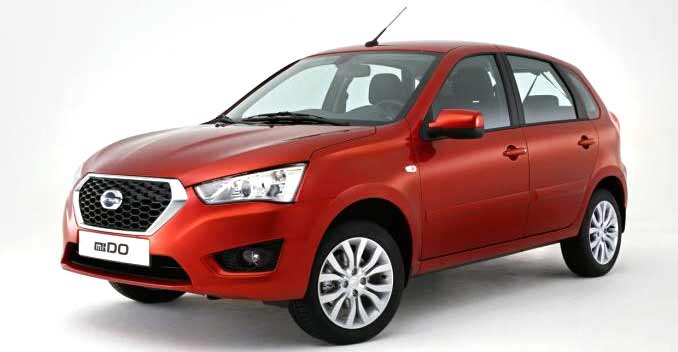
For Nissan, the biggest opportunity is [becoming more] premium and the development of Infiniti is a big part of that. At the opposite end of the product spectrum, Nissan is benchmarking Dacia to try to replicate its success with the Datsun range. For Renault, the biggest opportunity is geographical expansion. The first step is properly getting into China, where we plan a 3 percent market share, about 600,000 units a year, from about 30,000 units that we import now. The second step is to create an entry-level range for emerging markets. Another step at Renault is expanding the product line.
Why have none of your rivals been able to launch a serious rival to Dacia?
You should ask the competitors who said they were going to replicate the Dacia business model why they could not do it. What I can say is that Dacia is not just a car range. It’s a whole system, implemented with integrity in order to get the results in product, manufacturing, supply chain, marketing and sales. This may be something that is difficult to reproduce. I’m very happy that no one has been able to reproduce it yet.
Are Dacias and Dacia-badged Renaults still producing a double-digit operating margin?
Absolutely. Profitability in our industry is where people cannot copy you.
Renault has increased its operating margin from 0.1 percent in 2012 to 1.3 percent in 2013 to 2.2 percent last year. Will that number rise into the 3’s this year?
We need to be very prudent for a number of reasons, for example, Russia. We have the potential to deliver [an even higher operating margin], but the result will depend more on the external environment than on our performance.
What is the outlook for Europe?
Europe is not growing, it is recovering. There’s a big difference. The European market is still about 20 percent below its 2007 peak. I think the current situation is healthy and this slow recovery will continue in the coming years.
And in the U.S.?
The U.S. recovery is finished and we are on a new growth path. I don’t think the U.S. market has peaked yet. We will see moderate growth continuing. Probably not 5 percent year-over-year, but 2 to 3 percent, which is fine.
What about China?
China will continue to grow, but the pace is moderating, which is normal. I don’t think the world’s largest market could continue to grow by 70 percent a year. I do not envisage any risk of a bubble. There may be some excesses here or there, but nothing major is threatening the car industry in China.
Last year, the Renault Captur became Europe’s No. 1 small crossover replacing the Nissan Juke. Does that create a conflict within the alliance?
We’ve always said that the alliance should not be a handicap for any company. Renault and Nissan can launch any product at any time in any market. Also, we do not see direct competition in the market place. During consumer panels a Renault is seldom cross-shopped against a Nissan and the other way around. In Europe, Nissan is in a basket with Toyota, Honda, Hyundai ... mostly Asian brands. For Renault it’s mainly European brands.
Will you add or cut suppliers?
Every time we can reduce the number of suppliers, we do it. However, reducing the number of suppliers risks reducing competition. Therefore, you need to make sure that the guys who are supplying you become your partners. If not, you will find yourself in a very uncomfortable position: not having a big choice [of companies to work with] and not having long-term relationships.
Is there an ideal number of suppliers?
No, because all the new technology development taking place today adds new parts and new suppliers, so it’s impossible to have a cap.
Do you have a problem when a supplier’s margins are higher than yours?
No. I’m worried when a supplier has a much lower margin than mine, because he may not be interested in doing business with me. Also, when you come to ask him for competitiveness, he will tell you: “I don’t make enough money.” When your suppliers make more money than you, it puts you at ease to have a very balanced relationship.
You plan to retire before the end of the decade. You have said you would not recommend that one person runs both Renault and Nissan in the future. Has your opinion changed?
No. I don’t wish this on anyone. I’m doing it because of circumstances. That’s why I don’t think it would be fair to repeat something like this.
Who are your potential successors?
I’m not going to speculate on this because this is not a pressing matter. I have a new mandate with Renault that runs until 2018, so we still have three and a half years to go
Is 65 the right time to retire?
Retiring at 65 is mandatory at Renault. The issue came before the board and I voted in favor of this. Like most Japanese companies, Nissan does not have an age limit. In every country we operate, we follow the local rules. Those CEOs who think that they are still young and fresh enough to do the job at 65 can go and negotiate with their boards. I personally think that 65 is a very reasonable time for a CEO to step down.
How important is autonomous driving?
Renault-Nissan wants to be at the forefront of autonomous driving, which means empowering people in the car, giving them the possibility to drive or not to drive, to let the car do things for you under your guidance. It’s about re-establishing the pleasure of driving. What pleasure is there in keeping your eyes on the road and your hands on the wheel during a traffic jam? At the same time we are not interested in driverless cars. That is a completely different story.
Automotive News Europe Home
Automotive News Europe HomeWhen will the investments in autonomous driving start to pay off?
Autonomous driving comes from modules and we are already installing some of them in our cars such as automatic parking, lane keeping and steer-by-wire. These and other pieces of technology are coming one after the other, so they are being amortized one by one. I would say that autonomous driving is a much easier technology to amortize than electric cars or fuel cells. With EVs and fuel cells, you don’t start to amortize until you sell the first complete car. In autonomous driving, you start to amortize by introducing each single module.
Are you cooperating with Daimler on autonomous driving?
Right now we don’t cooperate with Daimler, but it doesn’t mean we will not one day.
You can reach Luca Ciferri
Tuesday, 25 November 2014

BMW may have to increase production of its i8 sports car to meet increased demand.

BMW may have to increase production of its i8 plug-in hybrid sports car to meet high demand.
The waiting time for the 120,000 euro coupe is up to 18 months, BMW sales and marketing chief Ian Robertson said.
"We need to find ways to increase i8 production because the waiting lists in some markets are getting too long,” Robertson told Automotive News Europe at the auto show here on Wednesday.

Robertson said six months is as long as customers should have to wait for a built-to-order premium model.
The i8 is produced at BMW's factory in Leipzig, Germany. The car went on sale in Europe in June and in the U.S. in August.
Robertson declined to elaborate on current production levels of the i8, as well as on any potential output increase. He said BMW planned the i8 as a low-volume model with annual sales in the low single digit thousands.
So far this year BMW delivered to 760 i8 cars to customers including 419 in October.
IHS Automotive forecasts that BMW will build 3,238 units of the i8 this year, increasing to 4,318 next year.
i3, i5
Robertson said waiting time for the i3 battery-powered compact hatchback, which is also built in Leipzig, is stabilizing at about four to five months.

“We are now delivering about 2,000 units of the i3 a month,” he said. Through October, BMW delivered 12,184 units of the i3 worldwide, including 1,985 in October.
Asked whether BMW will launch a fuel call car called the i5, as media reports have suggested, Robertson said he was not aware of such plans. BMW is discussing how its 'i' range will evolve but no decisions have been made, he said.
Luca Ciferri

Thursday, 13 November 2014

Zetsche: Daimler has no ambition to run Aston Martin

Daimler has no plans to increase its Aston Martin stake or become involved in operational matters at the UK sports car maker, Daimler CEO Dieter Zetsche said. (SO reading between the lines means that AMG MB will be haveing a bid for Aston - LOL)
The huge difference in size between the two companies is one reason why Daimler won't get involved in running Aston Martin, Zestche said.
Daimler sells more than 1 million Mercedes-Benz cars a year while Aston Martin's annual sales volume is much smaller.
"I don't think we could do a better job running a 4,000-units-a-year company than Aston Martin's management,” Zetsche said on the sidelines of a press event here.

Daimler has a 5 percent stake in Aston Martin that it got in exchange for supplying the company with electric and electronic parts and V-8 engines from Mercedes’ AMG performance unit. Zetsche said no cash changed hands in order for Daimler to get its share.
Reports have said that Daimler and Aston Martin are also in talks on using Mercedes technology to develop an SUV that Aston Martin that would go on sale in 2017.
In December 2012, Italian tycoon Andrea Bonomi's Investindustrial bought 37.5 percent of Aston Martin in a $241 million deal with Kuwaiti controlling shareholders Investment Dar and Adeem Investment.

Zetsche said Investindustrial believed that Aston Martin needed a technical partner to help secure its long-term future. "As we share this vision, we were willing to be their technical partner," he said.
Nissan's former chief planning officer, Andy Palmer, became Aston Martin CEO on Oct. 1. He is tasked with upgrading the brand's aging product lineup and almost doubling Aston Martin's annual sales volumes to 7,500 cars by 2018 from 4,200 last year.
Luca Ciferri

Saturday, 8 November 2014

Fiat Chrysler Automobiles CEO Sergio Marchionne has increased his stake in the automaker to 1 percent

Fiat Chrysler Automobiles CEO Sergio Marchionne has increased his stake in the automaker to 1 percent and nearly doubled his voting stake after exercising stock options and cashing in on a share price jump after a plan to spin off Ferrari was unveiled last week.
Marchionne owns 12.1 million shares in FCA, equivalent to a 1 percent stake in the company, up from 0.65 percent he had before. The shares were worth $134 million at Tuesday's closing price in New York. Marchionne held 6.8 million shares before the transaction.
Marchionne also has a 0.75 percent voting stake based on a total share capital of 1.6 billion shares, including loyalty shares, according to Reuters calculations. This compares to a 0.4 percent voting stake he held previously.

The shares purchase makes Marchionne the fifth-largest shareholder in FCA, according to data compiled by Bloomberg. FCA's biggest shareholder is Exor, the Agnelli family's holding company. It has 30 percent of common shares and 46.6 percent of the voting rights. Other shares are widely distributed with various investment funds holding stakes of about 2 percent.
Marchionne first exercised options that were due to expire on Nov. 3 for 6.25 million shares and the same number of shares in CNH Industrial, the truck and tractor maker that was spun off from the Fiat group, at a total price of 83.6 million euros ($105 million), filings with Dutch market regulator AFM showed. The shares were then sold on Oct. 30-31 at a total price of 94.3 million euros, according to the records, allowing Marchionne to benefit from a share price surge following the Ferrari announcement on Oct. 29.
Marchionne later increased his FCA stake by exercising his remaining 10.67 million stock options. Only a portion of those shares were then sold "for the sole purpose of funding the strike price and meeting the relevant tax liabilities," FCA said.

Marchionne said last week he would spin off Ferrari from the group, sell a 10 percent stake via a public offering and distribute the rest of FCA's stake in the luxury sports car brand to its shareholders. The spinoff is part of a bigger capital-raising plan that also includes a $2.5 billion convertible bond issue to help cut debt and fund an ambitious business plan at the world's seventh-largest carmaker. The stock jumped nearly 19 percent on the announcements.
FCA, which moved its primary share listing to New York last month, wants to invest 48 billion euros ($61 billion) over the next five years to turn Jeep, Maserati and Alfa Romeo into global brands and rival Volkswagen and BMW by strengthening its position in the fast-growing and high-margin market for premium cars.
Marchionne, 62, has said he plans to leave Fiat after implementing the plan, which is due to run until 2018.
Luca Ciferri

Friday, 31 October 2014

Maserati beats Ferrari in Q3 results, for the first time, since it joined the FIAT Group.

Maserati's quarterly profit topped Ferrari's for the first time since the Modena-based automaker became part of Fiat Group more than 25 years ago. The main reason was that Ferrari took a big financial hit to part ways with former Chairman Luca Cordero di Montezemolo.
Maserati's third-quarter operating profit rose to 90 million euros from 43 million euros in the same period last year, parent Fiat Chrysler Automobiles reported Wednesday. Ferrari's July-to-September operating profit was 89 million euros, up from 88 million euros during Q3 2013.
Fiat said in a statement that Ferrari's third-quarter results were affected by the 15 million euros it set aside as part of Montezemolo's severance package. Fiat said last month that Montezemolo, 67, will receive a lump-sum payment of 13.25 million euros by Jan. 31, 2015, in return for agreeing not to compete against Fiat until March 2017. Montezemolo also will receive 13.71 million euros payable in installments over 20 years.

Fiat Chrysler CEO Sergio Marchionne replaced Montezemolo as Ferrari boss on Oct. 13.
Through three quarters Ferrari remains the more profitable of the two automakers. From January to September Ferrari's operating profit was 274 million euros compared with Maserati's 210 million euros.

Ferrari's vehicle sales were down 1 percent to 5,280 supercars during the first nine months while Maserati's volume more than tripled to 26,428 vehicles from 7,548 in the same period the year before. Maserati is getting a big boost from the Ghibli and Quattroporte sedans, FCA said.
Luca Ciferri