Purpose

I will try my best to provide detailed info on various cars and what is like to live with them, I have already produced a few for Jaguar-car-forums, I will do my best to be unbiased, but it will be hard for some cars. I will re-produce press releases and copy from other motoring news.
Showing posts with label 45g/km. Show all posts

Monday, 2 March 2015

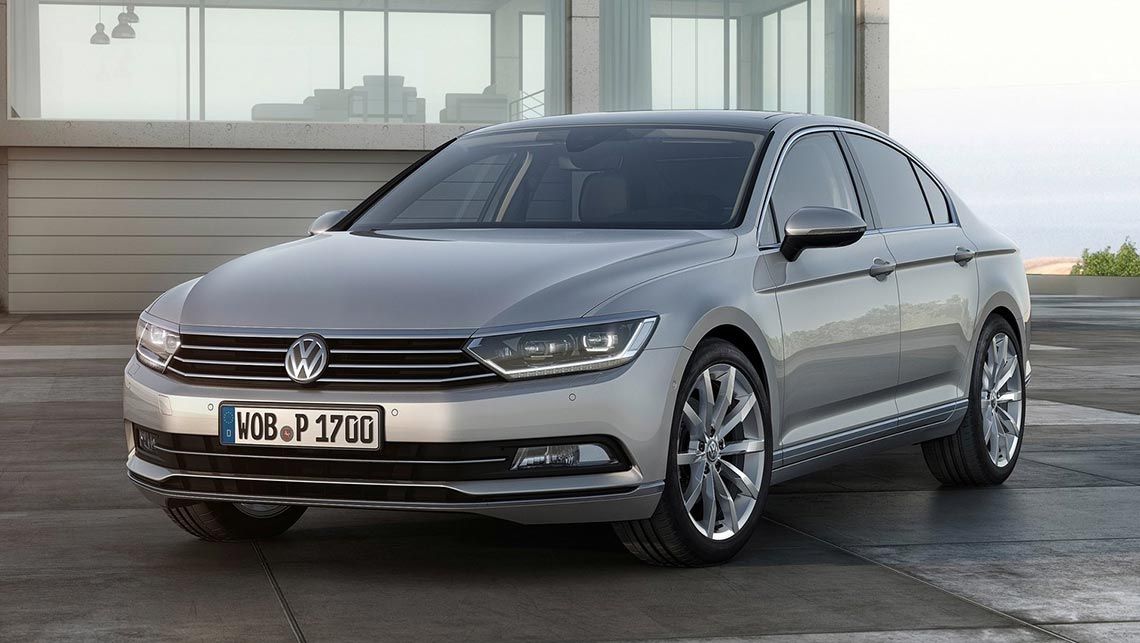
BREAKING NEWS - Volkswagens Passat wins European Car Of The Year 2015 - Well Done.

Europe's "Car of the Year 2015" is a Volkswagen: the new Passat wins the prestigious award, which is presented every year by the international "Car of the Year" jury. The winner was announced on the afternoon before the Geneva International Motor Show.
"We are extremely proud of this accolade," explained Prof. Martin Winterkorn, CEO of Volkswagen Aktiengesellschaft, at the prize-giving ceremony in Geneva. "In the new Passat we have again succeeded in developing a car that sets the standards for its class in terms of technology and quality. This honour is a tremendous confirmation for the work of our engineers, designers and the entire team. The new Passat shows that the Volkswagen brand has the right answers to the challenges of our time."
Heinz-Jakob Neusser, Member of the Board of Management Volkswagen Brand for the Development Division, received the award for the new Passat: "We are delighted by the honour of "Car of the Year 2015". This accolade has a very special significance for us because it is awarded by independent international trade journalists. In addition, the honour is known to have a high standing for our customers."

One of the oldest and most well-known awards in Europe, "Car of the Year" has been honouring the best new releases in the car industry every year since 1964. The jury, consisting of 58 European motoring journalists from 22 countries, had nominated seven candidates ahead of the final. 
In the preceding months, these candidates had undergone detailed testing, comparisons and evaluations based on criteria such as economy, comfort, safety, driving characteristics, functionality, design and technical progress. 
In the 52nd edition of the traditional competition, the new Passat clearly triumphed over its six rivals in the final with a total score of 340 points. Two current Volkswagen models have already received the coveted award in the recent past, namely the Polo in 2010 and the Golf in 2013. In addition to the "Golden Steering Wheel 2014" and "Auto Trophy 2014", the top position as "Car of the Year" was preceded by several accolades at home and abroad.
The new Passat, in all its versions, is one of the most successful mid-class cars in the world and with 1.1 million units (in 2014) one of the highest-volume series of the Volkswagen Group worldwide. Now in its eighth generation, the best-seller is regarded as one of the most innovative cars in its class. 
Thanks to advanced engineering methods, it was possible to introduce a significantly more dynamic design (including lower body, longer wheelbase, larger wheels). Despite the unaltered length in the interior dimensions, the new Passat has still expanded considerably. At the same time the latest technologies have been added: they include systems such as Active Info Display (a completely digital instrument cluster), extendable head-up display, and also systems such as an app-based Rear Seat Entertainment for tablets, Front Assist with City Emergency Braking and Pedestrian Monitoring as well as three further global firsts: Emergency Assist (vehicle stops in emergency), Trailer Assist (assisted manoeuvring with a trailer) and Traffic Jam Assist. 
The new Passat is available with ten direct injection turbocharged petrol and diesel engines which cover a power range from 88 kW / 120 PS to 206 kW / 280 PS.
The Passat GTE* – the first Passat to feature a plug-in hybrid drive – will arrive at dealerships beginning in late summer of this year. The 1.4-litre TSI engine develops a power of 115 kW / 156 PS; the electric motor produces 85 kW / 115 PS, while the maximum torque of the plug-in hybrid drive system is 400 Newton metres. 
Its power and torque are utilised in an extremely eco-friendly and efficient way. The car's NEDC fuel consumption (for hybrid vehicles) is less than 2.0 l/100 km and 13.0 kWh/100 km; these values equate to CO2 emissions of less than 45 g/km. In combination with the TSI, this results in a driving range of over 1,000 kilometres with a full 50-litre tank and fully charged battery.

Passat GTE is not on sale yet. Preliminary data: Passat GTE: Fuel consumption in l/100 km: combined: less than 2l; CO2 emissions combined in g/km: less than 45.

Thursday, 2 October 2014

Volkswagen launches a number of new models and concepts at Paris.

  • XL Sport has world's most powerful two-cylinder engine
  • Passat GTE is a plug-in hybrid with 218 PS of power
On the evening before the Paris Motor Show, the Volkswagen Group presented its key new products under the motto "Les images de marques". In the world premiere of the XL Sport, which is a highly efficient sports car concept, the Volkswagen passenger car brand is impressively demonstrating how high-tech developments lead to synergies across brands. At the same time, the Passat GTE is celebrating its world premiere at the Group Night.
In traditional French ambience, Volkswagen is presenting the XL Sport concept car at the Group Night; it is a driving machine unlike any other. It is a sports car with 200 PS of power and a top speed of 270 km/h that was created based on the XL11 - the world's most fuel-efficient automobile. Operating at the rear of the XL Sport, and the technical highlight of the powertrain, is a modified V2 engine from the new Ducati 1199 Superleggera - the world's most powerful two-cylinder motorcycle engine. 

This engine, together with a 7-speed DSG, launches the sports car from zero to 100 km/h in 5.7 seconds and revs up to 11,000 rpm. The aerodynamics of the concept car are especially noteworthy. The fact that the XL Sport is a very special sports car is illustrated by its numerous individual features such as special air curtains, wheel arch air outlets, an optimised underbody, a diffuser that reduces aerodynamic lift and adaptive exhaust heat vents integrated in the rear lid.
The XL Sport follows the dynamic and extravagant design of the XL1. The concept car is slightly longer and wider than the XL1 with a length of 4,291 mm, width of 1,847 mm and height of 1,152 mm. Its modified proportions, longer wheelbase (2,424 mm), significantly wider wings and larger wheels give the vehicle a wide, low and impressive appearance on the road. The wing doors, front and rear sections with the same width and an extending rear spoiler that spans nearly the entire width of the car transform the XL Sport into a classic race car. Its interior was also highly influenced by motorsport.
Along with the XL Sport, Volkswagen is presenting the new Passat GTE2 in Paris. This is the first Passat to be offered as a plug-in hybrid, which comes with a TSI engine combined with an electric motor. In "E-mode" the Passat GTE covers up to 50 km all-electrically for zero emissions. When the combustion engine and electric motor work together, the Passat GTE develops a system power of 160 kW / 218 PS and has a driving range of over 1,000 km. The maximum torque of the plug-in hybrid drive system is 400 Nm. The car's eco-friendly and efficient NEDC fuel consumption is under 2.0 l/100 km and 13.0 kWh/100km (equates to less than 45 g/km CO2). The front-wheel drive Passat GTE with a 6-speed dual-clutch gearbox accelerates from zero to 100 km/h in 8.0 seconds and reaches a top speed of over 220 km/h. In the electric driving mode, it is possible to reach a speed of 130 km/h.
Standard features of the Passat GTE include extras which are also available as options on other models, including the Automatic Post-Collision Braking System, Front Assist and City Emergency Braking. On the other hand, the new Passat GTE has many customisation options and feature extensions for the exterior and interior, such as the C-shaped LED daytime running lights, the "Composition Media" infotainment system that was specially adapted to the plug-in hybrid and the "CAR-NET e-Remote" app which, for instance, lets users start battery charging via a smart phone.
1 Volkswagen XL1 fuel consumption in l/100 km: 0,9 (combined); power consumption in kWh/ 100 km: 7,2; CO2emission in g/km: 21(combined); efficiency class: A+
2 Passat GTE is not on sale yet. Preliminary data: Passat GTE: Fuel consumption in l/100 km: combined: 1,6; CO2 emissions combined in g/km: 37. Passat Variant GTE: Fuel consumption in l/100 km: combined: 1,7; CO2emissions combined in g/km: 39.

Monday, 29 September 2014

Latest Generation Passat GTE, capable of, in excess of 140mpg.

  • Passat GTE is first plug-in hybrid by Volkswagen in saloon and estate body style
  • Combines TSI engine and electric motor for maximum power output of 218 PS
  • Driving range of over 600 miles; up to 31 miles in all-electric E-mode
The new Passat is one of the most innovative cars in its class. Equipped with progressive drive, assistance and infotainment systems, it is high-tech encapsulated in a powerful design with sharp proportions. The eighth generation Passat is currently being launched in Europe, and already, Volkswagen has come up with something more: the German car maker is showing the Passat GTE in a world premiere at the Paris Motor Show – the first Passat with a plug-in hybrid drive system.
It is a zero-emission and long-distance vehicle in one and available as a saloon or estate. In GTE mode, the Volkswagen also has a sporty side. Plug-in hybrid, in this case, means the combination of a turbocharged direct injection petrol engine (TSI) with an electric motor, which is supplied with energy from an externally (or in Charge mode) chargeable lithium-ion battery. Thanks to this battery, the Passat GTE can cover a distance of up to 31 miles in all-electric mode and thus with zero emissions. At the press of a button next to the gear lever, the driver can also control the all-electric mode ("E-Mode") at will – for example, at the end of a drive when the destination is in a city.
A contrast to the "E-Mode" is offered by the mode "GTE", which is also accessible at the press of a button – in this mode, the Passat delivers a maximum system output of 160 kW / 218 PS; a wide variety of parameters such as the accelerator pedal and steering are also configured in a sportier way in this mode. The 1.4-litre TSI engine develops a power of 115 kW / 156 PS (as of 5,000 rpm); the electric motor produces 85 kW / 15 PS. The maximum torque of the plug-in hybrid drive system is 400 Nm. Performance and power are deployed both efficiently and in an eco-friendly  way: The NEDC consumption (for hybrid vehicles) is over 141 mpg (under 2.0 l/100 km) and 13.0 kWh/100 km; these values equate to CO2 emissions lower than 45 g/km. In combination with the TSI, this results in a driving range of over 620 miles with a full 50-litre fuel tank and fully charged battery – with it, the Passat GTE covers the route from Paris to London and back without refuelling.

The pioneering low power/fuel consumption and emission values contrast with a powerful driving performance: the Passat GTE, always with front-wheel drive and equipped as standard with a six-gear dual clutch gearbox especially developed for the hybrid drive, accelerates to 62 mph in less than 8.0 seconds and achieves a top speed of more than 136 mph; in "E-Mode," 80 mph.
The Passat GTE will be launched in the second half of next year – both as a saloon and an estate. With the market launch of the plug-in hybrid, a total of nine drive versions, covering a power range from 92 kW / 125 PS to 206 kW / 280 PS, will be available for the European version of the Passat. All versions meet the EU 6 emissions standard. The Passat GTE also constitutes an integral part of the strategy for electric mobility at Volkswagen. After the XL1, e-up!, e-Golf and Golf GTE, the Passat GTE is the fifth, or sixth model (saloon and estate) that can be operated by electric motor with zero emissions.
The Passat GTE is an independent equipment line. On the one hand, its standard equipment includes many features also available in other models of the range, either as an option or without extra charge, depending on the equipment version: LED headlights, Driver Alert System, Automatic Post-Collision Braking system, Front Assist including City Emergency Braking function, rain sensor and ParkPilot. On the other hand, as a high-tech flagship, the Passat GTE features several unique elements and equipment upgrades which distinguish it from the rest of the range.
In the upper section of the front end, the Passat GTE can be recognised by a specific chrome radiator grille unit with additional blue line. The front bumper was also redesigned, with distinctive cross panels in the lower air inlet and C-shaped LED daytime running lights. The "C"-shaped LED daytime running light and the blue line in the radiator grille unit are stylistic devices purposefully deployed by Design: blue is the Volkswagen "e-mobility colour" and in conjunction with the C-shaped daytime running light, it constitutes an identifying feature of all Volkswagen's electric and plug-in hybrid models. When viewed from the side, 17-inch "Astana" alloy wheels identify the Passat GTE as a plug-in hybrid.
The interior was likewise fine-tuned for the new drive system. With a menu matrix for the functions and displays related to the drive system, the engineers and interface designers at Volkswagen TE (Technical Development Centre) tailored features such as the standard "Composition Media" infotainment system and the instrument cluster (with power meter) for the plug-in hybrid drive. In addition, the innovative Active Info Display with specific displays will be also available as an option for the Passat GTE. Standard details such as the blue ambient lighting, leather-trimmed multifunction steering wheel with blue decorative stitching, GTE specific gear knob with blue stitching and seats covered in "Sevilla" cloth with a blue basic structure have also been especially configured to the Passat GTE. Furthermore, the interior was enhanced by the "Waves" design (aluminium look) and "Piano Black" (high-gloss black) as well as a GTE logo in front of the gear shift gate.
The owner of the new Passat GTE can make use of the "CAR-NET e-Remote" app, by which the charging of the battery, for instance, can be started via smartphone. Likewise, all climate control functions can be activated via the smartphone. In addition, information on the vehicle status, state of charge of the battery, recent driving data or last parking position can be queried. It is also possible to check whether the doors are closed and the lights turned off.
The new Passat GTE will be launched with the high resolution 6.5-inch display of the standard "Composition Media" infotainment system. Optional: the "Discover Media" (also with a 6.5-inch display) and "Discover Pro" (with an 8.0-inch display) radio-navigation systems. Both devices feature numerous additional functions in the Passat GTE. They include a "range monitor", an "energy flow indicator", "zero-emission statistics", "e-manager" and – when the optional navigation system is installed – the "360° range" feature.
  • Range monitor: depicts the momentary electric driving range of the Passat GTE; the additional range potential that can be achieved by turning off auxiliary consumers that might be in use is also shown.
  • Energy flow indicator: this indicator utilises animated graphics to depict the energy flow when accelerating (blue arrows) as well as braking, i.e. regenerative braking (green arrows)
  • e-Manager:up to three departure and charging times can be programmed here, and heating or cooling of the interior can be activated via the stationary air conditioning, which comes as a standard feature.
  • 360° range: the driving range in "E-Mode" is shown by the so-called 360° zone on the map of the surrounding area. The highlighted zone depicts the one-way electric driving range of the car. Charging stations can be displayed and used in route calculation.
On the left side of the instrument cluster the Passat GTE's power meter supplements the tachometer and shows information such as whether the high-voltage battery is being charged by regeneration or whether – and how much – energy is being consumed. The speedometer is still on the right side. A colour display, which is located between the power meter and speedometer, continually displays the electric driving range and the momentary operating mode. In a separate LED field in the lower segment of the multifunction display, the "READY" message also appears after starting the e-motor, indicating that the car is ready to be driven. This is done because the electric motor cannot be heard when the car is stopped.
Volkswagen is offering an optional instrument cluster that has been designed as a full interactive display: the Active Info Display. All instruments – thus also the specific displays in the Passat GTE – are implemented virtually. Navigation information can be shown in 2-D or 3-D views on a 12.3-inch display. Its resolution of 1,440 x 540 pixels enables extremely precise, high-quality graphics and interactive display of all details. Take the Navigation mode, for instance: here the speedometer and tachometer are relocated to the sides to make more room for the map display. Information on driving, navigation and assistance functions can be integrated into the graphic areas of the speedometer and tachometer as needed.
Data that is displayed on the centre console via the infotainment system, such as phone contact pages or CD covers, can also be shown in the Active Info Display in the Passat. In fact, the driver can find all information relevant to driving in his or her direct field of view. As described above, he or she can pull up important data he needs according to the situation at hand and then use it in an individually selected display.
Drive system – with zero emissions whenever possible
As outlined above, Volkswagen uses a turbocharged direct petrol injection engine (1.4 TSI) and a three-phase permanent magnet synchronous motor as electric motor to power the Passat GTE. Like a turbine, the e-motor revs up from a standstill and provides a maximum torque of 330 Nm. The electric motor is supplied by a 9.9 kWh lithium-ion high-voltage battery. The gearbox is an automatic six-speed DSG with three clutches (dual clutch plus disengagement clutch) that was specially developed for hybrid use. Whenever possible, the disengagement clutch disengages the TSI from the driven front axle and shuts it off – such as in phases of "coasting"; in this case, the Passat GTE makes use of the car's kinetic energy and coasts without any added propulsive power. Volkswagen integrated the electric motor into the gearbox housing. Additional components of the hybrid drive include the power electronics (converts DC power from the battery to AC power for the electric motor) and a charger. An electro-mechanical brake servo and an electric air conditioning compressor also ensure optimal and energy-efficient operation of the brakes and air conditioner in "E-Mode".
Operating modes – starting in the "E-Mode"
From "E-Mode" to "GTE". The Passat GTE can be driven in four different modes, and which one to choose is very intuitive. "EMode", "Hybrid", "Battery Charge" and "GTE". The driver can always see which mode is active on the multifunction display of the instrument cluster.
Starting in "E-Mode". Upon starting the car, the Passat GTE is automatically in "E-Mode" (except when the battery is not sufficiently charged or the outside temperature is very low, in which case the TSI takes over immediately). When a minimum charge level of the battery has been reached or when there is very high demand for power, the drive system automatically switches over to the "Hybrid" mode. In this state, "E-Mode" is deactivated, and the Passat GTE now behaves like a classic full hybrid vehicle that charges the battery regeneratively during deceleration and automatically uses the TSI and/or electric motor, depending on the situation. The charge state of the battery is maintained at a constant level in this mode. By pressing the "E-Mode" button (to the left of the gear lever), the driver can manually switch to "E-Mode." This button simultaneously opens a window in the infotainment system, in which the three "E-Mode", "Hybrid" and "Battery Charge" modes can be directly selected.
In addition to the "E-Mode" and "Hybrid" modes, you can set another mode via the infotainment system menu: "Battery Charge". In this mode, the high-voltage battery is charged during driving. By pressing the "GTE" button (also to the left of the gear lever), the driver can switch to "GTE" mode which activates the sporty nature of the Passat GTE. In this mode the characteristics of the accelerator pedal, gearbox and steering are made sportier. In connection with optional DCC, the chassis is firmer. The tuning of the TSI is also more performance oriented. In addition, in the "GTE" mode the TSI and electric motor work together, in what is known as "boosting", to make the full system power and the maximum system torque available.
Charging the battery.
There are two ways to charge the battery in the Passat GTE via the charging socket in the radiator grille. First: the standard charging cable is plugged into a 230 volt mains electrical socket. The battery is then charged by alternating current (AC) from the mains at a power level of 2.3 kW. From completely flat, it can be fully charged (100 per cent battery charge level) in four hours and 15 minutes. Second: Volkswagen offers an optional wall box for a garage or carport which charges at a power level of 3.6 kW. Using this method, the battery is fully charged after only two hours and 30 minutes. There are also public charging stations that charge electric cars at a level of 3.6 kW.
The Passat GTE will become available to order in the UK in June, with first deliveries in October 2015.

Sunday, 12 January 2014

AUDI designs allroad e-tron , giving the best of both models.


  • World debut at NAIAS in Detroit (13-26 January)
  • Powerful and efficient hybrid drive features two electric motors linked to conventional 2.0 TFSI with 292 PS output and 380 Nm torque
  • Total system power 408 PS and 650 Nm of system torque available
  • 0-62mph in 4.6 seconds, 155mph limited top speed, 149mpg and 45g/km CO2, according to appropriate standard, 502-mile driving range possible

Audi has pooled the genes of its rugged allroad models and its forthcoming e-tron hybrids to create a striking and fittingly futuristic new crossover concept bound for this month‘s  2014 North American International Auto Show in Detroit.

Incorporating a host of design elements that define the brand’s future design values, the Audi allroad shooting brake combines the elegant lines of a shooting brake with the purposeful stance of an allroad. As befits an allroad-themed study, its hybrid drive – which is as powerful as it is efficient – also makes a new form of quattro drive possible - e-tron quattro.


“The show car combines sex appeal, highly efficient e-tron-quattro technology that produces 300 kW of power yet only consumes 1.9 l/100 km of fuel (equating to 149 UK mpg) and cutting-edge electronic applications,” says Prof. Dr. Ulrich Hackenberg, Member of the Board of AUDI AG, Technical Development. “We are offering very concrete glimpses of the near future in this show car.”

With exceptional functionality and versatility the Audi allroad shooting brake is geared towards those with an active lifestyle, but it also advances the development and design elements of one of the most recent Audi show cars, the mighty Sport quattro concept originally shown at the 2013 Frankfurt Motor Show. The main highlights of the show car are an aluminium and carbon fibre body shell, MatrixBeam LED headlights and the e-tron quattro drivetrain.

The allroad shooting brake has a wheelbase measuring 2.51 metres. It is 4.20 metres long, 1.85 metres wide and 1.41 metres tall, giving it a powerful stance on the road. The exterior shell appears as though it were sculpted from one solid piece, from the single-frame grille to the distinctive tornado line and crisp rear styling, in which the characteristics of the allroad and the shooting brake come together.

The outer body of the Audi allroad shooting brake is a material mix of aluminium and carbon fibre reinforced polymer (CFRP). Dark grey rubbing strips are typical allroad elements, and they visually reduce the volume of the body; they ascend dynamically from front to rear. Together with the large wheels and flared arches, they accentuate the car's offroad character.

e-tron and allroad in unison

The Audi allroad shooting brake represents the first time that Audi has combined elements of the allroad and e-tron model types. As on every Audi, the large hexagonal single-frame grille dominates on the impressive sculptural front; it is slightly offset towards the rear of the body. Typical of an e-tron model, it has an insert with narrow fins, which resemble the cooling ribs of an electronic component. There is a quattro logo on the lower part of the single-frame. The low-profile central air inlet is milled into the underbody protection that is made of aluminium.

The low-profile dual headlights of the Audi allroad shooting brake are a classic reference to the look of the Audi quattro models. Braces partition the headlights into four segments; the matrix LED technology with its individually controlled light-emitting diodes guarantees excellent visibility without causing glare to oncoming traffic. Beneath the headlights, narrow cross fins provide structure to the large air inlets.

In a side view as well, the characteristic lines of the show car give the impression of concentrated energy. Its overhangs are short, and its roof line stretches low over the vehicle body. Typical of the shooting brake style, it descends early and runs out into the distinctive C-pillars. There is a charging port in the left pillar and a fuel door in the right pillar.

Fine details attest to the precision with which the show car was designed. There are aluminium inlays in the angular sill add-ons. The 19-inch lightweight wheels shod with 255/40 tyres have rims made of Carbon Fibre Reinforced Polymer (CFRP). Their finely detailed styling with seven arms is based on the look of the e-tron models, while their central locks are another feature that highlights the sporty character of the compact crossover.

At the rear, the aluminium underbody protection emphasises the car's width; its implied grooves vary from the e-tron motif. Horizontal, logically sequenced lines define the outlines of clean surfaces and taut volumes; the styling of the tail lights takes up the motif of the headlights. A diffuser integrates the two large exhaust tailpipes. The open roof spoiler further accentuates the design. The third brake light, implemented as a flat light conductor, elegantly complements the rear design.

Interior elements

There is plenty of room for four passengers inside. In front, the narrow sports seats give the driver and front passenger optimal body support. They feature highly contoured lateral panels and integrated head restraints, while cushioned pads support the thighs in quick driving through curves. An easy entry function makes rear seat access simpler. When the rear seatback is folded down, a cargo area with a level cargo floor is created, in which there is space for rather large sports equipment.


Designed with clean and taut lines, the interior of the show car utilises the colors anthracite and rock grey. The materials reflect the skillful handiwork of Audi designers – this is evident in the alcantara rooflining and in the various qualities of leather and the bright and dark aluminium materials that are used for controls and trim, such as on the air nozzles and the spokes of the multifunction steering wheel.

The interior design of the Audi allroad shooting brake also follows the Audi philosophy of lightweight design, sporty elegance and easy to use controls. When viewed from the top, the instrument panel resembles the wing surface of an airplane, and the round air nozzles elicit associations to jet engines. The controls for the climate control system are located here. Their centre spindles contain the controls for seat heating, temperature and the direction and intensity of the air streams. They automatically extend out from the instrument panel when they sense a hand approaching. The lights are activated by a button, and a plate-type handle opens the door.

The centre console travels together with seat adjustments so that the controls remain at an optimal distance to the driver. Individual fine adjustment is also possible. The controls – the electronic selector lever of the e-S tronic (shift-by-wire) and the terminal of the MMI user interface – are always ideally within reach and can be optimally adjusted to the height and preferences of the driver.

More advanced MMI system

The new design of the MMI terminal and sporty design of the multifunction steering wheel lets the driver control nearly all functions of the Audi allroad shooting brake intuitively. The menu structure is based on that of a smart phone, which includes a free text search function. It is easy to access all major functions, and multitouch gestures on the touchpad of the MMI terminal enable quick scrolling and zooming in lists and maps.

The cockpit is very focused on the driver. The steering wheel and digital instrument cluster lie in a single direct line of sight. The TFT display with its 12.3-inch screen presents all key information in top quality 3D graphics and offers a variety of modes. In the classic view, the powermeter for the plug-in hybrid drive system and the speedometer are in the foreground, while in Infotainment mode elements such as the large navigation map dominate, and in Sport mode the tachometer is prominently displayed.


Another forward-looking feature in the show car is the Audi phone box, which links the driver's mobile phone to the vehicle electrical system and can inductively charge it as necessary.

Three drive units: plug-in hybrid drive

The plug-in hybrid drive delivers impressive key performance data with 408 PS of system power and a system torque of 650 Nm (479.42 lb-ft). The show car, which weighs around 1,600 kg unladen, launches from a standstill to 62 mph in 4.6 seconds, and is capable of reaching an electronically limited top speed of 155 mph.

Fuel consumption is measured at 148.7mpg according to the relevant ECE standard, which equates to CO2 emissions of 45g/km. A total driving range of up to 510 miles is achievable.

The 2.0 TFSI in the Audi allroad shooting brake delivers 292 PS of power and generates 380 Nm (280.27 lb-ft) of torque. The transverse mounted 2.0-litre four-cylinder with a large turbocharger is a high-end engine. In part-load operation, indirect injection supplements direct gasoline injection to improve fuel economy; the exhaust manifold that is integrated in the cylinder head enables high-performance thermal management.

The 2.0 TFSI operates together with a disc-shaped electric motor via a decoupling clutch; the electric motor outputs 40 kW of power and 270 Nm (199.14 lb-ft) of torque. It is integrated in the six-speed e-S tronic. The ultra-fast shifting dual clutch transmission sends torque to the front wheels.

A second electric motor, which is separate from this drive unit, is mounted to the rear axle. It supplies propulsive power at low and moderate vehicle speeds with its maximum power of 85 kW and 270 Nm (199.14 lb-ft) of torque. It can also be operated in tandem with the motor and engine at the front axle if the hybrid management system decides that all-wheel drive makes sense. In such situations, e.g. on a slippery road or in light off-road conditions, this essentially makes the Audi allroad shooting brake an e-tron quattro.

Located just forward of the rear axle is a lithium-ion battery that consists of eight modules. It contributes towards a balanced distribution of weight, and it hardly affects cargo capacity at all. The liquid-cooled battery has an energy capacity of 8.8 kWh, which is enough for 31 miles of all-electric driving. An Audi wall box is used for stationary charging; it can operate with different voltages and plug connector types, and it regulates the energy transfer conveniently and intelligently.

Three modes for Audi drive select

Drive select management offers three driving modes. EV mode, which can be selected by a button on the multifunction steering wheel, prioritises all-electric driving. Here, the front drive unit is inactive, and the electric motor at the rear axle with its powerful torque can rapidly accelerate the two-door car to a top speed of 81 mph.

In Hybrid mode, the drive sources operate highly efficiency, and they work together in various ways as necessary. In many situations, the electric motor in front acts as a generator – driven by the engine, it charges the battery, and this extends the car’s effective electric driving range.

In Sport mode, which the driver can select via the Audi drive select system, the car's full system power is available. When a high level of power is demanded by the driver, the electric motor at the rear axle works together with the 2.0 TFSI in a boost mode, in which both drive units output propulsive power.

Depending on the driving situation, releasing the accelerator pedal can cause all drive units to be decoupled, or it can result in energy recovery by regenerative braking. In the first case, the show car coasts with zero emissions since the combustion engine is shut off; in the latter case, braking energy is fed back into the high-voltage battery.

The driver can use the "Hold" and "Charge" functions in the MMI user interface to specifically influence the battery's charge state, e.g. to increase storage of electric energy so that it can be used over the final miles to the destination.

An electro-mechanical steering system is at work in the chassis of the Audi allroad shooting brake; it works together with a MacPherson front suspension and a four-link rear suspension. The sporty crossover is very talented in off-road driving thanks to its high ground clearance, compact wheelbase, short overhangs and electric quattro drive. It has a taut and sporty stance on the road, and the Audi drive select vehicle dynamics system offers various modes to the driver.