- CEO Matthias Müller: “2016 will be a year of transition for us, a year in which we will accelerate the transformation”
- The Group is opening itself up more to partnerships and equity investments in fields of future importance such as digitalization and mobility services
- e-mobility will become one of Volkswagen’s hallmarks
- Another challenging year with sound business development expected
- Fiscal year 2015: solid operations overshadowed by special items resulting from the diesel issue
The Volkswagen Group is systematically pressing ahead with its realignment and will take important steps this year to ensure a successful future. “2016 will be a year of transition for Volkswagen.
Yet it will also be the year in which we accelerate the transformation and lay the foundations for a new, better Volkswagen,” said Matthias Müller, Chairman of the Board of Management of Volkswagen Aktiengesellschaft, in Wolfsburg on Thursday at the presentation of the 2015 annual financial statements.
According to Müller, the automotive industry is on the cusp of the next big innovative leap and a radical transformation. “We are in a good starting position for this epochal transformation.


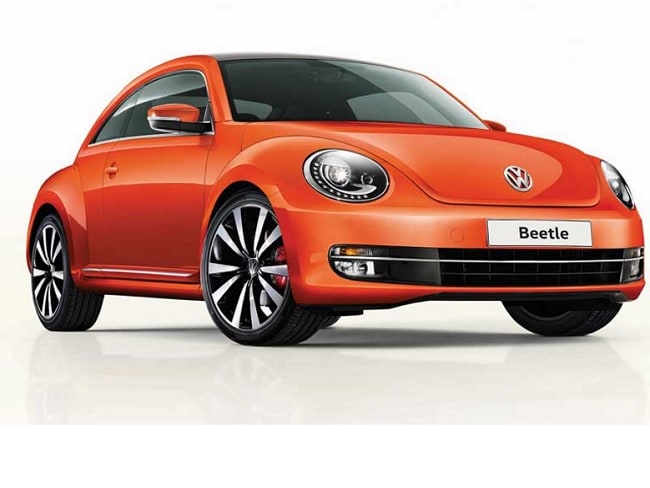


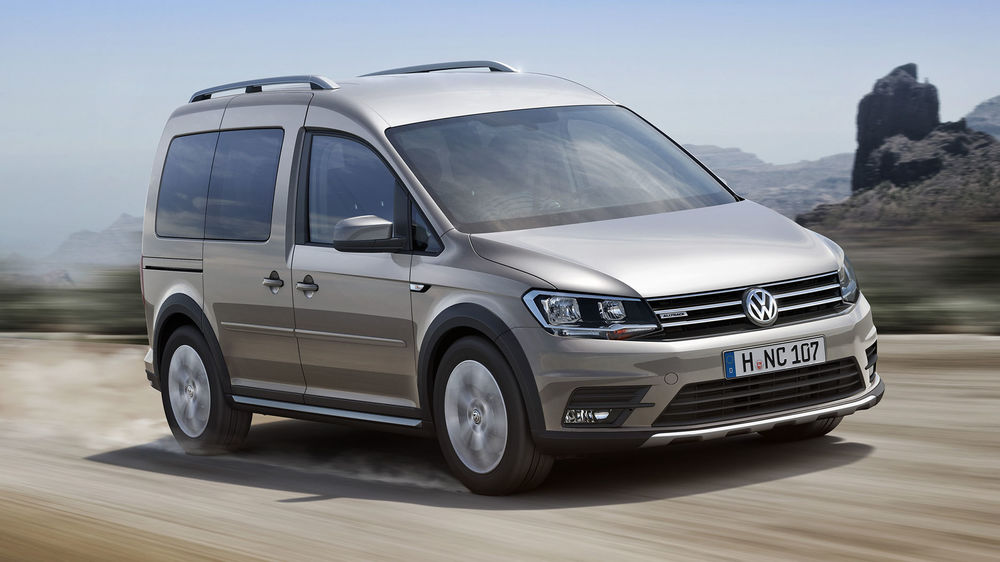
And we have many strengths to throw into the mix,” stressed the CEO, mentioning among other things the Group’s 12 strong brands, technological expertise, global presence, strong focus on quality, committed workforce and sound finances. “We aim to play a key role in designing the mobility world of tomorrow,” Müller explained.
He also sees room for improvement, however: “Our goal is to make the Volkswagen Group more efficient and faster, more entrepreneurial and courageous, more sustainable and technologically more progressive. That is without questionan enormous task, but we are making good progress,” the Chairman of the Board of Management said.
The Group is currently working hard on the further development of its strategy, to be presented mid-year. This will focus on the major fields of future importance in the industry – such as digitalization, networking, e-mobility and new mobility services. Volkswagen is already addressing all of these fields, for example with thee-offensive launched. “In the future, however, we will do this in a much more systematic and focused manner. Our Strategy 2025 will provide the framework for this,” Müller announced.
The Chairman of the Board of Management reaffirmed the goal of playing a key role in e-mobility, with the Volkswagen Group planning to launch over 20 additional models by 2020. The Volkswagen brand is currently developing its own architecture especially fore-vehicles in the form of its Modular Electrification Toolkit, or MEB for short.
The first vehicles produced on the MEB basis are slated to hit the streets at the end of the decade. “We plan to make electric cars one of Volkswagen’s new hallmarks,” Müller explained. In addition to building up and expanding its own resources for the major fields of future importance, the Group plans to open itself up more to new partnerships and strategic investments. “The era in which our sector kept itself apart from everything is now over, once and for all. Reservations, solo efforts, or even the illusion of knowing and doing everything better will not help us reach our goals,” said Müller. He provided two examples of this: digitalization and the field of mobility services. “This is a field with high earnings potential for our industry in the coming years. We want to participate in this as much as we can,” the CEO explained. “We are working hard on very promising ideas in the field of new mobility services. The discussions on this are already at an advanced stage. In addition, we will soon form a legally independent, Group-wide company to promote business in the mobility services of the future with the necessary speed, entrepreneurial focus and the required agility,” Müller announced.
Besides the extensive realignment of the Group, working through the diesel issue will dominate activities at Volkswagen this year. Müller said that the most important task in this context is still providing compelling solutions for the customers affected. “This will remain our most important task until the very last vehicle has been put in order,” he assured. With the software manipulation of diesel engines at Volkswagen, rules were broken and ethical boundaries overstepped. “We sincerely regret this. Also because we know that we have disappointed many people – people who have placed their trust in Volkswagen. We stand by our responsibility. And we are doing everything in our power to regain trust,” Müller stressed.
Looking back to last year, which the Group closed with a loss owing to high special items resulting from the diesel issue, he said, “The Volkswagen Group’s operations are in great shape. Now more than ever, it is paying off for us to have built our business on several sustainable pillars.” Chief Financial Officer Frank Witter added: “The increase in net liquidity in the Automotive Division from EUR 17.6 billion to EUR 24.5 billion at the end of 2015 underscores our sound liquidity policy.”
Key figures for 2015
The Volkswagen Group delivered 9.9 million vehicles to customers in fiscal year 2015, 2.0 percent fewer than in the previous year. “Nevertheless, the Group was able to increase its total sales revenue,” Witter explained. In particular, “improvements in the mix, positive exchange rate effects and our financial services business” helped sales revenue to reach EUR 213.3 billion (previous year: EUR 202.5 billion) and thus exceed the prior year’s figure by 5.4 percent. Excluding special items, the Volkswagen Group’s operating profit was on a level with 2014, at EUR 12.8 billion. The operating return on sales before special items was in the expected range, at 6.0 percent.
The diesel issue led to total exceptional charges of EUR 16.2 billion in 2015, which were recognized in the operating result. This figure includes provisions for pending technical modifications to the affected diesel engines and repurchases that come to EUR 7.8 billion in total.
Another EUR 7.0 billion has been set aside as a provision for legal risks worldwide. Thus, the Volkswagen Group made provision for all known and quantifiable repercussions of the diesel issue in the 2015 annual financial statements. “Alongside the diesel issue, special items related to restructuring expenses amounting to EUR 0.2 billion in the trucks business and EUR 0.2 billion in the passenger car business in South America had a negative impact,” Witter went on to explain. “Provisions of EUR 0.3 billion have been established as authorities in the US and Canada have ordered all affected automobile manufacturers to replace potentially defective airbags supplied.
Overall, negative special items recognized in the operating result came to a total of EUR 16.9 billion in the past fiscal year. As a result, the operating result declined sharply to EUR –4.1 (12.7) billion. The operating return on sales decreased to –1.9 (6.3) percent.
The delivery figures also include the vehicles sold by the Chinese joint ventures. Last year, Volkswagen sold 3.5 million units in China (incl. Hong Kong), 3.4 percent fewer than in the preceding year. The business of the Chinese joint ventures is not included in the Group’s sales revenue and operating profit, however. From the very beginning, it has been accounted for in the financial result using the equity method. The share of operating profit attributable to the Chinese joint ventures in 2015 remained at approximately EUR 5.2 billion.
The Group’s financial result rose last year to EUR 2.8 (2.1) billion.This includes the disposal gain of EUR 1.5 billion from the sale of shares in Suzuki. The higher income from the equity-accounted Chinese joint ventures than in the prior year as a result of more favorable exchange rates as well as lower finance costs also had a positive impact. By contrast, higher expenses from the measurement of derivative financial instruments at the reporting date and negative remeasurement effects relating to the put options and compensation rights in the context of the control and profit and loss transfer agreement with MAN SE had a negative effect.
On the whole, earnings before tax of the Volkswagen Group in 2015 came to EUR –1.3 (14.8) billion. The return on sales before tax decreased to –0.6 percent from 7.3 percent in the previous year. Earnings after tax were EUR –1.4 (11.8) billion.
In view of the Group’s continued robust financial situation, the Board of Management and Supervisory Board will propose to pay a reduced dividend of EUR 0.11 per ordinary share and EUR 0.17 per preferred share at the Annual General Meeting of Volkswagen Aktiengesellschaft on June 22, 2016 despite the sharp fall in the operating result. With this measure the Group is still focusing on continuity in its dividend payments and also sending out a powerful signal that it has the strength to handle the current situation using its own resources.
In 2015, the Automotive Division’s return on investment declined sharply – mainly due to the special items. It fell from 14.9 percent to –0.2 percent in the reporting period. In the Financial Services Division, the return on equity before tax decreased slightly from 12.5 percent to 12.2 percent last year. This was largely due to tougher regulatory capital requirements and the associated higher equity.
The Volkswagen Group’s financial situation is still very favorable. Net cash flow in the Automotive Division increased by EUR 2.8 billion in 2015 to EUR 8.9 billion. Net liquidity in the Automotive Division rose to EUR 24.5 (17.6) billion. This underscores the Group’s sound liquidity policy and gives it the necessary financial stability and flexibility to master the challenges facing it and to grow profitably.
The ratio of capex to sales revenue in the Automotive Division edged up 0.5 percentage points in 2015 to 6.9 percent. This means that Volkswagen is still within the expected range. Apart from investing in its manufacturing facilities, Volkswagen mainly invested in the electrification of the drive system, the expansion and environmental aspects of the model range and the modular toolkits.
Brands and Business Fields
The Volkswagen Passenger Cars brand generated sales revenue of EUR 106.2 (99.8) billion in 2015, an increase of 6.5 percent year-on-year. Positive effects from exchange rates and from the efficiency program were unable to compensate for negative effects arising from the markets in Brazil and Russia as well as from market support measures linked to the emissions issue. Operating profit before special items therefore fell to EUR 2.1 (2.5) billion. The operating return on sales stood at 2.0 (2.5) percent. As always, the positive developments in unit sales and earnings of our Chinese joint ventures are not included in these figures.
At EUR 58.4 (53.8) billion, Audi’s sales revenue exceeded the prior-year figure by 8.6 percent. This was mainly due to the positive unit sales growth. Amounting to EUR 5.1 (5.2) billion, the operating profit before special items was almost level with the previous year. The operating profit was boosted by the higher volume and exchange rate developments, while upfront investments in new products and technologies as well as the expansion of the international production network had a negative impact. The brand generated an operating return on sales of 8.8 (9.6) percent. The diesel issue led to special items of EUR 298 million. The financial key performance indicators for the Lamborghini and Ducati brands are included in the financial figures for the Audi brand.
ŠKODA’s sales revenue in 2015 was up 6.2 percent year-on-year at EUR 12.5 (11.8) billion. Volume and mix effects aswell as lower material costs and positive exchange rate effects lifted the operating profit to EUR 915 (817) million. The operating return on sales increased to 7.3 (7.0) percent.
In 2015, SEAT generated sales revenue of EUR 8.6 (7.7) billion. The operating result showed a marked improvement, rising to EUR –10 (–127) million. This was primarily due to the higher sales volume, positive exchange rate effects and cost optimization.
In fiscal year 2015, Bentley generated sales revenue of EUR 1.9 billion, up 10.9 percent on the prior-year figure. Operating profit nevertheless decreased by 34.9 percent to EUR 110 million. Positive exchange rate effects and cost reductions were unable to compensate for the impact of lower volumes and increased upfront expenditures for new products.The brand’s operating return on sales was 5.7 (9.7) percent.
The Porsche brand continued its success story in 2015. At EUR 21.5 (17.2) billion, sales revenue exceeded the prior-year figure by 25.2 percent. Operating profit also improved by 25.2 percent to EUR 3.4 (2.7) billion. Stringent income and cost management helped to counteract the negative effects from the changes in the mix, increased structural costs and higher development costs for future projects and technologies, and kept the operating returnon sales stable year-on-year at 15.8 percent.
The sales revenue of Volkswagen Commercial Vehicles rose to EUR10.3 (9.6) billion in 2015. Positive effects from the increase in unit sales and improvements in exchange rates were offset by higher expenditures for renewing the product range, leading operating profit before special items to decrease by 24.2 percent to EUR 382 million.
In the past fiscal year, global demand for trucks and buses was well below the previous year’s level. Scania generated sales revenue of EUR 10.5 (10.4) billion in this environment. Operating profit rose to EUR 1,027 (EUR 955) million. The expansion of the service business had a positive effect, as did exchange rates. MAN generated sales revenue of EUR 13.7 (14.3) billion and an operating profit before special items of EUR 277 (384) million.
Volkswagen Financial Services continued its growth trajectory and again achieved a record result in fiscal year 2015. This was aided by close cooperation with Volkswagen Group brands, growth in existing markets and the expansion of our international presence.
Operating profit at Volkswagen Financial Services grew by 12.9 percent year-on-year to EUR 1.9 billion. The division signed 5.2 million new financing, leasing and service/insurance contracts worldwide, an increase of 2.8 percent year-on-year.
Prospects for 2016
The Volkswagen Group started 2016 with more upbeat unit sales figures. In the first three months of the year, 2.5 million vehicles were delivered to customers, an increase of 0.8 percent over the prior-year period. With the exception of Volkswagen Passenger Cars, all brands increased their deliveries in the first quarter, in some cases substantially. Regional performance varied greatly, as expected. For example, Russia and Brazil remain problematic for all car manufacturers. In spite of the diesel issue, the decline in unit sales in the United States has been kept in check on the whole, largely thanks to the sustained success of Audi and Porsche. Contrasting with the trend in the United States, vehicle sales in Europe and Asia-Pacific were very solid in the first quarter of 2016. In China, the Volkswagen Group started the year on its strongest footing since entering the market over 30 years ago. The Group expects that, on the whole, deliveries in 2016 will be on a level with the previous year amid persistently challenging market conditions, with a growing volume in China.
Aside from the emissions issue, the highly competitive environment as well as interest rate and exchange rate volatility and fluctuations in raw materials prices all pose challenges.
Positive effects are expected from the efficiency programs implemented by all brands and from the modular toolkits.
Depending on the economic conditions – particularly in South America and Russia – the exchange rate development, and in light of the emissions issue, the Board of Management estimates that 2016 sales revenue for the Volkswagen Group may be down by as much as 5 percent on the prior-year figure. In terms of the Group’s operating profit, the Board of Management anticipates an operating return on sales of between 5.0 and 6.0 percent in 2016. In the Passenger Cars Business Area the Volkswagen Group expects a sharp decrease in sales revenue, with an operating return on sales in the range of 5.5 to 6.5 percent. With sales revenue in the Commercial Vehicles Business Area likely to remain essentially unchanged, the operating return on sales should be between 2.0 and 4.0 percent.
For the Financial Services Division, sales revenue and an operating profit at the prior-year level are expected.
In the words of CEO Michael Müller, fiscal year 2016 will again be a very challenging year for the Volkswagen Group, which it began “with grounds for some optimism but also accordingly realistic.” “We are not letting the crisis slow us down, but are stepping on the gas – in all of our brands, and in all relevant markets. All in all, from today’s perspective we have good chances of again recording solid growth in our operating business in 2016,” Müller explained. Volkswagen will emerge stronger from the present tense situation– “because we have a solid position on the operational side. Because our financial substance is strong. Because we know what needs to be done. And because we will do whatever is necessary,”said the CEO with conviction.


