Purpose

I will try my best to provide detailed info on various cars and what is like to live with them, I have already produced a few for Jaguar-car-forums, I will do my best to be unbiased, but it will be hard for some cars. I will re-produce press releases and copy from other motoring news.
Showing posts with label passive safety. Show all posts

Thursday, 8 September 2016

A look at the SEAT 600 and the SEAT Ibiza to compare how car safety has changed in 60 years

60 years of evolution
  • A look at the SEAT 600 and the SEAT Ibiza to compare how car safety has changed in 60 years
  • New brake systems, more elements of passive safety and chassis development are the most significant breakthroughs of recent decades 
  • The next step is to get cars to anticipate future events and try to prevent them
A lot can happen in 60 years, and when it comes to safety that’s a long time for cars to evolve. In terms of safety, and several other topics, cars today bear little resemblance to those of yesteryear. To illustrate this we can compare a 1963 SEAT 600 D to the SEAT Ibiza FR with the following results:
- Airbags and headrests. “The SEAT 600 wasn’t equipped with headrests,” recalls Javier Luzón, head of Passive Safety at SEAT. This feature makes a significant contribution to preventing whiplash when the car is involved in a low speed collision from the rear. In addition, whereas some SEAT Ibizas have up to six airbags, the SEAT 600 had none, because that technology did not become widespread until the 90s.

- Seat belt. It was developed in the 60s. But in the beginning it was “an inextensible strap that users had to adjust to their body,” explains Luzón. The difference today is that this element of passive safety adapts itself to the user’s body and not the other way round. This provides more safety in the event of a collision, as the current seat belt system fits snugly on the body and retains the passenger instantly.
- Brakes. The brake system on both models is also completely different. The SEAT 600 was equipped with drum brakes “with much lower braking power than what can be achieved today,” says Luzón. By contrast, current cars “have large diameter disc brakes,” tyres are also much wider, “giving them more contact surface with the road for safer traction,” and the cars feature ABS, a system that prevents cars from skidding out of control when braking.


- Chassis. A car’s chassis is another fundamental component when it comes to safety, and its evolution over the past several decades can clearly be seen. One major difference is the greater width of the structures, such as the doors, which nowadays “have added safety features that give better protection than before in the event of a collision.”

All in all, today’s cars offer the highest level of passenger safety. “The next step we will soon see involves cars with the ability to anticipate future events and react accordingly,” concludes Javier Luzón. This will be the beginning of a new era with technology that was unheard of at the time of the legendary 600.

Wednesday, 31 August 2016

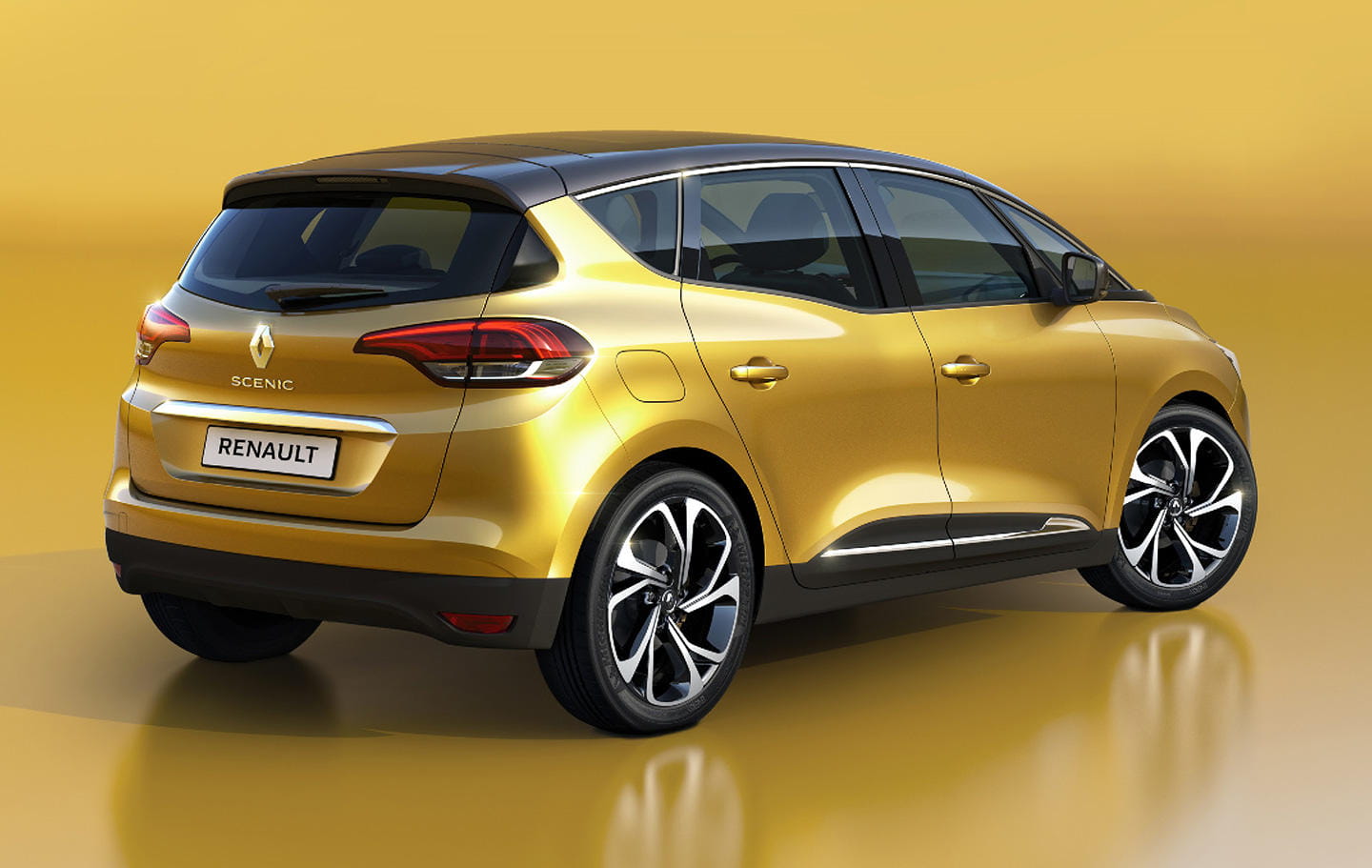
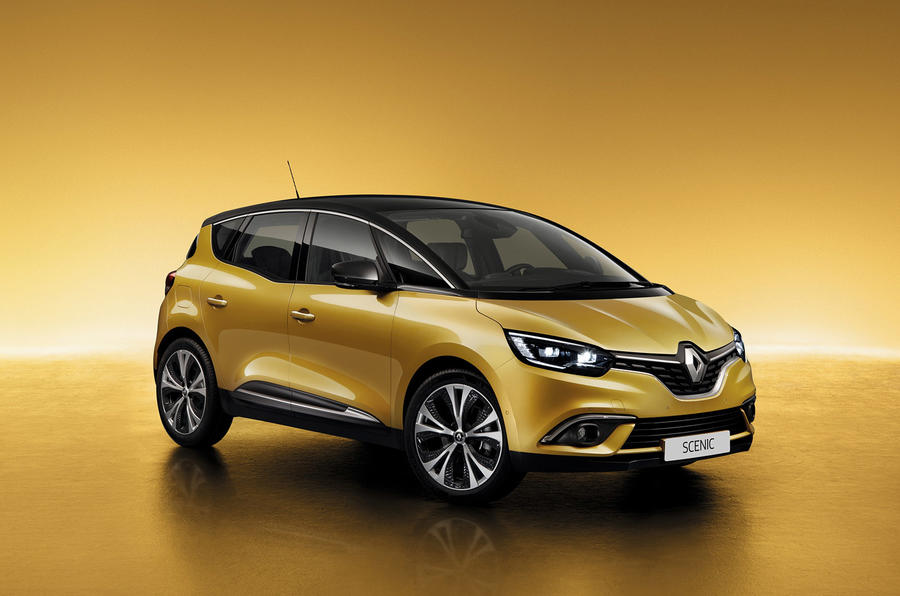
The All-New Renault Scenic is the 20th Renault to gain the coveted five star Euro NCAP rating.

  • The All-New Renault Scénic has received a five-star safety rating from the independent organisation, Euro NCAP
  • As the 20th Renault vehicle to receive a five-star Euro NCAP rating, All-New Scénic demonstrates over 15 years of Renault’s commitment to safety  
  • The All-New Renault Scénic sets itself apart from the crowd through a number of state-of-the-art technologies, including active emergency braking with pedestrian detection as standard; a first for vehicles in its segment.
The result highlights Renault's commitment to safety, particularly with the All-New Scénic, which arrives in the UK later this year. The All-New Scénic stands out with a 90 per cent score for adult occupant protection, 82 per cent for children and 67 per cent for pedestrians.
Top-level passive safety
The All-New Renault Scénic is amongst the best in its class when it comes to passive safety features.
The All-New Scénic uses a structure consisting of reinforced steel skirts, side members, windscreen pillars and posts, allowing it to protect the lives of occupants inside the safety cell.  

Parts of the structure are "ultra-high elastic", with each square millimetre able to resist up to 120kg of pressure. In addition, crumple zone steel located outside the passenger compartment allows for an impact to be absorbed, thus also protecting the lives of occupants inside the safety cell.
The All-New Scénic is equipped with two curtain airbags for the first and second rows and two lateral airbags in the front. It also has two new-generation front airbags that make use of adaptive technology. Based on sensor information, airbag inflation level is adapted for both driver and passenger.
With All-New Scénic's embedded technologies, driving is safe and serene.
The All-New Scénic makes use of premium segment features and several types of innovative equipment. It is the only vehicle in the C-MPV segment to offer an Active Emergency Braking System (AEBS) with pedestrian detection as standard. To put drivers at ease and warn them in the event of risk, All-New Scénic offers:          
  • Hands-free parking     
  • Lane Departure Warning (LDW)           
  • Lane Keeping Assist (LKA)     
  • Adaptive Cruise Control           (ACC)
  • Fatigue detection warning with trajectory analysis         
  • Active Emergency Braking System (AEBS) with pedestrian detection
Other five-star rated Euro NCAP Renault models
  1. 2016 All-New Renault Scénic     
  2. 2015 All-New Mégane 
  3. 2015 Talisman 
  4. 2015 Kadjar, 
  5. 2015 Espace
  6. 2013 Captur, 
  7. 2013 ZOE        
  8. 2012 Clio         
  9. 2009 Mégane Grand Scénic      
  10. 2008 Mégane
  11. 2008 Koléos   
  12. 2007 Laguna   
  13. 2005 Clio         
  14. 2004 Modus 
  15. 2004 Mégane Coupe Cabriolet  
  16. 2003 Scénic, 
  17. 2003 Espace    
  18. 2002 Vel Satis, 
  19. 2002 Mégane
  20. 2001 Laguna 

Thursday, 10 December 2015

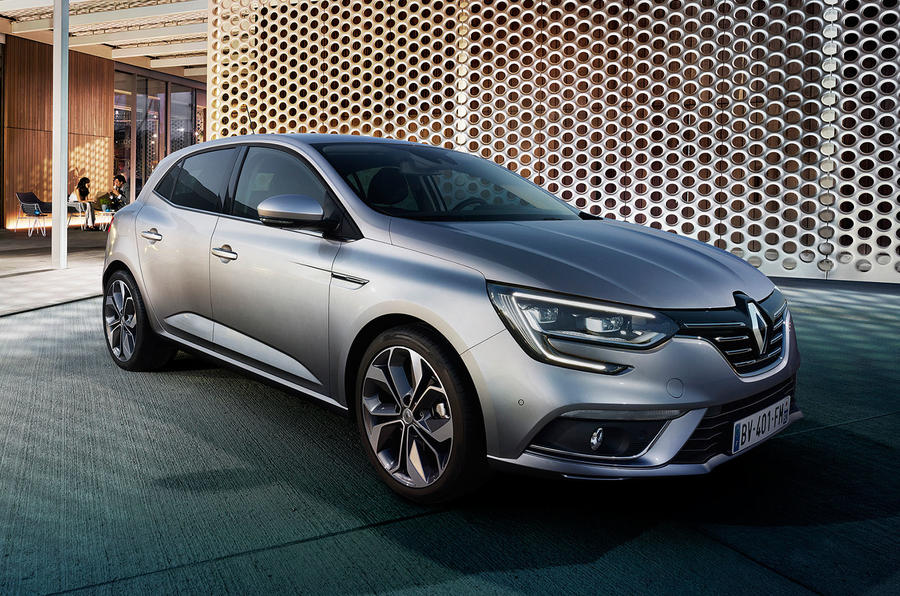
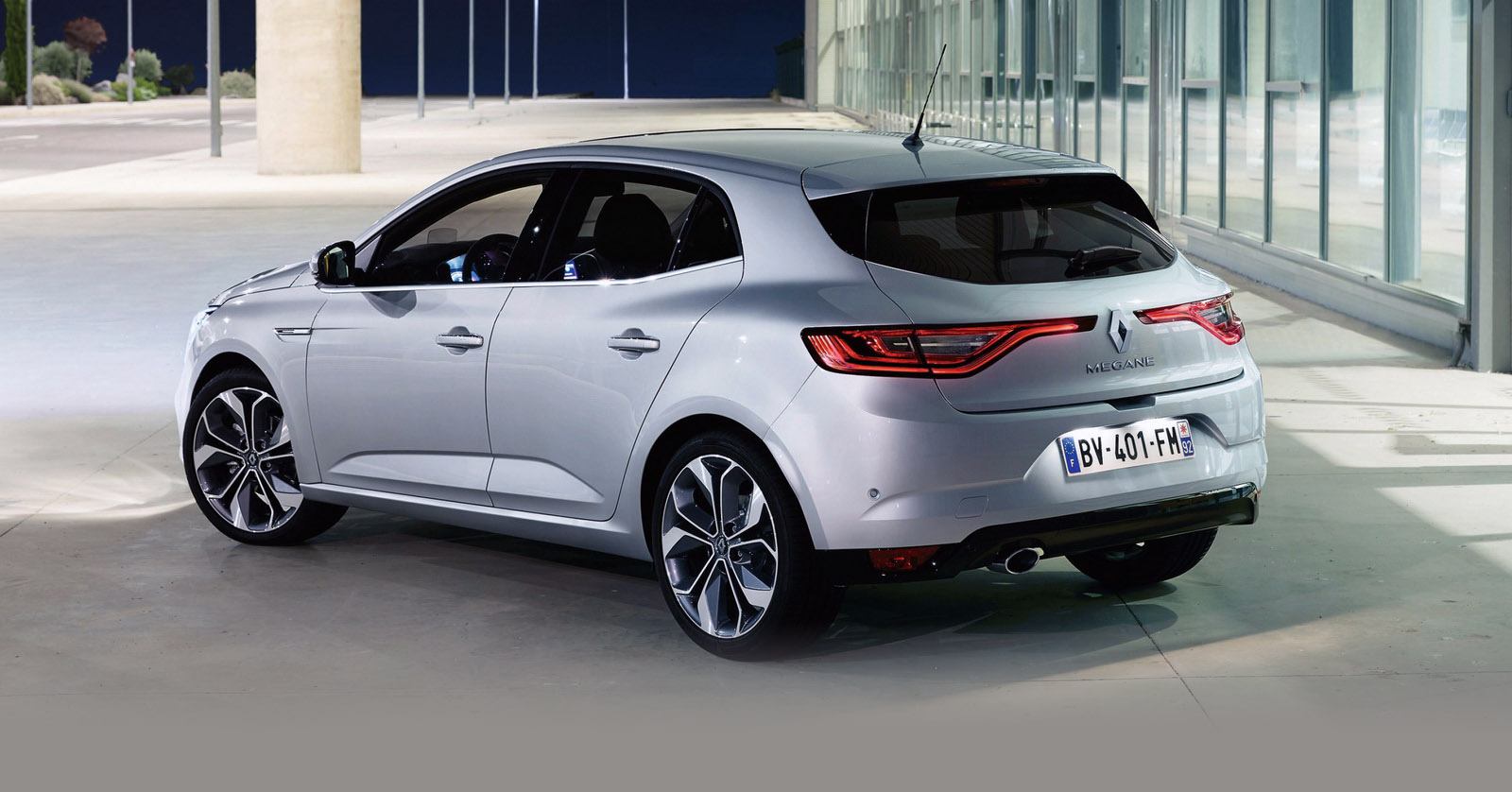
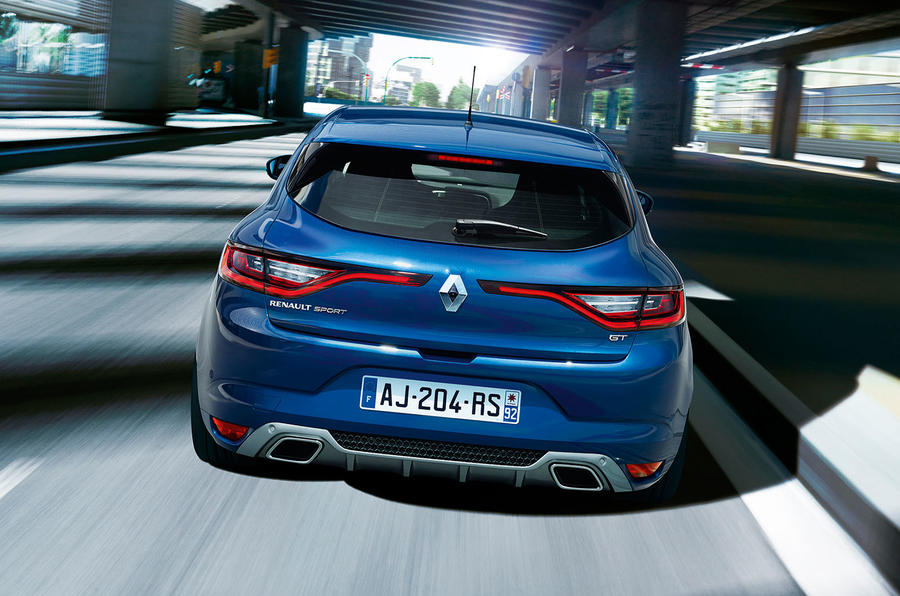
The All-New Renault Megane hatchback gets the full five start Euro NCAP Award, like most Renaults do.

  • The new Renault Mégane has been awarded a five-star passive safety rating after testing by the independent body Euro NCAP
  • The rating for the new Mégane takes the number of Renault models to have secured the maximum five-star rating in 2015 to four
  • The new Renault Mégane features upgraded safety thanks to a suite of driver assistance systems which reassure and warn drivers for ease of driving
Benefits of the Common Module Family platform
When it comes to safety, the new Mégane shares the benefits of the same Common Module Family (CMF) platform as the Kadjar crossover. Features of this new platform include the use of very high elastic limit steel for the spars, side rails and cross members (notably those situated between the engine compartment and the cabin). A square millimetre of this type of steel can withstand a load of 120kg.

The CMF platform also incorporates effective occupant restraint systems, including dual-generator front airbags, the deployment of which adapts as a function of the type of impact and position of the occupant. This feature enabled the new Mégane to obtain high scores for both adult and child protection. 
Meanwhile, the seat belts are equipped with pretensioners and adaptive load limiters which adjust the degree of restraint to the severity of the impact and the occupants’ build. In side impacts, front occupants are doubly protected by two latest-generation side airbags and two curtain airbags.
A suite of driver aids
Thanks to the CMF platform, the new Mégane also benefits from the many driver assistance systems already featured on Renault vehicles from the segment above, such as the Espace. These aids are designed to reassure or warn drivers, or for ease of driving.
For reassurance:
  • Adaptive Cruise Control automatically adjusts the car’s speed to maintain a safe distance to the vehicle ahead
  • AEBS (Active Emergency Braking System) warns the driver to brake in order to avoid a head-on collision. The brakes are applied automatically in emergency situations
To warn drivers:
  • Lane Departure Warning system warns drivers they are leaving their lane without indicating
  • The Safe Distance Warning system helps the driver to maintain a safe distance to the vehicle ahead
  • Overspeed Protection with Traffic Sign Recognition reads traffic signs in order to adjust the cruise control’s speed setting
  • A Blind Spot Warning provides the driver with a visual warning when a vehicle is detected in one of the door mirror’s blind spots
For ease of driving:
  • Switching from dipped to main beam head lights and vice-versa is automatic, requiring no driver intervention
  • Driver aids also include Hands Free Parking (front, rear and lateral parking sensors) and a reversing camera, subject to specification
  • A colour head-up display in the line of sight provides information about the majority of the driver assistance systems, the vehicle’s speed and navigation instructions
The Renault Talisman was also given a five-star rating at the same time as new Mégane, taking the number of Renault models to achieve the five-star rating in 2015 to four. The Kadjar and Espace, also benefiting from the CMF platform, were also awarded the rating by Euro NCAP earlier this year.
Anti-submarining: a Renault innovation dating back 15 years
For 15 years, Renault has innovated to prevent occupants from sliding beneath their seat belt in a head-on impact thanks to anti-submarining technology. To develop this technology, Renault uses specific crash test dummies equipped with more flexible groins to obtain simulations that are as close as possible to real-world situations. 
This technology calls for extensive work on seat ergonomics and on the positioning of the seat belt anchor points. In January 2015, the Euro NCAP protocol – which is made more severe every year – listed anti-submarining protection as a criteria for the first time.

Tuesday, 5 March 2013

Electric car awarded 5 stars at latest NCAP tests


Renault ZOE has been awarded a five-star rating following the passive safety tests carried out by Euro NCAP, despite the harsher noting system introduced by this independent body in January 2013. The score achieved by ZOE provides further evidence of Renault’s expertise in the realm of passive safety.  
Renault ZOE obtained an overall score of 82 percent (including the maximum rating for pedestrian safety) and consequently figures among the very best models in its segment.
In addition to this formal recognition, Renault ZOE is an eloquent ambassador of the Fix4sure system and delivers reassuring dynamics thanks to its precise, responsive chassis. As an electric vehicle, it is equipped with a system that provides an audible warning of its approach. The sound emitted was developed in association with organisations for blind and visually-impaired people.

Renault ZOE’s safety performance is amply comparable with that of an internal combustion-engined vehicle, confirming its status as a genuine car.
A holistic approach for optimal protection of all occupants
Renault ZOE shares the same platform as New Clio, so it was only normal for it to target the same high level of safety as the celebrated internal combustion-engined supermini. To achieve this result, Renault has developed solutions that take on-board its extensive research into real-world accidents and driving behaviours to ensure the protection of all occupants. To guarantee even more effective protection, its electronic architecture was designed to ensure that its latest-generation protective systems are triggered extremely quickly.
Adult occupant protection
In a head-on impact, Renault ZOE’s front occupants are protected by two high-efficiency airbags, as well as seat cushion airbags, along with seat belts equipped with pretensioners and load limiters set at 400daN.
At the rear, all seats are equipped three three-point seat belts, plus load limiters for the two outer seats.
Meanwhile, Fix4sure technology is a Renault innovation that has been developed to combat submarining (whereby passengers slide beneath their seat belt in a head-on impact). All Renault ZOE’s occupants are protected against this phenomenon thanks to a special hump in each seat cushion, as well as by the low position of the seat belt buckles, along with seat cushion airbags for the driver and front passenger.
Because the sides of a car benefit from relatively less protection, side-on impacts are a frequent cause of fatal injuries, but specific work has produced spectacular results to achieve the maximum score of eight points. To respond up to twice as quickly, Renault ZOE features two side-impact detection sensors (in the front doors and at the foot of the B-pillars). A specific algorithm adjusts the speed at which the new-generation head-thorax airbags are deployed to match the severity of the impact.
Combined with the results of the pole and rear impact tests, this score helped Renault ZOE to obtain 32 points from a possible 36 for adult protection, which is one of the best results ever obtained in the small car segment.
Child protection
Thanks to the overall design of its structure and the availability of three-point Isofix child seat anchorage for the front passenger seat and outer rear seats, Renault ZOE’s child protection rating figures among the very best in the B segment with a score of 39 points out of a possible 49, despite the fact that the evaluation procedure’s severity has been stepped up.
Renault ZOE: segment leader for pedestrian protection
The front end of ZOE was designed to minimise injury to pedestrians. The bumper has no salient edges, while the lower part of the windscreen, which is traditionally very rigid, was designed to reduce the risk of injury in an impact. Meanwhile, the height of the bonnet is raised in order to accommodate a crumple zone between the structure and the uppermost parts of the engine. Thanks to a score of 24 points out of 36, Renault ZOE has emerged as the best car in its class in terms of pedestrian protection, too.
Safety in its genes… plus equipment
Renault ZOE is equipped with cruise control and a speed limiter as standard, as well as audible and visual seat belt reminder warnings for all seats, plus ESC. It was awarded the maximum score of eight points for this part of the evaluation process, again despite the increased severity of the criteria employed.
A pragmatic approach and real engagement
Renault’s approach to safety is founded on a detailed study of actual accidents and real world safety with a view to proposing products that correspond with the realities on the road, including the incorporation of safety equipment as standard from the very first equipment level. The priorities consequently focus on the development of the most efficient technologies to a) prevent an accident happening in the first place, b) ensure that corrective action can be taken in unexpected situations and c) protect passengers when an impact does occur. Renault’s holistic approach does not boil down to just one equipment feature or technology. Over the years, Renault has emerged as a benchmark for automotive safety and this is also mirrored in the results its models have secured in media ratings.
When it comes to active safety, the qualities of the chassis, combined with auto-adaptive digitalisation of the vehicle’s dynamics, permit emergency situations to be detected with precision. The ABS and ESC functions, which are both standard, are even more efficient and are triggered at just the right moment to prevent jarring. The emergency brake assist function is incorporated in an electronic control unit/hydraulic unit.
Last but by no means least, work on ergonomics means that drivers are able to concentrate on the road ahead. For greater comfort, the legibility of instruments has been designed to be particularly clear and graphical. Renault ZOE also benefits from modern driving aids such as advanced navigation, voice commands for certain functions with the R-Link multimedia system, the automation of tasks such as headlight and windscreen wiper activation, plus rear parking sensors and even a reversing camera for certain versions. All versions of Renault ZOE are equipped with Bluetooth® telephony.
Renault’s five-star Euro NCAP-rated models
Laguna IIFive stars (2001)
Vel SatisFive stars (2002)
Mégane II Five stars (2002)
Espace IVFive stars (2003)
Scénic II The first five-star rating in its segment (2003)
Modus The first five-star rating in its class (2004)
Mégane Coupé Cabriolet Five stars (2004)
Clio IIIFive stars (2005)
New LagunaFive stars (2008)
KoleosFive stars (2008)
New MéganeFive stars (2008), the best score ever obtained, 
irrespective of segment
New ScénicFive stars (overall rating-2009)
New ClioFive stars (overall rating-2012)
ZOEFive stars (overall rating-2013)