Purpose

I will try my best to provide detailed info on various cars and what is like to live with them, I have already produced a few for Jaguar-car-forums, I will do my best to be unbiased, but it will be hard for some cars. I will re-produce press releases and copy from other motoring news.
Showing posts with label Maranello. Show all posts

Friday, 1 December 2017

The Modena version of the Ferrari Museum has beaten all previous visitor numbers with a month to go.

The popularity of the Ferrari Museums continues to grow, hitting a record of more than 500,000 visitors from the start of the year to November, an increase of 12% compared to the same period last year. As such, the previous record of more than 478,000 tickets set at the end of 2016 has been beaten, well before the end of the year. 
The Museo Enzo Ferrari in Modena in particular registered an annual growth of 19% in November, equivalent to 150,000 visitors, drawn by the “Driving with the Stars” exhibition that sees the Ferraris driven by stars from the sporting, cultural, industrial and entertainments worlds on display. 

The Ferrari Museum in Maranello has also enjoyed significant success, with an 8% increase in visitors taking the total to 350,000. Over the course of the year, the museum has hosted the “Rosso Infinito” (‘Infinite Red’) exhibition - which is still underway - and “Under the Skin”, which has now been transferred to the Design Museum in London, running from 15 November to 15 April 2018. 
Sales of single tickets for both museums remain stable, representing around a fifth of the total, serving as confirmation of the superb synergy between these structures for another year. 
These results serve to confirm that the Ferrari Museums are among the most visited in Italy, attracting fans and enthusiasts from all over the world. They owe their appeal to the exciting attractions renewed every year, with major themed exhibitions, exhibits featuring iconic cars and original museum tours that take visitors on a journey through the history of the Prancing Horse brand.

Monday, 24 July 2017

Thirty years ago one of the most storming cars ever made was launched, we have the F40 from Ferrari.

Thirty years have passed since the official presentation of the F40, which took place on 21 July 1987 at the Civic Centre in Maranello, now home to the Ferrari Museum. Created to celebrate the company's 40th anniversary, it was the last car to carry the founder's "signature". 
It was a definitive car, the ultimate expression of the technology thus far developed by the Prancing Horse, but at the same time it went back to Ferrari’s roots when racing cars were also road vehicles. An extreme derivation of the 308 GTB and of the 288 GTO Evoluzione prototype, the Ferrari F40 is a masterpiece of engineering and style, which entered the collective imagination as a symbol of an era.
On the anniversary of the launch of this motoring legend, Ferrari has gathered together the memories of three of its creators: Ermanno Bonfiglioli, then Head of Special Projects, Leonardo Fioravanti, a designer for Pininfarina, and test driver Dario Benuzzi.
Ermanno Bonfiglioli, who as Head of Special Projects was responsible for supercharged engines, has not forgotten the excitement of that 21 July: "I have never experienced a presentation like that of the F40. When the car was unveiled, a buzz passed through the room followed by thunderous applause. No one, except for close associates of Enzo Ferrari, had yet seen it. Indeed, the company had cloaked the development and testing of that car in unusual secrecy. 
And the surprise at such a stylistic leap was almost shock. The timeframe was also unusual, within the very short arc of 13 months, the chassis and bodywork moving ahead quickly and at the same pace as the powertrain. It was June 1986 when we began designing the engine of the project F 120 A. The 8-cylinder 478 hp twin-turbo was a derivative of the 288 GTO Evoluzione’s, but a number of innovative contents enabled the F40 to become the first production Ferrari to exceed 320 km/h. 
We paid maximum attention to the weight of the engine, thanks also to the extensive use of magnesium, such as oil sump, cylinder-head covers, intake manifolds, and gearbox bell-housing were in this material that cost five times as much as aluminium alloy and that was never used in such quantities in subsequent production cars. This is just a small example of this car's "difference".
Leonardo Fioravanti was a designer at Pininfarina when he was invited by Enzo Ferrari to Fiorano to try the 288 GTO Evoluzione: “when il Commendatore asked for my opinion on this experimental prototype, which due to regulatory issues never went into production, I didn't hide my enthusiasm as an amateur driver for the incredible acceleration of its 650 hp. It was then that he first talked to me of his desire to produce a "true Ferrari". 
We knew, as he knew, that it would be his last car. We threw ourselves headlong into the work. Extensive research at the wind tunnel went into aerodynamic optimisation, to achieve coefficients appropriate for the most powerful Ferrari road car ever. Its style matches its performance: the low bonnet with a very tiny overhang, the NACA air vents and the rear spoiler, which my colleague Aldo Brovarone placed at right angles, made it famous. 
If I had to point out one overriding reason for the success of the F40, I would say that its line succeeded in instantly transmitting the exceptionality of its technical content: speed, lightness, and performance."
Dario Benuzzi, a Ferrari’s long-term test driver, participated in an arduous and meticulous testing job: "The handling of the first prototypes was poor. 
To tame the power of the engine and make it compatible with a road model, we needed to subject every aspect of the car to countless tests: from the turbochargers to the braking system, from the shock absorbers to the tyres. The result was an excellent aerodynamic load and high stability even at high speed. 
Another important aspect was the tubular steel frame with Kevlar reinforcement panels, which provides three times more torsional rigidity than that of other cars of the period, and a bodywork made mainly of composite materials that reduced weight to just 1100 kg. 
We obtained precisely the car we wanted, with few comforts and no compromises. With no power steering, power brakes or electronic devices, it demands the skill and commitment of the driver but generously repays it with a unique driving experience. Steering precision, road holding, braking power and intensity of acceleration reached unmatched levels for a road car.
The F40 is on show at the Ferrari Museum of Maranello as part of the "Under the Skin" exhibition devoted to the evolution of innovation and style in the 70-year history of the Company.

Thursday, 1 June 2017

Ferrari opens a new wing to the Maranello Ferrari Museum and starts with two new exhibitions.


The Ferrari Museum of Maranello today opens its new exhibition spaces and two exhibitions - "Under the Skin" and "Infinite Red" - in the presence of President and CEO of Ferrari Sergio Marchionne, Vice President Piero Ferrari, Director of the London Design Museum Deyan Sudjic and Mayor of Maranello Massimiliano Morini.


The Ferrari Museums enjoyed a record year in 2016 with more than 478,000 visitors, of whom 344,000 came to Maranello. 

So also in order to cope with a growing public, the Museum's spaces have been extended by more than 600 square metres to a total of 4,100 square metres, creating a new wing that connects to the existing structure by means of a great continuous glass facade, and a new museum itinerary. 

In addition, a multifunctional space of about 300 square metres has been built, which can host up to 250 people for events, conventions and educational activities. The refreshments area and the Ferrari Store are also completely new.


Two new exhibitions, "Under the Skin" and "Infinite Red", celebrate Ferrari on its 70th anniversary. The former recalls the founder and the evolution of the company's innovation and style, while the latter covers the company's history through its models.


"Under the Skin"
The "Under the Skin" exhibition, created in partnership with the London Design Museum, recounts the creative and engineering development of Ferrari down the years through a series of exceptional cars beginning with the 125 S, the marque's first car. 

Some technical drawings from the historical archive of the Prancing Horse and the engines on display reveal the design process of cars of all eras, casting an unprecedented eye over the engineering work hidden behind their exterior beauty. 

Design models and the Wind Gallery also show the evolution of styles and technologies down the years, recalling how Enzo Ferrari was at the forefront of experimenting with new scientific techniques. 

A parallel exhibition itinerary strongly linked to the first one reminds us of the main biographical stages, the work and the competitive spirit that has made Ferrari famous worldwide. The exhibition will move to the London Design Museum from November.


"Infinite Red"
This exhibition celebrates the 70-year history of the Prancing Horse with some of Maranello's most exclusive creations for track and road. 

The Formula One cars on display have a long series of victories to their name: from the 500 F2, with which Alberto Ascari won for Ferrari the first world drivers' title in 1952, to the F2004, the Ferrari that won the most GPs in history (15, like the F2002) and concluded Michael Schumacher's epic run of world titles, and finally the F2008, which won the World Constructors' Championship. 

Among the GT cars, visitors can admire various models from the 250 family, such as the 250 GT Berlinetta "Tdf", which dominated races in the second half of the 1950s, its evolution the 250 GT Berlinetta SWB and the 250 GTO, a collectors' favourite. 

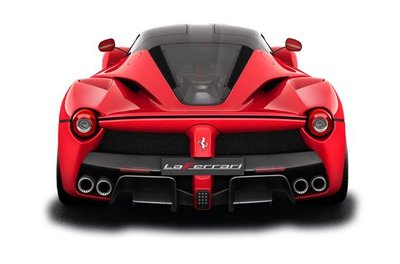
Then down to the present, the exhibition features a number of limited special series such as the F50, the Enzo and the latest, the LaFerrari, also present in the non-homologated FXX K version for exclusive use on track.


The exhibition "Under the Skin" will remain at Maranello until November 2017, while "Infinite Red" is open until the end of the year. The Ferrari Museum is open every day from 9:30 am to 7 pm (from November to March it closes at 6 pm).


Credits
The “Under the Skin” exhibition is in collaboration with Design Museum of London.


Exhibition Curators: Gemma Curtin, Andrew Nahum
Exhibition Design: Studio Urquiola
Graphic Design: Pentagram


A special thanks to Giovanni Perfetti, Lorenzo Ramaciotti, Ronald Stern.


The "Infinite Red" exhibition is curated by Ferrari.


Installation, graphics and multimedia: Benedetto Camerana (Camerana &
Partners), CWS Digital Solutions, Instant Creativity.

Thursday, 15 December 2016

To celebrate 50years of Ferrari in Japan, there is a ultra low limited edition J50 edition.

During a special celebration held at the National Art Center in Tokyo to commemorate the 50th anniversary of Ferrari in Japan, Ferrari revealed a new strictly limited series of bespoke cars, the J50.
The Ferrari J50 is a two-seater, mid-rear-engined roadster that marks a return to the targa body style evocative of several well-loved Ferrari road cars of the 1970s and 1980s. 
Created by Ferrari’s Special Projects department and designed by the Ferrari Styling Centre team in Maranello,  just 10 examples of the J50 will be built and, in the spirit of Ferrari’s fuori serie tradition, each one will be tailored specifically to the customer’s requirements.

Based on the 488 Spider, the J50 is powered by a specific 690 cv version of the 3.9-litre V8 that won the overall International Engine of the Year Award this year.
The bodywork is all new and heralds a radically futuristic design language, with a highly distinctive personality that suits the tastes of a clientele that seeks the utmost in innovative styling. The design approach was led by the desire to create a very low-slung roadster, encapsulating intrinsic Ferrari values of nimbleness and agility. To achieve this, a strong dynamic was imprinted on the flank of the car by the converging interplay between two main guiding lines: the slanted top edge of the side window, continuous with the windscreen, and the raked black swage line which dramatically rises from the low-set nose until it vanishes in the air intake aft of the doors.
While the “helmet visor” effect, which spawns from the window graphic, is reminiscent of Ferrari’s open competition barchettas going as far back as the 1950s, the black dividing line is a novel interpretation of a recurring Ferrari styling cue seen on iconic models such as the GTO, F40 and F50. Circling around the front of the car below knee height, it is a key element which alters the perception of the beltline, setting it at a much lower height than usual, transforming the J50 into a barchetta.
The bonnet section is lower at the centre with raised wheelarch crests giving the emphasized muscularity typical of Ferrari mid-engined sports cars. Two carbon-fibre air channels in the front bonnet create an even more diminutive and sharper looking front mass underlined by the full LED headlights that feature a specific and very dynamic profile.
The J50 benefits from detailed aerodynamic development with a number of significant functional solutions. Firstly, the radiators have been positioned closer together, and the front bumper has been completely redesigned. The windscreen header rail has been lowered allowing more airflow over the aero foil and thus over the rear spoiler.
The sophisticated tail section is dominated by the artful interplay of graphic design themes and three-dimensional elements. The engine is framed by a transparent polycarbonate cover which is intricately shaped to provide a visual extension of the two separate roll hoops protecting the heads of driver and passenger. A transverse aero foil projects as a bridge between the hoops, effectively revisiting one of the most distinctive features of Ferrari sports prototypes of the 1960s.
The rear is decidedly aggressive in nature, with the quad taillight design widening the car visually under a high-downforce wing profile. The rear diffuser features an extractor shape inspired by jet engine afterburners, giving the car a powerful stance. 20” forged rims of unique design were crafted specifically for this limited-edition model.
Inside the cabin, specific trim adorns the sports seats, echoing the design of the rear bonnet contour to provide a unmistakable signature feature. The carbon-fibre hard targa top is divided into two pieces which stow conveniently behind the seats.
The J50 presented at the launch in Tokyo is finished in a special shade of three-layer red with a red-over-black interior trimmed in fine leather and Alcantara.

Friday, 9 December 2016

A rare one of a kind La Ferrari is auctioned to help those in the earthquake zones of Italy.

The other night, a prized LaFerrari was sold at auction for $7 Million to benefit the reconstruction of Central Italy in the aftermath of the devastating earthquakes of 2016. 
The auction was held in conjunction with RM Sotheby’s and in collaboration with the National Italian American Foundation's Earthquake Relief Fund. The price achieved represents a record for the most valuable 21st Century automobile ever sold at auction.
All proceeds from the auction will go toward the reconstruction efforts in the areas affected by the earthquake. 
RM Sotheby’s has graciously donated their expertise to raise the highest amount possible. The decision to donate a LaFerrari from the company’s own collection for this cause  was announced on August 31st 2016 on the occasion of the bilateral talks between the Italian and German governments that took place at the Ferrari factory in Maranello, Italy.
The LaFerrari boasts a unique livery with a distinctly Italian theme: a red exterior with a white dream line on the hood and rear windshield. A  small Italian flag on the hood serves as a reminder that this is a gift by Ferrari to its home country. The car will also feature a commemorative plaque.

Thursday, 29 September 2016

PARIS - Ferrari celebrates the 70th Birthday with a world tour and 70 cars with differing liveries, some on show at Paris.

Ferrari is availing of the Paris Motor Show to announce a series of special initiatives to celebrate the 70th anniversary of the marque’s foundation in 2017.
The celebratory anniversary logo will be unveiled at the event. Its forms are inspired by styling cues of the Prancing Horse cars and the marque’s passion for detail. This is a symbol that encapsulates 70 years of history and points the Ferrari brand to the future. The logo will be used exclusively on a small number of iconic cars.


It will appear for the first time on the LaFerrari Aperta,   the Prancing  Horse’s  latest limited-edition special  series and  a unique  model in terms   of  both  its   technology  and   styling, making  it  perfect  to  celebrate this important anniversary. 

Another important initiative is the announcement of 70 different individual liveries created by the Tailor Made atelier and inspired by iconic models from Ferrari history. These 70 different configurations will be used to create a maximum of 350 unique cars: each can be used, in fact, once on one example of five models in the current range.
A number of these new liveries will be shown on the Paris stand: 
  • F12berlinetta: “The Stirling”, inspired by the 250 GT Berlinetta SWB, winner of the 1961 Tourist Trophy with Stirling Moss: it sports a characteristic Blu Scuro racing livery complete with horizontal white stripe and number roundel.
  • 488 GTB: “The Schumacher”, an homage to the F2003-GA single-seater, winner of the F1 Drivers’ and Constructors’ World Championships in 2003, in which the legendary German driver took no fewer than six grand prix victories.
  • California T: “The Steve McQueen”, inspired by the 1963 250 GT Berlinetta lusso, one of the most elegant Ferraris ever built, which was a gift to the American actor from his first wife, Neile Adams. It features brown body paintwork and a cabin in camel leather with elegant stitching.  
  • 488 Spider: “The Green Jewel”, sports the signature green livery of the 365 P2 fielded by the British David Piper Racing team. Piper was a regular and very well-known Ferrari privateer and drove the car to victory in the Nine Hours of Kyalami in both 1965 and 1966 and, in 1966, in the prestigious Trophée d’Auvergne at Clermont-Ferrand.
  • A second example of a 488 Spider is displayed in the Tailor Made area. Inspired by the 1953 375 MM bodied by Pinin Farina, it features an elegant three-layer Bianco Italia exterior colour.
2017 will also bring the start of a world tour spanning more than 60 different countries to underscore the Prancing Horse’s global reach. A year-long series of events in Italy and worldwide will see classic Ferraris and modern cars side by side and the celebrations will conclude with an exclusive event in Maranello.