Purpose

I will try my best to provide detailed info on various cars and what is like to live with them, I have already produced a few for Jaguar-car-forums, I will do my best to be unbiased, but it will be hard for some cars. I will re-produce press releases and copy from other motoring news.
Showing posts with label tokyo. Show all posts

Thursday, 15 December 2016

To celebrate 50years of Ferrari in Japan, there is a ultra low limited edition J50 edition.

During a special celebration held at the National Art Center in Tokyo to commemorate the 50th anniversary of Ferrari in Japan, Ferrari revealed a new strictly limited series of bespoke cars, the J50.
The Ferrari J50 is a two-seater, mid-rear-engined roadster that marks a return to the targa body style evocative of several well-loved Ferrari road cars of the 1970s and 1980s. 
Created by Ferrari’s Special Projects department and designed by the Ferrari Styling Centre team in Maranello,  just 10 examples of the J50 will be built and, in the spirit of Ferrari’s fuori serie tradition, each one will be tailored specifically to the customer’s requirements.

Based on the 488 Spider, the J50 is powered by a specific 690 cv version of the 3.9-litre V8 that won the overall International Engine of the Year Award this year.
The bodywork is all new and heralds a radically futuristic design language, with a highly distinctive personality that suits the tastes of a clientele that seeks the utmost in innovative styling. The design approach was led by the desire to create a very low-slung roadster, encapsulating intrinsic Ferrari values of nimbleness and agility. To achieve this, a strong dynamic was imprinted on the flank of the car by the converging interplay between two main guiding lines: the slanted top edge of the side window, continuous with the windscreen, and the raked black swage line which dramatically rises from the low-set nose until it vanishes in the air intake aft of the doors.
While the “helmet visor” effect, which spawns from the window graphic, is reminiscent of Ferrari’s open competition barchettas going as far back as the 1950s, the black dividing line is a novel interpretation of a recurring Ferrari styling cue seen on iconic models such as the GTO, F40 and F50. Circling around the front of the car below knee height, it is a key element which alters the perception of the beltline, setting it at a much lower height than usual, transforming the J50 into a barchetta.
The bonnet section is lower at the centre with raised wheelarch crests giving the emphasized muscularity typical of Ferrari mid-engined sports cars. Two carbon-fibre air channels in the front bonnet create an even more diminutive and sharper looking front mass underlined by the full LED headlights that feature a specific and very dynamic profile.
The J50 benefits from detailed aerodynamic development with a number of significant functional solutions. Firstly, the radiators have been positioned closer together, and the front bumper has been completely redesigned. The windscreen header rail has been lowered allowing more airflow over the aero foil and thus over the rear spoiler.
The sophisticated tail section is dominated by the artful interplay of graphic design themes and three-dimensional elements. The engine is framed by a transparent polycarbonate cover which is intricately shaped to provide a visual extension of the two separate roll hoops protecting the heads of driver and passenger. A transverse aero foil projects as a bridge between the hoops, effectively revisiting one of the most distinctive features of Ferrari sports prototypes of the 1960s.
The rear is decidedly aggressive in nature, with the quad taillight design widening the car visually under a high-downforce wing profile. The rear diffuser features an extractor shape inspired by jet engine afterburners, giving the car a powerful stance. 20” forged rims of unique design were crafted specifically for this limited-edition model.
Inside the cabin, specific trim adorns the sports seats, echoing the design of the rear bonnet contour to provide a unmistakable signature feature. The carbon-fibre hard targa top is divided into two pieces which stow conveniently behind the seats.
The J50 presented at the launch in Tokyo is finished in a special shade of three-layer red with a red-over-black interior trimmed in fine leather and Alcantara.

Thursday, 22 September 2016

Automobili Lamborghini celebrates the opening of “Excellence in Carbon Fiber”, an exclusive event in Japan.

Automobili Lamborghini celebrates the opening of “Excellence in Carbon Fiber”, an exclusive event dedicated to its carbon fiber technologies, at Meiji Memorial Picture Gallery in Tokyo, Japan.
Over the past 30 years, Lamborghini has been an industry leader in both the development and implementation of advanced lightweight materials. From the Countach to the Huracán, not a single series-produced Lamborghini came to life with less carbon fiber than its predecessor.

Since Japan is the producer of the majority of carbon fiber raw material currently available on the market, Lamborghini’s Research & Development has collaborated with Japanese Industries in composite development from 2008. Among last years, several missions by Japanese organizations and companies have visited both, the Advanced Composite Research Center (ACRC) in Italy and the Advanced Composite Structures Laboratory (ACSL) in the United States, recognizing Lamborghini competence in carbon fiber.
“We are delighted to celebrate the 30th anniversary of Lamborghini’s use of carbon fiber, with the opening of “Excellence in Carbon Fiber” in Japan. Carbon fiber is a material that Lamborghini has a long history with. It is one of the most important keys to our cars’ success in the past, the present and the future,” said Stefano Domenicali, Automobili Lamborghini Chief Executive Officer.
The event was attended by the Italian Ambassador S.E. Dr. Domenico Giorgi, who commented: “Japan is an important market in the development and production of carbon fiber. The long experience of Automobili Lamborghini in the use of composite materials, and its collaboration with leading Japanese companies have led to the development of significant innovations in this area. This combination is one of the key aspects in the field of scientific and technological relations between the two countries and is therefore a source of great pride for both Italy and Japan.”
Automobili Lamborghini and Mitsubishi Rayon Co.,Ltd. have agreed a co-operation under the project title ‘CFRP Press Technologies and Processes Automation’, and will work together to further develop higher levels of manufacturing automation that are more suitable for larger scale production, with great advantages in process stability. The event ended with a Memorandum of Understanding which was signed between Stefano Domenicali, Automobili Lamborghini Chief Executive Officer and Dr. Hitoshi Ochi, the President of Mitsubishi Rayon Co.,Ltd.
“By continuing to develop our patented Forged Composite materials, we are able to create a product that can enhance Lamborghini super sports cars in both their performance and their appearance. The ability to leverage this kind of lightweight material gives Lamborghini a competitive advantage that will benefit our cars, as well as the production process, in the future,” said Maurizio Reggiani, Automobili Lamborghini Board Member for Research & Development.
Lamborghini debuted the latest car to showcase its mastery of carbon fiber during the 2016 Geneva motor show. The Centenario, which was on display for the exclusive event in Tokyo, is available in a body made of fully exposed carbon fiber. Marking what would have been company founder Ferruccio Lamborghini’s 100th birthday, the Centenario is a marriage between acknowledgements of past milestones and technological “firsts”. Appropriately, it is only available in a very limited production run of 20 coupes and 20 Roadsters.

Monday, 27 June 2016

Mitsubishi Motors Corporation will launch another all-new concept at this years Paris Motor Show.

Following the unveiling of the Concept XR PHEV II and eX Concept at the 2015 Geneva Motor Show and the 2015 Tokyo Motor Show respectively, Mitsubishi Motors Corporation (MMC) continues the development of its ‘Dynamic Shield’ design philosophy with its latest concept to be unveiled at this year’s Paris Motor Show.

The Ground Tourer Concept carries the latest expression of Mitsubishi Motors’ design journey, expressed through four powerful elements: Functional beauty, augmented possibilities, Japanese craftsmanship and solid thrust.
Combining Mitsubishi Motors’ unparalleled off road heritage and cutting edge plug-in hybrid electric vehicle (PHEV) technology, the Ground Tourer Concept SUV will offer effortless travel both on and off the beaten track whatever the driving conditions.  

Tuesday, 16 February 2016

Special New Limited Edition Venetian Red D-Max marks Isuzu's 100th anniversary year, but be quick, 100 only.

The Isuzu D-Max Blade – the flagship model of the multi-award winning pick-up range – is getting a centennial Venetian Red paint finish as part of the celebrations to mark the 100th anniversary since the company first set up operations in Tokyo, Japan. The glowing red colour scheme will be limited to 100 D-Max Blade pick-up vehicles.

The vibrant Venetian Red colour will leave a lasting impression as it takes hints from the same shade of red consistently used by Isuzu throughout the brand’s history. The top-of-the-range double-cab Blade is available from just £25,249 (CVOTR) in manual transmission and £26,249 (CVOTR) in auto, and the eye-catching Venetian Red finish comes at no extra cost. The Blade, which has been a big hit since it was launched in 2014, is already available in Cosmic Black or Pearlescent White.
The D-Max Blade range-topper comes with a host of extra features and quality interior appointments for a premium level of comfort and refinement, including superior leather upholstery, 18-inch Shadow alloy wheels and choice of Black Mountain Top Roller Cover with Black Rear Style Bar or Colour Coded Aeroklas Leisure Canopy.
At the heart of the Blade remains the powerful-yet-efficient 2.5-litre twin-turbo diesel engine, producing 163 PS and 400 Nm of torque. Isuzu’s advanced power unit returns a highly impressive fuel economy of 38.7 mpg on a combined cycle. Owners also benefit from a heavyweight towing capacity of 3.5 tonnes (braked trailer) and 1,072 kg (manual) / 1,067 kg  (auto) payload.
Isuzu entered its centenary year on a rich vein of form, as the longest-running Japanese car manufacturer continues to break sales records in the UK. With 6,220 vehicle registrations in 2015, Isuzu UK made a 13% year-on-year improvement while also recording a 478% sales boost compared to five years ago. Further model news is expected later in the year.
Every new D-Max sold in the UK is backed by the company’s pioneering, five-year / 125,000-mile warranty.

Sunday, 15 November 2015

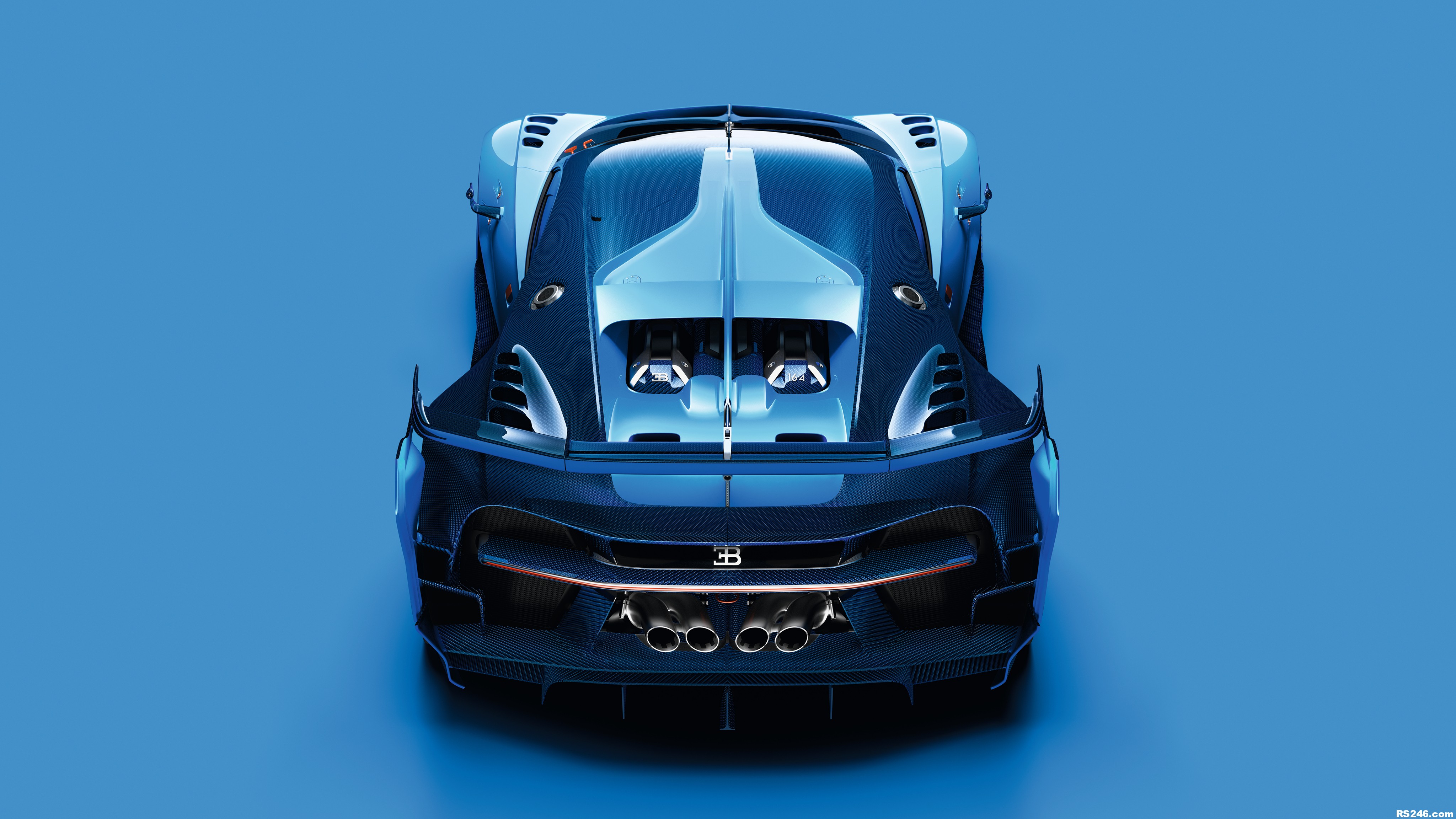
Despite the massive cost savings at Volkswagen Group, the next Bugatti is definitely coming soon.

Volkswagen Group's Bugatti will survive for at least one more supercar generation in the wake of the emissions scandal.
Bugatti said it will introduce a new supercar soon. Interest in the successor of the sold-out Veyron is "phenomenal" among North American customers, sales chief Stefan Brungs said after opening revamped showrooms in Manhattan and Miami. More outlets will follow in Munich, Monaco and Tokyo.

Bugatti's new showroom concept is a "fundamental investment in the future of the brand," Brungs said in a statement on Friday.
VW's widening scandal over rigged diesel engines and understated carbon dioxide emissions has drawn scrutiny over whether the company will stick to extravagant operations such as Bugatti as the parent company plans wide-ranging spending cuts to become leaner and more efficient.
Cleanup will cost at least 8.7 billion euros ($9.3 billion), Volkswagen has said. CEO Matthias Mueller said last week the group will scrutinize its vast lineup of more than 300 vehicles and weed out the least profitable.
Gold Veyron
Profitability was never the opulent, highly-engineered Veyron’s strong suit. Though the two-seat sports car sold for an average of 2.3 million euros, the cost of developing and building it -- in everything from gold and titanium to porcelain -- meant Volkswagen may have lost about 4.6 million euros on each Veyron it sold, according to estimates from analysts at Sanford C. Bernstein.
A spokeswoman for Bugatti declined to comment on speculation over the company’s prospects, saying that like all brands in the group, it needs to watch its costs. Bugatti has already started showing the Veyron successor to selected customers and will unveil it to everyone else in the near future, she said.
VW bought the rights to the brand founded by designer Ettore Bugatti in 1998, aiming to make a car powerful enough to drive faster than 400 kilometers (250 miles) per hour and civilized enough for a trip to the opera. In February it sold the 450th and final Veyron, an open-top Grand Sport Vitesse variant with 1,200 horsepower.
VW has hinted since then that a successor is coming -- the next iteration will be even faster, brand chief Wolfgang Duerheimer said at the Frankfurt auto show in September.
The Friday announcement is the first confirmation that Bugatti will survive the cuts.

Thursday, 31 October 2013

Suzuki to wow crowds with a number of new concepts in Tokyo.

Suzuki Motor Corporation will display several concept exhibits at the 43rd Tokyo Motor Show 2013 (organised by the Japan Automobile Manufacturers Association) which will open to the public at Tokyo’s Big Sightbetween November 23 and December 1, 2013.
The theme of the Suzuki booth at this year’s show is: “Let’s Create a Brand New Story”. Suzuki recognises that the daily life of each and every customer is a story, and by adding something to each of those stories, the desire to create different, brand new ideas together with our customers, is put into the theme.
Based on the Suzuki slogan of “Small Cars for a Big Future”, the concept cars exhibited at the show offer cars that are currently in demand, cars that should be available in the near future, and cars for the more distant future. In order to build a Brand New Story that will add excitement and passion to the daily lives of customers around the world, the cars are packed with Suzuki’s attractive products and unique leading-edge technology.
In addition, the design of the Suzuki booth features an S-shaped border that depicts lightness and softness to an open construction that expresses a bright future. A wide panoramic screen measuring 3.6m x 40m is set at the back of the stage. Introduction videos of the concept cars will be streamed across the main stage to show the Brand New Story of Suzuki and its customers in a beautiful image, all of which were produced by movie director Shunji Iwai.
Main Exhibits
Crosshiker: a compact crossover that fuses fresh new styling with a dynamic weight reduction and highly-efficient power train
World PREMIERECrosshiker
  • The Crosshiker is a compact crossover, which is an alternative offer of the G70, the concept car packed with lightweight and fuel-efficient technologies that was exhibited at the 2011 Tokyo Motor Show. It uses the next-generation lightweight platform adopted for the G70.
  • It features a size of a compact car while weighing just 810kg, the weight of a minicar. With a newly developed 1-litre 3-cylinder engine, it strikes a good balance between power and environmental performance.
  • The Crosshiker inherited the G70 concept “Eco-friendly on the inside while having a design with personality that would evoke passion in users”, while adopting more exciting styling and a design befitting a crossover tailored to adults keeping a playful mind.
X-LANDER: a real 4WD hybrid with a distinctive personality

World PREMIEREX-LANDER
  • Suzuki wants drivers to use this car in the city as well as sometimes go out to play in the field. This concept model is packed with such intentions.
  • Based on the Jimny, Suzuki’s world-class compact 4WD vehicle, the X-LANDER is equipped with a 1.3L engine and a newly developed automatically controlled manual transmission.
  • It incorporates a compact lightweight hybrid system equipped with a highly-efficient motor built onto a 4WD system, achieving both up-to-date environmental performance and excellent running performance.
  • The vehicle design is loaded with full of playful touches so that the vehicle looks like a fusion of off-road power and mechanical precision.
HUSTLER: the challenge to a new genre, a crossover that suits an active lifestyle

World PREMIEREHUSTLER
  • This is a crossover type concept model of a new-genre minicar that suits the active lifestyle of people who love the nature, love the outdoors, and love sports.
  • This is a stylish yet practical design with plenty of SUV touches, combining an exterior that looks like it belongs in the outdoors with a roomy, comfortable, and useful interior.
HUSTLER Coupe: the challenge to a new genre of minicar, a crossover coupe with a beautiful silhouette

World PREMIEREHUSTLER Coupe
  • This is a concept model that adds further design variation of a coupe silhouette to the reference exhibit HUSTLER.
iV-4: a compact SUV with a powerful design that carries on the Suzuki SUV image

Japan PREMIEREiV-4
  • The iV-4 is a compact SUV concept model newly offered by Suzuki, who has earned much praise for its Jimny, Grand Vitara, and other compact SUVs.
  • Its concept “Grab Your Field” has the meaning to let users pursue their own pastimes and lifestyles.
  • This model is equipped with Suzuki’s next-generation 4WD system ALLGRIP and will be launched in Europe in 2015.

Wednesday, 9 October 2013

Mitsubishi launches three new concepts at the Tokyo Motor Show 2013

Mitsubishi Motors Corporation (MMC) will unveil three world premiere concept vehicles at the 43rd Tokyo Motor Show 2013[1]. Incorporating a new design identity that symbolises the sense of security and functionality of an SUV, the three models highlight Mitsubishi Motors innovative engineering, MMC's next-generation advanced technologies that embody the concepts of environmental responsibility, driving pleasure, toughness and safety.
The first of the three concepts, the MITSUBISHI Concept GC-PHEV[2] is a next-generation full-size SUV that uses a high out-put PHEV (plug-in hybrid electric vehicle) system. The MITSUBISHI Concept GC-PHEV offers both the dynamic drivability of an SUV and class-leading environmental performance. MMC’s S-AWC (Super All Wheel Control) integrated vehicle dynamic control system delivers superior handling, stability as well as the all-terrain capability an SUV offers. The MITSUBISHI Concept GC-PHEV is a “connected car” that also offers next-generation preventive safety technology and driver support technology through wireless connectivity.
The MITSUBISHI Concept XR-PHEV[3] is a next-generation compact SUV loaded with a lightweight and highly efficient PHEV system with dramatically enhanced environmental performance. The MITSUBISHI Concept XR-PHEV offers nimble drivability and a body style resembling a sport coupe.
The MITSUBISHI Concept AR[4] is a next-generation compact MPV (multi-purpose vehicle) that offers both the mobility of an SUV and the occupant space of an MPV. The latest fuel efficiency technologies adopted in the MITSUBISHI Concept AR include the use of a down-sized direct-injection turbocharged engine. The MITSUBISHI Concept AR provides a relaxing space for occupants through its enveloping interior design and a range of seat arrangements that provide comfort for all passengers.

pic
pic

Wednesday, 28 August 2013

Nissan will be ready with revolutionary commercially-viable Autonomous Drive in multiple vehicles by the year 2020

  • Nissan will be ready with revolutionary commercially-viable Autonomous Drive in multiple vehicles by the year 2020
  • Program underway in Japan to construct first dedicated, purpose-built autonomous drive proving ground
  • The goal is availability across the model range within two vehicle generations
  • Nissan already working with top universities including MIT, Stanford, Carnegie Mellon, Oxford and The University of Tokyo*; seeks to broaden collaborative research with other world-class institutions as well as start-ups
  • Nissan leveraging 80 years of technical prowess and innovation in new effort to revolutionize vehicle chassis and design for Autonomous Drive

Nissan Motor Co., Ltd. today announced that the company will be ready with multiple, commercially-viable Autonomous Drive vehicles by 2020. Nissan announced that the company's engineers have been carrying out intensive research on the technology for years, alongside teams from the world's top universities, including MIT, Stanford, Oxford, Carnegie Mellon and the University of Tokyo.


Work is already underway in Japan to build a dedicated autonomous driving proving ground, to be completed by the end of fiscal year 2014. Featuring real townscapes - masonry not mock-ups - it will be used to push vehicle testing beyond the limits possible on public roads to ensure the technology is safe.

Nissan's autonomous driving will be achieved at realistic prices for consumers. The goal is availability across the model range within two vehicle generations.

"Nissan Motor Company's willingness to question conventional thinking and to drive progress - is what sets us apart," said CEO Carlos Ghosn. "In 2007 I pledged that - by 2010 - Nissan would mass market a zero-emission vehicle. Today, the Nissan LEAF is the best-selling electric vehicle in history. Now I am committing to be ready to introduce a new ground-breaking technology, Autonomous Drive, by 2020, and we are on track to realize it."

Nissan is demonstrating the breadth of the capability of its autonomous drive technology for the first time at Nissan 360, a huge test drive and stakeholder interaction event being held in Southern California. Laser scanners, Around View Monitor cameras, as well as advanced artificial intelligence and actuators, have been installed in Nissan LEAFs to enable them to negotiate complex real-world driving scenarios.

Nissan's autonomous driving technology is an extension of its Safety Shield, which monitors a 360-degree view around a vehicle for risks, offers warnings to the driver and takes action if necessary. It is based on the philosophy that everything required should be on board the vehicle, rather than relying on detailed external data. The technology being demonstrated at Nissan 360 means the car could drive autonomously on a highway - sticking to or changing lanes and avoiding collisions - without a map. It can also be integrated with a standard in-car navigation system so the vehicle knows which turns to take to reach its destination.

A revolutionary concept like autonomous drive will have implications throughout the design and construction of cars. For example, collision-avoidance by machines with the capability to react more rapidly and with more complex movements than a human driver will place new demands on the chassis and traction control. Nissan is leveraging 80 years of research and development expertise to create a complete solution for autonomous drive.

A vehicle that looks out for you

Six million crashes in the US per year cost $160 billion and rank as the top reason of death for four- to 34-year olds. And, 93% of accidents in the US are due to human error, typically due to inattention.

With Autonomous Drive Nissan has the technology today to detect and respond to the situations causing this tragedy.

In the future, Autonomous Drive also means less input from the driver; U.S. drivers average 48 minutes per day on the road - hundreds of hours a year that could be used more productively.

For the aged or those with disabilities, Autonomous Drive offers another benefit: true independence and mobility for all.