Purpose

I will try my best to provide detailed info on various cars and what is like to live with them, I have already produced a few for Jaguar-car-forums, I will do my best to be unbiased, but it will be hard for some cars. I will re-produce press releases and copy from other motoring news.
Showing posts with label Mi-DO. Show all posts

Monday, 21 September 2015

Nissan to remain as the top selling Asian brand in Europe with new models, better tech, and more markets.

  • 501,150 vehicles sold in first 8 months of 2015, up 9% on this time last year
  • Crossovers, electric vehicles and autonomous technology integral to strategy
  • Success driven by Nissan’s most cohesive and powerful line-up in its history
Nissan today reinforced its European growth strategy while firmly holding its position as the top-selling Asian brand in Europe. Nissan also confirmed its commitment to be the most desirable Asian car manufacturer by 2020.
Crossover, electric vehicles (EVs) and autonomous drive technology are central to this aspiration and Nissan will continue to defend and grow its leadership of these areas.

With the launch ofnine new models in Europe since the beginning of 2014, Nissan sets the mark in the crossover segment with new versions of the Nissan Qashqai, Juke and X-Trail. The company has also been breaking records with its line-up of electric vehicles.
Nissan’s European sales total 501,150* units in the first eight months of 2015, representing an increase of nine percent versus this time last year. The record growth stems from Nissan’s focus on new segments and high-growth markets, with localised production and investment allowing Nissan to respond quickly and capitalise on market opportunities across the region.
Today Nissan unveiled a new compact Crossover concept at the Frankfurt Motor Show, the Nissan Gripz Concept. The Gripz Concept once again offers something new from Nissan – a fresh perspective that blends the ability and practicality of a compact Crossover with the excitement and performance of a sports car.
Paul Willcox, Chairman of Nissan Europe said: “Nissan's commitment to bold design, great quality, and accessible technology is demonstrated here today with the release of the stunning new Gripz Concept that will re-invent the compact Crossover segment.
“In recent years, we've completely re-defined what Nissan means for our customers. We have a track record of bringing the ‘best to the most' – first.”
Today Nissan also unveiled the latest version of the best-selling electric vehicle in the world, the Nissan LEAF. The new model now provides drivers with 155 miles of motoring range, beating all competitors in the industry.
Paul Willcox continued: “This year we are proud to be celebrating the 5th birthday of the Nissan LEAF and the new LEAF 30kWh offers customers even more flexibility. The Nissan LEAF has sold 185,000 units globally and with over 92 percent customer satisfaction rate, the LEAF remains the best-selling electric car. We couldn’t have achieved this remarkable success without the support of our employees, customers, dealers, partners and suppliers so this really is a historic moment for everyone connected to the Nissan business.”
Nissan's strong manufacturing footprint in Europe continues to fuel the company's growth, enabling Nissan to gain market share in more than 65 percent of the European markets in which it operates.
Nissan continues to shape the future of mobility, investing significantly in Research and Development to bring pioneering technologies to as many customers as possible. The company is committed to bringing autonomous cars to market by 2020, with a differentiated offering built on simplicity, safety and accessibility.
Many of these innovations of tomorrow are already available from Nissan today, most notably through technologies that Nissan has pioneered, including Lane Departure Warning, Distance Control Assist, Around View Monitor and Blind Spot Intervention.
Nissan invests significantly in R&D and has a proven track record of delivering bold design, great quality, and accessible technology to everyone, reinforcing Nissan’s values of innovation and excitement.
*Includes Nissan and Datsun.

Wednesday, 1 April 2015

The Datsun return is being spearheaded by a Frenchman, and he will succeed.

Vincent Cobee's mission to reintroduce Datsun around the world is a mixture of irony, politics, auto industry counterintuition and a fair amount of raiding the corporate closet for new products.
Cobee, a Frenchman with a Harvard MBA, has been tasked by Nissan CEO Carlos Ghosn with re-establishing a name that Ghosn's predecessors killed in the early 1980s.
The Datsun name still stirs positive feelings among European and American consumers of a certain age who fondly recall the 1970s-era Datsuns. But western Europe and the United States are markets in which Nissan has no interest in reintroducing the brand. Datsun is targeted at Russia, India, Indonesia and South Africa.

"It's more than an irony that we're not going back there," said Cobee, 46, a tall and lanky father of three who trains for triathlons in his off time. "If I had my way, one day, I'd find a way to do that. But it's not in the plans."
Instead, Ghosn wants Cobee to establish Datsun as a low-cost aspirational brand in emerging world markets. In an industry in which automakers count on large vehicles and higher-priced models to deliver their meaty profit margins, Datsun focuses on products that retail for less than $7,000.
Cobee has not yet succeeded in India -- which the venture believes will someday become its volume market.
The popular press in India has been somewhat skeptical about Datsun as a business venture, despite rave reviews for the cars themselves. Datsun sold only about 13,000 cars there in its first 10 months. It is hoping for annual sales in India of 50,000.
Cobee acknowledges that he is facing a double challenge in India.
One is the automotive brick wall represented by Datsun's two larger competitors, Maruti Suzuki and Hyundai. The two automakers together control more than 60 percent of the compact market in India.

Word of mouth


Changing the rules


It must derive sales from a patchwork of markets in which consumers do not particularly want cars designed with other regions in mind. So Cobee's team is engaged in some contrarian industry thinking.
For starters:
• Datsun is building assembly lines before it launches sales. The brand has tossed out the accepted wisdom among importers that local production is possible only after local sales reach a critical mass. It is entering Russia, Indonesia and India with Datsun-designed vehicles built in local Renault-Nissan Alliance factories.
• And the assumption that entry-level markets are best served by a common global nameplate, such as the Ford Fiesta or the Volkswagen Golf? Datsun disagrees. Cobee believes the last thing consumers in India want is a car engineered for Spain or England.
"People only want to pay for what they want -- not what somebody in another country wants," Cobee said during an interview at the Geneva auto show. "What is important to Indian consumers? It's interior space, exterior compactness, price, styling, fuel economy, reliability, engine size and that's it.
"But what's important in Indonesia? It is seven-passenger seating. For Russians? It's high speed, vibration isolation, a very large trunk and the ability to withstand the cold. Heating isn't important in Indonesia. So why would you create one model for all markets?"
That means that Datsun is creating stand-alone local products instead of trying to sell a cost-efficient global car in multiple markets.
"I'm not going to develop new engines and platforms," Cobee says. "I'm going to look around the Renault-Nissan Alliance to find feasible solutions to create aspirational products that can be made in these markets.
"If I need to borrow or steal existing assets -- plants, transmissions, platforms -- I will. If they don't meet my expectations on weight, performance, cost, I will work on them."
In September, Datsun launched in Russia with its first car, the oddly named on-DO. The on-DO uses a flexible, multivehicle chassis called the V platform, of which Cobee headed development for Renault-Nissan. But the Russian car was styled in Japan, validated in Japan, engineered in Russia to Russian market tastes, fitted with a different transmission from the one used elsewhere on the V platform, and is now being manufactured in Togliatti, Russia, in an AvtoVAZ plant. AvtoVAZ is a part of Renault-Nissan, and Ghosn is its chairman.

Selling in 'tough places'


The results: After just seven weeks on the market, Datsun's 37 Russian dealers were selling 5,000 on-DOs a month. That made it the seventh most popular vehicle in the country, and propelled the new brand to No. 12 in a market with more than 30 marques.
Cobee finds some humor in his achievement: He must take Datsun into some difficult situations.
"We're selling cars in some tough places," he says. "These are places where inflation can be high or low, where foreign exchange can move wildly. The rupee, the ruble, the rupiah and the rand all saw tremendous change last year.
"We had presidential elections in India, Indonesia and South Africa and Brazil. And in the only place where we were not trying to sell during a presidential election, Russia, you might have heard about the little border conflict with the Ukraine.
"Growth and stability don't go together."
The other challenge is the Indian tradition of buying cars from neighborhood dealerships based on recommendations from friends and family. That is a tradition Datsun must simultaneously embrace and challenge, Cobee says.
One part of that will be adding dealers. He wants to end up with about 340 Indian dealerships, compared with 150 now. But he also wants to spread the news about Datsun's products through word-of-mouth and social media.
"That means you buy a Datsun because friends and family recommended it," he says. "Not because you saw our ad during a break at the cricket match."

Forecasters predict Indian auto sales will zoom upward in the coming decade. Cobee believes India will reach passenger vehicle sales of 5 million a year in the near future, up from 1,851,475 in 2014, according to the Society of Indian Automobile Manufacturers. The expected growth will create opportunities for competitive new brands such as Datsun.
"But to succeed at selling a car for under $7,000, we must be absolutely clear about one thing," he cautions. "You have to keep in mind that, for your customer, $7,000 is a massive personal investment.
"Decades ago, Datsun understood that customers expected a lot of car for a reasonable price," he adds. "We are continuing that tradition."
Lindsay Chappell

Saturday, 30 August 2014

Datsun mi-DO Debuts in Moscow


  • Datsun celebrates MIAS debut with a brand new model
  • Stylish Datsun mi-DO five-door hatchback to join Datsun on-DO sedan
  • Datsun on-DO will start deliveries in September
  • Datsun on-DO keys are handed over to a first customer
Datsun, the newest automobile brand on the dynamic Russian market, celebrates its first appearance at the prestigious Moscow International Automobile Salon (MIAS) today by showing two new models.
The Datsun on-DO sedan, launched earlier this year with the first customer deliveries due in September, will be joined by the brand new Datsun mi-DO hatchback, which will be given its worldwide launch at MIAS. Sales of this dynamic new model are due to start in early 2015.
Datsun on-DO was revealed in April this year, with the order bank opened in July. Such was the interest in the car that Datsun received more than 3000 enquiries in the opening weeks.
The first deliveries will be made in September, but IT specialist Mikhail from Omsk city – one of the first customers to place a pre-order for the car – has been invited to the show where he was given a symbolic key to mark this historic event.
MIAS has become a stage for global unveil of the second car in the Datsun model line-up for Russia.

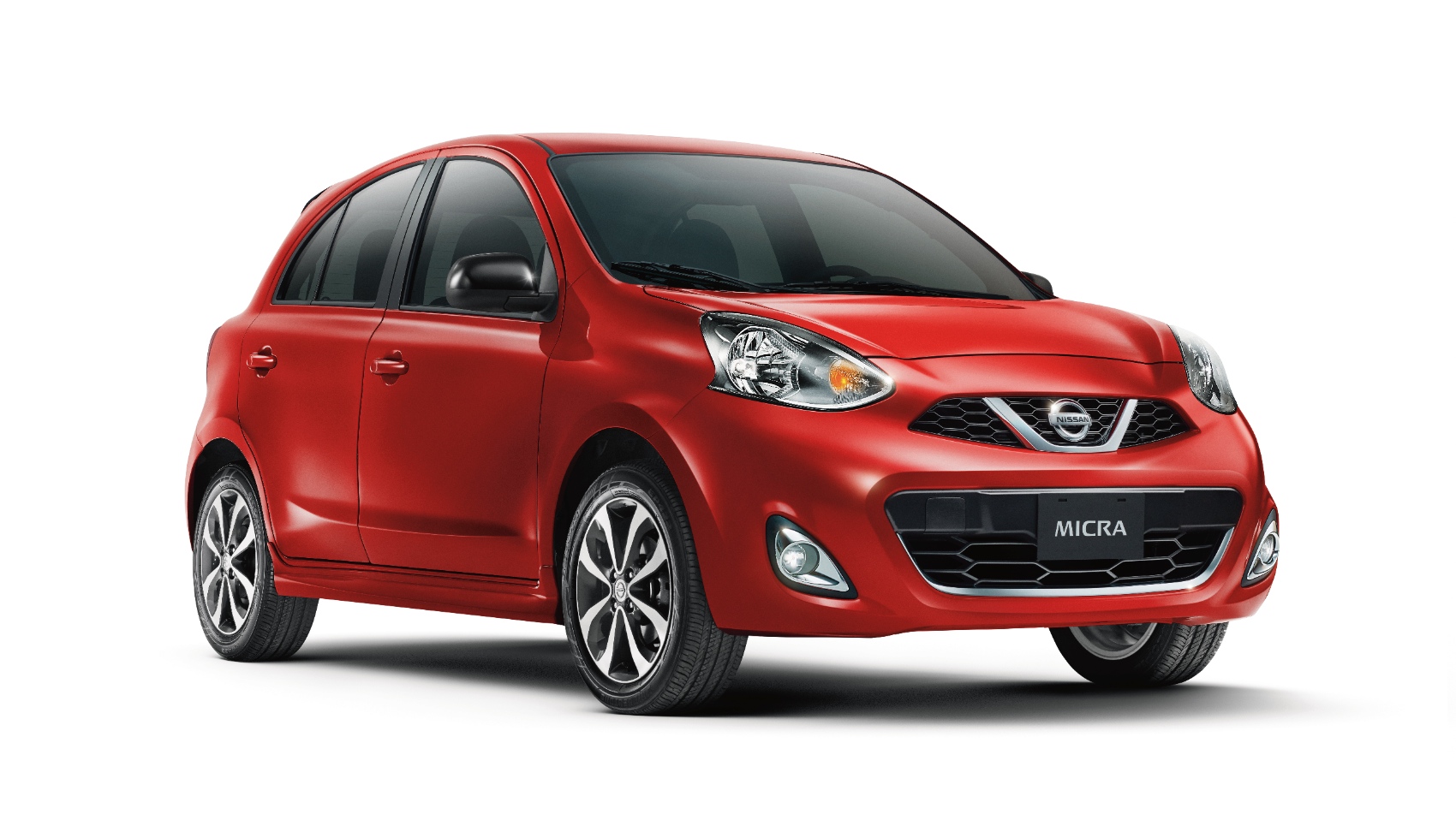
The brand new Datsun mi-DO is a practical yet sporty five-door hatchback with a strong masculine appearance: modern, robust and confident. Among its stand out features are its “face” dominated by Datsun's confident “D-Cut” grille and which, in turn, is flanked by dramatically elongated projector headlamps that stretch virtually from grille to fender to create a look that differentiates sedan and hatchback at a glance.
Although sharing the same wheelbase and front-wheel drive chassis layout as Datsun on-DO, Datsun mi-DO is shorter overall to emphasize its driving dynamics. Both cars sit on a 2,476mm wheelbase, are 1,500mm tall and 1,700mm wide, but the new Datsun mi-DO is 3,950mm long compared to the Datsun on-DO at 4,337mm.
Datsun mi-DO is well equipped. Comfort and safety have been priorities. Every version will have a driver and passenger airbag as well as ABS. Standard equipment will include a winter pack with heated seats and door mirrors while special attention has been paid to ensure road, engine and wind noise is kept to a minimum.
Power comes from an 87 hp version of Datsun's 1.6-liter 8V engine, while a four-speed automatic transmission is optionally available in place of the standard five speed manual transmission.
All Datsun customers will benefit from market leading support. So far there are 25 dedicated Datsun dealers in key regions of the country with 75 more due over the next two years. Every car will be backed by a comprehensive three year/100 000 kms warranty. To ease purchasing options, Datsun is offering a unique credit program – Datsun Finance.
"The Datsun concept of offering a new car from a foreign maker at a highly affordable price has struck a chord with Russian car buyers. Datsun might be a new name on the Russian market, but its impact will be felt for years to come. Rest assured we are totally committed to the Russian market: Our debut at MIAS marks just the beginning of the story," says Vincent Cobee, Global Head of Datsun.
The names Datsun on-DO and Datsun mi-DO reflect the cars' international heritage, encompassing Japanese, English and Russian themes. DO is a Japanese word that means “moving” and also refers to a “way” of doing things. “On” is the Russian word for “he” while “mi” sounds to a Russian speaker like the English word “me” and personalizes the car. Put together in Russian, they underline the individuality and personality of both cars.