- Unit sales significantly above prior-year level at 683,900 vehicles
- Revenue up by 2% to €35.0 billion
- Group EBIT of €2,148 million (Q1 2015: €2,906 million)
- Group EBIT from ongoing business of €2,680 million (Q1 2015: €2,930 million)
- Net profit of €1,400 million (Q1 2015: €2,050 million)
- Free cash flow of industrial business of €0.3 billion (Q1 2015: €2.3 billion)
- Significant growth in unit sales and slight revenue growth anticipated for full-year 2016
- Group EBIT from ongoing business expected to be slightly higher than in 2015
- Dr. Dieter Zetsche, Chairman of the Board of Management of Daimler AG and Head of Mercedes-Benz Cars: “Daimler is on a successful path. Our growth in unit sales clearly shows that we are following the right strategy and have the right products in the market.”
- Bodo Uebber, Member of the Board of Management of Daimler AG responsible for Finance & Controlling and Daimler Financial Services: “We are in a robust position with our solid financial statements, financial discipline and worldwide production networks in all divisions. This enables us to cope flexibly with market fluctuations and to consistently pursue our strategy.”
Daimler AG (ticker symbol DAI) continued to implement its strategy successfully in the first three months of this year and again set a record for unit sales in a first quarter with 683,900 cars and commercial vehicles sold (+7%).
Mercedes-Benz Cars also set a new record for this period with sales of 496,800 vehicles (+8%). Group revenue amounted to €35.0 billion and was thus 2% above the prior-year level. Adjusted for changes in currency exchange rates, revenue grew by 4%.
The Daimler Group achieved Group EBIT for the first quarter of €2,148 million (Q1 2015: €2,906 million). Group EBIT from ongoing business amounted to €2,680 million (Q1 2015: €2,930 million) and net profit amounted to €1,400 million (Q1 2015: €2,050 million). Net profit attributable to the shareholders of Daimler AG amounts to €1,353 million (Q1 2015: €1,963 million), representing earnings per share of €1.26 (Q1 2015: €1.83).
“Daimler is on a successful path. Our growth in unit sales clearly shows that we are following the right strategy and have the right products in the market.
The model offensive is continuing at the same speed,” stated Dr. Dieter Zetsche, Chairman of the Board of Management of Daimler AG and Head of Mercedes-Benz Cars. “We will continually improve as the year progresses and will make 2016 into another successful year for Daimler.”
Earnings of the first quarter of 2016 were impacted primarily by a lifecycle-related decrease in unit sales of the S- and E-Class at the Mercedes-Benz Cars division. This fall in earnings was not offset by the improvement in earnings at the Daimler Trucks, Mercedes-Benz Vans and Daimler Buses divisions.
At Daimler Financial Services, earnings increased primarily due to the higher contract volume. Exchange-rate effects had an overall negative affect on earnings. Declining discount rates also reduced earnings.
“We continue to make large investments in products and technologies – and thus in the future of Daimler. We are in a robust position with our solid financial statements, financial discipline and worldwide production networks in all divisions.
This enables us to cope flexibly with market fluctuations and to consistently pursue our strategy. In addition, we are working to further develop our efficient business models sustainable and on utilizing the potential of digitization,” stated Bodo Uebber, Member of the Board of Management of Daimler AG responsible for Finance & Controlling and Daimler Financial Services.
Free cash flow
The free cash flow of the industrial business resulted in a cash inflow of €0.3 billion in the first quarter (Q1 2015: €2.3 billion). This decrease was due to the lower profit contributions of the industrial business and the negative effects resulting from the change in other operating assets and liabilities.
Furthermore, there were higher tax payments as the prior-year period was influenced by tax refunds. The free cash flow of the industrial business was also impacted by higher investments in intangible assets and property, plant and equipment.
Net liquidity
Compared with December 31, 2015, the net liquidity of the industrial business decreased by €0.1 billion to €18.5 billion, as the free cash flow of €0.3 billion was offset by negative exchange-rate effects.
The Daimler Group once again utilized attractive conditions in the international money and capital markets forrefinancing in the first quarter of 2016. In the quarter under review, Daimler had a cash inflow of €7.3 billion from the issuance of bonds (Q1 2015: €4.1 billion).
The redemption of bonds resulted in a cash outflow of €2.6 billion (Q1 2015: €2.6 billion). A large proportion of the issuance volume was carried out in the form of so-called benchmark bonds (bonds with high nominal values). In January and March, Daimler AG issued two multi-tranche bonds with volumes of €3.3 billion and €3.5 billion in the European capital market.
Workforce
At the end of the first quarter of 2016, Daimler employed 285,992 people worldwide (end of 2015: 284,015; end of March 2015: 283,541). Of that total, 171,025 were employed in Germany (end of 2015: 170,454) and 23,839 in the United States (end of 2015: 24,607). The consolidated companies in China had 3,260 employees at the end of March (end of 2015: 3,155).
Details of the divisions
Mercedes-Benz Cars’ unit sales increased by 8% to 496,800 vehicles in the interim reporting period, setting a new record for a first quarter. In Western Europe, Mercedes-Benz Cars sold 200,400 units, which is 14% more than in the first quarter of last year and also a new record. The main growth drivers in this region were the United Kingdom (+10%), Italy (+28%), Spain (+32%) and Germany (+7%). In the United States, Mercedes-Benz Cars’ unit sales were 12% lower than in the first quarter.
In China, the division’s biggest single market, Mercedes-Benz Cars continued along its successful path, increasing its unit sales to a new high of 108,300 vehicles (+24%). The development of unit sales was particularly positive in the first quarter also in South Korea (+44%) and Australia (+29%).
The division’s revenue increased by 2% to €20.0 billion. EBIT of €1,395 million for the first quarter of 2016 was lower than the prior-year figure of €1,841 million. Return on sales was 7.0% (Q1 2015: 9.4%). The development of earnings was marked by lifecycle-related declines in unit sales of the S- and E-Class and by the regional sales structure.
Furthermore, earnings were negatively affected by higher expenses for the enhancement of products’ attractiveness, advance expenditures for new technologies and vehicles, and exchange rate effects. An additional factor was an expense of €20 million in connection with Takata airbags.
However, the significant increase in unit sales in the SUV segment and better pricing had a positive effect on earnings. The Mercedes-Benz Cars plants are operating at full capacity; worldwide, nearly all plants are working three shifts.
Daimler Trucks’ unit sales decreased by 6% to 105,700 vehicles in the first quarter. First-quarter unit sales were affected by weak market developments, especially in Indonesia, Brazil and Turkey. Daimler Trucks achieved a positive development of unit sales in the EU 30 region (European Union, Switzerland and Norway) with an increase of 13%. In the NAFTA region, sales of 40,400 trucks were at the prior-year level.
Unit sales in Latin America decreased by 18%. In Japan, the truck division achieved the level of the prior-year period with sales of 12,400 units. Unit sales in India increased by 12%. The joint venture BFDA in China achieved growth with Auman Trucks of 8%.
The division’s revenue reached €8.2 billion (Q1 2015: €8.4 billion). EBIT of €516 million was higher than in the first quarter of last year (Q1 2015: €472 million). Return on sales increased to 6.3% (Q1 2015: 5.6%). Increased unit sales in Europe (EU 30) and the realization of further efficiency improvements had a positive impact on earnings.
Negative effects on earnings occurred from lower unit sales in Latin America, Indonesia and Turkey. Earnings were reduced in the prior-year period by expenses relating to the sale of Atlantis Foundries (Pty.) Ltd.
Mercedes-Benz Vans increased its unit sales by 20% to 76,600 vehicles in the first quarter, achieving the best first quarter of a year in its history. In its core region of Western Europe, Mercedes-Benz Vans achieved further significant growth in sales of 21%.
The division posted strong growth in Germany (+7%), the United Kingdom (+15%), France (+33%), Spain (+26%) and the Netherlands (+80%), and further growth in Eastern Europe (+4%).
The development of unit sales was positive once again in the NAFTA region with an increase of 36%, while unit sales in Latin America decreased significantly (-32%) due to the continuation of difficult economic conditions. Unit sales in China increased by 67%.
Compared with the prior-year quarter, the division’s revenue increased by a strong 17% to €2.8 billion. Mercedes-Benz Vans achieved first-quarter EBIT of €301 million, which is significantly higher than the prior-year figure of €215 million. Its return on sales increased to 10.7% from 8.9% in the first quarter of last year.
EBIT reflects the very positive development of unit sales, especially in Europe and the NAFTA region, as well as efficiency improvements. Exchange-rate effects reduced first-quarter earnings. In addition, expenses of €30 million resulted from workforce adjustments in Germany.
Unit sales by Daimler Buses of 4,800 buses and bus chassis were significantly lower than the 5,700 units sold in the first quarter of 2015. The decrease was primarily caused by the continuation of the very weak business with bus chassis in Latin America, which was not offset by ongoing strong demand for complete buses in Western Europe, where the bus division sold 9% more buses and chassis than in the prior-year period. In Latin America (excluding Mexico) unit sales were down by a substantial 26% compared with the number sold in the first quarter of 2015.
The division’s revenue of €830 million was below the prior-year level (Q1 2015: €877 million). First-quarter EBITamounted to €39 million (Q1 2015: €34 million) and return on sales increased to 4.7% (Q1 2015: 3.9%). The persistently difficult economic situation in Brazil and also the associated decline in demand for chassis negatively affected earnings. Strong demand for complete buses, a positive product-mix in Europe and positive exchange-rate effects more than offset the negative impact in Brazil.
Earnings in the automotive divisions were also reduced by the restructuring of the Group’s own dealer network.
At Daimler Financial Services, new business increased compared with the prior-year period by 4% to €13.7 billion. Contract volume reached €115.7 billion at the end of the first quarter and was thus 1% lower than at the end of 2015. Adjusted for exchange-rate effects, there was growth of contract volume of 1%. The business of brokering insurance continued to develop positively.
In the first quarter of 2016, the division achieved earnings of €432 million, thus surpassing the prior-year figure (Q1 2015: €409 million). This was mainly the result of increased contract volume in all regions compared to the first quarter of 2015.
The reconciliation of the divisions’ EBIT to Group EBIT comprises gains and/or losses at the corporate level and the effects on earnings of eliminating intra-group transactions between the divisions. Items at the corporate level resulted in an expense of €519 million in the first quarter of 2016 (Q1 2015: €80 million).
In particular, this result includes expenses arising from an impairment by €244 million of the investment in BAIC Motor due to the share-price development and losses of €222 million (Q1 2015: €43 million) on currency transactions which are not allocated to business operations.
The elimination of intra-group transactions resulted in an expense of €16 million in the first quarter of 2016 (Q1 2015: income of €15 million).
The special items affecting earnings in the first quarter 2016 and the first quarter 2015 are listed in the table on page 12.
Investment in the future
In the first quarter of 2016, €1.1 billion was invested worldwide (Q1 2015: €1.0 billion), in particular at the production and assembly sites for new products and technologies and for the expansion and modernization of production facilities. The sites in Germany accounted for €0.9 billion of capital expenditure (Q1 2015: €0.8 billion). Spending on research and development increased to €1.7 billion (Q1 2015: €1.5 billion).
Outlook for the markets
At the beginning of the second quarter, the prospects for the continuing expansion of the world economy are still intact. Leading economic indicators suggest that the situation is tending to stabilize again after the difficult start to the year.
However, there are still no firm signs that the recent below-average growth rates will become more positive. At present, world gross domestic product (GDP) is growing at a year-on-year rate of nearly 2.5%, and growth for the full year is likely to be of that magnitude.
According to recent assessments, worldwide demand for cars is likely to increase from its high level by about 3% in 2016. As in the previous year, the biggest contribution to this global growth should come from theChinese market, which is likely to grow again significantly. For the US market for cars and light trucks, a volume in the magnitude of last year is expected. Slight growth is anticipated for the Western European car market.
This growth should continue to take place on a relatively broad basis, whereby the greatest need to catch up exists in markets such as Italy, France and Spain. In Japan, stabilization of demand is to be expected following the significant market correction of 2015.
Prospects for the large emerging markets remain mixed. InIndia, market growth is likely to gain momentum. In Russia, however, the ongoing recession is likely to cause another drop in car sales.
In total, demand for medium- and heavy-duty trucks should be slightly below the prior-year volume. In theNorth American truck market, the gradual weakening of the industrial sector is likely to have an impact. From today’s perspective, demand for Class 6-8 trucks is likely to decrease by approximately 10%.
But the European market so far seems to be fairly unaffected by the uncertain development of the world economy and should continue its recovery with growth in the region of 5% this year. The Brazilian market shows no signs of improvement. Due to the ongoing economic recession, further market contraction in the magnitude of 20% must be anticipated.
The situation in the Russian market will remain difficult, so demand there is expected to fall again. The growth slowdown in the manufacturing sector in China is likely to continue affecting demand there; from today’s perspective, however, a moderate market recovery can be anticipated.
Demand in Japan for light-, medium- and heavy-duty trucks is likely to be relatively solid. In a rather sluggish economic environment, the market volume should be at about the prior-year level.
The Indonesian truck market is likely to contract once again; from today’s perspective, market contraction of approximately 15% is anticipated. In India, further significant growth in the segment of medium- and heavy-duty trucks is anticipated.
Daimler expects a slight increase in demand for mid-size, large and small vans in Western Europe in 2016. For the United States, slight growth is also anticipated in the market for large vans. In Latin America, however, further significant contraction in the market for large vans is expected, while in China, more lively demand is anticipated in the market that Daimler addresses there.
For buses, Daimler expects a slightly larger market volume in Western Europe in 2016 than in 2015. Following the substantial drop in demand for buses in Brazil, further significant market contraction is anticipated in full-year 2016.
Outlook for the divisions
On the basis of the division’s planning, Daimler expects to significantly increase its total unit sales once again in the year 2016. However, the rate of growth is likely to be rather lower than in 2015, which featured exceptional dynamism.
Mercedes-Benz Cars should continue its success of record year 2015 in 2016 and should once again be able to increase its unit sales significantly.
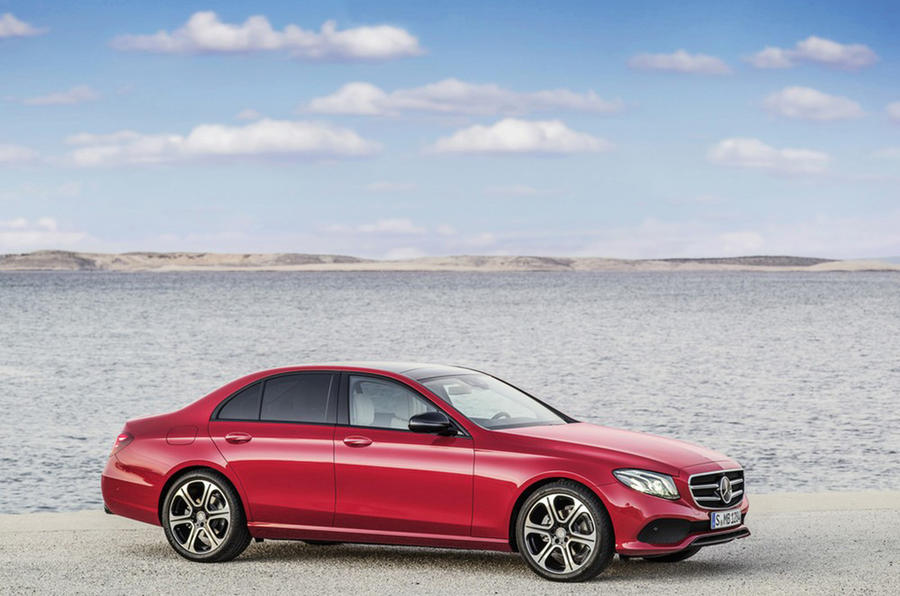
After the very good first quarter, the car division aims to achieve growth in unit sales also in the second quarter. A major contribution to this growth will be delivered by the new E-Class as of April, but also by the models of this year’s »dream-car offensive«, such as the C-Class convertible, which will become available in the summer.
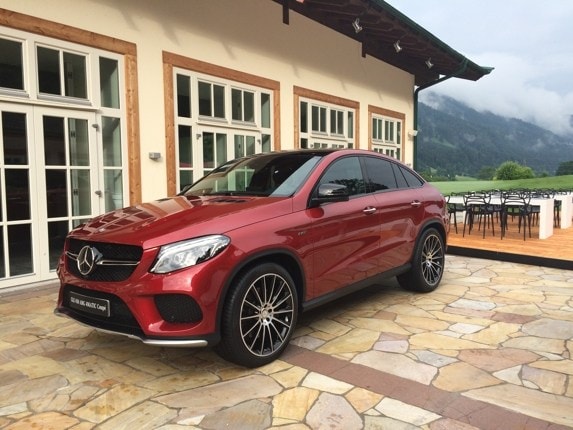
The S-Class convertible and the upgraded versions of the SLC and SL were launched in Europe in April and will be available in the United States towards the middle of the second quarter. Mercedes-Benz will also serve the still-rising demand for premium SUVs, with additional sales stimulus from the GLC Coupe presented in New York and to be launched in September in Western Europe.
With the smart fortwo cabrio, which will be available in time for the summer in all markets, smart will also make a significant contribution to the positive development of unit sales.
Daimler Trucks now anticipates unit sales in 2016 at slightly below the level of the previous year. The division should be able to increase its unit sales in the EU 30 region. A significant decrease is expected in Turkey, however, mainly due to purchases brought forward to 2015 because of the Euro VI emissions standard that came into effect also in Turkey at the beginning of 2016.
In Brazil, a further drop in unit sales is anticipated in full-year 2016. The lack of economic growth is likely to impact business there once again this year.
In the NAFTA region, unit sales are expected to be below the high level of the previous year in a contracting market. With the modern product range, Daimler Trucks can ideally satisfy its customers’ requirements and safeguard its market leadership. The division assumes that it will increase the proportion of its own engines and transmissions installed in the trucks sold. In Japan, it expects to maintain unit sales at the level of 2015.
An increase in unit sales should be achieved with the product portfolio in India. With the expanded range of FUSO vehicles produced in India, the truck division will generate additional unit sales in Asia and Africa. In Indonesia, a significant decrease in unit sales is now anticipated due to the overall weakness of demand in that market.
Mercedes-Benz Vans plans to achieve significant growth in unit sales in 2016. The van division anticipates significant increases in sales of vans in Western Europe, its core market. In the context of the strategy for the division, »Mercedes-Benz Vans goes global«, the Vito was launched also in North America and Latin America in 2015. This will stimulate additional demand in those markets in 2016. And additional growth is targeted with the Sprinter. Due to the market launch of the V-Class multipurpose vehicle and the Vito commercial van in China, Mercedes-Benz Vans will be able to expand its presence in the market segments it addresses there.
Daimler Buses assumes that it will be able to defend its market leadership in its core markets for buses above 8 tons with innovative and high-quality new products. For the year 2016, the bus division anticipates total unit sales at the prior-year level. This is based on the current assumption of significant growth in unit sales in Western Europe. Following the significant decrease in Brazil in 2015, another significant fall in unit sales is expected there in 2016. In Mexico, unit sales are expected to be at prior-year level.
Daimler Financial Services anticipates slight growth in new business and further growth in contract volume in the year 2016, driven by the growth offensives of the automotive divisions. In addition, the division is utilizing new market potential especially in Asia, and applying new and digital possibilities for customer contacts – in particular by systematically further developing online sales channels. Furthermore, Daimler Financial Services continues to see good growth opportunities also in the field of innovative mobility services.
Outlook for the Group
Daimler assumes that Group revenue will increase slightly in the year 2016. In regional terms, the strongest growth is anticipated for Asia and Western Europe, but business volumes should grow also in the other regions.
On the basis of the anticipated market development and the planning of the divisions, Daimler assumes thatEBIT from ongoing business will increase slightly in 2016.
For the individual divisions, the Group has set the following targets for EBIT from ongoing business in the year 2016:
- Mercedes-Benz Cars: slightly above the prior-year level,
- Daimler Trucks: at the prior-year level,
- Mercedes-Benz Vans: significantly above the prior-year level,
- Daimler Buses: slightly above the prior-year level, and
- Daimler Financial Services: slightly above the prior-year level.
The anticipated development of earnings in the automotive divisions will have a positive impact on the free cash flow of the industrial business also in 2016. The free cash flow in the year 2015 was significantly affected by extraordinary contributions to the German and American pension plan assets of €1.2 billion as well as by the acquisition of a stake in the digital mapping business, HERE, in an amount of €0.7 billion. As the Daimler Group will continue and intensify its investment offensive in products and technologies, the free cash flow of the industrial business adjusted for special items should be significantly lower in 2016 than the comparable amount of €5.9 billion in 2015. Daimler assumes, however, that it will be significantly higher than the dividend distribution in the year 2016.
With its research and development activities, Daimler aims to strengthen the Group’s competitive position over the long term against the backdrop of upcoming technological challenges. For this reason, spending on research and development activities in the years 2016 and 2017 will once again increase to an average of €7.2 billion per annum. Daimler also plans to increase its already very high investment in property, plant and equipment in the year 2016 and anticipates average capital expenditure of €7.0 billion in 2016 and 2017.
Against the backdrop of further efficiency progress in the context of the medium- and long-term programs for structural improvements in business processes, Daimler assumes that it will be able to achieve its ambitious growth targets with only slight workforce growth.
Other important events
In early March 2016, Daimler announced its intention to systematically expand its activities in the field of electric mobility and to invest approximately €500 million in the construction of a second battery factory. This means that production capacities for lithium-ion batteries will be significantly expanded at Deutsche ACCUMOTIVE in Kamenz in the German federal state of Saxony. Batteries for electric and hybrid vehicles of the Mercedes-Benz and smart brands are to be produced in the new factory there.
Daimler is continuing with the further development of diesel technology. Diesel engines are essential if traffic-related CO2 emissions are to continue falling in the short term. Daimler is therefore investing a total of €2.6 billion in a new generation of highly efficient diesel engines.
With its participation in the EuropeanTruck Platooning Challenge 2016 this April, Daimler Trucks once again underscored its technology leadership in the field of connected driving. Daimler Trucks is the only manufacturer worldwide with autonomously driving trucks that are approved for use on the roads. The intelligent trucks from Daimler have the potential to transport goods even more efficiently, sustainably and safely in the coming years. The key to this progress is truck connectivity with other trucks and logistics providers.
The Annual Shareholders’ Meeting held on April 6, 2016 reelected Dr. Manfred Bischoff, Chairman of the Supervisory Board of Daimler AG, as a member of the Supervisory Board representing the shareholders. In its meeting straight after the Annual Shareholders’ Meeting, the Supervisory Board confirmed Dr. Manfred Bischoff’s position as its Chairman. In addition, Ms. Petraea Heynike, formerly a member of the executive board of Nestlé S.A., was reelected as a member of the Board of Management. Their periods of office began at the end of the 2016 Annual Shareholders’ Meeting and will end with the end of the Annual Shareholders’ Meeting held in 2021.
Mercedes-Benz officially started one of the world’s most advanced car-body presses in April 2016 at the Press Shop in Kuppenheim. Mercedes-Benz is investing €170 million in the expansion in Kuppenheim and is creating 200 additional jobs there. The new press shop will supply body panels made of various types of steel and aluminum to the Mercedes-Benz plants in Rastatt, Germany, and Kecskemét, Hungary, and to the contract manufacturer Valmet Automotive in Finland.
In mid-April 2016, the management and works council agreed on a future vision for the Global Logistics Centerin Germersheim. Daimler will invest €60 million for the worldwide continuous supply of original spare parts from the Mercedes-Benz, smart and FUSO brands to their car, truck and van service partners.
The following table shows the special items affecting EBIT in the first quarters of 2016 and 2015:
Special items affecting EBIT
Amounts in millions of euros | Q1 2016 | Q1 2015 |
Mercedes-Benz Cars
Recall in connection with Takata airbags
Restructuring of own dealer network
Relocation of headquarters of MBUSA
Sale of real estate in the United States |
-20
-10
-
- |
-
-20
-20
+87 |
Daimler Trucks
Restructuring of own dealer network
Workforce adjustments
Sale of investment in Atlantis Foundries |
-1
-
- |
-4
-5
-55 |
Mercedes-Benz Vans
Workforce adjustments in Germany
Recall in connection with Takata airbags
Restructuring of own dealer network
Relocation of headquarters of MBUSA |
-30
-4
-1
- |
-
-
-4
-2 |
Daimler Buses
Restructuring of own dealer network |
- |
-1 |
Reconciliation
Impairment of investment in BAIC Motor
Losses from currency transactions
(not allocated to business operations) |
-244
-222 |
-
- |