- 3.0 TFSI V6 engine with mild hybrid technology
- Eight-cylinder performance with the consumption of a four-cylinder
- Electric Stop&Go and parking
At the 2017 Geneva Motor Show advanced Electrically Powered Compressor (EPC) technology first used by Audi in the SQ7 TDI will flex its muscle in a TFSI petrol engine for the first time in the Audi Q8 sport concept.
Demonstrating the vision Audi’s developers and designers have for the dynamic yet efficient SUV of tomorrow, the latest Q8 study combines its EPC with a six-cylinder TFSI and a mild hybrid system – a world first that enables it to deliver an exceptional 476PS output with the efficiency of a four-cylinder equivalent.
Augmented by the compressor and Mhev system the 3.0 TFSI engine powers the Q8 sport concept from 0 – 62mph in just 4.7 seconds and keeps going until it reaches its top speed of 170mph.


Meanwhile, its range of more than 745 miles ensures it is also suitable for long journeys. Thanks to the superb recuperation performance of 20 kW, this imposing SUV holds a considerable fuel economy advantage over a model equipped with a regular TFSI six-cylinder engine without mHEV system, and its CO2 output also shows a 25 g/km improvement.
“The drive system of the Audi Q8 sport concept is a major step towards optimising efficiency and sustainability in large-volume series production. The combination of mild hybrid technology and a TFSI engine sets a new benchmark for the synthesis of electromobility and combustion engines. In the future, this combination will be used in many Audi models,” says Rupert Stadler, Chairman of the Board of Management at AUDI AG.
Highly efficient power package: the drive system
The architecture of the drive system in the new Audi Q8 sport concept is revolutionary: for the firsttime ever, Audi is combining a 450PS 3.0 TFSI six-cylinder engine with an electric powered compressor and an effective mild hybrid system for recuperation. The starter generator positioned between the crankshaft and the transmission handles recuperation and, if required, can work in the opposite direction as an additional electric motor. The 48-volt electrical system assures the supply of electrical power.
For the customer, this approach has a number of advantages: the energy recovered as part of recuperation can, if required, be used to increase performance. During boost operation – where the combustion engine and electric motor are used simultaneously – the electric motor’s additional 20 kW of output and its torque of 170 Nm (125.4 lb-ft) open up a total of 350 kW of power to the engine and bring its total torque up to 700 Nm (516.3 lb-ft). The result is forceful acceleration at any speed and any point in the rev range.
Positioned at the rear under the luggage compartment, the lithium-ion battery with an energy storage capacity of 0.9 kWh makes it possible to keep moving slowly in stop-start traffic with the combustion engine switched off, as well as allowing for manoeuvres and parking under electric power alone. During braking, efficient recuperation using the 20-kW-strong starter generator quickly recharges the battery to ensure that the vehicle can regularly be driven under electric power.
In addition to the two exhaust gas turbochargers, the electric powered compressor provides the Q8 sport concept with an additional kick by supplying the three-litre six-cylinder engine with fresh air. The electric powered compressor supports the turbochargers at times when the exhaust gas is insufficient for rapid development of power. It therefore opens up delay-free acceleration to the V6 petrol engine – something previously only known to diesel engines and electric motors. It’s a recipe for success which already works impressively in the series production Audi SQ7.
The electric powered compressor is positioned in a bypass downstream of the intercooler, i.e. close to the engine. Instead of the turbine wheel, it integrates a compact electric motor. It accelerates the engine’s compressor wheel up to 70,000 rpm in less than 250 milliseconds. With the support of the electric powered compressor, the power of the 3.0 TFSI is always rapidly available as soon as the accelerator is depressed, even at low engine speeds. When driving off, the SUV immediately takes a lead of several metres ahead of the competition. During comfort-oriented driving, the electric powered compressor technology prevents unnecessary downshifts and thus keeps the engine speed at a low level. Meanwhile, keen drivers will appreciate the instantaneous delivery of power when exiting corners.
The Q8 sport concept drive system with its V6 TFSI and additional electric motor supplies the performance of a true eight-cylinder engine, yet with the fuel consumption of a frugal four-cylinder. That’s because, compared with a similar engine without mild hybrid system, the consumption reduces by more than a litre per 100 kilometres, despite serving up 20 kW of additional power. The total range of the Q8 sport concept equipped with an 85-litre fuel tank is more than 745 miles.
When driving, the drive system management controls the operating states of the Audi both intelligently and flexibly: the luxury SUV can boost, coast and recuperate as appropriate for the situation. The predictive efficiency assistant is a standard feature which supports the driver by supplying greatly detailed information on the vehicle surroundings to the control unit. Route data from the navigation system and Car-to-X services from Audi connect are also taken into account.
High-tech from production models: drivetrain and suspension
In the Audi Q8 sport concept, the quattro permanent all-wheel drive system transfers the power of the drive system to the road with supreme control. Even for its wide-track chassis, the technology study makes use of the latest high-end solutions from the luxury-class product portfolio. The adaptive air suspension sport – an air suspension system with controlled damping – allows for a broad spectrum of ride characteristics, ranging from cushioned cruising to firm and tight handling. Furthermore, it sets the ground clearance in five levels with 90-millimetre height differences, selecting the ideal level in each case. The front and rear axles are engineered as lightweight five-link constructions.
Audi mounts 305/35 tyres on the large 11J x 23 wheels. The five intertwining Y-spokes project a powerful image. Ceramic brake discs measuring 20 inches in diameter effortlessly decelerate the Audi Q8 sport concept.
Dynamic lines and high-tech design details
At first glance, it is clearly a highly dynamic and luxurious Audi – that’s how the Audi Q8 concept study was received at the 2017 Detroit Motor Show. The debutant in Geneva is an even more sporty variation of this composition and is also an elegant alternative to the robust presence of a classic Sport Utility Vehicle. The Q8 and Q8 sport concept are synonymous with prestige and technology in all areas.
At 5.02 metres long, the Audi Q8 sport concept makes an impressive mark on the luxury class. Thanks to a wheelbase of three metres, the show car offers plenty of space for passengers and luggage. Despite the sloping, coupe-like roofline, even the rear-seat passengers enjoy ample head and shoulder room. The new operating concept uses large touchscreens in the cockpit, rounded out by an expanded version of the Audi virtual cockpit and a contact-analogue head-up display. The latter uses intelligent augmented reality technology that merges the real and the virtual worlds.
Viewed from the front, the 2.05 metre wide Audi Q8 sport concept looks imposing. A distinguishing feature here is the octagonal Singleframe grille. It is a sculpted piece and is significantly wider than in today’s Audi production models. Its surface has a honeycomb lattice structure overlayed with aluminium segments, whilst the surround is painted in a contrasting colour. As is typical of Audi Sport models, the outer air inlets are much larger compared with the basic model – a sign of the greater air requirements of the high-performance power unit. A distinctive body-coloured blade forms the bottom edge of the bumper.
The flat, wedge-shaped headlights of the Audi Q8 sport concept are integrated into the front end and, from a design perspective, are connected with the adjoining air inlets. The individual light elements have a glass cover, but the entire headlight units are not enclosed. This creates the impression that they are free in space. Their aluminium housing carries over the sculpture of the Singleframe. An x-shaped, blue laser light signature accentuates the digital Matrix laser technology used for the low and high beams. Broken down into more than one million pixels, their light can illuminate the road in high resolution and with precise control. Located below the edge of the bonnet is a narrow LED light guide that emits the light for the dynamic turn signals and the daytime running lights. It wraps around the outside of the headlights, where its ribs create an innovative e-tron signature. All lighting functions are dynamic.
Powerful: the side view
The silhouette of the Audi technology study also evokes tautness. The doors have no window frames and thus contribute to the flat roofline. The Audi Q8 sport concept is 1.70 metres tall. All lines on the body climb upward dynamically toward the rear – the bottom edge of the side windows, the shoulders, the dynamic line and the sill line. The surfaces of the fenders, doors and side panels are athletically curved. The lower section of the doors form a deep fillet. Other design features are the quattro logo milled below the rear doors as well as the carbon-fibre exterior mirrors with their multifaceted edges. The doors are opened using touch elements: as soon as the sensors in the Audi rings on the B or C pillar are touched, the door simply pops open to a defined position.
The extremely flat and very wide C-pillar is reminiscent of the original Audi quattro from the 1980s, as are the strongly flared shoulders over the wheels. This places the concept car in a logical line with the show cars of the Audi Prologue series. The balanced proportions of the Audi Q8 sport concept emphasise the front and rear wheels equally – that, too, is typical quattro. Compared with the Q8 show car from Detroit, the wheel housings have been widened by a further 12 millimetres. The strongly accentuated wheel arches feature a double design. The sill region of the doors shines in brushed aluminium, ensuring an intriguing contrast to the show car’s krypton orange paint finish.
Flat and compact: the rear
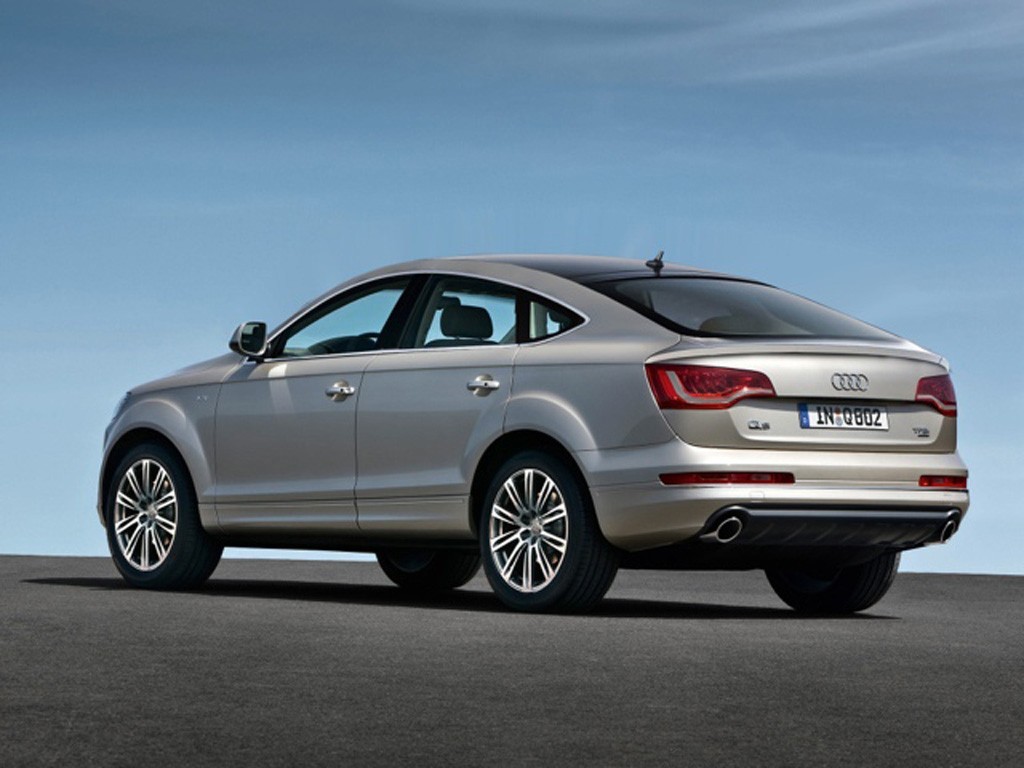
A long roof edge spoiler shades the extremely flat rear window of the Audi concept car. A doubly-shaped spoiler lip below it forms a distinctive contour on the power luggage compartment hatch. The light strip extending over the entire width of the rear end is part of the distinctive light signature. It serves as both the tail and brake lights as well as the dynamic turn signals.
The outer light elements are edged by aluminium blades whose inner strut is drawn broadly into the rear of the vehicle. The individual elements of the tail lights are also designed to be open, and all lighting functions are dynamic.
The license plate on the Audi Q8 sport concept is located under a black trim strip between the lights. The diffuser is made of aluminium, while its crosspiece is in high-gloss carbon fibre. Set in the diffuser, the oval exhaust tailpipes are equally striking in their design thanks to their brushed aluminium surface.
Luxury lounge for four: the interior
The interior of the Audi Q8 sport concept offers opulent spaciousness for four persons and their large suitcases. The luggage compartment has a capacity of 630 litres. Widely stretched lines lend the cockpit an elegant ambiance. Virtually floating above the centre tunnel is a console for the shift-by-wire lever with which the driver controls the eight-speed tiptronic transmission purely electronically.
The wrap-around begins in the front doors. This large, horizontal arc runs along the lower edge of the windscreen and frames both the driver’s and front passenger’s seats without hemming in the occupants. The sport seats as well as the two individual seats in the rear are made up of segments that appear to be separate geometric bodies, from the pronounced side bolsters to the head restraints. A horizontal aluminium trim piece divides the backrests at the height of the window belt line.
The instrument panel with its distinctly horizontal character descends in steps toward the interior. The central control and display surfaces are integrated into the “black panel” – a glossy black strip framed by an aluminium surround. When switched off, the screen is invisibly embedded in the surface and the lines flow harmoniously. When the display is in operation, it assimilates perfectly into the design line. In the front passenger area, the black panel features a graphical quattro badge. The arrow-shaped inlays in the doors pick up the expressive design. Filigree aluminium bars integrated into them serve as door openers. When dark, LED light guides illuminate the interior with white light.
The colours and materials in the Audi Q8 sport concept provide for a cool and dynamic atmosphere. One highlight is the three-dimensional, engineered grain on the instrument panel, doors and floor. High-gloss carbon-fibre applications with a new, abstract woven structure, as well as aluminium strips and frames set accents. Their brushed finish is comparatively dark. Brightness increases gradually from the headlining to the centre console in graduated grey tones from steel grey to pastel silver.
The technical materials in the Audi Q8 sport concept contrast with the soft surfaces. The seats are covered in a combination of Fine Nappa leather and Nubuk leather, both in pastel silver. The upholstery is pulled around the trim piece that divides the backrests – here, the inside becomes the outside. The head restraints are covered with a structured textile of a colour similar to that of the leather elements.
New ways: controls and displays
The elegant interior architecture of the Audi Q8 sport concept merges with a ground-breaking control and display concept. Information and commands are passed primarily through touch displays augmented by the Audi virtual cockpit future and a contact-analogue head-up display. All displays feature a new “digital design” that concentrates systematically on only the most important things.
The contact-analogue head-up display projects important displays onto the windshield in the driver’s direct field of view, seemingly placing them in the real environment. A navigation arrow, for example, appears in the same position as an actual arrow on the road – an intelligent application of augmented reality. The notifications from the driver assistance systems also merge the virtual and physical worlds.
The Audi virtual cockpit future is even more dynamic thanks to new functions and, with a resolution of 1,920 x 720 pixels, it displays graphics with more detail than ever before. In “auto” display mode, the 12.3-inch TFT display offers generous space for maps, lists and additional information. The top-down map view visualises the selected route. When zooming in, the current position and surroundings are displayed in 3D. Through the buttons on the steering wheel, the driver can switch to “performance” mode. The needles of the speedometer and powermeter now appear in a three-dimensional perspective display.
All other screens in the Audi Q8 sport concept are touch displays. The great strength of this principle is the direct, fast and intuitive operation. Drivers select each function exactly where they see it. By implementing touchscreens, Audi was also able to further reduce the number of buttons, switches and levers. The interior now appears even neater and more streamlined.
The MMI display in centre of the dashboard is used to control the infotainment system and vehicle settings. A display for the climate control system is integrated into the diagonally sloping section of the centre console. While using this display, the driver’s wrist can be rested comfortably on the low selector lever of the eight-speed tiptronic.
If the sensors in the seat detect a front-seat passenger, the touchscreen shows their climate control settings. If the driver is alone, this function is deactivated. Another smaller touchscreen to the left of the steering wheel is reserved for the lighting functions.