Purpose

I will try my best to provide detailed info on various cars and what is like to live with them, I have already produced a few for Jaguar-car-forums, I will do my best to be unbiased, but it will be hard for some cars. I will re-produce press releases and copy from other motoring news.
Showing posts with label Ryan Beene. Show all posts

Wednesday, 30 March 2016

U.S. auto safety regulators have granted BMW a five-month extension to complete repairs on Takata Airbags.

U.S. auto safety regulators have granted BMW of North America a five-month extension to complete repairs on some of its vehicles affected by the Takata airbag inflator recalls after replacement inflators from an alternative supplier failed in testing.
The National Highway Traffic Safety Administration says BMW now has until May 31, 2020, to replace all defective PSDI-4 driver-side inflators from Takata, according to a copy of the extension order provided to Automotive News by the agency. They were installed in 420,000 BMW vehicles, including 2002-06 3-series models, 2002-03 5-series models, and 2003-04 X5s.
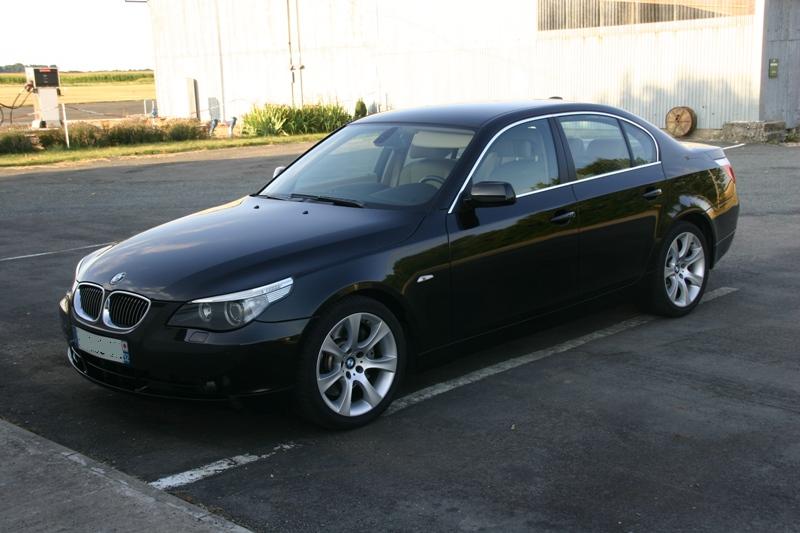
About 1.8 million Takata inflators in BMW vehicles are covered by the Takata recalls and need to be replaced. The extension only applies to vehicles with the PSDI-4 inflators.
The extension also pushes back deadlines this year for BMW’s ramp-up of replacement parts to supply recall demand at dealerships, including next week’s March 31 deadline aimed at providing parts to about 100,000 of the vehicles. That deadline is now Aug. 31.
Those 100,000 BMW vehicles are among a larger group of vehicles from the 12 automakers involved that NHTSA views as being most at risk of an inflator rupture, a defect that can spray vehicle occupants with metal shards and has been linked to 10 deaths worldwide.
In November, NHTSA set deadlines for the 12 automakers to amass replacement supplies and complete the repairs, grouping vehicles into four risk-based groups.
Automakers face a March 31 deadline to amass enough supply of replacement to meet demand for the riskiest group, vehicles from the 2008 model year or prior that are located in hot, humid climates.
NHTSA spokesman Bryan Thomas said the agency expects all other automakers involved in the recalls will meet the March 31 deadline.
The extension delays the already lengthy timeline of replacing the roughly 1.8 million inflators in BMW vehicles, but Thomas said it was granted in the interest of safety.
“We’re only going to put in safe inflators,” Thomas told Automotive News. “We’re not going to encourage or allow manufacturers to put unsafe inflators into their vehicles”
The delay underscores the challenges and complexity of the Takata recalls that have dogged the industry for years and will continue for years to come as some 29 million inflators in as many as 25 million vehicles are replaced.
According to NHTSA, BMW experienced an “unexpected failure” during “robustness” tests of inflators to replace the Takata PSDI-4 inflators that were being sourced from an alternative supplier to Takata.
After the failure, BMW halted production of the alternative supplier’s inflators while it worked on a solution. The automaker told NHTSA it would be unable to meet the March 31 deadline, according to a copy of the agency’s order granting BMW’s requested deadline extension.
BMW had contracted an alternative supplier to make replacements for the “batwing” PSDI-4 driver-side inflators that could be used for the life of the vehicle. In the interim, BMW had been repairing some of its affected vehicles using Takata-made replacements that would need to be replaced later, Thomas said.
NHTSA views those as a “safer” alternative to the original inflators that had been in use for years, even if they must be replaced again, because they hadn’t been exposed to the years of hot and humid climates that raises the risk of a rupture. Other automakers have been installing Takata-made replacements that may need to be replaced down the road, as well.
“We’re not calling them safe, but they’re an interim step until they can get sufficient supply,” of replacement inflators that will be safe long-term, Thomas said.
You can reach Ryan Beene

Friday, 15 May 2015

The tally rises to 36 MILLION cars recalled due to the Takata Airbag Scandal, when will it end ?

The global Takata airbag recall expanded by millions more vehicles for the second time in as many days today, with Honda Motor Co. and Daihatsu calling back more inflators.
The latest recalls affect some 4.89 million vehicles at Honda and about 260,000 at Daihatsu, the mini vehicle subsidiary of Toyota Motor Corp. The safety campaigns came just a day after Toyota and Nissan Motor Co. announced a similar recall of more than 6.5 million cars globally.
The Honda recall doesn’t affect vehicles in the United States or Canada. Vehicles sold in those markets weren’t equipped with the possibly faulty inflators targeted in the latest action.


Honda’s recall covers 1.72 million vehicles in Japan that were manufactured from 2002 to 2008. Those 17 nameplates were made in Japan, Thailand and the United States. The remainder of the recalls falls in other regions. Honda said it will announce the regional breakdowns locally.
Daihatsu’s recall affects cars only in Japan.
Including the latest actions, about 36 million vehicles have been recalled worldwide since 2008 over Takata inflators, according to Reuters estimates. That includes 19.6 million from Honda alone, some 8.2 million of which are in the United States, Honda spokeswoman Yuka Abe said.
Honda and Daihatsu said they aren’t aware of any injuries or deaths linked to the latest recalls.
Carmakers are calling back more cars after investigations showed that certain inflators were susceptible to moisture damage over time and possibly prone to rupture. Honda said it is acting based on the results of a study provide in March by Takata Corp., the Japanese supplier that has produced millions of airbag inflators that may explode, showering occupants with metal shards.
Mazda Motor Corp. said it was investigating whether the current findings warrant a similar recall of its vehicles. A Mitsubishi Motors Corp. spokesman said the company couldn’t comment on whether it plans a recall before officially notifying transportation authorities. A spokesperson for Subaru-maker Fuji Heavy Industries was not immediately available for comment.
That study, conducted independently by Takata, showed that moisture intrusion can cause the inflator’s propellant to lose density over time, raising the risk of rupture, Honda’s Abe said.
Honda said engineers have yet to determine the root cause of the problem.
Honda is acting in May, even though it received the study’s results in March, because it took time to determine how many cars were affected and where those cars were sold, Abe said.
Honda said it will replace the Takata-made driver-side inflators with inflators made by Autoliv and Daicel. Takata inflators on the passenger-side will be swapped for ones from Daicel and Takata. Abe said Honda opted to source from companies that can supply replacement quickly, and did not opt for Takata’s competitors because of concerns about Takata quality.
Daihatsu is replacing the Takata inflators with new inflators from Takata.
Toyota said Wednesday, while announcing its recall of about 5 million vehicles that it would opt for new inflators from Daicel on the driver-side because it could deliver the needed volume more quickly. Toyota will used Takata replacements for the passenger-side.
Toyota’s recall involved 35 models, including 1.36 million cars in Japan, 1.27 million in Europe, 637,000 in the U.S. and 18,000 in Canada, the company said in an email.
U.S. National Highway Traffic Safety Administration spokesman Gordon Trowbridge said Toyota and Nissan as well as Japanese government officials have been in contact with the U.S. safety agency over the last few days, and NHTSA will soon announce "significant new steps" related to accelerating Takata recalls.
Nissan said it was recalling about 1.56 million cars globally over the same issue, adding that no accidents or injuries had been reported. Nissan's recall includes 563,000 cars in Europe, 326,000 in North America, 288,000 in Japan and 274,000 in China.
In the U.S., the Nissan recall affects 12,725 units of the 2004 Pathfinder and about 251,000 Sentra compact cars from the 2004-06 model years from all 50 U.S. states. The company's latest move expands earlier recalls that were limited to regions with high humidity, a Nissan spokesman said.
Nissan will begin notifying customers in June, the spokesman said.
Six fatalities in Honda cars, including five in the U.S. and one in Malaysia, have been blamed on shrapnel from Takata airbags. At least 105 injuries are connected to the flaw, U.S. Senator Bill Nelson said last month.
Regulators in Japan and the U.S. are investigating Takata airbag inflators that may malfunction, deploying them with so much force that the part breaks and hurls metal shrapnel at the car's occupants.
A group of 10 automakers hired aerospace and defense company Orbital ATK to test potentially faulty Takata airbag inflators. The Japanese component maker has also commissioned German research group Fraunhofer Society to investigate the cause of airbag ruptures.
Takata, which has forecast a return to profit this fiscal year, has said it's unable to estimate the penalties from the lawsuits associated with the airbags and hasn't set aside any amount to cover them as the cause of the defect is still being investigated.
Ryan Beene 
Hans Greimel

Thursday, 9 April 2015

Alfa confirms that the new models will all be launched in the US shortly after European launch.

After the 4C Spider goes on sale in the U.S. this summer, Alfa Romeo will begin to flesh out its lineup with a new sedan and SUV by the first quarter of 2017. Reid Bigland, head of the Alfa Romeo brand in North America, says that Alfa’s new D-segment sedan will be revealed in Milan, Italy, on June 24.
The new range will go on sale in the U.S. in the first quarter next year. The still-unnamed sedan has been referred to as the Giulia, but Bigland said the name was still being hashed out.

He also declined to discuss powertrain or equipment specifics about the car, but said its performance would exceed segment rivals such as the BMW 3 series, Mercedes-Benz C class and Audi A4.
“I’m confident that it’s going to blow your Italian socks off when you look at the specifications associated with this vehicle,” Bigland said in an interview Thursday.
After the first Alfa sedans arrive, the brand will ramp up with additional trims in following months, Bigland said, signaling a high-performance version may be in the offing.
“I think with the D-sedan, you can expect performance at or above the Porsche, BMW and Mercedes for like-to-like classes,” he said. “With our base, our mid and our high, look for them to be a little bit of a notch above based on what they have in the market right now.”
A D-segment SUV would arrive next year in either the fourth quarter or possibly in early 2017, Bigland said, when it would go up against the BMW X3, Audi Q5 and Porsche Macan.

The two models will both be based on rear-wheel-drive technology dubbed Giorgio, a report in January said. The SUV will likely be produced alongside the sedan at the Cassino plant near Rome.
The two new nameplates will be among the eight new models that Alfa Romeo plans to roll out globally by 2018 as parent company Fiat Chrysler Automobiles seeks to rebuild the iconic Italian marque to rival the big German luxury brands.
You can reach Ryan Beene
REPORT HERE

PICTURES FOR ILLUSTRATIVE PURPOSES ONLY