Purpose

I will try my best to provide detailed info on various cars and what is like to live with them, I have already produced a few for Jaguar-car-forums, I will do my best to be unbiased, but it will be hard for some cars. I will re-produce press releases and copy from other motoring news.
Showing posts with label The Best Car In The World. Show all posts

Monday, 5 June 2017

The best cars in the world, The Rolls Royce Phantom range gets an exhibition to showcase the cars.

  • ‘THE GREAT EIGHT PHANTOMS’ A ROLLS-ROYCE EXHIBITION
  • ROLLS-ROYCE ANNOUNCES A GATHERING OF THE GREATEST PHANTOMS IN HISTORY 
  • #GreatPhantoms 
At the end of July, ‘The Great Eight Phantoms’, a Rolls-Royce Exhibition, will gather together the greatest Phantoms from the last 92 years in Mayfair, London. The Exhibition will welcome the next generation of this most celebrated luxury item. Over the next eight weeks, Rolls-Royce will announce which great Phantoms will journey to London from around the world, telling the stories of these motor cars and the historical events they witnessed. The first story will chronicle ‘The Fred Astaire Phantom I’. 
‘The Great Eight Phantoms’
From its debut in 1925, a Rolls-Royce Phantom has stood as witness to history’s most defining moments, from treaty signings to occasions of state and the events that have defined the world we live in today.

The conveyance of choice for the world’s most influential and powerful men and women for 92 years, Phantom has stood as a sentinel, silently witnessing moments as significant as The Beatles collecting their honours at Buckingham Palace, Field-Marshal Montgomery driving Churchill and Eisenhower, and numerous global superstars collecting their Oscars. 
Its standing as the longest existing nameplate in the world of motoring is testament to Phantom’s enduring importance to every generation’s leaders, from heads of state to generals, royalty to rock stars, stars of the silver screen to titans of industry. 
To celebrate this unprecedented legacy – a history still very much being written – Rolls-Royce will bring together the most famous examples of all seven previous generations of Phantom at ‘The Great Eight Phantoms’ Exhibition from 27 July of this year. 
Phantoms that have been owned by the great and the good will return from around the globe to Rolls-Royce’s spiritual home in Mayfair, London – the global home of luxury – for this never to be repeated event, which will welcome the arrival of the eighth and most modern generation of ‘The Best Car in the World’, the new Phantom. 
In a series of updates over the next eight weeks, Rolls-Royce will reveal which famous Phantoms will travel to London for the Exhibition, an occasion that promises to write yet another chapter in Phantom’s remarkable history. 
The first of these iconic stories is about ‘The Fred Astaire Phantom I’, which is loaned to the Exhibition by its owner, the Petersen Museum in Los Angeles. 
Rolls-Royce Phantom – ‘The Best Car in the World’
Rolls-Royce began producing the Phantom I in 1925. The car was developed in great secrecy, with the project code-named Eastern Armoured Car. This suggested Rolls-Royce was intent on producing the kind of military vehicles used in the First World War, most famously by Lawrence of Arabia. Sections of armour plate were left lying around the factory to confuse curious competitors eager to glean the secret of making the ‘best cars in the world’. 
The Phantom I was an instant success. The new 7.668-litre straight-six engine gave the car a fresh spring in its step. When General Motors opened a testing ground in Michigan, it was discovered that no cars could manage even two laps of the 4-mile circuit at full throttle without damaging their engines big ends – where the piston attaches to the crankshaft. However, Phantom I performed with consummate imperiousness and managed that, and more, at a steady 80mph without failure. 
Sir Henry Royce’s restless desire to, in his own words, “take the best that exists and make it better” quickly led to the creation of the Phantom II in 1929, this time with a totally new chassis, which significantly improved the handling, as well as a re-designed engine. 
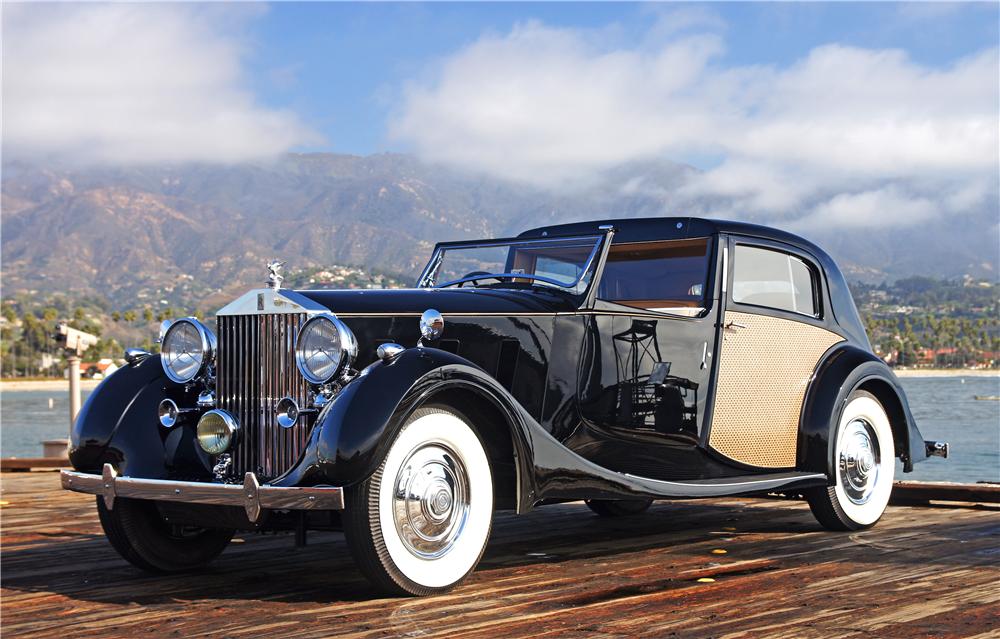
The next Phantom, the third in the line, was to be Sir Henry Royce’s last project. He passed away in 1933, aged 70, about 12 months into the development of this next Phantom. The finished model, with its peerless 12 cylinder engine, was unveiled two years later and production lasted from 1936 until the Second World War. The final chassis was produced in 1941, although the war meant it did not receive its coachwork until 1947. No announcement came about a replacement and it looked as if the Phantom was another victim of the war. 
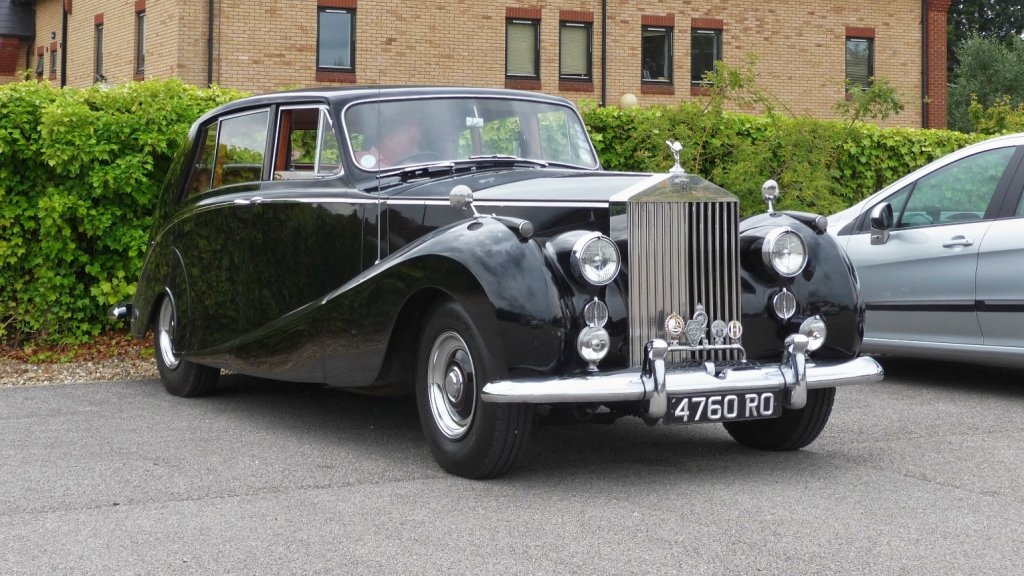
In 1950, Phantom IV appeared. The car was originally intended to be a one-off for Prince Philip and the then Princess Elizabeth. However, once seen, a further 17 were exclusively commissioned at the request of other royal families and heads of state around the world. Fitted with a straight-eight engine, it performed superbly at low speeds – essential for taking part in ceremonial parades – and featured the kneeling version of the famous Spirit of Ecstasy bonnet mascot. 
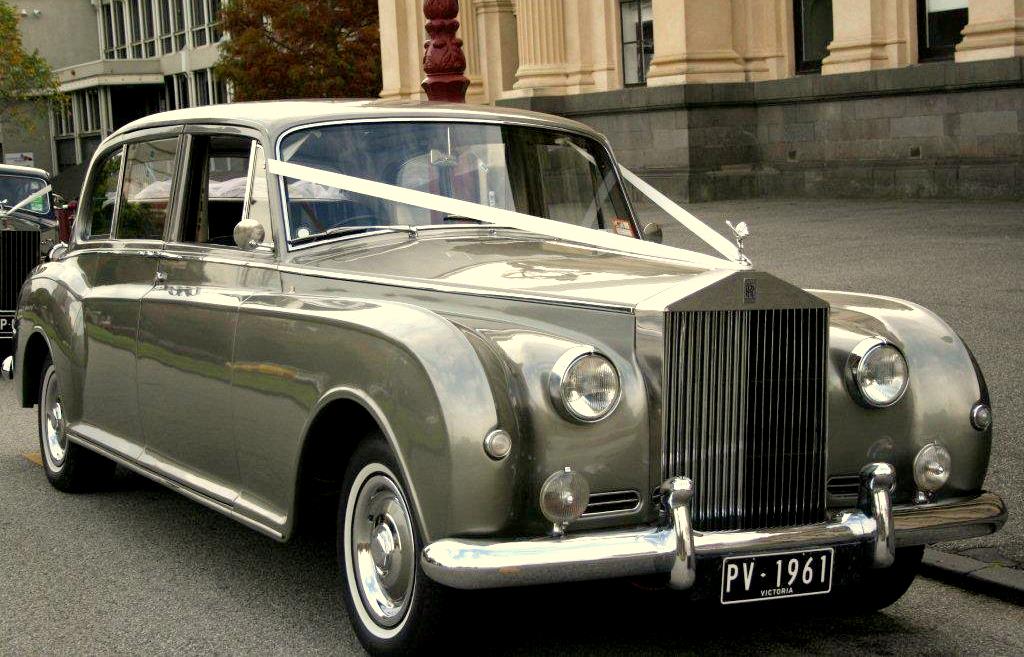
The Phantom V was produced between 1959 and 1968 and 516 of this hugely successful model were made for clients including the Queen Mother, governors of Hong Kong, King Olav of Norway and John Lennon. 
The long-running Phantom VI (1968-90) carried on the royal connection, notably with the Silver Jubilee Car, a raised-roof version presented to Queen Elizabeth II in 1977 by the British motor industry to celebrate her 25 years on the throne, and later famously used at the wedding of the Duke and Duchess of Cambridge. 
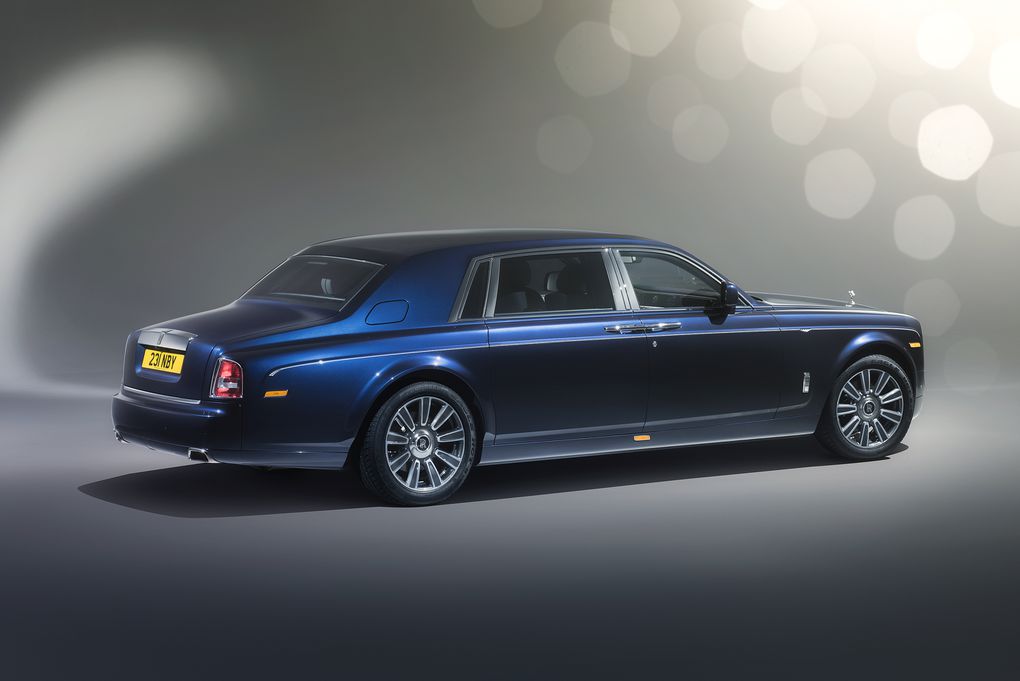
In 2003, a watching world was greeted with Phantom VII, a glowing affirmation of the start of Rolls-Royce’s renaissance at his new home in Goodwood, West Sussex. It was sharply contemporary yet timeless in the manner in which it deftly retained Phantom’s characteristic aesthetic. Built at the Home of Rolls-Royce. an all-new, state-of-the-art centre of excellence, it arrived with a 453bhp 6.75-litre V12 – enough to propel it from 0-62mph in 5.9 seconds – and every possible comfort a new breed of discerning luxury consumer could desire. Exquisite detail right down to the car's Teflon-coated umbrellas and self-righting wheel-centres, left a curious public in no doubt the marque was in safe hands.
Production of the Phantom VII ceased thirteen years later at the end of 2016. 
‘The Great Eight Phantoms’, a Rolls-Royce Exhibition, will be the first time that this exceptional group of truly iconic luxury motoring pieces will be gathered under one roof. Every Rolls-Royce Phantom is an exceptional car, but thanks to their pedigree, this particular collection will include some very singular cars indeed, all owned at some point by famous individuals, and having played their part in witnessing the making of world history.
This is such an uncommon pageant, it is no exaggeration to say we might never see the likes of it again. 
‘The Great Eight Phantoms’, a Rolls-Royce Exhibition, will take place in Mayfair, London, at the end of July this year. 

Sunday, 5 February 2017

The final Rolls Royce Phantom MK VII has been built, ready to usher in the MK VIII version.

From the creation of ‘New Phantom’ in 1925, every generation of this most fabled name in luxury has served to define its moment, not only in Rolls-Royce’s history, but in world history. Quite simply, it has been the choice of the people who have defined our world and made it turn for the last 90 years.

Phantom I (or ‘New Phantom’ as it was then known) carried the weight of expectation of living up to its eminent predecessor’s billing as ‘The Best Car in the World’. Needless to say it emphatically succeeded. In doing so, elevating Rolls-Royce to a place beyond a maker of superlative motor cars, to the very standard by which all luxury endeavours are judged.   
78 years later, Phantom VII, the first Goodwood Phantom heralded the renaissance of Rolls-Royce and established its own legend, returning the marque to its rightful place as the only conceivable mode of conveyance for the world’s most famous, wealthy and influential individuals.

Today, after 13 years defining luxury, Phantom VII leaves the stage with a fittingly artful tribute to the skills of the craftspeople at the Home of Rolls-Royce. This very last seventh generation Phantom signals the end of the first successful chapter in the renaissance of Rolls-Royce under new custodianship and the establishment of a true global centre of luxury excellence in West Sussex, England.  
Phantom – at the pinnacle of luxury for over 90 years 
Like its modern successor, that first generation Phantom was developed in an environment of fevered secrecy, borne of the weight of expectation surrounding such an important car. Lead engineer Ernest Hives even went as far as to scatter armoured plating around the factory to substantiate the project’s codename Eastern Armoured Car (EAC).  This kind of fervour and global scrutiny surrounding its development was perhaps not seen again for over seven decades, when a small team of engineers and designers ensconced themselves in total secrecy in a disused bank in central London. Their task was to create a Phantom, worthy of the name and reverential to its history, whilst making a truly bold statement on Rolls-Royce’s pinnacle position in a new luxury landscape.
The mission would have been familiar to Hives, who himself was tasked with creating a modern Rolls-Royce for an era of profound change. Both Phantoms I and VII had to plot the marque’s course amidst a backdrop of the shifting tastes and sensibilities of its wealthy patrons.
In designing Phantom VII, the task set before Ian Cameron and his team of designers cannot be overstated. Rolls-Royce, under new custodianship, had just five years to successfully design, develop, engineer and test a motor car worthy of re-entering the consciousness of a rapidly emerging yet increasingly global elite. The world was watching.
Rowing to the safety of pastiche or even tribute to Phantom I and its successors would have been a grave error. The 21st century’s wealthy and influential demanded authenticity and sovereignty in the luxury houses they choose to patronise, so a thoroughly contemporary, singular vision of Rolls-Royce luxury was the only possible path.
3 January 2003 saw Cameron’s vision finally unveiled to the world as the global media descended upon the marque’s factory on only its third day of official operation. Like Hives and his ruse to keep the press off the scent, Phantom VII was designed and developed under a cloak of absolute secrecy. On unveiling that first car, the press were unanimous in their reaction, praising Rolls-Royce and its new custodians for bringing to the world a thoroughly modern interpretation of the classic lines and proportions that had maintained a stately presence at the world’s great occasions for three quarters of a century.
Underneath that imposing yet elegant coachwork lay the foundations on which the opening passages of the next great chapter in Rolls-Royce history was built. A totally new aluminium spaceframe, designed and engineered for strength and weight-saving, and propelled by a magnificent 6.75l naturally-aspirated V12 Rolls-Royce engine developed the abundant yet whisper-quiet performance that has become the hallmark of modern Rolls-Royces.
Behind Phantom’s now emblematic coach-doors lay an exquisitely crafted interior – realised by using only the finest materials by a new artisanal workforce drawn from the local area’s boat-building and saddle-making industries. These first craftspeople, part of a workforce on that first day of just 350, served as the masters to a burgeoning new generation of 1,700 skilled craftspeople, their careers made possible by the success of the all-important seventh-generation Phantom.
For the first time since the age of the coachbuilder, patrons of luxury were offered true personalisation through the marque’s Bespoke programme, with Phantom serving as an exquisite blank canvas from which its patrons’ boldest visions could be expressed.
Media and customer acclaim soon affirmed that, like Hives, Cameron and his team had re-established the legend of the ‘Best Car in the World’. It was stated at the time, that the establishment of the marque’s centre of excellence and the concurrent development and launch of Phantom in just five years, stood as the ‘last great automotive adventure.’ Phantom once again represented the start of a bold new era – a period many close to the marque acknowledge as the most significant in its history. In just 13 years, Rolls-Royce had established itself once again as the yardstick by which all other luxury goods are judged.
The final Phantom VII – a study in luxury
Now, as this most significant motor car prepares to gracefully leave the stage, it is fitting that the final Phantom VII, a beautifully appointed extended wheelbase limousine, has been created to celebrate the golden age of travel that Phantom defined.
This remarkable example, commissioned by a renowned contemporary Rolls-Royce collector, perfectly serves to illustrate the extraordinary attention-to-detail and deftness of touch that has defined the first chapter at the marque’s home in Goodwood, West Sussex.
The art of marquetry – so beautifully used throughout Phantom’s life – depicts a stylised 1930s ocean liner, reflecting this particular patron’s fascination with the design and iconography of this grand era. The nautical theme continues with the application of tone-on-tone embroidery evoking the movement of the sea, exquisitely applied to the interior’s Powder Blue leather.
In true Phantom style, every possible detail has been considered. The clocks, featured in both the front cabin and the partition wall have been designed to echo the style of the radio clocks that adorned grand ocean liners. The Bezel, expressing 24 time zones, sits proud of the main clock, and reminiscent of HG Well’s time machine, allows the owner to rotate it in either direction depending on where they find themselves in the world.
The maritime theme even extends to Phantom’s indulgent lambswool carpets which feature a hand-cut wake effect elegantly created by the marque’s master craftspeople – perhaps a nod to the fact that this final Phantom has passed, leaving the world in its own wake.
The exterior is finished in a stunning Blue Velvet, completed with a twin coachline with ocean liner motif to the shoulder, and offset beautifully by pinstripe tyres and a solid silver Spirit of Ecstasy. This carefully tended hand-crafted scheme completes a stunning final expression for the last Phantom of its kind.
The completion of this very final motor car, and the decommissioning of the Phantom production line after 13 years, sets the stage for the introduction of Phantom VIII, underpinned by an all-new aluminium architecture of luxury. Like its predecessor it will advance the standards set by its illustrious forbears.
Its arrival will herald the beginning of yet another great chapter in the history of the world’s most compelling and celebrated name in luxury.

Monday, 22 June 2015

Rolls Royce motor Cars returns to the scene of one of the brands most defining moments, 1907, Scotland.

Rolls-Royce Motor Cars returned in magnificent style to the Scottish roads that, in 1907 set the scene for one of the marque’s defining moments. 

Wraith, Ghost Series II, Phantom and Phantom Coupé all paid homage to the achievements of the Rolls-Royce Silver Ghost, which, by completing a 14,371 mile virtually non-stop run, forged the marque’s reputation as purveyor of the ‘Best Car in World’.

The 1907 Scottish Reliability Trials

The petrol-powered automobile was still in its infancy in 1907, and the greatest concerns for the motorist were a car’s ability to cope with gradients, the ease with which it could be steered, stopped and started again, but above all, its reliability.


However, very few early manufacturers could truly meet these requirements. Indeed, Rudyard Kipling, an ardent motoring enthusiast, summed up the mood of the time by saying: “I like motoring because I have suffered for its sake”.

Ever the innovators, Sir Henry Royce set out with Charles Rolls to build the best cars in the world and conceived a challenge, the successful completion of which would show the world what their motor car could achieve.

The challenge was not one to be taken lightly. A six-cylinder Rolls-Royce 40-50 h.p. (later known as the Silver Ghost) was to be driven over 5,000 miles in less than a month, without once entering a repair shop for the duration of the trial. 

The mileage was twice the annual mileage a motorist would be expected to cover at that time and 748 miles would be covered as part of the gruelling challenge that would become known as the Scottish Reliability Trials.

Run in various forms since 1901, the Scottish Reliability Trials were administered by the Scottish Automobile Club and designed as the ultimate test over some of the most demanding and remote roads in Great Britain. 

Starting and finishing in Glasgow, the route stretched as far as Aberdeen, Inverness and Pitlochry. Providing one of the greatest challenges was the already well-known Cairnwell Hill, on the route to Braemar, which included the Devil’s Elbow and is still the highest pass in Great Britain, peaking at 2,200 feet above sea level.

The 748 miles took five days to complete and 14 of 104 cars failed to make the finish. The Rolls-Royce 40-50 h.p. completed the Trials in style, comfortably taking the gold medal in its class.

While the Silver Ghost competed in the Trials alone, it was accompanied to Scotland by three other cars from the Rolls-Royce stable. That many owners took in Scotland as part of their travels made the Scottish Reliability Trials particularly relevant to Rolls-Royce, but the 1907 Trials were part of a bigger test and immediately the victorious car was again on the road. 

Within two weeks of completing the Scottish Reliability Trials, the 40-50 h.p. had completed over 5,000 miles. That this had been done without once visiting a repair shop was an outstanding achievement for the time.

In 1911, Rudyard Kipling bought a Rolls-Royce. The only car he could afford, he said, ‘because they did not break down’.

Over a century later, the four contemporary Rolls-Royce models revisited some of the original routes conquered by the Silver Ghost. 

The quartet completed a tour around the Cairngorms and Trossachs, including Cairnwell Hill, touring through the breathtaking scenery with an ease only to be expected from the descendants of the Silver Ghost. 

Technology may have moved on immeasurably in 108 years, but the aim is still the same for Rolls-Royce Motor Cars today: to produce the best cars in the world.

Monday, 27 April 2015

Rolls Royce Motor Cars shares "The Limelight" with Phantom customers.

British engineering ingenuity and artistic creativity have proven to be the inspiration behind the naming and creation of the latest Bespoke Phantom Collection to emerge from the Home of Rolls-Royce in Goodwood, England.

The Rolls-Royce Phantom Limelight Collection has been conceived for that select group of people who spend their lives in the public eye and on the world stage. Its name was inspired by the origin of a British invention which became synonymous with fame. 

The limelight effect was originally discovered in the 1820s by Sir Goldsworthy Gurney, a prototypical British gentleman scientist and inventor of the Victorian era.  It was harnessed to revolutionise illumination in the theatres of London’s Covent Garden, highlighting leading actors on the stage, thus leading to the phrase, ‘in the limelight’.


“In creating the Rolls-Royce Phantom Limelight Collection, our designers have delivered authentic luxury by thinking deeply about the lifestyles of the powerful people who operate in the public eye and move swiftly from engagement to engagement as part of their daily life,” explains Torsten Müller-Ötvös, Chief Executive Officer of Rolls-Royce Motor Cars. 

“The result is a beautiful, discreet motor car in which those for whom the world is waiting can prepare, relax and arrive in the finest luxury and style.”

In common with its sister Phantom Serenity, which was unveiled to the world at last month’s Geneva Salon, Limelight proves once again why Phantom is considered ‘the Best Car in the World’. 

The Bespoke designers at the Home of Rolls-Royce in Goodwood have used their deep understanding of the habits and behaviours of those powerful people, who make and influence world-changing decisions every day, to create a collection of 25 super-luxury motor cars that cater directly to their busy lives like no other car maker can.

Limelight’s wholly new approach to luxury once again sets the benchmark by delighting the most demanding and exacting people in the world – Rolls-Royce customers. Once again Bespoke IS Rolls-Royce.

Prepare, Relax, Arrive

Thinking about the lifestyles of many of their clients, who spend considerable amounts of time travelling in the rear compartment of their Phantoms, the Bespoke design team at Rolls-Royce Motor Cars knew they could, in the words of Sir Henry Royce, “take the best that exists and make it better.”

Whilst mass-luxury car manufacturers simply offer a means of conspicuously getting from A to B in some luxury, Rolls-Royce Motor Cars seeks to understand and exceed the demands of super-luxury customers who are always on the move, preparing to arrive for their next big life moment.

With this in mind they have created the “Phantom Suite” comprising unique personalised rear door panniers to ensure cherished personal possessions fall easily to hand for preparing for the next engagement, and a new luxury seating configuration in which to relax in before arriving.

Phantom Limelight has thus been conceived as the ultimate travelling companion as its owner moves from major event to momentous occasion, helping them to Prepare, Relax and Arrive for their moment in the limelight in consummate Rolls-Royce luxury.

Authentic luxury on the move

Authentic luxury is only achieved through ultimately understanding the needs and desires of the most discerning patrons in the world – Rolls-Royce customers. 

From their deep understanding of this specific group of super-luxury clients, the Bespoke design team behind Limelight understood that a number of very human emotions and needs mattered: easy access to one’s favourite, personal possessions in order to prepare for the coming engagement; the opportunity to relax in ultimate luxury once ready and an impactful arrival. 

For these select people, Phantom Limelight is their very personal concept of authentic luxury.

Prepare

A unique personalised rear door pannier has been designed to ensure cherished personal possessions fall easily to hand. Ladies’ and Gentleman’s panniers are offered to the customer who can personalise their Phantom Limelight with door panniers that best suit their gender preferences. 

The Ladies’ and the Gentleman’s panniers can also be personalised to suit what particular personal possessions are required for the occasion.

In the standard configuration, the Concealed Fragrance Holder for three individual fragrances is located in the top left pocket of the Ladies’ pannier whilst in the Gentlemen’s pannier the concealed section holds watches. 

The concealed panel opens at an effortless push of the hand.

The top right pocket, which is open, contains the fragrance bottles in the Gentlemen’s pannier whilst in the Ladies’ are two watch or jewellery holders.

The fragrance bottles, which ensure the passenger always has the right fragrance available to them whatever the time of day, are handmade in the famous Bresle Valley in North West France ­– home to 75% of the world’s luxury bottles for perfumes and spirits.

The bottom left pocket houses a universal vanity pouch made of the finest materials, with space for credit cards, business cards, spectacle storage or makeup, whilst Ladies’ and Gentleman’s Accessory Z-Boxes, constructed from carbon fibre, milled in aluminium and hand covered in the finest leathers, complete the door pannier.

Once the passengers have prepared for their engagement by choosing their preferred accessories, they sit back and relax in the new Rolls-Royce seat until they reach their destination.

Relax

The optimum position for relaxing in luxury and safety in the rear compartment of a motor car whilst on the move has long been a subject of debate. 

Whilst some mass-luxury car makers have gone so far in their wish to install an aircraft-style flat-bed seat in the rear that they have had to created safety devices to compensate for the resulting body posture, Rolls-Royce Motor Cars engineers and ergonomists have worked closely with the medical profession to establish the optimum seat position that relaxes the body most whilst in motion. 

The result is the new rear seat to feature first in Phantom Limelight.

The Phantom Limelight seat back reclines the body by a recommended 27° helping to rest the head on the headrest cushion. Lower down the body, a new calf rest raises electrically by 68° to support the calf, whilst a foot rest emerges out of the floor to raise the feet up to 30°, all contributing to the perfect relaxed posture in motion.  

Also contributing to the passenger’s relaxation is the choice of two compartment trims as well as several new Bespoke features.

The Light contrast scheme features Seashell with Navy Blue Contrast Leather and Seashell tone-on-tone stitching, whilst the Dark contrast scheme offers Navy Blue with Seashell Contrast Leather and Navy tone-on-tone stitching.

Complex embroidery inspired by a diamond shape, in homage to the legacy of great Rolls-Royce motor cars of the past, has been applied to the central seat flutes, door cards, rear console and for the first time to the Picnic Table backs.

Unique to this Collection and a first for Phantom, is a two-veneer finish that shows off the unique skills of the woodworkers at Rolls-Royce Motor Cars. 

Piano Seashell specific to this collection is applied to the door cappings, blending the veneer with the leather schemes. Smoked Chestnut completes the colour scheme, the first time that this veneer has been used in Phantom.

A specially created Limelight Bespoke Clock draws influence from the rich Gala Blue paint exterior and the diamond motif design that runs throughout the collection.

Arrive

Prepared and relaxed, our passengers arrive for their next engagement clad in the rich but stealthy Gala Blue of Phantom Limelight. 

Rolling to a halt on its unique nine-spoke alloy wheels, the beautiful motor car features a Seashell and Navy Blue hand-painted coachline with a diamond motif, creating a three dimensional illusion of a diamond bracelet draped over the surface of the car.

The Phantom Limelight Collection of 25 cars will be available to order immediately from Rolls-Royce Motor Car dealers around the world.

Sunday, 22 February 2015

Open letter from Rolls Royce with regards to the development of an all new all terrain model.

The launch of Phantom in 2003 marked the beginning of the renaissance of Rolls-Royce Motor Cars. Since then, we have set a new benchmark for what a super-luxury car should be – unique, hand-crafted, beautiful and rare. Often imitated, Phantom has never been equalled and continues to be hailed as ‘The Best Car in the World’ by our customers and media alike.

Twelve years later, after the introduction of successful new models like Ghost and Wraith, Rolls-Royce stands proudly at the pinnacle of British luxury manufacturing, confirming our custodianship of this precious marque.


Possible look of new Rolls Royce SUV


Now we have reached another seminal moment in Rolls-Royce’s 111-year journey.
Today we confirm that we are developing an all-new Rolls-Royce with exceptional presence, elegance and purpose:
  • A car that offers the luxury of a Rolls-Royce in a vehicle that can cross any terrain
  • A car that meets our customers’ highly mobile, contemporary lifestyle expectations
  • A Rolls-Royce that is as much about the pioneering, adventurous spirit of Charles Rolls as it is about Sir Henry Royce’s dedication to engineering and innovation
  • A car that appropriately reflects Rolls-Royce’s brand promise of effortless luxury
  • A high-bodied car, with an all-new aluminium architecture
  • A unique new motor car worthy of carrying the Spirit of Ecstasy into the future
This new Rolls-Royce will be Effortless ... Everywhere.

Many discerning customers have urged us to develop this new car – and we have listened. At Rolls-Royce Motor Cars we are uniquely focused on the desires of our customers and are driven by our own thirst to innovate. So we challenged our engineers and design team, led by Director of Design Giles Taylor, to create a different and exceptional new car.

This car will embody all the values and capabilities that drove our two Founding Fathers to secure Rolls-Royce’s reputation, early last century, by taking top honours in rigorous overland adventures such as the Scottish Reliability Trials, the London to Edinburgh event and the Alpine Trials.

Rolls-Royces conveyed pioneers and adventurers like Lawrence of Arabia across the vastness of unexplored deserts and over mountain ranges. In other parts of the world including Australia, India and the Americas, Rolls-Royces carried their owners over challenging terrain with absolute reliability and comfort.

History sets our precedent and our future calls us to action.

This new journey begins now. We will take our time in developing and perfecting this new concept in luxury. We will include our customers, enthusiasts and media along the way and will keep you informed of our progress.

Until then, rest assured, we are creating a motor car in the greatest traditions of our marque.
Sir Henry Royce famously said: “When it does not exist, design it”.
We are doing just that.