Purpose

I will try my best to provide detailed info on various cars and what is like to live with them, I have already produced a few for Jaguar-car-forums, I will do my best to be unbiased, but it will be hard for some cars. I will re-produce press releases and copy from other motoring news.
Showing posts with label WRC. Show all posts

Tuesday, 5 December 2017

Volkswagen to launch a new Polo GTi R5 rally car to take on the WRC in 2018.

  • Super sporty variant of the new Polo GTI¹ for global rallying
  • 200 kW/272 hp turbo engine, four-wheel drive and safety package
  • FIA homologation in late summer, race debut planned for autumn 2018
The stage is set for the rally GTI: The Volkswagen Polo GTI R5 enjoyed a successful world premiere. The four-wheel drive rally car for customer sports, which is based on the sixth and latest generation of the new Polo, was introduced to the public for the first time at the official driving presentation of the Polo GTI² in Mallorca on Monday evening. 
The development of the new rally sports car incorporated the experience and know-how acquired whilst winning four world titles in the pinnacle of rallying, the WRC, from 2013 to 2016.
“Presenting the new Polo GTI R5 to the public was a magnificent moment,” said Volkswagen Motorsport Director Sven Smeets. “The close relationship to the road-going Polo GTI is unmistakable. 


In the rally Polo, the GTI family has another spectacular ambassador. Our team and the colleagues at Volkswagen Design in Wolfsburg deserve great credit for this. Over the coming months, the Polo GTI R5 must prove itself in a series of tough scenarios, in order to ensure that it can build on the success of its predecessor in the customers’ hands.”
Initial tests successful, homologation planned for late summer 2018
Development of the Polo GTI R5 has been in full swing since the start of the year. Initial tests on asphalt and gravel took place in mid-November in Fontjoncouse, France, and will continue in Great Britain in December. Responsibility for the entire project lies with Technical Director François-Xavier “FX” Demaison, as well as Project Manager Jan de Jongh, who, as race engineer, looked after world champion Sébastien Ogier’s Polo R WRC from 2013 to 2016.
“The Polo GTI R5 came through the initial tests without any problems. The feedback from the test drivers was very positive,” says Demaison. “It is obviously beneficial to be able to call upon an experienced team of engineers and mechanics, who helped to develop the Polo that won the world championship. And it goes without saying that, as we have in the past, we are also taking advantage of the close and excellent cooperation with the colleagues in the technical development department in Wolfsburg, as well as our Škoda colleagues, who have been offering their customers an R5 car since 2015.”
As in the GTI for the streets: four-cylinder turbo engine with direct fuel injection
Like the production model – the new Polo GTI – the Polo GTI R5 has a powerful straight four-cylinder turbo engine with direct fuel injection, which is mounted transversely in front of the front axle. 
The capacity of the rally car is limited to 1.6 litres, in accordance with regulations. This is sufficient to generate an impressive 200 kW (272 hp) and maximum torque of 400 Newton metres. A close-stepped, sequential, five-speed racing gearbox and permanent four-wheel drive achieve outstanding acceleration on any surface – whether asphalt, gravel or snow. Weighing just 1,320 kilograms, the rally GTI accelerates from 0 to 100 km/h in just 4.1 seconds.
The four-door, steel chassis, which serves as the basis for the assembly, is manufactured at the production plant in Pamplona, Spain. In accordance with FIA regulations, it is strengthened with a role cage and other safety components. The Polo GTI R5 will be homologated in the summer of 2018. The first deliveries to customer sports teams, and the first competitive outings, are planned for the second half of the year.
In 2012, the International Automobile Federation FIA passed the R5 regulations for a new generation of rally cars, aimed primarily at customer teams, talented youngsters and privateers. Since then, more than 400 cars have been produced by five different manufacturers and have been in action in national and international championships all over the world.
¹) Polo GTI R5: The concept vehicle has not gone on sale, and therefore Directive 1999/94 EC does not apply.
²) Polo GTI (147 kW/200 PS) fuel consumption in l/100 km: urban 7,7 / extra-urban 4,9 / combined 5,9; CO2-emissions (combined) in g/km: 134; efficiency class: C.

Wednesday, 19 October 2016

From one extreme to the other, Volkswagen spends millions on WRC, yet this old timer, Bertie the Beetle keeps plugging on !

  • The fourth string in Volkswagen’s impressive rallying bow
  • Old-timer gets ready to share the stages with today’s WRC pocket-rockets
  • Class winning crowd-pleaser returns to contest WRGB National Rally 
  • Catch Bertie in action with advance tickets on sale from as little as £20, kids go FREE
While Volkswagen Motorsport’s triumvirate of pace-setting Polo WRCs will be gunning for outright glory on this month’s Dayinsure Wales Rally GB (27-30 October), spare a thought for the fourth VW on the star-studded entry list. Lining up alongside Sébastien Ogier and all the sport’s other top guns is plucky Bob Beales in his 58-year-old ‘Bertie’ Beetle!
Mind you the venerable orange Bug is no ordinary rally car – like many approaching pensionable age, it boasts quite a colourful history. 

Bertie was born back in 1958 and early in his life was owned by a Hereford taxi company where he suffered a skirmish with a bus and somehow a more damaging roll.
The repaired car was then rally-prepared by the legendary VW specialist Bill Bengry in the early sixties before being acquired by Beales a few years later. “I was a lucky boy to get my hands on the car and it’s been a dream ever since,” says Bob who competed extensively in rallies, autotests and even autocross before putting Bertie into storage.
In more recent years, though, the Beetle has enjoyed a new lease of life competing in many historic events including the Monte Carlo Rally in 1990.
Marking the 25th anniversary of that adventure, Beales entered last year’s Network Q WRGB National Rally and – despite the best efforts of storm Abigail – won his class, a feat he’s now trying to emulate in 2016.
“Competing in Wales Rally GB last year was a brilliant experience,” he enthuses. “It was very hard on the old car and the weather made it all the tougher – there was lots of aquaplaning. But that’s what makes it such a great event – it’s a monumental challenge.”
Beales admits he takes great interest in the successes of the VW factory team and is ultra impressed with their all-conquering Polo R WRCs. He says: “The technology in those cars is just brilliant, although I’m not sure if I’m man enough to give one a go. That said, I actually passed one of the Polos on last November’s event when Jari-Matti Latvala got stuck in a ditch – that would have made a great photo!
“I reminded Jari-Matti about it when I saw him at Goodwood earlier this year, and he remembered seeing Bertie going past – it’s one of those cars you just can’t forget!”
Tickets on sale
Tickets to follow Bertie’s fortunes on this month’s Dayinsure Wales Rally GB are now on sale. Advance adult admission starts at just £20 for the family-friendly RallyFest at Cholmondeley Castle, with day tickets available for £25 and the full four-day World Rally Pass priced at £99. All tickets include free parking and an event programme priced at £9. Accompanied children aged 15 and under are admitted FREE – a real half-term treat for families. The latest event and ticket information can be found on the official www.walesrallygb.com website and the official Rally Planner is now available online, providing fans with all the details required to plan their visit.

Saturday, 24 September 2016

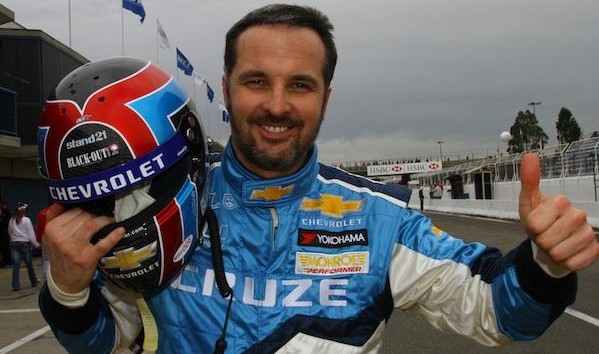
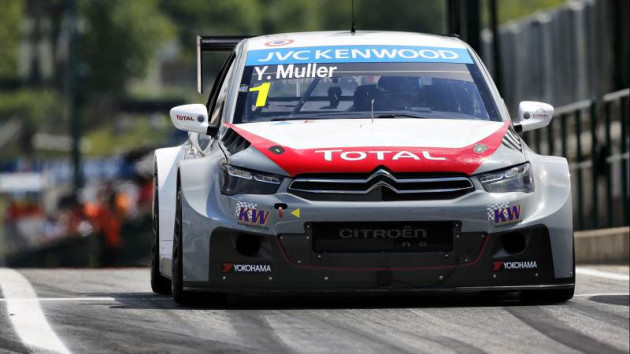
Yvan Muller, one of the worlds most impressive drivers has announced his retirement from the WTCC at the seasons end.

Four-time World Champion Yvan Muller, who has been an official Citroën driver since midway through 2013, has announced that this season will be his last in the FIA WTCC. Currently lying joint second in the overall standings, the driver of Citroën C-Elysée WTCC No. 68 will be looking to hold on to that position in the last two meetings of the season in Shanghai and Qatar.
Over a professional career spanning more than thirty years, Yvan Muller has built one of the most impressive records in French motor sport, with four FIA World Touring Car Championship titles in 2008, 2010, 2011 and 2013. 
He holds every WTCC record going, with 29 pole positions, 48 race wins, 125 podium finishes, 38 fastest laps and 2,826 points scored in 244 starts.
After starting out in karting (finishing as World Championship runner-up in 1985 and European Champion in 1986), he naturally progressed to single-seater racing, winning the British Formula 2 Championship in 1992. 
With no F1 openings, the man from Alsace turned to touring car racing in 1994. French Champion in 1995, he then competed in the Italian, German and British championships, picking up the BTCC title in 2003, before making the switch to the FIA WTCC in 2006.
He also made his name as the best driver on ice, with ten Andros Trophy crowns and several victories in the Chamonix 24-hour race. His wealth of experience across the world includes the 24 Hours of Le Mans, V8 Supercars in Australia, the Dakar Rally and a few rounds of the WRC.
Surprising as it may seem, Yvan Muller had never worked with a French manufacturer before he joined Citroën Racing. 
In July 2013, when the development of the Citroën C-Elysée WTCC and the organisation of the FIA WTCC team got under way, he provided the benefit of his immense experience and helped lay the foundations for the success that would later be achieved.
Yvan proved a vital member of the new set up, claiming four pole positions and four race wins in 2014, enough to secure him second place in the World Championship, behind José María López and ahead of Sébastien Loeb. He finished second in the driver standings again in 2015, with three pole positions and six race wins to his name.
Yvan has had more than his fair share of bad luck this year, but he is nevertheless currently sitting in second place in the overall standings, level on points with Tiago Monteiro. 
Having announced that his FIA WTCC career will end after this season, the holder of every record in the competition is determined to go out on a high by securing a championship one-two for Citroën Racing.
WHAT THEY HAD TO SAY
Yvan Muller: “I am not sure that age is the main factor when it comes to ending a career. It’s more a matter of desire and motivation. With all the testing, the simulator sessions, the physical training and the travel to the race venues, a season of professional motor racing requires a level of personal commitment that I am no longer prepared to put in. 
At the same time, I am at a time of my life where I want to do something else and I am happy to be able to make that decision after eleven seasons of FIA WTCC. 
I’ve had some great experiences over my career. These three seasons with Citroën Racing have been particularly special, even though I never managed to be World Champion with this team. But I will always be proud of having helped to build our racing programme and develop the Citroën C-Elysée WTCC. 
I have also met some great people who are passionate about their job and have a fierce competitive spirit. Driving has been part of my daily life for so long that I can’t see myself stopping racing entirely. 
But I am going to spend more time with my family and developing my team, Yvan Muller Racing. Before that, though, I am going to put everything I’ve got into meeting the team’s goals.”
Yves Matton, Citroën Racing Team Principal: “The whole Citroën Racing team is proud to have Yvan Muller in its ranks. Every time we get involved in a competition, we look to recruit the best drivers. 
That is why we invited Yvan to join us from the start of our involvement in FIA WTCC. We will not forget his contribution. Coming in from rally driving, we had everything to learn, and he has always been more than happy to offer the team the benefit of all his experience. 
He is a great competitor and a great guy, who has always put Citroën’s interests first. It is to Yvan’s credit that, after three seasons with us, he has decided to end his career at a point when he is still capable of winning pole positions, races and titles. 
He will always be part of the Citroën Racing family and we wish him all the best for the next stage of his life, which we will follow with interest.”

Tuesday, 26 July 2016

Three months after its first outing, Citroën Racing’s 2017 World Rally Car has made its asphalt debut.

Three months after its first outing, Citroën Racing’s 2017 World Rally Car has made its asphalt debut. On the bumpy roads of Aude in southern France, Kris Meeke and Stéphane Lefebvre learnt how the car behaves on this type of surface.
By opting to hold the first development sessions on gravel, the Citroën Racing engineers had given priority to a surface used in the majority of World Rally Championship events. 

“By test-driving the car in the toughest conditions first, we were able to check the reliability of all the components,” explained Citroën Racing Technical Director Laurent Fregosi. “What is more, there isn’t just one type of gravel. Finland and Mexico offer completely different surfaces. 
So we wanted to explore that diversity by testing the car on asphalt, where the operating window is narrower.”
In terms of the regulations, the differences between a WRC car’s gravel and asphalt setups are minimal, but they are vital. “The biggest change is in the suspension,” Fregosi continued. 
“We use lighter parts that allow us to reduce the ground clearance. The drivetrain kinematics are also adapted to the 18″ wheels. Large wheels mean we can increase brake disc diameter and use water-cooled callipers.
"We should also mention the lighter body protection. On the aerodynamic front, we now have the ability to adapt the lower part of the front bumper specifically for asphalt.”
“During this first session, we worked in particular on the programming of the centre differential,” explained the engineer. “The aim is to distribute power between the front and rear axles according to the situation. 
Obviously, the settings will be different from one surface to another. The drivers were also able to assess the effects of mechanical parameters, such as spring stiffness, the anti-roll bar and the differential. 
Overall, the results were positive and we know where we are at. Once again, the car’s reliability allowed us to get plenty of kilometres in.”
“It’s exciting to be driving the WRC on asphalt for the first time,” said Kris Meeke. “Citroën Racing has always made really good cars for this surface and I think this will be no exception. 
On tarmac, you can really feel the changes introduced as a result of the new regulations, such as the higher power, the increased width, the power of the brakes. We are continuing the programme as planned and each run teaches us a little bit more. Every phase of the project is just as exciting as the last.”
Now with two dedicated chassis for development tests, Citroën Racing will be intensifying its testing programme over the next few weeks. On gravel and asphalt alike, the engineers and drivers are focused on their main objective: Rallye Monte-Carlo on 16 January 2017.

Saturday, 18 June 2016

Volkswagen will celebrate in style the 40th Anniversary of the Golf GTi at this years Goodwood Festival of Speed.

  • The first Volkswagen Golf GTI – the Mk1 from 1976 – will tackle the Goodwood hill
  • It will be joined by the latest iteration of the Golf GTI – the highly-focused Clubsport S
  • Volkswagen’s World Rally Championship-winning Polo R WRC will be in action on the hill
Volkswagen will celebrate 40 years of the Golf GTI at this month’s Goodwood Festival of Speed.  The famous motoring event takes place on the south coast of England from 23 to 26 June and attracts hundreds of thousands of motoring enthusiasts.
The Golf GTI went on sale in the United Kingdom in 1976 and since then the car has achieved iconic status.  Now into its seventh generation, the model’s milestone birthday is being celebrated with the special edition Golf GTI Clubsport S.  

This two-seat machine packs 310 PS and recently took the lap record for front-wheel drive production cars at the Nürburgring Nordschleife circuit in Germany.
The Clubsport S has a special Nürburgring setting, which fine-tunes the adaptive chassis control, engine, steering and sound to suit the famous road circuit.  The car also has enlarged tailpipes and semi-slick tyres for stronger grip.  Limited to just 400 examples, 150 of those will be sold in the UK.
Both the Clubsport S and the Mk1, the bookends of the Golf GTI story, will be driven up the world famous Goodwood hill by two-time Le Mans 24 Hours winner Hans-Joachim Stuck.  The German ace will be keen to contrast the impact that 40 years of technological advancement has had on the Golf GTI.
Volkswagen will thrill motorsport fans with its Polo R WRC model, which has dominated the FIA World Rally Championship since its debut in the category at the start of 2013.  The Polo R WRC is powered by a 322 PS 1.6-litre turbocharged engine and has permanent four-wheel drive. Fast Finn Jari-Matti Latvala has won nine World rallies in the car and he will be on driving duty.
Volkswagen’s presence at the Goodwood Festival of Speed will be centred around its eye-catching display stand, which will feature a variety of models.  Among these will be the all-new Tiguan, whose arrival signifies the start of a major SUV product offensive from the brand.
Continuing the 40 years of Golf GTI celebrations, the Golf GTI Mk3 will also be on display, enabling fans of the car to see how the GTI has developed over the years.  The possible future of the Golf GTI is hinted at with the Golf GTE Sport concept car, which is powered by an advanced plug-in hybrid system.  The car was originally unveiled last year at the Lake Wörthersee Golf GTI event in Austria in front of 200,000 fans

Tuesday, 14 June 2016

Citroën Racing chose the roads of Finland for the third development test session of its 2017 World Rally Car.

Citroën Racing chose the roads of Finland for the third development test session of its 2017 World Rally Car. Running at maximum speed on the famous jumps, Kris Meeke and Craig Breen were able to test the car’s aerodynamic performance.
With its large, fast and rolling roads, Finland is among world rallying’s most revered venues. Due to the high speeds and the difficulty to “read” the road, it is one of the toughest terrains to grasp, with the drivers needing to concentrate on the jump approaches that send the cars flying into the air.


It is, therefore, no surprise that this country figures among the priority destinations for the team in charge of developing the Citroën that will compete in the 2017 FIA World Rally Championship. After the rough terrain of southern France and the mud-filled tracks in Portugal, Finland was ideal to continue assessing the car’s reliability and performance.
For this test, the aerodynamics were closely scrutinised by the engineers. “The freedom allowed by the FIA regulations offers us a much larger range of possible solutions than before,” says project manager for the 2017 World Rally Car, Alexis Avril.
“The bodywork of the WRC must entirely cover that of the original model and the maximum width is set at 1875mm. In this framework, we have a lot of freedom to design the wheel arches and bumpers. We can also create air intakes for re-cooling the rear brakes and add on a diffuser. Paradoxically, there are more restrictions for the design of the rear wing than today, but its efficiency will be increased tenfold by its further backed and raised positioning.”
The aerodynamics of a race or rally car must solve the complex equation of attaining maximum down-force, minimum drag and maximum cooling. To achieve this, Citroën Racing’s engineers have adopted what is now a standard methodology.
“We started the work with the CFD calculations, which let us sift through the possible options, continues Alexis Avril. “We collaborated with the Citroën design studio in order for the race car to resemble the characteristics of the production model. From this data, we built a model that was used in the wind tunnel. Between sessions, we carried on with the CFD calculations in enriching the data from the tests, and vice versa.”
With this approach, the expertise gained during the development of the WTCC Citroën Elysée has been widely put to use: “We have made great strides in our understanding of the flow principles and aerodynamic performance since 2013 and the debut of the WTCC programme. We have saved time in utilising the proven solutions. As the disciplines are different not everything was transferable, in circuit racing, there is a form of systematisation that doesn’t exist in rallying. Thus, the compromises are more important.”
While the aerodynamic development itself was done with CFD calculations and wind tunnel tests, the test sessions were used to assess the resilience of various components. “Vulnerability is an essential point in rallying. The dirt, mud, stones and gravel can quickly tear away the element or block the air intakes,” recalls Alexis Avril. “So you have to run in all the conditions to find a compromise between reliability and performance.”

Monday, 23 May 2016

The 2017 Citroen C3 WRC car undergoes another round of testing before the new season starts.

Three weeks after its first outing, Citroën Racing has continued development of its 2017 World Rally Car in the south of Portugal. Faced with varied weather conditions, Kris Meeke and Stéphane Lefebvre racked up the miles during four days of testing.


Fresh from the first test in the south of France, Citroën Racing headed to the Algarve in Portugal for the second session of development testing for its 2017 World Rally Car. The team were treated to rain, hail, fog and even the occasional burst of sunshine as they worked on the new car. Teammates Kris Meeke and Paul Nagle and Stéphane Lefebvre and Gabin Moreau were busy behind the wheel of the prototype produced by the Versailles Technical Centre, as they prepare for Rally de Portugal with the Abu Dhabi Total World Rally Team.
“We were actually quite pleased to have these variable conditions because they meant we could test different set-ups and assess how the bodywork stood up to being loaded with mud,” explained Laurent Fregosi, Citroën Racing’s Technical Director. “During the tests, we have several objectives. Obviously, we want to check the reliability of the various components. The mileage done by each part is noted down to make sure it tallies with the specifications. But our work is also focussed on looking for performance and driver comfort.”
After graduating in Engineering at INSA Lyon, Laurent Fregosi joined Citroën Racing in 1995, when the ZX Grand Raid dominated the Dakar Rally. He has therefore worked on every rally programme since the Xsara Kit-Car. Appointed Chief Engineer, Chassis, in 2005, Laurent took over from Xavier Mestelan-Pinon at the start of the year. Involved for over a year on the 2017 programme, the new Technical Director reflected on the origins of the car.
“Seeing our World Rally Car complete two long test sessions on demanding surfaces without encountering any major problems is very satisfying and just rewards for those who have been working on this project for over a year,” said Laurent Fregosi. “As always, we began by drawing up a set of specifications, based on the FIA regulations and the brand’s marketing goals. Once we had chosen the base model, we retrieved the CAD data in order to define the layout of the main components: engine, transmission, fuel tank, spare wheel, etc. The design of the roll cage stemmed from all these volumes as well as the regulatory position of the crew.”
Called on to produce the initial drawings, the design office then went to work on designing each part: “The approach is always the same: design hard-wearing, light components, whilst implicitly looking to adjust and lower the centre of gravity. The crews, as well as the engineers and technicians that will be running the car, were asked to give their opinion. We still need, for example, to improve the removal of parts that are likely to be replaced in service.”
“As ever, the work done factored in the experience acquired over the last twenty years or so at the highest level of world rallying. But we also added to our knowledge base by completing tests with a DS 3 WRC development mule,” revealed Laurent Fregosi. “Having reduced the pace of its development in 2014, we wanted to try out a few new solutions for the future. We used a Citroën C-Elysée WTCC engine, which meant the car immediately possessed the same power level as we’ll see next year. We also tested the latest suspension systems.”
Built in less than a month, the assembly of the first prototype involved the efforts of various teams:
“It was a critical moment because some components took a long time to manufacture. In the workshops, the technicians adopted a just-in-time approach, so that we would be ready on schedule. Although we have already completed two test sessions, we’ve only just begun the journey. Analysing the data and driver feedback helps us to develop the technical definition whilst selecting the most efficient solutions. As the same time, we are also preparing a second car, which will be shortly used for testing on tarmac. This iterative way of working – which affects all areas, from the chassis to the engine, including the transmission and the aerodynamics – will continue until we need to obtain homologation of the car for the 2017 Rallye Monte-Carlo. That point seems so far away, and yet it’ll be here before we know it!”

Wednesday, 27 April 2016

The 2017 FIA World Rally Championship Citroen C3 has undergone initial testing, this will be the ALL NEW C3.

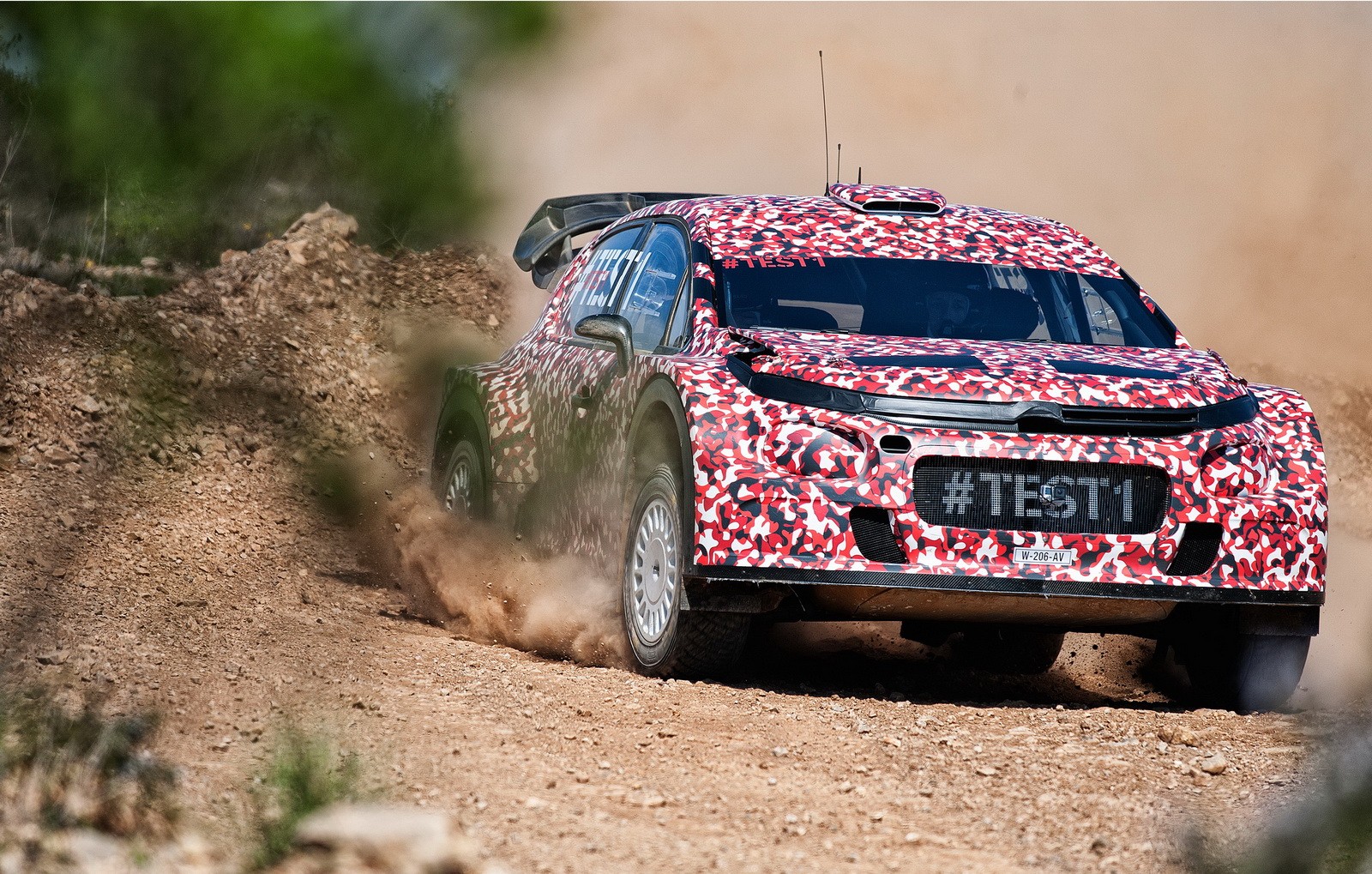
Citroën Racing has completed initial testing of the car that will be entered by the brand in the World Rally Championship for the 2017 season. On the gravel roads around the Château de Lastours and then in Fontjoncouse, Kris Meeke has already tested the reliability and performances of this new generation model.
First and foremost, it is worth remembering what a 2017-spec World Rally Car actually is because compared with the models that first appeared in 2011 the change is set to be dramatic, for eyes and ears alike. 

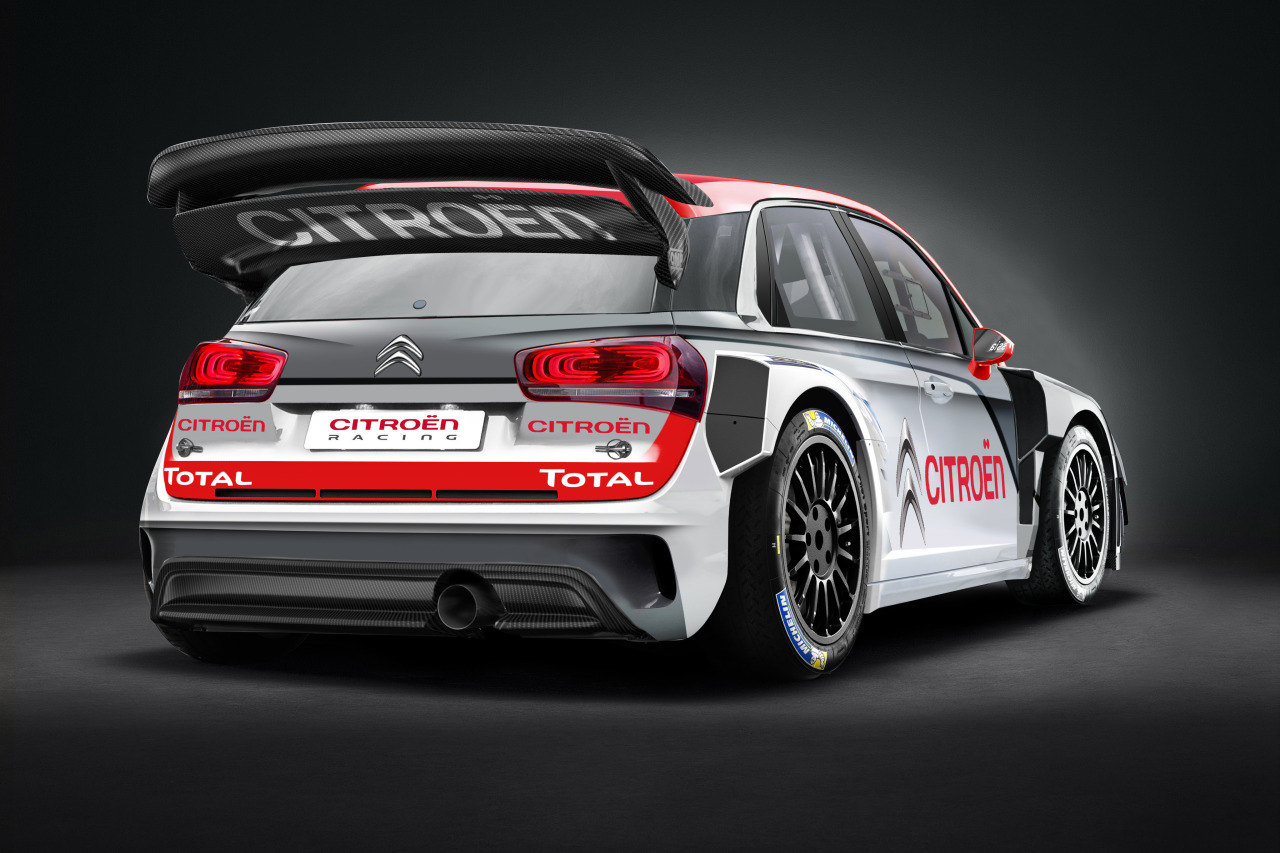
By becoming 55mm wider, the bodywork enjoys great aerodynamic freedom, with a front bumper fitted with a splitter, prominent air inlets and outlets, a rear diffuser, and so on. It is no accident that comparisons have been made with the legendary Group B cars of the 1980s.
Under the bonnet, the 1.6-litre direct injection turbo engine is now fitted with a 36mm booster flange, like the Citroën C-Elysée WTCC. With some 380bhp under the right-hand pedal, the drivers will be able to savour the power on offer, especially as the minimum regulatory weight has been reduced by 25kg and the four-wheel drive now comes with a central differential that improves traction.
This new generation of World Rally Cars has been designed by the FIA and the manufacturers to give the WRC new impetus. After announcing its return to the category in 2017, Citroën is now determined to play a big part in breathing new life into the WRC, with the aim of winning rallies and adding to its collection of world titles.
The very first outing of the brand’s latest model was held on Saturday, 9 April in Versailles on the small track right next to Citroën Racing’s Satory site. Alexandre Bengué, the team’s test driver, was handed the responsibility of completing the first few miles. The following Monday, Kris Meeke got behind the wheel of the prototype for another shakedown session. As he climbed out of the car at the end of his first run, the Northern Irishman’s wide grin spoke volumes about how much he had enjoyed driving the new car.
Overseen by Laurent Fregosi, Citroën Racing’s new Technical Director, the development team then headed for the south of France for the first proper test session. Engineers Alexis Avril (Project Manager) and Didier Clément (Chief Operating Engineer) didn’t go for the easy option in choosing the roads around Château de Lastours and Fontjoncouse as the base for testing. Regularly used by cross-country rally vehicles, the rocky gravel roads provided a demanding environment in which to test the strength of the chassis, the suspension, the gearbox and the bodywork.
To hide the aerodynamic features as much as possible, Citroën Racing’s latest creation was decorated with a special “camouflage” livery, with a red, white and black pattern created by Citroën’s design team. At 9.12am on Thursday, 14 April, Kris Meeke and Paul Nagle began the test programme. Not only did this moment represent an achievement of sorts for the engineers and technicians in charge of designing and building this first version, it also marked the start of a new adventure.
Without ever losing his broad smile, Kris Meeke switched between testing sessions and technical debriefings. Whilst racking up the miles to flush out the inevitable teething problems, he also tried hard to analyse the reactions of the car to changes in the set-up.
On the fourth day, Kris handed over driving responsibilities to Craig Breen. Tasked with analysing the work done using his own experience and feeling, the talented young Abu Dhabi Total WRT driver turned out to be just as enthusiastic about the potential and performances of this new generation World Rally Car.
Back in Versailles, the team now has to go through and analyse the gigabytes of data acquired and prepare the changes that will be made in time for the next test session.
WHAT THEY HAD TO SAY
Yves Matton (Team Principal, Citroën Racing): “It is one of the major stages in a project of this size. The lead-times established for the design phase were very tight. Thanks to its expertise and experience, the team has done a fantastic job to design a car based on the new regulations. Having seen our World Rally Car begin road testing on schedule and complete runs without experiencing any major problems, we can take our time in confirming the upcoming milestones. Once again, what the men and women at Citroën Racing have achieved is quite exceptional.”
“It is very much in line with what we had imagined when we talked about the new regulations, which were devised to make the cars more spectacular. All the factors we had wanted to improve – the noise, impression of speed and aggressive design – are already in evidence, even though this was only the car’s very first test outing. I think rally fans are going to like the new generation of WRCs.”
“The FIA has been working on improving safety for a number of years and we are supportive of this approach. As far as we’re concerned, we have always been something of a pioneer in this field, even if it has meant imposing additional restrictions on ourselves. It will be no different with this car, which will be even safer than its predecessor.”
“We have never strayed far from the WRC and have been constantly updating our knowledge base.
Our WTCC programme will be a bonus, because it will enable us to have a different approach. Before, we had virtually no real experience in aerodynamics. It is now a field in which we have genuine expertise. Similarly, we have an engine that has been running for more than two years with a similar power level and lifespan to those stipulated in the WRC specifications. All of this will be beneficial for the rest of the development phase and when it comes to running the car.”

“We are going to continue testing on gravel and then we’ll begin testing on tarmac. One of the key stages will be the point at which we set the technical definition to start building the cars that will be competing in 2017”
Kris Meeke: “Yes, everyone is absolutely 100% committed and it’s fantastic! When I joined the Citroën Racing fold two years ago, the priority was the WTCC and the development of the WRC was fairly limited. Now, you can feel there’s a real energy, with engineers coming back to rally with experience they have gathered on the track. The Citroën Racing machine is up and running at full power and that motivates me to work even harder. Together, we can all do something really special in the future.”
“It’s always exciting to drive a car for the first time. But this is different, this is the start of a major new programme for Citroën Racing and a new era for the WRC. That’s what makes this moment so special.
I know that everyone has put in a lot of work to build this new car. So it’s special for them too. Now, we’re moving into a new stage of the process and it’s up to me to step up to the plate.”
“Obviously, it’s a period of the history of rallying that everyone remembers with affection. The cars were spectacular, with their bold design and big spoilers. We’re returning to that spirit, with more aggressively-designed cars but adding in the technological advances that we now have in 2016. Having driven one or two Group B cars, I can confirm that there really is no comparison. The potential of our new World Rally Car is incredible.”
“With the power and the aerodynamic efficiency, these cars are fascinating. After my first run, one of the mechanics filmed the expression on my face. I didn’t realise it at the time, but the big smile on my face spoke volumes about how much I had enjoyed driving the new car.”
“I’ve always thought that aerodynamics shouldn’t become too important, because rallying shouldn’t become like track racing. I think we have a good balance and these cars will be just as exciting to drive as to watch. But I think the human factor will become more important than it is currently. In my opinion, the 2017 WRCs must remain exclusive to the World Championship, like the F1 cars or the MotoGP bikes.”
“Every year, even if the regulations remain unchanged, we always go a little bit quicker. You can’t stop technology from moving on. This new generation will enable us to make a big step forward in terms of the safety of the cockpit and protection in the event of a side impact. We’re heading in the right direction.”
“As soon as we set off, I felt that I was driving a genuine rallying machine, a well-designed car. I have been involved in the development of several cars in my time; generally speaking, you spend more time waiting around than driving in the first few test sessions. But with this, I was able to rack up the miles and start to explore the set-up options. It was like a dream.”