Purpose

I will try my best to provide detailed info on various cars and what is like to live with them, I have already produced a few for Jaguar-car-forums, I will do my best to be unbiased, but it will be hard for some cars. I will re-produce press releases and copy from other motoring news.
Showing posts with label bankruptcy. Show all posts

Saturday, 12 September 2015

Former CEO of Saab Automobile, Jan Ake Jonsson, has been charged with giving false testimony.

The former CEO of Saab Automobile, Jan Ake Jonsson, was charged on Wednesday with giving false testimony when the aftermath of the Swedish company's bankruptcy played out in court.
Jonsson was charged in a Swedish district court with giving false testimony over an import and wholesaler agreement in Ukraine in March 2011 when he was head of the automaker, which filed for bankruptcy in December the same year.

"The legal action is, in my opinion, groundless and premature," Jonsson's defense attorney Bengt Nilsson said in text message when asked about the charges.
Jonsson told Swedish business daily Dagens Industri that he was innocent of the charge. "As I remember it, the agreement was a correct one. This happened more than four years ago and at the time we had a string of other important things to deal with," he was quoted as saying.
Jonsson could not immediately be reached by Reuters for comment.
Two other former Saab Automobile employees were also charged in the case.

The Swedish carmaker, which had been making cars since 1947, was rescued from closure under its former owner General Motors through a sale to Dutch Spyker Cars in 2010, but the venture proved short-lived.
China's National Electric Vehicle Sweden (NEVS) bought the bankruptcy estate of the carmaker in 2012.
Jonsson joined Saab in 1973. He rose through the ranks to CEO and retired in May 2011 after fighting hard to save the automaker.

Monday, 8 June 2015

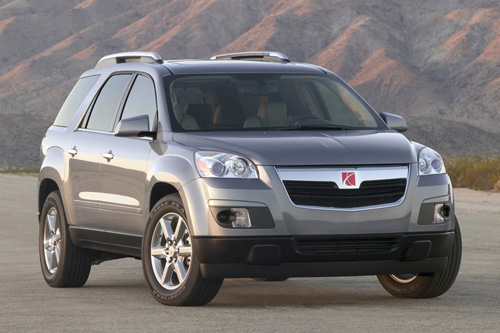
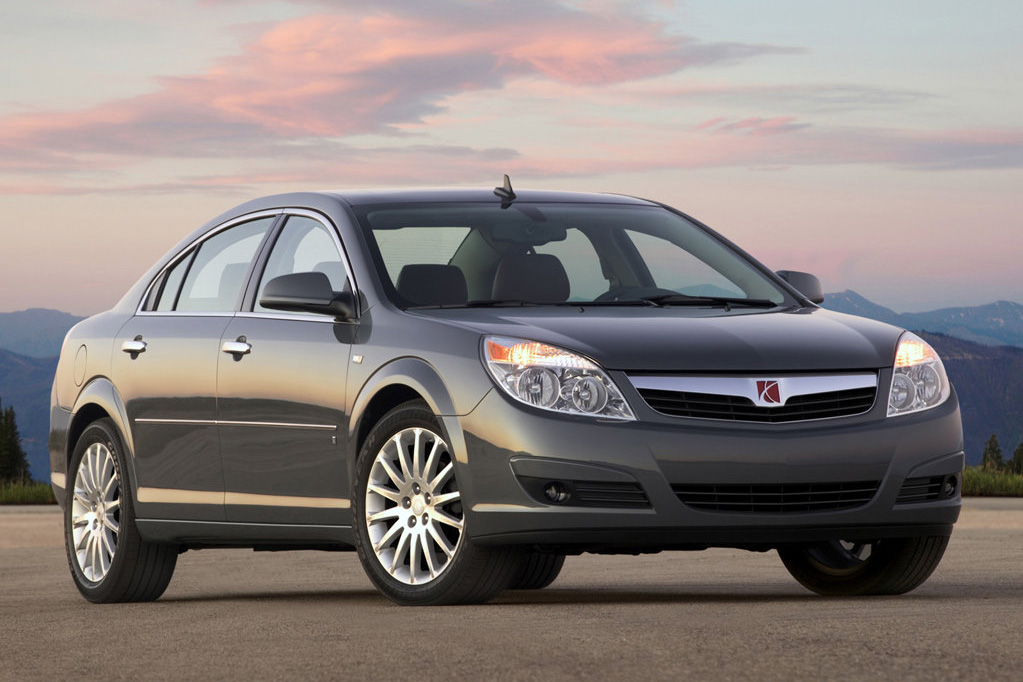
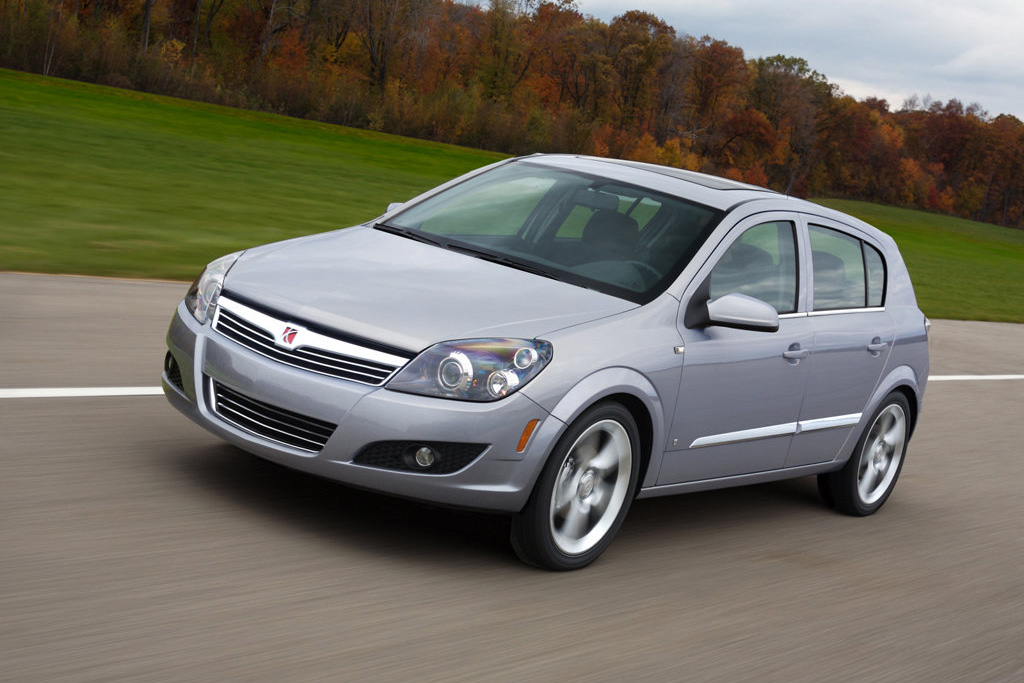
Ex-Saturn Dealer to sue GM's financial auditors for the losses he incurred in the brand's dissolvement.

Saturn dealers rarely complained about General Motors' now-defunct franchise back in the day, and Bob Goodman, for one, never complained at all. But six years after the demise of the quirky car venture, billed as "a different kind of company," Goodman is the last man fighting.
The former Florida "retail partner," as Saturn dealers were called, is suing for the $13.8 million he says he lost by investing in three southwest Florida dealerships in Saturn's final years of operations.
But it is a different kind of lawsuit.
His strategy? Rather than blaming GM for his losses, he is suing GM's outside auditing firm, Deloitte & Touche.

Dealers have had mixed results seeking compensation from losses caused by GM's 2009 reorganization, mostly due to the protective ground rules of the government-managed bankruptcy. Saturn dealers' legal options were clipped further by a last-minute waiver many of them were offered and signed in hopes of saving the brand that year -- a pledge not to sue GM in exchange for inclusion in a reborn Saturn franchise that was proposed under the ownership of industry mogul Roger Penske. 
But Goodman's lawsuit has made it to the verge of an actual court date, possibly as early as this month. Late last year, the court agreed to let him seek additional punitive damages on top of any compensation he receives for damages if successful in his lawsuit. 
Goodman's five-year-old case in the 20th Judicial Circuit Court for Lee County, Fla., alleges that Deloitte, GM's longtime independent auditor, gave Saturn dealers an inaccurate picture of the subsidiary's financial health. 
The nub of his complaint is that the accountants should have been aware that Saturn, as a wholly owned GM subsidiary, was a perpetual money-losing venture -- a revelation laid bare in late 2008 as GM faced up to its larger financial problems.

Investing in Saturn


Goodman's complaint specifically alleges that Deloitte failed to alert dealers of that reality through its independent auditors' report in Saturn's March 31, 2005, franchise offering circular -- the financial report distributed to prospective dealers and investors on which Goodman based his decision to spend millions more on his Saturn stores between 2006 and 2008, the lawsuit claims.
"Our case isn't with GM, or even with Saturn," says Jeff Morganroth, the Detroit attorney representing Goodman's case who now speaks on Goodman's behalf. "It's with the people who did the auditing and turned a blind eye to problems. Mr. Goodman relied on them when he was making his decisions about whether to invest.
"Had he known the extent of Saturn's losses, he wouldn't have sunk all that money into it."
The suit alleges that Deloitte's independent auditors' report of Saturn certified that "the financial statements present fairly, in all material respects, the financial position of the Company," when Saturn was actually a financial drain on GM. Deloitte was auditor for GM and Saturn.
In the 2009-2014 Restructuring Plan that GM presented to the U.S. Department of Treasury in December 2008 as it sought a federal bailout, GM revealed that Saturn and two smaller brands, Hummer and Saab, had contributed a $1.1 billion annual loss to GM, before interest and tax, from 2003 to 2007.
Deloitte spokesman Jonathan Gandal wrote in an email to Automotive News, "These claims are simply untrue and we are confident we will prevail based on the facts presented at trial."
A former Saturn dealer in another state, who also suffered financial losses when Saturn failed, commended Goodman on his legal approach.
"I don't know him, but kudos to him for finding a way to take this to court," said the former dealer, who asked not to be named. "We didn't have a lot of options."


Blindsided dealers


The case is a reminder of how blindsided many auto retailers were by the 2008-09 financial collapse of GM and Chrysler. Approximately 1,600 dealerships closed as a result of those bankruptcies.
But the Goodman case also offers a glimpse of what happened inside Saturn, the brand designed to bring the automaker and its retailers into close working harmony.
More than 400 Saturn stores were operating in 2008 as the economy crashed. The brand launched in fall 1990 as an industry disrupter, offering a no-pressure, "one-price" sales environment that made customer satisfaction as important as sales results. Retailers had helped create the national franchise system. Dealer-factory communications were touted as being open and transparent. Dealers hung signs in their stores assuring customers of the same in communications with them.
Goodman, whose attorney provided details of his personal story, came late to the franchise. A Toledo, Ohio, native, now 53, he had decided by age 6 that he wanted to be a car dealer. He began canvassing the Detroit 3 at age 22 to find out how to get a dealership and was allowed to participate in a dealer training program at an Oldsmobile store in Ann Arbor, Mich., which he eventually bought. He held Oldsmobile, Cadillac, Saab and Isuzu franchises.
But in the 1990s, the grittier ways of old-fashioned car selling -- high-pressure sales and abrasive factory-dealer relations -- were beginning to wear on him. When he witnessed Saturn's launch and heard about its more customer-friendly approach, he wanted in.


Signs of trouble


He sold his Michigan retail operation to acquire two existing Saturn stores in Fort Myers and Naples, Fla., in 2002. Within three years, Saturn management asked him to expand, moving his Fort Myers store to a new site and constructing a third store in Cape Coral, Fla.
Goodman was bullish on the brand even though, by that time -- 15 years after Saturn's inauguration -- there had long been signs of trouble.
Saturn's national sales volumes had peaked in 1994 at 286,003. Its original concept of selling small cars to win back market share from Asian imports had run into surging American demand for large cars, pickups and big SUVs -- none of which Saturn offered. Saturn had flopped at its vow to export cars to Japan. Its small cars were growing stale, and its foray into the midsize segment with the L-series sedan had failed. Some of its original gung-ho retailers had sold their stores. Others were convinced that, given a new wave of relevant products, Saturn would become revitalized.
Skeptics had made much about the enormous investments that GM had poured into Saturn over the previous decade. But there were also corporate assurances that the brand would continue on. New products were rolling out, such as the stylish Sky convertible roadster. Given an infusion of new product, company executives doggedly believed, Saturn would be profitable.
Saturn was structured as a wholly owned subsidiary of GM, much like a privately held company, and did not reveal its earnings or losses.
The suit claims that the circular's financial information focused on a legal entity within Saturn known as "Saturn Distribution Corp.," which existed only on paper, without employees or business infrastructure.
The distribution entity was created to act as franchiser for Saturn Corp. And although it recorded some income from financial activity, it did not reflect the true condition of Saturn Corp., Goodman alleges.
In his statement to Automotive News, Deloitte spokesman Gandal wrote, "We are committed to conducting audits of the highest quality and stand fully behind our audit of Saturn Distribution Corporation's 2004 financial statements, which clearly disclosed the relationship between SDC and Saturn."
According to depositions in the Goodman case, even Saturn's senior executives were not privy to its profits or losses.
Jill Lajdziak was involved with the brand throughout its existence. In 1999, she was named Saturn's vice president, and in 2004, her title was changed to general manager. In the course of a lengthy deposition in the Goodman case two years ago, Lajdziak insisted that she never knew whether Saturn made or lost money. While she was responsible for knowing the profitability of Saturn's individual vehicles, she said in the deposition, she did not know how the company was faring as a whole.
According to a transcript of the deposition, Lajdziak repeatedly said she could not remember if all, or any, of the Saturn vehicle lines had ever made or lost money.
Similarly, Edward Toporzycki, Saturn's CFO from 1997 to 2002 and now GM's executive director of finance, said in a deposition that he did not know the financial condition of Saturn as a whole while involved with the subsidiary.
"Do you know if Saturn Corporation was solvent during the time period you served as a CFO/vice president of Finance for it?" Morganroth asked Toporzycki, according to a transcript of the deposition.
"No. No. No, I can't say," Toporzycki answered.
"You don't know one way or the other?"
"No," he repeated.
"Did you ever have any communications with anyone while you were serving as CFO/vice president of Finance [at] Saturn Corporation as to the solvency or insolvency of Saturn Corporation?" Morganroth asked.
"Not that I recall," Toporzycki said.

Focus on Deloitte


The suit does not fault Saturn management for being in the dark on the brand's true financial condition. Morganroth claims that management's lack of information bolsters Goodman's claim that it was up to the auditors to know and to alert potential investors.
Instead, Deloitte's unqualified opinion on the 2005 franchise offering circular created "the false impression that Saturn was consistently profitable year in and year out, in order to convince prospective Saturn franchisees" to invest, the suit alleges.

An unqualified opinion means that the independent auditor believes a company's financial statements are free from misstatements, are in accordance with generally accepted accounting principles and laws and are not concealing or overlooking important information.
Goodman never got over the loss of his stores, Morganroth says. Many Saturn dealers were able to shift directions after the crash, acquiring different brands for their stores or launching used-car dealerships in their place. Goodman was not.
He is now enrolled in law school. A thriving Kia dealership occupies the Cape Coral store he constructed and opened in 2008 on the verge of Saturn's collapse.
Beneath the carpet in one of the dealership's back rooms, the current owners might someday discover two sets of handprints in the concrete floor. Before the store's completion in March 2008, Goodman and his daughter made their handprints in the wet concrete floor. It was intended to be a commitment in stone to his daughter that -- many years into the future -- the Saturn dealership would be hers to operate, too.
Lindsay Chappell

Tuesday, 3 February 2015

GREAT NEWS - Spyker has been removed from bankruptcy, and will launch new B6 Venator soon.

Dutch supercar maker Spyker won its appeal against being placed in bankruptcy by a court late last year. Spyker CEO Victor Muller said he now intends to push ahead with development of the company's B6 Venator, an entry-level luxury sports car, and to merge with a U.S. based manufacturer of high performance electric aircraft.
Spyker has been struggling to survive financial setbacks since its ill-fated acquisition of Saab from General Motors in 2010.
Spyker was placed in bankruptcy on Dec. 18 by a Dutch court after bridging finance promised while it was under creditor protection failed to arrive. Spyker got the money 11 days later and appealed the court’s bankruptcy declaration.

A Dutch appeals court on Thursday declared the bankruptcy "null and void with retrospective effect." This puts the company back under the protection of the "moratorium of payment" – equivalent to U.S. Chapter 11 protection from its creditors.
Muller said that the company has now reached agreement with the majority of its creditors. As a result "we should see Spyker exit 'moratorium of payment' in a matter of weeks," he said in a statement.
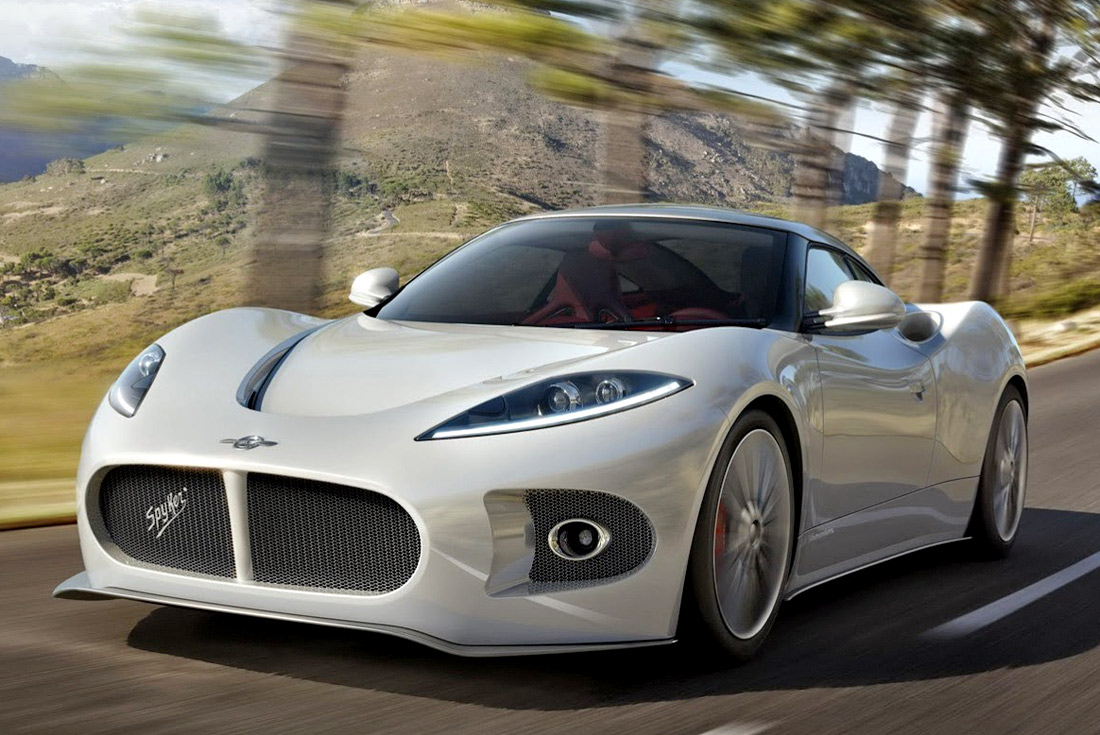
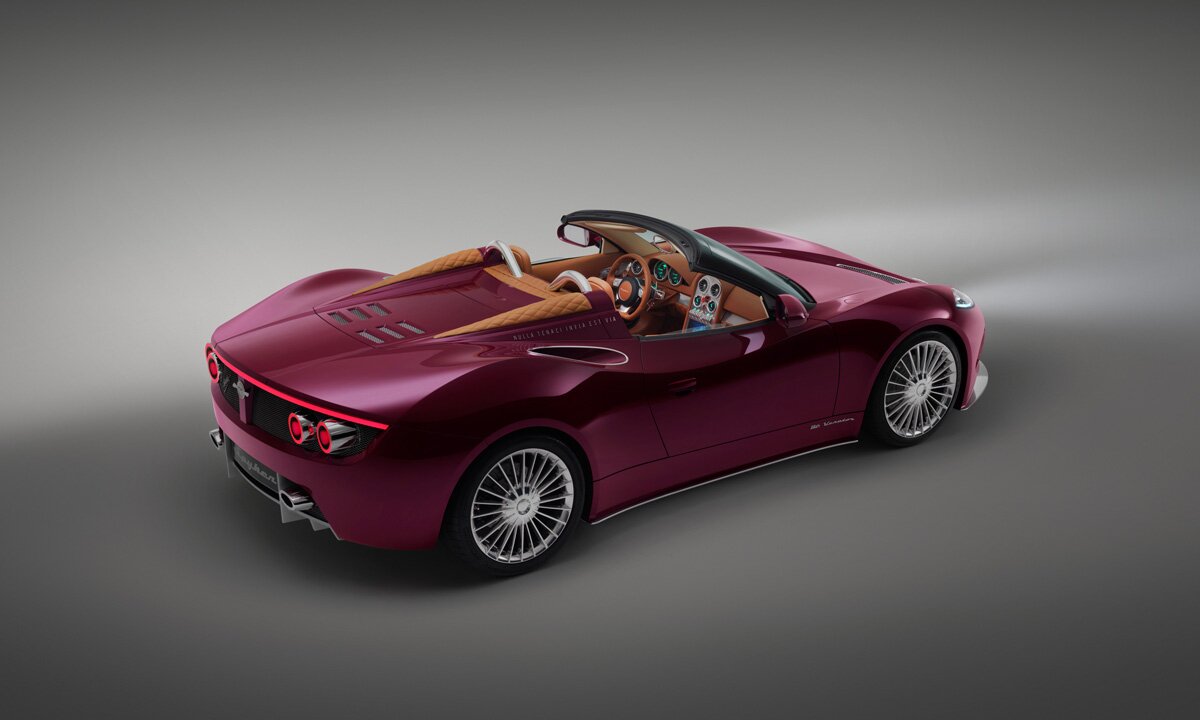
Spyker hopes the B6 Venator, a mid-engined 375-hp V6 sports car unveiled at the 2013 Geneva auto show, will attract more customers. The model is intended to compete with such cars as the Porsche 911 and Lotus Evora.


When it was first revealed there were suggestions it would be priced around 160,000 euros. That is about 40,000 euro less than the 198,500-euro 2014 European list price of Spyker's 4.2-liter C8 Aileron sports car.
Muller is keen to pursue a merger with a U.S. based specialist aircraft manufacturer once Spyker comes out from the "moratorium of payment." The logic for this, according to Muller, is that "the exciting new sustainable and disruptive technologies" currently being developed by the as yet unnamed company will be of value in future "full electric" Spyker cars.

REPORT HERE

Friday, 19 December 2014

Spyker Supercar makers has been declared bankrupt.

Today the District Court of Midden-Nederland, at the request of the administrator, converted the moratorium of payment, granted to Spyker N.V. and its wholly owned subsidiaries Spyker Automobielen B.V. and Spyker Events & Branding B.V. (collectively “Spyker” or the “Company”) on December 2nd, last, to bankruptcy. The cause for this conversion was that the committed bridge funding did unfortunately not reach the company in time. The administrator will continue his work but now as receiver.

Victor R. Muller, Founder and Chief Executive Officer said: “None of the ambitions we had when we founded Spyker 15 years ago, has vanished as a result of today’s events. In 2000 we set out to establish a super sports car business from scratch with a global distribution and we achieved that. Over the years we undertook some daring ventures that left their marks on the company which in turn contributed to today’s demise.
However, I would like to make clear that as far as I am concerned “this is not the end. It is not even the beginning of the end. But it is, perhaps, the end of the beginning” to quote Winston Churchill. I will relentlessly endeavour to resurrect Spyker as soon as practically possible and, assuming we will be successful, pursue our goal to merge with a high performance electric aircraft manufacturer and develop revolutionary electric Spykers with disruptive sustainable technology.
This is the moment to express my gratitude to our customers, dealers, suppliers and of course our employees and Board. Their loyalty and support was vital to build the brand over the past decade and a half. They can count on us continuing to live by the Spyker axiom “Nulla Tenaci Invia est Via” (Latin for “For the tenacious no road is impassible”).”

Tuesday, 19 August 2014

SAAB weather new bankruptcy with news that a two major manufacturers are in talks for assistance.

Saab's owner, National Electric Vehicle Sweden (NEVS), says it is in discussions with potential partners as it seeks to restart car production and develop future models.
NEVS was forced to stop production at Saab's factory in Sweden in May due to a shortage of cash to pay suppliers. NEVS last week denied that Saab is facing insolvency after a supplier filed a bankruptcy petition.
"We need cooperation to secure a long-term financial structure and help us to solve our short-term financial challenges," a NEVS spokesman told Automotive News Europe.
The spokesman said NEVS is talking with potential investors but declined to name them. Getting new investment is a "prerequisite to forming a decision on how and when we can resume production," he said.

NEVS said Labo Test, one of Saab's suppliers, had petitioned a Swedish court to declare the automaker bankrupt over unpaid bills of 150,000 kronor (16,372 euros). According to NEVS, the petition has now been withdrawn.
"The company does not have enough liquid cash today to pay all outstanding debt, but NEVS' assets are larger than its debt. NEVS cannot say exactly when, but NEVS' suppliers will get paid," the company said in a statement.
The automaker’s debts amount to 3.6 million kronor (393,000 euros) with the Swedish Enforcement Authority, the Wall Street Journal reported Aug. 13, adding that the government agency has said another 91 claims, many of which are for several million kronor each, are waiting in the pipeline for NEVS to acknowledge.
China revival
NEVS, which is controlled by National Modern Energy Holdings Ltd., whose founder and principal owner is Chinese-Swedish businessman Kai Johan Jiang, bought Saab from Dutch niche sports-car maker Spyker in September 2012 with the aim of reviving the brand with an electric lineup aimed chiefly at the Chinese market.
Production of a gasoline-powered 9-3 model began a year later, but by May the company ran into financial difficulties and halted production, which stood at six cars a day.
Spyker bought Saab from General Motors in early 2010, but soon hit financing problems and spent months trying to put together deals with Chinese companies before Saab filed for bankruptcy in December 2011.

Saturday, 3 May 2014

USA - GM wants customers to agree to suspend suits within 10 days

General Motors Co. told a bankruptcy judge that car owners should agree “voluntarily” within 10 days to suspend 59 lawsuits over ignition-switch defects pending his decision on whether all their demands are allowable.
The lawsuits were already stopped last month by federal judges in Texas and California while GM sought a ruling from U.S. Bankruptcy Judge Robert Gerber in Manhattan on whether the claims were permitted under the terms of the carmaker’s 2009 reorganization. The car owners are seeking as much as $10 billion for the lost value of their vehicles. 

Some have asked Gerber for a quick decision on whether they can keep suing on grounds that he won’t consider when he assesses the scope of his court orders in the bankruptcy, which shielded GM from some legal actions.
Customers who don’t agree to the halt that GM is seeking should be required to file papers in court by May 25 explaining why the judge shouldn’t force them to, the carmaker said in a Wednesday bankruptcy court filing.

The automaker asked Gerber to put the stay proposal at the top of the agenda for a conference Friday on how the case should proceed.
Some GM customers also want permission to immediately seek enough information from the company to ground the 2.59 million cars it has recalled over the faulty ignition switches, which have been linked to 13 deaths.

Thursday, 13 March 2014

The worlds most famous race track, The Nuerburgring has been sold.

The Nuerburgring, the German race track known as Green Hell for its challenging Formula One course, was sold to Dusseldorf-based partsmaker Capricorn Group.
The transaction values the 379-hectare (937-acre) property at more than 100 million euros ($139 million), including 25 million euros to be spent further developing the site, lawyers managing the insolvency of owner Nuerburgring GmbH said.
The site was put up for sale last year after its owners failed to pay loans taken out to build hotels and a rollercoaster.
"The creditor committee had two very good offers and in the end decided on the offer with the highest price and good prospects for the region," insolvency lawyer Jens Lieser said in the statement.
The Nuerburgring, Germany's most famous race circuit, was built in 1927 and has hosted at least 30 Formula One races, including a 1976 event where Austrian driver Niki Lauda's car burned while he was trapped inside.

The track's owner and operator filed for insolvency protection in 2012.
Capricorn's acquisition includes the 21km (13-mile) North Loop and newer 5km Grand Prix circuit.
Last year, Hyundai Motor Co. built a 4.4 million-euro research center at the Nuerburgring with direct access to the tree-lined track, which was dubbed Green Hell by driver Jackie Stewart.
German auto club ADAC bid about 100 million euros for the property, the Frankfurter Allgemeine Zeitung reported in November.

Formula One Management CEO Bernie Ecclestone also submitted a bid, WirtschaftsWoche reported in January.